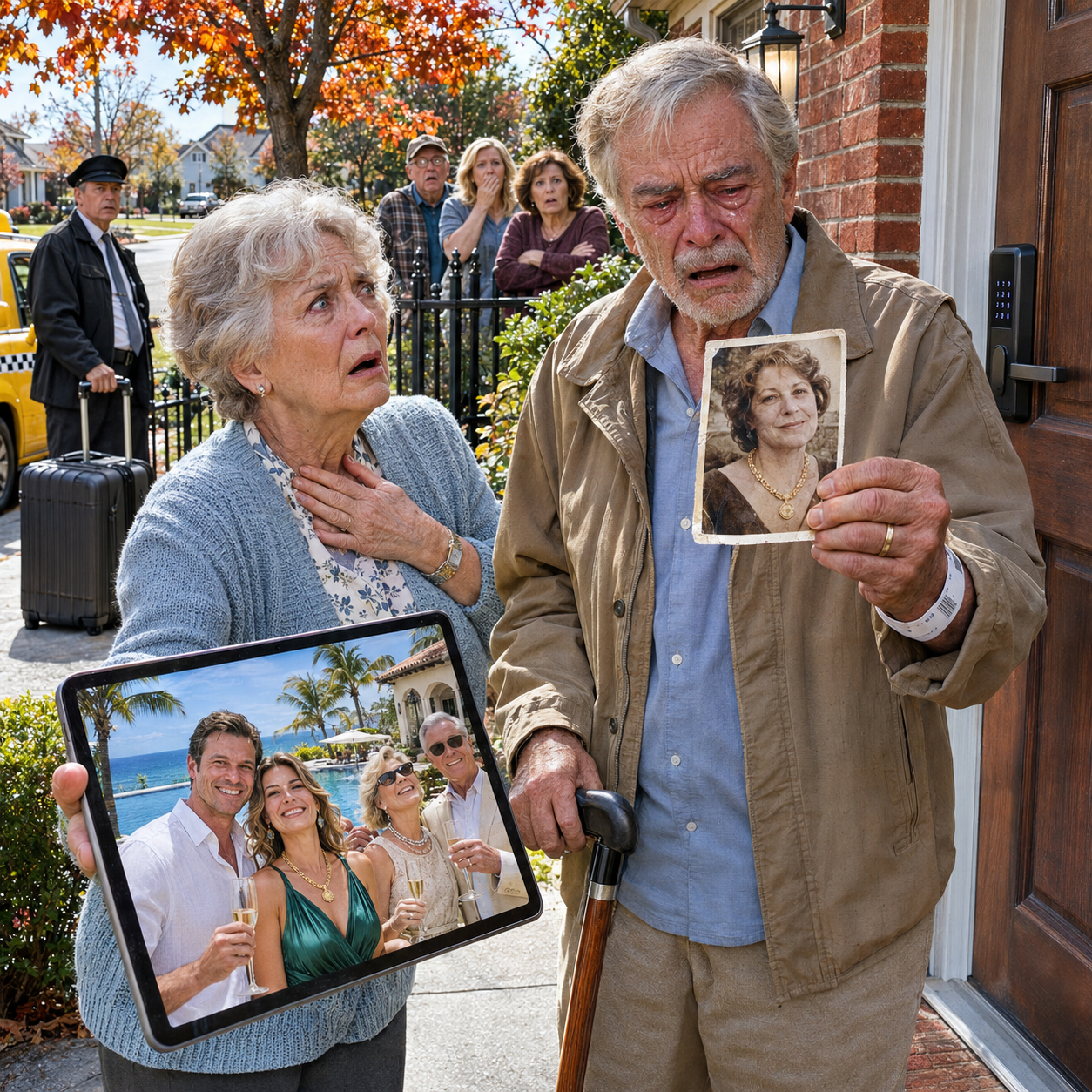
My Daughter-in-Law Planted Something in My Suitcase at Midnight—She Never Knew I Was Recording
At 12:17 a.m., I watched my daughter-in-law unzip my suitcase and hide a black pouch beneath my clothes. Then she whispered into her phone, “Call airport security at six. Make sure they search her bag.” I lay still while she planned to have me detained. She wanted my son to take control of my lake house while I fought to clear my name. What she didn’t know was that I’d spent twenty-eight years investigating fraud—and the camera had captured everything.
Part 1
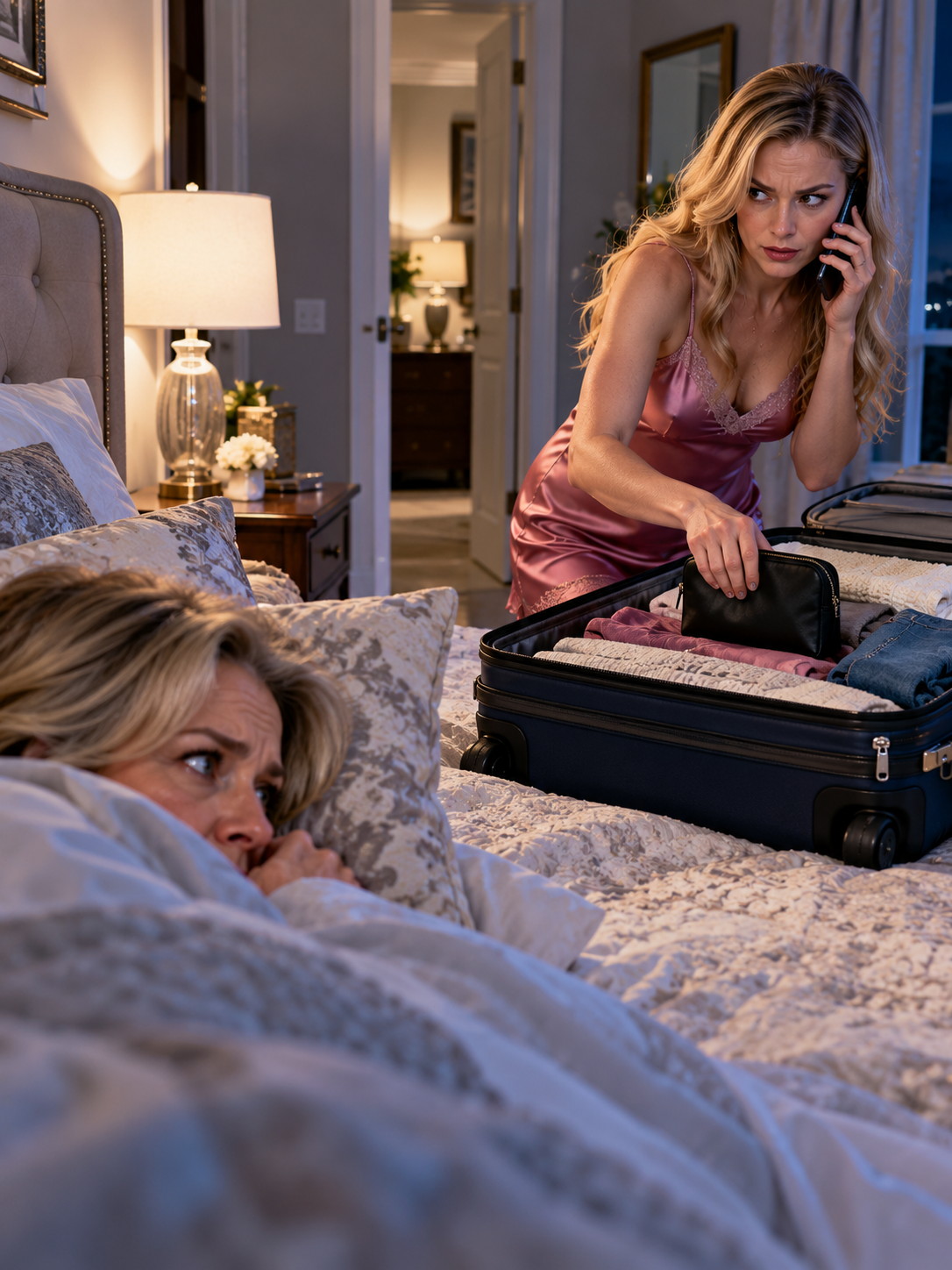
The zipper made a tiny metallic rasp, the kind of sound you notice only when you’re supposed to be asleep. Through the narrow gap between my eyelids, I watched my daughter-in-law, Elise, kneel beside my maroon carry-on and lift the folded sweaters I’d packed for Denver. She slid a black velvet pouch into the lining, photographed the open bag, and whispered, “It’s in there. Call airport security at six.” My bedside clock read 12:17 a.m., and the little green light on my bedroom camera remained steady.
My name is Ruth Calder, I’m sixty-four, and I spent twenty-eight years investigating financial fraud for the federal government. I was supposed to fly from Milwaukee to Denver at seven thirty that morning to help my younger sister, Linda, recover from surgery. Instead, I lay under a cotton quilt listening to someone in my own home arrange a disaster for me.
Elise and my son, Patrick, had been staying with me for nine days while repairs were supposedly underway at their condo. At dinner, Elise had watched me fold my boarding pass into my wallet and remarked, “Airport officers can be terribly suspicious of older travelers who get confused.” Patrick studied his plate, just as he had whenever she mentioned my age lately.
The real argument had begun three months earlier, when Elise suggested selling the lake house my late husband, Samuel, and I had spent thirty-one years restoring. She called its driveway a hazard despite my careful upkeep. Last week she brought me a document giving Patrick sweeping authority over my finances, calling it an emergency precaution. I handed it back unsigned, and she didn’t smile again until tonight.
I waited until her footsteps disappeared before reaching for the phone beneath my pillow. A small camera on my dresser faced the luggage rack because someone had searched my bedroom twice that week, leaving a drawer half open and Samuel’s old document box turned backward. The footage captured Elise inserting the pouch and whispering into her phone. I saved the original recording without editing it or touching the suitcase.
My first instinct was to call Patrick and demand that he explain his wife’s behavior. Then I remembered him quietly asking where I kept the deed to the house, two nights after Elise’s power-of-attorney proposal. He’d claimed he needed the information for an insurance estimate, yet no insurer had contacted me. I couldn’t decide whether he was frightened of his wife or helping her, and that uncertainty hurt more than the fear.
I called Ray Holden, a former colleague now working financial investigations for the county prosecutor. He listened without interrupting and asked whether I knew what the pouch contained. “No, and I won’t find out by myself,” I told him, looking across the dark room at my closed suitcase. Ray told me to stay away from it, secure the recording, and wait while he contacted the officers responsible for our area.
At 2:10, a pair of local officers arrived quietly through the side entrance after I called them inside. They photographed the luggage where it stood, documented what I’d witnessed, and arranged for the suspicious pouch to be safely taken as evidence. An officer sealed the item as evidence. Nothing about the pouch was worth risking an airport worker’s safety or my own.
Ray explained that the attempted setup could be investigated without allowing an unknown object into an airport checkpoint. He asked whether I was willing to meet airport police before checking in, since Elise might make a report and expect to witness my humiliation. I said yes, but only if I could leave safely afterward and no one treated the terminal like a stage. An officer returned my empty, inspected carry-on, its maroon shell looking exactly as it had before.
Before dawn, I opened the recording once more, this time noticing Elise’s phone reflected in the mirrored closet door. For a moment its screen showed a message thread, and although I couldn’t read the words, I recognized the contact photograph beside the incoming reply. It was my son Patrick, smiling in the blue fishing cap I’d bought him last Father’s Day.
Part 2
At 5:12 a.m., I wheeled the maroon suitcase into the kitchen, where Elise was already standing beneath the pendant lights in a pressed cream blouse. She offered me coffee and immediately looked at the bag, then glanced at the clock above the stove. “Patrick wanted to sleep, so I’m driving you,” she said, with practiced sweetness. I thanked her and declined the cup, knowing I needed a steady head more than caffeine.
Outside, wet leaves stuck to the driveway and mist floated above the lake. Elise insisted on lifting my bag into the trunk, but I rolled it up the ramp myself, forcing her to step aside. During the drive she asked three times whether I’d packed everything personally and once whether I’d been forgetful lately. I answered politely while mentally cataloging each question.
At 5:58, as we approached the airport, she sent a voice message without looking at me. “We’re almost there,” she said, setting the phone face down on her lap. I thought of the pouch in police custody, its contents still unknown to me, and wondered who expected a reward for reporting it. Then Elise reached across the console and patted my arm as though I were the one in need of reassurance.
She parked and walked beside me into the terminal, ignoring my suggestion that she could leave at the curb. Travelers lined up with coffee, backpacks, and children in puffy jackets. Elise steered me toward the ticketing hall instead of my airline counter, watching every uniform that passed. A woman in a navy jacket approached before we reached the security entrance and introduced herself as Detective Mara Keene of the airport police.
“Mrs. Calder, would you come speak with us for a moment?” Keene asked, keeping her voice low. Elise immediately stepped forward and announced that I was a widow who had been experiencing confusion. “I’m terribly worried about what she may have packed,” she said, loudly enough that two passengers turned around. I felt heat climb my neck, even though I’d known exactly what performance was coming.
Keene led us to an interview room before the screening checkpoint, where Ray waited with another investigator. Elise’s smile flickered when she recognized him from an old retirement photograph on my bookshelf. He placed a sealed evidence receipt on the table and explained that police had received a report concerning my luggage. Elise covered her mouth and asked whether they had found anything dangerous.
“Before we discuss the report, I’d like to know who prepared Mrs. Calder’s bag,” Keene said. Elise claimed I’d packed alone and that she’d urged me to double-check everything. Ray asked whether she’d entered my bedroom after midnight, and she laughed too quickly. “Why would I go into Ruth’s room while she was sleeping?” she asked, turning toward me for support.
I didn’t answer; Keene placed a tablet on the table and played the recording from my dresser camera. Elise watched herself lift the sweaters, slip in the pouch, and photograph the case; the audio caught the instruction about calling security at six. Her hands curled under the table, and she whispered, “That’s not what it looks like.” I watched the confident woman who’d lectured me about losing my memory suddenly struggle to remember her own story.
Keene explained that the pouch had already been secured during an earlier police response and that no suspicious item had reached airport screening. The contents were being examined, and the circumstances of the report would be investigated. Elise claimed it was a foolish prank, then said Patrick had encouraged her to frighten me into accepting help. Hearing his name spoken aloud made my stomach turn.
Ray asked Elise to remain for additional questions, and I stepped into the hallway to call Linda about missing my flight. Before I could dial, my phone lit up with a message from Patrick: “Don’t let them search the inside pocket. It wasn’t supposed to go this far.” He had sent it three minutes before we entered the terminal, and suddenly I knew the contact photograph in the closet mirror hadn’t been an accident.
Part 3
I stood beside a vending machine reading Patrick’s message until the words lost their shape. For nine days he’d kissed my cheek at breakfast, offered to carry groceries, and asked whether my hip was bothering me. Now his warning suggested he’d known about the planted pouch before I ever left home. I forwarded the message to Ray and took a photograph of the screen, because old habits are difficult to abandon.
Ray joined me a few minutes later and told me the initial examination had revealed a packet of unidentified material and several old financial certificates from Samuel’s estate. The certificates had vanished from my locked study in August, and I’d assumed I’d filed them somewhere foolish after rearranging my records. Their presence in that pouch transformed the incident from a cruel performance into something with a longer history. I asked whether the packet was dangerous, and Ray said investigators would wait for proper testing before drawing conclusions.
Elise was still speaking with Keene when I returned to the interview room. She admitted taking the certificates but insisted she hadn’t intended to hurt anyone, saying she believed Patrick needed legal authority to protect me. “Ruth’s been making impulsive decisions,” she said, staring at the table instead of at me, her hands white around a paper cup and her voice still carefully practiced. When I asked her to name one, she said, “Refusing to sell the house,” as if that explained everything.
Ray reminded us that no airport incident would automatically grant anyone control over an adult’s property. Elise looked startled, then insisted their attorney had described an emergency process. She showed Keene a message about a guardianship petition that was supposedly ready to file if I were detained or unable to travel. On the screen was a draft statement claiming I’d repeatedly misplaced valuables and concealed suspicious items in my belongings.
“You stole the valuables you planned to accuse me of losing,” I said. Elise’s face hardened for the first time that morning, and she said I had no idea how much pressure Patrick was under. I asked what kind of pressure required inventing a criminal accusation against his mother. She refused to answer, but Ray made a note when she mentioned a deadline later that week.
By noon, I had canceled my original flight, booked another for a later date, and hired a local attorney, Anika Desai, to protect my property interests. Linda was furious on my behalf, but she was safe with a visiting nurse and told me not to rush across the country just to prove I could. I drove home with a police escort long enough to retrieve my essential papers, while Elise remained with investigators. The lake looked bright and ordinary beyond the windows, as if the last twelve hours had happened to somebody else, which somehow made the violation feel worse.
I checked the locked study and found the bottom drawer slightly misaligned. Samuel had kept his estate inventory in that drawer, including an appraisal for the house and a list of insurance policies. The certificates were missing, but so was a binder containing photocopies of my identification and our old mortgage documents. I hadn’t given either of them permission to touch it.
Anika arrived that afternoon with her laptop and a practical tone I appreciated; she had helped Samuel and me update our wills, and I trusted her refusal to make promises. She helped me secure my financial accounts, notify my insurer of the document theft, and request alerts for changes affecting the property. Then she asked whether I’d received recent mail from a title company or lender. I remembered an envelope addressed to “The Calder Household” that Elise had casually taken from the kitchen counter two weeks earlier.
We searched an online county records index and found no completed deed transfer, which briefly eased my breathing. But Anika located a pending request for title information associated with a private lending firm I’d never heard of. The request named my lake house as proposed collateral for a business financing transaction. I stared at the screen as Anika read out the applicant’s name: Patrick Calder.
Part 4
Patrick arrived at my house just after five that evening, wearing the old college sweatshirt he always chose when he wanted me to see my little boy instead of the grown man he’d become. He stepped across the threshold carrying a grocery bag and said he’d heard Elise had been questioned at the airport. I told him to put the bag down and answer one question: “Did you know she put that pouch in my suitcase?” His expression changed before he spoke.
He admitted that Elise had planned to make me appear unreliable but claimed he’d never agreed to planting anything suspicious. “I thought someone would stop you and send you home,” he said, twisting the handles of the grocery bag around his fingers. When I showed him his message about the inside pocket, he conceded that he’d known more than he’d admitted. Every correction came only after I put another piece of evidence in front of him.
I asked why the private lender had requested information about my property. Patrick explained that his construction-supply business was failing after two contracts collapsed, leaving him owing nearly four hundred thousand dollars. He’d promised an investor that I would eventually sell my lake house and help cover the debt. I stared at the son whose college tuition, wedding, and first down payment I’d paid, searching his face for shame.
“You didn’t ask me because you knew I’d say no,” I said. He protested that the house would become his someday anyway, as though my death were merely a delayed signature. Then he claimed Elise had invented the airport plan because she was desperate to save their marriage. I told him desperation explained fear, not the decision to frame someone who trusted you.
Anika joined us by video call, and Patrick reluctantly described the proposed financing. The lender had not advanced funds against my property, but Patrick had submitted copies of my documents and suggested he would soon obtain authority to act for me. Anika explained that neither his expectations nor a guardianship application would transfer ownership of my home. She asked him to preserve all messages and correspondence, and warned that false representations to a lender carried serious consequences.
He suddenly began crying, saying he couldn’t survive bankruptcy or public disgrace. For one awful moment, I wanted to comfort him, the way I’d done when he’d broken his wrist in middle school. Instead, I remembered the airport floor, the strangers watching Elise call me confused, and the fact that he’d let me walk toward that humiliation. I told him that my love had never given him permission to gamble with my freedom.
After Patrick left, I sat at the kitchen table while Anika prepared notices revoking any permissions previously granted to my son and his wife. We arranged new locks, updated estate instructions, and notified relevant institutions that neither of them could act on my behalf. I did not pretend those steps could erase every possible risk, but they gave me back control over decisions my family had tried to make in secret. The air smelled of lemon polish and the vegetable soup Patrick had left untouched.
Two days later, police obtained additional records concerning the report made about my luggage. Investigators found messages between Elise and Patrick discussing how an incident at the airport could support allegations that I could no longer manage my affairs. Patrick’s earlier claim that he hadn’t agreed to the plan became much harder to believe. Anika called that evening and said there was one document she wanted me to see in person.
It was a draft petition prepared before the airport trip, containing a sworn statement attributed to Patrick that I had been behaving erratically for months. Listed among its examples was an incident involving my missing estate certificates, dated weeks after he and Elise had apparently removed them. At the bottom of the page was my son’s signature, and beneath it a sentence asking the court to appoint him temporary guardian of my finances.
Part 5
I read the petition twice, sitting across from Anika in her office while rain ticked against the window. Patrick hadn’t merely failed to stop his wife; he’d documented lies about me and tried to turn them into legal authority. The request had never been granted, and no judge had declared me incapable of managing my affairs. Still, knowing my own son had prepared that accusation felt like losing him a second time.
Anika asked what outcome I wanted beyond protecting the house. I told her I wanted accurate records, appropriate accountability, and absolutely no private settlement that required me to reconcile with either of them. She contacted investigators and the lender, which withdrew Patrick’s application. The attempted shortcut Patrick had imagined turned into the disclosure he’d been trying to avoid.
Over the following months, the criminal investigation addressed the planted pouch, the missing certificates, and the false report. I never needed the laboratory details to understand Elise’s intentions. She eventually accepted responsibility in court for offenses tied to the deception and theft, while Patrick faced separate proceedings over his false statements and financial representations. Neither of them could blame an airport misunderstanding anymore.
They both tried contacting me before their hearings. Elise sent a three-page letter describing financial panic, exhaustion, and the pressure of keeping up appearances. Patrick left a voicemail beginning, “Mom, I know we went too far,” as though what they’d done were a family argument that had gotten out of hand. I saved the correspondence for Anika and didn’t reply.
The house remained mine. I removed Patrick as a future decision-maker in my estate documents and appointed a professional fiduciary to handle matters if I ever needed assistance. My savings went into accounts neither he nor Elise could access, and I changed the emergency contacts listed with my doctor. Those tasks were dull, careful, and strangely satisfying, like putting clean labels on boxes after a long move.
In November, I finally flew to Denver to see Linda. At the airport, I watched an officer help a frazzled traveler collect a spilled stack of boarding passes, and for the first time I didn’t hear Elise’s voice in my head. Linda met me outside baggage claim wearing a knitted red hat, then hugged me so fiercely I nearly dropped my purse. We spent the week cooking soup, comparing terrible television programs, and arguing cheerfully over who made the better piecrust.
Back home, I volunteered twice a week with a nonprofit that helped older adults recognize financial exploitation. I taught them to keep independent records, ask questions about unfamiliar documents, and remember that being loved should never require surrendering the right to say no. Sometimes participants asked whether I’d learned those lessons professionally or personally, and I answered, “Both.”
Patrick’s last letter arrived just before spring, saying he hoped time would help me forgive him. He wrote about missing our Sunday breakfasts and walking along the dock with Samuel when he was young. I missed those mornings too, but I knew the difference between mourning a memory and reopening a door. I filed the letter away without answering and went outside to inspect the flower beds.
The lake was still cold, with thin mist rising where sunlight met the water. I carried my old maroon suitcase to the donation pile, then changed my mind and cleaned its wheels with a damp cloth. It had never betrayed me; people had, and I was tired of surrendering ordinary things because of what they’d done. I put it in the hall closet beside my hiking shoes, ready for another trip whenever I chose.
That evening, I sat on the porch Samuel had built, listening to the water tap gently against the dock. I thought of the woman who’d lain motionless at 12:17 a.m., waiting for her daughter-in-law to leave the bedroom so she could call for help. She’d been frightened, and she’d still acted carefully enough to protect herself. I was that woman, too, and I no longer needed my son to believe I was capable of standing on my own.
Legal Notice: This story is a work of fiction. Names, characters, businesses, events, and incidents are the product of the author’s imagination or are used fictitiously. Any resemblance to actual persons—living or dead—or to actual events is purely coincidental. Thank you! 💓