My Sister Abandoned Her Baby for Ten Years—Then Called Me His Nanny at Graduation, Until My Son Opened a Secret Letter
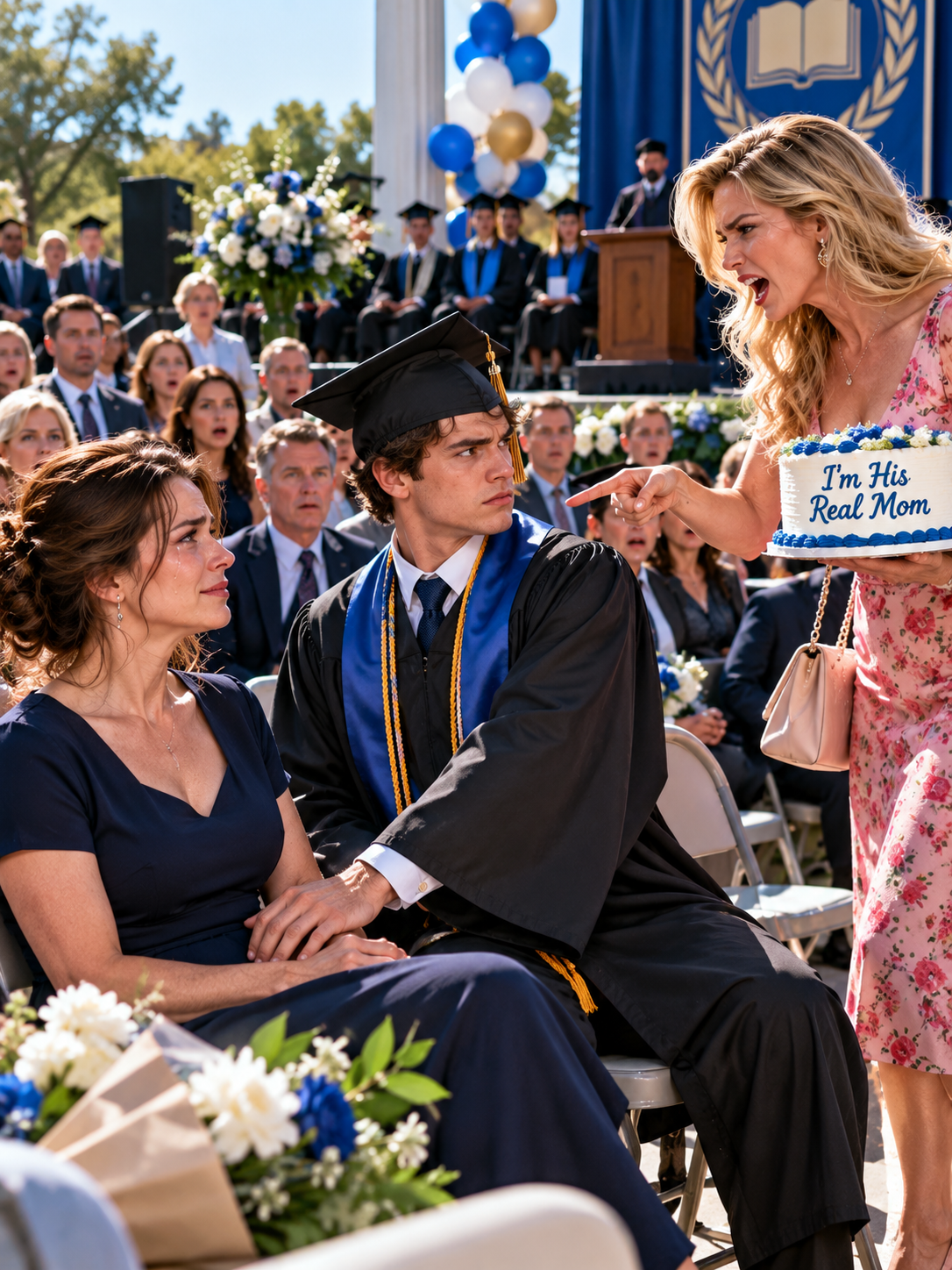
“Thank you for being such a wonderful nanny,” my sister announced at my ten-year-old son’s graduation, smiling as seventy strangers watched. She had abandoned him as a newborn, leaving me to sacrifice my scholarship and raise him alone. Now she carried a cake declaring herself his real mother and announced she was taking him home. I wanted to scream, but my son squeezed my hand and whispered, “Mom, please wait.” Then he walked onto the stage holding an envelope my family believed had disappeared years ago.
Part 1
“You’re only his aunt, Willa. Don’t embarrass yourself by pretending otherwise.” My older sister, Corinne, delivered those words with a brilliant smile while resting her manicured hand on my shoulder. Behind her stood a white graduation cake, decorated with blue frosting and the words “Congratulations From Your Real Mom.” My ten-year-old son, Micah, watched from the aisle, his small graduation cap tilted sideways and his expression strangely calm.
Ten years earlier, Corinne had appeared at our parents’ doorstep carrying a three-week-old baby, a yellow blanket, and a diaper bag with a broken zipper. I was twenty-two, preparing to begin college on a scholarship, and had never changed a diaper without somebody standing beside me. Corinne placed Micah in my arms and said she needed a few weeks to get her life together. Three days later, she stopped answering my calls.
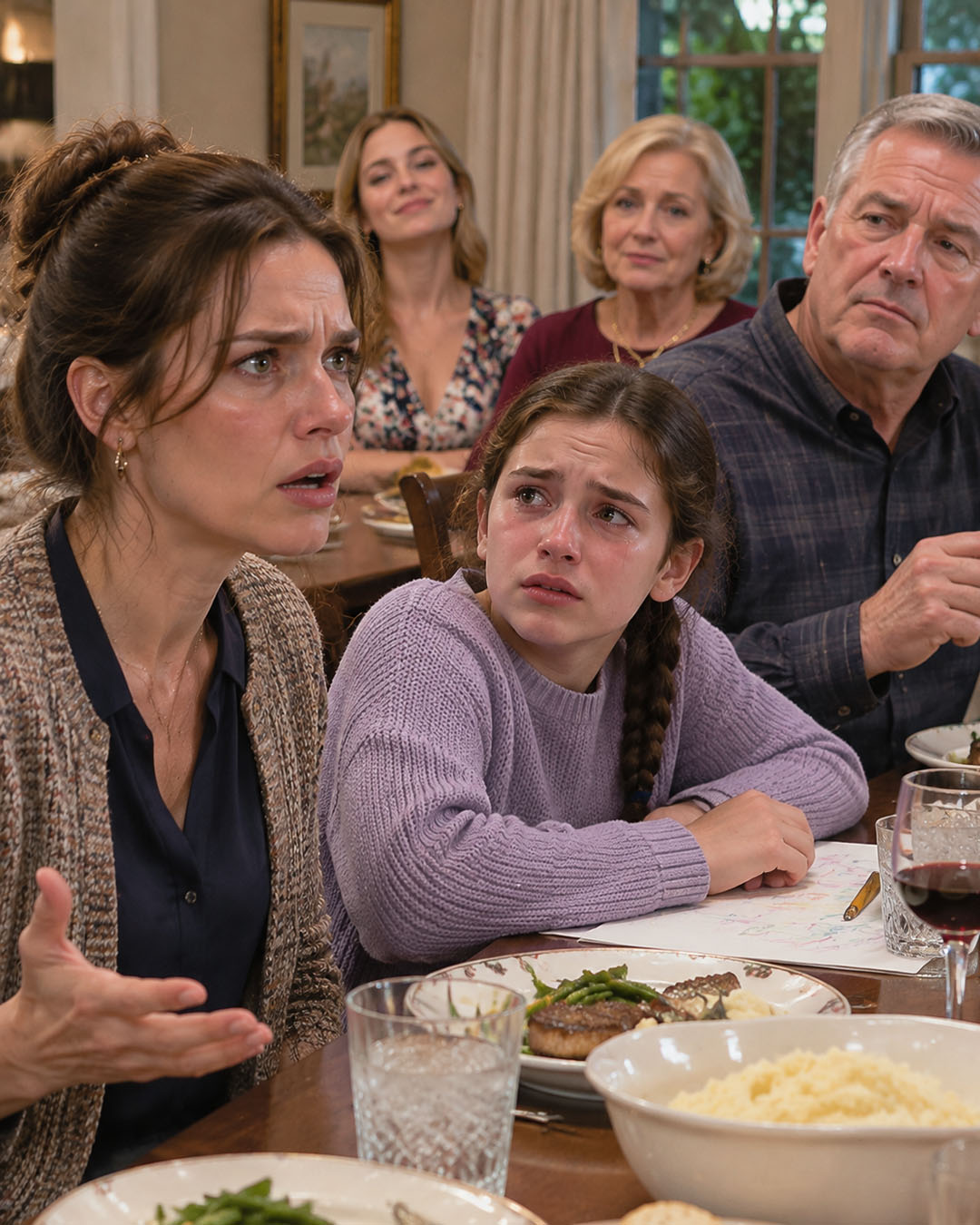
Our mother, Frances, insisted that families made sacrifices for one another, while Dad promised Corinne would eventually return. Meanwhile, somebody had to get up for midnight feedings, arrange medical appointments, and figure out why the baby cried whenever the house became completely quiet. That somebody was me. By the time Micah learned to smile, I had already missed the enrollment deadline for the social work program I’d dreamed about since high school.
I worked mornings at a medical billing office, cleaned a neighborhood bakery on weekends, and studied parenting advice during my lunch breaks. Money was tight enough that I learned which grocery stores discounted meat after seven and which children’s books our library sold for fifty cents. My parents helped occasionally, but they always described Micah as Corinne’s responsibility, even while leaving most of that responsibility to me. I stopped arguing because there was always another bottle to wash or another bill waiting.
Micah was an extraordinary child, though his brilliance initially frightened me more than it impressed anyone else. At three, he memorized entire picture books; at five, he explained why a science documentary contained an incorrect diagram; and at seven, he built a working weather station from discarded electronics. But the same little boy who understood advanced mathematics sometimes cried when plans changed unexpectedly. I knew he loved cinnamon toast, hated scratchy shirt collars, and needed somebody beside him when his thoughts moved faster than his courage.
At nine, he entered a university-sponsored accelerated learning program in Ohio, designed for exceptionally advanced students. He completed its highest available academic track the following year, becoming the youngest graduate in the program’s history. Reporters wanted photographs, professors predicted remarkable things, and strangers began calling him a genius. To me, he was still the boy who left tiny handwritten reminders on the refrigerator saying, “Mom, remember to eat lunch.”
Corinne’s involvement consisted mostly of expensive birthday presents and photographs she posted online. She visited four times in ten years, never stayed overnight, and once called to ask which school Micah attended because a friend wanted to interview her about raising a gifted child. I corrected her whenever she referred to herself as the person behind his achievements. She would laugh and say, “We’re both his family, Willa. Why make everything a competition?”
On graduation morning, I ironed Micah’s white shirt twice because my hands wouldn’t stop shaking. He noticed, naturally, and told me wrinkles weren’t statistically important to academic achievement. I kissed his forehead and told him some things mattered simply because they mattered to the person doing them. He gave me that serious little smile I’d loved since he was a toddler and said, “Then I guess today’s important to both of us.”
The ceremony took place inside a university auditorium filled with white flowers, polished wooden seats, and nervous families holding cameras. My parents arrived early, but Corinne appeared just before the procession wearing an expensive emerald suit beside a man she introduced as her fiancé, Adrian. The cake followed on a rolling cart, attracting curious looks from everyone nearby. I felt uncomfortable immediately, though I told myself she might simply be celebrating Micah’s achievement.
Then she announced she was finally ready to bring her son home. She thanked me for my years of “babysitting,” suggested my responsibility was finished, and reached toward Micah as though expecting him to embrace her. Instead, he looked at me, then quietly asked, “Did she discuss this with you?” When I shook my head, he squeezed my fingers and whispered, “Please don’t answer yet.”
A few minutes later, Micah’s name was announced, and the auditorium erupted in applause. He walked onto the stage carrying the prepared graduation speech we’d practiced together, but instead of reading it, he placed the pages facedown beside the microphone. “I was going to talk about scientific discovery,” he began, “but I think there’s something more important I need to explain.” Then he reached beneath his gown, pulled out a faded yellow envelope, and looked directly at my parents.
“I found this when I was six,” he said. “And Grandpa promised he’d tell Mom what was inside, but he never did.”
Part 2
My father turned pale so quickly that I thought he might collapse. Onstage, Micah unfolded a sheet of paper, carefully smoothing its creases against the wooden podium. “This letter was written by Corinne ten years ago,” he explained. “It says she wanted Aunt Willa to raise me, and that she signed papers so Mom could become my legal guardian.”
A murmur moved through the auditorium, and Corinne’s confident smile vanished. Micah glanced toward me, his fingers tightening around the paper. “Aunt Willa is what biology calls her,” he continued. “But she’s my mom because she stayed with me every day.” I pressed my hand over my mouth, unable to stop the tears.
He explained that he’d discovered the envelope in Grandpa’s desk while searching for a measuring tape. At six, he’d recognized the names and asked his grandfather about the documents. Dad had promised to explain everything to me, but Micah eventually realized that conversation had never happened. “I waited because Grandpa said it was an adult problem,” he told the audience. “But today somebody tried to make decisions about my home without asking me.”
His adviser, Dr. Salazar, quietly approached the microphone and suggested they discuss the documents privately after the ceremony. Micah nodded, looking suddenly relieved to have an adult help him finish. He concluded by thanking his teachers and the person who’d raised him, then returned to his seat. The applause was warm, but I barely heard it because Corinne was staring at my parents with an expression I’d never seen before.
After the ceremony, Dr. Salazar offered us a private conference room. Corinne arrived carrying the ridiculous cake while Adrian followed with two unopened water bottles. My mother began explaining that everyone had misunderstood, but I interrupted her. “I want to know what papers Micah was talking about, and I want an answer without another family speech.”
Dad admitted Corinne had signed consent documents supporting my appointment as Micah’s guardian when he was an infant. The paperwork hadn’t completed any court process, but it would have helped me pursue legal guardianship years earlier. Instead, my parents had kept it in their desk while I struggled with school authorizations and medical forms. “We thought Corinne might return,” Mom whispered.
“For ten years?” I asked. Mom insisted she hadn’t wanted to make the separation permanent, and Dad claimed they were protecting everyone’s feelings. I remembered all the nights I’d worried about whether Corinne could suddenly demand Micah’s return. They had watched that fear consume me while keeping documents that might have helped resolve it.
Corinne suddenly announced that she had a stable home now and wanted Micah to live with her after the summer. Adrian looked surprised, suggesting even he hadn’t understood her intentions. Micah moved closer to me and said quietly, “I don’t want to move.” I put my arm around him and told Corinne there would be no decisions about his residence without proper legal consideration and, above all, attention to his welfare.
Then Micah asked why his grandparents had hidden the letter from me. Mom reached for him, but he stepped back, looking more hurt than angry. “I thought adults were supposed to tell the truth when something mattered,” he said. I wanted to answer, but I couldn’t find a sentence that wouldn’t make him responsible for comforting us.
Dad finally brought out the folder he’d kept in his car. It contained Corinne’s original letter, unsigned court forms, and several papers I’d never seen before. I was preparing to close it when a familiar university crest caught my attention. Beneath the guardianship documents lay a ten-year-old letter addressed directly to me, and the first sentence said my scholarship had been approved for a one-year deferment.
Part 3
I read the letter three times while everyone waited. The university had offered to hold my scholarship for another academic year after learning about our family emergency. The document outlined options for delayed enrollment, including advising assistance and a possible adjustment to my housing award. I hadn’t known any of those options existed.
“Where did this come from?” I asked. Mom’s eyes immediately dropped toward the table, and my father looked genuinely confused. Corinne leaned forward, recognized the letterhead, and said she’d contacted the admissions office after leaving Micah with us. She claimed she wanted me to have a chance to return to school, although she’d never followed up to see whether I received the response.
The letter had been mailed to my parents’ address, where I was living at the time. Someone had opened it and tucked it inside the same folder as the guardianship papers. I turned the page over and found a handwritten note in my mother’s familiar slanted writing. It said, “Don’t give Willa this until we’re certain she won’t leave the baby.”
My mother began crying before I even finished reading. She said she’d been frightened that if I went to school, she would become responsible for Micah while my father worked. Corinne was gone, the household had already been turned upside down, and she couldn’t face another unexpected change. Instead of telling me how she felt, she’d decided to control the information I received.
“You watched me give up my scholarship,” I said, struggling to keep my voice steady. Mom answered that I’d seemed happy with Micah and that she’d assumed I would eventually return to school anyway. I reminded her how often I’d cried over tuition deadlines and how desperately I’d wanted to finish my education. She looked away, unable to explain why my future had mattered less than her comfort.
Dad admitted he’d discovered the scholarship letter several years later but assumed the opportunity had expired. He hadn’t mentioned it because he believed reopening the subject would only upset me. I looked at the two people who’d taught me to be responsible, honest, and considerate. They had spent a decade hiding decisions that belonged to me, then called their silence protection.
Micah sat beside me, looking terribly small inside his oversized graduation gown. “Did you miss college because of me?” he whispered. I immediately took both his hands and told him the truth: adults had made choices around us, and none of those choices were his responsibility. He nodded, but the worry remained in his eyes, and I hated that he’d been forced to hear any of this on a day meant to celebrate him.
I ended the meeting before anyone could offer another explanation. Outside, Adrian approached privately and apologized for Corinne’s announcement. He admitted she’d described our arrangement as temporary and had told him Micah would eventually come to live with them. When I asked whether he’d known about her ten-year absence, his expression revealed that he’d been given a much more flattering version.
That evening, I made Micah his favorite grilled cheese sandwiches and let him choose a documentary for us to watch. Afterward, he brought his yellow blanket downstairs and asked whether I regretted raising him. I held him until his breathing settled and explained that loving him was never something I’d regretted. What hurt was discovering that other people had taken away choices I should have been allowed to make.
Just before bedtime, my phone rang from the university program’s administrative office. Dr. Salazar sounded unusually concerned as she explained that someone had requested copies of Micah’s academic records and information about transferring him to another educational program. The request identified Corinne as his custodial mother and included a signed authorization I had never seen.
For the second time that day, somebody had submitted paperwork claiming authority over my son’s future. This time, I intended to stop it before another ten years disappeared.
Part 4
I called a family-law attorney the following morning and explained everything, from Corinne’s disappearance to the documents discovered at graduation. Her name was Meredith Shaw, and she listened without interrupting while I described my parents’ decisions and the new request for academic records. She explained that biological parentage, caregiving arrangements, and legal guardianship were distinct matters requiring careful review. Most importantly, nobody could simply announce a change in Micah’s living situation and expect it to become legally binding.
Meredith helped me prepare written instructions for the academic program stating that I hadn’t authorized Corinne’s records request. She also reviewed the caregiver authorizations I’d used for years and explained how we could seek a formal guardianship order. The old consent documents were relevant history but weren’t a substitute for an actual court determination. For the first time, I had a clear path toward securing Micah’s future instead of relying on verbal promises.
Corinne called that afternoon, furious that I’d questioned her request. She claimed she was trying to enroll Micah in an elite educational program closer to her home and that I should appreciate her efforts. When I asked why she hadn’t discussed anything with us, she said, “He’s my son, Willa. I shouldn’t need your permission to help him.” I reminded her that helping a child began with understanding what the child actually needed.
She accused me of turning Micah against her, pointing to his graduation speech as proof. I told her I’d never asked him to investigate our family’s documents or confront her publicly. He’d acted because adults kept making decisions without including him in the conversations that affected his life. “You didn’t come back to understand him,” I said. “You came back expecting him to fit the life you’ve built.”
Adrian contacted me two days later. He had learned that Corinne had discussed a possible media interview about her gifted son and had described their upcoming reunion as a fresh beginning for their family. He hadn’t arranged it and was uncomfortable with the idea of Micah becoming part of a public story before their relationship had even developed. I thanked him for telling me and made it clear that Micah wouldn’t participate.
My parents came to the house that weekend carrying the remaining documents from Dad’s desk. Mom apologized repeatedly, saying she’d spent years convincing herself that hiding the letters hadn’t changed anything. I told her it had changed how I understood my own life and how much I could trust her. She asked whether we could move forward as a family, but I wasn’t willing to offer forgiveness simply to relieve her guilt.
Dad looked toward the kitchen, where Micah was building a small motorized model from a science kit. He said he hadn’t realized how much the uncertainty had affected us both. I reminded him that Micah had been asking questions since he was old enough to understand the difference between having a biological mother and having someone who raised him. Dad admitted he’d hoped time would solve the problem without requiring an uncomfortable conversation.
I told them I needed distance while Meredith reviewed the legal situation. They were welcome to send birthday cards and messages, but I wouldn’t involve Micah in conversations about adult guilt or reconciliation. Mom cried, and Dad looked disappointed, yet neither tried to argue. Watching them leave, I felt grief rather than satisfaction, but I knew maintaining boundaries was more important than pretending everything was repaired.
Over the next several weeks, Meredith gathered the required records and contacted Corinne through the appropriate channels. Corinne initially objected, then reconsidered after learning that securing guardianship wouldn’t erase her biological relationship with Micah. She eventually agreed not to pursue an immediate change of residence while the legal process continued. I didn’t celebrate her cooperation, because doing the minimum to protect a child wasn’t an extraordinary act of generosity.
One evening, while we reviewed Micah’s school schedule, he asked whether a judge might make him leave me. I explained that courts considered children’s welfare and that Meredith was helping us present the complete history. He leaned against my shoulder and asked whether I would still be his mother if some document said otherwise. I held him close and promised that no piece of paper could erase the years we’d lived together.
The following week, Meredith called to say the guardianship hearing had been scheduled. She also mentioned that Corinne had submitted a written statement acknowledging I’d been Micah’s primary caregiver throughout his life. I should have felt relieved, but I stared at the wall after hanging up. Ten years after she left him in my arms, my sister was finally telling the truth, and I no longer wanted anything from her except for her to stop standing in our way.
Part 5
On the morning of the hearing, Micah wore a blue sweater and carried a small notebook filled with questions. Meredith had explained the process in language he understood, including that he might be asked about his home and daily life. He didn’t seem frightened until we reached the courthouse steps. Then he slipped his hand into mine and whispered, “Can we go for pancakes afterward?”
I promised we could, regardless of what happened inside. The hearing was quieter than I’d imagined, without dramatic accusations or people shouting across the room. Meredith presented records documenting the years I’d cared for Micah, our home life, and the educational and medical arrangements I’d managed. Corinne confirmed that she’d lived elsewhere and hadn’t provided consistent day-to-day care.
The judge asked several questions about Micah’s needs and the stability of his current home. After reviewing the evidence and applicable requirements, the court granted my petition for guardianship. It didn’t erase Corinne’s biological connection or settle every question that might arise in the future, but it gave our existing family structure the legal recognition it had lacked. I squeezed Micah’s hand beneath the table, and he finally smiled.
Outside the courthouse, Corinne approached us without the confident expression she’d worn at graduation. She said she’d been selfish, that she’d allowed shame to keep her away, and that she’d convinced herself returning with enough money and opportunities could make up for everything. I listened because I wanted to hear her acknowledge what she’d done. But when she asked whether we could finally become sisters again, I told her I wasn’t interested in rebuilding a relationship merely because she was ready.
She turned toward Micah and asked whether he might want to visit someday. He considered the question carefully before saying he wasn’t ready to make plans. Corinne nodded and accepted his answer without pressing him. That was the first genuinely respectful thing I’d seen her do since graduation, but one appropriate response couldn’t outweigh ten years of absence.
My parents sent a letter afterward, saying they understood why I needed distance and hoped we could eventually reconnect. I kept it in a folder with the old scholarship notice, the guardianship documents, and Corinne’s letters. I didn’t destroy those papers because they were part of Micah’s history and mine. But I stopped rereading them in search of explanations that would somehow make the past acceptable.
That autumn, I enrolled in two evening courses at a community college that offered a pathway toward completing my social work degree. I was thirty-two, worked full-time, and hadn’t written an academic paper in years, so the first assignment terrified me. Micah helped me organize my textbooks and announced that my study schedule was inefficient. I told him mothers were allowed to make their own inefficient decisions, and he laughed so hard he nearly spilled his orange juice.
Our lives settled into a rhythm that belonged to us. Micah continued his advanced academic program but also joined a neighborhood robotics club where other children sometimes cared more about pizza than equations. I worked during the day, studied several evenings each week, and learned to ask for help without surrendering control over my decisions. Some nights were exhausting, but I knew exactly why I was doing the work.
A year after his extraordinary graduation, Micah helped me bake a small chocolate cake for my birthday. He insisted on decorating it himself, although the frosting letters leaned sideways and the kitchen counter ended up covered in powdered sugar. When I opened the box, I found he’d written, “Happy Birthday, Mom. You Stayed, and Now You Get to Grow Too.” I hugged him so tightly that he complained I was interfering with his ability to breathe.
Later that evening, we sat on the back porch watching fireflies flicker above the grass. Micah asked whether I would ever forgive Corinne or Grandma for what had happened. I told him I didn’t know what feelings the future might bring, but I no longer intended to organize my life around waiting for their apologies. He nodded and said, “So you can be happy without fixing everything?”
I thought about the young woman I’d been at twenty-two, holding a newborn while her college acceptance letter disappeared into a drawer. I thought about the ten-year-old boy who’d stood at a microphone demanding honesty from adults who should have offered it freely. Most of all, I thought about the life we were still building together, not because anyone had given us permission, but because we’d chosen to keep moving forward.
“Yes,” I told him, resting my hand over his. “We don’t have to fix everyone else to have a good life.” He leaned against my shoulder, comfortable and quiet, and for several minutes neither of us spoke. The silence no longer frightened him, and it no longer made me feel that something was missing.
My sister had arrived at his graduation believing she could reclaim motherhood with a cake and a declaration. She hadn’t understood that raising a child meant showing up through ordinary mornings, difficult nights, unexpected sacrifices, and thousands of moments nobody photographed. I had spent ten years proving that without ever asking for recognition. Now I understood that I didn’t need my family to acknowledge my worth before I could finally claim my own future.
Micah went inside to finish a robotics project, leaving me on the porch beneath the warm evening sky. My textbooks waited on the kitchen table, beside a grocery list and a half-finished cup of tea. For the first time in years, I looked at everything ahead of me without wondering which part of my life somebody else would demand I surrender. I was still his mother, still myself, and finally free to become the woman I’d once hoped to be.
Legal Notice: This story is a work of fiction. Names, characters, businesses, events, and incidents are the product of the author’s imagination or are used fictitiously. Any resemblance to actual persons—living or dead—or to actual events is purely coincidental. Thank you! 💓