I caught the envelope before it slid into my Christmas dinner, but the divorce papers inside still knocked the breath from my lungs. My husband’s family lifted their champagne glasses and laughed as he announced he was finally free of me. Then I handed our waiter a black metal card, and his face turned white.
### Part 1: My husband turned Christmas dinner into a public humiliation spectacle
The Hawthorne Room was the most expensive restaurant in Crown Harbor, a place where crystal chandeliers glittered above velvet walls and wealthy families paid thousands of dollars to feel important. I sat beside my husband, Grant Weatherbe, wearing a simple navy dress while his mother, Cynthia, examined me with the disappointed expression she usually reserved for damaged merchandise. “Meline, darling, did you actually wrap everyone’s presents yourself?” she asked, lifting her wineglass. “How wonderfully rustic. You really never outgrew that little workshop mentality, did you?” Around the table, twelve members of the Weatherbe family chuckled as though she had delivered the funniest joke of Christmas Eve.
“I thought handmade gifts might mean something,” I replied, keeping my hands beneath the table where nobody could see the faint varnish stains around my fingernails. My father-in-law, Miles, leaned back in his chair and announced that people who understood the value of time paid someone else to wrap packages. Grant laughed along with him, never once looking at me. Three years earlier, he had loved those same hands because they restored beautiful things other people had abandoned. Now he acted embarrassed whenever I touched his sleeve.
I had spent five years managing the Gilded Splinter, a successful antique furniture restoration workshop, before Grant convinced me that his rising political career required a more sophisticated wife. He called leaving my job a promotion, promising I would become the center of his world. Instead, I became the unpaid organizer of dinner parties, charity events, investor meetings, and family obligations. Nothing I accomplished pleased Cynthia, and every mistake became another story the family repeated over expensive wine. Somewhere between polishing silver and memorizing donors’ names, I had forgotten what it felt like to be proud of myself.
That evening, Grant kept checking his phone while his father discussed a new yacht and his mother’s friends compared European vacations. When I quietly asked whether something was bothering him, he pulled his hand away from mine. “Stop hovering, Meline,” he muttered. “You’re embarrassing me.” I looked toward our young waiter, James, who was refilling the water glasses, and caught the uncomfortable sympathy in his eyes.
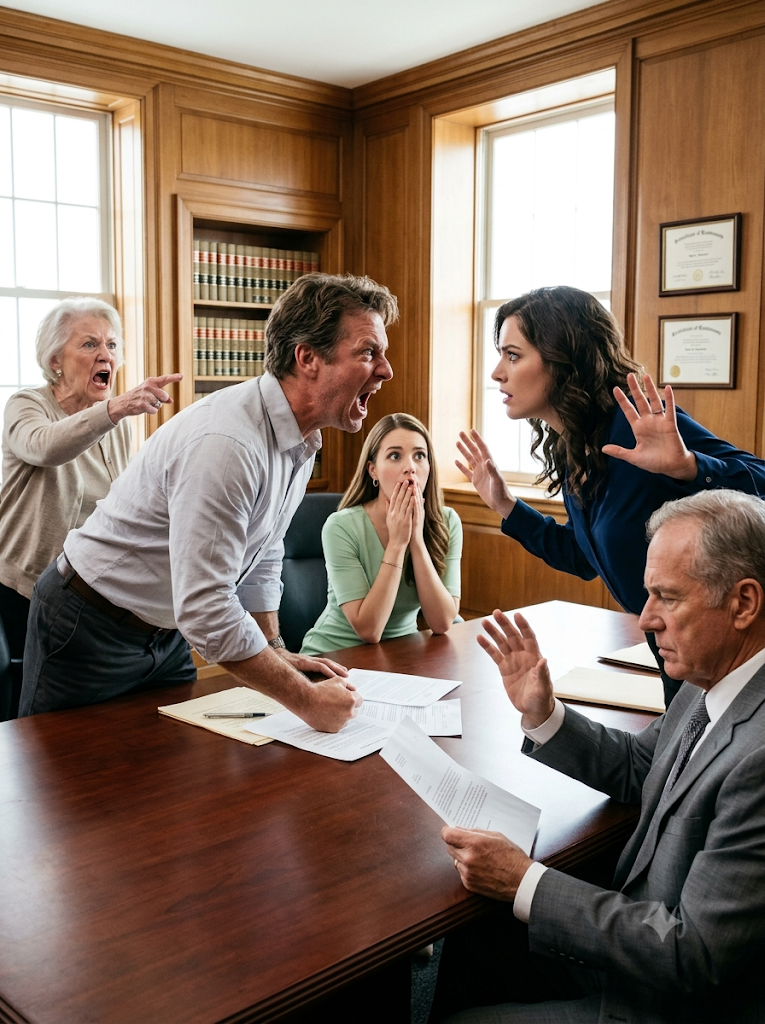
After the main course disappeared, Grant slipped his phone into his jacket and reached beneath his chair. He pulled out a thick manila envelope and tossed it across the white tablecloth, stopping inches from my plate. “Open it,” he ordered, while Cynthia exchanged an unmistakably delighted glance with Miles. I unfolded the documents and stared at the words Petition for Dissolution of Marriage. Every conversation around the table stopped, as though someone had rehearsed the silence.
“I signed everything this morning,” Grant announced. “The settlement is generous, considering you brought practically nothing into this marriage. I need someone who fits my future, Meline, and you’re not that person.” I looked into his eyes, searching for the man who once brought me coffee during twelve-hour restoration shifts. “You’re doing this on Christmas Eve?” I whispered. He straightened his tie and replied, “I wanted witnesses.”
Miles slapped the table approvingly. “About time, son. You can’t launch a serious political campaign in January with dead weight dragging behind you.” Cynthia smiled and added that Grant deserved a wife with the right education, connections, and family background. At the far end of the table, his cousin Tyler raised his phone and began recording. “Here’s to Grant’s freedom!” someone shouted, and champagne glasses collided while I sat holding the documents that ended my marriage.
I realized then that every person at the table had known what was coming. Their expensive dinner wasn’t a family celebration; it was an audience assembled to watch me fall apart. But the strangest thing happened as their laughter grew louder: my trembling stopped. I folded the papers carefully, slipped them into their envelope, and placed it beside my untouched dessert spoon. “You’re right, Grant,” I said, meeting his eyes. “I don’t belong in this family, because I thought family meant loyalty.”
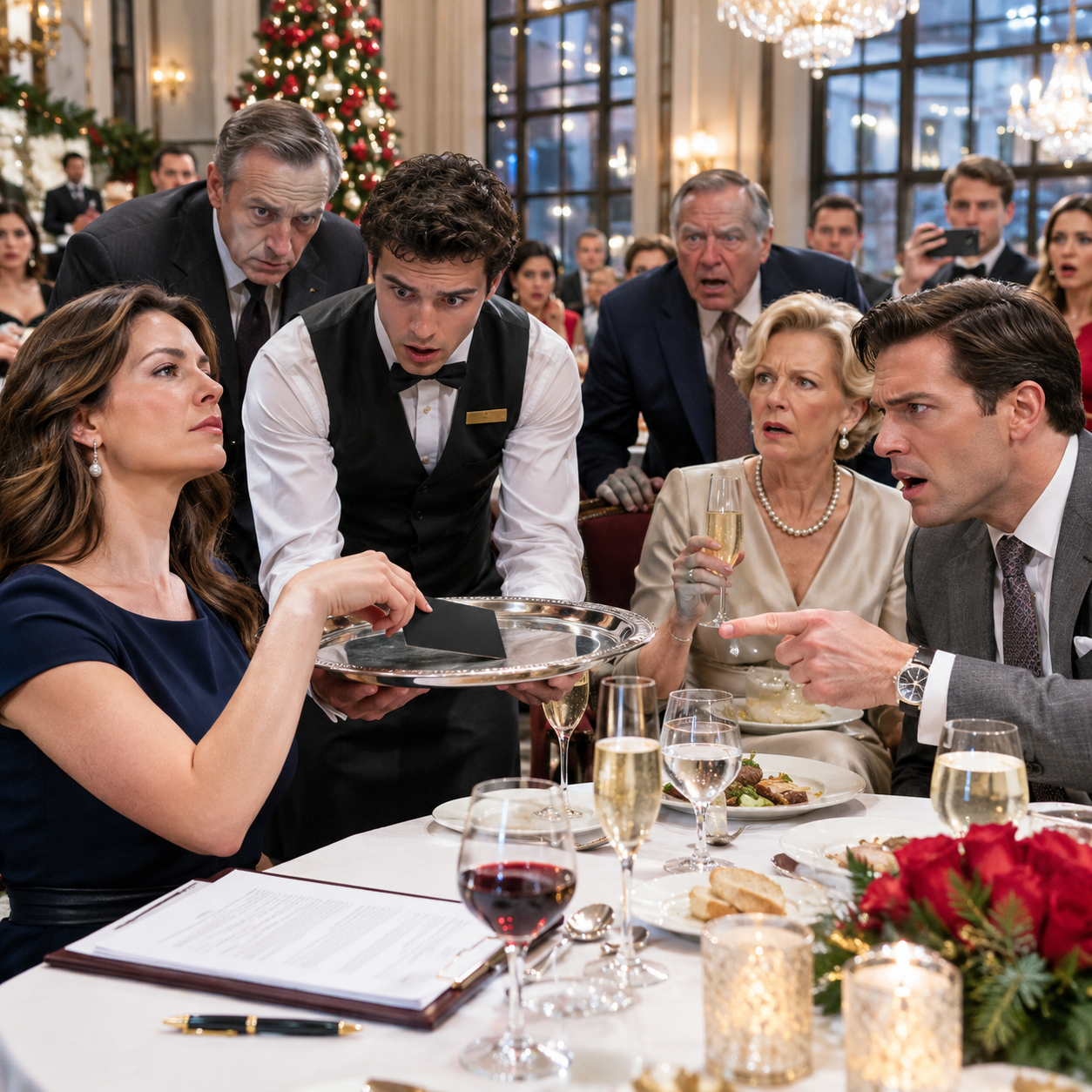
He rolled his eyes and told me to take the settlement and call a car. Instead, I raised my hand toward James and requested the entire bill. Miles burst out laughing when the waiter returned with a leather folder showing $4,352.80. “What are you going to use, sweetheart? Your grocery allowance?” Cynthia suggested I avoid embarrassing myself with a declined card, while Tyler aimed his phone directly at my face.
I opened my clutch, moved past the joint credit card Grant monitored, and removed a heavy black titanium card I had carried for eighteen years without using. Its surface bore no familiar bank logo, only an embossed name: Renee Kerr. I placed it on James’s brass tray and asked him to process the bill. He turned the card over, noticed its discreet silver insignia, and abruptly stopped breathing normally. Then he leaned toward me and whispered, “That’s the owner’s private key.”
Grant scoffed that I had probably given the waiter an expired membership card. But James wasn’t listening; he hurried through the velvet curtains toward the manager’s office, clutching the tray with both hands. Moments later, the restaurant’s general manager, Mr. Halden, emerged behind him, carrying the card as though it were something priceless. He walked past Miles, ignored Cynthia’s greeting, and stopped directly beside my chair. Then, in front of the entire Weatherbe family, he lowered his head and addressed me by a name my husband had spent three years teaching me to forget.
“Ms. Kerr,” he said, “we’ve been expecting you.”
### Part 2: My aunt’s mysterious final gift exposed an extraordinary hidden inheritance
Mr. Halden’s words pulled me back eighteen years, to a weather-beaten porch surrounded by pine trees. My mother had died when I was four, and her older sister, Renee Kerr, had raised me in a small mountain house where the windows rattled during storms. Renee wore work boots, repaired furniture in a converted barn, and taught me that broken things deserved patience rather than contempt. On my nineteenth birthday, just before I left for university, she pressed that black metal card into my hand. “This isn’t for shopping, Meline,” she told me. “Use it only when someone leaves you with nowhere else to turn.”
I had asked what the card actually did, but Renee merely said it would remind certain people who I was. For years, I kept it wrapped in velvet, afraid it might be nothing more than an eccentric old woman’s attempt to make me feel protected. When she died of heart failure two years earlier, I searched the old house and discovered a safe beneath her bedroom floor. Inside was absolutely nothing, and I cried beside it because I thought the emptiness confirmed how little security I possessed. Grant barely attended her funeral, spending most of the graveside service checking his watch.
Now Mr. Halden stood before me with that same card, his fingers trembling. “Our verification system recognized the executive access token,” he explained. “I contacted the trust’s legal representatives, and they’ve confirmed your identity and authorization.” He opened the leather folder and showed me a cream-colored note bearing the words Welcome Home, Ms. Kerr. “Your aunt arranged for this account to remain dormant until you personally activated it.”
Miles pushed back his chair. “What trust? This is ridiculous. Her aunt fixed old chairs.” Halden looked directly at him and explained that Renee Kerr had established Kerr and Company, a private holding trust controlling the Hawthorne Room and much of Crown Harbor’s hospitality property. Its portfolio included twelve luxury hotels, commercial waterfront land, a significant interest in the convention center, and several prominent downtown properties. Renee had withdrawn from public life decades earlier while professional managers protected her investments. Following her death, the trust had continued operating for its designated beneficiary, whose executive authority could be activated through the card and legal verification.
I stared at the black metal object, remembering Renee sanding an oak table beneath a bare workshop bulb. She had lived with peeling paint, repaired her own truck, and clipped grocery coupons while quietly controlling assets worth more than anything the Weatherbes imagined. The empty safe suddenly made sense: the fortune had never been inside the house. It had been protected by documents and trustees I hadn’t known existed. When I lifted my eyes, Cynthia’s expression had changed from disgust to unmistakable fear.
“You’re saying she owns this restaurant?” Grant demanded. Halden nodded and clarified that I controlled the trust which owned the property, along with many other holdings. Miles threatened to telephone the restaurant’s directors, boasting that he played golf with them. “You know several regional executives, Mr. Weatherbe,” Halden replied evenly. “They don’t own the company.” For the first time that evening, my father-in-law had no answer.
Grant turned on me with sudden fury. “You knew! You let us believe you were poor while you were hiding all this money!” I placed the card beside the divorce petition and told him the truth. “I didn’t know, Grant. Renee never told me what she owned, and I never investigated because I trusted what she taught me about earning my own living.” He stared at me, apparently more offended by the possibility of missing my fortune than by the humiliation he had inflicted.
His mother recovered first, rising with a trembling smile and opening her arms. “Oh, sweetheart, what an incredible blessing! We’ve always known you were extraordinary.” She moved toward me, but I remained seated. Ten minutes earlier, she had been celebrating my departure from the family; now she was suddenly calling me her beloved daughter. Grant reached for my hand and murmured that his divorce petition had merely been an emotional mistake caused by campaign pressure.
I looked at the envelope lying between us. “You called me dead weight when you thought I had nothing,” I reminded him. “You don’t get to change the meaning of those words because my circumstances changed.” Tyler’s phone was still recording, though his grin had vanished. Beside him, Miles was staring at the card with a strange, dawning recognition.
Then he whispered a name I hadn’t heard since childhood. “The Kerr waterfront trust. My father told me about them.” He looked toward Halden, who answered with a solemn nod. When Miles finally turned back to me, his face was gray. “Your aunt didn’t just own this restaurant,” he said. “She owned the ground beneath half our business dealings.”
And the family that had laughed at my supposed poverty suddenly understood how much of their own prosperity rested on land belonging to me.
### Part 3: Their carefully guarded fortune unraveled through contracts, secrets, and betrayal
I picked up the divorce petition and turned to a paragraph Grant had filled in himself. Instead of relying solely on irreconcilable differences, he had described me as incompatible with his political ambitions because of my social standing and inability to support his professional image. I remembered a prenuptial agreement Miles had forced me to sign three days before our wedding. His expensive attorney had read every provision aloud, apparently enjoying the opportunity to remind me that I entered the marriage without significant assets. One provision, Section 7B, addressed divorce proceedings motivated by public reputation, family pressure, or deliberate damage to the other spouse’s standing.
“You insisted on a good-faith clause because you were afraid I’d embarrass your family and demand money,” I told Miles. “But Grant has just documented that he’s divorcing me to improve his political brand.” Grant grabbed the petition, his eyes racing across the page. I explained that whether the provision could be enforced was a matter for attorneys and a court, but his written statements would be difficult to dismiss. “You were so interested in making an example of me that you created evidence against yourself.”
Mr. Halden then handed me a smaller envelope retrieved from the trust’s secure records. I recognized Renee’s familiar typewritten lettering before I opened the letter inside. She had written it three weeks before her death, explaining that she knew how the Weatherbes treated me and had quietly asked the trust’s attorneys to examine my prenuptial agreement. She warned that people obsessed with status often exposed themselves through their own contracts, and she instructed her legal team to offer me independent counsel if I ever activated the card. At the bottom, in her familiar slanting handwriting, were seven words: Never confuse being needed with being loved.
For a moment, everything around me blurred. Renee had known more than she ever said, and she had protected my right to make my own choices instead of forcing me into a life of wealth I might not have wanted. When I looked up, Grant was already asking whether we could retreat into a private room to negotiate. “You wanted this conversation in front of witnesses,” I told him. “Your cousin even broadcast it. Now you’re asking for privacy because the audience knows the truth.”
I asked Halden to preserve the restaurant’s legally maintained security recordings for review by my attorney. He agreed, explaining that management could secure the material under the property’s established retention procedures. Tyler slowly lowered his phone as I mentioned that his own livestream might also become evidence. Grant looked toward his cousin with unmistakable panic. The same recording meant to humiliate me could now show how willingly the entire family had participated.
When Halden brought a tablet displaying the trust’s property portfolio, Grant attempted to recover his confidence. He insisted his forthcoming Weatherbe Lux Auto Lounge would succeed independently, regardless of anything I owned. Halden located the proposed waterfront development and explained that the land had belonged to the Kerr Trust since 1998. Grant’s agreement was still provisional, awaiting financing verification and environmental review. His expression collapsed when he realized his investors depended on a location my trust controlled.
Miles hurried forward, proposing that Weatherbe Holdings and Kerr and Company become strategic partners. He boasted about his twenty-story headquarters at 400 Main Street until Halden checked the ownership records. “Your company occupies that building under a leaseback agreement established after its sale in 2008,” the manager explained. “The deed belongs to Kerr Commercial Real Estate, and your current lease expires March first.” Miles gripped the back of a chair, suddenly understanding that his celebrated corporate tower was another property belonging to the family he had mocked.
“Please, Meline,” he whispered. “I employ people. We have responsibilities.” I told him those employees would not be punished for his behavior and that any lease decision would follow the contract, with sufficient notice and proper legal review. But I also made clear that the trust would no longer extend special favors simply because a tenant belonged to a powerful family. Miles had spent years teaching me that contracts mattered more than feelings. Now he would have to live by the principle himself.
Cynthia began crying when I mentioned reviewing the $250,000 the trust contributed annually to the Golden Gala and Bayside Charity Ball. I explained that I intended to direct future support toward shelters and food banks instead of expensive fundraising parties where guests spent more on entertainment than some families earned in months. Her tears stopped when she realized that her position on the charity committees might disappear. Beside her, Grant suddenly pointed at his mother.
“She planned this!” he shouted. “She chose the restaurant, told me what to say, and said embarrassing Meline publicly would make her accept the settlement!” Cynthia called him an ungrateful coward, while Miles demanded that both of them stop speaking. I watched the family turn on itself within seconds, each person desperate to escape responsibility. Renee’s greatest gift had not been the properties or the fortune. It was the chance to see what these people became when they could no longer control me.
### Part 4: One final revelation restored my freedom and changed Christmas forever
Grant followed me into the corridor as I prepared to leave, but the security staff quietly stopped him from crowding me. His confidence had vanished, leaving a man who seemed frightened by the consequences of his own choices. “Meline, please,” he said. “We can forget tonight. I’ll withdraw the divorce, and we can start over.” I looked at the husband who had once convinced me to abandon everything I loved, then asked the only question that mattered. “Would you still want me back if that card had been worthless?”
He opened his mouth, but no answer came. Behind him, Cynthia clutched her diamonds, Miles stared at the floor, and Tyler finally stopped recording. I returned to the dining suite to collect my coat, where James had quietly placed the leather bill folder beside my untouched dessert. Halden offered to waive the entire $4,352.80 charge, but I insisted the meal be properly recorded and charged to my authorized personal account. I signed the receipt Meline Kerr, reclaiming the name that had belonged to me long before Grant entered my life.
Halden approached with one final document from Renee’s trust records. It contained a conduct provision requiring independent review of business partners and tenants involved in documented harassment or abuse directed toward a beneficiary. The provision did not automatically cancel valid leases, but it ensured the trust could investigate misconduct without overlooking it because of family connections or political influence. I instructed the lawyers to examine every matter fairly, including the Weatherbe headquarters, the waterfront project, and any legitimate obligations to employees and investors. Their conduct would face consequences, but I would not become another person who used money to frighten innocent people.
Then I asked Halden to bring in the employees who had served our table. James entered alongside four coworkers, all looking bewildered as they stood near the doorway. I thanked them for maintaining their professionalism while my family behaved disgracefully, and I asked the manager to arrange a Christmas bonus equal to three months’ salary for each staff member who had worked that evening. James blinked rapidly and whispered that he had never received anything like that before. I told him Renee had taught me that dignity showed itself most clearly when someone had no reason to expect a reward.
Grant watched the exchange, then sank to his knees beside the table. “I love you, Meline,” he pleaded, tears gathering in his eyes. “I made a terrible mistake. We could build something extraordinary together now.” I looked down at him and remembered how easily he had laughed when his family called me worthless. “You meant every word when you thought I was poor,” I replied. “The only thing that changed tonight was what you believed I could give you.”
I gathered the divorce documents from the table, smoothed their wrinkled pages, and told him my attorney would respond through the proper legal process. I would not demand his inheritance or use my new fortune to keep him trapped in a marriage neither of us deserved. I wanted an honest separation, a fair resolution of our obligations, and my name restored. When Cynthia tried one last time to call me her daughter, I gently removed her hand from my sleeve. “My mother died when I was four,” I said, “and the woman who raised me taught me what love looks like. You never did.”
Months later, the divorce became final. The video Tyler had livestreamed circulated far beyond Crown Harbor, and Grant’s political campaign collapsed under scrutiny of his public conduct. His auto lounge project stalled when its financing and land arrangements failed to satisfy their contractual requirements, while Weatherbe Holdings had to relocate after its headquarters lease ended following legal review. The trust’s charitable contributions continued, but more money reached local shelters and food banks directly. No one had been ruined by a mysterious black card; they had simply discovered that their names no longer exempted them from accountability.
I returned to the Gilded Splinter, not as a wealthy patron seeking a sentimental hobby, but as a woman who missed the smell of cedar, the scrape of sandpaper, and the satisfaction of making damaged things beautiful again. I invested in expanding the workshop and offering paid apprenticeships to young people who couldn’t afford formal training. On my first afternoon back, I rolled up my sleeves and helped restore an old walnut dining table whose surface had been scarred by generations of careless use. The work left varnish beneath my nails, and for the first time in years, I didn’t try to hide it.
That Christmas, I drove to Renee’s little mountain house carrying a bundle of fresh pine branches and a small framed photograph of her. The building still needed repairs, but sunlight filled the workshop exactly as I remembered, and her old rocking chair waited beside the window. I found the black card in my purse and laid it briefly on the workbench beside her worn tools. For eighteen years, I had believed she gave it to me so I could become someone important. Standing there, I finally understood that she had wanted me to know I was important before anyone discovered what I owned.
I placed the card back in my purse and picked up her favorite sanding block. Outside, snow settled quietly on the mountain road, covering the tracks of my arrival. Grant had given me divorce papers for Christmas because he believed I had nothing worth keeping. Renee had left me a fortune, but the greatest thing she gave me was the courage to walk away from people who couldn’t love me without it.
And that was the Christmas I stopped trying to earn a place at someone else’s table and began building one of my own.
THE END.
All characters and events in this story are fictional, created for storytelling and entertainment purposes. Thank you sincerely for reading. Your feedback and support are invaluable and motivate me to continue sharing more stories with you.