At my granddaughter’s baby shower, I watched my daughter-in-law drop a silver gift box into a catering bin. Chocolate frosting smeared the white ribbon as it struck the bottom. My son saw her do it and turned away. Neither of them knew I had sewn a folded document inside the blanket.
### Part 1: My Daughter-in-Law Threw Away More Than a Handmade Baby Blanket
I stood behind the velvet curtains at Lakeshore Golf and Country Club, watching Caitlyn brush her hands together as though my gift had left something dirty on her fingers. Her best friend, Ashley, laughed and followed her toward the ballroom, where a string quartet was playing and guests were admiring a mountain of expensive presents. I remained perfectly still, my fingers gripping the curtain, while the silver box lay among discarded napkins and cake scraps. At sixty-three, I had never imagined that the most painful thing I would witness would involve something I had made with my own hands.
My name is Brenda Coleman, and I had been a widow for nine years. When my husband, Roger, died, he left me a struggling laundry business in Hamilton, Ontario, and enough unpaid invoices to frighten a banker. I spent the next decade building Coleman Linen Services into a company supplying clean linens to hospitals across Southern Ontario. But my son, Blake, and his wife believed I still operated one modest neighborhood laundry, and I had never bothered correcting them.
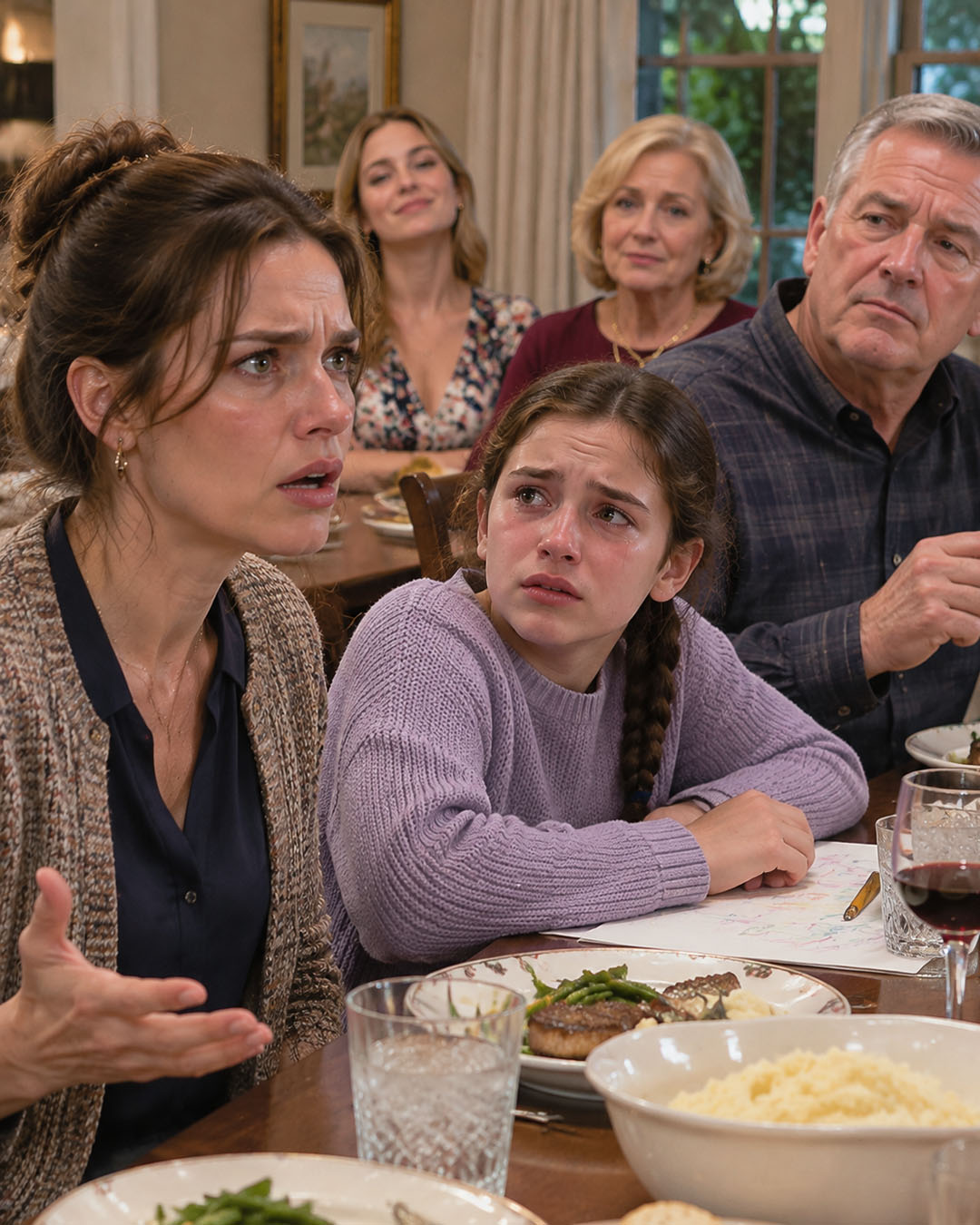
That morning, I had parked my ten-year-old Corolla between a Porsche and a Range Rover. I wore a navy dress from Costco, sensible shoes, and the pearl earrings Roger had given me on our twentieth anniversary. Blake, now a physician, greeted me with a distracted smile, while Caitlyn offered a stiff embrace and said, “Brenda, how lovely that you could get away from your little laundry.” Her friends exchanged amused glances before a hostess directed me to a table beside the kitchen doors.
The shower looked like a celebration for royalty. White orchids hung from the ceiling, champagne flowed freely, and Caitlyn’s parents presented a four-thousand-dollar stroller to thunderous applause. When she reached my silver box, I leaned forward, remembering the winter evenings I had spent knitting beside Roger’s empty chair. Inside lay a blanket made from pure qiviut, the rare, extraordinarily soft underwool of Arctic muskoxen, purchased from a cooperative in Nunavut for nearly nineteen hundred dollars.
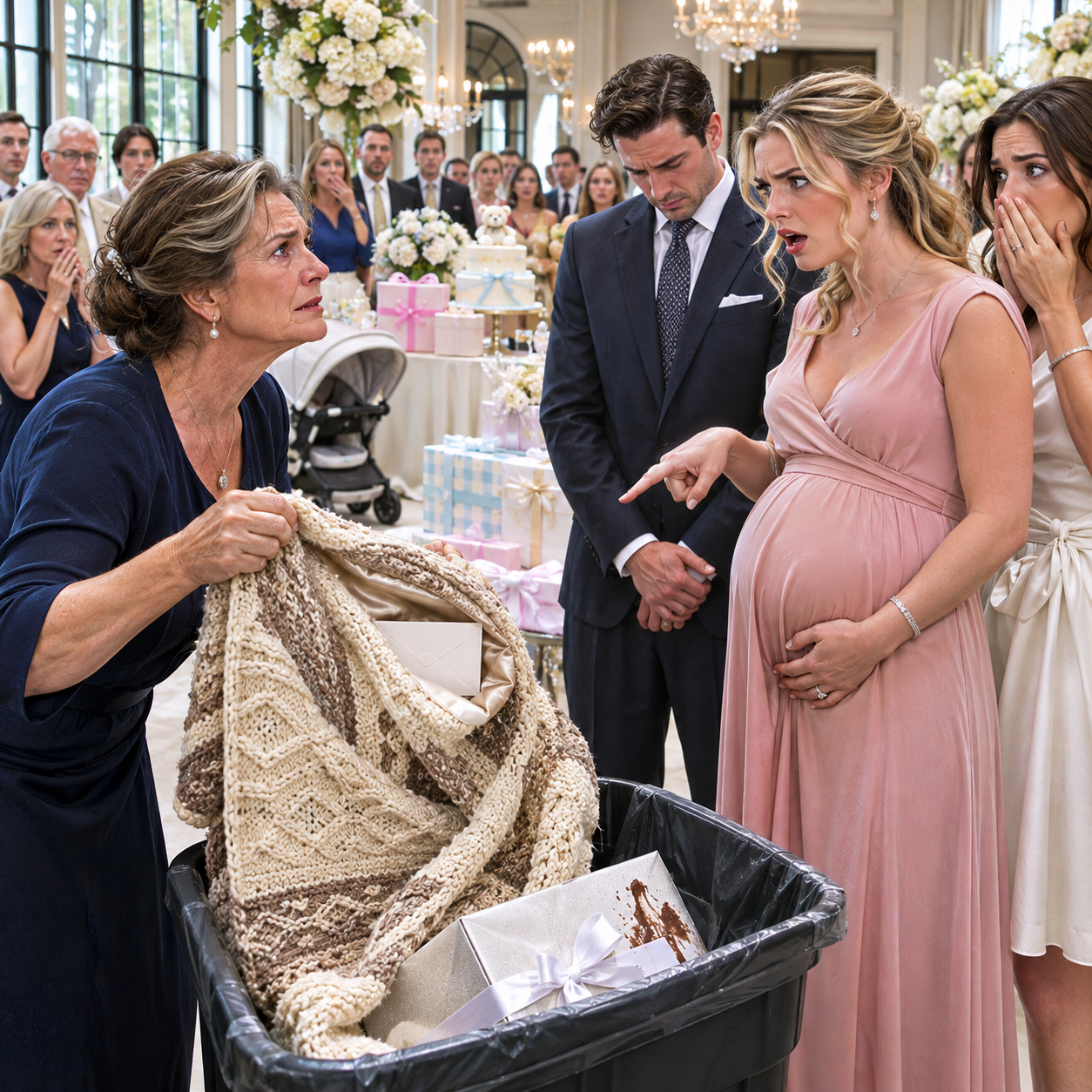
Caitlyn lifted the blanket between two fingers and wrinkled her nose. “You actually made this yourself?” she asked, loud enough for the surrounding tables to hear. I smiled and explained that the yarn was exceptionally warm, light, and gentle against a newborn’s skin. “How quaint,” she replied, handing it to Ashley and whispering that it should be put away before it shed on her designer dress.
Blake stood three feet away, studying his shoes.
An hour later, I stepped into the hallway and overheard Caitlyn speaking near the service entrance. “It looks like something from a church basement sale,” she said, laughing about my ancient car and supposed bargain-store yarn. Then she added, “My daughter isn’t going to be wrapped in poverty.” Ashley asked what she intended to do with it, and Caitlyn carried the box to the catering bin, dropped it inside, and instructed her friend to blame the venue if I ever asked where it had gone.
I waited until they disappeared before lifting the lid. The ribbon was stained with chocolate icing, but the blanket remained folded inside, its concealed stitching undisturbed. I wiped the box clean, slipped it into my tote bag, and walked past the valet without saying goodbye. During the drive home to Burlington, I kept remembering how Blake had once slept beneath blankets I knitted when we could barely afford to heat the house.
Three days passed before I opened the box again. At my kitchen table, I reviewed the eighty-three thousand dollars I had lent Caitlyn for her failing boutique, the two-hundred-thousand-dollar down payment I had quietly arranged for their Oakville house, and the private second mortgage of three hundred eighty thousand dollars I had provided through one of my companies. Blake had told his wife the money came from a special physician financing program. I had allowed the lie because I wanted him to build a life without feeling overshadowed by mine.
Then a courier mistakenly delivered a nursery parcel addressed to Caitlyn to my house. Since Blake was supposedly working a thirty-six-hour hospital shift, I drove it to Oakville and let myself in with the spare key he had given me. Their home was crowded with unopened designer packages, and the nursery contained a five-thousand-dollar crib beneath a crystal chandelier. On the kitchen island, beside a bottle of mineral water, lay a blue legal folder bearing my full name.
I opened it and felt the blood drain from my face.
It was an application to the Superior Court of Justice requesting guardianship over my property and personal decisions. Blake was named as the applicant, Caitlyn as the proposed guardian, and I was described as suffering from rapidly advancing cognitive impairment. Attached was a medical opinion signed by Dr. Ferguson, a physician I had never met.
Before I could turn another page, the garage door rumbled.
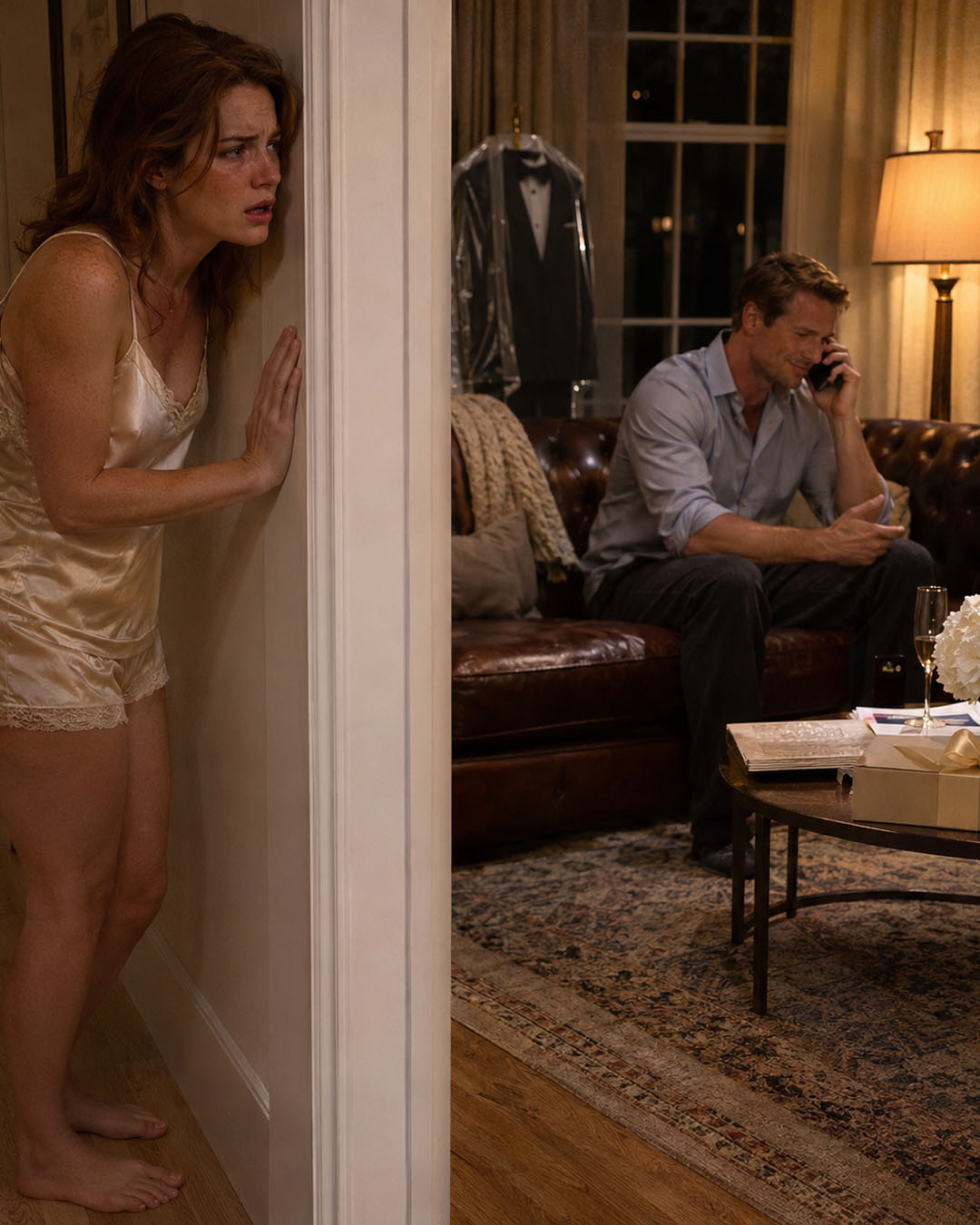
I slipped into the pantry hallway and listened as Caitlyn, Blake, and a man on speakerphone discussed a creditor named Morris, four hundred thirty thousand dollars in debt, and the sale of my house. Caitlyn mentioned a long-term care home where she intended to place me before the baby arrived.
I waited for my son to object.
Instead, Blake said, “Just move it along. Mom’s getting confused anyway. She won’t understand what’s happening until it’s done.”
For the first time in my life, I was afraid of the boy I had raised.
### Part 2: A Forged Diagnosis Uncovers the Cruelest Betrayal of All
I stood in the pantry until their voices faded into the sunroom, then returned to the kitchen and photographed every page of the guardianship application. The medical opinion claimed I could no longer manage money, understand contracts, or make decisions about my own care. It recommended selling my paid-off Burlington home to finance my placement in a municipal care facility. By the time I slipped out the front door, my hands had stopped trembling, replaced by a terrible clarity.
The following morning, I entered Ralph Jenkins’ office on the nineteenth floor of a Bay Street tower in Toronto. Ralph had been Roger’s lawyer for thirty years, and he knew exactly how much I owned, including the businesses Blake had never bothered to ask about. He studied my photographs without interrupting, then removed his glasses and said, “Brenda, this isn’t a family disagreement. They’re preparing to take away your legal independence.” I looked across his polished desk and told him I wanted every door to my life secured before they came knocking.
Within forty-eight hours, Ralph began restructuring my holdings under an irrevocable trust with independent oversight. My business, warehouses, investments, and Burlington home received additional protection, while a new continuing power of attorney named Ralph’s firm rather than my son. He also arranged a formal assessment with a qualified capacity specialist, a geriatric psychiatrist who spent three hours examining my memory, reasoning, and financial understanding. Her written findings confirmed that I was fully capable of managing my affairs and making my own decisions.
Then Ralph asked about the blanket.
I retrieved it from my tote bag and carefully opened a nearly invisible seam beneath its silk lining. Inside was the original signed discharge of the three-hundred-eighty-thousand-dollar mortgage on Blake and Caitlyn’s home, prepared as a surprise gift. I had intended to forgive the debt before Violet’s birth so that my granddaughter could grow up in a more secure home. The document had never been registered, and I had made no unconditional promise to release their mortgage.
Ralph examined it and sighed. “You were about to give them something worth more than most people earn in years.” I told him that Caitlyn had thrown it away without even looking, and that Blake had watched without speaking. He placed the document inside a protective folder and asked whether I still wanted it delivered. I shook my head, then admitted something that made him look at me differently: I wanted to know how far they would go.
There was another secret Blake and Caitlyn didn’t know. For three years, one of my property companies had owned the Lakeshore Road plaza containing Caitlyn’s boutique. Her late rent payments, requests for extensions, and complaints about unreasonable landlords had all passed across my desk. I had quietly approved every extension because I believed helping my son’s wife was helping my family.
Now those same records told a different story.
Following Ralph’s advice, I stopped volunteering information and waited for them to make their next move. When Blake called, I deliberately lost my place in a conversation and asked him to repeat something he had just explained. When Caitlyn phoned, I complained about misplacing my glasses while they rested on my nose, and she impatiently suggested I spend more time watching television. Six days later, Blake announced that a doctor friend wanted to stop by for an informal wellness visit.
Dr. Ferguson arrived carrying a leather folio and wearing a reassuring smile. Blake sat beside him while Caitlyn watched from the window, her arms folded above her growing stomach. A small recorder was running inside my sugar bowl, and Ralph’s investigator waited nearby. When Ferguson asked what year it was, I pretended to hesitate, and when he asked me to count backward from one hundred, I stopped after the first subtraction.
He wrote furiously without examining me or ordering a single test. Twelve minutes later, he closed his folio, thanked me for cooperating, and announced that he had everything he needed. I watched my son exchange a satisfied glance with his wife. They had mistaken my willingness to play along for proof that their scheme was working.
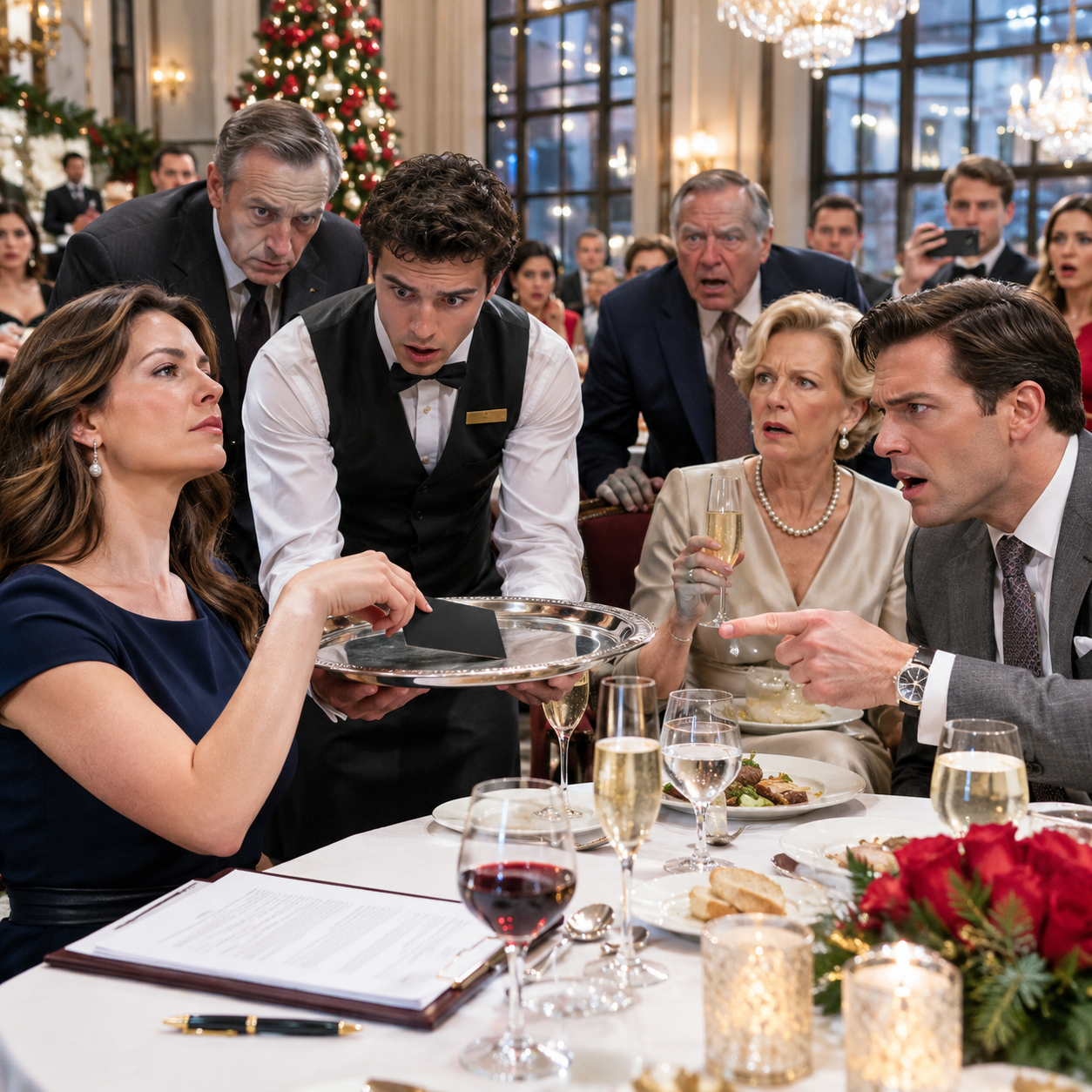
That weekend, Blake invited me to Oakville for a quiet dinner to celebrate the coming baby. I arrived wearing the charcoal suit I normally reserved for major business negotiations, with another recorder tucked into my handbag. There were no dinner plates on the table, only documents and a pen. As I stepped inside, I heard Blake slide the deadbolt into place and fasten the chain.
Caitlyn stood opposite me, pressing both palms against the dining table. “There’s no dinner, Brenda,” she said coldly. “You’re signing the power of attorney and the property transfer tonight, or you’ll never meet your granddaughter.” Blake added that a judge would approve the guardianship soon enough, so I might as well make things easier for everyone.
I looked straight at him. “Is that what you want?”
“It’s for your own good, Mom.”
I opened my handbag, laid a printed copy of the fraudulent application on the table, and began naming their debts. I mentioned Caitlyn’s unpaid boutique rent, Blake’s disastrous margin trading, and Morris’s demand for four hundred thirty thousand dollars. Their faces changed with every number, and when I told them I knew about Dr. Ferguson’s false report, Blake staggered backward against his chair.
“Unlock the door,” I said.
Neither moved until I took out my phone and told them my next call would report that they were preventing me from leaving. Blake unfastened the chain with shaking fingers and stepped aside. I walked into the cold night without turning around, leaving them alone with the documents they had hoped would steal my freedom.
At six minutes past midnight, Ralph’s law firm delivered an email that neither of them was prepared to receive.
### Part 3: One Midnight Phone Call Reveals the Blanket’s Hidden Fortune
The email began by informing Blake and Caitlyn that the company holding their second mortgage had prepared a discharge forgiving the entire three-hundred-eighty-thousand-dollar debt. The signed original had been concealed inside the qiviut blanket presented at their baby shower, intended as a gift for their daughter. Because the discharge had never been registered, the mortgage remained enforceable, and the company would not be issuing a replacement. The final paragraph notified Caitlyn that her boutique’s landlord was commencing proceedings over months of unpaid rent.
At two in the morning, my phone rang.
“Mom?” Blake’s voice cracked so badly I barely recognized it. “Mom, what was folded inside that blanket?”
I sat upright in bed and listened as he explained that they had driven back to the country club, climbed over the service fence, and searched the catering dumpsters. Caitlyn had ruined her manicure digging through old food and broken decorations, while Blake had called the waste company only to learn that the bins had already been emptied. The contents were compacted somewhere beneath a regional landfill, beyond anyone’s reach.
“Please,” he sobbed. “Tell Ralph to make another one. I’ll change, Mom. I swear I will.”
I watched the rain slide down my bedroom window. “Your wife threw away something I spent three months making, and you let her humiliate me. Then you helped plan to declare me incompetent and locked me inside your house.” When he tried blaming Caitlyn, I interrupted him and said, “You made your own choices, Blake. That debt was going to be forgiven out of love, but I will not reward what you’ve done.”
He cried harder, asking whether I had any idea what would happen to their house.
“I do,” I answered.
At eight the following morning, Blake’s Audi rolled onto my front lawn, leaving deep tracks in the wet grass. Caitlyn climbed out with swollen eyes, accompanied by Dr. Ferguson and a lawyer named Harrison. They stopped when they saw Ralph standing beside me on the porch, with two Halton Regional Police officers and a forensic accountant behind him. Ralph held up a folder containing the independent capacity assessment, the recordings, and copies of their proposed guardianship application.
“A formal complaint has been filed with the College,” he told Ferguson. “And the application seeking guardianship of Mrs. Coleman is being challenged with evidence of fraud.” Harrison examined the documents, whispered urgently to the doctor, and began distancing himself from the entire matter.
Blake stared at the people surrounding me. “Mom, who are they? What’s going on?”
I took the accountant’s binder and opened it to the audited statements of Coleman Linen Services. “Your father left me one failing laundry,” I said. “I built it into a business worth nineteen million dollars, not counting all the real estate and investments.” I explained that the company belonged to a trust and that I had never needed their money or their permission to manage my life.
Blake sank onto the bottom porch step.
Then I turned to Caitlyn. “That little boutique you love so much? I’ve been your landlord for three years.” I handed her the formal notice concerning her lease and the inventory securing her debts. Her mouth opened, but no words came out.
When Blake begged me to withdraw the complaints to save his medical career, I told him there was only one useful thing left to do: tell the truth. He looked at Ferguson, then at the officers, and finally admitted that the doctor had accepted cash to support a false capacity opinion. He also acknowledged his gambling losses, his signature on the application, and the plan to sell my home to satisfy their creditors.
Caitlyn shouted that I had manipulated everyone, but the investigator’s recordings told a different story. The officers explained that the evidence would support criminal investigations, including fraud and the incident in which I had been prevented from leaving the Oakville house. Ferguson was taken into custody, and Blake and Caitlyn were arrested as well, the consequences of their confessions finally catching up with them.
As Caitlyn was escorted toward the police car, she turned and shouted, “It was just a blanket!”
I stood on the porch where Roger used to drink his morning coffee.
“No, Caitlyn,” I said. “It was the last gift I planned to give you without asking for anything in return.”
### Part 4: The Woman They Betrayed Finds Peace Without Forgetting Everything
My granddaughter, Violet, was born in March, healthy and beautiful, with the same blue eyes Roger had carried throughout his life. Caitlyn was temporarily released under strict conditions, but I declined every invitation to visit. I loved that little girl without having met her, yet I refused to let her become another bargaining chip in her parents’ desperate attempts to reach my money. For once, I needed my love to have boundaries.
In April, I attended the sentencing hearing in Milton, wearing the same navy Costco dress I had worn to the baby shower. Dr. Ferguson had already pleaded guilty, received an eighteen-month sentence, and lost his medical license, while Harrison faced professional discipline for his involvement. Blake received a twelve-month conditional sentence, two years of probation, and 150 hours of community service at a food bank. His medical license was suspended for two years, his residency ended, and his wages became subject to repayment obligations.
When the judge asked whether he understood, Blake whispered, “Yes, Your Honor.”
Caitlyn received six months in custody and two years of probation for her role in the scheme. She turned toward the public gallery, searching until her eyes found mine, and silently mouthed, “Please.” I remembered her standing over the catering bin, laughing as my silver box disappeared beneath the garbage. I held her gaze but did not move.
The Oakville house went to power of sale that spring, and my company recovered less than half the mortgage balance. Caitlyn’s boutique closed, its remaining inventory sold against outstanding debts, while her parents eventually lost their Muskoka cottage. After serving four months, she returned to Blake, and they moved into a rented basement apartment in Hamilton. She found work folding sweaters at a discount outlet in Halton Hills, the sort of store she once considered beneath her.
I stepped back from daily operations at Coleman Linen Services and became chair of the board. I traveled along the fog-covered Cabot Trail, ate lobster in Cape Breton, and finally visited Lisbon, where Roger and I had once dreamed of retiring. But on a ferry one afternoon, watching the gray Atlantic roll past, I wondered whether protecting myself had to mean losing my son forever. I realized forgiveness and restored trust were not the same thing.
I established a thirty-thousand-dollar trust for Violet, with Ralph overseeing it, and wrote Blake a letter. I told him I would never again finance his lifestyle, but I was willing to see genuine change through counseling, honest work, and sustained recovery from gambling. I wanted him to build a life he could support himself, even if that took years. Caitlyn, I wrote, would have to acknowledge what she had done without excuses before we could begin repairing anything.
Nearly a year after that terrible morning on my porch, the doorbell rang on a rainy Sunday. Blake stood outside holding Violet, thinner than I remembered, with a pharmacy clerk’s lanyard hanging from his coat pocket. He told me he had attended nineteen recovery meetings and was still seeing a counselor. Caitlyn waited silently beside their car, wearing a plain coat and making no attempt to approach.
“I didn’t come for money,” Blake said. “I just wanted you to meet your granddaughter.”
I studied his face before stepping aside. He had not earned back my trust, but he had finally arrived without a demand, a threat, or a document for me to sign. When he placed Violet in my arms, she reached for my pearl earring with her tiny fingers, and I felt something inside me soften.
I went to the hall table and picked up the old silver box, its white ribbon carefully washed and retied. The qiviut blanket was still inside, as soft as the evening I finished knitting it beside Roger’s empty chair. I unfolded it, wrapped Violet gently in its warmth, and watched her settle against my shoulder.
Through the window, I saw Caitlyn standing beside the car, her hands clasped together. For a moment, she looked toward the house, then lowered her eyes and remained where she was. I didn’t invite her in that day, but I no longer felt the need to punish her with every breath I took.
Violet fell asleep against my chest while Blake sat quietly nearby.
I looked down at the blanket and smiled through unexpected tears. After everything it had survived, the stitches were still strong, the wool was still warm, and the little girl I had made it for was finally safe in my arms.
The blanket had no designer label.
It never needed one.
THE END.
All characters and events in this story are fictional, created for storytelling and entertainment purposes. Thank you sincerely for reading. Your feedback and support are invaluable and motivate me to continue sharing more stories with you.