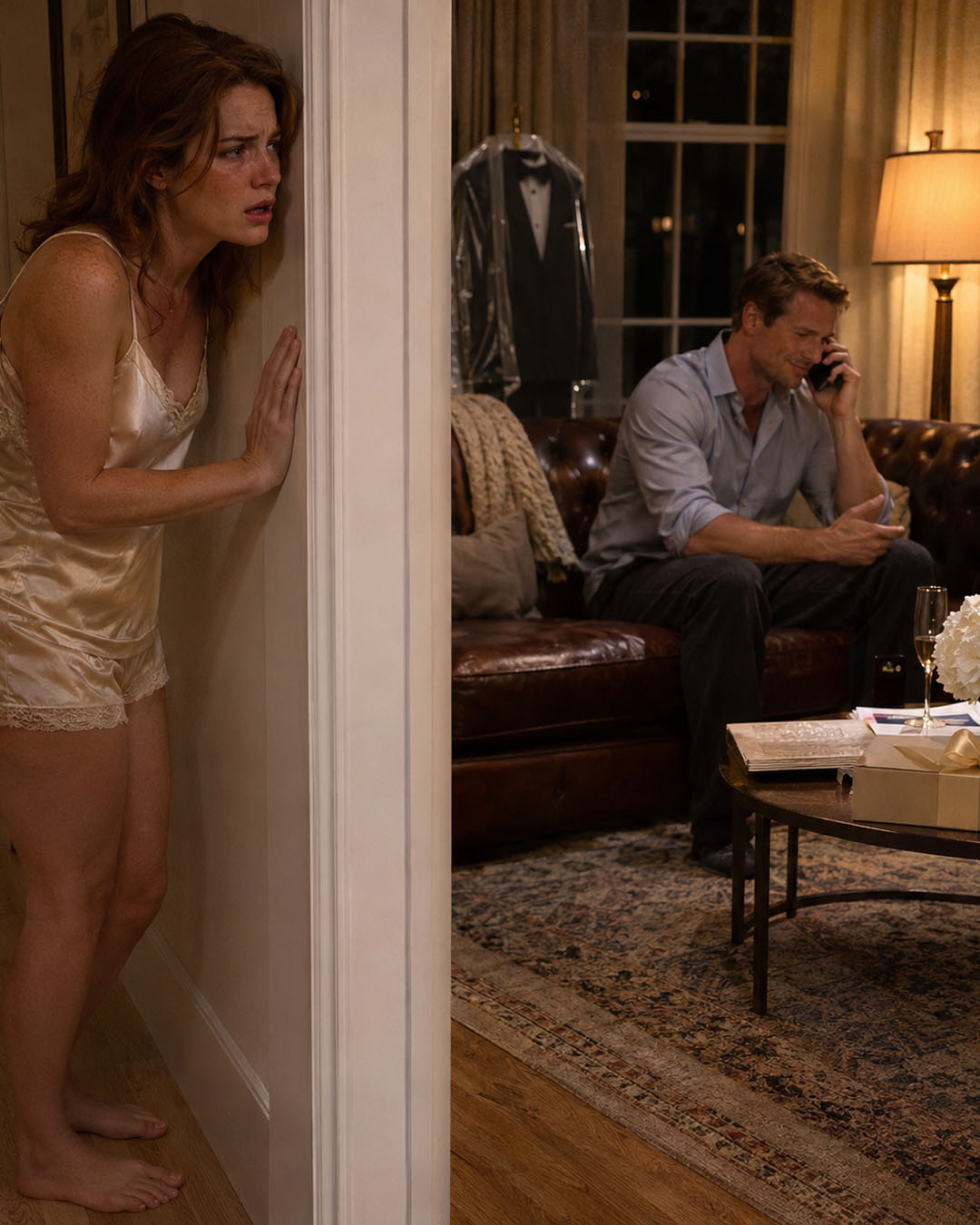
I held the coffee pot halfway over my mug when I heard my daughter-in-law call me a parasite. Three women laughed in my living room, unaware that I could hear every word. I didn’t confront them. Instead, I walked into my office, locked the door, and opened a spreadsheet that would change all our lives.
### Part 1: A Cruel Lunchtime Insult Finally Forces Me to Count Everything
My name is Pamela Reynolds. I’m 63 years old, a widow, and I’ve worked as an independent financial consultant for 26 years. My late husband, Gary, and I bought our four-bedroom house in Burlington, Ontario, in 1994, and we paid off the mortgage shortly before he died. For three years, I’d allowed our son Corey and his wife, Taylor, to live there rent-free so they could save for a home of their own.
I had asked for only two things: respect my space and cover their personal expenses. Corey, an engineer, agreed immediately, and Taylor hugged me as though I’d handed her the keys to paradise. But somewhere between their first moving box and their third anniversary under my roof, gratitude disappeared. Taylor began treating my home like her private residence and me like an inconvenient employee who refused to retire.
Because I worked from the back bedroom instead of commuting to an office, Taylor assumed I did nothing. She would pass my doorway while I reviewed retirement portfolios for Andrews Partners and private clients, glance at my computer, and announce that it must be wonderful having so much free time. Laundry baskets appeared outside my door, followed by grocery lists filled with almond milk, organic berries, collagen water, and expensive snacks I never touched. I bought everything anyway because Corey seemed happy, and after losing Gary, I couldn’t bear another fracture in our little family.
Then came that Tuesday in October. Taylor had invited three friends over for lunch, and I heard Ashley ask whether living with her mother-in-law was difficult. Taylor laughed and said, “Exhausting. She sits in that room all day doing absolutely nothing, while Corey and I actually work. Honestly, she’s basically a parasite living off this house.” Her friends chuckled, and I stood frozen beside the kitchen counter, the hot coffee pot pressing against my palm.
A parasite. In the house I owned, where I paid the property taxes, electricity, gas, insurance, maintenance, and nearly every household expense. I’d even kept Corey and Taylor on my family phone plan without mentioning the bill. I looked toward Gary’s photograph above the fireplace and wondered what he would have said if he’d heard our son’s wife describe me that way.
Instead of marching into the living room, I poured my coffee and returned to my study. I locked the door, opened my banking records, and examined three years of expenses with the same attention I gave my clients’ portfolios. By midnight, I knew exactly how much generosity had cost me, and I understood that the problem wasn’t money. It was that I’d made their comfortable life so effortless they no longer recognized who was providing it.
The following morning, I changed our internet arrangement. My work devices remained on the high-speed connection, while the rest of the house received a basic guest network. I then bought a compact refrigerator from Canadian Tire, placed it beneath my desk, and stocked it with yogurt, cheese, oat milk, and the good butter I loved. My groceries disappeared from the shared kitchen, and my pantry supplies moved into a cabinet with a lock.
Taylor noticed the internet first. “The Wi-Fi is practically dead,” she complained from the sofa. “I can’t even stream my workout.” I explained that my business required reliable service and suggested she open an account for herself and Corey. When she protested that they lived there, I answered, “Yes, and you’re both employed adults.”
By Friday, she had discovered the empty refrigerator shelves. She appeared at my office door demanding to know where her salads and almond milk had gone. “I decided a woman who does nothing all day shouldn’t be responsible for feeding two working adults,” I replied. Her expression changed instantly, and for the first time, Taylor understood that I’d heard what she’d said.
That evening, Corey begged me to restore everything because Taylor was upset. When I reminded him that they earned two good salaries and paid no rent, he shifted uncomfortably in his work boots. “Mom, please. You know how she gets. Can’t you just keep the peace?” I stared at my son and realized he wasn’t asking Taylor to respect me. He was asking me to absorb her cruelty so he wouldn’t have to confront it.
After he left, I opened a property website and searched the Toronto waterfront. One listing stopped me: a bright condominium with enormous windows overlooking Lake Ontario. I studied the photographs, then checked my investment accounts, including Gary’s insurance proceeds and the savings we’d accumulated over decades. For the first time since his funeral, I wasn’t thinking about preserving the life we’d shared.
I was imagining a different one.
### Part 2: A Quiet Move Turns My Daughter-in-Law’s Certainty Into a Trap
The following Tuesday, while Corey and Taylor were working, I visited the condominium. Sunlight flooded the empty living room, and beyond the glass, Lake Ontario stretched toward the horizon. There was a concierge downstairs, a rooftop terrace, a gym, and a saltwater pool. I stood beside the balcony doors, listening to the silence, and felt something loosen inside my chest.
I had spent so long making everyone else comfortable that I’d forgotten what it felt like to want something for myself. I sat with the listing agent and made a cash offer, using investments Gary and I had carefully built over our marriage. My lawyer arranged the paperwork, and closing was scheduled for less than three weeks later. When I returned home, Taylor glanced at my shopping bag and sneered, “Nice to see someone still has money to waste while we’re living on takeout.”
“Just managing a few investments,” I answered, slipping the condominium documents into my bedroom drawer.
When the keys were finally mine, I began moving quietly. A discreet moving company collected boxes during business hours, carrying my books, business files, jewelry, clothes, and the photo albums Gary had carefully labeled. His old Toronto Maple Leafs jersey went into a separate garment bag because I couldn’t bear the thought of it getting damaged. Within a week, most of my bedroom and study had emptied, but Taylor was too occupied with her own plans to notice.
One evening, she dropped several glossy renovation magazines onto the kitchen island. “Corey and I have decided these oak cabinets need replacing,” she announced, spreading photographs of expensive white kitchens across the counter. “I’ve already called someone for an estimate.” When I asked who intended to pay, she looked genuinely offended and explained that renovating my house was obviously my responsibility.
“It’s an investment, Pamela. Besides, you have money sitting around doing nothing.”
I stirred my tea and studied the photographs. “I’ve already made my investments this year,” I said. “The cabinets stay.” Taylor slammed the magazines together and marched upstairs, muttering about how impossible I was. I watched her go, knowing she was planning improvements to a home she’d never owned and would soon have to leave.
The following Sunday, Corey invited me to dinner in what he clearly hoped would be a reconciliation. Taylor had arranged takeout sushi on our dining table and sat opposite me with her arms folded. After ten uncomfortable minutes, Corey asked whether we could stop fighting and return things to normal. I told him I wasn’t fighting anyone, and Taylor dropped her chopsticks hard enough to make the plates rattle.
“You’re being selfish,” she snapped. “You cut our internet, hide food in your office, and refuse to help make this place livable.” I put down my salmon roll and looked directly into her eyes. “You told your friends I was a parasite. I’ve simply stopped providing the things you apparently believed appeared without anyone paying for them.” Corey murmured that she’d never meant it that way, but Taylor immediately interrupted him.
“I meant exactly what I said. She works from home. She has time to do everything!”
I carried my plate to the kitchen without responding. There was no point debating the value of my work with someone who had decided my time belonged to her. Instead, the following Wednesday, I met with a realtor named Dawn, who walked through the house admiring the hardwood floors, the mature trees, and the updates Gary and I had paid for. She believed we could attract serious offers quickly and suggested an open house.
I agreed, then arranged to finish clearing my belongings before the photographer arrived.
That evening, Corey found a tower of labeled boxes in the garage and asked whether I was moving. “Just clearing thirty years of accumulated things,” I told him, pressing a strip of tape across another carton. He seemed relieved and remarked that Taylor had been complaining about the clutter. I almost told him everything, but then he added that she’d been looking at new kitchen fixtures, apparently convinced I would eventually change my mind.
I watched him walk away and thought about how often he’d mistaken silence for agreement. I’d raised him to be thoughtful, but somewhere along the way, he’d learned that avoiding conflict was easier than doing the right thing. The realization hurt more than Taylor’s insults because he was the child I’d carried, protected, and taught to tell the truth.
On Saturday, while I was finishing a client’s report, someone opened my office door without knocking. Taylor stood in the doorway, holding an envelope addressed to me. The envelope had already been torn open, and the papers inside were shaking in her hands.
“Pamela,” she demanded, “what exactly have you done?”
### Part 3: One Opened Envelope Exposes the Future She Thought She Owned
I recognized the letter immediately. It was the welcome package from my condominium building, containing parking information and instructions for accessing the rooftop amenities. Taylor waved it toward me and demanded to know whether I’d secretly purchased an investment property. When I told her it was my new home, she laughed once, then stopped as she looked around my nearly empty study.
“Your new home? But you live here.”
“Not anymore,” I replied. “I’ve already moved most of my things. Tomorrow night, I’ll sleep there.”
Her gaze darted between the bare shelves and the empty closet. “You’re leaving us? Just like that?” I told her that leaving wasn’t the only change and that Dawn would be listing the Burlington house for sale. For several seconds, Taylor didn’t move, as though her mind refused to accept the words.
Then she began shouting. “You cannot sell this house! Where are we supposed to live? You promised we’d stay here until we saved enough!” I reminded her that I’d offered temporary help three years earlier, not permanent housing. When she insisted Corey had rights because he’d grown up there, I opened the drawer containing my property documents and placed the deed on my desk.
“There’s one name on that deed, Taylor. Pamela Reynolds.”
She grabbed her phone, dropped it, scrambled to retrieve it, and announced that Corey would stop me. I told her my lawyer would provide formal notice on Monday and that they would have approximately sixty days to arrange somewhere else to live. “You can’t do this to your son!” she screamed. I looked at the woman who’d called me a parasite and realized she still hadn’t asked whether I was happy about moving.
Monday morning, Dawn planted the For Sale sign in the lawn. By Wednesday, the photographer had completed the listing, and Taylor had discovered that keeping a house ready for prospective buyers required considerably more work than she imagined. She complained about strangers examining the bedrooms and blamed me when Dawn asked her to remove piles of clothing from the floor. I stayed at the condominium, where I could finish my client calls without hearing complaints through the walls.
The first open house brought an unexpected visitor. Dawn telephoned afterward, struggling to suppress a laugh, and told me Ashley had come through. The same Ashley who’d sat at my table while Taylor called me a parasite had found Taylor emerging from the upstairs bathroom in pajamas at two in the afternoon. Looking at the messy room, Ashley reportedly said, loudly enough for several visitors to hear, “I thought your mother-in-law did nothing all day. Looks like she was the one keeping this place together.”
I didn’t laugh. I sat beside my new living room window and let the words settle, wishing it hadn’t taken strangers walking through our home for someone to recognize the truth.
We received offers that weekend and accepted one on Monday, ten days after the sign appeared. The sale price exceeded my expectations, and my lawyer handled the closing arrangements. Taylor reacted by accusing me of destroying their future, while Corey stopped calling for several days. I knew he was angry, but I couldn’t keep sacrificing my remaining years to protect him from the consequences of his choices.
Three weeks before closing, the concierge called to say a young man was asking to visit. I told Winston to send my son upstairs. Corey entered still wearing his work coat, and his eyes moved from the lake view to Gary’s framed photograph on the console. He stood there for a long moment before taking a folded sheet of paper from his pocket.
“Mom, I finally looked at the bills.”
He’d discovered the household expenses I’d been covering: taxes, utilities, phone service, insurance contributions, Taylor’s gym membership, and other recurring payments she’d arranged through our shared household accounts. The total approached three thousand dollars a month. His hands trembled as he explained that he’d trusted Taylor to manage their budget and had never questioned why they seemed to have so much disposable income.
“She knew what you paid,” he whispered. “She told me everything was taken care of. And I let her call you a parasite.”
I touched his arm, remembering the little boy who used to bring me broken toys because he believed I could repair anything. “Corey, being afraid of an argument doesn’t excuse allowing someone to mistreat another person.” He nodded, wiping his eyes, and told me he’d confronted Taylor. She had accused me of manipulating him and demanded that he persuade me to cancel the sale.
Then he looked down at the paper again.
“There’s something else, Mom. The money we were supposed to be saving isn’t there.”
### Part 4: My Son Learns the Price of Silence Before We Part
Corey explained that Taylor had been moving money out of their down-payment account for personal purchases. She called the withdrawals temporary loans, but the statements showed a pattern stretching back months. Every time he asked where the money had gone, she reminded him that they still needed to save for a house and accused him of making her feel guilty. He had finally moved his paycheck into an account he controlled.
“I told her she has to apologize to you properly,” he said. “And if she refuses to take responsibility, I don’t know if our marriage can survive this.”
I wanted to tell him what to do, but Gary and I had raised Corey to make his own decisions. I offered him coffee instead, and we sat overlooking the lake while he described how ashamed he felt. When he finally left, he hugged me longer than he had in years. I closed the door and understood that our relationship might survive, but it would never again survive on pretending nothing was wrong.
The following Sunday, Winston called from the concierge desk. Taylor was downstairs, crying and insisting she was family. I told him I would meet her in the lobby, but she wasn’t to come upstairs. When the elevator opened, I found her sitting on a leather bench, mascara smeared beneath her eyes and both hands gripping her purse.
“Pamela, please,” she began, rising unsteadily. “Corey barely speaks to me. He’s moved his money, and the landlord in Hamilton wants the first and last month’s rent. We don’t have enough.” I asked what she had come to say to me, and she blinked. “I’m sorry you felt disrespected,” she answered.
“Try again.”
She blamed stress, then Ashley, then the pressure of saving money. I listened without interrupting before explaining that every apology she’d offered contained an excuse. For three years, I’d paid close to three thousand dollars monthly so they could build a future. That assistance was ending, including their phone arrangements and the insurance payments I’d been covering.
“You can’t abandon us now,” she whispered. “We’ll have nothing.”
“You’ll have two salaries,” I replied. “And you’ll have each other, if that’s what you both choose.”
She asked for a few more weeks in the Burlington house, but the buyers were taking possession at the end of the month. The property was sold, the legal arrangements were in place, and there was nothing left to negotiate. I returned to the elevator while she sat motionless on the bench, looking smaller than I’d ever seen her.
On moving day, I drove back to Burlington for the final inspection with Dawn. Corey was loading the last cartons into a rented van, and the house smelled faintly of cardboard and furniture polish. Without our possessions, the rooms seemed strangely unfamiliar. I wandered into the kitchen, where Gary had once danced with me while waiting for the kettle to boil, and rested my fingers against the oak cabinets Taylor had wanted replaced.
Taylor stood beside the island holding a ring of keys. She handed them over, then hesitated, staring at the floor. “I need to tell you something,” she said. “I knew you were paying for almost everything. I saw the bills. I told Corey not to worry about them because I wanted us to keep spending our own money.”
I didn’t move.
“And I called you a parasite because my friends kept asking why we were still living with you,” she continued, her voice breaking. “I wanted them to think we were helping you. I didn’t want them to know you were helping us.”
For a moment, the only sound was the refrigerator humming behind us. The confession hurt, but it also explained what had troubled me most: Taylor hadn’t simply misunderstood my work or overlooked my generosity. She had deliberately reversed the truth to protect her pride.
She wiped her eyes. “I’m sorry, Pamela. You paid for everything, and I made you feel worthless in your own home. There isn’t an excuse for what I did.”
It was the first apology she’d offered without blaming anyone else. I believed she meant it, but believing an apology didn’t require returning to the relationship that had made it necessary. “I accept your apology,” I told her. “But we aren’t going back to the way things were. You won’t be a guest in my home, and I won’t pretend we’re close.”
Taylor nodded, placed her empty hand against the countertop for a moment, then walked outside.
Corey was waiting on the front steps with an envelope. Inside was a check and a repayment schedule written in the precise block lettering he’d used since college. He’d calculated what he could reasonably return each month and proposed paying me four hundred dollars until he’d made up for years of expenses. “It might take twenty years, Mom,” he admitted.
“Then it takes twenty years.”
He looked surprised when I put the envelope in my purse. I explained that I wasn’t accepting it because I needed his money. I was accepting it because he needed to become someone who honored his responsibilities even when doing so was difficult. Then I told him my door would always be open to him, though Taylor would not be welcome in my home.
He embraced me on the lawn where he’d learned to ride a bicycle, and I felt the familiar ache of loving a child who’d become a man capable of disappointing me. But I also felt something else: the fragile beginning of respect between two adults who had finally stopped hiding behind old family roles. When he climbed into the van, I stepped back and watched him drive away.
Dawn approached with the final paperwork, and I handed her the last house key. Before leaving, I turned once more toward the windows Gary and I had washed every spring, the porch he’d repaired himself, and the maple tree we’d planted when Corey was born. I had loved that house, but loving something didn’t mean I had to remain inside it forever.
That evening, I drove along the lakeshore toward Toronto. Winston greeted me by name, and I rode upstairs to the condominium I’d chosen without anyone else’s approval. Gary’s photograph stood on the console, his old Leafs jersey hung safely in the closet, and my refrigerator contained exactly what I liked.
I poured a glass of Niagara Riesling and stepped onto the balcony. Below me, city lights shimmered against the dark water, and a cool breeze brushed my face. I thought of the years I’d spent trying to keep peace in a house where my generosity had become invisible.
Taylor had called me a parasite because I worked from home. Yet the moment I stopped supporting their lifestyle, she discovered how much of it depended on me.
I hadn’t sold the house to punish my son or his wife. I’d sold it because I’d finally understood that my remaining years belonged to me, too.
And when I locked my door that night, I wasn’t shutting out my family.
I was opening the rest of my life.
THE END.
All characters and events in this story are fictional, created for storytelling and entertainment purposes. Thank you sincerely for reading. Your feedback and support are invaluable and motivate me to continue sharing more stories with you.