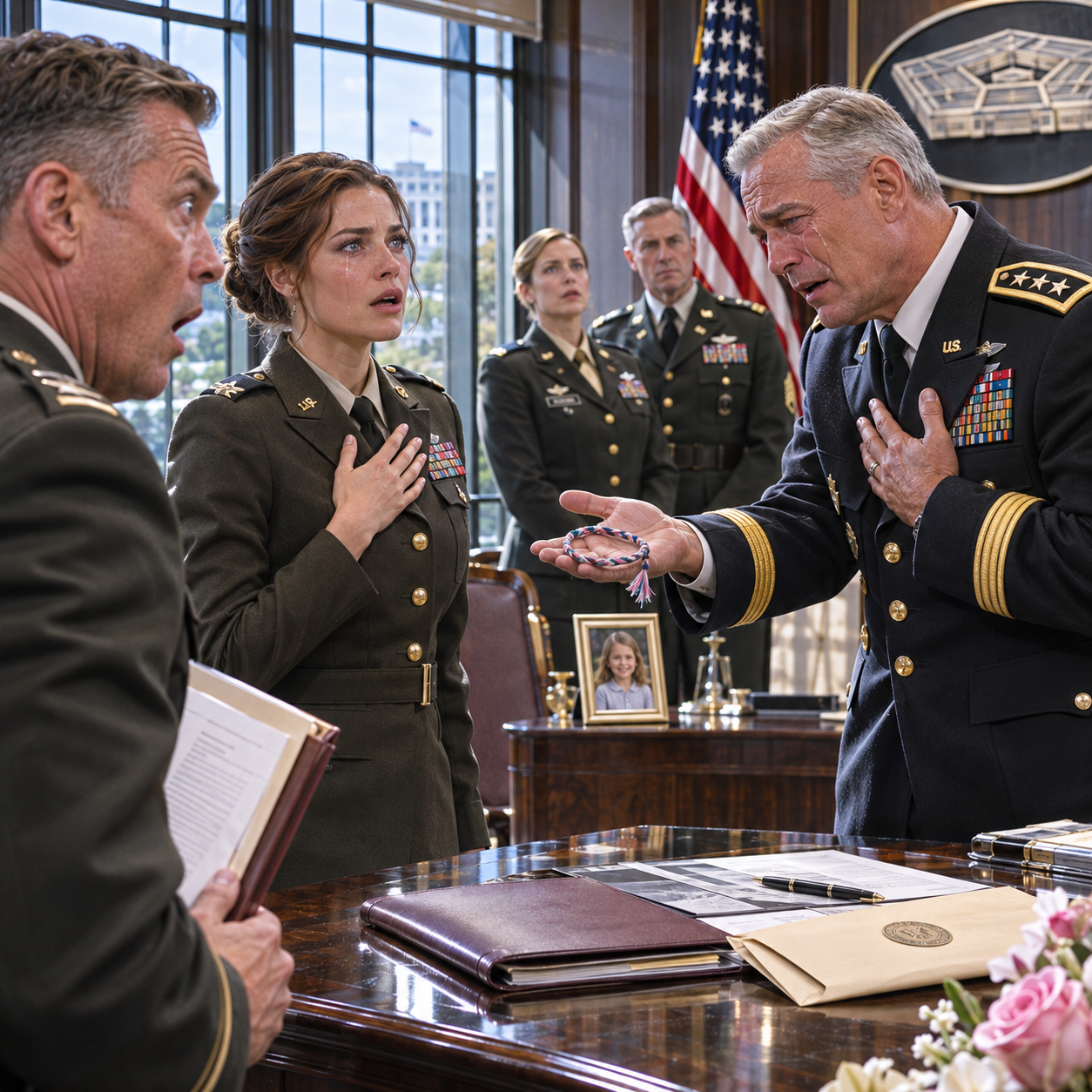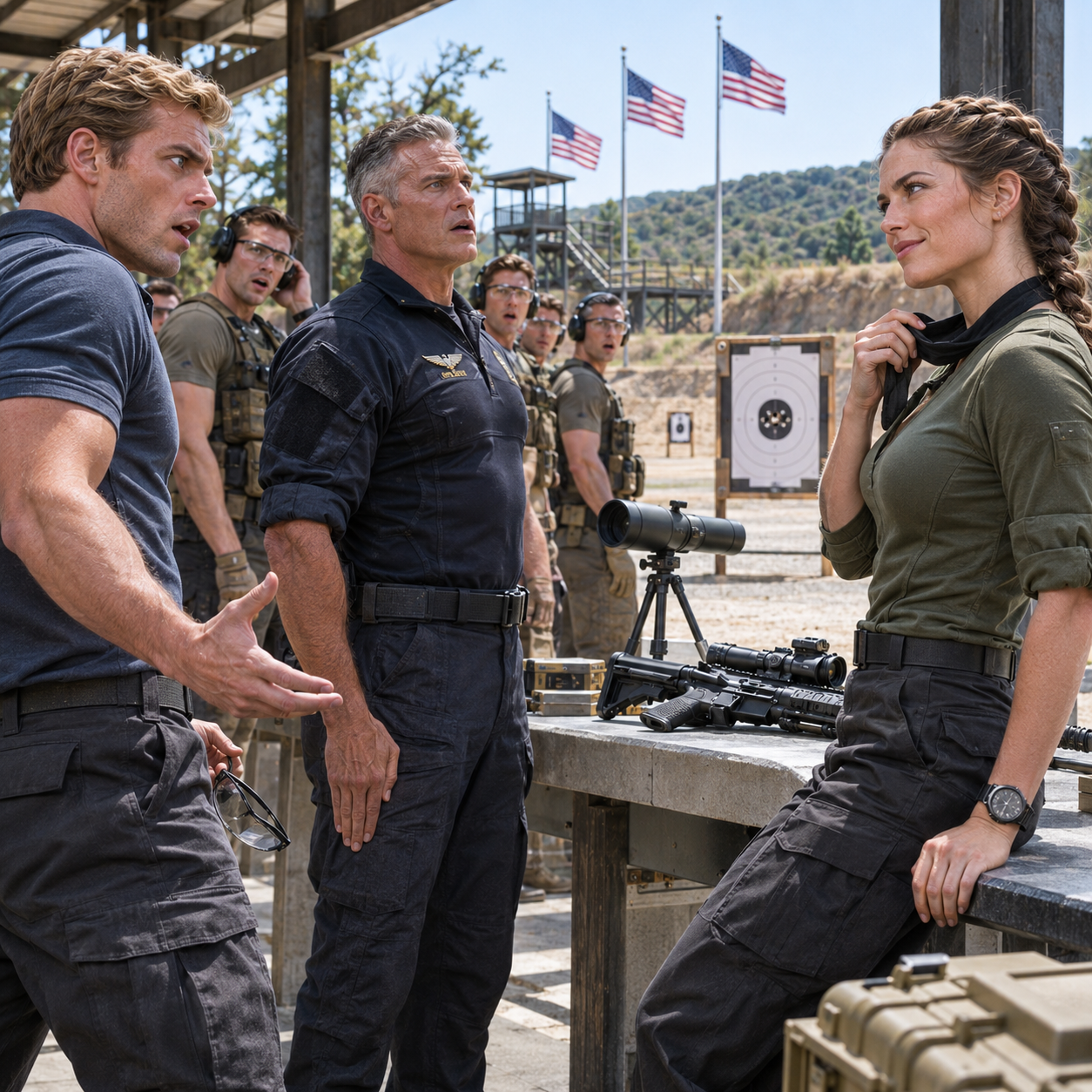
My Brother Smirked: “Cute Try, Sis. Leave It To Men.” I Field-Stripped The Rifle Blindfolded And Shot A Bullseye At 50 Yards. The Lead SEAL Instructor Snapped To Attention: “Commander… Is That You?” His Smile Instantly Vanished.
My brother laughed when I told him to stop pointing a rifle toward another person. “Guns aren’t for girls,” Kellan said, repeating the joke our father had encouraged for years. I didn’t argue, and our mother, as usual, pretended not to hear. At the range, an instructor from my Navy years recognized me, turning Kellan’s performance into a public reckoning. Two days later, an ordinary contracting review revealed something worse than his arrogance: a document carrying my signature, although I had never signed it.
Part 1
The first thing my brother brought to Sunday dinner was a rifle catalog. He laid it beside the cornbread, then spent twenty minutes describing a new position he expected to get with Vantage Shield Group, a defense contractor outside Richmond. My father, Walter, leaned forward, while my mother passed Kellan the best pieces of roast chicken. I sat at the far end of the table because nobody had asked what I’d done that week.
Kellan was twenty-seven and newly employed as a junior scheduling assistant. He called himself a tactical coordinator, although his daily work involved tracking shipments and assigning training-room reservations. Our parents never corrected him; they had spent his entire life translating small accomplishments into family legends. When I mentioned that his company’s upcoming federal contract might require verified experience, he grinned and said, “You wouldn’t understand, Sloane. Procurement is a different world from your little spreadsheets.”
I was forty-two and had spent sixteen years in the Navy before moving into civilian defense oversight six years earlier. My parents knew I had served. After I came home, I didn’t replace one set of titles with another; I bought a small brick house, learned to keep basil alive, and let them describe me as an office employee. Quiet wasn’t a disguise I wore for their benefit, but I noticed how conveniently they mistook it for a lack of substance.
At dessert, Kellan announced that he’d booked a Saturday session at Hawthorn Ridge, a private training range in the foothills. Two friends from Vantage were coming, and he’d arranged an extra guest pass because Mom worried I spent too many weekends alone. “It’ll be good for her to see something besides a computer,” he said, smiling across the table. I told him I could drive myself, but Dad laughed and said, “Let your brother show you how the real world works for once.”
My mother didn’t laugh; she folded a napkin into a narrow triangle and pushed it beneath her plate. For a moment I thought she’d challenge him. Instead she asked whether anyone wanted coffee. I accepted the invitation partly because I’d been meaning to visit the range and partly because I wanted to see if Kellan’s confidence survived contact with rules he couldn’t talk his way around.
Saturday arrived gray and humid, with the smell of wet pavement hanging over my driveway. Kellan pulled up in a gleaming black pickup, the passenger seat filled with energy drink cans and a jacket he insisted was military grade. He examined my jeans and worn sneakers before I’d closed the door. “Stay behind me today,” he said. “Guns aren’t for girls who panic when the printer jams.”
I watched the suburbs disappear behind us, wondering when teasing had hardened into something he needed me to believe. At sixteen, Kellan used to brag to his friends that his sister was somewhere overseas doing secret missions. By twenty-five, after two failed attempts at joining the service, he’d decided my career had been mostly paperwork. When I stopped defending it, he took my silence as confirmation and began using me as the punch line whenever he needed an audience.
Two hours later we turned onto a gravel road between stands of pine, passing a white sign that read HAWTHORN RIDGE TRAINING CENTER. The compound smelled of damp earth and machine oil, and distant reports echoed against the hills. Its posted safety rules were unusually clear, and I felt a small measure of relief. Kellan, apparently eager to impress the two men waiting by the parking lot, walked right past the sign without looking.
His friends, Brett and Owen, wore matching company caps and carried themselves like men with something to prove. Brett shook my hand politely; Owen asked whether I was there to take pictures. Kellan opened a case on the bench, displaying an expensive sporting rifle with an expensive sight. “Professional tools for professional people,” he said, then pointed at the painted boundary line. “Sloane, that’s where spectators stand.”
The range officer checked our reservation, reviewed the rules, and assigned us lane four. I stayed behind the marked line while Kellan fired at a paper target, each shot making him twitch more visibly than the one before. When the target returned, the holes were scattered far from the center. He blamed a strong crosswind, although the little red flags beside the lanes hung motionless, heavy with moisture, and both friends seemed reluctant to look at him.
“Those flags disagree,” I said, intending no more than a factual observation. Kellan spun toward me with the rifle still in his hands, and the barrel swept dangerously close to Brett before the range officer called a warning. “Keep it pointed downrange,” I said, my voice sharper than it had been all morning. Kellan set the rifle down hard enough to rattle the bench and announced that his sister had suddenly become an expert.
He offered me a public challenge: five shots at a target farther out, with Brett keeping score and Owen filming the embarrassment for our parents. I told him I wasn’t interested in being filmed, but he mistook that for fear and raised his voice until people at the next lane looked over. The door to the control building opened, and a broad-shouldered man with close-cropped silver hair walked toward us carrying a clipboard. His expression was irritated at first, then puzzled, and finally so still that I recognized him before he spoke.
“Hold the line,” he told the range officer, without taking his eyes off me. Kellan stepped forward to explain that he’d brought his inexperienced sister, but the man moved past him as though he were a folding chair. I hadn’t seen retired Master Chief Gideon Rusk in nearly seven years, not since a rain-soaked graduation ceremony when both of us had been too tired to celebrate. He stopped a few feet away and said, with unmistakable recognition and no trace of doubt, “Commander Merritt?”
Part 2
Kellan laughed because he thought the old man had made a mistake. “That’s Sloane,” he said, pointing at me. “She works in an office.” Gideon glanced at the rifle resting crookedly on the bench, then at the range officer. “An office is a place people work,” he said. “It’s not a measure of what they know.”
I shook his hand before he could say anything else. The last time we’d worked together, Gideon had been responsible for evaluating training standards across several naval units, and I had chaired the team that revised their qualification framework. We hadn’t seen each other since I left active duty, although every Christmas he mailed a card with a badly drawn ship on the envelope. “I’m here with family,” I told him. His eyes shifted toward Kellan, and I watched the connection form without his needing an explanation.
Gideon asked the range officer to confirm the line was safe, then drew us away from the active lanes to a covered seating area. He had no patience for shouting near firearms, especially when the shouting came from someone who’d ignored a direct warning. Kellan followed with an embarrassed grin, still waiting for the conversation to become a misunderstanding he could correct. Brett stayed behind to put their equipment away; Owen lowered his phone and deleted the video he’d started recording.
“I remember Commander Merritt,” Gideon said after everyone had settled. “She was the officer who asked why a training assessment rewarded speed but ignored judgment, and then spent a year fixing the problem.” He gave me a look I remembered from late-night meetings. “Some of us were irritated with her at first. Then we saw fewer people making careless decisions under pressure.”
Kellan glanced at my jeans as though the fabric itself should disprove what he was hearing. “You were actually a commander?” he asked. “I thought you were support staff.” I explained that I’d commanded a training detachment and later helped develop standards used by naval instructors, but that my present job was civilian procurement compliance. He opened his mouth, closed it, and finally said, “Why didn’t you ever tell us?”
I thought of a photograph my mother had left facedown on her piano after one of my promotions, and of Dad asking whether command meant I’d finally get a proper salary. They’d attended my retirement ceremony, although Kellan left early for a friend’s birthday and neither parent remembered the admiral’s name. “I did,” I said. “You didn’t ask enough questions to hear the answers.” Gideon looked away, giving us the privacy of not watching that land.
Kellan might have apologized if Brett hadn’t returned with an awkward smile. Instead he straightened, pointed toward the targets, and said the original challenge should still count. I could see what he wanted: a way to reduce the conversation to a contest and recover something tangible in front of his friends. Gideon asked whether I was willing, and I agreed on the condition that nobody filmed and the range officer supervised everything. Kellan nodded so quickly it was almost painful.
Back on lane four, I used the equipment Gideon approved, listened to the range officer’s instructions, and waited until the lane was clear. The five reports came close together, each one familiar in a way that tightened a quiet place beneath my ribs. Years of service had taught me not to confuse familiarity with pleasure; some sounds belonged to memories I never wanted to revisit. When the paper target rolled back, its center held five closely clustered holes, and nobody needed to announce who’d won.
Gideon studied the target, then placed it faceup on the bench without commentary. Brett let out a low breath and said, “That explains a few things,” while Owen looked at Kellan with open concern rather than amusement. My brother stared at the grouping and then at me, searching for the pride he’d expected to find on my face. What he found was exhaustion; I had never wanted to embarrass him, only to stop him from treating caution as weakness.
We packed in silence, interrupted when Gideon noticed the Vantage Shield logo stitched onto Brett’s cap. He asked whether their company was competing for the regional training-support contract, a public solicitation posted weeks earlier. Brett said yes and mentioned that Kellan was being considered for a field liaison role on the proposed team. “That position requires documented operational experience,” Gideon said, his voice neutral. “They verify every named candidate.”
Kellan spoke before anyone could answer. “I have the background,” he said, too loudly. “My manager reviewed the qualifications personally.” I remembered his dinner-table story about instructor deployments, which had grown more elaborate every time he told it, and watched him pick at the label on his water bottle. Gideon didn’t challenge him; he only explained that he provided training advice to the facility, not assessments of a contractor’s employees. If Vantage had problems with its submission, someone else would handle them.
In the truck, Kellan asked whether I could introduce him to people who might help his application. I told him my office had oversight responsibilities related to the solicitation and that any personal connection would require a disclosure and recusal. “So you’re going to get me rejected because you’re embarrassed?” he said. “No,” I answered. “The review is supposed to be independent of both of us.” He drove faster, then slowed when he noticed a state trooper parked beside the highway.
At home I found three missed calls from Mom and a text from Dad: DON’T HUMILIATE YOUR BROTHER OVER A HOBBY. I set the phone aside and watered my basil, trying to decide whether the day’s ugliness had ended at the range. On Monday morning, the contracting team received Vantage’s staffing documents, and the intake clerk forwarded a cover sheet that contained my name as a professional reference. Attached to it was a signed endorsement letter, allegedly written by me eight months earlier, describing service Kellan had never performed.
Part 3
The letter appeared on official-looking stationery, with my former rank below a signature I recognized immediately. Someone had lifted the signature from an old training memorandum. Beneath it, a paragraph claimed I’d personally supervised Kellan during two overseas training rotations and approved him to advise specialized military teams. I had never served beside my brother, and I had certainly never recommended him for a job.
For nearly a minute I sat listening to the building’s air conditioner knock against its metal housing. The intake clerk, Thomas, had sent the cover sheet to me only because the reference shared my name, not because he knew Kellan was my brother. I called our ethics officer, Marin Cho, before opening another attachment and explained both the personal relationship and the unauthorized letter. She told me to preserve the notification, forward it through our secure reporting channel, and take no part in evaluating Vantage’s submission.
I wrote my disclosure: the relevant facts, the dates, and nothing I couldn’t verify. Marin assigned an independent reviewer from another division, and my supervisor removed me from every decision involving the bid. I asked whether I should contact the company about the forged signature; she said no, because Vantage needed to receive any questions through the contracting officer. Being careful wasn’t a favor to Kellan, but a protection for the review and everyone caught inside it.
By lunch my phone had collected messages from three family members. Mom wanted to know whether Gideon had exaggerated my military career; Dad wondered why I hadn’t told them I was connected to the contract; Kellan sent a photograph of the target with the caption, HAPPY NOW? None of them asked about the rifle pointing toward Brett’s leg. I answered only Mom, explaining that the matter was professional and I couldn’t discuss it, and she replied, “He’s your only brother.”
That evening I unlocked a cedar trunk in my hallway closet and looked for the memorandum I’d signed years earlier. Inside were retirement cards, a photograph of my first ship, and a notebook with water-warped pages from an assignment I rarely mentioned. The signature on the scanned endorsement matched the one on my old memorandum almost perfectly, including an accidental ink blot near the letter M. Only a copy could have produced that imperfection, and the original had spent time in my parents’ house after a pipe burst in my apartment during my final deployment.
I remembered bringing the trunk home from their garage, surprised that Dad had placed a few documents in clear protective sleeves. I thought he’d finally become curious about my career, and I even thanked him for keeping everything dry. Now I found a photograph of the commendation ceremony tucked beneath the notebook, its edge cut unevenly where someone had trimmed away the names of the other officers. I stared at it until the kitchen clock sounded unnaturally loud, then put everything back without deciding what it meant.
The next morning Marin asked me to give a written statement confirming that I hadn’t authored the endorsement or participated in Kellan’s claimed assignments. She didn’t reveal the contents of the full staffing packet, but she said the independent team had identified discrepancies that required formal verification. Records available to the reviewer showed no military service matching his declared history, and several dates overlapped with ordinary civilian employment. The question was no longer whether Kellan had exaggerated at dinner; someone had certified a professional history that didn’t exist.
I met Marin in a conference room whose windows faced a loading dock. She asked whether anyone outside government service might have retained examples of my signature and whether I had authorized any family member to use my military credentials. “My parents stored some papers for me,” I said, realizing how little I knew about what they’d copied. Marin wrote that down and reminded me not to conduct my own investigation, especially not by questioning relatives who might become witnesses.
On Wednesday, Vantage received a notice identifying unsupported personnel qualifications and requesting an explanation before further consideration of its proposed staffing. Kellan called within an hour, shouting that I’d ruined his promotion because I couldn’t stand to see him succeed. I was standing in a grocery-store freezer aisle, holding a bag of peas. “I reported a letter with my name on it that I never wrote,” I told him. “Someone else is verifying the rest.”
“You could have let it go,” he said, and his voice broke on the final word. I asked who had prepared his packet, but he refused to answer and accused me of setting a trap at Hawthorn Ridge. Then he said something I hadn’t expected: “Dad told me you’d understand once you saw what I was trying to build.” Before I could ask what he meant, he ended the call, leaving me beside the frozen vegetables with my fingers numb against the bag.
I drove home instead of going to our parents’ scheduled Wednesday dinner. There was a message on my answering machine from Dad, saying Kellan had always struggled to find his place and I needed to remember who’d supported me when I was young. I replayed it once, thinking of the years I had paid my own rent, the deployments they rarely discussed, and the family occasions they’d asked me to skip because Kellan needed encouragement. The worst part wasn’t his accusation; it was how naturally Dad expected my work to become a resource for his son.
At seven, Marin called to confirm that the endorsement had been submitted as part of Vantage’s official staffing materials. Investigators had requested the supporting correspondence from the company and obtained an email thread showing that the document existed before the range incident, removing any question of retaliation after Saturday. A forwarded attachment appeared in the thread with the subject line SLOANE SERVICE PAPERS, and Marin asked me to verify whether an address looked familiar. I recognized the address almost immediately: it belonged to my father.
Part 4
I had barely slept when Dad appeared on my porch Thursday morning carrying a foil-covered casserole. Mom stood behind him, holding her purse with both hands, and I knew before opening the door that the food was an excuse. Dad stepped inside without waiting for an invitation and announced that Kellan had been temporarily removed from Vantage’s proposed contract team. “It’s an administrative misunderstanding,” he said. “You work in administration, so you ought to know how to fix it.”
I told them the review was independent and that they shouldn’t discuss evidence with me. Dad placed the casserole on my kitchen counter and asked whether I’d at least withdraw my complaint about the signature. “You can’t withdraw the fact that I didn’t write the letter,” I said. Mom inspected the dry leaves on my basil plant, avoiding my eyes as carefully as she had at Sunday dinner. When I asked whether she’d known about the letter before Monday, she began to cry.
Dad interrupted before she could answer. He admitted he’d sent Kellan copies of my Navy papers after a Vantage hiring manager asked for evidence that someone in the family had military experience. “He needed a reference, Sloane,” Dad said. “I thought your reputation could help him get a chance, the way families are supposed to help.” I reminded him that a reference meant an honest account of someone’s actual work, not permission to borrow another person’s history.
Mom finally spoke, her voice small but clear. “Your father showed me the drafts, and I told him they sounded too impressive, but Kellan was excited for the first time in years.” She insisted she hadn’t seen the final signature, although she’d watched Dad scan my training memorandum and send it to the contractor. I asked why neither of them had called me. Dad said he expected me to refuse, and the certainty of that answer hurt more than anything he’d shouted.
For a few seconds nobody moved; I could hear the dishwasher finishing its cycle behind us. Dad pointed out that he’d helped pay for my first college textbooks, then described every sacrifice he’d made raising two children as though he were presenting invoices for reimbursement. I remembered the birthday dinners they’d postponed, the deployment homecomings they’d missed, and the months when Mom told me not to visit because Kellan was struggling. “You knew I would say no because you knew it was wrong,” I said, and he had no answer.
I didn’t question them further about the documents. I asked them to leave, sent Marin a factual account of their uninvited visit, and offered to provide the original memorandum through the appropriate process. Dad called from the driveway, saying family problems should stay within the family. The screen door rattled shut behind him, and I stood staring at the casserole until its warm smell turned my stomach. I threw it away without lifting the foil.
The independent review continued while I handled other contracts, an ordinary week that felt strangely distant from my own life. Marin asked for an image of my signature and arranged for another official to secure the original papers as evidence. She told me Vantage had supplied additional communications voluntarily after receiving notice of the discrepancies, including messages from its staffing director, Celia Stroud. I was not permitted to read them, and for once I was grateful to have a professional boundary I couldn’t cross. My colleagues saw me moving between meetings with a chipped coffee mug, unaware that every ordinary message from home now made me check the sender before I opened it.
On Friday, Kellan came to my house wearing the same company cap he’d worn at the range. He looked smaller without his rehearsed swagger, but his anger was intact, and he demanded to know whether Dad had turned against him. I said I couldn’t discuss the inquiry; then he blurted out that Celia had assembled his qualifications from a questionnaire he’d completed months earlier. “I told her I’d never served,” he said. “She said the bid needed people who sounded like they belonged in the field.”
I asked whether he’d signed the final submission, a question about his own conduct rather than evidence I’d been assigned to examine. He nodded and added that he’d told himself the company would correct everything before the government reviewed it. “But you used those claims at dinner,” I said, remembering his stories about overseas assignments. He looked down at his shoes. “People believed me,” he answered, as though that had once made the stories true.
I told him to speak to the independent investigators and obtain advice from someone qualified to represent his interests. He asked whether I still considered him my brother, and I said our relationship wasn’t something he could use to bargain away responsibility. His jaw tightened, and for an instant I saw the old Kellan preparing an insult. Instead he walked down the steps and drove away without saying goodbye, leaving a streak of mud where his truck had crossed my lawn.
The following Tuesday, Marin called with a limited update because the investigation involved unauthorized use of my name. The reviewers had found unsupported experience claims in several other proposed employee profiles, all linked to templates maintained by Celia’s department. Vantage had withdrawn its staffing submission while an independent contracting authority examined the firm’s eligibility and internal controls. Kellan’s application had not been an isolated mistake; it was the easiest loose thread to pull from a practice that had already been normalized.
Then Marin explained why she wanted me to preserve every old document in my possession. The same endorsement bearing my signature had been reused in two earlier proposals, both submitted before Kellan’s supposed promotion became public. Each presented me as someone who could personally vouch for qualifications I had never examined. My brother’s need to appear important hadn’t merely borrowed my career; it had given other people a convenient way to put my name behind their stories.
Part 5
The government did not announce its findings with the drama my family seemed to expect. Six weeks after Hawthorn Ridge, an independent contracting official notified Vantage that its withdrawn proposal would not be considered for award, and the matter was referred for further administrative examination. Marin later confirmed that the use of my name had been substantiated and that I remained excluded from every decision about the company. Nobody asked me to recommend a punishment, which was exactly how the process should have worked.
Vantage’s own inquiry traced the documents from Dad’s scanned papers to Kellan’s application and then to templates controlled by Celia Stroud. The company dismissed Celia, revised its hiring controls, and began rechecking qualifications listed on other submissions. Kellan was removed from the proposed field role and suspended from his ordinary position while Vantage reviewed his signed statements. The investigators didn’t treat him as an innocent bystander simply because a manager had encouraged him; he had repeated the false claims when nobody required him to.
The most troubling discovery came from another applicant, a veteran named Corinne Hale, who contacted the contracting oversight office after learning that her legitimate experience had been omitted from a staffing roster. I didn’t see her complaint, but the public notice of Vantage’s corrective measures mentioned improperly substituted personnel histories. Someone qualified had been pushed aside while my brother posed as the person she actually was. In a local newspaper interview, Corinne described turning down another opportunity because Vantage had promised her a position it never intended to fill. The damage wasn’t theoretical anymore, and it didn’t disappear just because Kellan regretted being caught.
Dad stopped leaving angry messages after investigators requested copies of his correspondence. Mom continued sending short texts about church, groceries, and the weather, as though a normal conversation might grow over the place where an apology belonged. One afternoon she wrote, “We’re proud of what you’ve accomplished, sweetheart,” and I looked at the screen for a long time. The sentence might have meant something at my promotion ceremony; now it felt like praise offered only because other people had finally supplied proof.
Three months after the range trip, Kellan called from a number I didn’t recognize. Vantage had terminated his employment, he said, and he’d taken an inventory position at a freight warehouse near the interstate. The shifts began before sunrise, the work left his shoulders sore, and none of his coworkers cared about his old contractor title. He asked to meet for coffee, not at our parents’ house, and I agreed to forty minutes at a diner halfway between us.
He arrived early, wearing plain work clothes and carrying a folded envelope that he left untouched beside his cup. His hands were rougher than I remembered, with a fresh scrape along one knuckle, and he looked embarrassed when the waitress called him honey. “I’m sorry I pointed the rifle near Brett,” he said before I could ask what he wanted. “I’m sorry I lied about the service, and I’m sorry I let them put your name on that letter.”
I believed he was sorry, but I wanted to know whether he understood what he’d done before consequences made regret unavoidable. He admitted he’d seen my service records in Dad’s garage years earlier and had been ashamed by how much they impressed him. “I told myself your career was just luck because it was easier than admitting how hard you’d worked,” he said. “Then Celia offered me a better title, and I thought I could become that person on paper first.”
I told him the papers belonged to real people and real responsibilities, not an identity he could try on until it fit. He listened without interrupting, which was new, then slid the envelope toward me. Inside was a handwritten apology with no request for a favor and no demand that I convince anyone to restore his reputation. I thanked him for writing it, but when he asked whether we could go back to Sunday dinners, I told him no.
“I don’t hate you,” I said, watching a delivery truck move slowly past the window. “But I don’t trust you, and I’m not ready to build a relationship around pretending none of this happened.” Kellan folded his hands and nodded, looking at the untouched second half of his sandwich. We left separately, and I felt no rush of triumph as I drove home. The boundary hurt, but it belonged to me.
My parents never accepted that distinction. Dad sent a birthday card saying everyone made mistakes, without naming his own, and Mom asked whether I intended to punish the family forever. I mailed back their spare house key and stopped attending dinners where I was expected to make myself smaller so Kellan could feel important. I didn’t announce a permanent estrangement or set conditions they could perform for an audience. I simply stopped making room for excuses in my life.
That fall, Gideon invited me to speak at a career program for women leaving military service. Most participants wanted practical advice about translating experience into civilian qualifications, and I spent more time discussing resumes and professional references than anything that happened at the range. Afterward, a young veteran told me her family considered her new office job a disappointment compared with her uniform. I suggested she measure the work by the responsibility it carried, not by whether relatives recognized the title.
Six months after Hawthorn Ridge, I drove past the freight warehouse on my way to a meeting and saw Kellan outside helping a coworker maneuver a heavy cart. I didn’t pull over or call, and I didn’t need to know whether his modest new routine would eventually change him. At home, the basil on my kitchen windowsill was growing again, its leaves bright in the late afternoon sun. I had spent years believing silence kept peace in my family; now I understood that sometimes peace begins when you stop offering your silence to people who misuse it.
THE END!
Disclaimer: Our stories are inspired by real-life events but are carefully rewritten for entertainment. Any resemblance to actual people or situations is purely coincidental.