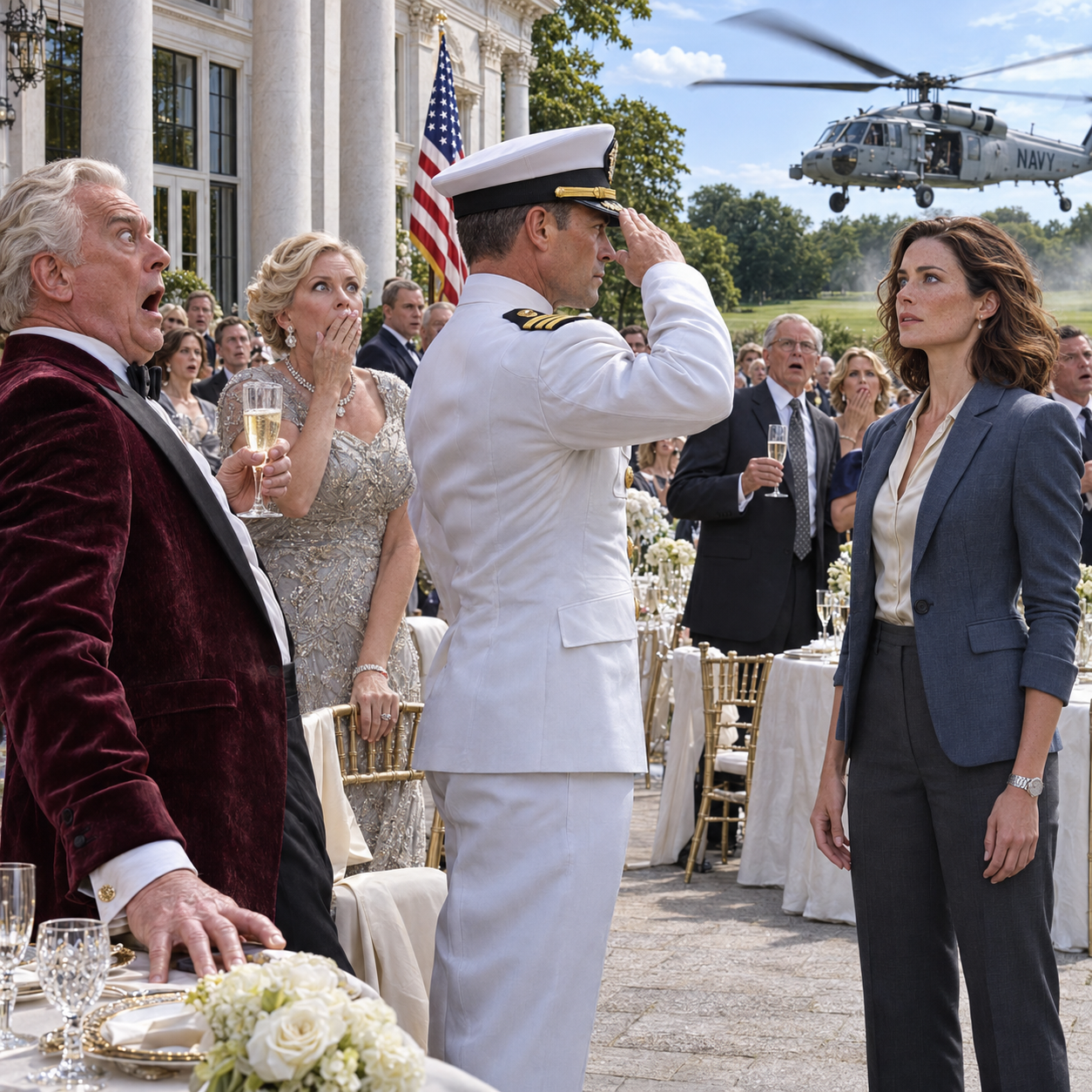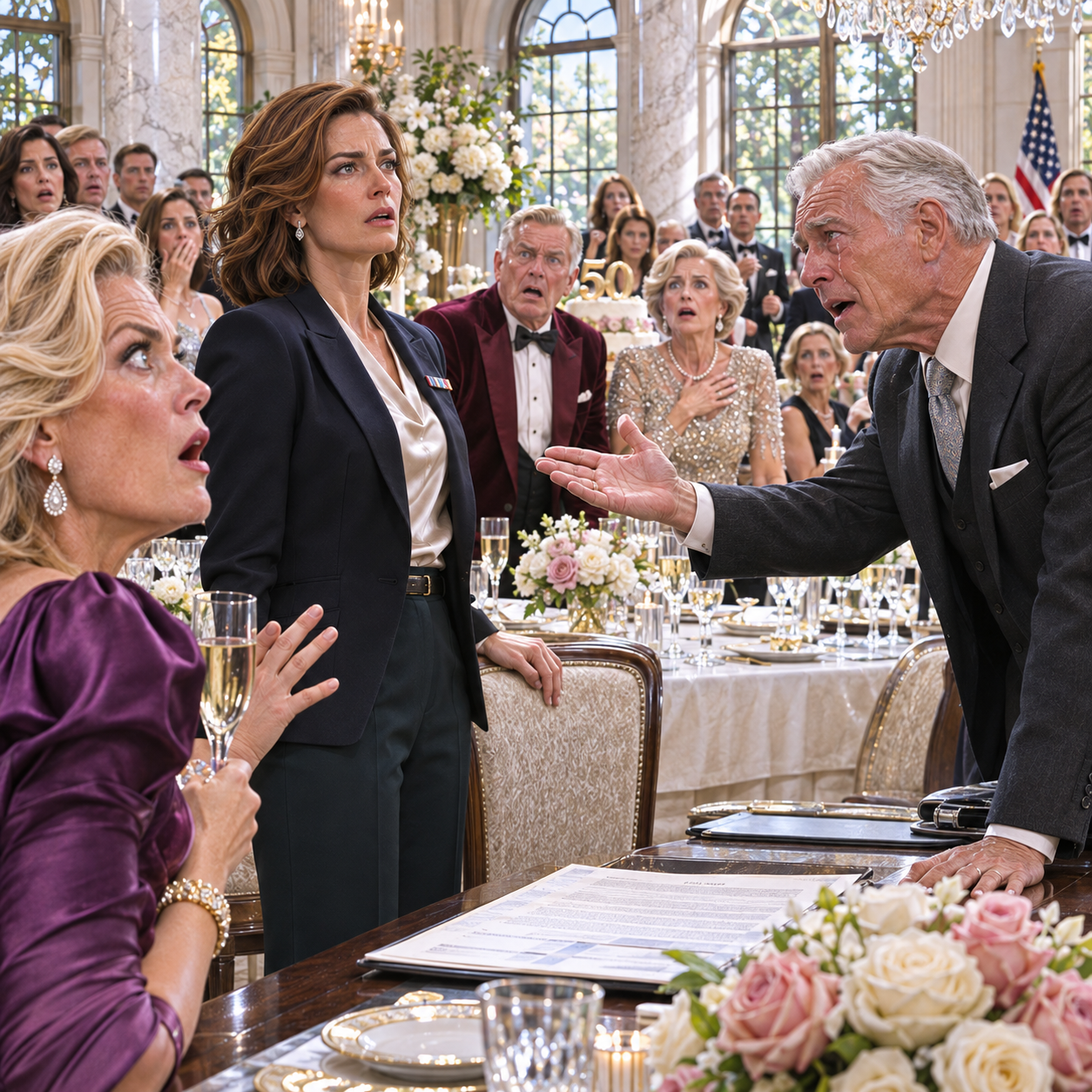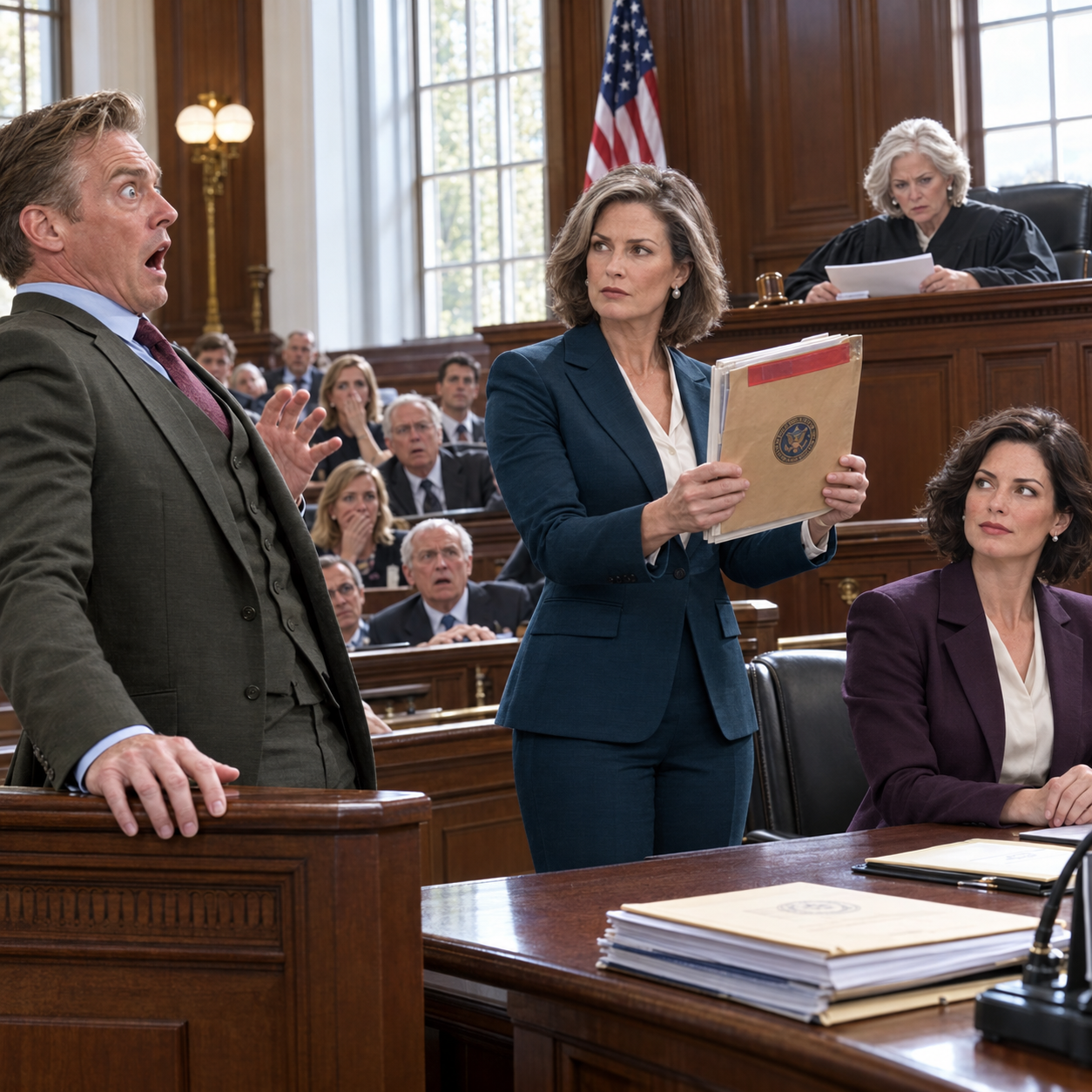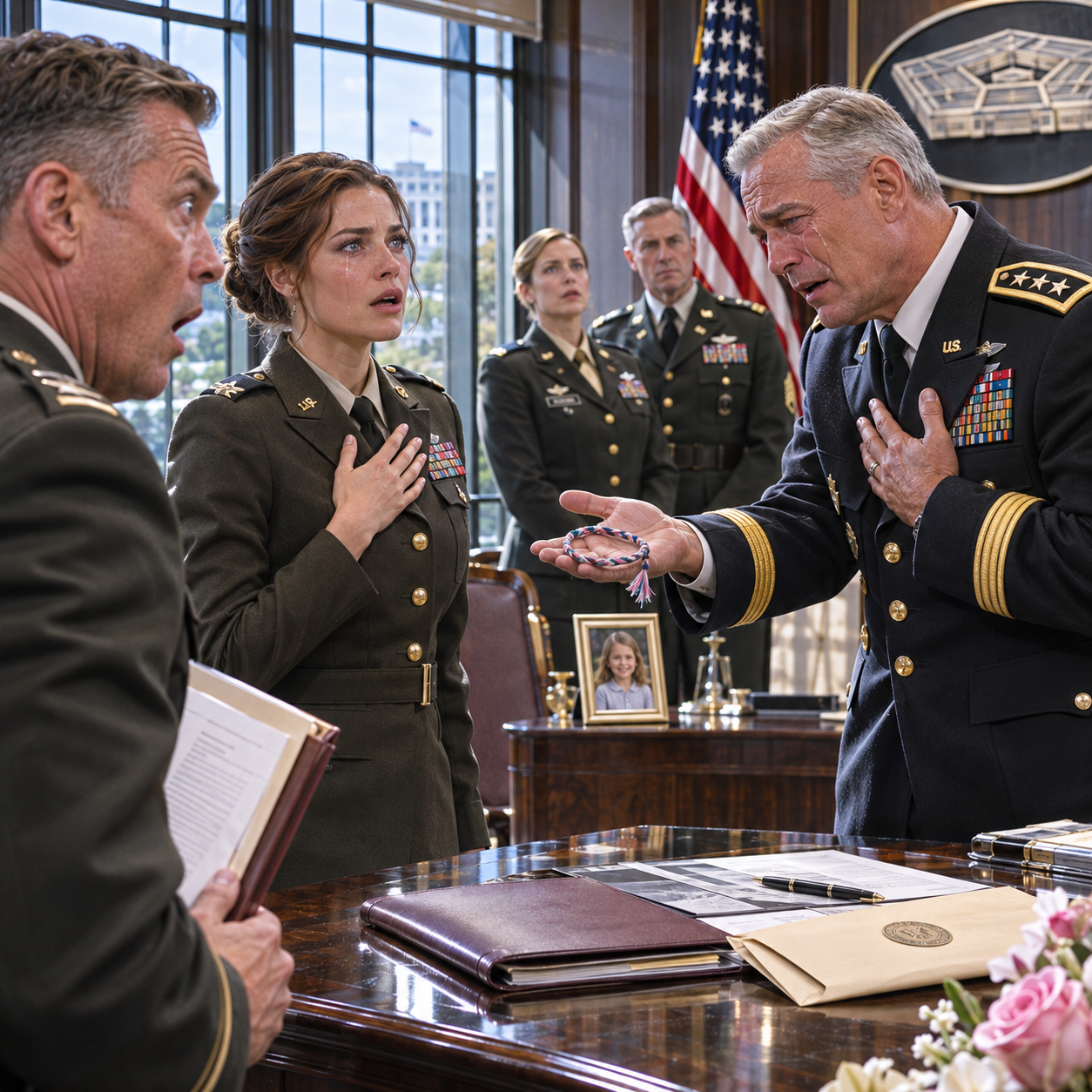
I thought I was risking my Army career for a ten-year-old girl whose name I would never know. I left my unit during the worst possible week, spent hours connected to a collection machine, and returned to find my supervisor preparing paperwork that could destroy my future. Then a sealed Pentagon summons arrived. I expected an interrogation. Instead, a four-star general walked toward me with tears in his eyes—and pulled a cheap braided bracelet from his pocket that I had seen only once before.
### Part 1
The secure administrative phone on my desk almost never rang before seven in the morning, so when it started buzzing beside my cold coffee at 6:14 on a Friday, I stared at it for a second before picking it up. I was Captain Cassidy Sloan, thirty-two years old, an Army logistics officer at Fort Belvoir, and my entire week had been consumed by fuel projections, equipment transfers, convoy schedules, and a brigade readiness evaluation that everyone in our battalion had been treating like the second coming of judgment day. Outside my office window, dawn was barely touching the parking lot, and somewhere down the hall a printer kept spitting out manifests with the mechanical rhythm of a machine that didn’t care whether any of us had slept.
“Captain Sloan?” a woman’s voice asked after I identified myself. “This is the military donor coordination office. Are you somewhere you can speak privately?”
Something in her tone made me close my office door.
Six years earlier, when I was a brand-new lieutenant, I had volunteered at a base health fair and allowed a technician to swab the inside of my cheek for a Department of Defense donor registry. I remembered joking with another lieutenant about how anticlimactic it had been, signing a form, rubbing a cotton swab against my cheek, then going back to work. After that day, I never thought about it again.
The coordinator reminded me of none of that. She simply said, “You’ve been identified as a potential full match for a pediatric patient with an urgent need for a stem-cell transplant.”
I stopped looking at the spreadsheets spread across my desk.
“How urgent?”
There was a slight pause. “Very.”
She explained that additional testing performed from my stored profile showed an unusually strong compatibility. The recipient was a child, ten years old, already in critical condition at Walter Reed, and the medical team wanted confirmation bloodwork immediately. The registry protected the recipient’s identity, just as it protected mine, so the coordinator could not tell me the child’s name, family, hometown, or anything else that might identify her.
I asked the only question that mattered. “If I say yes, how soon do you need me?”
“Today.”
Within forty minutes, I had the authorization packet printed and tucked beneath my arm as I walked toward Major Preston Mercer’s office. Mercer was my battalion executive officer, a polished forty-one-year-old major who kept his boots gleaming, his desk empty, and his opinion of junior officers permanently several degrees below freezing. He valued charts because charts never challenged him, and he valued metrics because numbers could be arranged into whatever argument he needed.
His door was open, but he didn’t invite me inside when he saw me.
“What?”
“I need emergency medical administrative leave, sir.”
That got his attention.
I handed him the paperwork and watched his eyes move down the page. The deeper he read, the flatter his mouth became.
“A donor procedure?”
“Yes, sir.”
“This week?”
“They need confirmation testing today.”
Mercer dropped the papers onto his desk. “Captain, do you understand what is happening here Monday?”
“The deployment readiness evaluation.”
“And you’re responsible for the logistics package.”
“I’ve already built the transportation matrix, maintenance crosswalk, and alternate movement schedule. Lieutenant Parker can execute the brief if I’m unavailable.”
His chair creaked as he leaned back. “That’s not the point.”
The smell of his cinnamon coffee suddenly seemed absurdly strong.
“What is the point, sir?”
“The point is judgment. The Army gave you responsibility for a section during a brigade-level evaluation. You are now asking to disappear because you volunteered for something unrelated to your mission.”
I stared at him.
Some disagreements in the military are loud. The dangerous ones are often quiet.
“Sir, this isn’t a charity event.”
“I know what it is.”
“A child may die without a compatible donor.”
“And thousands of children are sick every day, Captain Sloan. Your responsibility is still here.”
For a moment I honestly wondered whether I had heard him correctly.
I kept my voice controlled. “The program is Department of Defense supported, and qualifying donation procedures are covered by authorized medical leave.”
Mercer’s expression hardened because I had used policy instead of emotion. “Are you informing me you’re leaving regardless of my recommendation?”
“I’m informing you I’m completing a medically authorized donor evaluation.”
His eyes stayed fixed on mine.
Then he pushed the packet away with two fingers.
“If you walk out during evaluation preparation, Cassidy, don’t expect me to forget it when your officer evaluation comes due.”
He almost never used my first name. That was how I knew it was a threat.
I picked up the packet. “Understood, sir.”
“No. I don’t think you do.”
I stopped at his doorway.
Behind me, Mercer said, “Careers are made by officers who know when the mission comes first.”
I turned just enough to look back at him. “Maybe we disagree on what the mission is.”
Then I walked out.
By noon I was inside Walter Reed, giving blood for confirmatory testing beneath fluorescent lights bright enough to make everyone look exhausted. The pediatric side of the hospital lay beyond a controlled corridor I couldn’t enter, and no one would tell me anything more than what I already knew. A nurse drew several tubes, labeled them with a donor code instead of my name, and told me to keep my phone close.
The call came at 4:37 that afternoon.
“You are the confirmed donor,” the coordinator said. “The medical team wants to proceed.”
I leaned against my car in the parking garage, listening to footsteps echo between concrete pillars.
“When?”
“Immediately.”
I closed my eyes.
“Tell me where to be.”
Over the next several days, I received injections designed to push stem cells from my marrow into my bloodstream. They warned me about the bone pain, but no explanation quite prepared me for the deep pressure that settled into my hips and spine, as if somebody had packed wet concrete inside my skeleton. I continued working whenever I could, finishing transfer documents at my kitchen table at midnight while a heating pad rested against my lower back.
Mercer never asked how I felt.
He sent emails.
Where is the revised fuel annex?
Why hasn’t Parker updated the movement board?
Confirm you will be physically present Monday.
I answered each message professionally and attached everything my section needed. What I did not tell him was that by Sunday evening my ribs hurt when I laughed, my legs felt heavy, and I had been scheduled for collection early Monday morning.
Before sunrise, I put on civilian clothes, carried my uniform bag downstairs, and drove toward Walter Reed through thin Virginia fog. The highway lights faded behind me while my phone sat silent in the cup holder, and for the first time since the call I wondered who was waiting at the other end of this procedure. Somewhere inside that enormous hospital was a ten-year-old girl who had no idea what I looked like.
And somewhere, I assumed, were parents being told whether their daughter was going to live or die.
I didn’t know their names.
They didn’t know mine.
But by the time I entered the hospital doors that morning, our lives were already moving toward each other.
### Part 2
The collection room was colder than I expected. Pale morning light leaked through half-closed blinds, mixing with the clean white ceiling lights, while a machine beside an adjustable recliner hummed softly as though it had been awake long before I arrived. My donor code, 84-Charlie, appeared on every label, and nowhere in the room was there any indication of the child whose doctors were waiting for what my body could provide.
A nurse named Renee had the calm hands of someone who had spent twenty years making frightened people feel ordinary. She wrapped a cuff around my arm, checked my veins, and said, “Long morning ahead, Captain. Once we start, you won’t be doing much moving.”
“I’ve had worse Monday meetings.”
She smiled. “Let’s hope this meeting accomplishes more.”
Lines were placed in both arms so blood could move out through one side, pass through the collection system, and return through the other. When the machine started, I felt the strange cold pull in my veins and heard a repetitive mechanical clicking beneath the steady hum. Renee tucked a blanket over my legs and positioned my phone where I could see it but couldn’t easily reach it.
For the first hour, I tried reviewing logistics notes in my head.
By the second, I stopped caring about work.
My elbows ached from being held nearly motionless, my hips throbbed beneath the blanket, and the room smelled faintly of antiseptic and heated plastic. Every few minutes I looked toward the collection bag, where a cloudy amber fluid slowly accumulated, and tried to understand how something so visually unimpressive could represent another person’s chance to stay alive.
Around the third hour, Renee stepped back into the room after speaking quietly with someone outside.
She checked the monitor twice before looking at me.
“Everything okay?” I asked.
“Your collection numbers are excellent.”
“Good.”
She hesitated.
Then she lowered her voice. “I can’t give you identifying information. You know that.”
“I know.”
“But I can tell you the receiving team is ready.”
My throat tightened unexpectedly.
“She’s still there?”
Renee gave me a look that told me she understood what I was really asking.
“She’s fighting.”
That answer stayed with me for the next two hours.
I never learned exactly when the collection crossed whatever threshold the physicians needed. I only noticed Renee’s shoulders relax and another nurse enter carrying an insulated medical container. The bag was checked, sealed, matched against numbers three separate times, then placed inside the container as carefully as if somebody had packed a beating heart inside it.
When the lid clicked shut, I stared at it.
“That’s it?” I asked.
“That’s it.”
It felt impossible.
Months of illness, years of training, careers, families, all the complicated machinery of life—and sometimes everything narrowed to one small container rolling down a hospital corridor.
By late afternoon, the lines were removed and thick white pressure bandages covered both arms. I tried standing too quickly and immediately grabbed the recliner because the floor tilted beneath me.
Renee caught my elbow.
“Easy.”
“I’m fine.”
“That’s usually what military patients say five seconds before proving otherwise.”
I laughed, then winced because even laughing made my ribs hurt.
She made me sit until my blood pressure settled, forced me to drink juice, and watched me eat half a sandwich before she would sign the discharge paperwork. By the time I changed into my service uniform, the hallway outside had become quiet enough that I could hear the soft squeak of my shoes on the polished floor.
I carried my duffel toward the elevators.
At the intersection near the pediatric intensive care corridor, I noticed a man sitting alone.
He was probably in his late fifties. Maybe early sixties. Gray showed at his temples beneath an old baseball cap, and he wore a faded canvas jacket, brown pants, and scuffed hiking boots that looked wildly out of place in a hospital filled with polished floors and uniforms. His elbows rested on his knees, but his hands were clasped so tightly that the knuckles had gone pale.
Something bright was tangled around his fingers.
A child’s braided yarn bracelet.
Pink, blue, green, yellow.
He stared at it as though the entire world had been reduced to those four colors.
I slowed down.
He noticed movement and lifted his face.
His eyes were swollen and red. Not the dramatic crying people do in movies. This was worse. He looked like a man who had been trying not to cry for so long that exhaustion had finally beaten him.
I glanced toward the restricted pediatric hallway.
Then back at him.
I didn’t ask who he was waiting for.
I didn’t need to.
I set my duffel beside the wall, opened the front pocket, and found a sealed bottle of water and a clean white handkerchief I kept folded with my uniform supplies. It was an old habit from inspections, almost ridiculous in 2026, but my grandmother had taught me that a professional person should always carry one.
I placed both on the empty chair beside him.
He looked at the bottle.
Then the handkerchief.
Then my arms.
The white medical tape was visible below my sleeves.
Something changed in his expression.
His eyes moved back to mine.
“Donor?” he asked.
The word barely came out.
I could not discuss anything about the recipient, and he had no way of knowing who I was donating for. For all I knew, he might have been waiting for a completely different child.
So I only nodded.
His mouth tightened.
“God bless you, Captain.”
I had not expected that sentence to hit me as hard as it did.
I swallowed and looked toward the pediatric doors.
“Hold fast, sir.”
His fingers closed around the handkerchief.
I picked up my duffel and continued toward the elevators.
Just before the doors closed, I looked back.
He had covered his face with both hands.
The yarn bracelet still hung around his wrist.
I returned to Fort Belvoir the next morning because staying home would have given Mercer exactly the story he wanted to tell about me. My arms were bruised purple beneath my uniform, my lower back still ached, and every staircase made my legs feel as if I had spent the night carrying a rucksack uphill. Lieutenant Mara Parker glanced at me when I walked into the logistics shop and nearly dropped her coffee.
“Ma’am, you look terrible.”
“Good morning to you too.”
“I’m serious.”
“So am I.”
She lowered her voice. “Major Mercer has been asking when you would arrive.”
That erased what little humor I had left.
“Why?”
Parker looked toward his office.
“He has a counseling packet.”
I set my bag beside my desk.
The room suddenly felt too warm.
Before I could ask another question, Mercer’s door opened.
“Sloan.”
Every soldier in the office became interested in something on their computer.
“Office. Now.”
I walked inside and closed the door.
A thick manila folder sat in the middle of Mercer’s desk.
He didn’t offer me a chair.
“Captain Sloan,” he said, tapping one finger against the file, “we need to discuss your future in this battalion.”
Then he opened the folder.
### Part 3
The first page was a formal counseling statement accusing me of abandoning critical responsibilities during a brigade readiness period. Mercer had carefully avoided claiming that my leave itself was unauthorized, probably because even he knew that would not survive legal review, but he had built a different argument around “poor professional judgment,” “failure to prioritize operational obligations,” and “erosion of command confidence.” The language was polished, bloodless, and much more dangerous than shouting.
I read the entire page before looking up.
“This says my absence caused a failure in the deployment exercise.”
“It caused disruption.”
“The logistics package passed.”
“Because other officers compensated for you.”
“Lieutenant Parker executed the plan I prepared.”
Mercer folded his hands. “You are missing the larger issue.”
“Then explain it.”
His eyes narrowed slightly.
I knew I was close to the line, but pain and exhaustion had removed whatever patience usually helped me tolerate nonsense.
Mercer said, “Leadership requires understanding that personal priorities cannot supersede organizational commitments.”
“A medical donation isn’t a personal priority.”
“It was voluntary.”
“So is running into a burning building.”
“Don’t be dramatic.”
I almost laughed.
Instead, I pointed to the paperwork.
“Sir, if you intend to enter this into my record, I will submit a rebuttal.”
“You are entitled to.”
“And I will request that the medical authorization and donor-program policy be included.”
His jaw tightened.
“Do what you believe you need to do.”
“I will.”
He slid the form toward me.
At the signature block, I wrote the date and signed only to acknowledge receipt.
Mercer watched my pen.
“Your next evaluation is coming soon,” he said. “I hope you’re considering the long-term consequences of challenging your chain of command.”
I placed the pen down.
“With respect, sir, I’m considering the long-term consequences of allowing inaccurate paperwork to stand uncontested.”
The room went silent.
Something in his face changed.
Not rage.
Decision.
I left his office knowing he had just made me a problem.
The next ten days confirmed it.
My primary transportation planning portfolio was reassigned to Lieutenant Parker. Routine briefings I had attended for a year suddenly disappeared from my calendar. Tasks that normally belonged to junior officers began appearing in my inbox, including property reconciliation reports and archival document reviews that required hours but had almost no visibility.
Parker cornered me in the supply room on the third afternoon.
“He’s burying you.”
I kept sorting inventory sheets.
“He’s assigning tasks.”
“That’s not what I said.”
I looked at her.
She lowered her voice. “People are noticing.”
“Then people should keep noticing quietly.”
She crossed her arms. “You’re seriously not going to fight him?”
“I am fighting him.”
“How?”
“By giving him nothing he can use.”
That answer frustrated her because it frustrated me too.
Every instinct wanted to challenge Mercer openly, demand legal review, request commander intervention, and force the issue immediately. But Army organizations have memories, and a captain who appears emotional in a dispute with a field-grade officer can lose even when the facts are on her side.
So I documented everything.
Dates.
Assignments.
Canceled meetings.
Emails.
Policy references.
I wrote my rebuttal in calm language and sent it through the proper channels.
Then I waited.
The hospital contacted me once during that period.
Not with identifying information.
Only an update.
“The recipient received the cells successfully,” the coordinator told me.
I sat alone in my car outside the commissary and pressed my forehead against the steering wheel.
“Is she okay?”
“We can’t provide clinical details beyond what the program permits.”
“Can you tell me whether she’s alive?”
A long pause.
“She’s alive.”
I stayed in the car for ten minutes after the call ended.
That was enough.
Whatever Mercer did to my evaluation, whatever job he reassigned, whatever promotion board eventually saw my file, somewhere there was a ten-year-old girl who had made it through another day.
I tried telling myself that made everything else easy.
It didn’t.
I had worked too hard for my career to pretend I didn’t care about it. I had spent years in warehouses before sunrise, on field exercises in freezing rain, in planning cells where everyone lived on caffeine and four hours of sleep, and in command meetings where one wrong number could wreck an entire movement schedule. The idea that one vindictive superior could reduce all that work to a few sentences in an evaluation made me furious.
But anger wasn’t evidence.
So I kept working.
On the second Tuesday after the donation, exactly at 9:00 in the morning, an unfamiliar black government SUV stopped at the curb outside battalion headquarters.
Everyone near the windows noticed.
The vehicle had Department of Defense plates and heavily tinted rear windows. Two uniformed personnel stepped out, both wearing access credentials I didn’t recognize from any installation office at Belvoir.
They walked directly past the front desk.
One carried a sealed courier envelope with a red border.
Parker leaned toward me.
“Are we expecting somebody?”
“No.”
“That looks important.”
“It probably isn’t for us.”
Thirty seconds later, both visitors entered Mercer’s office.
The door shut.
Through the narrow glass panel, I could see Mercer stand as they handed him the envelope.
He opened it.
His face changed.
Only for a second.
Then something resembling satisfaction appeared at the corner of his mouth.
The visitors left without speaking to anyone else.
Mercer remained inside for another minute.
Then his door swung open.
“Sloan.”
Every head in the section turned toward me.
“Sir?”
“Get into full dress uniform.”
My stomach dropped.
“What’s happening?”
“We have orders to report to the Pentagon.”
Parker’s eyes widened.
Mercer walked closer and lowered his voice so only I could hear.
“Executive corridor.”
I said nothing.
His smile returned.
“I told you this matter wouldn’t stay at battalion level.”
For the first time since the donation, uncertainty cracked through my confidence.
“What does the order say?”
“That you and I are required to appear at eleven hundred.”
“For what purpose?”
“You’ll learn when we arrive.”
He took one step away, then turned back.
“And Captain?”
“Sir?”
“I suggest you spend the drive thinking very carefully about how you explain abandoning your duty when senior leadership asks.”
Twenty minutes later, I stood alone in the restroom fastening my dress uniform jacket.
My ribbons were straight.
My hair was exact.
My shoes were polished.
My hands were shaking.
I curled them into fists until they stopped.
When I stepped outside, Mercer was waiting near the SUV.
The same sealed order rested beneath his arm.
He looked almost pleased.
I climbed into the back seat without speaking.
As we pulled away from Fort Belvoir, I watched the installation disappear through tinted glass and wondered whether the decision I had made ten days earlier was about to cost me everything I had spent a decade building.
Then I noticed something Mercer apparently hadn’t.
In the lower corner of the sealed document was an authority code I had seen only once before.
It didn’t belong to brigade headquarters.
It belonged much higher.
### Part 4
The drive toward the Pentagon took less than half an hour, but Mercer managed to fill most of it with silence that felt deliberately engineered. He sat across from me in the government SUV with his cap resting on one knee, occasionally checking his phone, while I watched traffic move beside us and tried not to imagine every possible disciplinary outcome. The Potomac flashed silver beneath the pale morning sky as we crossed the river, and my reflection in the window looked calm enough to belong to somebody else.
Mercer finally spoke as the Pentagon came into view.
“When we get inside, you speak only when addressed.”
I looked at him.
“I know military protocol.”
“This isn’t a routine command briefing.”
“I gathered that.”
His mouth flattened.
“You have a tendency to mistake confidence for permission, Captain.”
“And you have a tendency to warn me about conversations that haven’t happened yet.”
The driver glanced at us in the mirror.
Mercer leaned slightly forward.
“This attitude is exactly why you’re here.”
That statement bothered me.
“Do you know why we’re here?”
“I know your counseling packet moved upward.”
“That isn’t what I asked.”
He looked away.
There.
For the first time, I understood that Mercer was guessing too.
Whatever was inside the courier order had told him where to go, not why.
Security at the Pentagon swallowed us into layers of controlled movement: identity verification, credential scans, escorts, long hallways filled with uniforms moving at purposeful speed. The building had a peculiar smell I remembered from earlier assignments, coffee, old stone, polished floors, paper, and conditioned air. Every few turns, I caught glimpses of framed photographs showing decades of wars, presidents, service chiefs, and young soldiers whose names had become history.
Our escort took us deeper than I had expected.
Mercer’s posture changed as the hallway grew quieter.
He stopped pretending to be relaxed.
We entered a section where foot traffic thinned almost completely. The doors were heavier, the offices larger, and even the enlisted personnel working outside them carried themselves with the alert stillness of people accustomed to handling sensitive information.
Finally, we stopped outside a dark wooden door.
There was no dramatic brass nameplate.
Just an office designation and a small command emblem.
An aide opened it.
“Major Mercer. Captain Sloan. Please enter.”
The room beyond was a conference space with tall windows overlooking an interior courtyard. Sunlight spread across a long polished table, and the air smelled faintly of wood cleaner and fresh coffee.
Three people were inside.
One civilian attorney sat near the side wall with a closed folder.
A colonel stood beside the windows.
And at the far end of the room stood a four-star general.
I recognized him immediately.
General Elias Ward was one of the most senior operational commanders in the Army, the kind of officer whose speeches became mandatory viewing during professional development sessions. His photograph had appeared on official websites, command publications, and briefing slides throughout my career.
Mercer snapped to attention.
So did I.
“General Ward, sir,” Mercer began. “Major Preston Mercer reporting with Captain Cassidy Sloan as directed concerning—”
The general raised one hand.
Mercer stopped.
“Thank you, Major.”
Ward’s voice was quiet.
He wasn’t looking at Mercer.
He was looking at me.
Something about his face bothered me.
I had seen him before.
Not in photographs.
Not on television.
Somewhere else.
The general moved around the table.
Without his cap, his short gray hair was neatly cut, and his uniform was immaculate. Four silver stars sat on each shoulder, but his eyes looked exhausted in a way rank couldn’t hide.
He stopped several feet away.
“Captain Sloan.”
“Sir.”
His gaze dropped briefly toward my arms.
The bruising was hidden beneath my sleeves.
Still, he seemed to know where to look.
“How are you feeling?”
The question confused me.
“I’m fully recovered for duty, sir.”
Something flickered across his face.
“That wasn’t what I asked.”
Mercer shifted slightly beside me.
I heard fabric move.
The general looked at him for the first time.
“Major, please remain silent unless I address you.”
Mercer went rigid.
“Yes, sir.”
Ward turned back to me.
“How are you feeling, Cassidy?”
No general had ever called me by my first name during an official meeting.
The room suddenly felt much smaller.
“I’m sore, sir. But fine.”
He nodded slowly.
Then he reached into the pocket of his uniform jacket.
What he removed was not an official document.
It was a folded white handkerchief.
My handkerchief.
I stared at it.
The general unfolded it carefully on his palm.
Inside lay a small braided yarn bracelet.
Pink.
Blue.
Green.
Yellow.
The hospital hallway came back to me instantly.
The old baseball cap.
The canvas jacket.
Scuffed boots.
Bloodshot eyes.
A bottle of water sitting on a plastic chair.
My breath caught.
General Ward watched recognition move across my face.
“Sir…”
His jaw tightened.
He looked down at the bracelet for a moment before speaking.
“My daughter made this for me three years ago.”
No one moved.
“Her name is Emma.”
My pulse began hammering.
“She’s ten.”
Mercer’s face changed beside me.
The general continued.
“She has spent most of this year in and out of treatment. Three weeks ago her condition deteriorated very quickly. The doctors told my wife and me that without a compatible donor, we were running out of options.”
He paused.
His voice became rougher.
“I have commanded troops under fire. I have written letters to families. I have stood in operations centers while people waited on decisions I made.”
He looked directly at me.
“None of that prepared me to sit outside my child’s hospital room knowing there was absolutely nothing I could order, plan, threaten, negotiate, or command that would save her.”
The man in the hallway.
I saw him clearly now.
Without rank.
Without staff.
Without stars.
Just a father.
Ward took one breath.
“Then the transplant team told us they had found a full donor match.”
My throat tightened.
Mercer turned slightly toward me, disbelief spreading across his face.
The general’s eyes filled.
“You matched my daughter’s marrow, Captain.”
The words landed softly.
That made them hit harder.
I tried to answer.
Nothing came out.
Ward looked down at the handkerchief again.
“The afternoon your cells were collected, I left Emma’s room because I didn’t want her to see me lose control. I sat in that hallway wearing civilian clothes because I had spent three nights at her bedside and didn’t care what I looked like.”
His mouth trembled.
“A young captain walked past me.”
My eyes burned.
“She left water beside me.”
He gave a broken little laugh.
“And a handkerchief.”
One tear slipped down his cheek.
“I didn’t know it was you.”
Neither did I.
For several seconds, the most powerful person in the room wasn’t a four-star general.
He was a father holding a child’s bracelet.
Then he said something I had not prepared myself to hear.
“Emma is alive because you answered that phone.”
### Part 5
I had imagined a hundred versions of that Pentagon meeting during the drive from Fort Belvoir. Every one involved defending my decisions, explaining regulations, or standing silently while some senior officer decided whether I had damaged my career. Not once had I imagined General Elias Ward crying in front of me.
“Sir,” I managed, “I didn’t do anything extraordinary.”
Ward looked almost offended.
“You were told a child you didn’t know needed you.”
“Anyone on that registry would have gone.”
“No.”
His answer was immediate.
“Many would have. Not everyone.”
I didn’t know what to say to that.
He folded the handkerchief around Emma’s bracelet again.
“She received the transplant.”
My hands curled at my sides.
“How is she?”
Ward smiled for the first time.
It transformed his face.
“Her doctors are cautious. They will remain cautious for a long time. But her fever came down. Her bloodwork is moving in the right direction, and yesterday she argued with a nurse for twenty minutes because she wanted a cheeseburger.”
A laugh escaped me before I could stop it.
Ward laughed too.
“That was the best argument I’ve heard all year.”
The room relaxed for exactly three seconds.
Then General Ward turned toward Mercer.
The temperature seemed to drop.
Ward didn’t raise his voice.
That made it worse.
“Major Mercer.”
“Sir.”
“I have reviewed Captain Sloan’s donor authorization.”
Mercer’s shoulders stiffened.
“I have also reviewed the counseling statement you issued after her procedure.”
“Sir, if I may explain—”
“You may answer questions.”
Mercer stopped.
Ward walked toward the table and opened a folder.
“Was Captain Sloan’s absence medically authorized?”
Mercer hesitated.
“Yes, sir, technically.”
The civilian attorney looked up.
Ward’s expression did not change.
“There is no ‘technically’ in that question. Was it authorized?”
“Yes, sir.”
“Did her section fail the brigade logistics evaluation?”
“No, sir.”
“Was any convoy delayed because of her absence?”
“No, sir.”
“Did any equipment movement fail because of her absence?”
“No, sir.”
“Did the logistics package she prepared meet the required standard?”
Mercer’s jaw flexed.
“Yes, sir.”
Ward closed the folder.
“Then explain what operational failure justified adverse career documentation.”
Mercer swallowed.
“My concern was command judgment, sir. Captain Sloan left during a high-visibility preparation period and—”
“For an authorized emergency donor procedure.”
“Yes, sir, but voluntary medical programs can create competing priorities, and I believed—”
“You believed she should let a child lose her only available donor because a briefing was inconveniently scheduled.”
The sentence hung in the room.
Mercer looked toward me.
For the first time since I had known him, he appeared genuinely afraid.
“General, with respect, I did not know the recipient was your daughter.”
Ward’s face went completely still.
I knew the instant Mercer said it that he had made the worst possible choice.
The general stepped closer.
“My daughter’s identity is irrelevant.”
Mercer’s mouth opened.
Ward continued before he could speak.
“If Captain Sloan donated to a private whose name I had never heard, the policy would be the same. If she donated to the child of a janitor, a schoolteacher, an unemployed parent, or a foreign ally, the facts would be the same.”
The attorney lowered her eyes to her notes.
Ward’s voice sharpened.
“Do not mistake my presence here for the reason your conduct is being reviewed.”
Mercer stared straight ahead.
“The concern,” Ward said, “is that you appear to have used administrative authority to retaliate against an officer for taking protected medical leave.”
“Sir, that was not my intention.”
“Intent will be evaluated through the proper process.”
Mercer’s face drained.
Ward turned to the colonel near the window.
“Colonel Hayes?”
The colonel stepped forward.
“Major Mercer, effective immediately, you are temporarily removed from supervisory authority over Captain Sloan while the administrative review is conducted. You will report to division personnel at 0800 tomorrow for reassignment pending findings.”
Mercer seemed to lose an inch of height.
“Understood, sir.”
“Your counseling statement will be flagged and removed from consideration pending legal review,” Hayes continued. “You are not to initiate, modify, or influence Captain Sloan’s evaluation report.”
“Understood.”
I stood frozen.
Part of me had expected satisfaction.
Instead, I felt tired.
Mercer had spent ten days making me believe he could erase years of work because I had chosen a dying child over an inspection schedule. Watching his authority disappear should have felt triumphant.
It didn’t.
It felt like discovering how unnecessary the entire fight had been.
General Ward dismissed him.
Mercer saluted.
The general returned it.
Before leaving, Mercer looked at me.
There was no apology in his face.
Only humiliation.
I realized then that I didn’t need one.
The door closed behind him.
I exhaled for what felt like the first time all morning.
General Ward gestured toward a chair.
“Sit down, Captain.”
“Sir?”
“That’s an order.”
I sat.
He took the chair across from me.
The four stars were still there, but the room felt less formal now.
“I want something understood,” he said. “I did not summon you here to rescue your career.”
“I know, sir.”
“Do you?”
“Yes.”
He studied me.
“I requested an independent review because the donor office reported a potential retaliation concern through proper channels. I learned your identity only after legal and medical privacy officers confirmed that disclosure was permissible under the circumstances and after Emma’s team cleared contact.”
That mattered more than I expected.
“Thank you for telling me.”
“I don’t ever want you believing this was fixed because my daughter happened to be the recipient.”
“I don’t.”
Ward nodded.
“Good.”
He opened another folder.
I immediately became suspicious.
“What is that?”
His mouth twitched.
“Your service record.”
“Sir, I’ve seen it.”
“I would hope so.”
He turned a page.
“Two deployments. Company executive officer. Battalion logistics officer. Strong evaluations until this incident.”
I shifted in the chair.
“Sir, if you’re considering some kind of promotion intervention—”
“I’m not.”
I stopped.
Ward looked amused.
“You were prepared to argue.”
“Yes, sir.”
“Why?”
“Because saving Emma shouldn’t buy me a career advantage.”
The amusement disappeared.
He leaned back.
For several seconds he said nothing.
Then he nodded.
“That is exactly why I wanted to meet you.”
He closed the file.
“No promotion promises. No special assignment. No phone call to a board.”
“Thank you.”
“But there is something else.”
He stood.
The colonel moved toward a side cabinet.
My stomach tightened again.
Ward said, “The hospital staff submitted a recognition recommendation after learning that you completed the procedure despite significant professional pressure.”
“Sir—”
“This is not about Emma being my daughter.”
I closed my mouth.
“The recommendation is being reviewed through normal channels. You will neither lobby for it nor refuse it before the process is complete.”
I almost smiled.
“Is that also an order?”
“Absolutely.”
Then his expression softened.
“There’s one thing, however, that has nothing to do with Army paperwork.”
I waited.
Ward pulled his phone from his pocket.
On the screen was a photograph of a thin little girl wearing a knit cap, sitting upright in a hospital bed with markers scattered around a tray.
She held a piece of paper toward the camera.
I couldn’t read the writing from where I sat.
Ward enlarged the picture and handed me the phone.
The message was written in uneven purple letters.
CAN I MEET HER?
My vision blurred.
I looked up.
General Ward’s eyes were wet again.
“Emma knows there’s a donor,” he said. “She knows her donor is a woman in the Army. That’s all we told her until medical staff approved contact.”
I stared at the photograph.
“When?”
Ward smiled.
“Whenever you’re ready.”
I thought about the machine humming beside my chair.
The small collection bag.
The empty hallway.
The man clutching a braided bracelet.
Then I handed the phone back.
“Today.”
### Part 6
Walter Reed felt different when I returned with General Ward. The hallways were the same, the lights were the same, and the smell of disinfectant still followed us through every secured door, but I was no longer walking through the building as donor 84-Charlie. This time I knew the person waiting at the other end.
Ward changed into civilian clothes before we left the Pentagon.
It was almost funny how completely the four-star general disappeared inside a gray sweater and ordinary jacket.
“Emma hates uniforms in the hospital,” he explained as we walked toward the pediatric unit. “She says uniforms mean somebody is about to tell her what to do.”
“Smart kid.”
“Unfortunately.”
At the nurses’ station, Renee recognized me immediately.
Her eyes widened.
“Captain.”
“Hi.”
Then she noticed Ward.
Recognition flickered across her face, but she professionally ignored it.
“She’s expecting you.”
That sentence nearly stopped me.
I had spent days preparing for physical pain.
Nobody had prepared me for a ten-year-old expecting me.
Before we entered, Ward touched my arm.
“One warning.”
I looked at him.
“She has been planning what to say for two days.”
“That’s bad?”
“Emma plans conversations the way I plan operations.”
“That sounds hereditary.”
He sighed. “My wife says the same thing.”
The room was bright with afternoon light.
Colored drawings covered one wall. Paper stars hung from strings near the window, and a stuffed fox wearing a tiny green scarf sat on the bedside table.
Emma Ward looked much smaller than she had in the photograph.
She wore soft pajamas and a knitted blue cap. Her skin was pale, and medical lines disappeared beneath the blanket, but her eyes were alert.
Very alert.
She inspected me for about three seconds.
Then she said, “You’re shorter than I thought.”
Her father made a choking sound behind me.
I laughed.
“So are you.”
She smiled.
“Good answer.”
The tension vanished.
I moved closer to the bed.
“Hi, Emma.”
“Hi, Captain Cassidy.”
“You can just call me Cassidy.”
She considered this.
“Dad says captains outrank me.”
“Your dad is wrong.”
Ward leaned against the wall.
“I am standing right here.”
Emma ignored him.
She reached toward the bedside tray and picked up a folded piece of construction paper.
“I made this.”
She handed it to me.
Inside was a drawing of two stick figures connected by a giant red line. One had long brown hair. The other wore a blue hat.
Above them she had written, in shaky letters:
SAME TEAM.
I stared at the page longer than necessary.
“Do you like it?” she asked.
“I love it.”
“I didn’t know what color your hair was.”
“You guessed right.”
“Good.”
She looked pleased with herself.
Then her expression changed.
Children can do that faster than adults. One second she was smiling. The next, she was painfully serious.
“Did it hurt?”
Ward looked toward me.
I could tell he had probably hoped she wouldn’t ask.
“A little.”
“How much?”
“Enough that I complained about hospital sandwiches.”
Emma nodded thoughtfully.
“Hospital sandwiches are terrible.”
“Exactly.”
“But you did it anyway.”
“Yes.”
“Why?”
That question was harder.
I pulled a chair close to her bed.
“Because someone told me another person needed help that I could give.”
“But you didn’t know me.”
“No.”
“You didn’t know my dad either.”
I glanced toward Ward.
“No.”
Emma picked at the edge of her blanket.
“What if I had been mean?”
I smiled.
“I still would’ve done it.”
“What if I hated Army people?”
“Still would’ve done it.”
“What if I liked pineapple on pizza?”
I hesitated.
She narrowed her eyes.
“Captain.”
“That would have required additional consideration.”
She burst out laughing.
Ward covered his face.
The sound filled the room.
It was a small laugh, fragile and breathy, but I had never heard anything more beautiful.
We stayed for almost an hour.
Emma told me about school, her dog Murphy, a science project she had missed, and her belief that hospital television had been specifically designed to punish sick children. She complained about adults whispering around her, about people bringing balloons she couldn’t keep, and about how everyone kept saying she was “brave” when she was actually scared most of the time.
That last confession quieted the room.
I leaned closer.
“You know something?”
“What?”
“I was scared too.”
Her eyebrows rose.
“Of what?”
“Losing my career.”
Ward looked at me sharply.
I continued.
“My boss thought I shouldn’t leave work to donate. He made things difficult afterward.”
Emma’s face tightened with immediate outrage.
“Dad.”
Ward raised both hands.
“It’s being handled.”
“He should fire him.”
I coughed to hide a laugh.
Ward gave me a look.
“Do not encourage her.”
“I didn’t say anything.”
Emma crossed her arms.
“He should.”
I smiled.
“You don’t need to fight that battle for me.”
She studied my face.
“Did you still think it was worth it?”
I didn’t answer immediately.
Instead, I looked at the monitors beside her bed, the paper stars in the window, and the drawing in my hands.
“Every second.”
Emma looked down.
Then she whispered, “Good.”
When it was time to leave, she asked if she could hug me.
I glanced toward the nurse.
After receiving approval, I carefully leaned over.
Emma’s arms were thin around my shoulders.
She smelled like clean sheets and children’s shampoo.
“Thank you,” she whispered.
I shut my eyes.
“You’re welcome.”
“No.”
Her grip tightened.
“I mean really.”
My throat closed.
I couldn’t speak.
So I just held her.
In the hallway afterward, General Ward and I stood beside the same row of vinyl chairs where I had first seen him.
For several seconds neither of us said anything.
Finally, he looked at me.
“I’ve received medals that meant less than that drawing.”
I held the folded paper carefully.
“Me too.”
He nodded toward the chair.
“This is where you found me.”
“I know.”
“I thought she was dying.”
His voice had become distant.
“The transplant team had told us the next forty-eight hours were critical. My wife was with Emma. I came out here because I couldn’t breathe.”
He looked down the hallway.
“I have spent my entire adult life believing preparation could reduce uncertainty. Then my daughter got sick, and every illusion of control disappeared.”
I leaned against the wall.
“That must have been hard for somebody who commands thousands of people.”
He gave a humorless smile.
“Brutal.”
Then he looked at me.
“Do you know what I thought after you walked away?”
“No.”
“I thought, whoever that captain donated for, I hope the family understands what someone just did for them.”
His eyes filled again.
“I had no idea I was the family.”
We stood there quietly.
Then my phone vibrated.
A new Army email appeared.
The subject line read:
ADMINISTRATIVE REVIEW—PRELIMINARY FINDINGS.
I opened it.
The first paragraph cleared my donor leave completely.
The second went further.
Investigators had found that Mercer had used adverse counseling and reassignment actions inconsistently and that my case might not be the only one under review.
I read the paragraph twice.
Ward saw my face change.
“What is it?”
I handed him the phone.
He read silently.
Then he looked at me.
“This is bigger than your case.”
I nodded.
Because there, buried near the end, were four words that changed everything:
Additional complainants have emerged.
### Part 7
The investigation expanded over the next month. Once officers and senior enlisted personnel learned that Mercer’s actions were being independently reviewed, people who had stayed quiet began describing their own experiences: denied family emergency requests, threats tied to evaluations, retaliatory duty assignments, and counseling statements that seemed to appear whenever someone challenged his interpretation of authority. None of the complaints alone looked dramatic enough to ruin a career, which I began to understand had been exactly the point.
Mercer had been careful.
He rarely did anything obviously illegal.
He operated in the space between discretion and intimidation, where subordinates were often too worried about appearing weak or disloyal to complain.
My case had simply created documentation strong enough to open the door.
Colonel Hayes interviewed me twice.
Both times he warned me not to speculate.
“Describe facts,” he said.
So I did.
I described the donor call.
The leave packet.
Mercer’s statement that leaving would affect how he viewed my command judgment.
The counseling.
The reassigned duties.
The promotion warning.
I did not mention Emma unless specifically necessary.
Her identity was never the issue.
That distinction mattered to me more with every passing week.
Some people at Fort Belvoir figured out that my donor procedure had somehow drawn senior attention. Rumors multiplied with the creativity military organizations reserve for incomplete information.
One version claimed I had donated to the Secretary of Defense.
Another claimed the recipient was a foreign royal.
My favorite said I had saved a four-star general himself.
Parker laughed so hard when she heard that one she had to leave the office.
“If they only knew.”
“They don’t need to.”
“You’re really going to keep it private?”
“Emma deserves privacy.”
Parker studied me.
“And you?”
“What about me?”
“Don’t you want people to know why all this happened?”
I looked around the logistics room.
“No.”
That answer surprised her.
It surprised me too.
Before the donation, I had cared deeply about reputation. I still cared about professional credibility, but the distinction between credibility and attention had become much clearer.
I wanted my record corrected.
I wanted Mercer held accountable if investigators proved misconduct.
I did not want strangers applauding me because they knew the child belonged to an important man.
Three weeks after meeting Emma, I received a formal memorandum confirming that my counseling statement had been voided.
Two weeks later, my evaluation report arrived.
It contained no interference from General Ward.
That mattered.
My new rating chain assessed the work I had actually performed, including the readiness package that passed during my absence.
The report was strong.
Not magical.
Not inflated.
Just fair.
I sat at my desk reading it and felt more relief than I had expected.
Parker leaned over the partition.
“Well?”
“It’s good.”
“How good?”
“Good enough.”
She rolled her chair closer.
“That’s the most Cassidy Sloan response imaginable.”
“What do you want me to do, print fireworks?”
“At least smile.”
I did.
A little.
Mercer’s outcome arrived later.
The official notice was carefully worded, as personnel actions usually are. The investigation substantiated inappropriate retaliation and misuse of counseling authority. He was removed from his position, received an adverse evaluation, and was reassigned to a staff role with no supervisory responsibility while additional administrative action was considered.
He sent me one message.
Only one.
I opened it after work while sitting alone in my car.
Cassidy,
I understand you may believe I treated you unfairly. My decisions were made under significant readiness pressure, and I regret that circumstances escalated beyond the battalion. I hope with time you will recognize I was attempting to protect mission effectiveness, not damage your career.
—P. Mercer
I read it twice.
There was no apology.
No acknowledgment that Emma could have died while he worried about inspection slides.
No recognition that he had threatened my career after learning my absence was medically authorized.
Only circumstances escalated.
As though circumstances had acted by themselves.
My thumb hovered over the reply button.
I wanted to write a paragraph explaining everything he still refused to understand.
Then I realized I had already spent enough energy trying to make him understand.
I deleted the message.
Not because I forgave him.
I didn’t.
I simply no longer needed anything from him.
Months earlier, that would have seemed impossible.
Now it felt peaceful.
The Army later approved a service recognition connected to my donor action, although not the dramatic battlefield-style award rumors had invented. The ceremony was small, held at division headquarters with perhaps forty people present.
General Ward did not pin it on me.
That was intentional.
He attended in the back row wearing his uniform, standing beside his wife, Laura.
Emma attended too.
She wore a green dress, a surgical mask required by her medical team, and enough attitude for three healthy children.
When the ceremony ended, she pushed through the adults toward me.
“Captain Cassidy.”
“Emma.”
She held out another braided bracelet.
This one was green and gold.
“I made you one.”
I lowered my wrist.
She tied it carefully.
“What do the colors mean?”
“Nothing.”
I laughed.
“You could have invented something meaningful.”
“I thought about it.”
“And?”
“Too much work.”
Her mother covered a smile.
General Ward shook his head.
I looked at the bracelet.
“I love it.”
Emma nodded.
“I know.”
Six months passed.
Her doctors remained careful with words like cure, but every update improved. She returned to school part-time, then nearly full-time. She sent me photographs of homework she hated, a science fair volcano that exploded sideways, and Murphy the dog wearing a birthday hat against his will.
I never became part of the Ward family.
That wasn’t what the story needed.
There was no dramatic adoption into their lives, no powerful general magically guiding my career, no fairy-tale reward.
There was simply a connection.
Every few weeks, a message.
Every few months, lunch.
A child growing stronger.
A father becoming less afraid.
And me returning to the ordinary work I had always done.
The following spring, my battalion prepared for another major evaluation.
This time I was leading the logistics planning cell.
At 5:30 one morning, Parker walked into the office holding two coffees.
“You know what day this is?”
“Tuesday.”
“Your favorite day.”
“I don’t have a favorite day.”
“Exactly.”
She placed a cup beside me.
Outside, trucks were already moving across the installation.
Radios crackled.
Printers started.
The familiar machinery of readiness came alive.
Parker looked at the green-and-gold bracelet still tied around the handle of my work bag.
“You ever think about what would have happened if you’d listened to Mercer?”
I looked at it too.
Sometimes I did.
More often than I admitted.
I imagined remaining at my desk that morning, attending every meeting, protecting every metric, and telling myself the donor office would find somebody else.
Maybe they would have.
Maybe they wouldn’t.
Some questions don’t deserve to be answered.
I picked up my coffee.
“I try not to.”
Parker nodded.
Then my secure phone rang.
For one irrational second, my heart stopped.
I answered.
“Captain Sloan.”
A voice from division headquarters said, “Ma’am, I have an administrative notification for you.”
I looked at Parker.
She raised her eyebrows.
The officer continued.
“The promotion board results have been released.”
### Part 8
I had spent years imagining what that phone call would feel like. Every captain does, even the ones who pretend not to care, because military careers are built around gates that determine where you can go next. I had expected excitement, fear, maybe the same cold adrenaline I felt before major briefings.
Instead, I looked through the glass wall of my office at soldiers loading equipment outside and thought about a ten-year-old girl arguing over cheeseburgers.
“Go ahead,” I said.
“Congratulations, Major-select Sloan.”
Parker read the answer from my face.
She slapped both hands over her mouth.
I thanked the officer, ended the call, and had approximately two seconds of silence before Parker shouted loudly enough for half the building to hear.
“YOU MADE IT?”
Every head turned.
I closed my eyes.
“So much for discretion.”
She was already running around the partition.
“You made major!”
“Apparently.”
She hugged me hard enough to nearly spill my coffee.
Within ten minutes, the entire section knew.
By lunch, people from three different units had sent messages.
By afternoon, my phone showed a text from General Ward.
Congratulations. Earned, not given.
That last part mattered.
I replied:
Thank you, sir.
Then another message appeared.
Emma says congratulations too. She also says major is a boring title.
I laughed.
Tell Emma I agree.
Her response came through her father’s phone thirty seconds later.
CAPTAIN CASSIDY SOUNDS BETTER.
I saved it.
My promotion ceremony took place several months later on a clear October morning.
I chose a small auditorium at Fort Belvoir rather than anything elaborate. Parker attended. Soldiers from my section filled two rows. My mother flew in from Colorado and cried before the ceremony even started, then denied crying when I pointed it out.
General Ward did not attend.
He had moved to another command overseas.
But Emma sent a video.
She looked healthier than she had the day I met her.
Her hair had started growing back thick and dark beneath a baseball cap.
“Hi, Captain Cassidy,” she said into the camera. “Dad says I have to call you Major Sloan now, but I refuse because that sounds like a person who yells about parking. Congratulations anyway.”
The room laughed.
Then Emma became serious.
“I’m back in school full-time. I ran half a mile last week. It was terrible. I don’t know why healthy people do that on purpose.”
More laughter.
She looked slightly embarrassed.
“And… thank you again.”
She paused.
“For the thing.”
I knew what she meant.
“Okay, bye.”
The video ended.
My mother was crying harder.
So was Parker.
I pretended to inspect my uniform.
When the new rank was pinned on, I expected some feeling of arrival.
Instead, I felt continuity.
The same person.
The same responsibilities.
More work.
Different insignia.
That realization might have disappointed me years earlier.
Now I understood it.
Rank mattered because responsibility mattered.
It did not determine value.
A four-star general had taught me that without intending to, the night I saw him wearing scuffed boots and clutching a yarn bracelet like a lifeline.
Two years after the transplant, Emma’s doctors reached a milestone the Ward family had been afraid to celebrate too early.
Her condition remained stable.
She was thriving.
The first time she visited Fort Belvoir after being medically cleared for normal travel, she was twelve and almost as tall as my shoulder.
She hated that I mentioned this.
“You keep saying I’m short.”
“You opened our relationship with that insult.”
“I was sick.”
“Convenient defense.”
General Ward laughed.
He looked different too.
Less hollow around the eyes.
We ate lunch at a quiet restaurant off post.
No aides.
No photographers.
No uniforms except mine because I had come directly from work.
Emma spent most of lunch explaining why middle-school group projects were evidence of civilization’s decline.
Her father listened like it was the most important briefing he had ever received.
At one point she went to wash her hands.
Ward watched her disappear around the corner.
Then he looked at me.
“I still wake up sometimes thinking we’re back in that hospital.”
I nodded.
“I still remember that hallway.”
He rubbed his thumb across the old bracelet on his wrist.
The colors had faded.
He still wore it.
“I spent years thinking the hardest part of command was making decisions when people might die.”
He looked toward the hallway where Emma had gone.
“I was wrong. The hardest moment of my life was having no decision available at all.”
I understood.
“You couldn’t save her yourself.”
“No.”
He looked at me.
“You could.”
I shook my head.
“The doctors saved her. Nurses saved her. Scientists who built the registry saved her. Whoever convinced a twenty-six-year-old lieutenant to get cheek-swabbed at a health fair helped save her.”
“And you.”
“And me.”
I had finally learned not to argue with that part.
Ward smiled.
“Progress.”
Emma returned.
“What did I miss?”
“Your father was being emotional.”
She groaned.
“Again?”
Ward pointed at me.
“This is insubordination.”
“Wrong branch of authority,” I said.
Emma laughed.
That laugh still did something to me.
It always would.
Years later, people sometimes asked about the small bracelet I kept inside a clear frame in my office.
Not the original green-and-gold bracelet Emma had tied around my wrist.
That one eventually frayed.
This was the first one I had ever seen, the pink, blue, green, and yellow bracelet General Ward had been holding in the hospital corridor.
On the fifth anniversary of her transplant, Emma gave it to me.
“Dad doesn’t need it anymore,” she said.
Ward immediately objected.
“I did not say that.”
“You have like twelve others.”
“That’s not the point.”
Emma handed it to me anyway.
Now it sits beside my desk.
No plaque.
No explanation.
Most soldiers who enter my office think it is just a child’s craft project.
I prefer it that way.
Because the most important things in my career have rarely looked important from the outside.
A cheek swab.
A ringing telephone before sunrise.
A medical authorization packet.
A bag filling slowly beside a humming machine.
A bottle of water.
A clean handkerchief.
A scared father sitting alone in a hospital hallway.
Any one of those things could have been ignored.
That is what stayed with me.
Not that I happened to save the daughter of a general.
That part makes the story dramatic, but it isn’t what makes it matter.
If Emma’s father had been a mechanic, a janitor, an accountant, or an unemployed man sitting beneath those same fluorescent lights, I would like to believe I would have made exactly the same choice.
In fact, I know I would have.
Because when the phone rang, I didn’t know who she was.
When I signed the paperwork, I didn’t know.
When Mercer threatened my career, I didn’t know.
When the needles went into my arms, I didn’t know.
When my bones hurt, I didn’t know.
When I watched that collection bag leave the room, I still didn’t know.
That anonymity was the purest part of the entire experience.
There was no general.
No recognition.
No promotion.
No audience.
There was simply a person who needed something I could give.
I almost lost professional opportunities because somebody above me believed protecting a spreadsheet was more important than helping a human being.
I don’t forgive Mercer for that.
But I also don’t carry him with me.
His career became his responsibility.
Mine became mine.
The lesson I kept was simpler.
Leadership is not proven when everyone is watching.
Character isn’t measured when doing the right thing is convenient.
Sometimes the decision that tells you who you are happens quietly, before sunrise, with cold coffee beside your elbow and no promise that anyone will ever know what you chose.
Years after that Friday morning, my secure phone still rings.
Sometimes it’s bad news.
Sometimes it’s paperwork.
Sometimes it’s another impossible problem somebody expects logistics to solve by lunch.
Whenever I answer, I can still picture a ten-year-old girl in a blue knit cap handing me a drawing of two stick figures connected by a giant red line.
SAME TEAM.
She was right.
We always were.
THE END!
Disclaimer: Our stories are inspired by real-life events but are carefully rewritten for entertainment. Any resemblance to actual people or situations is purely coincidental.