### Part 2: My Brother’s Jealousy Turns Into a Campaign Against Everything I Built
I stood motionless in my office while Sandra, the bank representative, verified the application details. Someone had submitted my company’s legal name, business identification number, and personal address, information that wasn’t available to ordinary customers. Sandra agreed to flag the application as potentially fraudulent, but she couldn’t identify the applicant during our call. When I hung up, I remembered leaving my work phone unattended during the barbecue.
My business notes contained sensitive information, and Brandon knew the old passcode I’d been foolish enough to keep using. I couldn’t prove he’d touched the phone, but the possibility made my stomach tighten. My accountant helped me review the business records, and we found no additional suspicious filings. I changed my passwords, notified the bank in writing, and tried to believe the incident was over.
That autumn, I submitted a proposal to maintain two university dormitories and their surrounding grounds. My crew had the equipment, references, and experience to handle the contract, and I spent weeks refining our bid. Seven days before the university announced its decision, Greg, the project coordinator, called with an uncomfortable question. “Hank, are you aware of some complaints about your company?”
I opened my laptop and found anonymous reviews accusing my employees of missing appointments, damaging property, and abandoning projects. One complaint named a property we’d never serviced, while another included confidential business information. I spent three days contacting customers, preparing records, and requesting investigations into the false allegations. Despite Greg’s assurances that the university would review everything fairly, the contract went to a larger company.
I sat alone in my truck afterward, staring at the university buildings beyond the windshield. Losing a bid was part of doing business, but losing an opportunity because someone was manufacturing accusations felt different. I knew Brandon resented my success, although resentment wasn’t proof of fraud. Without reliable evidence, I couldn’t accuse him publicly, so I documented what I could and returned to work.
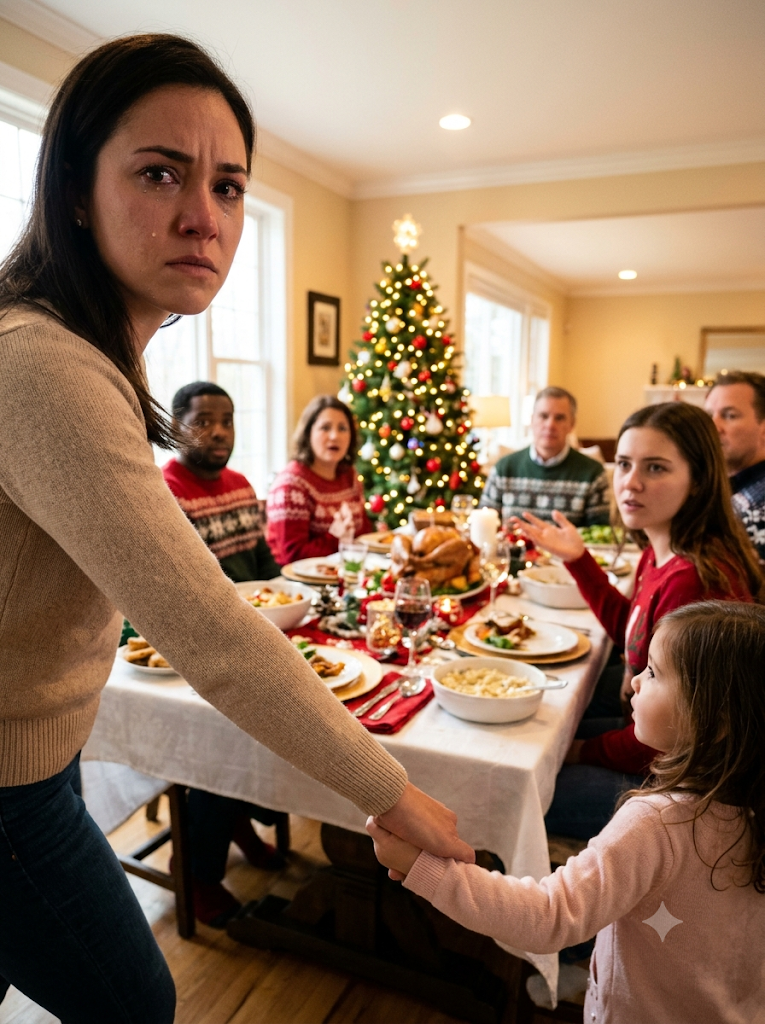
At Christmas, Mom insisted that I come to dinner because Brandon’s fiancée, Sierra Langston, wanted the family together. Sierra came from a wealthy family with substantial property holdings, yet she treated me with more genuine interest than my parents had shown in years. When she mentioned hearing about my commercial development, she smiled across the table. “Brandon told me you were doing really well. I admire people who build something from the ground up.”
Brandon lowered his fork and stared at her. Mom immediately asked about wedding flowers, while Dad reached for his scotch. Later, when I stepped onto the porch, Brandon followed and shut the door behind him. “You think Sierra’s impressed by a couple of rental houses?” he demanded. “You still mow rich people’s lawns, Hank.”
“I don’t need her to be impressed,” I answered.
“You’ll never be on my level.”
I looked him directly in the eyes. “You’re right. I passed you years ago. You just haven’t noticed.”
He remained frozen on the porch as I walked toward my truck.
In February, an officer from the city’s business compliance division called about alleged violations at my Maple Avenue development. I arrived at city hall with permits, zoning approvals, inspection reports, and equipment records, only to learn that an anonymous complainant had questioned nearly every aspect of the project. The officer found no immediate evidence supporting those accusations, but the investigation delayed construction. One contractor withdrew, the bakery requested protection against further delays, and a design agency abandoned its lease negotiations entirely.
One evening at a hardware store, I caught myself gripping a shelf of plumbing supplies because my legs had suddenly weakened. I wasn’t afraid of losing everything, but exhaustion had begun making ordinary setbacks feel unbearable. The next morning, Grandpa Frank arrived at the construction site carrying two coffees. He listened while I described the suspicious loan, false reviews, lost university contract, and city complaint, then leaned against his rusted Ford.
“Your grandmother used to say there’s a special kind of fool who mistakes silence for weakness,” he told me. “You’re patient, Hank, but patience doesn’t mean allowing someone to destroy you.”
I hired professional help to document the online allegations, strengthened my company’s security, and organized every permit and inspection record. Within weeks, the city formally dismissed the complaint, and both the bakery and chiropractor recommitted to the plaza. We resumed construction, although the design agency never returned. One morning, while loading mulch beside the entrance, I spotted Brandon’s black Lexus idling across the street.
The vehicle remained there for several minutes before pulling away.
I watched it disappear and returned to my wheelbarrow. For the first time, I understood that protecting my business meant more than working harder. I needed evidence, boundaries, and the courage to stop pretending the conflict didn’t exist.
Then Brandon sent me an invitation to his wedding.
### Part 3: A Cruel Wedding Invitation Leads Me Toward My Brother’s Hidden Lies
The envelope arrived in expensive cream-colored paper, my name printed in gold beneath Brandon’s return address. Inside was an invitation to his September wedding at the Langston estate in Riverbend Hills, complete with navy ribbon and elaborate lettering. At the bottom, Brandon had written a personal message. “Hope this helps us move forward. Formal attire, please. Leave the work boots at home. Wouldn’t want mud in the rose garden.”
I read it twice before placing it on my kitchen counter. Brandon had spent years disguising insults as jokes, and even his wedding invitation couldn’t resist humiliating me. What troubled me more was Sierra, who seemed to believe she’d found an ambitious, trustworthy man with a successful business career. I remembered her defending his accomplishments at Christmas and wondered how much of his history she’d actually seen.
The following morning, I contacted Alex, a former developer from Brandon’s failed startup. We’d met at a mutual friend’s barbecue, where Alex mentioned disputes over unpaid compensation and misleading financial claims. I asked whether he’d be willing to discuss what happened, and he agreed to share records he was authorized to disclose. What he showed me was worse than I expected.
There were investor presentations containing inflated user statistics, correspondence about unpaid contractors, and internal messages revealing that Brandon had exaggerated his financial position. One exchange included a contemptuous remark about Sierra’s father, whose family was considering investing in Brandon’s latest venture. Another showed that Brandon had presented financial projections as if they were established results. Alex had retained supporting records from his employment dispute, including dated communications that could be independently verified.
I called Emily, my former girlfriend, who worked in corporate public relations and reputation management. We hadn’t spoken much since separating over conflicting schedules, but she remembered how my family treated me. After I explained the business complaints and Alex’s records, she asked a question that stopped me. “Hank, are you trying to embarrass your brother, or prevent him from deceiving people who trust him?”
I looked at Brandon’s wedding invitation on the table. “Both, probably,” I admitted. “But Sierra deserves to know the truth before she marries him.”
Emily helped me separate firsthand records from speculation and advised me to have the material reviewed before sharing it. I consulted an attorney, assembled a concise timeline, and preserved the original correspondence. Separately, I submitted the business complaints and suspicious loan documentation for appropriate investigation. Although the evidence connected several incidents to circumstances involving Brandon, I refused to describe suspicion as certainty.
Then I requested a conversation with my parents. Mom invited me for lunch, and we sat on the patio while Dad prepared chicken on the grill. I placed a folder between them and explained what had happened to my business over the previous year. Mom’s expression changed as she examined the records, while Dad kept turning the same pair of grilling tongs in his hands.
“Why would Brandon do something like this?” Mom whispered.
“Because he’s angry that I succeeded without your help,” I answered. “But I’m not asking you to choose your favorite son. I’m asking you to recognize what’s happening.”
Dad finally looked at me. “He’s still your brother.”
“He’s my brother,” I said, “and that doesn’t give him permission to hurt people.”
Neither parent offered an apology, but Dad took the folder inside instead of dismissing it. Mom remained on the patio long after I left, staring at the empty chair across from her. I couldn’t tell whether she was grieving what Brandon had done or the years she’d spent refusing to see him clearly.
Emily contacted the Langston family’s legal representative with the verified financial concerns and supporting records, requesting that they be reviewed privately before additional investment decisions were made. Sierra’s family had already scheduled its rehearsal dinner for Friday at six, and the material reached their representatives shortly before the guests assembled. I didn’t attend the opening of that dinner. I stayed home, uncertain whether Sierra would confront Brandon, postpone the wedding, or decide the documents were none of my business.
At 6:17 p.m., my telephone rang.
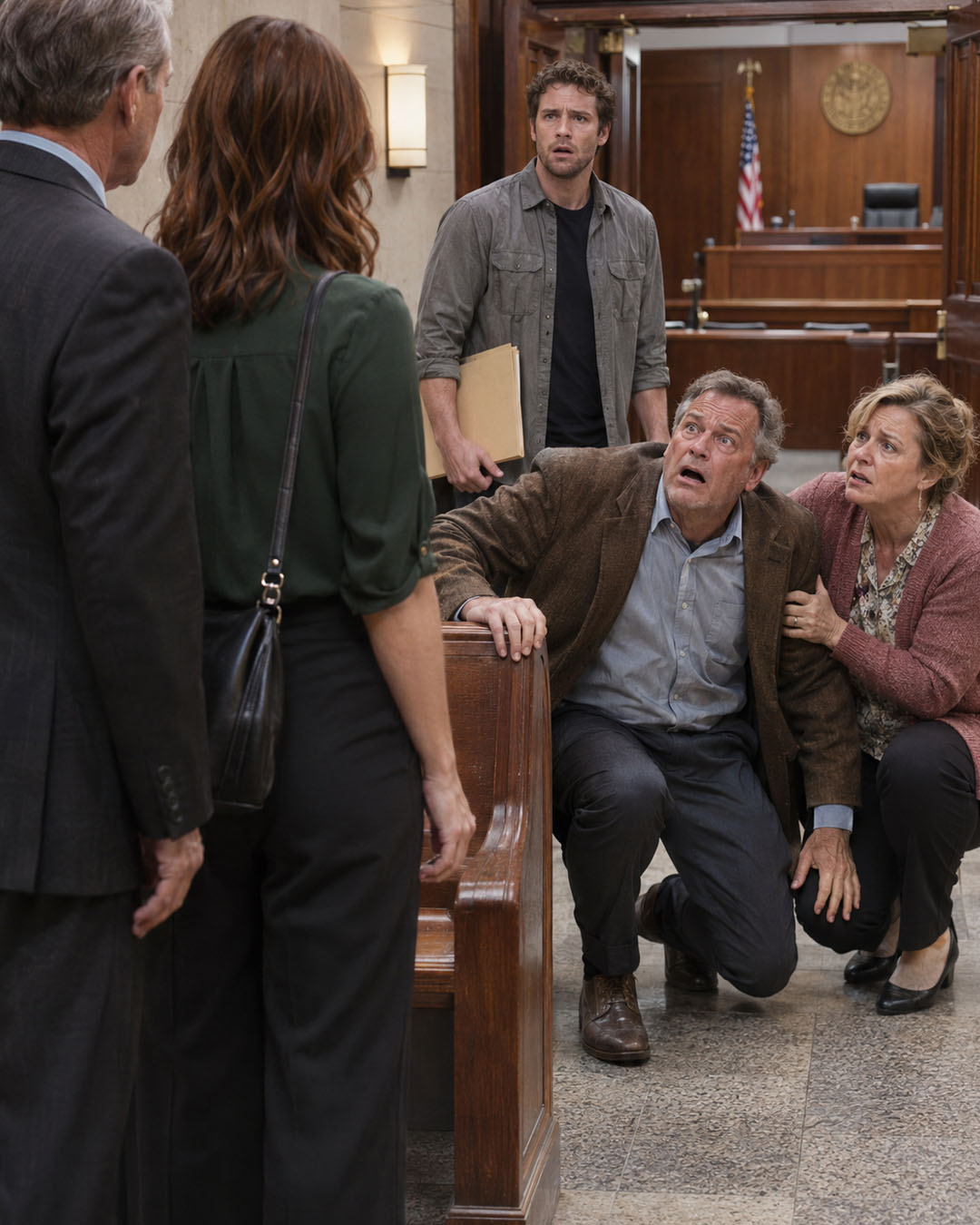
Grandpa Frank was calling from the Langston estate. Behind his voice, I heard raised voices, a door closing, and the sharp clatter of something dropped onto a hard floor. “Hank,” he said, “you’d better get down here. The dam just broke.”
When I arrived, guests were gathered outside the dining room, whispering beneath enormous flower arrangements. Through the archway, I saw Sierra standing beside her father, holding a folder against her chest. Brandon stood opposite them, his face bright red, gripping printed emails in both hands.
And for once, nobody was listening to his excuses.
### Part 4: The Wedding Collapse Reveals Who Truly Built a Successful Life
“Those numbers weren’t real?” Sierra asked, her voice trembling as she held up an investor presentation. Brandon looked toward the doorway, searching the gathering crowd for support. “They were projections,” he insisted. “Everybody presents the strongest possible version of their business.”
Her father stepped forward. “You represented those figures as actual performance during our investment discussions. Was that a mistake, Brandon, or did you deliberately mislead us?”
Brandon couldn’t answer immediately. That hesitation changed Sierra’s expression more than any argument could have. “I told my parents you were the most honest man I’d ever met,” she whispered. “I defended you every time someone questioned your business.” She turned another page and found the message in which Brandon had mocked her father. Her hand shook as she lowered the document.
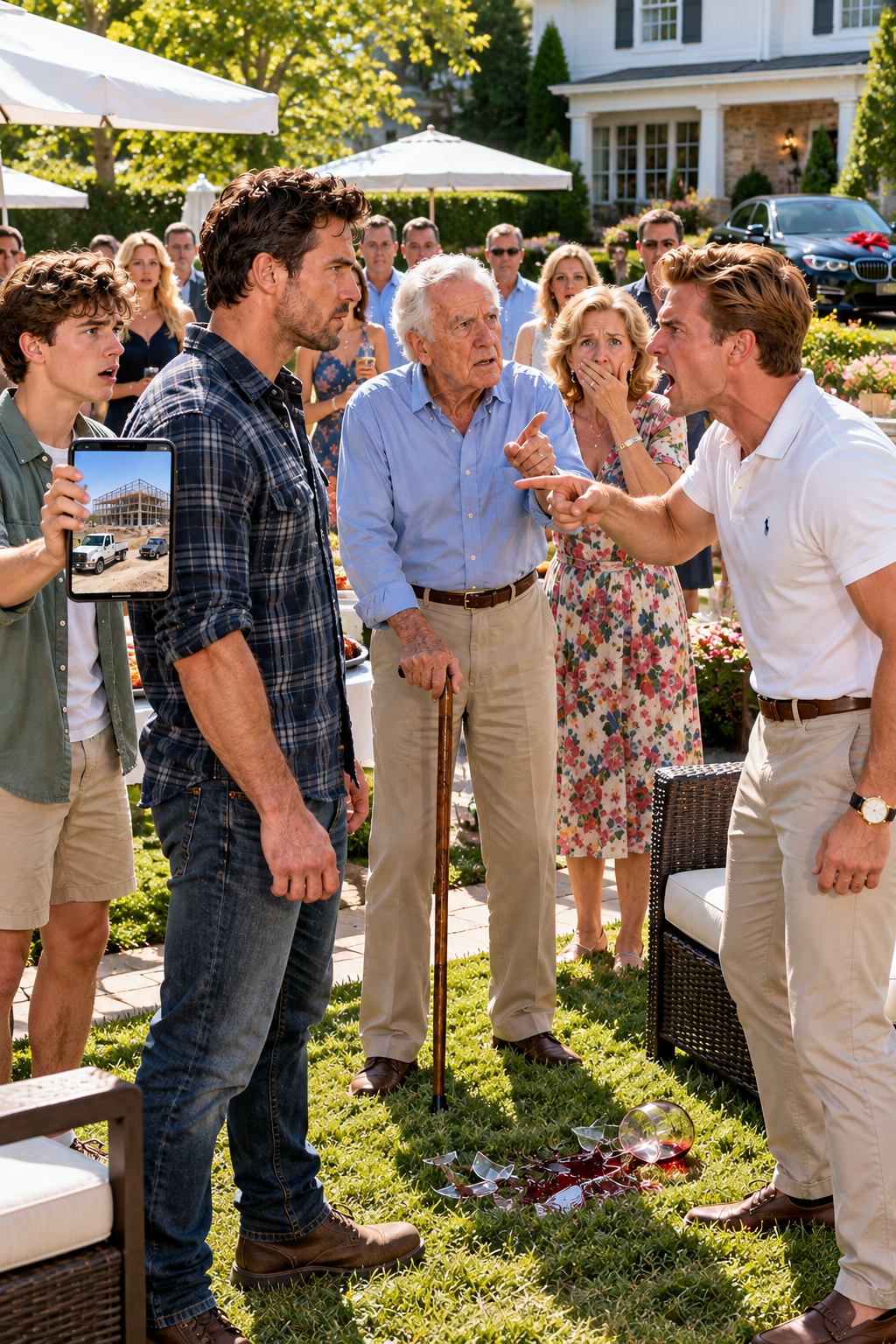
Then Brandon spotted me near the entrance. “Hank!” he shouted, pushing past an empty chair. “You did this! You couldn’t stand seeing me happy, so you decided to destroy my wedding!”
The room fell silent as he approached. I stopped several feet away and looked directly at him. “I didn’t invent those financial statements, Brandon, and I didn’t write those messages.”
“You’ve always hated me!”
“I hated being treated like I didn’t matter,” I answered. “But I never needed you to fail so I could succeed.”
He raised the printed emails as if they might somehow prove his innocence. Dad entered from the adjoining hallway, followed by Mom and Grandpa Frank. For a moment, I expected my father to order me out, just as he’d always expected me to swallow an insult for the sake of family harmony. Instead, he walked to Brandon’s side and quietly asked, “Are those documents real, son?”
Brandon looked at him with disbelief. “Dad, you’re supposed to be on my side.”
“Answer the question.”
“I exaggerated a few things,” Brandon snapped. “That’s how business works!”
Dad closed his eyes. Across the room, Sierra removed her engagement ring and set it beside her untouched dinner plate. “Not in the business of being my husband,” she said. Her father placed a hand gently against her back, and Brandon suddenly seemed unable to decide whether to plead with her or continue blaming me.
Then Sierra’s father revealed something nobody in our family had known. The Langstons had been discussing a substantial investment in Brandon’s new holding company, contingent on financial representations he had supplied. Their attorneys had now identified serious discrepancies, and the funding would not proceed. Several other commitments were linked to that financing, meaning the collapse of the proposed deal could place Brandon under significant financial pressure.
That was the final twist: the successful career my parents had celebrated was far less secure than Brandon had led anyone to believe. The investment from Sierra’s family wasn’t simply a promising opportunity. It was the money he had been counting on to keep his newest venture alive.
Brandon turned toward me, his voice reduced to a desperate whisper. “You ruined everything.”
I looked at Sierra, then at our parents. “No,” I said. “You made the decisions. People are finally seeing them.”
Wedding staff escorted Brandon into a private room when his shouting resumed. I remained long enough to speak briefly with Sierra, who was pale but composed. She thanked me for bringing the documents to her family’s attention, although neither of us pretended the discovery had been painless. As I left, Grandpa joined me beside the entrance, leaning heavily on his cane.
“You did the hard thing,” he said.
“I’m not sure I did it the right way.”
“Then make sure what happens next is about protecting yourself, not punishing him.”
The Langstons canceled the wedding the following day. Sierra ended the engagement publicly without detailing Brandon’s financial problems, while her family’s attorneys began reviewing their investment discussions. Brandon claimed the documents were misleading, but the verified records and statements from former colleagues made his explanations difficult to sustain. His funding arrangements unraveled, and Dad refused to guarantee another loan or rescue the company.
Two weeks later, my father called while I was inspecting newly installed irrigation at the plaza. I almost ignored the number, but something made me answer. “Hank,” he said, his voice unusually quiet, “I spent a long time thinking I knew which one of my sons would make something of himself.”
I leaned against my truck and waited.
“I was wrong about you. For years.”
It wasn’t a grand apology, but I could hear how much it cost him to say it. Mom sent me a handwritten letter a few days later, along with childhood photographs I’d never seen. One showed me at eleven, standing proudly beside a wooden bench I’d built with Grandpa. Another captured me laughing in the backyard, covered in dirt, with both parents watching from the porch. I put the photographs in a drawer because I wasn’t ready to forgive everything, but I couldn’t bring myself to throw them away.
A later update from the bank’s fraud investigation added one more painful detail. The suspicious loan application had included contact information associated with Brandon, strengthening the evidence that someone close to me had attempted to misuse my business identity. My attorney helped me preserve the records and protect my company while the matter was reviewed. I didn’t need another family confrontation to understand what it meant.
That spring, Maple Avenue Plaza reached full occupancy. The bakery opened first, filling the courtyard with the smell of fresh bread every morning, and the chiropractor welcomed patients shortly afterward. I signed two more commercial leases, hired five additional employees, and purchased another work truck. When my accountant told me annual revenue had passed one million dollars, I sat quietly in the office where I’d once worried about making payroll.
Grandpa visited the plaza that afternoon carrying a folding chair and a bag of lemon drops. He watched my crew install flower beds along the sidewalk, then pointed his cane toward the storefronts. “Your grandmother would have loved this,” he said. “Especially the fact that you built it with your own hands.”
I pulled up another chair and sat beside him. For once, we didn’t need to discuss Brandon, my parents, or the past. We watched families enter the bakery and workers carry equipment through the courtyard, surrounded by something real.
Brandon eventually moved to another state and found consulting work at a small technology company. Months later, he sent me a single message: “You think you won?”
I read it while standing beneath the maple trees I’d planted outside the plaza, then slipped my phone into my pocket without replying.
For most of my life, I’d measured success against everything my parents gave Brandon and everything they withheld from me. The BMW, Ivy League tuition, expensive introductions, family applause, and promises of an extraordinary future had once seemed like proof that he mattered more. But standing there, watching my employees finish another honest day’s work, I understood something I’d spent years overlooking.
My brother had been handed opportunities. I’d learned how to create them.
I wasn’t the disappointment my family had imagined, and I didn’t need to become their new golden child to prove it. I was simply Hank Dawson, a man who built a life he could respect, surrounded by people who valued what he did rather than the name he carried.
And that was finally enough.
THE END.
All characters and events in this story are fictional, created for storytelling and entertainment purposes. Thank you sincerely for reading. Your feedback and support are invaluable and motivate me to continue sharing more stories with you.