My Three Children Left Me After Heart Surgery Over $32 in Parking—Then a Stranger Showed Me What They Were Really Doing
I woke up after heart surgery to three empty chairs. My children had promised to stay, but a nurse said they’d left because parking cost thirty-two dollars. While I struggled not to cry, a well-dressed man entered carrying a yellow school lunch ticket I’d handed out decades earlier. He said I’d once kept him from going hungry. Then a hospital advocate brought me a letter bearing my oldest son’s attorney’s name. Suddenly, I understood that the parking excuse wasn’t the cruelest part.
Part 1
The first thing I saw when I opened my eyes was the rain sliding down the hospital window. The second was three empty blue chairs lined up against the wall, their plastic seats untouched by purses or coats. My throat felt like sandpaper, and a machine beside the bed marked my heartbeat with soft, stubborn beeps. I had survived heart-valve surgery at sixty-five, but there was nobody there to tell me I had.
A nurse named Tessa came in when I pressed the call button. She had lavender scrubs, a crooked ponytail, and the gentle impatience of someone managing too many things at once. After helping me drink a little water, she asked whether I was comfortable. I asked the question I’d been saving since waking: “Where are my kids?”
Tessa glanced at the chairs before adjusting my blanket. “They were here while you were in surgery, Mrs. Whitcomb,” she said, “but they went home about an hour ago.” I asked whether something had happened to my grandchildren, and she shook her head. “Your oldest said the parking garage was getting expensive, and you’d probably sleep until tomorrow.”
I thought the anesthesia had made me misunderstand her. “They left over parking?” I whispered, and she answered that the daily charge was thirty-two dollars. The monitor quickened as I remembered my children standing around my kitchen table just two nights earlier, promising that whatever happened, I wouldn’t wake up alone. Tessa pulled up a chair, but her kindness made the other three look emptier.
My oldest, Aaron, was forty-two and ran a struggling bookkeeping firm outside Seattle. My daughter, Brooke, taught fitness classes between raising two teenagers, and my youngest, Colin, sold appliances and drove a truck he couldn’t afford. I’d helped each of them when life got tight: a substantial loan for Aaron’s office, monthly help for Brooke, and my signature on Colin’s vehicle financing. I never kept score because their father, Paul, had died ten years before, and I thought being available was what remained of my job as a mother.
At home in Ballard, I lived in the little pale-green bungalow Paul and I bought before our children started school. Its porch steps tilted slightly, and the cherry tree out back still held the initials Aaron carved when he was twelve. The house had become valuable while my pension stayed modest, something Aaron reminded me of whenever he suggested I “unlock some equity.” I always said no; I wanted to grow old beneath that tree, not turn every memory into a payment.
Footsteps sounded in the hallway, steady and unhurried, and a man in a charcoal coat appeared at my door. He carried a leather briefcase but looked more nervous than a businessman should. “Mrs. Elaine Whitcomb?” he asked, and I nodded, suddenly self-conscious about my flattened hair. He set the case down and said, “You probably don’t remember me, but you bought my school lunch every day in third grade.”
He introduced himself as Julian Park, though I remembered a thin boy named Julian Price who wore the same red sweatshirt all winter. Back in 1980, I was a nineteen-year-old classroom aide earning just enough to help my widowed mother pay the electric bill. Julian used to sit at the far end of the cafeteria, pretending he wasn’t hungry while the other children opened their lunchboxes. I bought him lunch tickets quietly and told him the kitchen always made extra food.
Julian opened a small envelope and slid one faded yellow ticket into my palm. “You gave me two on the last day of school,” he said. “I saved this one because I was afraid nobody would ever help me again.” The paper felt thin as a dried leaf, and I found myself crying for reasons that had nothing to do with the parking garage. Then he glanced at the empty chairs and asked, “Elaine, did you know your children were asking questions about your ability to make decisions?”
Part 2
I stared at Julian, certain I’d heard him wrong. “A review of what?” I asked, and he pulled the visitor’s chair closer without touching the monitors or the tubing at my arm. He told me he chaired the charitable board supporting this hospital and several community clinics, but that he was here as an old friend, not my physician. My neighbor Joyce had helped him find me after he contacted our old elementary school, and she’d mentioned my operation because I had wanted visitors once I was awake.
Julian hadn’t come to repay a debt with a grand gesture. He’d meant to bring flowers, show me the ticket, and tell me about the meal program he’d built for children whose families were receiving hospital care. Instead, Joyce had told Julian that Aaron was asking troubling questions about my decision-making, and Julian urged me to speak directly with the hospital patient advocate. “I don’t have your private records,” he said. “But Joyce sounded worried, and you deserve to know what is happening.”
The advocate arrived with Tessa and a sealed envelope addressed to me. Inside was a copy of a letter sent by an attorney representing my children, requesting medical information and proposing an evaluation of my decision-making ability after surgery. My name filled the top of the page in stiff black letters. At the bottom, a note said the family planned to pursue emergency authority over my finances if doctors found me unable to act for myself.
“They can ask,” the advocate said, “but asking doesn’t make them your decision-makers, and we cannot just hand over your medical records.” She offered to contact the hospital social worker and an attorney of my choosing. I thanked her and asked her to place a restriction on visits while I figured things out. The ordinary word “visits” nearly made me laugh; I’d spent the afternoon begging the room to feel less empty.
Julian sat quietly while I called Joyce, my friend of thirty years, who knew where I kept every important paper. Her voice cracked when I told her the three children had left. Then she said something I couldn’t stop hearing: “Elaine, Aaron asked me last week whether you ever forgot to pay your property taxes. I thought he was just worried about you.” I’d never missed a property-tax bill, and Joyce knew it.
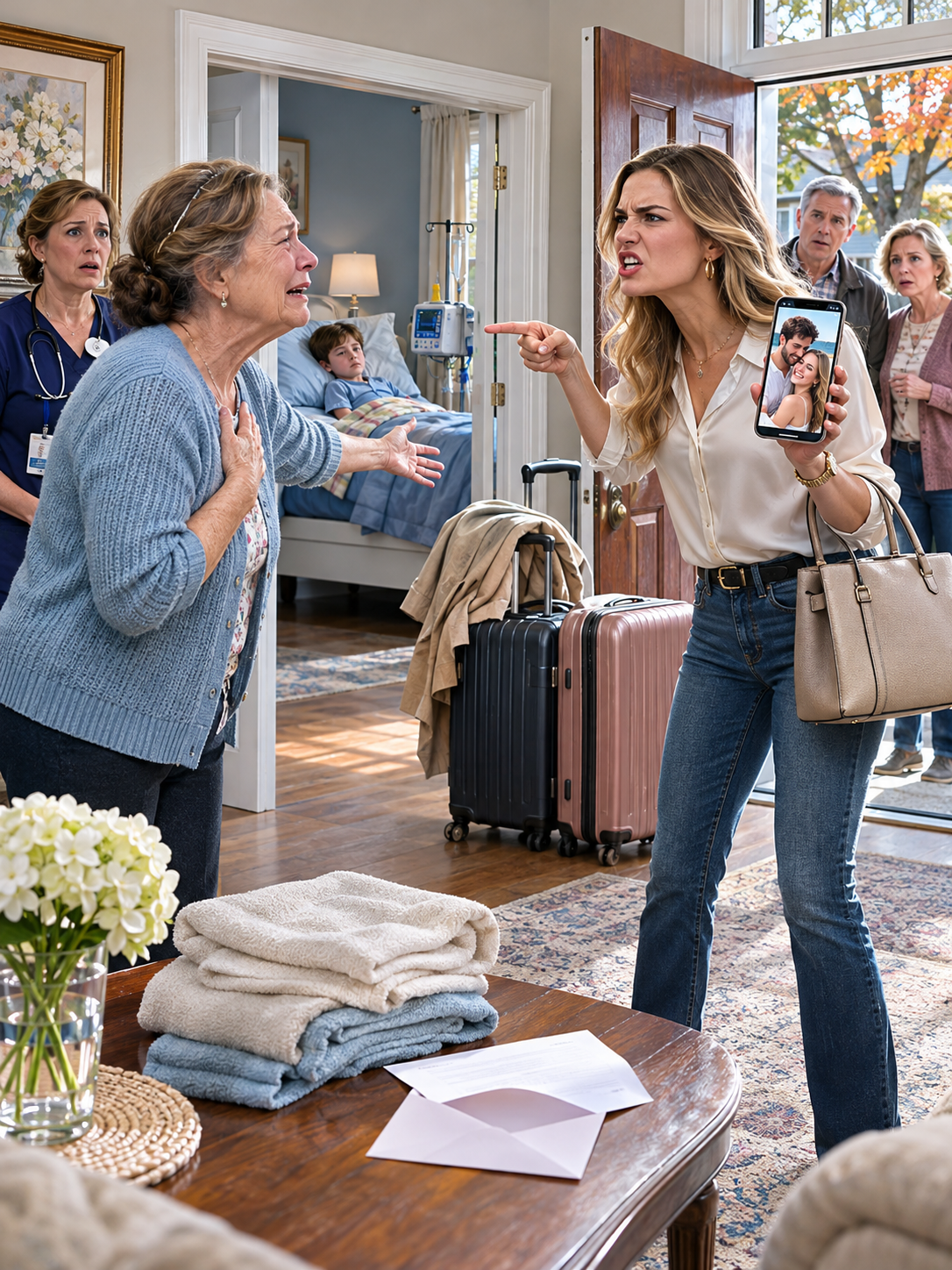
I remembered the little incidents I’d dismissed as concern. Brooke had offered to tour retirement communities with me even after I’d said I loved my house. Colin had asked whether I’d sign something allowing him to receive my mail while I recovered. And Aaron had casually asked me, during a Sunday football game, how long someone needed to be confused before a family could step in and “help.”
“Why didn’t they tell me?” I asked, and Julian didn’t pretend to have an answer. Instead, he described his childhood after his mother became ill, the foster homes, and the couple who later adopted him. He now helped fund hospital meal programs because he remembered what hunger felt like, not because he believed a single lunch ticket could buy lifelong gratitude. “What you did gave me dignity,” he said. “You should have the same dignity now.”
Joyce arrived with my reading glasses and a worn folder of household records. My mortgage had been paid off for years; the property-tax receipts and insurance statements were neatly arranged inside. At the bottom was a copy of the loan agreement Aaron had signed when I gave him sixty thousand dollars, none of which he’d repaid. I held it beside the attorney’s letter, wondering whether helping my children had somehow become the evidence against me.
That evening, a local elder-law attorney named Mara Ellis spoke with me by video after my care team confirmed I was alert enough for the conversation. She explained that an emergency court request would not automatically take away my rights, and that we’d have an opportunity to respond. Before ending the call, she checked the public court docket and leaned toward her screen. “Elaine,” she said, “your children didn’t just ask the hospital questions. Aaron filed a petition at 3:46 this afternoon.”
Part 3
I slept badly, waking whenever shoes squeaked in the corridor. The next morning, my surgeon said my recovery was proceeding well but urged me to rest. I looked at him over the edge of my water cup and said, “Then you may have to ban my children.” He arranged a social worker visit and said we could consider an independent assessment when I was ready.
Mara visited that afternoon with the petition and a yellow legal pad. Aaron’s filing described me as forgetful, impulsive, and unable to manage money, claiming I’d made “unsecured loans against my own interests.” Brooke and Colin had signed statements about my supposed confusion, including a family dinner where I mixed up two cousins’ birthdays. I remembered deliberately calling Colin by the dog’s name that evening.
Another page listed my house’s estimated value at more than a million dollars. Mara pointed out that the petition requested broad control of my finances and raised the possibility of selling property to pay for care. “The judge must evaluate evidence and less restrictive alternatives,” she explained. “Your children cannot simply announce that you’re incapable and take your house.” The fact that they had tried still turned my stomach.
The children arrived the next day with flowers, a balloon, and a cream envelope. Brooke kissed my cheek, smelling of expensive hand lotion, while Colin stared at the window and tugged the string of the balloon. Aaron sat beside me and began talking about hospital bills in the patient, careful voice he used when persuading clients. “Mom, sign this authorization and we can handle everything while you recuperate.”
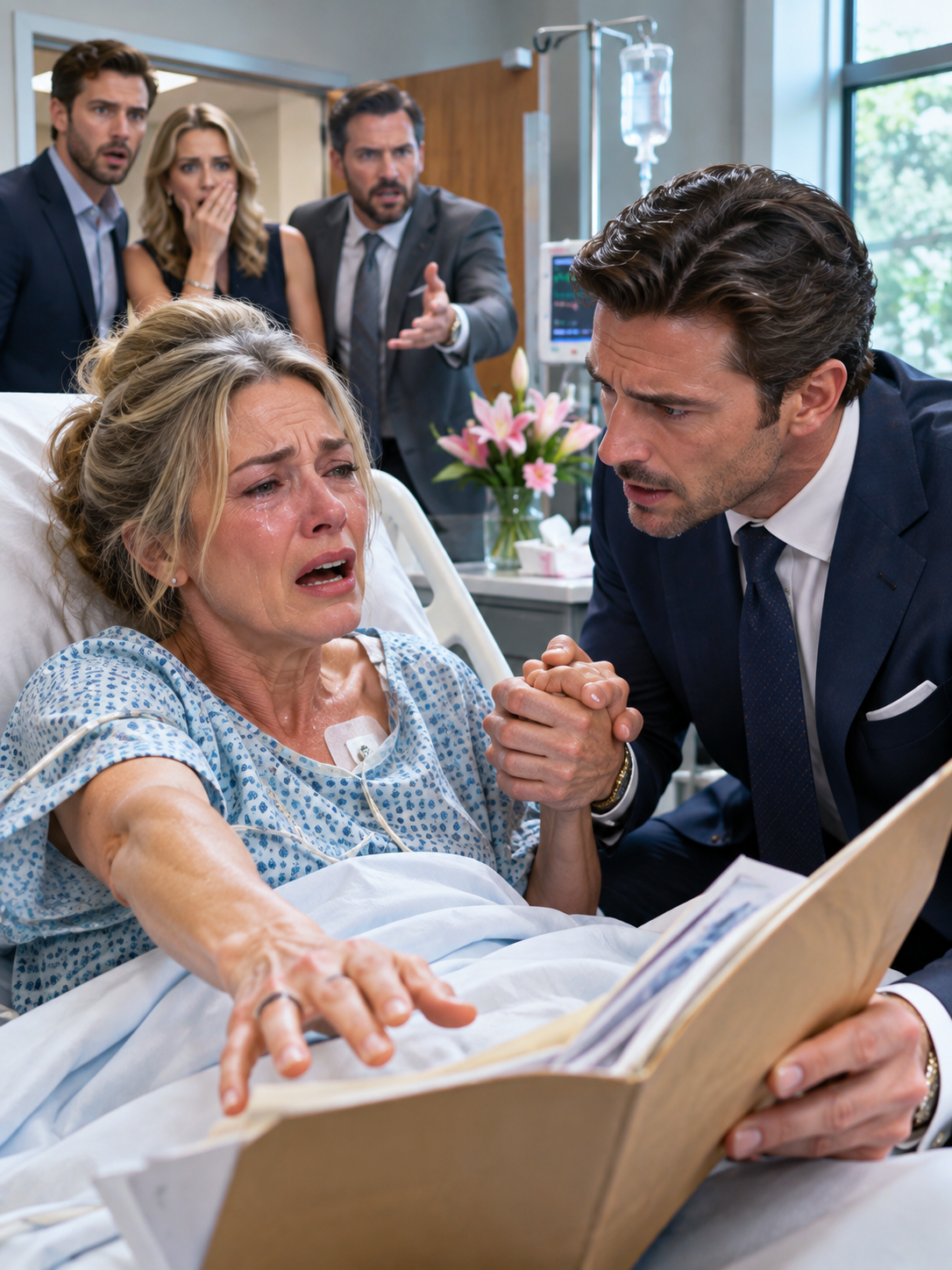
“Let me read it,” I said, reaching for my glasses. Aaron hesitated, then slid the papers across my tray table. They included a broad power of attorney that would take effect immediately, not a simple insurance authorization. When I asked why he needed authority to sell or mortgage my home, his face tightened and he said, “You’re proving exactly why we’re concerned.”
I pressed the call button and asked Tessa to bring Mara into the room. Aaron stood so abruptly his chair scraped against the floor; Brooke asked whether I was accusing them of something, and Colin remained silent. “I’m asking why you filed court papers while I was unconscious,” I said. Brooke’s flowers crackled in their plastic wrapping as her grip tightened.
Mara came in with Joyce and calmly explained that I had my own legal representation and would respond to the petition. Aaron insisted he’d acted out of love, pointing at my loans as proof I couldn’t be trusted with money. I said the loans were to him, his sister, and his brother, not strangers. He opened his mouth, then closed it, as if he’d forgotten I’d kept copies.
Brooke began crying and admitted that Aaron had told them he was protecting the house from my “bad decisions.” She’d visited a residential care facility but found the idea unbearable, she said, and yet she’d signed because her credit-card bills had gotten out of control. Colin finally spoke: “Aaron said there’d be enough from the sale to cover your care and help us get caught up.” The words seemed to hang in the air longer than the monitor’s beeps.
I asked whether any of them had stayed to see me wake up. Brooke wiped her face and said Aaron received a call from his lawyer about a filing deadline. He’d told the others I would be asleep and wouldn’t remember, so they left; Colin used the garage fee as an excuse when Tessa asked. Aaron snapped, “We were trying to do what was necessary,” but for the first time none of his siblings agreed.
I pictured their three cars leaving the garage while I slept. I’d raised them, held their hands at dentist appointments, and cheered at games. The betrayal didn’t make me stop loving the children I remembered, but it changed what I could allow the adults in front of me to do. I looked at Aaron and asked, “When you sell my house, where exactly were you planning to put me?”
Part 4
Aaron wouldn’t answer, so Brooke did. She named a facility north of Seattle, one I’d never visited, and admitted she’d asked about its least expensive shared room. My cherry tree, my porch swing, and the kitchen where Paul made pancakes every Sunday were already numbers on someone else’s plan. I told them our visit was over, and Tessa helped them leave while Mara stayed to discuss what I wanted next.
I wasn’t interested in a dramatic speech or a family meeting where everyone cried and went home unchanged. I wanted my medical privacy respected, my property protected, and my recovery to belong to me. With Mara’s help, I replaced an outdated authorization naming Aaron, designated Joyce as my medical contact, and arranged an independent assessment when my doctors judged me ready. The hospital documented my preferences, and Mara prepared a detailed response to the court.
At the hearing the following week, I appeared by secure video with Mara beside me. The judge considered my medical team’s reports, the independent assessment, the household records, and the petition’s reliance on loans made to the petitioners themselves. Brooke and Colin withdrew their support; Aaron’s lawyer tried to reframe the dispute as a misunderstanding about future care. The court denied the emergency request, leaving any further challenge subject to proper evidence and procedure.
When the call ended, I didn’t cheer. My chest still hurt when I laughed, and my fingers were tired from gripping Joyce’s hand. Mara reminded me that the denial didn’t prevent anyone from ever filing something else, but we now had documentation and a plan to respond. For the first time since surgery, I slept through the afternoon without dreaming of strangers carrying my furniture away.
I went home days later, moving carefully through rooms that smelled of lemon soap and rain-damp wood. Joyce had put fresh milk in the refrigerator and changed the sheets, while a neighbor had swept leaves from the porch. Julian stopped by with groceries, asked before sitting, and listened as I described the house the way Paul had first seen it. He never suggested buying it, managing it, or taking charge of me.
A month later, Aaron mailed a check toward the loan and a long apology. Brooke sent flowers twice; Colin left messages saying he missed me, then asked whether I could help with another payment. I returned the flowers, directed money matters through Mara, and told all three that I was not ready for visits or phone calls. I couldn’t undo loving them, but I could refuse to make their guilt more comfortable at the expense of my safety.
As my strength returned, Julian invited me to advise his hospital network’s children’s meal program for a few hours a month. I met with cafeteria workers and volunteers, insisting that hungry children should be offered food without being made to explain their circumstances. With a grant from the hospital foundation, we expanded a family meal voucher program and started a parking-assistance fund for families who needed to stay nearby. Julian named neither project after me; I’d asked him not to.
The following spring, I stood in the hospital cafeteria watching a little boy study the price board, his jacket sleeves too long for his arms. His grandmother was upstairs receiving treatment, and he told the cashier he wasn’t hungry after all. I offered him one of our vouchers and said, “The kitchen made a little extra today. Would you help us with it?” His face brightened as he accepted, and I suddenly remembered Julian at eight years old.
That afternoon I drove back to my green bungalow and sat beneath the cherry blossoms with a cup of tea. The three chairs at my bedside had taught me something painful: sharing blood doesn’t guarantee that someone will show up when it matters. I hadn’t forgiven my children, and I wasn’t waiting for them to become different people before enjoying the years ahead. I had my home, my health to rebuild, and the quiet freedom to choose who was welcome inside.
Legal Notice: This story is a work of fiction. Names, characters, businesses, events, and incidents are the product of the author’s imagination or are used fictitiously. Any resemblance to actual persons—living or dead—or to actual events is purely coincidental. Thank you! 💓
WordsCharactersReading time