My Wife Lay in the ICU While Her Mother and Six Sisters Smiled Outside—Then I Found the Evidence They Tried to Bury
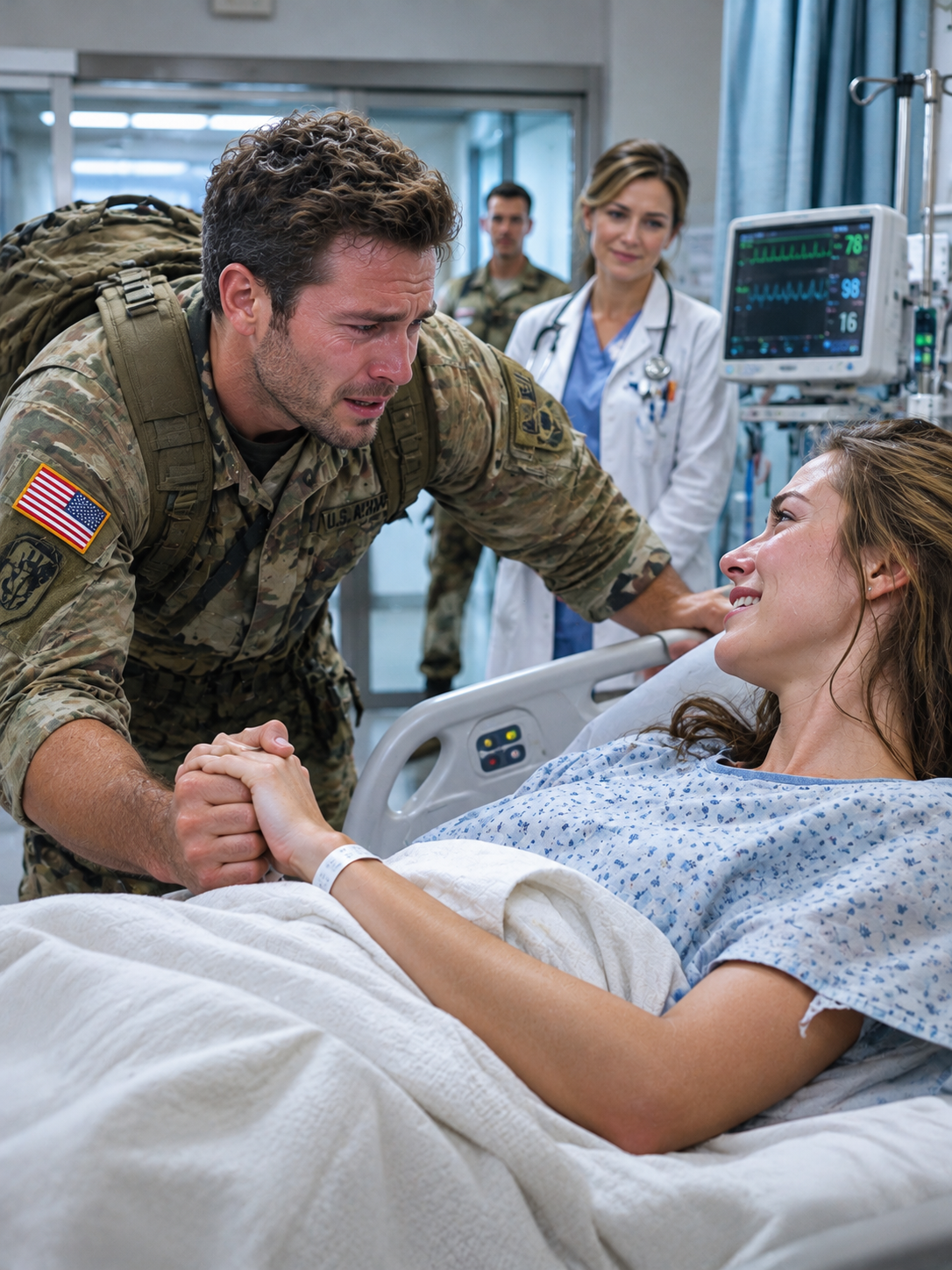
I came home from a seven-month Army deployment expecting my wife to meet me at the door. Instead, I found her unconscious in intensive care, with multiple fractures and a serious head injury, while her mother and six sisters sat outside laughing over coffee. They called it a burglary. The detective warned me that her family practically owned the county. But my wife had anticipated danger long before I returned, and the first clue she left behind would expose a secret far bigger than the attack itself.
Part 1
The hospital smelled of burned coffee. Celeste Voss was laughing beside a vending machine, surrounded by her six daughters like guests waiting for lunch. My wife, Leah, lay behind the intensive care doors, and a nurse had told me eleven hours earlier that she might not survive. I stood in my dusty military boots, unable to understand how Leah’s mother could laugh. My boarding pass was still folded inside my jacket pocket.
Dr. Miriam Cho met me outside Leah’s room and described multiple fractures, serious head trauma, and a long recovery ahead. When I asked if someone had attacked her, she said the injuries raised that concern, although investigators would determine what happened. Through the glass, I saw Leah’s dark hair against a pillow and a machine helping her breathe. The doctor’s voice softened when she saw my face, and somehow that frightened me more.
I pressed my palm against the glass. Seven months earlier, Leah had stood on our porch in a yellow sweatshirt, reminding me how she liked her pancakes. Now splints supported her hands, and the monitors sounded impossibly loud. “I’m home, Lee,” I whispered before looking for whoever had called this a burglary. I thought of the welcome-home card Leah always hid on the refrigerator.
Detective Owen Bell held a paper cup beside the nurses’ station. He said electronics were reportedly missing and the back door supposedly forced, yet photographs showed no frame damage. When I asked why the Voss family reached the hospital before the ambulance, he stared into his coffee. “Major Hart, that family has friends in the police department, the courthouse, and half this county.” His badge tapped against his belt as he shifted uneasily.
Celeste approached in pearls and citrus perfume. “Caleb, the girls and I have decided to move Leah to a private facility,” she said, as casually as changing caterers. I told her the doctors hadn’t proposed a transfer and that I was Leah’s husband. Her smile sharpened: “You’ve been gone all year. We were here when she needed family.” She never asked if Leah had regained consciousness.
“You were here before the ambulance,” I said. Ingrid stopped scrolling; Maren and Brooke exchanged a glance, while Daphne and Sloane watched the elevators. Youngest sister June crushed her coffee sleeve. Celeste stepped closer: “Don’t accuse people you don’t understand.”
I called Aaron Pike, the attorney who had prepared our wills, and asked about Leah’s medical instructions. Hearing “attorney,” Celeste accused me of making a private tragedy public. I told her I wanted Leah’s wishes honored and walked away. My rank couldn’t decide a civilian case, and Leah needed me useful, not furious.
June caught me beside the ice dispenser, twisting a hair elastic around her wrist. “It wasn’t a burglar,” she murmured, then shook her head when I asked what she’d seen. “I heard Leah tell Mom to leave. Then a chair fell, and Mom told me to stay in my car.” Her words barely carried over the clatter of falling ice.
Celeste called June from the elevator, and June flinched before hurrying away. Bell returned with a photograph of a broken gold earring beneath our dining table. I recognized the design from Ingrid’s birthday dinner, though that alone proved nothing. I remembered Ingrid complaining last summer that she had lost one earring. Still, the burglary explanation seemed less believable by the minute.
Aaron arrived that evening with a health care directive Leah had signed the previous fall, naming me as her representative and excluding Celeste. The hospital reviewed it, ending Celeste’s attempt to arrange a transfer. Then Aaron handed me an envelope sealed in Leah’s handwriting: “For Caleb, if my family says it was an accident.” I knew that handwriting better than my own.
Part 2
I opened the envelope in the hospital chapel beside flickering electric candles. Leah’s handwriting slanted uphill, as it did when she rushed. “I’m sorry I didn’t tell you,” the letter began. “I found something at Voss Aerospace that could hurt people, and Mom has been trying to make me give it back.” The chapel clock ticked while I stared at those words.
Leah worked in compliance at her family’s aviation-parts company, refusing a promotion under Celeste. She described altered inspection reports after failed tests and invoices that didn’t match shipments. She’d hired an independent auditor and preserved records with her lawyer rather than assume she knew everything. At the bottom she wrote, “Please don’t let them tell you I was confused.” She had once joked that the company considered paperwork optional whenever the family was involved.
I read the last sentence three times. I wanted to confront Celeste, but Aaron reminded me that Leah wanted qualified investigators to receive the evidence. He contacted auditor Hannah Ortiz and prepared referrals to appropriate authorities. My commander approved emergency leave and reminded me that my uniform conferred no authority over civilian police. I kept hearing the doctor list Leah’s injuries while I tried to focus on what needed doing.
Bell called that afternoon after his supervisor removed him from Leah’s case for questioning the burglary report. He’d documented the order and contacted state investigators. “I couldn’t even get an inventory of what was stolen,” he said over traffic noise. I thanked him and asked him to share only what he was authorized to disclose. He sounded beaten until we discussed preserving his notes; then his voice steadied.
I sat beside Leah as a nurse adjusted her blanket. Afternoon sunlight crossed the floor like it did in our kitchen, where she lined up herbs by the window. “They think they can erase you,” I whispered, “but you left a trail.” Her fingers moved against mine, and the nurse called a doctor. The yellow hospital blanket reminded me of the sweatshirt she wore when I left.
Two days later, Leah opened her eyes, weak after her breathing support was removed. Dr. Cho told me not to press her for answers. I assured her Celeste couldn’t decide her care. Leah stared at me, frightened, then rasped, “Back door. They had the code.” Even those few words exhausted her.
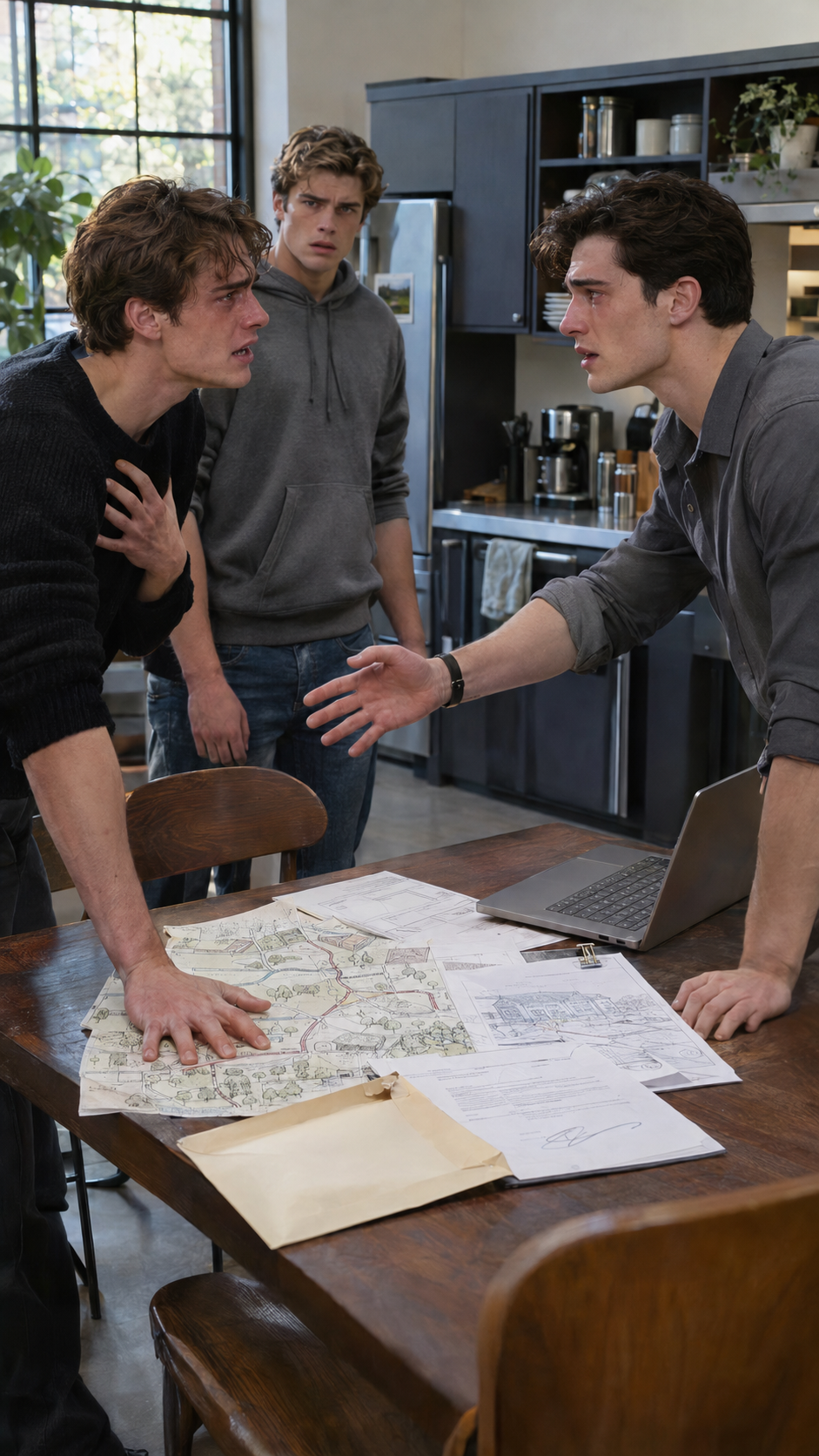
State investigator Naomi Reyes came the following morning and promised to stop whenever Leah tired. With her attorney present and physician’s approval, Leah described Celeste arriving uninvited to demand her computer and inspection files. Ingrid, Maren, and Brooke entered with her, using an old emergency access code. The confrontation began when Leah refused to surrender what they believed were the only copies. Her hands tightened around the blanket whenever she mentioned her mother.
Leah remembered Maren grabbing her arm and falling near the kitchen island. She said Ingrid and Brooke continued the attack while Celeste demanded the documents, though her final memories were incomplete. Leah’s breathing grew shallow as she spoke. Reyes ended the interview, promising to compare her account with independent evidence.
June arrived that evening with swollen eyes and a parking receipt. She told Reyes she’d arrived after Maren called and summoned emergency services despite Celeste’s objections. She showed a saved message from her mother: “Tell them she interrupted a break-in. Nothing about company files.” June seemed to expect comfort, but I only said Leah deserved the truth.
The next day, Hannah Ortiz sent Aaron an audit summary preserving original test results, revisions, and timestamps. It named Celeste’s trusted finance chief on several questionable approvals, a man who had retired the week before Leah was hurt. What had he known about the defective parts, and why had he vanished just as Leah asked questions?
Part 3
His name was Warren Keel, and for fifteen years he’d been the quiet man at Voss Aerospace family picnics who remembered every employee’s birthday. I remembered him carrying a tray of lemonade while Celeste gave speeches about integrity. Hannah’s audit showed his credentials approving altered reports on days he claimed to be out of the office. It didn’t prove he had entered those changes himself, but it gave investigators a reason to examine the access records closely.
As Leah recovered, Reyes and her colleagues reconstructed events inside our house. The back-door system recorded Celeste’s old code shortly before the emergency call; nearby footage showed her SUV pulling onto our street. Investigators located the missing document bag at a property connected to the family, though its contents were gone. None of those facts alone explained the assault, but together with Leah’s account and June’s emergency call, they made the burglary story impossible to accept at face value.
Ingrid, Maren, and Brooke were arrested after investigators presented evidence and obtained warrants. Celeste remained free during the next phase, which made me restless whenever my phone rang. I wanted every question answered immediately, but Reyes refused to pretend that suspicion and proof were the same thing. “If we take shortcuts,” she told me, “we give their attorneys a way to challenge the work your wife fought to preserve.”
Leah heard about the arrests while practicing how to move from her bed into a wheelchair. The therapist had placed bright tape on the floor to mark the safest route, and Leah stared at those strips as I explained what had happened. “Mom watched,” she said after a long silence. “She didn’t call for help, Caleb. She just kept asking about the files.”
I asked whether she wanted to see June, and she surprised me by saying yes. June came into the room holding daisies from a grocery store, their plastic wrapping crackling between her hands. “I’m sorry I didn’t stop them sooner,” she said, and Leah looked at the flowers instead of her face. “You called for help,” Leah answered, “but I need time before I can decide what you mean to me now.”
The independent audit reached federal investigators reviewing possible misconduct tied to government contracts. A separate team examined the company’s testing history, interviewed employees, and sought original records through lawful procedures. Warren Keel’s attorney eventually contacted investigators, and his account pointed to senior managers who had pressured staff to approve disputed batches. I didn’t hear the details then, only that the inquiry was expanding beyond our kitchen and that hundreds of honest workers could be affected by the findings.
A week later, Celeste appeared on a local television broadcast outside the corporate headquarters. She called Leah “a troubled daughter” and said the family prayed for her recovery. I switched off the sound before the reporter finished, but Leah had seen it from the doorway. Her hands shook around the handles of her walker, and she said, “She’s still trying to make me sound unreliable.”
Aaron helped Leah prepare a written response for her legal team rather than enter a public shouting match. The next morning, state investigators told us they had obtained additional communications about the plan to retrieve the documents, including instructions that Celeste had sent before the others entered our house. Charges against her followed after the evidence was presented to the court. When Reyes called to confirm the arrest, I expected satisfaction, but all I felt was an immense need to sit beside my wife.
Three months after the attack, Leah came home to a rental house outside Raleigh, not the kitchen where she had begged her own mother to stop. The place smelled of fresh paint and pine needles, and a ramp led to the front door for her walker. We ate takeout on the floor because the dining table hadn’t arrived, laughing when I realized I’d forgotten forks. That night, she slept with the hallway light on, and I lay awake wondering what the trials would demand of her next.
Part 4
By spring, Leah walked short distances with a cane, though bright lights still caused headaches. She chose to testify about the attack because, as she put it, “I spent my whole life letting Mom explain what I meant.” On the morning of court, I helped fasten the bracelet she’d worn on our wedding day, and she reminded me not to fuss with it twice. It was the first ordinary argument we’d had in months.
The courtroom smelled of polish and wet wool. Leah described the back door opening, the demand for her computer, and Celeste’s instructions while her daughters searched for the files. The defense challenged her memory of the worst moments, but investigators had the access logs, the emergency recording, and other evidence that supported the essential sequence. When asked why she’d refused to surrender the documents, Leah answered, “Because inspection reports aren’t family secrets when someone’s safety depends on them.”
June testified too, her voice unsteady as she described calling for help despite her mother’s objections. The prosecutor asked whether she had feared Celeste, and June said yes without looking at the defense table. I could see Leah watching her, expression guarded rather than grateful. Finally, June had chosen to speak, but it didn’t erase the years she’d spent protecting her mother’s version of every family story.
After several weeks, the jury returned guilty verdicts against the sisters charged in the assault and against Celeste for her role in arranging and concealing it. Sentencing came later, with penalties based on each person’s conduct. Leah gripped my hand when the verdicts were read, yet she didn’t smile or glance toward her mother. In the hallway she said, “I wanted a family, Caleb. I didn’t want to become a case file.”
Separately, federal investigators examined altered certifications on government contracts. The company eventually agreed to penalties, independent oversight, and quality-control reforms, while individual cases proceeded separately. Leah insisted that most employees had done careful, honest work and shouldn’t be treated as responsible for what executives concealed. Her concern for them was one reason I had fallen in love with her, long before I understood what courage it would cost.
Leah cut off contact with Celeste, Ingrid, Maren, and Brooke after the proceedings. Daphne and Sloane had stayed away during the crisis and later sent awkward messages asking if things could be normal again; Leah told them normal had never protected her. She agreed to occasional, carefully bounded conversations with June, without promising forgiveness. When Celeste mailed a letter from prison, Leah asked me to mark it for her attorney rather than open it.
I requested a reassignment that would keep me closer to home, but I didn’t pretend that changing my duty station would undo the months Leah had spent alone. Instead, I learned the practical things: which exercises exhausted her, how she liked the bedroom curtains in the morning, when she wanted help and when she wanted to try on her own. Some evenings we barely mentioned the case, preferring to debate whether the neighborhood pizza place was better than the one across town. That felt like progress too.
Two years after the attack, we drove past our old house. Someone had painted the shutters green and planted sunflowers beneath the porch, and a child’s bicycle leaned against the fence. Leah watched a dog race across the lawn and said she was glad the house belonged to someone who could make happy memories there. I asked whether she wanted to stop, but she shook her head and told me to take us home.
Our smaller kitchen had a crooked cabinet handle and a window over the sink. Leah stood beside me that night cutting tomatoes while I managed to burn the garlic, and she laughed so hard she had to rest against the counter. I used to think my rank meant I could protect her from anything, but no uniform could have done that. Her courage, preserved evidence, and people willing to listen saved our future. Her laughter filled a kitchen that belonged only to us.
Legal Notice: This story is a work of fiction. Names, characters, businesses, events, and incidents are the product of the author’s imagination or are used fictitiously. Any resemblance to actual persons—living or dead—or to actual events is purely coincidental. Thank you! 💓
WordsCharactersReading time