Three Months After Our Divorce, the Hospital Called About My Pregnant Ex-Wife—And Exposed the Lie That Ended Our Marriage
I was in a late-night meeting when a nurse called to say my ex-wife was unconscious—and sixteen weeks pregnant. Three months earlier, I had ended our marriage with a lie I thought would protect her. Now someone had found her anyway, and the hospital was investigating how she got hurt. I raced there expecting to confront an old enemy, unaware that the people closest to me had been keeping a secret of their own. The truth would change our lives, but it wouldn’t make her mine again.
Part 1
At 10:03 p.m. on a February night, my phone buzzed across a conference table in Detroit. Snow streaked the windows while the men around me argued about missing freight payments. I nearly ignored the unfamiliar number until I recognized a hospital’s area code. I answered with a sudden tightness in my chest.
“Mr. Keene? I’m calling from North River Medical Center,” a nurse said. “You’re listed as Mara Ellis’s emergency contact, and she’s been admitted after a serious injury.” I stood so quickly my chair scraped the floor. “Is she alive?” I asked, and every conversation in the room stopped.
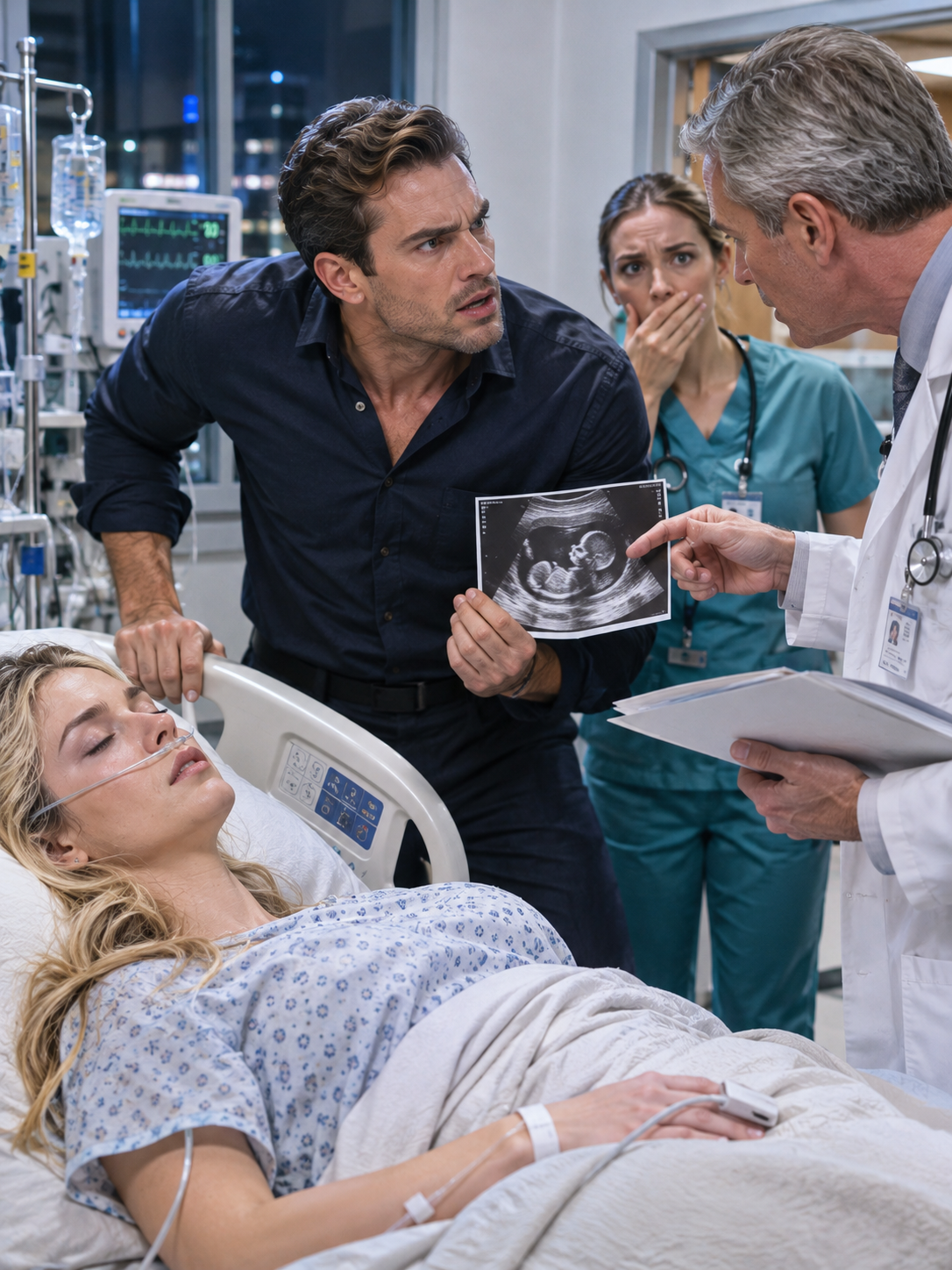
“She is receiving treatment,” the nurse answered carefully. “We’re trying to contact someone familiar with her medical history, including her pregnancy.” The word struck harder than anything else she’d said. When I asked how far along she was, the nurse replied, “Approximately sixteen weeks,” then urged me to speak with the care team in person.
Sixteen weeks meant Mara had been pregnant before our divorce. I touched the wedding ring I still wore on a chain beneath my shirt. She’d removed hers in the courthouse after I told her our marriage was a mistake. I could still see her face.
My sister Vera caught me beside the elevator. “Adrian, what’s wrong?” she asked, noticing my trembling hands. When I told her about Mara, she gripped my arm and offered to drive, though her eyes flickered strangely when I mentioned where Mara had been found. I didn’t ask why; I only wanted to reach the hospital.
I ran a freight company with legitimate contracts and ugly off-the-books dealings. People called me powerful, but fear seemed to follow me everywhere. Mara hated that part of my life. She kept books for a housing nonprofit, made terrible Sunday pancakes, and wanted me to become someone better.
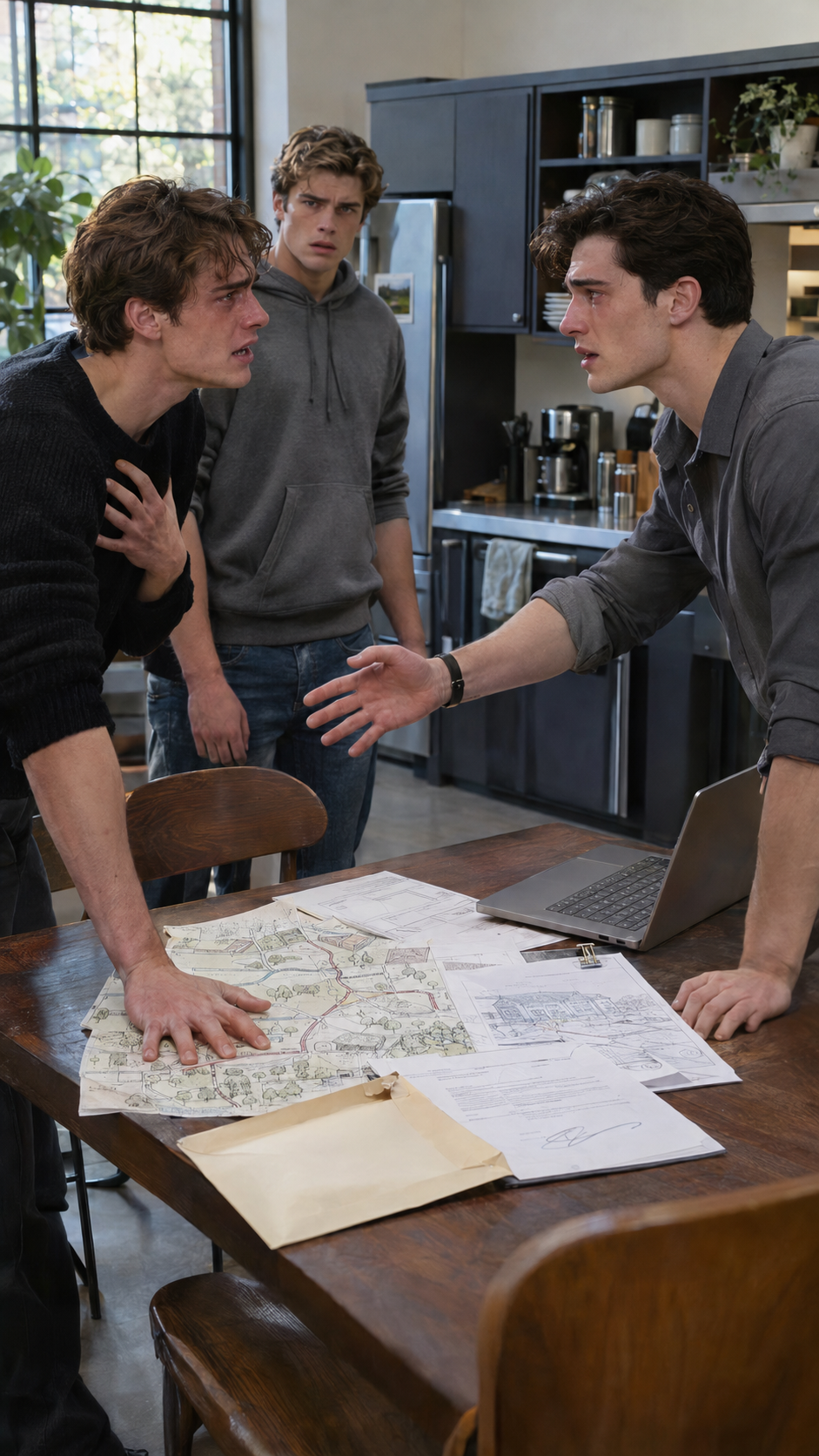
Four months earlier, my partner Tobin Shaw showed me a photograph of Mara leaving work. An attached message said my rival, Rafe Calder, knew where she lived. Tobin insisted that divorcing her would remove the leverage against me. Terrified, I believed him.
I never explained the photograph. I stopped coming home for dinner and finally told Mara I’d never loved her. She could barely hold her pen while signing the divorce papers. I convinced myself she’d be safer hating me.
At the hospital, automatic doors opened onto sharp disinfectant and stale coffee. I left my security driver outside. Dr. Elise Rowan explained that Mara had suffered a head injury and was under close observation. The pregnancy was continuing, but neither patient’s condition was something to take for granted.
“Was it a fall?” I asked, rubbing snowmelt from my hands. Dr. Rowan looked guarded. “We can’t establish that from the examination alone. Investigators are reviewing the circumstances.” I’d never felt more useless.
Through her doorway, I saw Mara’s dark hair brushed away from a bandage, her hand resting open on the blanket. I remembered that hand drawing stars on grocery lists and holding mine under restaurant tables. I’d thrown away a life made of ordinary things.
Detective Serena Holt approached while I waited. She asked about my company’s rivals and Mara’s recent concerns. I told her about the threat Tobin had shown me, then offered to cooperate. Holt asked me to preserve every related message.
Before she left, Holt showed me a photograph of an envelope recovered with Mara’s belongings. My name was written across it in her unmistakable slanted handwriting, and the sealed flap carried a sentence in thick blue ink. “If something happens to me,” it read, “ask who wanted us apart.”
I had spent three months believing I was the one who had destroyed our marriage to save her. Looking at that envelope, I felt the first terrible doubt: what if somebody had wanted me to do exactly that?
Part 2
By morning, I had worn a groove into the hospital corridor between the vending machine and Mara’s room. A nurse told me her condition was stable and asked that I give the staff space to work. I bought coffee that tasted like warm cardboard and couldn’t finish it. Vera sat beside me, rubbing the corner of an unopened granola bar until the wrapper tore.
“Tell me everything Tobin said about Calder,” she finally asked. I described the photograph, the warning, and Tobin’s insistence that separation would protect Mara. Vera stared at the floor. “You never checked whether the threat was real?” she asked, and I heard the disbelief she was trying to hide.
Detective Holt returned with questions about my company vehicles and employees. A dark sedan had been seen near Mara’s office, and its description resembled one used by several businesses in our area. I offered a company vehicle list through my attorney. Holt nodded but made clear that investigators, not my employees, would handle the inquiry.
Tobin called before noon. “I heard about Mara,” he said, though I hadn’t told anyone at work except the six people who’d watched me leave. “You should let me arrange private protection.” His concern sounded practiced, the same smooth voice he’d used when suggesting divorce. I told him not to contact Mara, the hospital, or anyone connected to her care.
“That’s a strange way to treat the man trying to help,” Tobin replied. I glanced through the window at bare branches scraping the parking garage wall. “Then give me the original photograph and the message that came with it,” I said. After a pause, he claimed the files had been deleted months ago.
Mara woke briefly that afternoon and agreed to see me. A nurse warned me not to overwhelm her, and I stayed near the doorway until she looked over. “Adrian?” she whispered, sounding confused. I told her the baby was being monitored and asked whether she wanted me to leave.
She watched me for a long moment, then said, “You’re still wearing it.” My hand went automatically to the chain under my collar. I said I was sorry, but she closed her eyes before I could explain. “Don’t make another decision for me,” she murmured, and I stepped back.
Her words followed me into the waiting room. I had planned to promise protection, offer money, perhaps suggest moving her somewhere private, but she had already told me what those gestures would mean. Instead, I asked the nurse to tell Mara I would respect whatever contact she chose. The nurse returned later with a message: “She wants her lawyer, not your people.”
I arranged for my attorney to send relevant company records directly to Holt. The review uncovered payments from a little-used consulting account to a vehicle rental service. They were described as site inspections, although our company had no projects near Mara’s office. I had approved the account’s budget but hadn’t examined the individual charges.
Meanwhile, a representative for Calder’s business denied involvement in the threat and supplied travel records to investigators. That didn’t establish his innocence, but it gave me reason to question the story I’d accepted. Holt cautioned me not to draw conclusions before she finished. For once, I listened.
Vera found me in the cafeteria, staring at untouched soup. “Mara called me two weeks after the divorce,” she admitted. “She asked whether Tobin had been telling you things about her.” Vera had dismissed the call and never told me. I’d let everyone treat Mara’s voice as less important than Tobin’s.
That evening, Holt confirmed that the rental account deserved closer examination. She couldn’t tell me everything, but she asked whether I recognized the name attached to its authorizations. On the photocopy she placed before me was Tobin Shaw’s signature. The man who warned me Mara was being watched had apparently been paying for someone to watch her.
Part 3
I didn’t sleep. At sunrise, the hospital windows glowed pale orange, and I sat with my attorney in an empty consultation room. I wanted Tobin confronted immediately, but she warned that interfering could damage the investigation. “You’ve spent years solving problems by taking control,” she said. “This time, help by telling the truth and staying out of the way.”
So I gave Holt the original threat messages, Tobin’s contact information, and access to records I was legally authorized to provide. My company accountant, Nikhil Desai, conducted a separate review under counsel’s direction. By afternoon, he had identified payments to vendors that never completed the services listed on their invoices. The missing freight money wasn’t an accident; it had been disappearing for years.
Then Nikhil found a connection to Mara’s nonprofit. Several suspicious vendors had billed the organization for renovation supplies that were never delivered. Mara had noticed the discrepancy while preparing an annual report. She’d been doing what she always did: asking ordinary questions that powerful people preferred to leave unanswered.
I remembered a dinner three weeks before our divorce. Mara had asked why Tobin was receiving consulting fees from a company that also billed her nonprofit. I’d brushed it off as coincidence, angry that she’d mentioned my work over pasta and cheap red sauce. She looked at me as if she wanted to say more, then quietly cleared our plates.
Mara was awake long enough for a proper conversation the next day. I sat beside her bed while a heater clicked under the window, keeping my hands in my lap. “I thought leaving would protect you,” I said. She looked directly at me and answered, “You didn’t ask what I knew, Adrian. You decided I was safer without the truth.”
I told her about Tobin’s photograph and the warning attributed to Calder. She frowned. “Tobin came to my office after you filed,” she said. “He said you’d asked him to collect some financial records, but he wouldn’t say which ones.” She’d refused, and afterward she noticed the same dark car near her building several times.
On the night of her injury, she had arranged to meet a legal investigator near the records office. Someone approached her in the parking area, demanded her folder, and grabbed for it when she refused. She lost her balance and fell against a concrete step. Her memory of the encounter was incomplete, so she had reported what she could without guessing who was responsible.
I wanted to take her hand, but she moved it away before I reached her. “Are you going to tell me you still love me?” she asked. I nodded, ashamed of how small the answer sounded. “I believe you might,” she said, “but you taught me that loving me doesn’t mean you’ll trust me.”
Her lawyer arrived, and I stood to leave. Mara stopped me with one question: “When you said none of our marriage was real, did you know I was pregnant?” I told her no; I’d learned about the baby from the hospital. She blinked hard and said, “I found out the week after the divorce. I wanted to tell you, but I couldn’t survive another answer like that.”
Later that week, investigators identified discrepancies in security footage and financial records linked to Tobin, and prosecutors began reviewing potential charges. I expected the findings to explain his actions and leave me only with regret. Instead, Nikhil discovered one more document in our company archive: an authorization transferring approval of the disputed vendor payments to Tobin.
The signature at the bottom was mine, dated the morning after I told Mara our marriage was over. I remembered signing a stack of papers without reading them because grief had made me careless. Tobin had exploited my decision, but my own hand had helped give him the freedom to do it.
Part 4
I wanted to call the signature a trick, but I recognized it immediately. Tobin had included the authorization in routine paperwork, and I had signed without checking what it permitted. My attorney told me the difference between deception and responsibility would matter. I couldn’t demand accountability from everyone else while pretending my choices were invisible.
I disclosed the authorization and cooperated with an independent review of my company’s finances. My older business practices came under scrutiny too, and I faced penalties and questions I couldn’t buy my way around. I began counseling and stepped away from dealings that had made our marriage unsafe. Whatever followed would include the truth about me.
Tobin eventually faced charges connected to disputed payments and attempts to obtain Mara’s records. Investigators pursued the person who confronted her, relying on witnesses and footage instead of my suspicions. The legal process would take months, and some claims remained contested. Mara’s recovery mattered more to me than headlines.
One chilly April afternoon, Mara asked to meet at a small cafe near the river. Her bruising had faded, and she wore a yellow sweater stretched gently across her growing belly. The espresso machine hissed behind us as I told her I had ended the arrangements that kept me tied to Tobin. I didn’t describe it as something I’d done for her; it was work I should have done years earlier.
“I’m glad you’re changing,” she said, stirring cinnamon into her tea. Hope rose before I could stop it, but she held my gaze. “That doesn’t mean I’m coming back. You broke our marriage when you decided I didn’t deserve the truth, and I can’t build a home on that again.” I felt the words land and didn’t argue.
“I understand,” I said, although understanding wasn’t the same as feeling ready. She explained that she wanted the baby to know me if I could be a steady, honest parent. We agreed to take advice from her doctors and our attorneys and build a parenting plan around the child’s needs. When she left, I stayed at the table until the tea went cold.
In August, Mara gave birth to a healthy girl named Juniper. She invited me to visit after she’d rested, not into the delivery room, and I respected the distinction. The baby curled one tiny fist around my finger while the hospital’s air conditioner hummed overhead. Mara watched from the bed, tired but peaceful, and I realized how much she’d reclaimed without me.
The court later approved arrangements for parentage, support, and regular contact with Juniper. I moved into a modest house twenty minutes from Mara’s apartment and learned to prepare bottles, fold impossibly small clothes, and arrive on time without an assistant reminding me. I wasn’t her husband anymore. I was Juniper’s father, and that was a responsibility I intended to earn every day.
Mara returned to her nonprofit after maternity leave and eventually became its finance director. She helped restore the funds lost to improper billing and joined a neighborhood group that renovated vacant homes. She also began seeing someone new, a quiet high-school art teacher named Ellis. When she told me, I said I hoped he treated her well and meant it, even through the ache.
On Juniper’s first birthday, I arrived at Mara’s backyard carrying a cake box and a bag of paper decorations. Mara greeted me politely, Ellis lit the candles, and our daughter smeared frosting across her cheeks while everyone laughed. There was no reunion waiting after the party, no secret promise that Mara would take me back. I went home alone, but for once I didn’t confuse that with being abandoned.
Three months after our divorce, I’d believed one lie could save the woman I loved. Uncovering the truth didn’t entitle me to another chance. Mara had built a life where her voice mattered, and I finally respected it. I couldn’t undo what I’d done, but I could make sure our daughter never confused control with love.
Legal Notice: This story is a work of fiction. Names, characters, businesses, events, and incidents are the product of the author’s imagination or are used fictitiously. Any resemblance to actual persons—living or dead—or to actual events is purely coincidental. Thank you! 💓
WordsCharactersReading time