### Part 2: A daughter’s accusations threaten her father’s freedom and dignity
Fiona called that Wednesday while I was shoeing a palomino in Citra.
“What did you tell him?” she demanded.
“Nothing. I didn’t even know he’d changed his will.”
“Don’t lie to me. You’ve lived there rent-free for eleven years. You’ve been working on him the whole time.”
Before I could answer, she hung up.
My aunt Patsy called next. She accused me of manipulating her elderly father, then started circulating messages among relatives about financial abuse and undue influence.
Within days, the rumors reached my customers.
One woman leaned against a stall door while I trimmed her gelding and asked whether I’d really gotten my cousin disinherited. Then my biggest customer, a breeding farm with thirty-two horses, canceled our arrangement without explanation.
Three thousand dollars a month disappeared with one text message.
I drove to Aunt Patsy’s house that Saturday, hoping she would believe me if she looked into my eyes. She barely opened the front door.
“Aunt Patsy, I swear I didn’t do anything.”
“Tell it to our lawyer.”
She shut the door before I could ask what lawyer she meant.
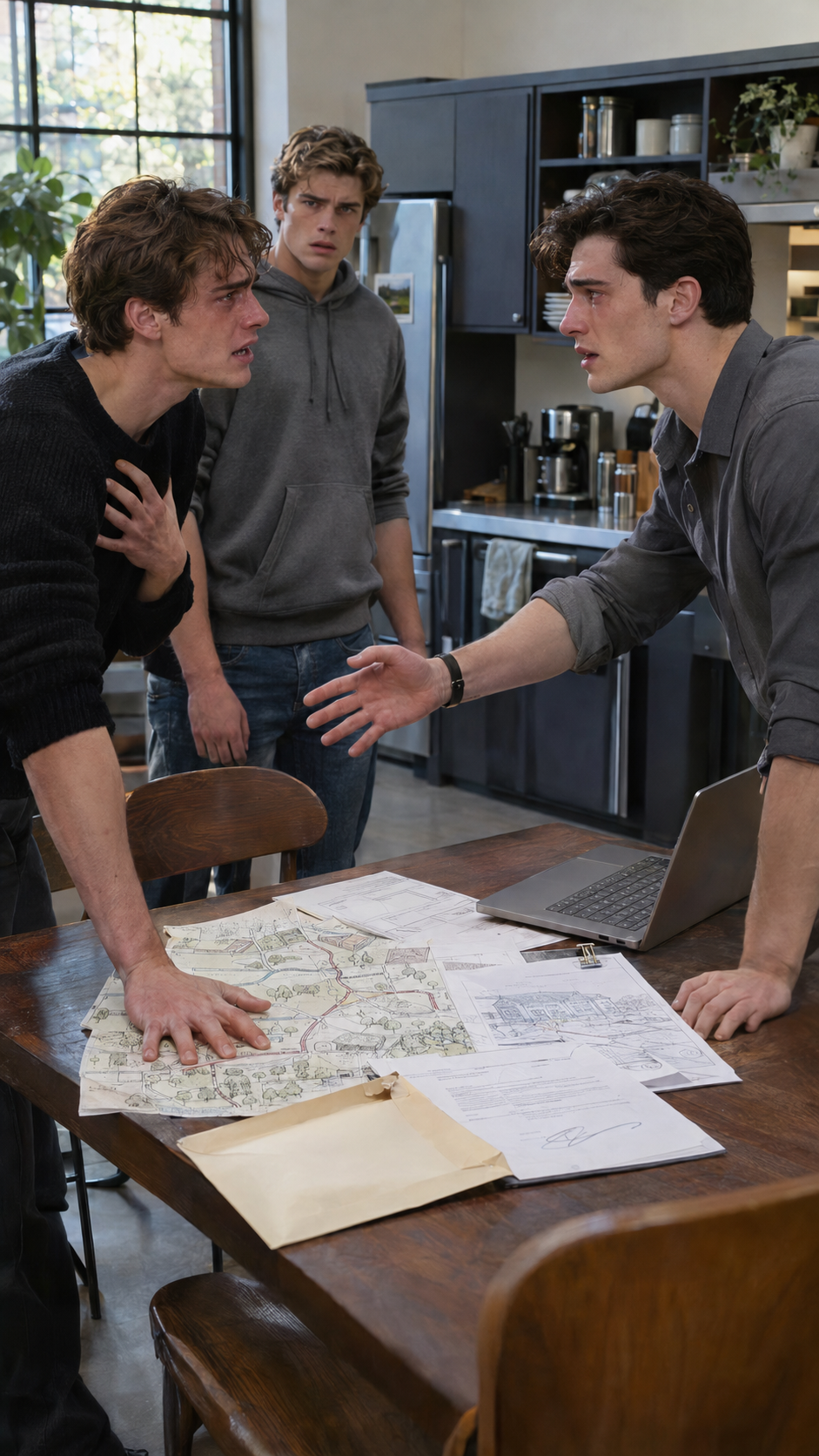
That evening, I confronted Grandpa at the kitchen table.
“They’re destroying my reputation,” I told him. “I’m losing work. Please tell me what happened.”
He lowered his crossword puzzle.
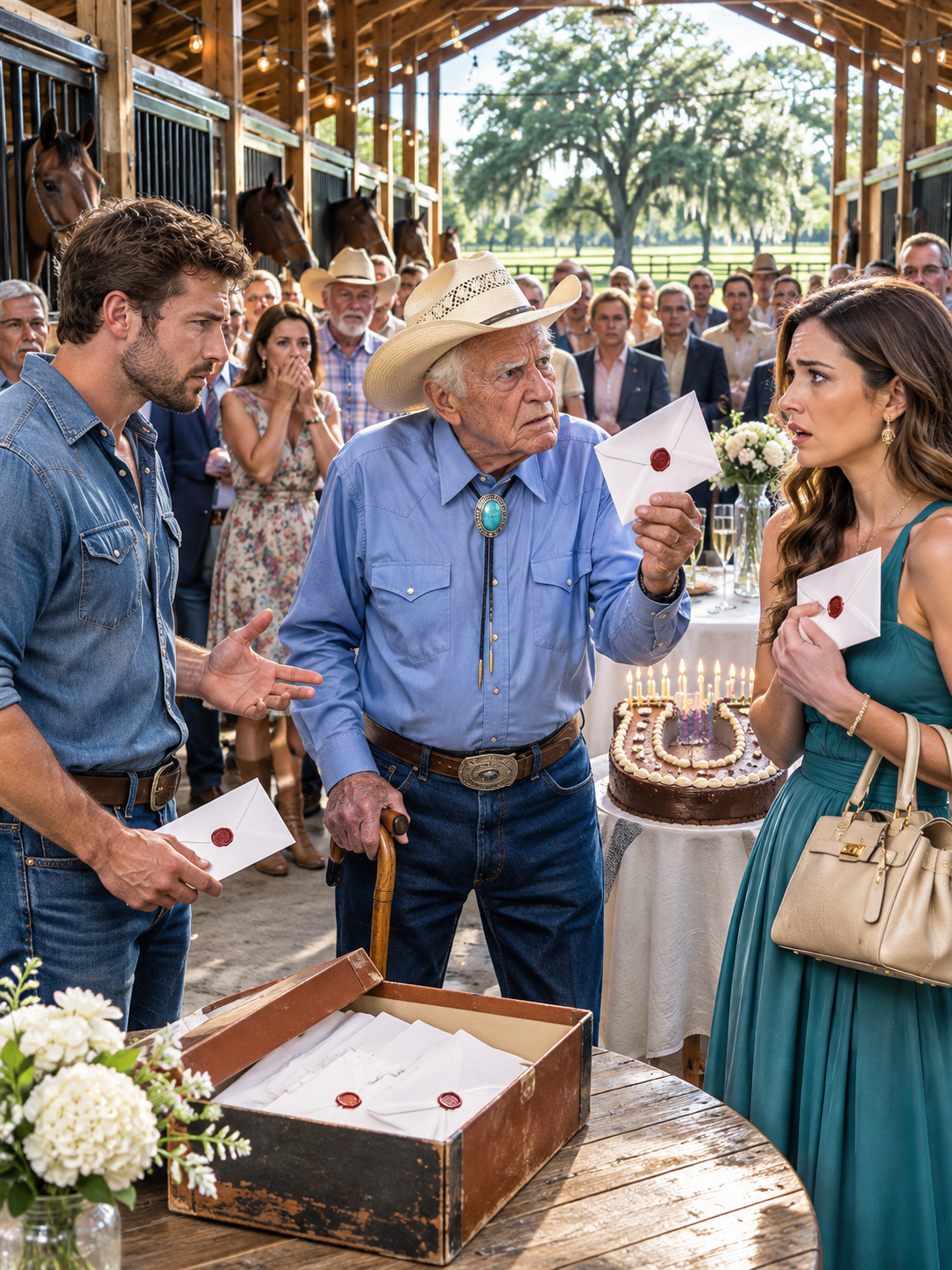
“I told all five of you those envelopes stay sealed until I’m gone.”
“But Fiona already opened hers, didn’t she?”
His expression hardened.
“I don’t break promises, Nathan. Not even to a thief.”
Then he picked up his pencil.
“Seven letters. A horse’s ankle.”
“Fetlock,” I answered automatically.
He wrote it down.
On July 20, a process server arrived at the farmhouse. Grandpa opened the envelope at the kitchen table while I stood behind him.
Aunt Patsy and Fiona had petitioned the Marion County court to declare him incapacitated.
They cited his confusion during rehabilitation. They accused me of exploiting his age to influence his estate planning. They wanted Patsy appointed his guardian, with emergency authority over his property.
Grandpa read every page twice.
Then he removed his glasses.
“They want my checkbook,” he whispered. “My truck keys. My land. My right to decide where I sleep.”
He looked toward the pasture.
“I’ve buried my wife and my son. Now my own daughter wants a judge to tell me I’m not a man anymore.”
I’d never heard him sound so wounded.
The emergency hearing came four days later. The judge refused to appoint a temporary guardian because there was no evidence of immediate danger, but the case continued.
The court appointed an attorney to represent Grandpa’s wishes and a three-person committee to evaluate his capacity.
His attorney visited the farm. Before leaving, she told me something I couldn’t forget.
“Your grandfather understands what the petition means. He also refuses to expose whatever happened with Fiona.”
I begged him to change his mind.
“Show them her envelope. End this.”
“No,” he said. “She’s still my granddaughter.”
The first evaluation took place on August 5.
Dr. Lou, a geriatric psychiatrist, sat across from Grandpa at our kitchen table. He looked exhausted, and his hands trembled as he tried drawing a clock.
He gave the wrong month. He remembered only one of three words she’d asked him to memorize. He even called her by my grandmother’s name.
I stood in the doorway watching, sick with fear.
The following morning, I found Grandpa feverish and disoriented. I rushed him to the emergency room.
He had a serious urinary tract infection.
The physician explained that infections could cause sudden confusion in elderly patients. I immediately contacted his attorney, who arranged for the medical records to reach Dr. Lou and the court.
After antibiotics, Grandpa’s sharp mind returned.
The second evaluator, a nurse from Okeechobee, spent two hours talking with him about horses. The third, a social worker, examined his finances and found handwritten records balanced down to the penny.
Both saw the man I knew.
But Dr. Lou’s report still worried me, and Patsy’s lawyer was determined to exploit it.
One night in mid-August, unable to sleep, I began searching the county’s online property records.
I’d expected to find nothing more than old deeds and tax documents.
Instead, I found a contract dated March 3, 2026.
The date made my stomach turn.
March 3 was the day Grandpa believed my grandmother was still alive.
And the contract appeared to give a developer the right to buy our farm.
### Part 3: A buried land deal reveals the price of betrayal
I stared at my phone until the numbers blurred.
Marion Ridge Land Partners LLC had received an option to purchase Grandpa’s forty-acre horse farm for $1.15 million.
The property had recently been valued at approximately $2.6 million.
And Grandpa’s signature was at the bottom.
I opened the next document. It showed the purchase option had been canceled on April 22.
Suddenly, everything connected.
Fiona’s visits during rehabilitation. The insurance paperwork. The survey flags. Her questions at Easter. Grandpa’s emergency meeting with his lawyer.
The developer had planned a subdivision where Delta Dawn was buried.
I searched Florida’s business registry and found that Marion Ridge was connected to a Tampa development company already buying farmland for housing projects.
The following morning, I placed my phone in front of Grandpa.
“Is this what Fiona did?”
He read the document carefully, his thumb resting on the signature.
“You’ve got your daddy’s stubbornness,” he said.
“Grandpa, please.”
He pushed the phone back.
“That envelope stays sealed.”
I called his appointed attorney and explained my discovery. She listened patiently but reminded me that Grandpa controlled what information she disclosed in his case.
“He knows what you’ve found,” she said. “You need to let him make his own decisions.”
On August 21, somebody knocked on my apartment door just after nine.
Fiona stood outside without makeup, wearing jeans and an old T-shirt. Behind her, the engine of her SUV was running, and her daughter slept safely in the back seat.
She looked exhausted.
“I need you to help me,” she whispered.
I let her inside.
“Get Grandpa to agree to the guardianship voluntarily,” she said. “Mom will arrange nurses and everything he needs. We can stop all this fighting.”
“Why would he surrender control of his life?”
Her eyes filled.
“Because the developer wants twenty thousand dollars back.”
I stared at her.
“They paid me an advance for bringing them the deal,” she admitted. “When Grandpa canceled it, they demanded the money back. I’ve spent it, Nate. My mortgage, my daughter’s expenses. They’re threatening to sue.”
“So you want your mother controlling the farm so you can sell it anyway?”
“Everybody would benefit!”
I took a breath.
“I found the March third contract.”
Her face drained of color.
“You brought him papers when he didn’t understand what year it was,” I continued. “You put a pen in his hand and told him they were insurance forms.”
She stared at the floor.
She never denied it.
“That land could make us all wealthy,” she said finally. “What does a ninety-year-old man need forty acres for? Five old horses? They’d have paid him over a million dollars.”
“Delta Dawn is buried out there.”
“Nate—”
“Those orange flags went straight through her grave. Did you know that?”
She looked away.
“Grandpa figured out what happened,” I said. “He canceled the contract, protected your secret, and never told your mother. Now you’re trying to have him declared incompetent.”
Fiona wiped her cheeks.
“You don’t understand anything. You never have. You just shoe horses.”
She left without saying goodbye.
I watched her SUV disappear and wondered when the cousin I’d grown up with had become someone willing to gamble her grandfather’s dignity for a commission.
On August 26, Grandpa’s attorney called with the committee reports.
Two evaluators had found him capable of managing his affairs. Dr. Lou had documented his confusion but acknowledged that the infection diagnosed the following day could have affected her observations.
It should have been enough.
Aunt Patsy’s attorney nevertheless demanded another hearing, arguing that Grandpa’s recent confusion indicated a deeper decline.
The hearing was scheduled for August 28.
That Thursday evening, Grandpa asked me to iron his blue shirt.
I had no idea how, so he sat at the kitchen table instructing me.
“Collar first. Then the shoulders. Don’t leave the iron sitting there.”
I scorched a small brown triangle near the bottom.
He inspected my mistake.
“That’ll tuck in.”
Then he began polishing his boots.
“Your daddy would’ve been beside me tomorrow,” he said quietly.
“I know.”
“He would’ve hated every minute.”
I swallowed.
“So do I.”
Grandpa smiled, but his eyes were tired.
The following morning, he dressed in his blue shirt, turquoise bolo tie, and straw hat. He refused my arm as we entered the Ocala courthouse and climbed the stairs one careful step at a time.
Aunt Patsy and Fiona were already seated beside their attorney.
Fiona wouldn’t look at either of us.
Twenty minutes into the hearing, their lawyer began describing Grandpa’s confused behavior during rehabilitation.
Grandpa rested a hand on his own attorney’s sleeve.
Then he slowly stood.
“Your Honor,” he said, “I’d like to speak for myself.”
From inside his jacket, he withdrew a sealed white envelope.
Across the front, in his unmistakable handwriting, were two words.
Fiona. Copy.
### Part 4: A grandfather’s final gift reveals what inheritance truly means
The courtroom fell silent as Grandpa walked toward the judge.
He placed the envelope on her desk.
“This contains what I gave my granddaughter on my birthday,” he said. “I promised her it would remain private until I was gone.”
He glanced toward Fiona.
“But I won’t let people say I don’t know my own mind. I’m asking you to read it privately, ma’am. Not in front of everybody.”
The judge studied him for several seconds.
Then she called a recess.
For twenty-two minutes, we waited while she examined the envelope in her chambers.
When she returned, she ordered the document kept under seal and allowed Patsy’s attorney to review it privately.
He disappeared behind the courtroom door.
Ten minutes later, he returned looking pale.
He leaned over and whispered into Aunt Patsy’s ear.
She slowly turned toward Fiona.
I watched the color leave my aunt’s face.
Their lawyer stood.
“Your Honor, my clients withdraw their request to examine Mr. Chambliss.”
The judge nodded.
She reviewed the committee’s findings, acknowledged the medical evidence concerning Grandpa’s infection, and dismissed the incapacity petition.
Then she looked directly at my aunt and cousin.
“The court further finds this petition was filed in bad faith.”
She ordered them to pay the proceeding’s fees and costs, which eventually totaled approximately eighteen thousand dollars.
Grandpa simply closed his eyes.
Outside the courtroom, Fiona stood alone against the hallway wall, crying.
Grandpa walked over to her.
“You opened it early, sugar,” he said gently. “You always did open your Christmas presents before everybody else.”
She covered her face.
He patted her shoulder twice.
Then he turned toward me.
“Let’s go home, Nathan. I’m hungry.”
That evening, we sat on the porch watching the sun sink behind the east pasture.
Grandpa finally told me everything.
On March 3, Fiona had visited the rehabilitation center carrying a folder of documents and accompanied by a notary. She’d presented Grandpa with insurance forms, Medicare paperwork, and other documents requiring his signature.
Hidden among them was the option to sell his farm.
“I could sign my name,” Grandpa said. “I just didn’t know what year it was.”
He hadn’t realized what happened until the survey flags appeared.
After Easter dinner, he contacted his lawyer. The attorney uncovered the recorded option and obtained medical documentation proving Grandpa had been delirious when he signed it.
The developer had promised Fiona a ninety-thousand-dollar commission.
Grandpa’s attorney threatened legal action unless the option was canceled.
The company released its claim within two weeks.
“She could’ve lost her real estate license,” Grandpa said. “But she’s got that little girl. I didn’t want to ruin their lives.”
He’d placed copies of the paperwork inside Fiona’s birthday envelope, along with a handwritten letter.
He recited its message from memory.
“I know what you did. I’ve already fixed it. I haven’t told anyone. When I’m gone, you’ll have to decide what kind of woman you want to become.”
But Fiona hadn’t waited.
She opened the envelope that night, panicked, and returned to search his office for the original lawyer’s documents.
Grandpa heard her opening his desk drawers.
“I stood there watching,” he said. “She didn’t even know I was behind her.”
Finally, he’d spoken.
“The papers are in my lawyer’s safe, sugar.”
That was when she’d fled.
“And that’s when I knew,” he whispered. “She wasn’t sorry she’d done it. She was sorry I’d found out.”
We sat together until the porch light attracted moths.
In September, Fiona moved to Savannah with her daughter and took another real estate job. Aunt Patsy stopped speaking to us.
Grandpa never removed Fiona’s little girl from his inheritance plans.
“The child didn’t do anything wrong,” he reminded me.
On September 30, I entered his bedroom at six in the morning.
His reading lamp was still burning. A horse racing magazine lay open beside him, and his glasses rested on his chest.
Grandpa had died peacefully in his sleep.
I sat beside him, holding his hand, until the morning sunlight reached the quilt.
We buried him on October 3 at the little Methodist church in Anthony. Trainers, jockeys, neighbors, and farmhands filled the pews. Even the nurse who’d evaluated him came to pay her respects.
Fiona stood at the back of the church in a black dress.
After the burial, the five grandchildren gathered at the farmhouse.
We’d brought our envelopes.
My sisters and Fiona’s brother opened theirs first. They read their letters quietly and cried.
Fiona stood at the bottom of the porch steps, empty-handed.
She’d already opened hers.
Then I broke the seal on mine.
Something small and metallic slid into my palm.
It was an old aluminum racing plate, a tiny horseshoe worn smooth at the toe. Attached with baling twine was a tag in Grandpa’s handwriting.
Delta Dawn. Tropical Park. January 1961.
Beneath it lay a folded note.
Four words.
You never needed this.
My knees nearly gave way.
I’d spent eleven years caring for Grandpa without asking what he might leave me. I’d stayed when my parents separated, when Dad died, when the fences needed repairing and the horses needed feeding.
Grandpa had known.
He’d never needed a sealed envelope to discover whether I loved him.
And I’d never needed an inheritance to prove that I belonged.
I began laughing and crying together.
At the bottom of the steps, Fiona watched silently. For one brief moment, our eyes met.
Then she turned and walked away.
Grandpa’s will divided the farm into five equal shares, with Fiona’s portion held in trust for her daughter.
There was one additional condition.
The east pasture had to remain pasture for as long as any of us owned the land.
That evening, I carried Delta Dawn’s racing plate across the grass where the orange survey flags had once stood.
I knelt beneath the live oak and placed the little horseshoe on her gravestone, pointing toward the barn.
For months, I’d thought Grandpa was fighting to keep forty acres of land.
Now I understood.
He’d been protecting the memories that made those acres a home. He’d protected his granddaughter’s child even after her mother betrayed him. And he’d defended his right to live with dignity until his final day.
I sat beneath the oak until the first stars appeared.
Behind me, the barn lights came on, and I heard Penny shifting in her stall.
Tomorrow, the horses would need feeding. Fences would need mending. Somewhere, a loose shoe would need replacing.
I would be there.
Not because Grandpa had left me something valuable.
But because he’d taught me the difference between something that could be sold and something worth keeping.
THE END.
All characters and events in this story are fictional, created for storytelling and entertainment purposes. Thank you sincerely for reading. Your feedback and support are invaluable and motivate me to continue sharing more stories with you.