
Chapter 2
The following spring nearly broke me.
The farmhouse roof leaked, the plumbing rattled, and the heating system failed during an April snowstorm. My savings dwindled as I paid contractors for the work I couldn’t safely handle myself.
I kept my technology job, negotiated a mostly remote schedule, and continued freelance design work after hours.
On weekends, I repaired fences, pulled weeds, and studied soil reports until my eyes burned.
I knew graphic design.
I didn’t know farming.
That changed when I met Thomas Bennett.
Tom was sixty-eight, a retired farmer who lived three miles down the road. He appeared one Saturday while I was struggling to repair a broken gate.
“You’re putting that post in backward,” he said.
I looked up, exhausted.
“That would explain why it keeps falling over.”
He laughed, climbed out of his truck, and spent the afternoon teaching me how to do it correctly.
Over coffee afterward, he asked what I intended to grow.
“I’ve been thinking about lavender,” I admitted. “And maybe herbs. Something people could visit the farm to see.”
Tom considered the hills.
“Good drainage. Plenty of sunshine. Some varieties could do well here, though you’ll have to deal with our winters.”
He pointed toward the southern slope.
“Start small. Learn the land before you ask it to support you.”
He also introduced me to beekeeping.
Within a year, I’d planted five acres of lavender, installed three beehives, and transformed the old barn into a workspace.
The first growing season brought more mistakes than profit.
I lost hundreds of plants to poor drainage and an unexpected freeze. A broken irrigation line flooded part of the field, and one equipment repair cost nearly everything I’d earned from freelance work that month.
More than once, I wondered whether Dad had been right.
Then I’d remember his voice.
“That’s what failure feels like.”
I refused to let those words write the ending of my story.
My first meaningful harvest came the following summer.
At sunrise, rows of purple flowers stretched toward the mountains. Bees floated above the blossoms, and the air carried a fragrance so sweet it made me stop working just to breathe.
Tom helped me cut the stems.
“Well, would you look at that,” he said, smiling. “You grew yourself a future.”
We sold dried lavender bundles at farmers markets. I used my design background to create elegant labels and packaging for soaps, candles, and lavender honey produced with local partners.
Customers loved the story of a woman restoring an abandoned farm.
Soon, local gift shops began placing orders.
My professional experience, the very education Dad had dismissed, became one of my greatest business advantages.
I built a website, developed an online store, and photographed my products against the farm’s weathered wooden fences.
Orders slowly increased.
Then a regional lifestyle magazine featured our lavender bundles in a holiday gift guide.
We sold out in eleven days.
By the end of the second full production year, the farm was generating enough revenue to begin paying its own operating expenses.
I hired two employees.
Emma was a college student studying agriculture. Tyler was twenty-one and had spent much of his adolescence moving between foster homes.
Both worked hard and asked thoughtful questions.
One afternoon, Tyler approached me after I’d helped him complete his community college application.
“Why are you doing so much for us?” he asked.
“Because you’ve earned the opportunity.”
He looked uncomfortable.
“Most people don’t see it that way.”
I understood him better than he knew.
“Well,” I said, “around here, good work matters more than where you came from.”
As the business grew, so did my confidence.
I started seeing a counselor named Dr. Walsh, who helped me understand how deeply my parents’ criticism had shaped my choices.
“You keep trying to prove you’re worthy,” she told me during one appointment. “But your worth was never theirs to determine.”
I thought about that sentence for weeks.
The farm became more than a business.
It became the place where I learned to trust myself.
I hosted small workshops on lavender cultivation and floral arranging. Visitors came from Denver, Boulder, and neighboring states.
Tom taught introductory beekeeping sessions. Emma organized educational tours, and Tyler became remarkably skilled at equipment maintenance.
Eventually, we opened a small farm shop inside the restored barn.
Everything felt possible.
Two years and three months after that terrible Sunday dinner, my brother Marcus happened to drive through the area while visiting a wedding venue.
He saw the lavender fields.
He saw the newly painted farmhouse.
And he saw the wooden sign beside the road.
CAMILA’S LAVENDER HILL FARM.
An hour later, my phone rang from an unfamiliar number.
I answered, expecting a customer.
“Camila?”
My father’s voice sent a cold shiver down my spine.
“How did you get this number?”
“Marcus found your farm. Is it true you own forty acres?”
“Yes.”
“Why didn’t you tell us?”
I looked through my office window at Tyler loading boxes into our delivery van.
“Because I stopped telling you things two years ago.”
Dad went quiet.
Then he said something that revealed exactly why he’d called.
“Marcus found an online valuation saying your property and business might be worth more than two million dollars. Is that accurate?”
“It’s an estimate,” I replied. “But we’re doing well.”
His voice softened immediately.
“Camila, sweetheart, that’s wonderful. Your mother and I are so proud of you.”
I felt no warmth.
Only recognition.
He hadn’t called when I was struggling.
He hadn’t called when I was exhausted, frightened, or rebuilding a ruined farmhouse.
He’d called because someone had put a dollar figure beside my name.
Chapter 3
The next morning, Dad emailed me a business proposal.
He wanted to become an investor in the farm, offering contacts, financial advice, and capital in exchange for a share of the company.
I read the message twice before closing it.
For years, he’d insisted I had no business sense. Now he wanted to help run the business I’d created without him.
Three days later, a courier delivered an envelope.
Inside was a check for $100,000.
The note read, “For the education expenses we should have helped with. Let’s put the past behind us.”
I stared at it for a long time.
When I needed $15,000 for tuition, they’d told me to figure it out myself.
Now they were offering six figures.
Not when I needed help.
When I no longer needed them.
I returned the check with a short letter.
“I appreciate the acknowledgment, but money cannot replace the respect I needed from you.”
A week later, another check arrived.
This one was for $150,000.
I returned that one, too.
Then Dad appeared at my farm gate.
I saw him on the security camera wearing polished shoes and a button-down shirt, looking completely out of place beside the gravel driveway.
I spoke through the intercom.
“What do you want, Dad?”
“Five minutes, Camila. That’s all I’m asking.”
“You’ve already said what you needed to say.”
“Your mother hasn’t been sleeping. She’s heartbroken over this.”
I closed my eyes.
Even now, he was making me responsible for someone else’s feelings.
“Dad, you spent years telling me I wasn’t good enough. You helped Marcus while I worked two jobs. You called me a failure in front of everyone.”
“I made mistakes.”
“Yes, you did.”
He sighed.
“Can’t we start fresh?”
I glanced toward the fields where Emma and Tyler were working.
“Starting fresh requires understanding what happened. Not pretending it never did.”
He stood silently.
Then the old irritation crept into his voice.
“I’m still your father.”
“And I’m still your daughter. Neither of those things gives you ownership of my life.”
I ended the conversation.
Tom found me sitting on the porch later that afternoon.
“Your dad?” he asked.
I nodded.
He settled into the chair beside me.
“People can change,” he said. “But real change takes more than showing up with a checkbook.”
I looked at him.
“Did you ever have to apologize to your children?”
Tom smiled sadly.
“My daughter didn’t speak to me for five years after her mother and I divorced. I was so wrapped up in my own hurt that I forgot hers.”
“What happened?”
“I apologized. Then I gave her space. Eventually she called.”
He looked toward the mountains.
“You can’t demand forgiveness, Camila. You can only become somebody worth trusting again.”
Those words stayed with me.
Months later, a journalist from a national magazine contacted me about writing a profile of women who had built successful agricultural businesses.
During our conversation, she asked what had motivated me to buy the farm.
I hesitated.
Then I told her about my family.
About the college loans.
About Marcus’s $100,000.
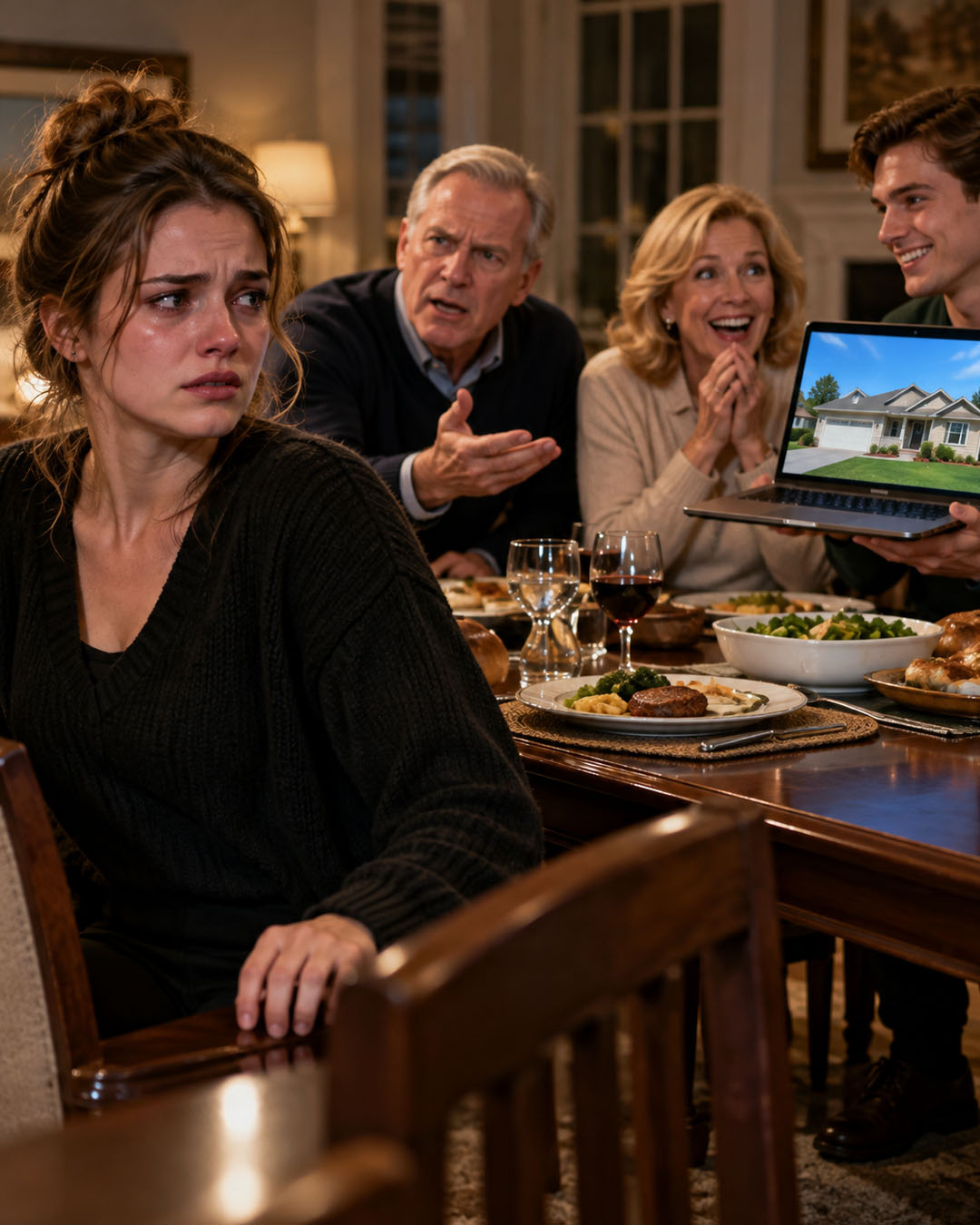
And about the dinner when Dad called me a failure.
The magazine published the story with my permission.
The headline focused on how a rejected daughter had built a thriving business from neglected farmland.
The response stunned me.
Letters arrived from women in their sixties and seventies who’d spent lifetimes feeling second-best to their brothers.
Others wrote about careers their families had dismissed, dreams they’d postponed, and the courage it took to begin again.
One handwritten letter came from a seventy-four-year-old widow in Kansas.
She’d spent thirty years believing her paintings weren’t worth showing because her husband had called them silly.
After reading my story, she’d entered a local art exhibition.
She enclosed a photograph of herself standing beside her first prize ribbon.
I cried when I saw it.
For once, something painful from my past had helped someone else find courage.
My mother saw things differently.
She called from an unfamiliar number.
“You’ve humiliated us,” she said without greeting.
“Mom…”
“Everybody knows our business now. Your aunt has been calling nonstop. Marcus is furious.”
“The story was true.”
“Some things belong inside a family.”
I took a slow breath.
“I spent twenty-eight years keeping quiet because I was afraid of embarrassing you. I won’t lie about my life to protect your reputation anymore.”
She began crying.
“We gave you everything we could.”
“No,” I said gently. “You gave Marcus opportunities and gave me reasons why I didn’t deserve them.”
She hung up.
It hurt.
But it didn’t destroy me the way it once would have.
Another year passed.
Our lavender business expanded into wholesale products, educational workshops, and private farm events.
An agricultural hospitality company approached us about creating a retreat destination with guest cottages, walking trails, and wellness programs.
Unlike my father, they brought experienced planners, detailed financial projections, and a willingness to listen.
I worked with independent attorneys and financial advisers before signing a carefully structured partnership agreement.
The expansion was enormous.
We purchased neighboring parcels, renovated the historic barn, and built several cottages overlooking the fields.
Bookings exceeded expectations.
Regional retailers began carrying our lavender products, and a luxury hotel group signed a multiyear supply agreement.
Then came an unexpected opportunity.
A national investment firm offered to acquire a minority interest in our growing company.
After months of negotiations and due diligence, the business received an independent valuation that took into account its land holdings, facilities, contracts, brand, and projected earnings.
The figure was $23 million.
I sat across from my attorney, staring at the report.
Twenty-three million dollars.
It wasn’t money sitting in my bank account. It represented the estimated value of the enterprise I’d built, with its debts, obligations, and future risks still very real.
But the number was staggering.
I thought about the young woman who’d once cried in a parking lot because her father believed she was worthless.
Then I thought about all the people who’d helped me reach this moment.
Tom.
Emma.
Tyler.
The neighbors who’d loaned equipment, shared advice, and shown up when storms damaged the greenhouse.
I knew exactly what I wanted to do.
I established a scholarship program for young adults entering agriculture and rural trades, especially those without family financial support.
The inaugural awards went to twelve students.
At the ceremony, Tyler stood beside me wearing the jacket he’d bought for his college graduation.
“You know,” he whispered, “you changed my life.”
I shook my head.
“You did the work, Tyler.”
He smiled.
“Somebody still had to believe I could.”
That evening, after everyone had left, I sat alone beneath the old oak tree beside the farmhouse.
My phone vibrated.
It was a message from Marcus.
“Twenty-three million? I guess Dad underestimated you.”
I stared at those words.
Even now, he measured my success in dollars.
I turned off the phone and went inside.
Chapter 4
By my fourth year on the farm, I had finally learned the difference between being wealthy and feeling secure.
The valuation was wonderful, but it wasn’t what made me happy.
Happiness was drinking coffee on the porch while the sunrise turned the lavender silver. It was hearing Tom argue with the goats, watching Emma return every summer, and seeing Tyler teach younger workers the skills he’d once been afraid he’d never learn.
We’d built something lasting.
One October afternoon, a thick envelope arrived with Dad’s handwriting on the front.
I almost put it away unopened.
Instead, I carried it to the porch and read it as the leaves drifted across the lawn.
It was three handwritten pages.
He admitted that he’d always favored Marcus.
He acknowledged that he’d treated my education and career as inferior because they were different from his expectations.
He wrote about the night he’d called me a failure.
“I remember your face when I said those words,” he wrote. “For a long time, I told myself I was pushing you to succeed. The truth is that I was cruel, and I was wrong.”
I stopped reading.
For twenty-eight years, I’d wanted my father to recognize the damage he’d caused.
Now the words were in front of me.
He continued.
“I don’t expect you to forget. I don’t expect the money we offered to fix anything. I only hope that someday you’ll believe I regret the father I was to you.”
There was no business proposal.
No check.
No request for ownership.
Just an apology.
I read it three times.
Then I wrote back.
I thanked him for acknowledging the truth. I told him I’d found a measure of forgiveness, but that trust couldn’t return simply because he’d finally understood what he’d done.
“I wish you well, Dad,” I wrote. “But I need to keep the peaceful life I’ve built. Please respect that.”
He didn’t respond.
For the first time, his silence didn’t feel like punishment.
It felt like acceptance.
Winter came early that year.
Snow covered the mountains, and the lavender fields went quiet beneath their protective mulch.
One evening, Tom arrived carrying a casserole his daughter had made.
“Thought you might need supper,” he said.
I laughed.
“You know I can cook.”
“Sure you can. But why should you have to every night?”
We ate at the kitchen table, talking about the farm’s spring expansion and the new greenhouse plans.
Before leaving, Tom stopped beside the fireplace.
“You ever regret walking away from your family?”
I considered his question carefully.
“I regret that things happened the way they did,” I said. “I wish they’d treated me differently. But I don’t regret choosing a healthier life.”
He nodded.
“That’s an important distinction.”
A month later, a message came from Marcus.
Dad had suffered a heart attack.
The doctors expected him to recover, but he’d need rehabilitation and major changes to his daily routine.
For several minutes, I sat staring at the phone.
I felt sadness.
I remembered him teaching me to ride a bicycle, lifting me onto his shoulders at a county fair, and cheering at my elementary school spelling bee.
Those memories were real.
So were the cruel ones.
I could hold both truths without pretending one canceled the other.
I replied, “I’m sorry to hear that. I hope Dad recovers completely.”
Marcus answered quickly.
“Thank you. Would you be willing to talk sometime?”
I thought about the years we’d spent apart.
About his silence during that dinner.
About the photographs he’d once sent of our childhood, hoping pleasant memories would erase everything else.
Then I wrote, “Not right now, Marcus. But thank you for telling me about Dad.”
His response surprised me.
“I understand. Take care of yourself, Cam.”
There was no argument.
No accusation.
No attempt to make me feel guilty.
Maybe that was the beginning of something different.
Or maybe it was simply one respectful conversation.
Either way, I was grateful.
Spring returned.
Our employees planted new lavender rows across the southern fields. The greenhouse opened, and the first group of scholarship students arrived for a weekend workshop.
Watching them gather beside the barn, I recognized something familiar in their faces.
Hope mixed with uncertainty.
The desire to build a future that might look different from the one their families had imagined.
During the opening session, a young woman asked me what had been the hardest part of building the farm.
I could have told her about the loans, the frozen irrigation lines, the lost plants, or the endless nights balancing invoices.
Instead, I told her the truth.
“Learning to believe I deserved a good life, even when the people closest to me didn’t believe it.”
The room grew quiet.
I smiled.
“Don’t misunderstand me. Believing in yourself won’t make the work easy. But it will help you keep going when the work gets hard.”
Afterward, I walked through the fields.
The lavender was beginning to bloom, tiny purple flowers emerging from stems that had survived another Colorado winter.
The farmhouse stood on the hill, its white porch bright in the afternoon sunshine.
I thought about the numbers that had once seemed so important.
The $15,000 Dad refused to help me with.
The $42,000 I’d owed for college.
The $100,000 Marcus received without hesitation.
And the $23 million valuation that had finally made my father notice what I’d accomplished.
For years, I’d believed those numbers could explain why I mattered less.
Now I understood they had never measured my worth at all.
What mattered was the land I’d restored, the people I’d employed, the opportunities we’d created, and the peace I’d learned to protect.
That evening, our farm family gathered for dinner in the renovated barn.
Tom brought homemade bread. Emma arrived with her fiancé, and Tyler showed everyone photographs of the house he and his wife were hoping to purchase.
I listened to their laughter beneath the wooden beams I’d once spent weeks repairing.
Outside, the mountains turned gold in the setting sun.
Nobody asked how much money I had.
Nobody compared me to my brother.
Nobody suggested I needed to become someone else to deserve a seat at the table.
I looked around at the people who’d stood beside me when my fields were little more than weeds and broken fences.
These were the people who knew the real value of what we’d built.
Later, standing alone on the porch, I remembered the last thing Dad had said before I left that Sunday dinner years earlier.
“That’s what failure feels like.”
I no longer heard those words with anger.
I heard them as a reminder of how far I’d come.
My parents gave my brother $100,000 to help him buy a house. I worked two jobs, bought neglected farmland, and built a business eventually valued at $23 million.
But my greatest achievement wasn’t becoming wealthy.
It was reaching a place where I no longer needed their approval to feel successful.
I had a home filled with laughter, work that gave others opportunities, and people who loved me without keeping score.
For the first time in my life, I wasn’t trying to prove my father wrong.
I was simply living the life I’d always wanted.
And as the evening breeze moved gently through the lavender fields, I realized that was worth more than any fortune.
THE END. ⚠️ All characters and events are fictional. Do not imitate or apply them in real life. 😌😌😌

