Chapter 2
Three weeks later, I transferred to Maple Ridge Rehabilitation Center and met Kesha Whitaker, a physical therapist with reading glasses on a beaded chain and no patience for hopelessness. On our first morning, she positioned me between parallel bars and asked me to stand. My arms shook, my knees barely held, and I said, “I can’t.” Kesha adjusted her glasses and replied, “Can’t and won’t are different words. Which one are we using?”
I disliked her immediately. By the end of the month, I trusted her more than almost anyone. She taught me to measure progress differently: ten seconds standing, then twenty; one spoon lifted safely, then two; three steps with help, then four. My world had once been law school and courtrooms, but now victory could mean buttoning my own shirt.
That was where Linda Hayes came to see me. Brandon’s mother arrived in cream slacks carrying white lilies and a leather folder while my mother was downstairs getting coffee. She placed the flowers on my windowsill and smiled as though we were old family friends. “Emma, look at you. Awake.”
She opened the folder and slid a check toward me. Forty thousand dollars. Beneath it was a legal agreement saying I would release any remaining claims and agree not to speak publicly about what had happened. I read the first page twice before looking at her.
“You’re buying my silence.” Linda’s smile tightened. “I’m buying peace. Brandon made a terrible mistake when he was young, and he’s carried that burden for years.” I reminded her that he’d lost ninety days while I’d lost six years, but she told me decent people eventually moved forward.
My hands were still weak, but I managed to tear the check in half. It took longer than I wanted, which somehow made the moment more satisfying. The pieces fell into her lap. Linda stood and said, “Some people don’t know when they’re being helped.”
She left the lilies behind. The little card attached to them said To Emily. After six years, the mother of the man responsible for putting me there couldn’t even get my name right. That told me more than the check did.
A week later, an online fundraiser appeared under Brandon’s name. It described my collapse as an unfortunate reaction at a lively graduation celebration and portrayed Brandon as a traumatized young man who had heroically called for help. Haley posted one calm response citing the police report. The next morning, my parents received a letter from an attorney warning them that further statements might be considered defamatory.
Dad read it at their apartment kitchen table and placed it down carefully. “They’re turning you into the problem,” he said. I looked at his tired face and answered, “They have enough money to make people tired of hearing the truth.” That was what frightened me most about the Hayes family. They didn’t need everyone to believe them; they only needed everyone else to become exhausted.
Madison called my mother instead of calling me. Mom put the call on speaker while Haley and I listened. Madison cried about the wedding, the deposits already paid, and Brandon’s law firm possibly firing him if the old case became public again. “Mrs. Carter, you were like another mother to me,” she said. “Can’t Emma just let it be?”
I stared at the phone. My best friend wasn’t asking whether I could walk, whether I could sleep, or whether waking up thirty felt like waking inside someone else’s life. She was asking whether I could remain silent so the future she had built with Brandon wouldn’t become inconvenient. Mom said nothing for several seconds, then quietly answered, “That’s something you need to ask Emma yourself.”
Madison never did.
Soon afterward, my rehabilitation coverage was placed under administrative review. Five therapy sessions a week became one, and Dad began making calls. He discovered that Richard Hayes sat on the board connected to a charitable care trust that had contributed $75,000 toward my treatment years earlier. During those desperate early months, my parents had signed paperwork they barely understood.
Dad came to Maple Ridge looking crushed. “I thought they were helping us,” he said. “I think I signed away part of your case.” I told him he had been trying to keep his daughter alive. He shook his head. “I should’ve read everything.”
“You were sleeping in hospital chairs,” I said. “You didn’t sell me. You saved me.” He didn’t believe me yet, but I kept saying it anyway. Kesha learned that my therapy had been reduced and started working with me on her own time without once mentioning money.
By December, I could walk the length of a hallway with a cane. I fell often enough that bruises became ordinary, but I got up just as often. My body was finally beginning to remember itself. That’s when Brandon came to see me.
I was crossing the rehab parking lot toward Dad’s car when someone called my name. Brandon stood behind me wearing a navy overcoat and the same carefully concerned expression he’d used in college whenever he wanted to seem sincere. Dad froze twenty feet away, but I raised a hand to stop him from coming closer.
“I’m not here to fight,” Brandon said. “I think about that night every day.” I told him that was good. His eyes became wet. “You know I’d never intentionally hurt you, M. You were stressed, you’d been drinking, and everything got confused.”
“Something was put in my drink.” He sighed. “It was supposed to be a joke.” Then his voice softened. “You’ve been through severe trauma. Memory changes after things like that. Maybe you’re remembering pieces differently.”
I understood exactly what he was doing. His family had tried money, lawyers, guilt, and financial pressure. Brandon was reaching for something more personal: my confidence in my own mind. “Go home,” I said.
He took one step toward me. “You’re about to throw your whole life away over a misunderstanding. You almost did that before, and look what happened.” I stopped so abruptly my cane slipped an inch against the pavement. “Before? What misunderstanding?”
His expression changed for a fraction of a second. The warmth disappeared, and something colder looked out through his face. Then the smile returned. “The party. That’s all I meant.”
“No. You said I almost threw my life away. Over what?” Brandon looked past me toward Dad and shook his head. “I misspoke. Take care of yourself, Emma.” Then he walked away.
I wrote his exact words down before Dad started the car. That evening, Haley brought me my old phone, which she had paid a technician to recover two years earlier. My calendar contained an entry for Monday, two days after the graduation party: 9:00 a.m. Dean Aldridge. Bring the blue folder.
My laptop had disappeared after I collapsed. My room at the rental house had been partly cleared before my family could retrieve everything, and police had never found any blue folder. Dean Aldridge’s office had no current record explaining the appointment. For the first time, the bitter drink Brandon handed me felt connected to something bigger than a stupid joke.
Maybe the important question wasn’t what he’d put in the shaker.
Maybe it was what I had planned to carry into that office Monday morning.
Chapter 3
By then Haley was working for a small private investigation firm run by Frank Dylan, a retired detective with a gray crew cut and a personality like a locked filing cabinet. Frank reviewed everything Haley had collected and listened while I described Brandon’s strange remark in the parking lot. Then he leaned back and said, “People who cross a serious line usually practiced crossing smaller ones first.”
He began searching for old complaints connected to Brandon. Within five weeks, he found a woman named Priya, then Alana, then Brittany Collier. Brittany agreed to meet us at a coffee shop across town. She was twenty-six, nervous, and kept folding her paper napkin into smaller and smaller squares.
She told us Brandon’s family had threatened legal action after she reported becoming dangerously impaired at a college party years earlier. She’d been twenty, broke, carrying student loans, and terrified of being publicly called a liar. Eventually she stopped pushing the complaint. Then she looked at me and said something that made every sound in the coffee shop disappear.
“Emma, I told you.”
I stared at her. “Told me what?” Brittany reminded me that I had worked at Whitfield’s writing center as a tutor. Two weeks before graduation, she’d come to me shaking and told me everything. I had believed her.
“You took notes,” she said. “You said you’d already spoken to Dean Aldridge and would bring everything to him Monday morning. You had a blue folder.” My hands turned cold around the coffee cup. The appointment finally had a shape.
I had been building a case against Brandon.
Frank asked who knew about the meeting. Brittany didn’t. Haley didn’t. My parents hadn’t known either. Then I thought of the person I probably would have told that something important was coming, even if I hadn’t shared details.
Madison.
Frank found another name buried in the old party records: Jared Bell, one of Brandon’s closest college friends. Jared had been at my graduation party but never gave investigators a complete statement. He cancelled two meetings before finally agreeing to meet us in a diner. When he arrived, he looked like a man who had been sleeping badly for years.
Frank turned on a recorder with Jared’s consent. Jared stared into untouched coffee for almost a minute before saying, “I saw him put something in your shake.” Haley inhaled sharply beside me. I stayed still because I was afraid any movement might stop him.
Jared said he had entered the kitchen around 9:15 and found Brandon preparing the blue shaker bottle with crushed pills. When Jared asked what he was doing, Brandon called it a graduation gift and laughed. Jared assumed it was another stupid prank, something that might make me sleepy for a few hours. Later, when my condition became serious, he understood he’d been wrong.
Then Jared showed us his phone. He had preserved an old group chat between Brandon and several friends. The earliest messages were from before Brandon handed me the drink.
Brandon wrote that Madison had let it slip that I planned to visit the dean Monday with a folder involving Brittany. One friend said that was serious. Brandon answered that I wouldn’t make the appointment because I’d be asleep. “It’s a prank,” he’d written.
Later, the tone changed. Someone asked how long until I was out. Then Brandon wrote that something seemed wrong and my breathing didn’t sound right. Jared told him to call 911.
Brandon didn’t.
The messages discussed removing the shaker, wiping cups, moving cars, and deleting evidence before emergency responders arrived. Forty-six minutes passed between the first message acknowledging that I was in real trouble and the call for help. I placed the phone facedown on the table because I couldn’t look at it anymore.
For six years, everyone had said Brandon made an immature joke that went too far. Even in my anger, I’d imagined panic after an accident. The messages showed something else. He knew I intended to report him, deliberately tried to make me miss that appointment, and protected himself first when the plan became dangerous.
“Why didn’t you tell anyone?” I asked Jared. He folded forward and covered his face with both hands. Richard Hayes’s attorney had warned him that everyone in the chat could face charges and lose their careers. Jared was afraid. “I told myself I didn’t actually do anything.”
“You watched.”
“I know.”
“You knew I was in danger.”
“I know.”
I couldn’t forgive him that day, but I needed him to tell the truth where it mattered. Jared agreed to testify and handed Frank a copy of the messages. Before we left, he gave us one more piece.
Brandon had taken the blue folder from my desk before the party. Jared later heard him brag that he’d destroyed it at his father’s property. The reason Brandon had said I was about to throw my life away suddenly became obvious. He hadn’t been referring to a party misunderstanding.
The prank had never been the story.
The prank was the cover.
Frank brought Jared’s recording and the group chat to Rachel Monroe, a senior prosecutor in Franklin County. She listened without interrupting, read the messages twice, and asked why none of this had been properly investigated six years earlier. The answer emerged in the weeks that followed.
The prosecutor who approved Brandon’s unusually lenient plea left public service shortly afterward and joined a private firm with professional ties to attorneys representing the Hayes family. Rachel quietly reopened the case under a different file number. Subpoenas went out, old communications surfaced, and people who had forgotten details six years earlier suddenly found their memories improving.
Five weeks later, Rachel called me into her office. She slid a cream-colored invitation across the desk. Brandon Hayes and Madison Reyes were holding their rehearsal dinner Friday evening in a downtown Columbus hotel.
“I can arrest him at his office,” she said. “Quietly.” I asked why she hadn’t done it already. Rachel tapped the invitation. “Because his family has spent six years making sure nobody sees what happened. I think it’s time people see.”
Chapter 4
At 8:14 Friday night, I stood outside a ballroom in a plain black dress with my cane folded inside my purse. Kesha had fixed my hair in the parking lot and squeezed my shoulders before I went inside. “Can’t and won’t,” she reminded me. I smiled. “Different words.”
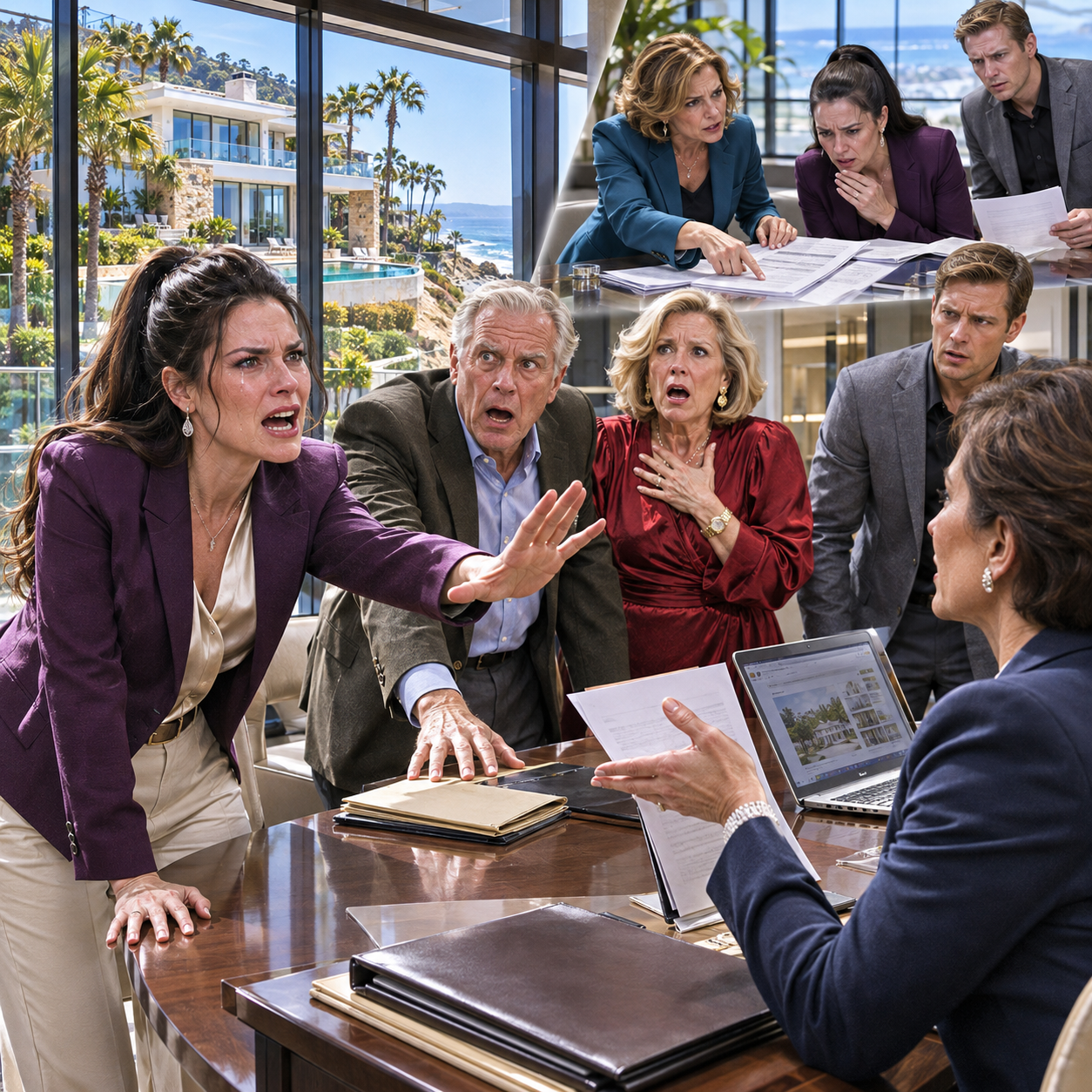
The ballroom had tall windows, polished wood, candles on every table, and a string quartet playing softly near the far wall. Brandon sat laughing at the head table with Madison beside him, while Richard and Linda Hayes entertained lawyers, business partners, donors, relatives, and friends. Nobody noticed me at first.
Linda did.
Her eyes crossed the room, found me, and widened. Brandon followed her stare. His smile stayed in place, but something underneath it changed.
I walked down the center aisle. My legs shook, yet they held. When I stopped before the head table, I looked directly at Brandon and said, “I’d like to say something about your harmless prank.”
The quartet stopped playing. I told the room what six years had cost: my twenties, law school, my parents’ house, my father’s health, my mother’s peace, and my sister’s youth. Linda stood and told me I was embarrassing myself. I reminded her she had offered me $40,000 to sign away my silence.
A murmur moved through the room. Richard rose next and announced that his family had helped pay for my care. I told him his $75,000 had purchased my exhausted father’s signature on documents he hadn’t understood while my parents covered the rest by selling their home and working until their bodies hurt. “That’s not generosity,” I said. “That’s leverage.”
Then I turned back to Brandon. “You didn’t play a prank. You found out I was going to Dean Aldridge with information from another student, stole my folder, and put something in my drink so I’d miss the appointment. When I became seriously ill, you waited forty-six minutes to call for help while your friends cleaned the house.”
Brandon stood so quickly his chair scraped backward. “That’s insane. She has brain damage. Her memory isn’t reliable.” His voice cracked on the last word. I looked at him and said, “That’s why I’m not asking anyone here to trust my memory.”
The ballroom doors opened. Rachel Monroe entered with several officers, and Jared walked behind them. Brandon’s face didn’t slowly change; it emptied all at once.
Rachel informed him he was being arrested on serious felony charges connected to what happened to me and the subsequent concealment of evidence. Richard stepped forward angrily until an officer calmly blocked his path. Around the ballroom, phones appeared in people’s hands. Partners from Brandon’s law firm began looking anywhere except at him.
“Madison,” Brandon said as officers approached. “Tell them this is crazy. Tell them.” Madison remained seated for several seconds. Then she stood, removed the engagement ring from her finger, and placed it on the table beside his untouched plate.
She didn’t say a word.
The officers led Brandon away, and for one clean moment I thought the story was over. Then Madison walked toward me with shaking hands. She opened her purse and pressed a small black flash drive into my palm.
“I found this in his desk last month,” she whispered. “I was afraid to open it.” I asked what was on it. Her eyes filled. “Emma, you’re not the only woman whose name is there.”
Two days later, we sat in Rachel’s conference room. The drive contained eleven folders labeled with women’s first names and years. There were dates, locations, notes, scanned agreements, and records of payments made after complaints.
There were also scanned copies of my blue-folder pages.
My handwriting.
Brittany’s account.
Names and dates.
At the bottom of one page: Dean Aldridge. Monday, 9:00 a.m.
Brandon had copied the evidence before destroying the original. Madison stared at the table and admitted she had been the person who accidentally warned him. I had told her over coffee that I was frightened about an important meeting Monday, and later Brandon asked why I seemed distracted.
“I said you had some big thing with the dean,” she told me. “Seven words. That’s all.” Tears rolled down her cheeks. “I thought he’d ask if he could help you.”
“Jared told me.”
She flinched. “Then you know.”
I asked the harder question. “Why did you stay with him after what happened to me?” Madison reminded me of Brandon’s birthday party and the drink that had left her barely able to stand. She remembered me helping her upstairs while Brandon laughed in the kitchen.
“I think some part of me always knew something was wrong with him,” she said. “I just kept choosing the explanation that let me keep my life.” She visited me once during my first year unconscious and never returned because seeing me made the truth impossible to avoid. Each year she stayed made leaving harder.
I was furious with her. I also remembered the fourteen-year-old girl who had borrowed my pencil and become my best friend. The two feelings sat beside each other without cancelling each other out.
“I’m not forgiving you today,” I said.
“I’m not asking you to.”
I reached across the table and put my hand over hers. “But you gave me the drive.” It was the first time we’d touched in six years.
Chapter 5
The flash drive transformed one reopened case into many. Other women agreed to speak, former friends began cooperating, and records showed how complaints had disappeared behind settlements, threats, and legal pressure. Investigators also uncovered communications surrounding the original plea agreement that raised serious questions about how influence had been used.
Brandon lost his job. Whitfield removed the Hayes family name from the science building. Richard Hayes eventually faced charges related to his role in suppressing evidence and interfering with the aftermath. People who had once treated his name as protection started treating it as something they needed distance from.
Linda made one final attempt to control things. She approached Haley outside a grocery store and offered a large payment if we softened our testimony and claimed uncertainty about dates. Haley had been working around investigators long enough to start recording the moment Linda called her name. What Linda intended as leverage became evidence instead.
The most unexpected visitor arrived months later. Harold Aldridge, the retired dean of students, came to my parents’ apartment holding a battered envelope. He had seen the case in the news and searched through old records he had kept after retirement.
Inside was a photocopy of his desk calendar from six years earlier. The Monday after my graduation party contained a nine o’clock student appointment. Beneath it, in his handwriting, were the words: Student no-show. Left voicemail x2.
“I was there,” he told me. “I waited until ten-thirty.”
For six years, that appointment had existed in my mind like a half-remembered dream. Now I knew a man had really sat in an office waiting for me while I lay unconscious in a hospital. He had called twice, unaware that the silence on the other end had nothing to do with changing my mind.
Dean Aldridge agreed to testify.
The grief arrived after the investigation became something lawyers and detectives managed. One winter evening, I asked Haley to drive me past our old house. Another family lived there now, and a child’s bicycle leaned against the porch railing.
I remembered Mom laughing behind those windows. I remembered Dad complaining about leaves while secretly enjoying every Saturday he spent in the yard. I remembered being twenty-four and believing that if I worked hard, followed the rules, and treated people decently, life would eventually meet me halfway.
I cried harder that night than I had in the hospital. Haley held my hand across the center console and didn’t tell me to stop. I wasn’t grieving a building. I was grieving the young woman who had stood beneath backyard string lights with law school waiting for her and no idea that one decision to avoid seeming difficult would divide her life into before and after.
Brandon’s trial lasted nine days. The jury found him guilty on the major charges before them. At sentencing, I carried three pages of prepared remarks to the lectern and left them closed.
Instead, I told the judge about waking up. The white hospital light. My mother’s shaking hand. The spoon falling from fingers that no longer remembered how to hold it. Then I looked directly at Brandon.
“It wasn’t a prank,” I said. “A prank ends when everyone stops laughing. This kept going for six years.” He stared down at the table.
“My mother still wakes at night to make sure I’m breathing. My father damaged his health working two jobs. My sister spent her twenties investigating something other people were paid to forget.” I paused. “I don’t expect this court to give me six years back. It can’t. I only need what happened to be called what it was.”
Brandon received a long prison sentence. It wasn’t six years returned, and no number could have made that exchange fair. Civil cases followed, the agreement my parents had signed while desperate for medical assistance was successfully challenged, and a substantial settlement eventually went to my family and other women connected to the investigation.
My parents bought a small blue house on Willow Lane with a narrow porch and a maple tree in the front yard. Dad stopped driving passengers at night. Mom took her first real vacation in decades and sent me so many photographs of the same beach that I couldn’t tell half of them apart.
Haley stayed with Frank’s investigation firm and eventually earned her own investigator’s license. She began helping people whose complaints had been dismissed because they were inconvenient, difficult to prove, or connected to someone powerful. Frank eventually retired and left Haley his office chair, though she refused to sit in it for months.
Kesha came to another graduation too.
Mine.
Marlowe Law School honored the scholarship opportunity I’d lost. I started at thirty-two, almost a decade older than many students in my section and one of the only people walking into class with a cane. By January, I no longer needed it.
When my name was called at graduation, I saw Kesha standing near the back. She caught my eye and mouthed two familiar words: Different words. I smiled because I knew exactly what she meant.
I’m thirty-five now. I helped start a small legal clinic in Columbus called the Monday Project. We assist people whose complaints were dismissed as misunderstandings, bad choices, or jokes that supposedly went too far.
Every new client gets a blue folder. It starts empty. I tell them that’s the point: the story is theirs, and nobody gets to decide what belongs in that folder except the person who lived it.
Madison moved west. She sends me a card every May, and sometimes I answer. We aren’t the girls we were before Alder Street, and I don’t think we ever will be.
Last winter, she called me. We spent forty minutes talking about grocery prices, terrible television, and a neighbor’s barking dog. When the call ended, I realized I’d been smiling, and I decided that could be enough.
People sometimes ask whether I feel like I won. I don’t know what winning means after losing six years. Brandon went to prison, his family lost much of the power they had used to control the story, and people who once laughed or looked away eventually had to explain their choices.
Justice is something. It isn’t a time machine.
Nobody returned the backyard string lights, my parents’ old house, or the twenty-four-year-old version of me who believed not being difficult was a virtue worth protecting at any cost. I miss her, but I understand her better now. She didn’t know how expensive silence could become.
For a long time, I believed serious harm required one obviously terrible person. Now I know it can require one selfish person and a room full of ordinary people who decide speaking up would be uncomfortable. One laughs, another looks away, a friend chooses the explanation that hurts least, a parent writes a check, and an attorney sends a letter.
Each silence looks small by itself.
Together, they can become a wall.
But the opposite is true too. One witness can finally speak, one friend can hand over evidence, one investigator can ask the question everyone avoided, one dean can keep an old calendar page, and one sister can spend six years refusing to accept an easy answer.
And one woman can open her eyes.
Mom says I’m different now. Quieter, more careful, harder around the edges. She says it with love, the way someone might describe a house that survived a flood and still carries marks showing how high the water reached.
She’s right.
I would trade every settlement dollar, every courtroom victory, and every headline for the six years I lost. I would trade all of it to stand beneath those string lights at twenty-four again and hear my father laughing in the backyard. But life doesn’t offer that bargain.
So I keep the life I still have.
I am awake.
I am here.
And nobody gets to call what happened harmless anymore.
THE END.
⚠️ All characters and events are fictional. Do not imitate or apply them in real life. 😌😌😌