
Part 2
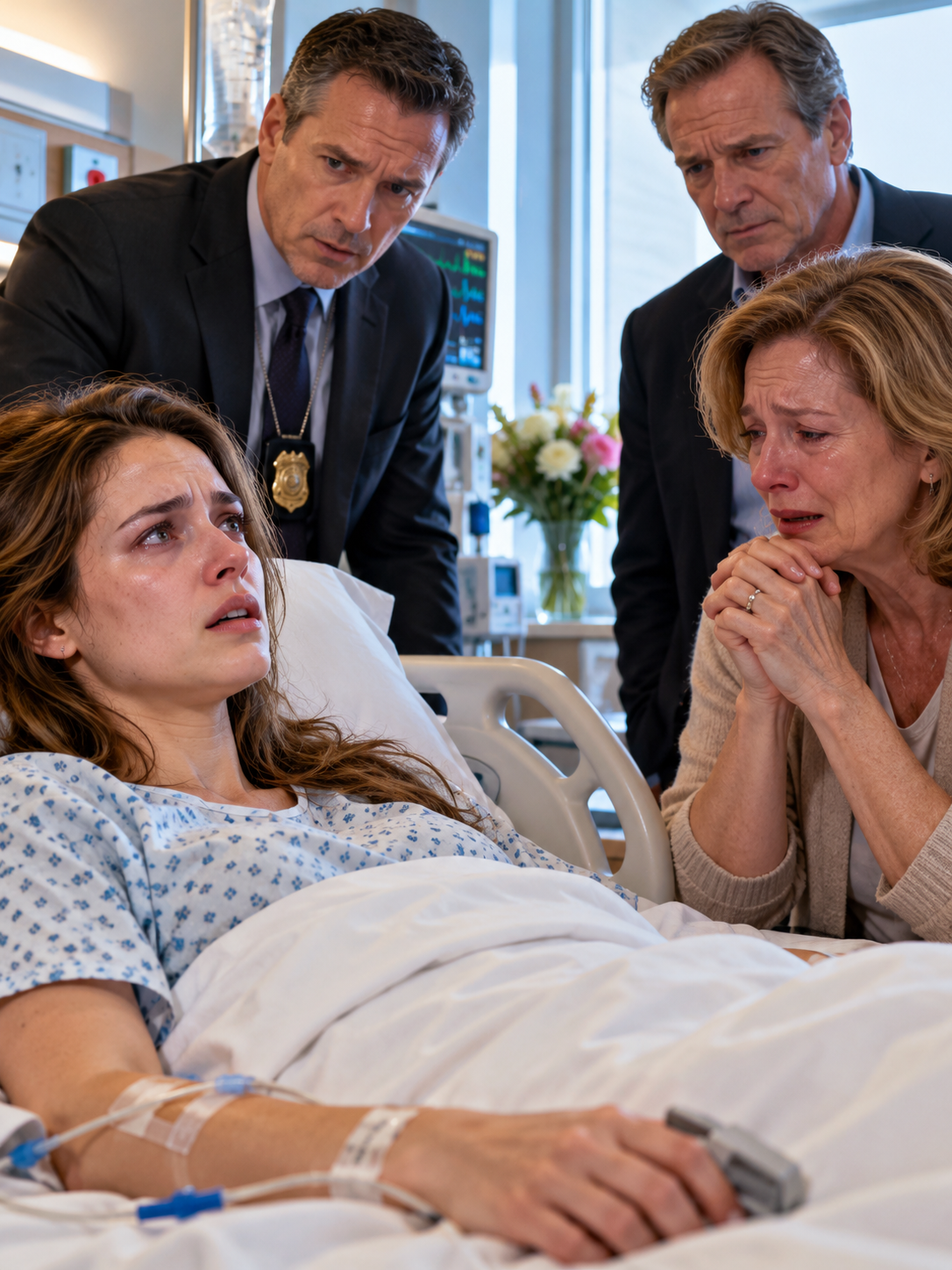
By evening, the word prank had disappeared from Detective Reynolds’s vocabulary. My parents still used it twice, but both times the word sounded smaller and uglier than before. Once the toxicology report was confirmed, even my father stopped arguing that Emily had merely made a reckless mistake.
The amount of warfarin in my bloodstream was dangerous enough that one of my physicians told me plainly that another few hours without treatment might have changed the outcome. There were signs of internal bleeding, which explained the blood I had tasted before losing consciousness. My sister had not slipped me something designed to cause nausea. She had put a drug into my routine that could turn an ordinary medical vulnerability into a catastrophe.
Security footage from my apartment building arrived the next morning. At 5:58 a.m., Emily entered through the side door wearing a baseball cap and carrying a large purse. She used the spare key I had given our mother the previous Thanksgiving, then walked out seven minutes later.
Mom watched the video twice.
“I gave her that key,” she whispered.
Nobody answered.
The police obtained a warrant for Emily’s phone. That afternoon, Detective Reynolds came to my room without my parents and asked whether I wanted to see several messages recovered from a conversation with one of Emily’s friends. I told him yes because after thirty-eight years of being told I misunderstood my sister, I needed to know what she had actually said when nobody was defending her.
One message read, Claire’s always been the special one because she’s sick. Let’s see how special she looks when she screws up in front of her bosses.
Another said, I know what I’m doing. It’ll make her sick enough to miss work. Probably no permanent damage.
Probably.
That word hurt more than anything else.
Emily had accepted the possibility of permanent damage as if she were calculating the risk of a parking ticket.
I remembered us as children, sleeping in the same room during thunderstorms because she was afraid of lightning. I remembered her holding my hand in a hospital waiting room when I was fourteen and doctors were still trying to understand why my joints swelled and my fevers came without warning. Back then, she had threatened a boy who mocked me for walking with a cane.
When had that little girl become someone who could sit in my kitchen before sunrise and replace medicine I needed to stay alive?
Diane brought more news from work. Emily had contacted human resources, telling them I was emotionally unstable and suggesting the company would be legally exposed if it allowed me to remain in a high-pressure position. She had also implied that I had begun confusing dosages.
“She was preparing an explanation before it happened,” Diane said.
The realization left me strangely calm. Rage would have been easier. Rage was hot and simple, but betrayal was cold, and it spread slowly through memories you once trusted.
A hospital psychiatrist named Dr. Feldman visited later that day. She made it clear she was not there to diagnose Emily from a distance, only to help me understand the pattern I was describing. When I mentioned research notes that had vanished before deadlines, my car refusing to start before two interviews, and strange illnesses that seemed to arrive before important events, Dr. Feldman asked me not to dismiss those memories simply because I could not yet prove anything.
“People often reinterpret escalating behavior as isolated incidents,” she said. “Especially inside families where one person is repeatedly excused.”
That sentence stayed with me.
The police searched the small pharmacy where Emily had briefly worked after finishing her certification. A security camera showed her pocketing several bottles from a return bin six days before I collapsed. One of those medications was warfarin.
Dad watched the footage standing beside my bed.
He sat down before it finished.
For most of my life, my father had been the family authority. He believed in evidence, procedure, and accountability everywhere except at home, where Emily’s misconduct somehow became a misunderstanding and my objections became proof I was too sensitive.
Now he rubbed both hands over his face.
“I sentenced a man to prison once for poisoning his business partner,” he said. “He used less planning than this.”
Mom began sobbing.
“I kept asking Claire to forgive her,” she said. “Every time Emily lied. Every time she ruined something. I told myself keeping the family together mattered more than being right.”
She looked at me with red, swollen eyes.
“I taught her there would never be consequences.”
I wanted to comfort my mother. The old version of me would have.
Instead I said, “You taught me there wouldn’t be consequences for hurting me.”
The room went silent.
Mom closed her eyes.
Two days later, just as the hospital was preparing to discharge me, Detective Reynolds came back with another lab report. This time he did not sit down.
“We asked the doctors to review older blood samples from your medical records,” he said. “Samples taken during some of your unexplained episodes this year.”
My mouth went dry.
“They found traces of several medications you were never prescribed.”
Mom made a small sound behind me.
“How far back?” I asked.
“At least seven months.”
I stared at the detective.
One poisoned morning was no longer the story.
Emily had been testing me.
Small doses. Different substances. Enough to cause vomiting, dizziness, weakness, missed meetings, canceled dinners, ruined weekends. Not enough to make anyone ask the right question.
Until she got ambitious.
Until she wanted me down on the morning that mattered most.
I signed the amended statement with a hand that would not stop trembling.
My sister had not tried to poison me once.
She had been practicing.
Part 3
I did not return to my apartment after the hospital. Diane insisted I stay in the spare bedroom of her townhouse, and for once I accepted help without arguing that I could manage alone. We changed every lock at my place, installed cameras, and moved my medication into a small biometric safe that sat on Diane’s dresser until I was ready to go home.
Emily was released on bail with strict orders not to contact me. My parents stopped asking me to forgive her, but the silence that replaced their pleading carried its own grief. They had lost the daughter they thought Emily was, and I was slowly realizing I had lost a sister years earlier without knowing it.
The investigation continued for nearly three months.
Police found a spiral-bound journal hidden beneath winter clothes in Emily’s apartment. She had dated entries the way someone might keep records of a diet or exercise plan.
March 15: Put something in Claire’s coffee before board review. She got sick in the conference room. Finally looked human.
April 23: Added medication to her water before dinner with David. Maybe he’ll understand she’s too much trouble.
I had dated David for six months. Our relationship ended after I became violently ill at a restaurant and then canceled two weekends because of unexplained fatigue. He had been kind about it, but I could see the exhaustion in his eyes.
For almost a year, I had blamed my body.
Now I understood that some of those failures had been manufactured by someone who shared my last name.
The district attorney assigned to the case was Sarah Martinez, a woman in her early fifties who spoke calmly even when describing things that made my stomach turn. She showed me purchase records, falsified supplier accounts, and emails Emily had used to obtain medications under false pretenses.
“She was experimenting,” Sarah said. “That is what the evidence suggests.”
My mother covered her face.
Dad stared at the documents for a long time. Then he asked Sarah what he could do to help.
It was the first time I saw my father choose my safety over Emily’s future without hesitation.
He gave prosecutors everything he knew. He helped organize years of family records, identified dates when Emily had access to my apartment or personal belongings, and even admitted instances where he had persuaded me not to report her behavior.
“I thought I was protecting my child,” he told me one afternoon. “I never asked which child needed protecting.”
I could not forgive him immediately. Maybe part of me never would completely. But remorse, I learned, was different from apology. Apology was a sentence. Remorse changed behavior.
My parents changed.
Emily did not.
Two weeks before trial, she tried to send a message through a cousin. She said she missed me. She said prosecutors were exaggerating because they wanted an easy conviction. She said if I testified, I would destroy the family forever.
I sent the message directly to Sarah.
The morning of the trial, I was in a courthouse restroom trying to stop my hands from shaking when I heard a commotion in the hall. Then Emily’s voice came through the door.
“Claire! Please, I just need one minute.”
Diane stepped between her and the restroom before security arrived.
“They’re making this sound like something it wasn’t,” Emily shouted. “Tell them, Claire. Tell them I wasn’t trying to kill you.”
I stayed inside.
For once, I did not explain myself.
On the witness stand, I described the morning I collapsed. I described waking up and learning that my sister had switched my pills. I described the seven months of unexplained illnesses that turned out not to be unexplained at all.
Emily cried through most of my testimony.
Years earlier, those tears would have undone me. I would have remembered thunderstorms, childhood secrets, Christmas mornings, hospital waiting rooms, and every person who told me blood was thicker than anger.
But there are moments when memory becomes dangerous because it can make you loyal to someone who no longer exists.
Then Sarah played the recording.
Emily had spent several nights in county jail immediately after her arrest, and one of her calls from the facility had been recorded. She was laughing with a friend.
“She always thought she was better than me,” Emily said on the recording. “Her degree, her career, everybody worrying about her. You should have seen her face when the pills hit. She finally looked scared.”
The courtroom changed.
The jurors stopped looking at Emily with pity.
My mother began crying quietly.
Emily stopped pretending to cry.
For the first time since the case began, she looked at me exactly the way she had apparently looked at me for years.
With hatred.
Part 4
The jury deliberated for less than three hours.
I spent that time in a small witness room with Diane and my parents. Nobody talked much. My mother held a paper cup of coffee without drinking it, and Dad kept checking his watch as if thirty years in courtrooms had taught him that waiting could be controlled if measured carefully enough.
When the bailiff called us back, my knees nearly failed.
“Guilty.”
The word was repeated on every major count, including attempted murder and multiple offenses connected to medication tampering, theft, and the months-long pattern of poisoning.
Emily did not look at the jury.
She looked at me.
At sentencing, the judge spoke for nearly ten minutes. He described the planning, the repeated acts, the exploitation of my medical condition, and what he called an “extraordinary absence of genuine remorse.”
Then he sentenced Emily to fifteen years in state prison.
My mother made a broken sound beside me.
Dad took her hand.
As two deputies approached the defense table, Emily twisted around.
“I hate you,” she said.
The judge ordered her to face forward.
But Emily raised her voice.
“You always have to win, Claire! Everything has to be about you!”
I felt the old instinct rise inside me—the desperate need to explain, to make her understand, to defend myself against an accusation that made no sense.
Then it disappeared.
I said nothing.
That may have been the first real freedom she ever gave me.
For Emily, everything had been a competition. My illness had been attention she believed belonged to her. My education had been an insult. My career had been proof that someone else was keeping score.
For me, there had never been a contest.
I had simply been trying to stay alive.
The months after sentencing were not triumphant. Nobody leaves a courtroom after watching a sibling go to prison and feels victorious. Justice can protect you, but it cannot restore the years before you learned protection was necessary.
My parents sold the house where Emily and I had grown up. Mom said she could not walk past our childhood bedroom without wondering when she had stopped seeing what was happening between her daughters. She joined a support group for families dealing with violent relatives and began seeing a therapist every week.
Dad stopped doing occasional legal consulting and volunteered instead with an organization that helped victims of domestic and family abuse obtain protective orders. He rarely talked about Emily. When he did, he no longer asked me to soften what she had done.
One Sunday afternoon, he came to my apartment carrying a toolbox to repair a loose cabinet hinge.
Before leaving, he stood in the doorway and said, “I spent my whole career believing accountability was a form of respect. Then I came home and treated accountability like cruelty.”
I waited.
“I failed both of you,” he continued. “I failed you by not protecting you. And I failed Emily by teaching her that love meant she would never have to answer for anything.”
It was the most honest thing my father had ever said to me.
“I’m glad you finally understand,” I told him.
It was not forgiveness.
But it was a beginning.
My company handled everything better than I expected. The board rescheduled my presentation once I was medically cleared, and I delivered it with Diane sitting in the front row.
Halfway through, my voice trembled.
I stopped, took a sip of water, and looked around the room.
Nobody was laughing.
Nobody thought I was weak.
So I continued.
Two weeks later, I received the promotion.
For years Emily had tried to convince me that success was proof someone else had lost. I finally understood how deeply I had absorbed that idea. Accepting the promotion did not mean I had defeated my sister. It meant I had survived long enough to keep living the life she tried to take from me.
Part 5
A year after the trial, a letter arrived from a counselor at the prison where Emily was being held.
I almost threw it away unopened.
Instead, I made tea, sat at my kitchen table, and read it.
The counselor explained that Emily continued to minimize her actions. She claimed she had only wanted to “teach me humility” and insisted the situation had spiraled because I was medically fragile. According to the letter, she still blamed me for the consequences of choices she had made herself.
The counselor recommended permanent separation after her eventual release.
I filed for a long-term protective order the following week.
Some people in the extended family thought that was harsh. An aunt told my mother that fifteen years was a long time and people could change. A cousin suggested I might feel guilty someday if Emily became seriously ill and I refused to see her.
Years earlier, those comments would have tormented me.
Now I understood that guilt was sometimes just the old name we gave a boundary we had never been allowed to set.
I keep my medication locked away today. Cameras watch the doors of my home, and I check sealed bottles before taking anything. I no longer feel foolish for doing those things.
Caution is not fear when someone has already proven the danger is real.
Diane remains the person I call first when something wonderful happens. My parents and I have rebuilt a relationship more honest than the one we had before, although there are subjects we approach slowly. Nobody tells me to forgive Emily anymore.
My mother once asked whether I hated my sister.
I thought about it for a long time.
“No,” I said.
She looked surprised.
“Hating her would still give her too much of my life.”
That was the truth.
What Emily did changed me. I became more careful, less willing to dismiss cruelty because it arrived wearing a familiar face. I stopped confusing endurance with kindness and silence with peace.
But she did not take everything.
She did not take my work. She did not take my friendships. She did not take my ability to trust people who had earned that trust.
Most importantly, she did not take the future.
For decades, my parents believed blood created an obligation strong enough to survive anything. They were partly right. Blood creates history. It creates memories, loyalties, and ties that can be painfully difficult to break.
But blood is not a permission slip.
It does not give someone the right to endanger you and demand forgiveness afterward. It does not turn abuse into a misunderstanding or attempted murder into a prank.
Family, I learned, is not defined by who shares your blood.
It is defined by who wants you alive enough to protect your life, honest enough to tell you the truth, and loving enough to accept that actions have consequences.
Emily wanted me to believe that holding her accountable meant I had chosen punishment over family.
She was wrong.
I finally chose myself.
And after spending most of my life being told to forgive what should never have been excused, I learned that sometimes the most moral thing you can do is walk away, close the door, and let justice stand where forgiveness cannot.
THE END.

