
My Daughter-in-Law Introduced Me as Her Head Chef at Thanksgiving—So I Walked Out and Left Her $6,000 Business to Collapse
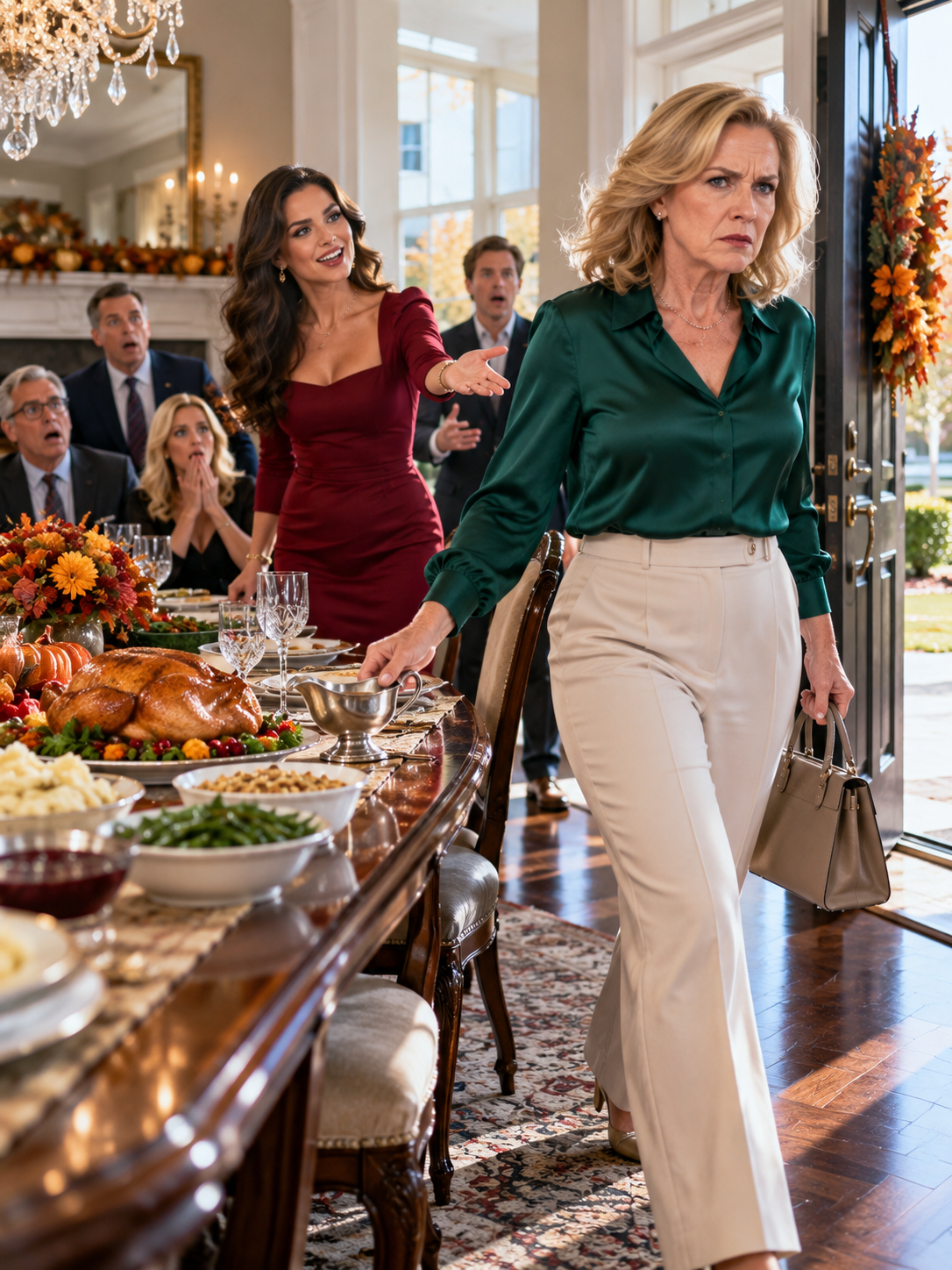
“Everyone, meet our new head chef—my mother-in-law!” My daughter-in-law announced at Thanksgiving, smiling at twelve wealthy strangers while I stood holding a gravy boat. I’d spent two days cooking that dinner for free, unaware she’d already collected thousands of dollars from clients expecting me to cater their future parties. My son wouldn’t even look at me. So I quietly put down the gravy, picked up my purse, and walked out. Twenty-four hours later, I was flying across the Atlantic. But they weren’t finished trying to use me.
Part 1
At sixty-three years old, I never imagined Thanksgiving dinner would be the moment I finally understood what my family thought I was worth. I was standing beside my son’s dining table, holding a warm gravy boat, when my daughter-in-law tapped her wineglass and announced that I would be managing the kitchen operations for her new catering business. Twelve strangers applauded, my son stared at his plate, and I realized I had just been publicly hired for a job nobody had bothered to offer me.
My name is Evelyn Harper, and until that evening, I believed I had a reasonably good relationship with my son, Nathan, and his wife, Brooke. Nathan was forty-one, worked in commercial insurance, and lived with Brooke and their seventeen-year-old daughter, Lily, in a comfortable suburb outside Richmond, Virginia. My husband, Samuel, had died five years earlier, and I’d spent much of my widowhood filling the empty spaces in their lives.
I collected Lily from school when her parents were working, brought over casseroles when they were busy, and paid for little expenses whenever Nathan mentioned money was tight. Every Sunday, somebody needed something, and I convinced myself being useful meant being loved. Samuel used to say I had a habit of giving people my last piece of pie while pretending I wasn’t hungry, but I’d never understood how accurate that observation was.
That Thanksgiving, Brooke had asked me to prepare dinner because she was inviting “a few important friends.” I’d arrived Tuesday morning with my own Dutch oven, handwritten recipes, and enough groceries to feed twenty people. By Thursday afternoon, I’d roasted a twenty-pound turkey, baked three pies, prepared two casseroles, and made cranberry sauce from scratch while Brooke rearranged flowers and practiced introductions.
I should have noticed that something was unusual when a delivery driver arrived carrying twelve identical gift bags. Brooke hurried them into the dining room and told me they were little favors for her guests. Later, while searching for aluminum foil, I spotted a folder marked “Winter Private Dining” beside her laptop, but she whisked it away before I could look inside.
At six-thirty, the guests arrived wearing tailored jackets and expensive watches, introducing themselves with professional titles rather than the familiarity I’d expected from family friends. Several asked Brooke detailed questions about upcoming holiday events, and one woman mentioned a deposit she’d already transferred. I assumed Brooke was organizing some neighborhood fundraiser because she’d recently talked about starting a business, but nobody had mentioned that I would be involved.
Then came the announcement. Brooke stood with her wineglass raised and said, “I’d like everyone to meet the culinary genius behind tonight’s beautiful dinner, my mother-in-law, Evelyn Harper.” She gestured toward me with the polished enthusiasm of a television presenter before adding, “Evelyn will be heading up our kitchen operations, so you’re all in excellent hands.”
I looked toward Nathan, expecting him to laugh and explain that Brooke was joking. Instead, he became fascinated with the centerpiece, carefully straightening a decorative pinecone that didn’t need straightening. That tiny movement hurt more than Brooke’s speech because it told me he already knew what she intended.
I placed the gravy boat on the table, folded my napkin, and pushed back my chair. “Excuse me for a moment,” I said, smiling politely at the guests. Then I collected my coat and purse from the hallway, opened the front door, and walked into the cold November air without saying goodbye.
Nobody followed me. By the time I reached the highway, my phone was vibrating continuously, but I left it on the passenger seat and drove home with the radio off. My hands smelled of sage and roasted onions, and the aching muscles in my lower back reminded me that I’d spent nearly sixteen hours standing in Brooke’s kitchen.
At home, I remembered something I’d glimpsed in that folder: a printed schedule of private dinners stretching into February. Beneath the dates were client names and figures labeled “Deposits Received,” including several payments of more than five hundred dollars. I suddenly understood that Brooke hadn’t simply embarrassed me with an impulsive announcement; she’d been selling my cooking to strangers.
Then her first text arrived: “You walked out in the middle of my business launch. Do you have any idea how much money you’ve just cost me?”
I read it twice, realizing that she was more concerned about losing her business than losing her mother-in-law’s trust. And as I sat alone at my kitchen table, I remembered a folder on my laptop that I’d been afraid to open for four years.
Part 2
The folder was called “Someday Lisbon.” Inside were apartment listings and photographs of the city Samuel and I had wanted to visit before his illness made traveling impossible. For four years, I’d opened those bookmarks whenever Nathan demanded another favor, then closed them again. That night I booked a furnished apartment near Lisbon’s old center and a flight departing the following evening, with no return date.
My retirement income covered my expenses, and Samuel had left me savings I’d barely touched. I called my neighbor, June, to collect the mail and arranged for someone to check the heating. Then I filled a suitcase with walking shoes, sweaters, and books I’d been saving for a trip I never permitted myself to take. I left every apron hanging in the kitchen.
At six the next morning, Lily texted, “Grandma, are you okay? Mom says you had some kind of episode.” I told her I was safe, loved her, and was taking a long-awaited vacation. I didn’t ask her to pick sides, because she still had to live with the two adults responsible for this mess. She sent three little hearts and requested photographs.
Nathan arrived before nine, ringing the doorbell repeatedly. Through the peephole, I saw him waving his phone as he called, “Brooke has the Ellisons coming tonight for a tasting. She needs you there by noon, and you can’t abandon her because you got upset over a compliment.” I stood beside my suitcase, resisting the familiar urge to make everything easier for him.
“Tell Brooke she needs other arrangements,” I said through the door. Nathan demanded that I stop acting ridiculous, but I remembered twelve strangers applauding while my own son studied a pinecone. After several minutes, his car finally pulled away. That evening, as Virginia disappeared beneath the airplane’s wing, I opened my paperback and felt the unfamiliar pleasure of having nobody else’s dinner to prepare.
Lisbon greeted me with clear sunshine, rattling trams, and the smell of bread from a bakery beneath my rented apartment. My landlady, a retired teacher named Teresa, showed me the stubborn radiator and handed over two iron keys. I made tea and switched on my phone. Forty-one missed calls waited beside complaints about refunds, a disastrous tasting, and Brooke’s humiliation.
Not one message from Nathan or Brooke asked whether I’d arrived safely. Sitting where sunlight fell across the blue kitchen tiles, I opened my banking app and examined years of recurring charges: Nathan’s gym, his storage unit, Brooke’s specialty coffee subscription, and streaming services they used. Nearly three hundred dollars vanished monthly, all because I’d once offered to help.
I canceled those voluntary payments and removed my card from their accounts. It wasn’t revenge; I was ending gifts that had somehow become permanent obligations. Then I slept nine uninterrupted hours, something I hadn’t managed in months. The next morning, I ate a warm custard tart in a small café and practiced ordering coffee in Portuguese.
Three days later, Nathan finally reached me. “You’re in Europe?” he demanded, then launched into complaints about the Ellisons canceling, refunds totaling thousands, and his declined gym payment. “Brooke accepted deposits for meals I never agreed to cook,” I answered. “You knew what she was planning and let her announce it in front of strangers.”
“She got excited,” he insisted. “She thought you’d be proud to help the family.” I asked why she hadn’t offered compensation or even requested permission, and he fell silent. When he finally muttered, “We’re family,” I told him that made his betrayal worse, not better. I ended the call before he could ask for anything else.
That afternoon, Lily sent me a screenshot from Brooke’s business website. Beneath a photograph of the Thanksgiving table was a picture of me in Samuel’s blue apron, apparently taken while I stirred gravy. The caption read, “Meet our resident chef, Evelyn Harper—exclusive private dining experiences booking through spring.” My stomach tightened as I realized Brooke wasn’t merely expecting my labor; she’d already started selling my name.
Part 3
I studied the photograph on Brooke’s website. Samuel had given me that blue apron years earlier, and I’d worn it because the faded cotton reminded me of him. Brooke had transformed a family moment into advertising. The website also displayed booked dinner dates and menus copied from recipes I’d made for decades.
I saved screenshots and called a Richmond attorney. She prepared a demand that Brooke stop using my name, photograph, and implied endorsement. “Her customer deposits are her responsibility,” the attorney reminded me. “Keep the messages, and don’t let anyone convince you that you agreed to work for her.”
Brooke answered by accusing me of destroying a business she’d worked hard to build. When my attorney requested the agreement authorizing her to advertise my services, Brooke produced nothing. My photograph eventually disappeared from the website, replaced by a generic image of a smiling chef. There was still no apology, only another message about how selfish I’d become.
I returned to exploring Lisbon, riding trams and eating oranges from the market. Teresa invited me to lunch with her sister, and I was startled when they insisted I remain seated while they cooked. Nobody asked me to peel potatoes or wash dishes afterward. For once, I was simply a guest, and I nearly cried over a bowl of vegetable soup.
I also began making plans to stay longer, researching lawful residency requirements rather than assuming I could live indefinitely on a tourist visit. Samuel and I had dreamed of spending a winter abroad before he became ill. After his death, I’d confused constant availability with having a purpose. Now I finally had time to consider what I wanted.
Six weeks after Thanksgiving, Brooke emailed with the subject “Practical Arrangements.” Because I was apparently staying in Europe, she wrote, she and Nathan had decided to move into my Virginia house while rebuilding their finances. They would put my belongings in the garage and use the kitchen for occasional business tastings. “There’s no point leaving it empty when family needs it,” she concluded.
I stared at the message while the apartment radiator clicked behind me. They hadn’t asked permission to occupy my property, much less run a business there. Apparently my absence made them think they could simply claim the house Samuel and I had paid for. I called my attorney and then a licensed Richmond property manager named Denise Lowell.
With my written authorization, Denise inspected the house, arranged new locks, and coordinated insured movers to store my personal belongings. My attorney informed Brooke that she had no permission to enter or use the property for events. Denise photographed the rooms, arranged professional cleaning, and began looking for tenants. I was determined to protect the house without abandoning my plans abroad.
By mid-January, Denise found a married couple relocating for hospital jobs who wanted a twelve-month lease beginning February 1. Their references checked out; I signed the documents electronically. The rental income would cover the property’s expenses and support my travel plans. Seeing my empty dining room in the listing hurt, but surrendering it to Brooke would have hurt more.
I emailed Brooke: “The house is leased beginning February 1. The locks have been changed. You have no permission to move in or host events there. Please arrange your own housing.” Nathan called from Lily’s phone later, opening with, “Mom, tell me you didn’t actually rent our house.”
“It’s my house,” I replied. Nathan said they’d already given notice to their townhouse landlord because Brooke had assured him I would let them move in. I asked why nobody had spoken to me first, and he muttered, “She told everyone you’d promised.” Hearing him admit that he hadn’t even checked with me extinguished my hesitation.
Then Brooke snatched the phone. “We already advertised two dinners at your address,” she snapped. “Now we’ll have to cancel again, and those clients know where to find us.” I looked at Teresa’s iron key and felt my stomach turn. Even after everything, Brooke was still accepting money for things she had no right to offer.
Part 4
I wanted to call Nathan back and shout, but that would only give Brooke another argument. Instead, I forwarded her admission to my attorney and asked Denise to warn the incoming tenants. Brooke’s customers were notified that my address wasn’t a catering venue. Whatever refunds she owed, she’d have to arrange them herself.
That weekend, Denise sent a security-camera photograph showing Nathan and Brooke on my porch with cardboard boxes in their SUV. They left after Denise called, but seeing my son testing the new locks made me unexpectedly tearful. He’d carried a key to my house for twenty years, yet apparently never imagined he would need my permission to live there.
Lily called Sunday while walking home from track practice. Her parents had found a small apartment and were arguing about money, she said. Then she hesitated: “Mom says you’re punishing us because you don’t like her.” I explained that loving my family didn’t mean agreeing to financial promises made using my time and property without asking me.
“She said you might stop helping with college,” Lily whispered. I sat down, suddenly understanding why Brooke kept mentioning my granddaughter. Three years earlier, I’d established an education trust for Lily, administered by an independent trustee who would cover eligible tuition and living costs. I assured her that neither parent could use her future to bargain for my obedience.
Lily cried softly, and we talked instead about her college applications and her dream of studying environmental science. Before hanging up, she said, “Grandma, I never thought you were just the cook.” I held the phone long after the call ended. Those words meant more to me than all Brooke’s angry messages put together.
In February, I briefly returned to the United States to handle residence-visa paperwork and financial matters, staying in a hotel. I didn’t visit my old house because the tenants deserved privacy. Denise reported that they’d planted flowers beside the front steps. It comforted me knowing the place was being cared for by people who respected the terms of living there.
By spring, after completing the required paperwork, I returned to Lisbon for a longer stay. I joined a Portuguese class, befriended a Canadian architect and a local painter, and learned to cook without automatically doubling every recipe. Sometimes grief still caught me off guard, especially when a café smelled like Samuel’s favorite coffee. But loneliness no longer meant I had to serve someone else.
Nathan emailed in April about expensive car repairs. He mentioned the cost three times, then asked whether my rental income was treating me well. I replied, “That sounds difficult. I hope you find a solution.” A week later, Brooke sent a proposal for a new catering venture requiring an initial investment and occasional help from an experienced cook.
I didn’t answer her. My attorney confirmed that the original business was winding down amid refunds and customer disputes, and I wasn’t volunteering to finance its replacement. Instead, I visited a tiled museum with Teresa, then cooked grilled fish and tomatoes for us both. She insisted on washing the dishes, and I let her.
In June, Lily called to say she’d been accepted into her first-choice university in North Carolina. I cried so loudly Teresa appeared in my doorway, worried something terrible had happened. Lily laughed and invited me home to celebrate before she left for college. I booked a flight and a hotel room, eager to see her without becoming everyone’s cook again.
Two days before my flight, Nathan invited me to an expensive steakhouse for a celebratory dinner. He said everyone wanted a fresh start and Brooke had “something promising” to discuss. When I showed Teresa the message, she raised an eyebrow and asked, “Do they miss you or your wallet?” I smiled, but on the flight home, I realized I didn’t know the answer.
Part 5
Lily ran across the hotel lobby and hugged me hard enough to wrinkle my blouse. She smelled of sunscreen and the vanilla lotion she’d loved since middle school. We spent two days visiting the botanical garden, shopping for dorm essentials, and eating lunch at places she chose. Nobody asked me to cook, and that alone felt like a holiday.
At a riverside café, I explained how her education trust worked and gave her the trustee’s contact information. When she saw the amount reserved for school, her eyes filled with tears. “Grandma, you’ve already done so much,” she whispered. I told her Samuel and I had saved because we believed in her future, not because she owed us anything.
Saturday’s family dinner was at a steakhouse with white tablecloths and an expensive-looking wine list. I wore a green linen dress from Lisbon, which Brooke inspected without comment. Nathan kissed my cheek and mentioned how difficult their finances had become. Lily rescued the conversation by describing her future roommate and orientation week.
Brooke ordered costly wine, two appetizers, and an enormous steak. Once the waiter disappeared, she leaned forward with the same practiced smile she’d worn at Thanksgiving. “I’ve been rethinking private dining,” she began. “Smaller events, higher prices, and a professional kitchen. With startup money and an experienced cook, we could finally make it work.”
I asked whether the evening was supposed to celebrate Lily or finance another business. Nathan insisted they were merely discussing possibilities, then suggested lending them twenty thousand dollars against future profits. The number landed between us like a familiar insult. They’d made another plan for my resources without finding out whether I wanted any part of it.
“No,” I answered, cutting my salad. Brooke asked whether I needed time to reconsider, but I repeated myself. Nathan said they weren’t requesting charity, and I reminded him that loans also required willing lenders. Brooke immediately asked when my tenants’ lease ended, suggesting that my kitchen would be perfect for intimate tasting events.
“They want to renew,” I said. “And I want to stay in Lisbon.” Nathan looked wounded while Brooke stared into her wineglass. Neither asked what made me happy there, whom I’d befriended, or how I’d spent my days. They only wanted to know when I would resume being useful to them.
Our food arrived, and Lily described a creek restoration project she hoped to join at college. I listened proudly, wishing the dinner could remain about her for once. When the waiter finally placed the check between Nathan and Brooke, neither reached for it. Brooke smoothly slid the leather folder across the table until it rested beside my plate.
I opened my purse, and Nathan visibly relaxed. Instead of a credit card, I removed an envelope addressed to Lily, containing a gift card and a letter Samuel had written years earlier with advice for her future. She hugged me, blinking away tears. Then I asked the waiter to separate my salad and sparkling water from everyone else’s orders.
“You’re seriously not paying?” Brooke demanded. “I’m paying for what I ordered,” I replied, handing over my card. Nathan said they’d counted on my treating everyone because I hadn’t contributed to the celebration. I looked at Lily and reminded him that I’d come because my granddaughter wanted to see me, not because I intended to purchase everyone’s dinner.
I hugged Lily outside and promised to call when I landed. Nathan followed me onto the sidewalk and said he hoped I’d eventually forgive them, but I told him forgiveness wasn’t something I owed before moving on. I wasn’t interested in repairing a relationship that required me to surrender my independence. Then I returned to my hotel without looking back.
Back in Lisbon, I resumed my classes, my friendships, and quiet dinners cooked entirely for myself. Lily called every Sunday, sharing stories about dorm life and the environmental projects she loved. Sometimes I remembered the gravy boat I’d placed on Brooke’s table that Thanksgiving and how easily my family had mistaken my generosity for permanent employment. I hadn’t abandoned them when I walked out that night; I’d finally stopped abandoning myself.
Legal Notice: This story is a work of fiction. Names, characters, businesses, events, and incidents are the product of the author’s imagination or are used fictitiously. Any resemblance to actual persons—living or dead—or to actual events is purely coincidental. Thank you! 💓

