### Part 2: My Broken Arm Forces Our Family to Choose Sides
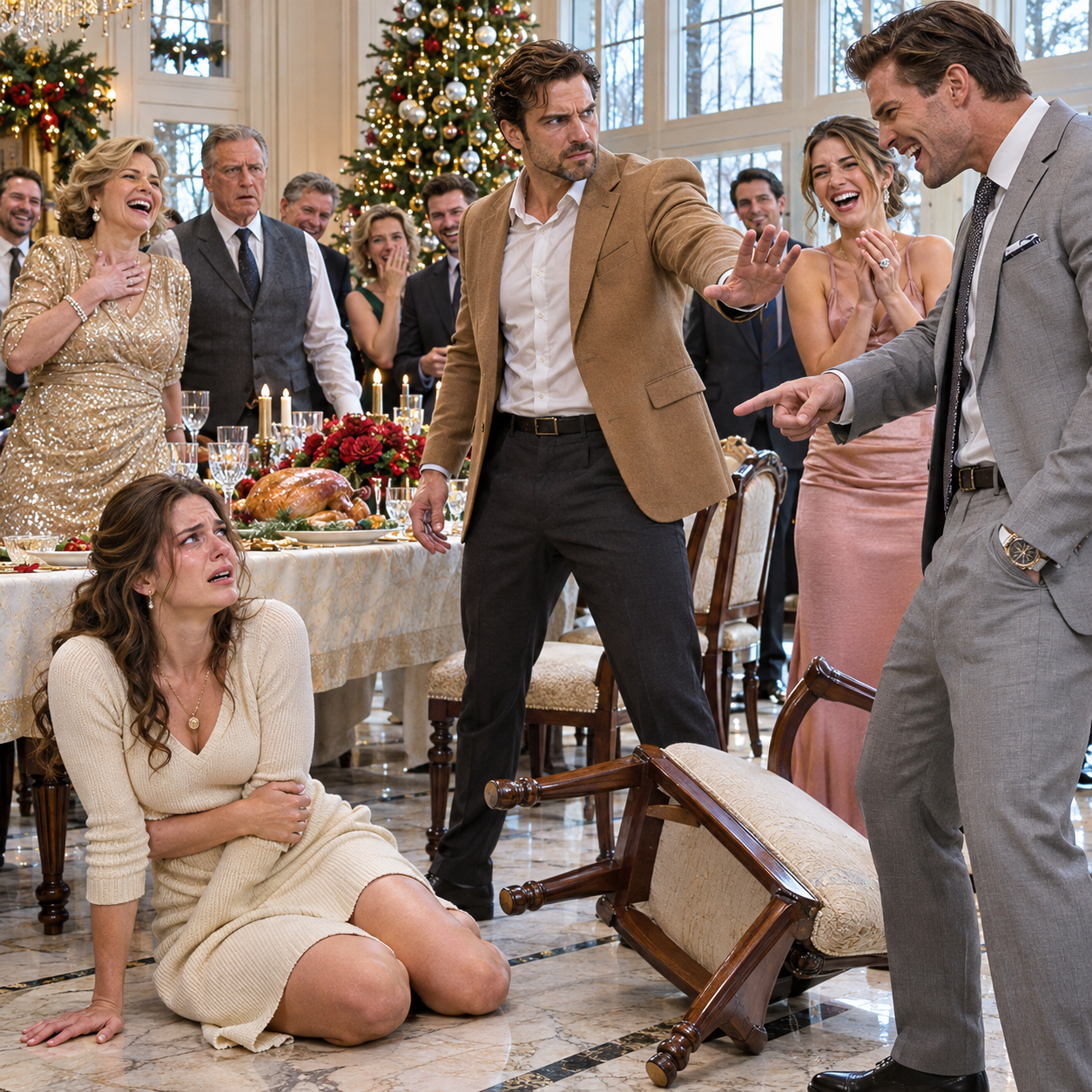
The emergency room smelled of disinfectant and wet winter coats, and I sat beside Ethan while a nurse carefully examined my swollen elbow. Dr. Hollander studied the X-rays and explained that the bone was fractured, fortunately without the complications that might have required surgery. I would need a cast for approximately six weeks, and when she asked how it happened, I struggled to say the words. “My sister’s fiancé pulled a chair out from under me at Christmas dinner,” I answered, and hearing it aloud made the whole thing sound even crueler.
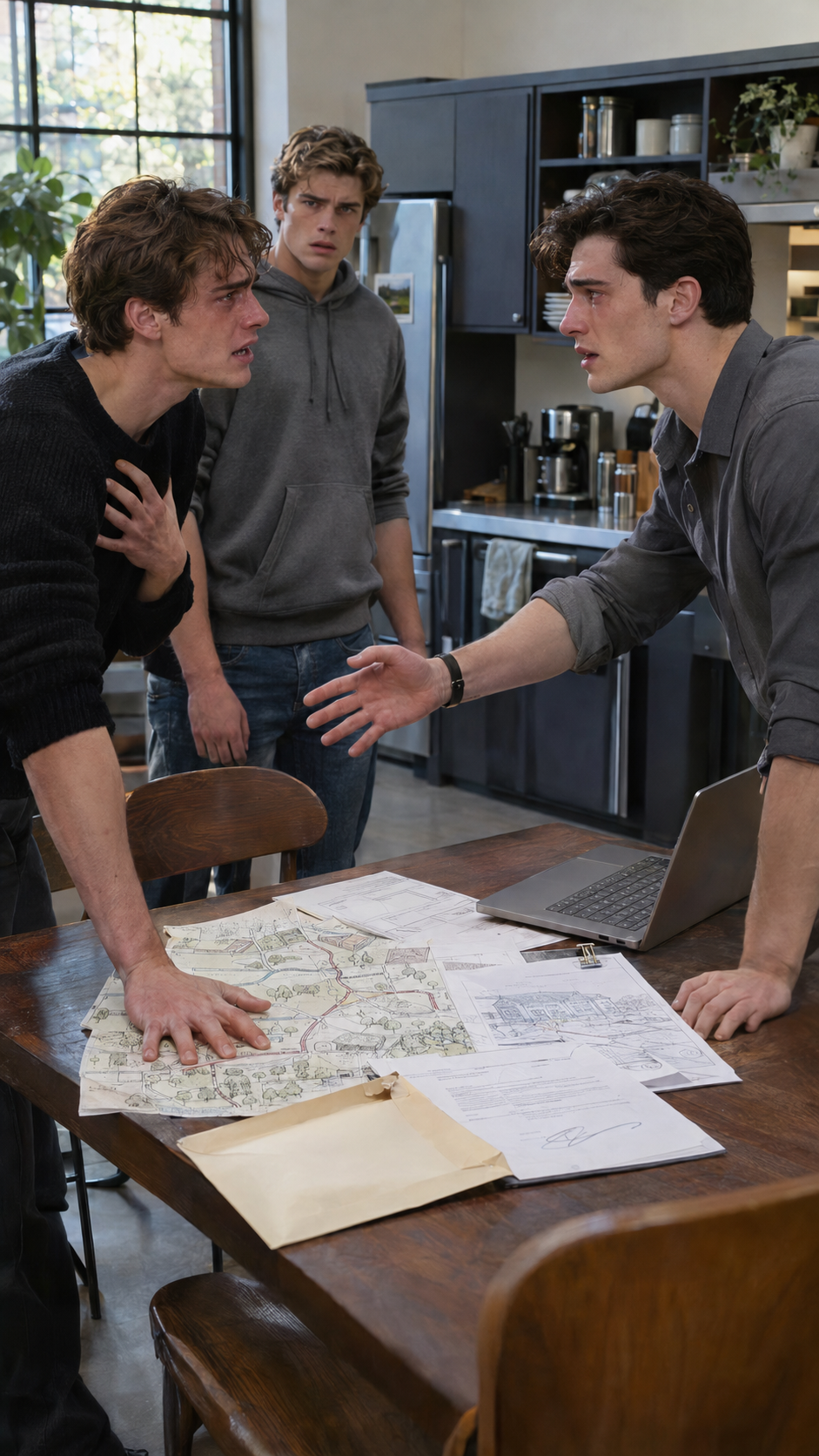
Ethan held my uninjured hand while the nurse finished securing the white cast, and only then did I start crying. I wasn’t thinking about the fracture; I was remembering my mother’s delighted face and my sister’s applause. Ethan apologized for remaining quiet through Hunter’s earlier insults, saying he should have supported me before things reached that point. Then he looked at the cast and added, “And I should never have put my hands on him. I was furious, but you needed me beside you, not fighting across the room.” I squeezed his hand, grateful that he understood the difference.
The next problem was my flower shop, where holiday orders were stacked from the counter to the cooler. I couldn’t lift water buckets, trim thick stems, or tie ribbon properly with my dominant arm immobilized. Ethan promised we would manage, though I could see him calculating how to balance engineering deadlines with deliveries. Before I could answer, a familiar figure appeared behind the examination-room curtain, holding my forgotten coat and a shopping bag filled with Christmas presents.
My father stood there looking suddenly older, his charcoal vest wrinkled and his eyes unusually uncertain. He asked about my arm, swallowed when I told him it was fractured, and sat without removing his coat. “I watched my daughter lying on the floor,” he said, “and all I could think to say was that everyone should calm down.” He rubbed his hands together and admitted that he had confused avoiding arguments with doing what was right. “I was afraid of upsetting your mother, Jade. I should have been afraid of failing you.”
He told me he had sent the guests home after we left, including Hunter’s parents, and informed Craig that Hunter would not be welcome again unless I chose to return. He had also stopped the next payment toward Kelsey’s wedding, which he and Mom had been helping finance. My father gave a tired smile when I asked how Mom had reacted. “She’s hardly spoken to me since,” he said, then leaned down and kissed my forehead. It was the first time I could remember him openly choosing my well-being over the family’s appearance.
His courage didn’t spread to everyone else. Two days later, Hunter sent an angry message threatening legal action against Ethan and demanding apologies from both of us. He insisted that I had embarrassed Kelsey, then warned that I would be excluded from the wedding unless I accepted responsibility. Kelsey called shortly afterward to remove me as maid of honor, while Mom offered to forgive me if I simply apologized and ended the disagreement. Sitting on our couch with my arm propped on pillows, I asked, “What exactly am I supposed to be sorry for?” She had no answer that made sense, so I ended the call.
For three days, I moved between our quiet house and the flower shop, exhausted by pain and the ache of missing people who seemed perfectly comfortable without me. One evening, after destroying a bouquet because I couldn’t hold the stems and ribbon together, I opened a message to my mother and typed an apology. I almost sent it, even though I knew every word was a lie. Ethan saw my phone from the doorway but made no attempt to take it. “Whatever you decide, I’m beside you,” he said, “but please remember who moved that chair.”
I read my message once more, then erased it. The following morning, Ethan arrived at Petal and Pine before sunrise, carrying coffee and wearing his oldest work jacket. He had watched floral-arranging tutorials the night before, which explained why he approached a bundle of roses with the concentration he usually reserved for bridge calculations. His first bouquet looked dreadful, and when he accidentally snapped a stem, we both laughed until tears ran down our cheeks. It was the first laughter since Christmas that didn’t come at someone’s expense.
By the end of the week, Ethan could assemble respectable arrangements and had taken over most deliveries. While reviewing our remaining holiday bookings, I noticed a name that made my stomach tighten: Marion Lockridge. Months earlier, Hunter’s mother had paid in full for twelve centerpieces, a floral arch, and an elaborate welcome arrangement for her family’s New Year’s Day brunch at their country club. Ethan immediately said I could cancel, but I shook my head. “She paid for flowers,” I said, “and I’m going to give her flowers.”
What I didn’t know was that Hunter intended to entertain his friends with the Christmas story one more time. And this time, the person he chose to humiliate would be the woman wearing his engagement ring.
### Part 3: One Cruel Joke Returns to Destroy My Sister’s Engagement
On New Year’s morning, Ethan loaded our delivery van while I checked each arrangement against the order sheet with my left hand. The country club stood beyond a long driveway bordered by snow-covered trees, its enormous windows reflecting a pale winter sky. Inside, staff hurried between linen-covered tables as I directed Ethan where to place the heavy vases and adjusted the arrangements one-handed. Being treated like an ordinary florist was unexpectedly comforting, because nobody there expected me to smile through an insult.
Guests began arriving in expensive coats and polished shoes, filling the room with perfume, conversation, and the delicate clinking of glasses. I was fastening the last ribbon around the welcome arrangement when Hunter entered wearing a new navy suit, with Kelsey beside him in a cream-colored dress. He passed within several feet of me without acknowledging my presence, though I noticed Kelsey glance at my cast before turning away. Soon Hunter had gathered a circle of friends near the windows, and his unmistakable voice rose above the music.
He began describing Christmas dinner, presenting himself as the clever victim of an unreasonable family. I watched him imitate my fall, throwing his arms outward and staggering as his friends laughed into their drinks. He described Ethan as an unstable engineer who had destroyed a designer suit because nobody in my family could appreciate humor. Kelsey stood beside him with an uncomfortable smile, saying nothing even as Hunter repeated the remark about my weight. Ethan shifted toward them, but I caught his sleeve and asked him to stay beside me.
Hunter noticed a vacant chair near his group and suddenly grinned at Kelsey. “Come here, sweetheart,” he said, gesturing grandly toward the seat. “I’ll show them exactly how it happened.” Kelsey looked uneasy but moved toward the chair while his friends gathered closer. As she lowered herself, Hunter hooked his foot around one of its legs and jerked it backward.
My sister fell before anyone could warn her, hitting the polished floor with her wrist trapped awkwardly beneath her body. She cried out, and Hunter doubled over laughing while his friends erupted around him. Marion laughed from a nearby table, apparently convinced her son’s performance had become the highlight of the brunch. Hunter raised his hands triumphantly and told Kelsey to stop embarrassing him and get up. I stood frozen, staring at the sister who had applauded when exactly the same thing happened to me.
Then Kelsey looked around the room. Her eyes moved from Hunter’s grinning face to his amused friends, then to Marion, who was still smiling behind her hand. She tried to rise, winced, and cradled her wrist, but nobody in that cheerful circle stepped forward. I remembered the cold marble beneath my own body, and suddenly I couldn’t bear to watch another second. I crossed the room, knelt carefully beside Kelsey, and extended my uninjured hand.
“Can you stand?” I asked, keeping my voice steady. Kelsey stared at my cast, her expression slowly crumbling as she recognized the strange symmetry between us. She accepted my hand, and Ethan came forward to steady her while she climbed to her feet. Hunter rolled his eyes and accused me of making another unnecessary scene. Kelsey turned toward him with tears gathering along her lashes and asked him to repeat what he had just said.
Hunter smiled uncertainly, glancing toward his friends for encouragement. “It was a joke, Kelsey,” he answered. “You know I didn’t mean anything.” My sister looked at him for several long seconds, then lifted her left hand and slowly removed the enormous engagement ring. She crossed to the nearest table, placed it beside Hunter’s empty plate, and stepped back.
The little metallic sound of the ring touching the tablecloth’s decorative clasp seemed louder than the music. “When Jade fell, I laughed,” Kelsey said, facing the gathered guests. “I saw that she was hurt, and I still laughed because everyone else was laughing.” She looked at me, then at her wrapped wrist, and her voice faltered. “I thought it was funny because it wasn’t happening to me.”
Hunter reached for her hand, but she moved beyond his grasp. “You laughed when I was hurt,” she told him, “and when I looked at your face, I understood something I should have understood at Christmas.” He tried to interrupt, promising that she was taking the whole incident too seriously, but Kelsey shook her head. “You didn’t stop laughing because I was crying,” she said. “You only stopped when I gave you back the ring.”
She walked toward the exit without looking back, and I followed with Ethan at my side. The room fell silent behind us, leaving Hunter standing in his new suit beside the engagement ring that had seemed to define his entire future. Nobody tried to reassure him that it was only a joke. For once, his audience had nothing left to applaud.
### Part 4: Healing Begins When Apologies Become Actions Instead of Words
Hunter caught us in the parking lot, breathing hard as his expensive shoes slipped on the icy pavement. He called Kelsey’s name repeatedly, insisting that she couldn’t possibly cancel their wedding over a chair. She stood beside our delivery van, holding her sore wrist against her coat, and listened without turning around. When he finally said he loved her, she answered quietly, “You loved having someone who would laugh at other people with you. That’s not the same thing.”
Craig emerged from the club and stopped beside his son, his expression grim. He glanced at Kelsey’s injured wrist, then at Hunter, and told him to get into the car before he embarrassed the family any further. Hunter looked from his father to Kelsey, then toward me and Ethan, and I saw the first genuine uncertainty cross his face. The torn suit at Christmas had cost him money and pride, but this time his cruelty had cost him something he couldn’t replace. Kelsey climbed into our van, and Ethan drove her to the emergency room while Hunter remained alone in the parking lot.
Her wrist was sprained rather than broken, and the doctor fitted her with a supportive brace. During the examination, Kelsey barely spoke, but I noticed her watching the nurse examine my cast with an expression that looked painfully close to shame. On the drive home, the snow drifted across the windshield while Ethan kept the heat low enough for everyone to remain comfortable. My sister stared out the window and occasionally opened her mouth as though she wanted to speak, but every time she fell silent again.
Three mornings later, the bell above my flower-shop door rang just after opening. Kelsey stood beneath it wearing jeans, a plain coat, and no makeup, her injured wrist still secured in its brace. She didn’t bring flowers, demand forgiveness, or explain why she hadn’t answered my messages. Instead, she glanced at the delivery boxes stacked near the cooler and asked whether she could help carry them. I studied her for a moment, then pointed her toward the roses.
She returned the following day, and the day after that, carrying what she safely could with her good hand and sweeping scraps from the floor. We worked quietly, sometimes brushing shoulders in the narrow workspace, but she never tried to force an emotional conversation. One afternoon, while I was inspecting a wedding centerpiece, Kelsey stopped beside me and finally said, “I knew he was hurting you, Jade. I thought keeping him happy mattered more than protecting you.” She swallowed and added, “I don’t expect you to forgive that just because he hurt me too.”
I set down the ribbon I was holding and looked at her. “When I was on the floor, I searched everyone’s face,” I told her. “I kept waiting for someone to see me as a person instead of a joke.” Tears filled her eyes, but she didn’t reach for me or ask me to soften what I had said. She simply nodded and went back to work, and somehow that quiet acceptance meant more than any elaborate apology could have.
My mother appeared one Saturday carrying homemade chicken soup in a covered dish. She stood uncertainly by the counter, asked how my arm was healing, and glanced at Kelsey arranging greenery in the back of the shop. I could see she wanted everything restored to normal without having to discuss what had happened. I thanked her for the soup and told her she was welcome whenever she was ready to speak to me with the same respect she expected for herself. She left without apologizing, but I didn’t follow her to the door.
Hunter never faced some spectacular public downfall, and I didn’t need him to. The wedding was canceled, Kelsey stopped returning his calls, and the story his friends once found hilarious began circulating with Hunter as the embarrassing central figure. My father’s relationship with Mom remained strained, though he started visiting my shop regularly and never again pretended silence was kindness. Ethan continued helping with deliveries until I could work comfortably, and Kelsey stayed long after the busiest season ended.
Six weeks after Christmas, Dr. Hollander removed my cast, revealing a pale, stiff arm that needed time and gentle movement to regain its strength. That Sunday, Ethan prepared his famous lasagna, slightly burned along the edges, and set our modest dining table with four plates and one candle. Dad arrived carrying dessert, Kelsey brought a small arrangement she’d made herself, and Mom sent a message saying she might join us another evening. I read it, put my phone away, and returned to the people who had chosen to be there.
When dinner was ready, Ethan came around the table and pulled out my chair. He held it firmly while I lowered myself, then leaned down and kissed my forehead before taking his own seat. Kelsey sat beside me, Dad poured the water, and for a few wonderful minutes, all we could hear was the quiet sound of forks touching plates. Nobody was the entertainment, nobody had to endure humiliation to belong, and nobody needed to pretend an injury was funny.
Halfway through dinner, Kelsey reached beneath the table and gently squeezed my left hand. I looked at her, and she whispered, “Thank you for helping me up.” I squeezed back and answered, “I knew what it felt like to be left there.” Across the table, Ethan caught my eye and smiled, and I realized that the most important thing he’d done that Christmas wasn’t confronting Hunter. It was helping me find the courage to stop apologizing for being hurt.
For thirty-one years, I had mistaken a full family table for a loving one. Now I understood that a home wasn’t defined by how many people gathered around its chairs, but by whether those people could trust one another to keep them safe. I looked at my husband, my father, and the sister who was finally learning how to love without cruelty, and I felt something settle peacefully inside me.
I had spent Christmas on the floor, surrounded by laughter. Six weeks later, I was sitting at my own table, surrounded by people who would never mistake my pain for a punch line.
THE END.
All characters and events in this story are fictional, created for storytelling and entertainment purposes. Thank you sincerely for reading. Your feedback and support are invaluable and motivate me to continue sharing more stories with you.