I gripped the edge of a Halifax hotel sink as my son screamed, “I burned that pigsty to the ground!” My funeral tie slipped through my fingers. He expected me to collapse, to beg for mercy. Instead, I burst out laughing. He had no idea who had been watching—or what his fire had actually destroyed.
### Part 1: My Son Returned Home With A Plan To Destroy Everything
The trouble began on a snowy Sunday in January, when my son Jason drove up our ranch road for the first time in eleven months. Six inches of fresh snow covered the foothills west of Longview, Alberta, and I recognized his expensive engine before his headlights swept across the barn. I was sixty-seven, a fourth-generation rancher, a former Army Reserve combat engineer, and a widower who still set two coffee cups on the kitchen table out of habit. My wife, Connie, had died of cancer in October 2021, leaving behind a house full of memories and two children who had never grieved the same way.
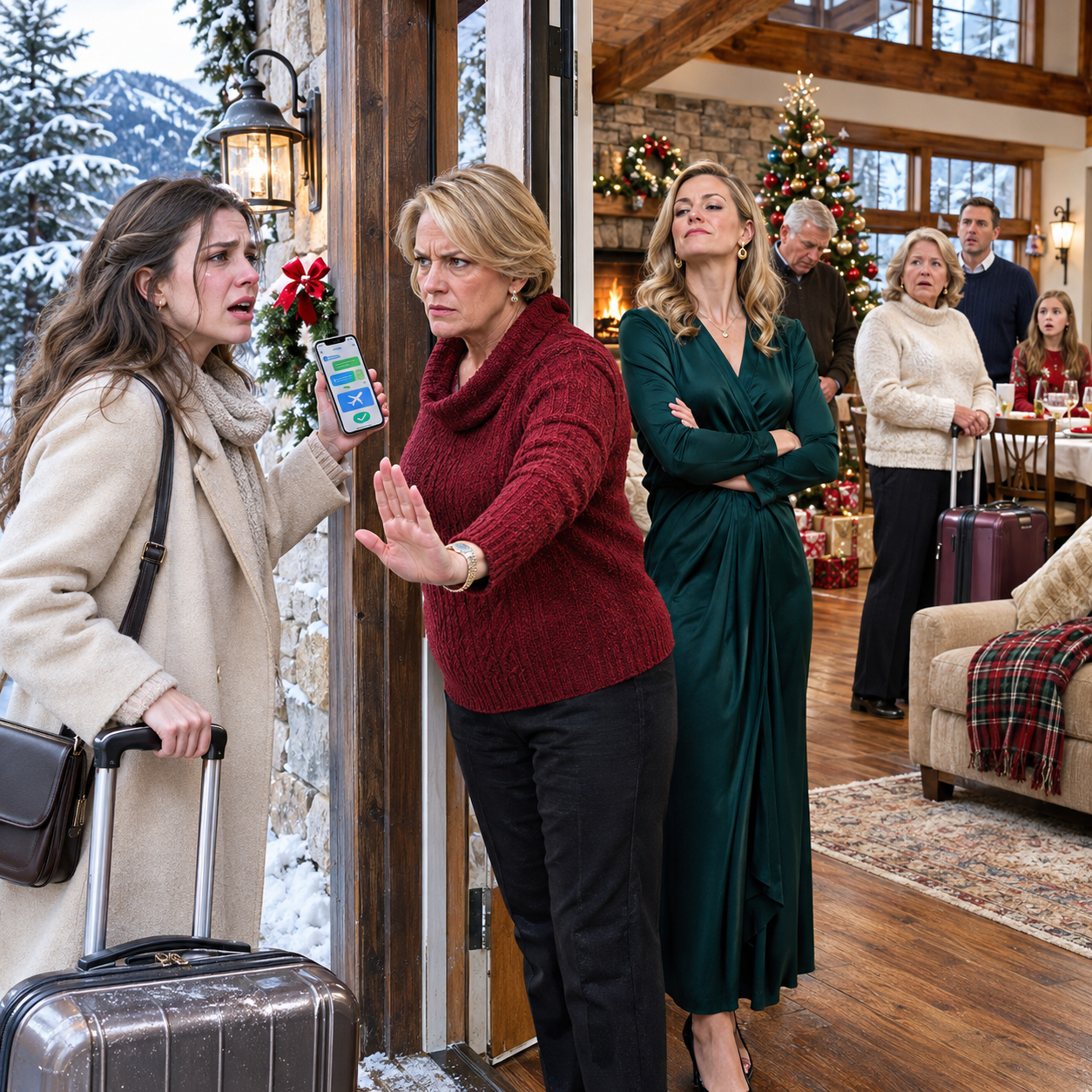
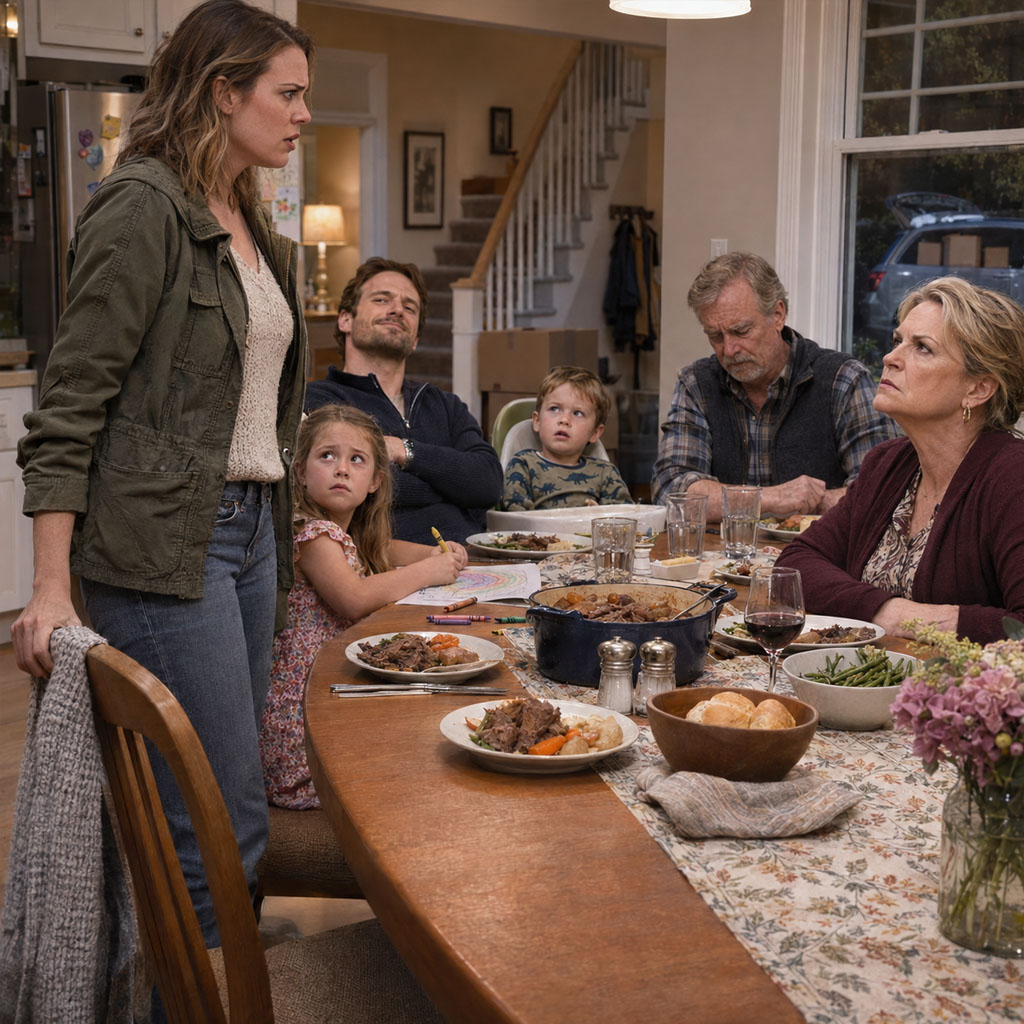
My daughter Hannah, thirty-four, was stirring gravy when someone knocked. “Dad, it’s Jason and Renee,” she whispered, her hand trembling around the spoon. “I didn’t invite them.” I told her to set two more plates because Connie had always said nobody should leave our Sunday table hungry, even when they arrived carrying trouble.
Jason stood on the porch in a camel-colored overcoat, his wife Renee behind him in spotless white boots. He offered neither a hug nor an apology for his absence, only a stiff smile and a comment about the pot roast. During supper, he talked about Calgary traffic, his new gym, and the development company where he worked as vice president of land acquisition. Renee kept asking about my north pasture while checking her phone beneath the table, and when Jason reached for the salt, I noticed a gold watch worth more than my first dump truck.
After supper, Jason settled into Connie’s favorite armchair and finally explained his visit. “Jerry Simmons is in trouble, Dad,” he said, referring to the chairman of Owens Group, his employer. “He owes six million dollars to Black Sage Capital, and if he doesn’t pay by March thirty-first, dangerous people will come after him.” I asked to see the loan papers, but Jason insisted these lenders didn’t operate like ordinary bankers.
“Then what exactly do you want from me?” I asked. Jason leaned forward, his eyes suddenly cold. “Sell the ranch to Owens Group for $9.8 million. Jerry pays his debt, Renee’s family stays safe, and you get to enjoy whatever years you’ve got left.” I stared at him, struggling to recognize the boy who once cried for two days after finding a dead barn cat.
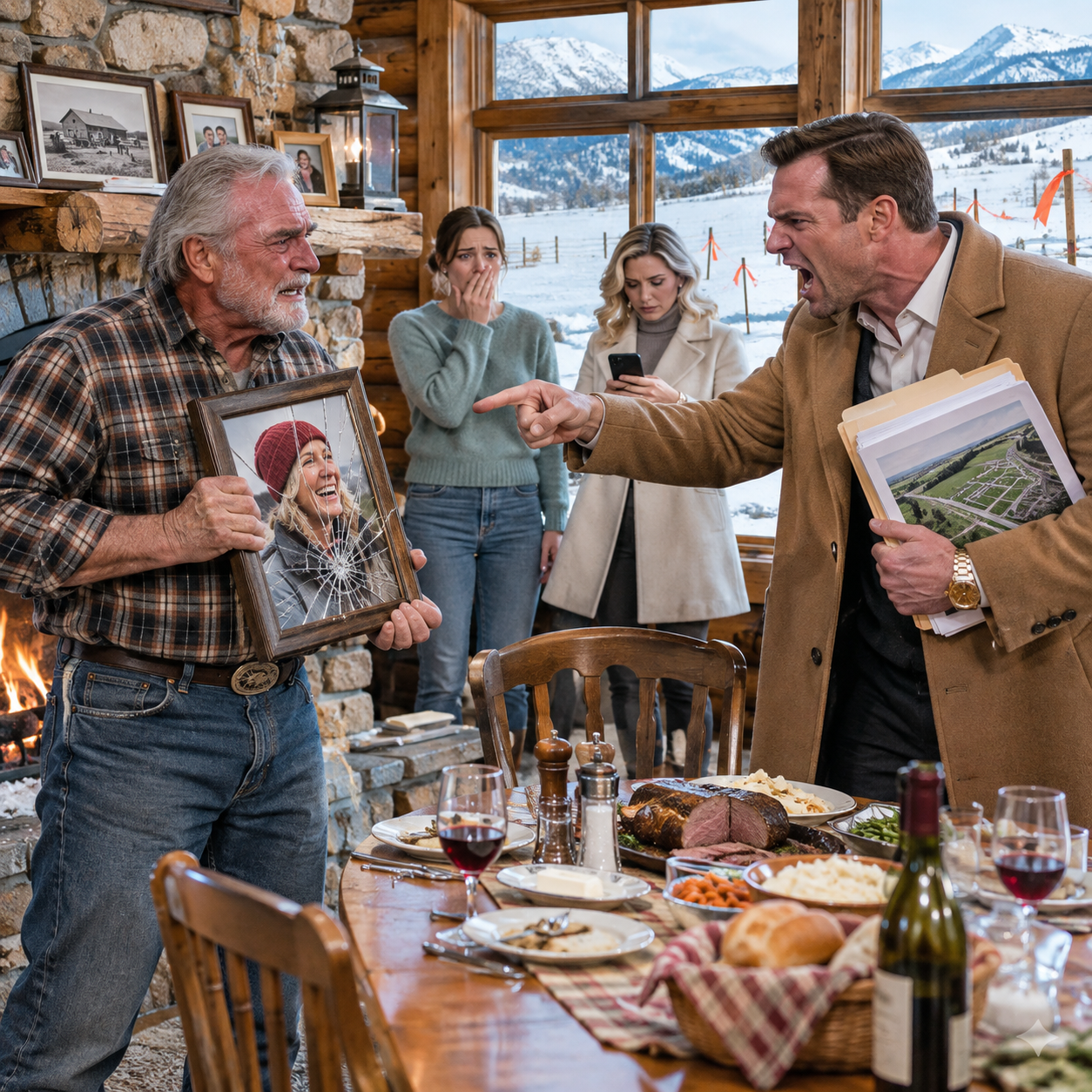
When I refused, he sprang to his feet and swept his arm around our living room. “You’re alone in this rotting pigsty, feeding cattle for no reason! Mom would’ve sold it to save her family.” I warned him not to speak for Connie, but he slammed his palm against the end table, knocking her framed photograph onto the stone hearth. Glass shattered across the floor, and I dropped to my knees, cutting my thumb as I gathered the pieces of my wife’s smiling face.
Hannah stood frozen in the doorway, tears running down her cheeks, while Renee stared at her phone. I stood with blood on my fingers and ordered my son outside. Jason’s face twisted with fury as he grabbed his coat. “Six months from now, you’ll be begging me to take whatever Jerry offers,” he said before slamming the door.
At dawn, I walked the north fence and discovered wooden survey stakes wrapped in orange ribbons, spaced a hundred feet apart. The nearest bore the marking OS14, and snow had already piled around its base. Someone had surveyed my land before Jason ever arrived for Sunday dinner. I photographed every stake and drove straight to Nancy Daniels, the fifty-eight-year-old lawyer who had handled Connie’s will.
Nancy spent the next seventeen days digging through corporate filings and financial records. Black Sage Capital, she discovered, had no traceable existence in the relevant registries, and Jerry’s supposed six-million-dollar emergency was a fabrication. Owens Group, however, owed forty-one million dollars to four banks, with major payments approaching in June. My son wasn’t rescuing a frightened businessman; he was helping a desperate company reach the one asset it couldn’t afford to lose.
At the Foothills County Planning Office, a clerk named Marcy handed me a twenty-page proposal that made my hands shake. My 1,280 acres were outlined in red beneath plans for four hundred residential lots, a ninety-room hotel, and a gondola climbing the ridge behind my barn. The development was called Highwood Peters Resort, submitted by Ridgeline Patterson Limited, a company secretly connected to Owens Group. Beside the marking OS14, someone had written that my great-grandfather’s log house, built in 1912, was to be demolished.
Then a letter arrived from Owens Group’s lawyer, offering the same $9.8 million while casually mentioning my private investment account, accurate to within a hundred thousand dollars. Only my lawyer and accountant should have known about that money. Nancy looked up from the letter and asked, “Ron, who has access to your house and your financial papers?”
I thought about Jason’s childhood key, our neighbors’ emergency key, and Pamela Baker, the bookkeeper who had sat at Connie’s desk for twenty years. Pamela had brought butter tarts to my wife’s funeral and held my hand beside the grave. When I realized someone inside my own home had been selling my secrets, I felt something worse than anger.
I felt the first unmistakable warning that my son wasn’t finished with me.
### Part 2: A False Medical Appointment Exposed The Betrayal Inside My Home
I decided to test Pamela with something no honest person could possibly know. On Tuesday, while she worked at Connie’s desk, I mentioned a private appointment with a Calgary cardiologist that Friday and asked her to keep it secret. There was no appointment; I had invented it that afternoon. By Wednesday morning, Jason had left a voicemail saying he was worried about my heart and wanted to help, and I sat on a chopping block behind the barn and cried because the evidence was finally undeniable.
Nancy urged me not to confront Pamela until we had something in writing. The next day, Pamela’s husband Dale called in tears, and when I entered my office, Pamela confessed that Jason had paid her $35,000 through Patterson Ridge Consulting. Dale’s trucking business had collapsed, and Jason had convinced her that I was becoming incompetent and needed someone to manage my affairs. She had handed him my financial statements, calendar, and private correspondence, then spent every night regretting it.
I wanted to throw her out, but anger wouldn’t protect my ranch. Instead, I told Pamela to report that I was frightened, exhausted, and considering Jason’s offer. Her shoulders collapsed with relief before she whispered one more secret: Jason wanted the north gate left unlocked on February twenty-second. I looked at Nancy, and neither of us needed to ask why.
Two days before that date, I moved my pregnant heifers to Ray Henderson’s pasture and installed four night-vision cameras with cellular connections. At 1:34 that morning, Jason’s black Silverado entered the unlatched gate without headlights. From my truck on the ridge, I watched him unload two blue barrels, drag them toward the creek above our stock tank, and pour herbicide concentrate and diesel into the water. He even laughed as the chemicals spread beneath the ice.
An environmental officer arrived days later after receiving a complaint accusing me of contaminating my own land. I showed him the recordings, and his expression changed from suspicion to disbelief. Jason received an $18,000 penalty and cleanup obligations, punishment that seemed almost meaningless beside what he had attempted. But Nancy insisted we preserve every frame because she suspected something worse was coming.
On March fourth, a process server delivered Jason’s application to have me declared legally incapable and placed under his control. He cited confusion, wandering outdoors, and my supposedly secret heart appointment. Dr. Jeffrey West examined me and recorded a cognitive score of twenty-nine out of thirty. At the March twentieth hearing, Nancy played Jason’s voicemail, explained my invented appointment, and presented the creek footage.
Jason sprang from his chair when the video showed him tipping the barrels, but Justice Judy Cole ordered him to sit. His lawyer withdrew the application, which was dismissed with costs, and the judge issued a five-hundred-meter no-contact order protecting me and the ranch. She also referred the evidence to prosecutors. Outside the courtroom, Jason demanded to know how I could destroy his future, and I answered through tears, “You made those choices, son.”
Jerry Simmons approached us in the corridor wearing a spotless camel coat. “Ten million cash, Ron,” he said. “We forget everything.” When I refused, his expression hardened, and he warned that Jason had been the cheaper option. I understood then that the most dangerous man in the room wasn’t my son.
The following week, I visited Connie’s grave and told her I would finally honor her oldest wish. On April seventh, I signed a conservation easement with Andrea Campbell of the Foothills Land Trust, permanently protecting the ranch against subdivision and resort development. Its potential development value was $9.8 million, but its protected agricultural value was closer to $2.1 million. At my request, registration was scheduled for June ninth, and Nancy warned me that saving the land would not necessarily save our house.
That evening, I called an old military friend, retired RCMP Staff Sergeant Carl Henderson. I told him what Jason had already done, then asked whether he could help me protect the one thing my wife had loved more than the land itself.
### Part 3: I Saved Our Family Home Before My Son Returned
At six the following Monday morning, flatbed trucks rolled up our ranch road, and my great-grandfather’s house began coming apart. A specialist crew photographed and numbered fourteen hundred logs, dismantled the stone chimney piece by piece, and carefully removed every original doorframe. When they reached the pantry, I made them preserve the pencil marks recording Jason’s childhood growth and the week we adopted Hannah at fourteen. Those marks were the history no developer could ever replace.
The entire house traveled to a storage barn near Nanton belonging to Evan Taylor, a retired soldier who supported veterans struggling after military service. I promised him something in return: a proper gathering lodge where those men could sit together without having to explain their scars. Then another crew erected a convincing replica on my original foundation, complete with imitation log walls, a fiberglass chimney, and secondhand furniture. It cost $62,000, and from the road it looked exactly like the home my family had occupied for generations.
We installed hidden cameras, a heavy safe in the study, and an ultraviolet forensic tracer on the porch rails and door handles. Carl moved into the roadside cabin disguised as Cal Dennis, an elderly fence builder with a pronounced limp. Nancy reminded us that we couldn’t persuade Jason to commit a crime, and Staff Sergeant Kimberly Evans insisted that any observation remain lawful and that nobody be placed in danger. The replica would remain empty, the livestock elsewhere, and police would monitor the property.
On May seventeenth, Jason returned, threatened Carl, and destroyed his small garden bed before driving away. Police documented the breach of the no-contact order, but my son called back that the old wiring in my freshly painted house looked dangerous. A week later, Hannah discovered a $5 million insurance policy issued by Prairie Shield Mutual in my name, although I had never applied for it. Forensic examiner Dr. Carla Whitman identified a traced signature, apparently copied from paperwork Renee had filmed me signing months earlier.
By then, Jason believed my study safe contained gold coins and bearer bonds. He thought the house was worth millions and that the insurance would pay him after a fire. I didn’t know whether he would go through with it, but when an urgent call summoned me to Halifax for the funeral of my old commanding mentor, Warrant Officer Frank Campbell, I made certain Carl and the police knew I would be away. I also completed one final transaction before the funeral.
Stone Financial held a $9.2 million note secured against Owens Group’s headquarters, personally guaranteed by Jerry Simmons. The lender agreed to sell it for forty cents on the dollar, and I paid $3.68 million from my investment account. Its terms allowed early enforcement if a company officer became involved in serious criminal misconduct. As Jason was still an officer of Owens Group, I now possessed leverage Jerry never imagined a rancher could obtain.
At 4:51 the following morning, Carl called my Halifax hotel. Jason had entered the ranch again with his headlights off, carrying two red gasoline cans. The hidden cameras showed him sitting on the porch swing, pushing it gently with one boot. “Mom,” he whispered, his shoulders shaking, “you’d hate me for what I’ve done.”
For ninety seconds, I saw my little boy again, and I wanted desperately to reach through the screen and bring him home. Then he wiped his face, stood, and said that his father needed to learn a lesson. Staff Sergeant Evans offered to intervene before he proceeded, but I explained my fear that he might return another night when someone was inside. After reviewing the immediate safety conditions, the officers continued observing the vacant structure.
Jason poured gasoline across the steps and railings, then flicked his lighter toward the porch. Flames raced across the imitation logs while cameras captured every movement, including the way his hands gripped the tracer-coated railing. He filmed the fire with his phone, sent a message reading “Done. Done,” and drove away as unmarked police vehicles followed at a distance. Fire crews were already responding, and the protective firebreaks held.
At 7:15 that morning, I was standing before the hotel mirror, fastening my tie for Frank’s funeral, when my son’s name appeared on my phone. I answered, and Jason screamed that he’d burned my precious pigsty to ashes. I gripped the sink and laughed, not because the betrayal didn’t hurt, but because he had destroyed nothing that couldn’t be rebuilt. He had spent months trying to erase our family history, and he still didn’t know that every original log was waiting safely in a barn.
### Part 4: The Ashes Revealed The Truth And Ended My Son’s Scheme
“What’s so funny?” Jason demanded, his voice trembling with rage. I told him to keep talking, and he proudly described the gasoline, the fire, and the five-million-dollar insurance policy he expected to collect. Then he mentioned the coins and bonds supposedly locked inside my safe, promising to return for them before forcing me to sell the ranch. Carl had arranged for the call to be recorded, and when Jason finally hung up, I lowered myself onto the bathroom floor and cried into my funeral shirt.
I still attended Frank Campbell’s funeral in Dartmouth that morning. Standing before the old soldiers, I spoke about a man who believed courage meant doing the next right thing even when it broke your heart. Later, as I traveled home, Evans told me Jerry Simmons had delivered hundreds of pages of messages to investigators and fired Jason in an attempt to protect himself. Renee had also fled with $380,000 from their joint account and filed for divorce, leaving Jason alone in a motel.
I returned to Alberta after midnight, and Carl predicted Jason would come back for the safe. At 5:41 Sunday morning, we watched his Silverado crawl up the ranch road for the second time in two days. With an arrest warrant secured, officers waited nearby as Jason dug through the replica’s ashes until his shovel struck metal. He opened the safe using Connie’s birthday as the combination, found a single manila envelope, and unfolded the conservation easement papers beneath his flashlight.
“No,” he whispered, reading the permanent development restrictions. “Dad wouldn’t throw away eight million dollars.” Carl stepped from the shadows without his false limp, and Evans illuminated Jason’s hands with an ultraviolet flashlight. His palms and sleeves glowed green from the tracer on the porch. When he protested that he had been tricked, Evans replied that nobody had forced him to bring gasoline onto the property.
I stepped out of the barn as officers secured his wrists. Jason stared at me, then at the smoking foundation, and asked what he had actually burned. “Sixty-two thousand dollars of plywood, son,” I answered. “Your mother’s house is safe, every log numbered and wrapped, eighty kilometers from here.” He began laughing in disbelief before his laughter collapsed into sobbing.
Nancy arrived with documents confirming my revised will, which left the ranch to Hannah. Jason begged me to reconsider, reminding me that he was still my son. I told him that was precisely why I wanted him to have proper legal representation and a chance to face what he’d done without another lie. I had spent my life protecting him from pain, but I could no longer protect him from the consequences of his choices.
On Monday morning, Jerry Simmons arrived at the gate in a black Escalade, claiming he was merely another victim of Jason’s recklessness. I handed him notice that I had purchased Stone Financial’s $9.2 million note. Under its default provisions, Owens Group’s exposure to Jason’s criminal conduct gave me grounds to demand repayment, and Nancy’s Calgary colleague had already obtained the appointment of a receiver. Jerry’s confidence vanished when he read the document, and two investigators approached to question him.
Minutes later, Andrea confirmed that the conservation easement had been registered against the ranch title. No future buyer could turn Connie’s pastures into a subdivision or a resort. Standing on the bare foundation, I listened to a meadowlark singing above the valley and realized that the land was finally safe, even though my family had never been more broken.
Eleven months passed before Jason was sentenced. He pleaded guilty to arson, fraud, forgery, and mischief connected to the creek contamination, receiving six years in federal prison. Renee faced her own fraud-related charges, returned the money she had taken, and received a conditional sentence after pleading guilty. Jerry was sentenced to four years for his role in the conspiracy, and the tower securing the debt passed into receivership.
Pamela repaid every dollar of the $35,000 and received a conditional discharge after I testified about her cooperation. I couldn’t keep her as my bookkeeper, but I thanked her for the twenty honest years that had come before her terrible decision. By October, the restoration crew had rebuilt my family’s house, setting the original logs and chimney stones back into place. Evan Taylor received his veterans’ lodge, and Hannah began taking responsibility for the cattle and the land she would someday inherit.
Then, one cold afternoon, a letter arrived from a prison near Edmonton. Jason had written only four lines, asking about the herd, whether the house looked the same, and whether his mother’s porch swing still creaked. He didn’t ask for money, forgiveness, or another chance to sell the ranch. For the first time in years, he had written to me without demanding anything.
I sat beneath Connie’s brass lamp and answered him carefully. I told him the cattle were healthy, the swing still creaked, and the old pantry doorframe had been saved. I also told him that Hannah would inherit the ranch, and that earning my trust again would take more than a letter. Before sealing the envelope, I looked at the pencil marks in the doorway and remembered my little boy standing straight while his mother measured him.
I had once believed saving my son meant giving him everything he asked for. Now I understood that love sometimes meant refusing to surrender what was right, even when the person you loved hated you for it. I left a little space beneath the last pencil mark, not as a promise that everything would be forgotten, but as a reminder that a man could still grow after making the worst mistake of his life.
Outside, the evening wind moved through the cottonwoods, and Connie’s swing creaked gently against the porch. My son had tried to burn away four generations of history, but all he had destroyed was a counterfeit house and the future he had built on lies. The real home still stood, the land was protected, and for the first time since Connie died, I could sit at our table without feeling that I had failed her.
THE END.
All characters and events in this story are fictional, created for storytelling and entertainment purposes. Thank you sincerely for reading. Your feedback and support are invaluable and motivate me to continue sharing more stories with you.