The Night My Sister Gave My Son Bread—and Expected Me to Save Her $1.6 Million Deal
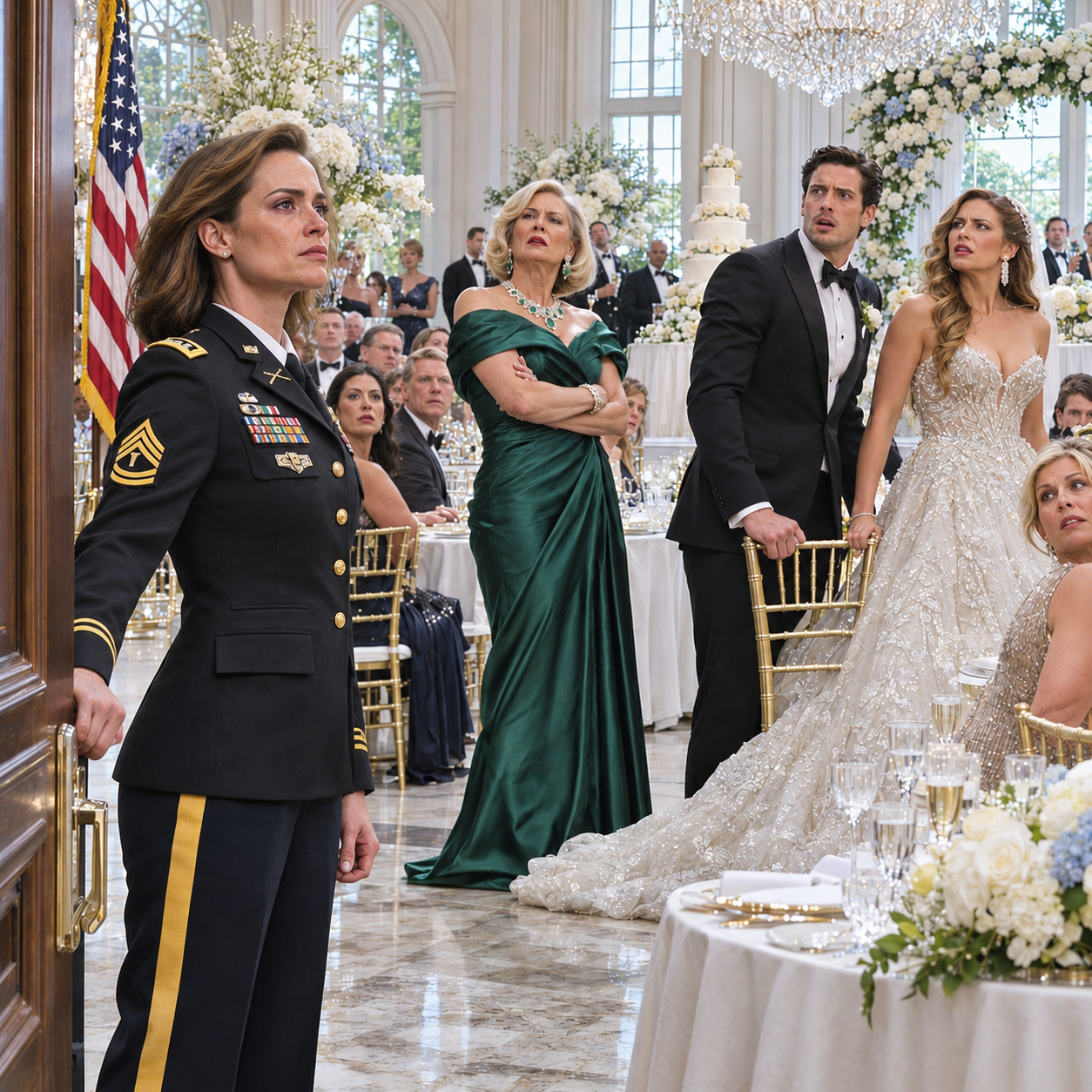
At my father’s sixtieth birthday dinner, my sister placed a bread roll on my seven-year-old son’s empty plate while her children ate steak. My parents told me to be grateful we were invited. I paid for my son’s meal and thought we could leave quietly, until my sister reminded me of the million-dollar agreement she expected me to sign before midnight. She had spent the evening treating us like strangers. What she hadn’t considered was that the future of her business rested on something I owned.
Part 1
My son, Leo, was wearing the navy button-down he saved for school picture day. He had tucked his napkin into his collar because he was worried about spilling on it. Across the table, his cousins were cutting into steaks with tiny gold-handled knives while he watched an untouched white plate.
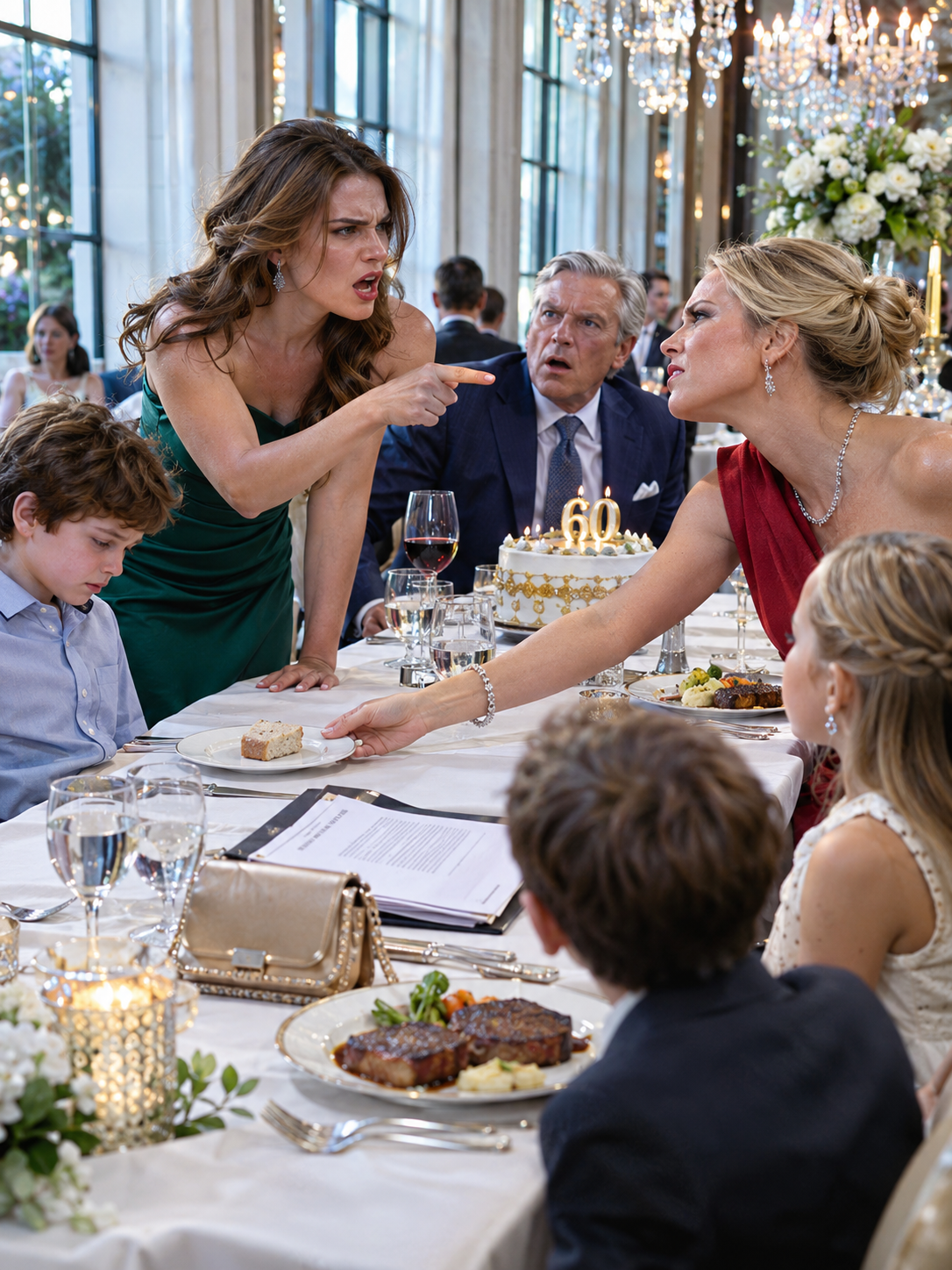
“Is mine coming soon?” he whispered. I checked with a waiter, who looked down at his tablet and frowned. Before he could answer, my younger sister, Sloane, reached across the centerpiece, picked up a dinner roll, and put it on Leo’s plate. “We didn’t order anything for your son,” she said, as casually as if she were passing the salt.
The conversation around our table at the Glasshouse Room kept humming. My father, Martin, was celebrating his sixtieth birthday, and the room smelled of rosemary, warm butter, and the flowers Sloane had arranged beneath enormous silver balloons. The photographer she’d hired aimed his camera toward her family, seated in the center beside our parents. Leo and I sat at the far end, next to a swinging service door.
“I can order him something,” I told the waiter. Leo studied the bread, his ears turning pink. “Chicken and potatoes, please, if that’s possible.” The waiter nodded and hurried away, looking more embarrassed than the people responsible.
Mom dabbed her lips with a linen napkin. “Hannah, you should have arranged his food in advance. Your sister has enough to manage tonight.” I reminded her that Sloane invited both of us and had asked for Leo’s meal preference two weeks earlier. Dad didn’t look up from his plate. “Your sister paid for a lovely party. Try appreciating it.”
I wasn’t angry about the price of dinner. I could afford dinner. What hurt was Leo folding his hands beneath the table as if he’d done something wrong, while his cousins argued happily over the last buttered carrot. He had counted down the days until Grandpa’s birthday because he wanted to show him the card he’d drawn, complete with a crooked fishing boat.
I’d noticed the seating arrangement when we arrived. Sloane had greeted a bank representative near the entrance, then steered me toward our chairs with a bright smile that didn’t reach her eyes. “The center seats are for the people building the company’s next chapter,” she explained. I assumed she meant the photographers needed a clear view of Dad; I wasn’t going to start a fight over a chair.
My sister was thirty-two, three years younger than me, and she’d always had a gift for turning family events into a stage. She ran operations at Copper & Laurel Catering, the business Dad had started in a rented storefront. She was talented at making clients feel important. She was considerably less interested in remembering who helped keep the lights on.
Three months earlier she’d begun talking about a luxury events division: destination weddings, corporate galas, elaborate menus delivered from a bigger kitchen. Tonight’s photographer had been instructed to capture “the beginning of a new era,” although I thought we were celebrating Dad. A printed program beside my plate displayed Sloane’s smiling face below his.
Leo leaned toward me as the waiter returned with water. “Mom, am I in trouble?” he asked. I felt the words like a stone under my ribs. “Not even a little,” I said, and pulled his chair closer. Across the table, Sloane raised her glass to a speech about how family sacrifice had built everything they enjoyed.
Then my phone lit up beside the bread basket. It was a message from my attorney, Nora Bell, marked urgent: “I reviewed the revised signature package. Your name is still listed as guarantor. Do not authorize anything.” Beneath it was a second notification from the financing portal, showing a deadline of 1:00 a.m.
I slipped my phone under my napkin before Leo saw the tension in my face. I’d come prepared to protect his feelings, not discuss business. But when I looked up, Sloane was watching me instead of our father, and I realized the birthday dinner might have another purpose.
Part 2
Four years earlier, I bought a neglected printing warehouse on the east side of Louisville. Ink stained the floors, pigeons occupied the loading bay, and the realtor called it “full of potential.” I saw something different: a commercial kitchen with room to grow.
I was thirty-one, a financial operations consultant, and every spare dollar went into renovating it. I negotiated permits, hired contractors, rebuilt the ventilation system, and learned more about grease traps than any person should know. Under the finished kitchen lights, stainless-steel counters gleamed. The deed was in my name alone.
Copper & Laurel needed production space at the same time. Dad’s old kitchen couldn’t handle its orders, and Sloane said moving farther outside town would hurt deliveries. I offered them a long lease at a discounted rate, with predictable increases, so the company could stabilize. Dad hugged me and said, “That’s what it means to be family.”
I also rebuilt their invoicing system during a rough year. They could finally track deposits, labor, and overdue payments, but I never asked for company shares. I wanted our businesses separate. Mom told relatives Dad had “given Hannah a reliable tenant,” as though the warehouse had appeared from nowhere.
Then Sloane announced her expansion plan. Harrowbridge Capital was considering $1.6 million in conditional financing for a new high-end events brand. She showed glossy drawings of wedding tables and a rooftop reception venue, but every budget meeting I requested somehow got postponed. When I asked how much cash the business had available, Sloane joked that spreadsheets were my love language and vision was hers.
Eleven days before Dad’s birthday, a forty-three-page packet arrived from the business attorney. It included an extension to Copper & Laurel’s warehouse lease, a pledge of the building as collateral, and a personal guarantee with my full legal name already typed beneath the signature line. My parents called it routine paperwork. I called Nora.
Nora identified obligations far beyond an ordinary landlord agreement. If the expansion failed, my building and potentially other assets could be exposed to serious financial claims. She told me not to confuse a proposed guarantee with an agreement I’d actually made. I emailed Dad and Sloane that I wouldn’t sign without audited financials, independent valuation, and a different financing structure.
Their response was silence, followed by another packet with nearly identical language. Dad told me to trust Sloane because she had worked so hard. Sloane said the investor deadline was artificial pressure created by lawyers. Yet neither of them offered the documents I requested, even after Nora asked in writing.
At dinner, I watched Sloane lean toward a polished man in a gray suit who had spent most of the evening speaking to Dad. A place card identified him as a guest from Harrowbridge’s advisory team. Suddenly the promotional programs, the camera, and the speeches about “our next chapter” made more sense. This wasn’t just a birthday. It was a celebration of financing they didn’t have yet.
Leo’s chicken arrived, hot enough to fog the edge of his water glass. He thanked the waiter and began eating, his shoulders relaxing as he told me about a classmate who’d built a paper rocket. I wanted to listen, but Sloane’s voice carried over the table. “Tomorrow we finally stop playing small,” she announced. Everyone applauded, including Dad.
My cousin Megan, seated two chairs away, leaned close when the applause faded. “Is the warehouse part of this?” she whispered. I asked why. She showed me a photograph of Sloane’s presentation board from the reception area; under “Assets Secured” was a picture of my building. Not “proposed.” Secured.
I was still looking at the image when Dad tapped his glass. “Before the night ends,” he said, fixing his gaze on me, “we need one last signature to make this family dream official.” Sloane smiled as though she had already won, and I understood why they’d invited me despite making it clear that Leo and I didn’t belong.
Part 3
I returned Megan’s phone. Leo hummed over his potatoes, and I wanted him to finish without another argument. When Dad asked me to stand, I stayed seated. “This isn’t the time to discuss financing,” I said.
Sloane set down her wineglass. “Funny, because you’ve spent eleven days making it everyone’s problem.” The Harrowbridge guest studied his napkin. “We have an electronic deadline tonight. Just sign the packet when you get home.”
“I explained why I can’t.” My voice was quiet, but the conversation around us had stopped. Mom leaned forward and said, “Your father is counting on this expansion for his retirement. Must you turn everything into a debate?” I felt fifteen again, punished for asking questions.
Sloane gave a little laugh. “Some people contribute by actually doing things, Hannah. Other people just want credit for being helpful.” She waved toward Leo’s empty bread plate as the waiter cleared it. “And apparently expect special treatment everywhere they go.” My son stopped chewing, and something inside me became wonderfully still.
“Don’t talk about him like that,” I said. Sloane opened her mouth, but I continued, “You asked us here. You asked what he liked to eat. You seated him beside the kitchen door and handed him bread while your children had full meals.” Dad muttered that I was making a scene; I pointed out that I hadn’t said a word about the business until he raised it.
The waiter returned with our bill, which I’d requested discreetly after Leo’s entrée arrived. I paid, tipped generously, and folded the receipt beside Dad’s birthday card. Leo’s drawing showed Grandpa holding a fishing rod beneath a yellow sun. Dad hadn’t opened it.
Sloane watched me help Leo into his coat. “Go ahead and sulk,” she said. “But the portal closes tonight. Your little protest won’t change the fact that we need that signature.” Her face wore the same confident expression she’d had when she placed bread on my son’s plate. She truly believed I would give in once she waited long enough.
I took out my phone. Nora had prepared a formal refusal for the lender’s portal and a separate notice regarding the warehouse lease, which still had eleven months remaining. Nonrenewal required advance written notice. I had kept those documents ready because Sloane’s revised packet made it clear she wasn’t hearing me.
“What are you doing?” she asked as I opened the portal. “What I’ve told you I would do,” I replied. I rejected the guarantee and collateral agreement, then instructed Nora to deliver the nonrenewal notice through the required channels. Copper & Laurel could remain until the existing lease expired, but my property would not finance its expansion or subsidize its next chapter.
Dad pushed back his chair, its legs scraping painfully across the floor. “Without your kitchen extension, Harrowbridge walks,” he said. His voice had lost the warmth of the birthday toast. I looked at the unopened card and said, “Then you should have planned a business that didn’t depend on a signature I never promised.”
Sloane reached for my arm, but I stepped away. “You’ll ruin us over dinner?” she demanded. “No,” I said. “I’m leaving over the way you treated my son, and I’m refusing the deal because it was unsafe. Those are two separate decisions.” I took Leo’s hand and walked past the service door into cold, clean night air.
In the parking lot, Leo asked whether Grandpa was mad at him. I knelt beside the car and hugged him. “None of this was your fault. Adults are responsible for their own choices.” He nodded, then asked if we could get ice cream tomorrow, and I promised we could.
At 8:12 the next morning, Nora forwarded Harrowbridge’s withdrawal notice. Six minutes later, my father’s name appeared on my screen, followed by twelve missed calls from Sloane. The deal was dead, but I hadn’t yet understood what my family would try to make me pay for next.
Part 4
The first accusation arrived in an email with the subject line “What You’ve Done.” Dad wrote that I had jeopardized his retirement and endangered jobs. Mom predicted Leo would be ashamed of me. Sloane demanded I reverse the lease notice.
Nora drafted a short response confirming my position and reminding them that the current lease remained valid. I would honor the existing lease and expected them to as well. I wouldn’t renegotiate under threats, sign a guarantee, or accept messages about Leo. I routed business communications through Nora and stopped opening their personal messages.
For weeks, I expected to feel guilty. Instead, I felt an unfamiliar quiet each evening when I closed my laptop. Leo and I made pancakes, played board games, and walked to the library. He stopped asking whether Grandpa was angry.
The family business didn’t collapse overnight. They had eleven months to fulfill catering contracts, and I hoped employees kept their jobs. But Harrowbridge would not reopen negotiations without verified financing and long-term production capacity. Sloane’s luxury division, announced so confidently in front of the photographer, never launched.
Three months after the birthday, I learned through public business listings that Copper & Laurel was searching for a smaller kitchen. Every replacement kitchen cost more than they had budgeted. Dad postponed his retirement plans. Sloane stopped posting glamorous mock-ups and started advertising ordinary office lunches again.
Megan called one Saturday while I painted a shelf in Leo’s room. “Your mom says she wants to make peace,” she told me. I asked whether anyone had apologized to Leo. Megan hesitated, then admitted Mom mostly wanted me to consider “one last compromise” on the warehouse. “That’s not peace,” I said. “That’s another request with a nicer label.”
In the sixth month, Sloane came to my office carrying a box of bakery pastries. She had never visited before without asking for free accounting advice. She looked thinner, and her perfectly styled hair had escaped its clip. “We were under so much pressure,” she began, setting the box on my desk, “and the dinner got out of hand.”
I gave her a chance to finish. She said they’d miscalculated the cost of moving and that Dad’s health had suffered from the stress. Then she asked whether I’d reconsider a five-year lease at the old rate if they dropped the guarantee. There was the real reason for her visit, tucked beneath powdered sugar and a rehearsed apology.
“You haven’t asked about Leo once,” I said. Her eyes flickered toward the family photograph on my desk, but all she said was, “Of course I care about him.” I waited; she only pushed the pastry box closer. I told her the notice would stand, with no special rate or future financial arrangement: “I can’t trust you with my livelihood, and I won’t teach my son that love means accepting humiliation.”
She left the pastries. I gave them to the building’s maintenance crew and returned to work. Later, Nora helped me sign a market-rate lease with an independent culinary business, scheduled to begin after Copper & Laurel’s term ended. The new tenant provided insurance and a deposit without asking me to prove my love.
By the following spring, Copper & Laurel had moved into a smaller licensed kitchen and was serving fewer clients. My warehouse had new tenants, and my consulting practice had grown enough for me to hire an assistant. Dad and Mom hadn’t apologized. Sloane hadn’t contacted Leo. I didn’t forgive them, and I didn’t feel obligated to make room for another round of excuses.
On Leo’s eighth birthday, we ate at a little Italian restaurant with paper-covered tables and crayons in glass jars. The server brought him his own menu, listened carefully to his order, and set down a steaming bowl of pasta. He grinned at me across the candlelight. I realized the best thing I’d given him wasn’t a fancy dinner or a successful business. It was the certainty that he never had to beg for a place at his own family’s table.
Legal Notice: This story is a work of fiction. Names, characters, businesses, events, and incidents are the product of the author’s imagination or are used fictitiously. Any resemblance to actual persons—living or dead—or to actual events is purely coincidental. Thank you! 💓