The Bracelet My Sister Wanted—and the Wedding My Father Refused to Walk Me Through
Three days before my wedding, my father canceled his promise to walk me down the aisle because my sister said my happiness was hurting her. I asked my future father-in-law instead, expecting nothing more than a steady arm. But minutes before the ceremony, he clasped my dead grandmother’s missing sapphire bracelet around my wrist. My sister went white and demanded an envelope he had slipped into my bouquet. I hadn’t read it yet. Whatever Grandma had left me, my family was terrified I would find out.
Part 1
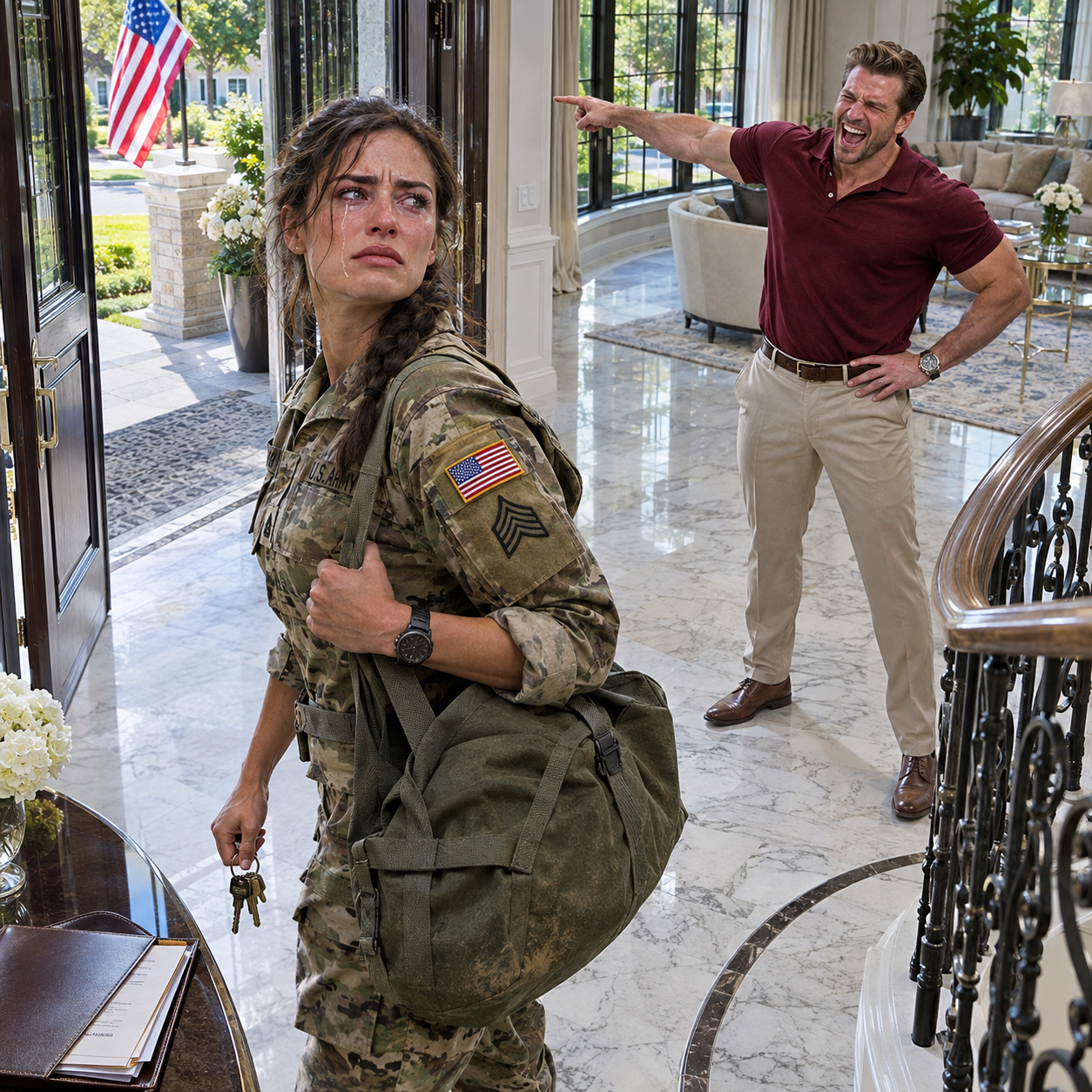
My father called three days before my wedding while I was stripping thorns from roses. October sunlight crossed the greenhouse floor, and my hands smelled of eucalyptus. I thought he wanted rehearsal directions. Instead, he said, “Hannah, I don’t think I should walk you down the aisle on Saturday.”
I lowered my shears. “Did something happen?” I asked. “Your sister is having a difficult time,” he replied, and a familiar weight settled behind my ribs. “Tessa says it would be unbearable to watch me give you away when her marriage is falling apart.”
My sister had threatened to leave Scott since January, though neither had moved out. She knew her tears could make our parents punish someone else. “It’s my wedding,” I said. Dad exhaled as though I were being unreasonable and explained that Tessa might keep her children away at Christmas if he escorted me.
“Then she’s putting you in a terrible position,” I said. He answered, “I’m trying to keep this family together, Hannah, and I need you to be mature.” I asked why her threat outweighed his promise, and he said, “Don’t turn this into a competition.” Then he told me he knew I would understand.
I looked at the oak shelves my fiancé’s father had built for my studio. Dad had ignored every invitation to visit. I ended the call without saying I understood. Within six minutes, my mother’s name flashed across my phone.
“Plenty of brides walk alone now,” she said, skipping hello. “It’s independent and modern, so don’t embarrass us by looking abandoned.” I told her I wasn’t ashamed of walking alone; I was hurt by Dad’s broken promise. Mom lowered her voice and said, “You have Owen now, while your sister is losing everything.”
I wanted to ask why my happiness always counted as something taken from Tessa, but I already knew her answer. At sixteen, I missed a regional gardening competition because Tessa’s college boyfriend broke up with her that morning. At twenty-eight, I bought Mom dinner while Tessa received applause for attending. I said, “I’ll make my own arrangements,” and hung up before my mother could call me selfish.
Last winter Grandma Ruth had shown me an old map of Laurel Creek, the mountain acreage where I learned to grow sunflowers in rocky soil. She asked whether I still dreamed of opening a nursery there. I told her I could barely afford my rented greenhouse, and she squeezed my wrist. “Not everything worthwhile should come down to money,” she said, watching my face strangely.
Owen found me outside, holding a crumpled dressmaker’s invoice. He listened without defending my parents. “You don’t need anyone’s permission to be loved properly,” he told me. “And my dad would be honored to walk beside you.”
His father, Walter Reed, was a retired cabinetmaker with broad hands, soft-spoken manners, and a habit of fixing things before anyone asked. He had shown up with soup when I had pneumonia and taught me how to repair the studio’s sticking door. He had helped unload wedding flowers in sleet. He had already shown up for me.
The next morning I found Walter sanding a chair in his garage, with a radio murmuring beside a jar of screws. I told him about Dad, then asked, “Would you walk with me? Because I want someone beside me who’s happy I’m getting married.” Walter wiped his eyes. “Hannah, I’ve been hoping you would ask,” he said.
Before I left, he stopped me beside my truck. “Your grandma Ruth visited me last spring, a few weeks before she died,” he said, glancing toward his workshop. “She left something for you and insisted I wait until your wedding day.” I asked what it was, but he only said, “She knew your family better than you think.”
That evening, Mom sent a message about seating charts, followed by another: “Whatever happens Saturday, don’t wear your grandmother’s jewelry. Tessa couldn’t bear that, either.” Grandma’s sapphire cuff had supposedly disappeared after her funeral. I stared at the message, wondering why Mom had suddenly brought up something nobody had found.
Part 2
That night I asked Mom about Grandma’s bracelet. Over the television in her living room, she said, “I don’t want another fight over an old piece of jewelry.” When I reminded her it was missing, she replied, “Exactly.” She ended the call before I could ask what that meant.
Grandma wore the cuff even while gardening. Its rough sapphires resembled blue streams in silver. After the funeral, Tessa searched Grandma’s dresser. By Monday, she was telling relatives someone had stolen what Grandma had “promised” her.
A month before she died, Grandma had asked me to look for a folder she kept beside her seed catalogs. I found the catalogs, but Mom said Tessa had already taken the folder to “help with paperwork.” Grandma had pressed her lips together when I told her. At the time, I assumed they were arguing about medical bills, another subject my family never discussed honestly.
Friday’s rehearsal began in an old stone barn outside Asheville. Owen stood where the altar would be, his tie crooked and his grin reassuring. Walter practiced walking with me as the coordinator counted. Dad watched from the back row.
During dinner, he approached our table and said, “I hope you’re not trying to make a point by using Walter.” I lowered my glass. “I asked him because I love him,” I said, “not because I’m staging a protest.” Dad watched Walter help an elderly guest and said nothing.
Tessa arrived late in a nearly bridal-white dress. She told Owen I was “taking the aisle situation personally.” Then she leaned toward me and whispered, “You could still walk alone and keep Dad from feeling humiliated.” I mentioned her threats about the children; she fled outside.
Owen found me outside by the water trough. “Your dad asked mine if he’d back out,” he said, rubbing my shoulders. Walter refused, saying he wouldn’t discard my invitation. I cried against Owen’s jacket.
Walter joined us with a wool blanket. He draped it around my shoulders and said, “Ruth wanted your wedding to belong to you.” I asked whether Grandma suspected Tessa. “She was worried about something bigger than a wedding,” he said, “but she wanted you to hear it from her.”
Saturday I arrived before sunrise with my dress. My assistants and I had arranged the centerpieces; dahlias and rosemary scented the hall. My friend Priya helped fasten the tiny pearl buttons down my back. Mom scrolled through photos of Tessa’s children.
Tessa arrived late and grim. She asked whether Walter was replacing Dad. “Walter is walking with me,” I replied, pulling on my earrings. “Dad decided where he wanted to be.” Tessa looked at my bare wrists, then quickly looked away.
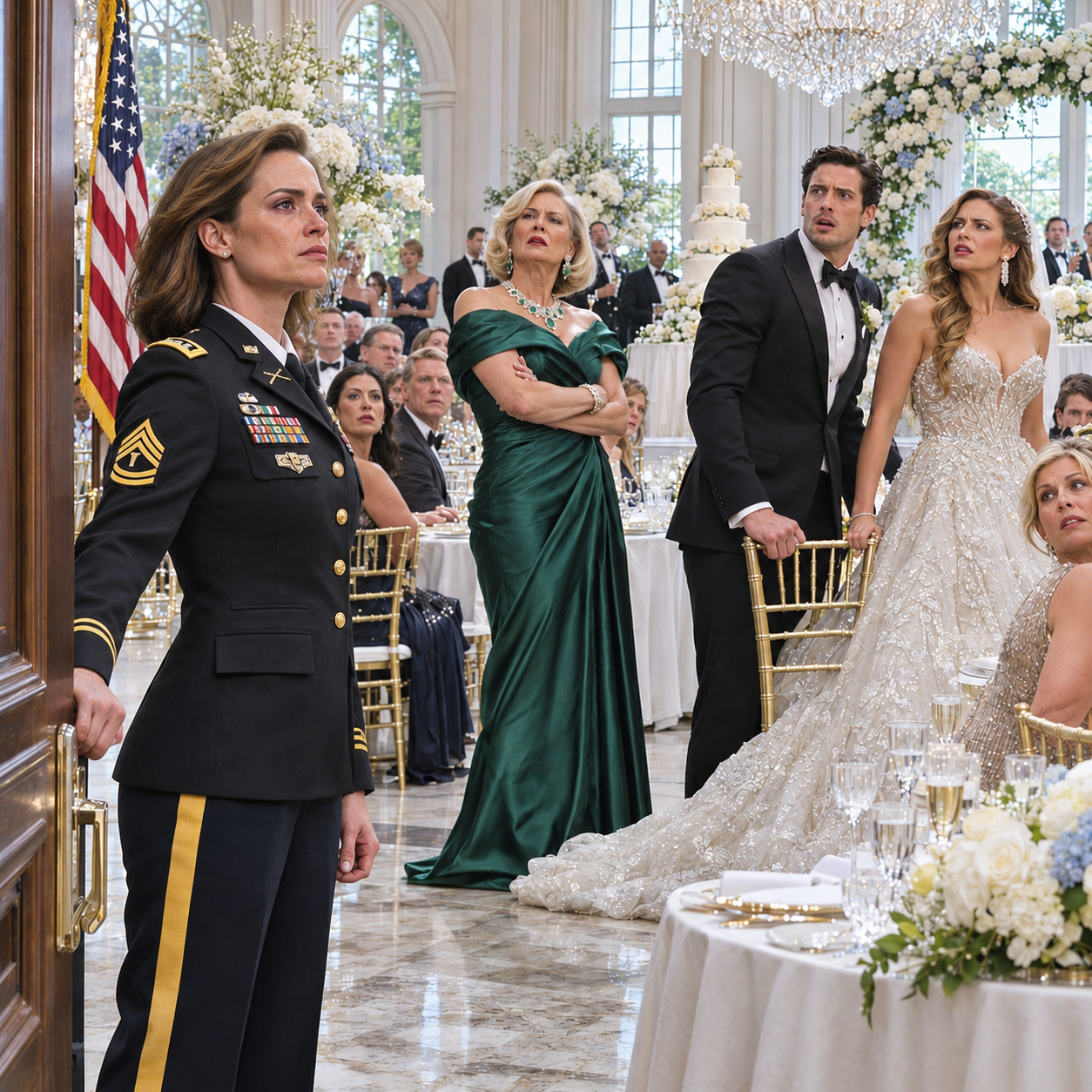
When Walter knocked, the coordinator announced we had ten minutes. He stepped into the suite wearing a charcoal suit and carrying a small black velvet box that looked worn at the corners. “Your grandma asked me to give you something before the ceremony,” he said, looking directly at me. Mom gasped.
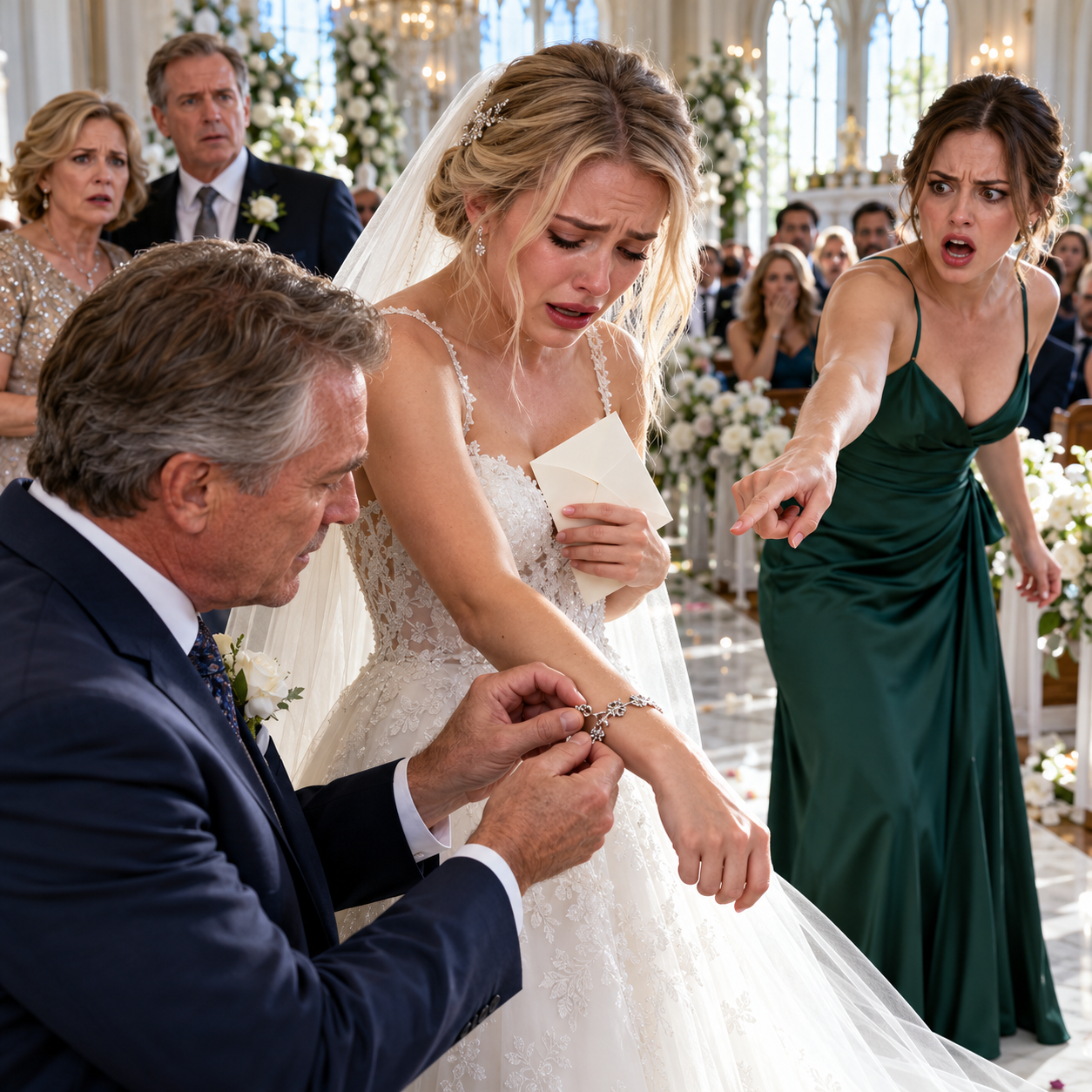
Inside lay Grandma’s sapphire cuff. Walter fastened it around my wrist; the cool metal clicked shut. Tessa went white. “Where did you get that?” she demanded, stepping toward us so suddenly that Priya moved between us.
“Ruth entrusted it to me,” Walter answered, and slipped a thick envelope sealed with green wax into my bouquet. Tessa stared. “There shouldn’t be any letter,” she whispered, then clamped her mouth shut. A cello sounded, and Walter offered his arm.
The doors opened onto our waiting guests. Dad avoided my eyes, but Walter led me toward Owen. “You look incredible,” Owen whispered.
During our vows, I heard a soft scrape from the front pew and saw Dad shift forward as though he might stand. Mom caught his sleeve, and he stayed seated. I turned back to Owen and promised to build a life in which neither of us would have to beg for kindness. His hands trembled slightly around mine, but his voice never wavered. Behind us, Tessa stared at the envelope in my flowers.
Part 3
At the reception, the sapphire cuff warmed against my skin. I hid Grandma’s envelope in my bridal bag to read privately with Owen. Guests sipped cider amid the smell of roasted apples. Briefly, I forgot Tessa’s expression.
Then she caught me beside the dessert table. “Where is it?” she asked without congratulating me. I reached for a pecan tart. “What?” Her perfume stung my nose. “The letter, Hannah, and whatever papers Walter gave you.”
I asked how she knew about papers. “Grandma was confused before she died,” she said. “She was signing things she didn’t understand, and I was the one helping her.” Grandma had beaten Owen at chess weeks before dying. I told Tessa to leave.
She gripped my lace-covered arm. “You don’t understand how much trouble you could cause,” she whispered. I pulled free; cider spilled. Owen arrived and asked, “Do you need me to get someone?”
Tessa recoiled. “She’s making this ugly,” she told him, adopting the injured expression that had worked on our parents for decades. Owen looked directly at her and replied, “You’re the only person who has mentioned that envelope since the ceremony.” She stalked toward the bar. I trembled, certain she would return.
Scott intercepted us near the coatroom, his collar loosened and his face drawn. He asked whether Tessa had caused a scene, and when I said yes, he stared at the carpet. “She’s been telling people she has a solution to our money problems,” he admitted. “I thought she meant selling the boat.” Before I could question him, Tessa called his name from across the room.
We took the bag into the library as rain tapped the windows. Walter offered to stay, then gave us privacy. Inside lay handwritten pages, a property map, and legal photocopies. Grandma’s first line read: “If Walter walked you to your husband, I wish I could say I was surprised.”
She remembered me arriving with pockets of seeds. She remembered the summer I repaired Laurel Creek’s flooded irrigation ditch. Then her handwriting darkened. “Your sister has mistaken my age for weakness,” Grandma wrote, “and your parents have mistaken keeping peace for doing right.”
I remembered visiting Grandma the following Easter and finding her kitchen table cleared of its usual piles of seed packets. She had asked whether I kept copies of documents before signing them, a strange question from a woman who had balanced the accounts for her late husband’s farm. When I laughed and said of course, she answered, “Good. Never let anybody rush you with a pen.”
Tessa had brought Grandma documents granting her control of Laurel Creek, its greenhouses, and spring. She claimed Scott needed the property as loan collateral. When Grandma refused, Tessa threatened to keep the children away from her. I remembered Grandma crying after dinner because she missed them.
“She tried to use them on Grandma, too,” I whispered. Owen steadied me as I read. Grandma had established a trust with attorney Marisol Vega, naming me beneficiary of Laurel Creek after her death. Marisol’s number was enclosed.
I recognized the creek bend where I left my boots. Twenty-three acres, a barn, two greenhouses, and spring access were mine to inherit. Grandma’s words blurred through my tears: “You do not owe anyone your smallness in exchange for being tolerated.” I wished I could thank her.
A separate note from Marisol explained that the trustee still held legal title and would handle the transfer under the trust terms. There was no immediate deed for me to wave around, just careful paperwork that Grandma had arranged while she was still alive. That made the gift feel more real, not less. Grandma had protected the land in the same patient way she taught me to protect young plants from frost.
At the bottom lay the rejected paperwork. A “Durable Power of Attorney” would have let Tessa transact for Grandma. The witness section was filled in, then crossed out. I recognized the slanted letters as Mom’s handwriting.
Mom’s warning about the bracelet sounded different now. She feared Grandma had kept evidence. Dad knocked on the library door. “Hannah,” he called, “your mother says we need to talk before you make a terrible mistake.”
Part 4
I opened the library door clutching Grandma’s pages. Dad stood beside Mom, while Tessa hovered behind them. “We should handle this quietly,” Dad said. I asked how Mom’s handwriting had ended up on a document giving Tessa control of Grandma’s land.
Mom’s face tightened. “It was only a preliminary form,” she said. “Your sister was trying to keep her family afloat, and Ruth had more land than she needed.” I waited for her to say she had stopped. Instead, she complained Grandma had become “unnecessarily suspicious.”
“Grandma raised two children,” I said. “And she told Tessa no.” Dad rubbed his forehead, then suggested we discuss whether the property could be shared fairly. I asked if he knew about the document. He stayed silent as the music changed.
Dad finally admitted Mom had driven Tessa to Grandma’s house with the forms. He had known about the visit, but after Grandma refused, he decided “nothing happened” and stopped asking questions. I thought of the tears Grandma had tried to hide at Easter. He had watched her suffer and called his silence peace, just as he had with my wedding.
Tessa stepped forward and pointed at the envelope. “She promised me that land when I was twenty-one,” she insisted. Tessa had always refused to help at the farm. “Do you have that promise in writing?” I asked. She called me greedy, though I had just learned about the trust.
Owen moved beside me, calm but firm. “Hannah is not settling an estate dispute at our wedding,” he said. “You can leave this hallway, or I can ask the venue manager to escort you out.” Mom looked outraged; Dad accused Owen of turning me against them. Walter appeared behind them, concerned.
Walter took one look at us and asked whether I wanted him to call Marisol. I dialed Grandma’s emergency number as Owen ushered them away. Marisol answered and congratulated me. Then I told her what had happened with the bracelet and the document bearing Mom’s handwriting.
“Your grandmother signed the trust while she had full capacity,” Marisol said. “She met with me independently, and the trustee has held the property ever since.” The old power-of-attorney form had never been executed, she explained, and no one could use it to move the land. Then she asked, “Has anyone requested that you give up your interest in Laurel Creek?”
I said no. She was quiet for a moment, then explained that the trustee had received an email the previous afternoon containing a supposed disclaimer of my beneficial interest, redirecting it to Tessa. The trustee rejected it because its authenticity couldn’t be established and had already preserved the message. “The signature resembles yours,” Marisol said, “but I was concerned the moment I saw it.”
Friday I had only signed a catering receipt. Marisol told us not to confront anyone over the document, to preserve our own messages, and to meet with her Monday. The email had transferred nothing. Even so, I could barely keep my hand steady enough to end the call.
Back in the hall, the band announced a father-daughter dance I had removed. Dad approached, holding out his hand. “We could still have one dance,” he said. I stepped back and said, “You don’t get to refuse to walk with me and then reclaim the part that looks good in photographs.”
His hand lowered slowly. Mom began to cry, but her first words were, “Everyone is staring.” Tessa argued with Scott about a man named Bennett. He looked sick when she finally said, loudly enough for me to hear, “I already took the deposit.”
Walter caught my eye and nodded. He was standing with Priya and our friends beside the cake, making sure the evening still belonged to us. Grandma had chosen him as the keeper of her message, but he had never used that responsibility to tell me what to do. He had simply handed me the truth and stayed nearby.
I didn’t pursue her. Owen took me onto the floor, and I focused on his heartbeat. Tessa grabbed her purse and fled. Whatever she had done with Laurel Creek, it was no longer just a family argument.
Part 5
The rest of our wedding belonged to us. Walter toasted the time I repaired his wife’s neglected herb garden, and Owen laughed so hard he spilled cider on his sleeve. We danced with friends and stepped outside beneath white lights. When I asked why Grandma had trusted him, Walter said, “Because she knew I’d never put a price on loving you.”
Monday, Owen and I sat across from Marisol, tired but smiling. Rain streaked her office windows, and documents covered the desk. She confirmed Grandma had funded the trust while alive and its trustee controlled the land. The disputed disclaimer had accomplished nothing, but someone had still tried to sign away my inheritance.
Developer Calvin Bennett believed Tessa could sell Laurel Creek. He had paid her a $48,000 deposit for exclusive purchase rights without properly checking the land records or her authority. His agreement could not transfer the property, but it could leave Tessa facing financial and legal consequences. Suddenly, her terror at seeing Grandma’s letter made perfect sense.
Marisol showed me the signature on the supposed disclaimer. Its first letter curled incorrectly, and the document claimed I had attended a signing on Friday when I was preparing flowers. I gave her my schedule, the catering receipt, and Tessa’s messages. “We’ll preserve everything and let the evidence speak,” she said, sealing the copies in a folder.
I didn’t call Tessa or threaten her. The trustee notified Bennett that she had no authority, while Marisol preserved the suspicious documents for a formal report. Bennett demanded repayment, and his attorney began a civil claim; investigators also reviewed the questioned signatures. For the first time, no one could demand that I rescue my sister from what she had done.
Wednesday, Dad appeared at my studio with a box of childhood photographs. He defended Mom for witnessing the papers, described Tessa as frightened, and asked me to “make things right.” I pulled off my gardening gloves and asked, “Do you mean right for Grandma or comfortable for Tessa?” He lowered the box onto my workbench and couldn’t answer.
“I was afraid she’d keep the children from us,” Dad finally admitted, his eyes wet. “So you let her hurt Grandma, and then you hurt me,” I said. He reached toward my shoulder, but I stepped back. “You didn’t lose me because of land, Dad. You lost me because my pain was always the price you were willing to pay.”
Mom left a voicemail asking me to reconsider for the sake of the family. She never apologized for helping pressure Grandma or acknowledged the witness signature. Instead, she complained that relatives were asking what happened at the wedding. I saved the message for Marisol, then blocked her number and Tessa’s.
Scott called once, apologizing for ignoring the source of the deposit. He’d moved into a rental while he and Tessa sorted their finances, and he assured me the children were being cared for. I thanked him but refused to serve as a messenger between them. Their decisions could no longer determine the shape of my life.
By January, the trustee had completed the paperwork and transferred Laurel Creek to me. Its gate rattled in frosty morning air that smelled of wet leaves, and the old apple trees stood black against the hills. Owen walked beside me toward the fogged greenhouses, whose frames were still sound. Walter followed with coffee and a toolbox, having already noticed a loose hinge.
We planned to restore one greenhouse that spring, growing my flower business without borrowing against the land. I called the nursery Ruth’s Acre and hung a wedding photograph above my desk: Walter and me walking down the aisle, laughing through tears. The picture didn’t pretend my father hadn’t existed. It showed the man who had chosen to stand with me when it mattered.
Dad’s later letters stayed unopened in a drawer. I no longer needed his approval, and forgiving him wasn’t a condition of moving forward. One bright morning, I wore Grandma’s sapphires beside the creek while Owen planted our first seedlings. The water flowed past the stones without looking back, and I understood that leaving the people who kept abandoning me didn’t mean I was walking alone.
Legal Notice: This story is a work of fiction. Names, characters, businesses, events, and incidents are the product of the author’s imagination or are used fictitiously. Any resemblance to actual persons—living or dead—or to actual events is purely coincidental. Thank you! 💓