My Sister Threw My Navy Inspection Bag Into the River—Then Learned I Was the Commander She Tried to Ruin
I watched my older sister throw my work bag into the Elizabeth River while sailors and contractors stared in disbelief. She thought I had come to a Navy pier to sabotage her catering job, and she was certain I would break down in front of everyone. Instead, I called security and watched her smile disappear when someone addressed me by rank. I thought that was the worst part of the morning. Then an access log suggested she had been expecting me all along.
Part 1
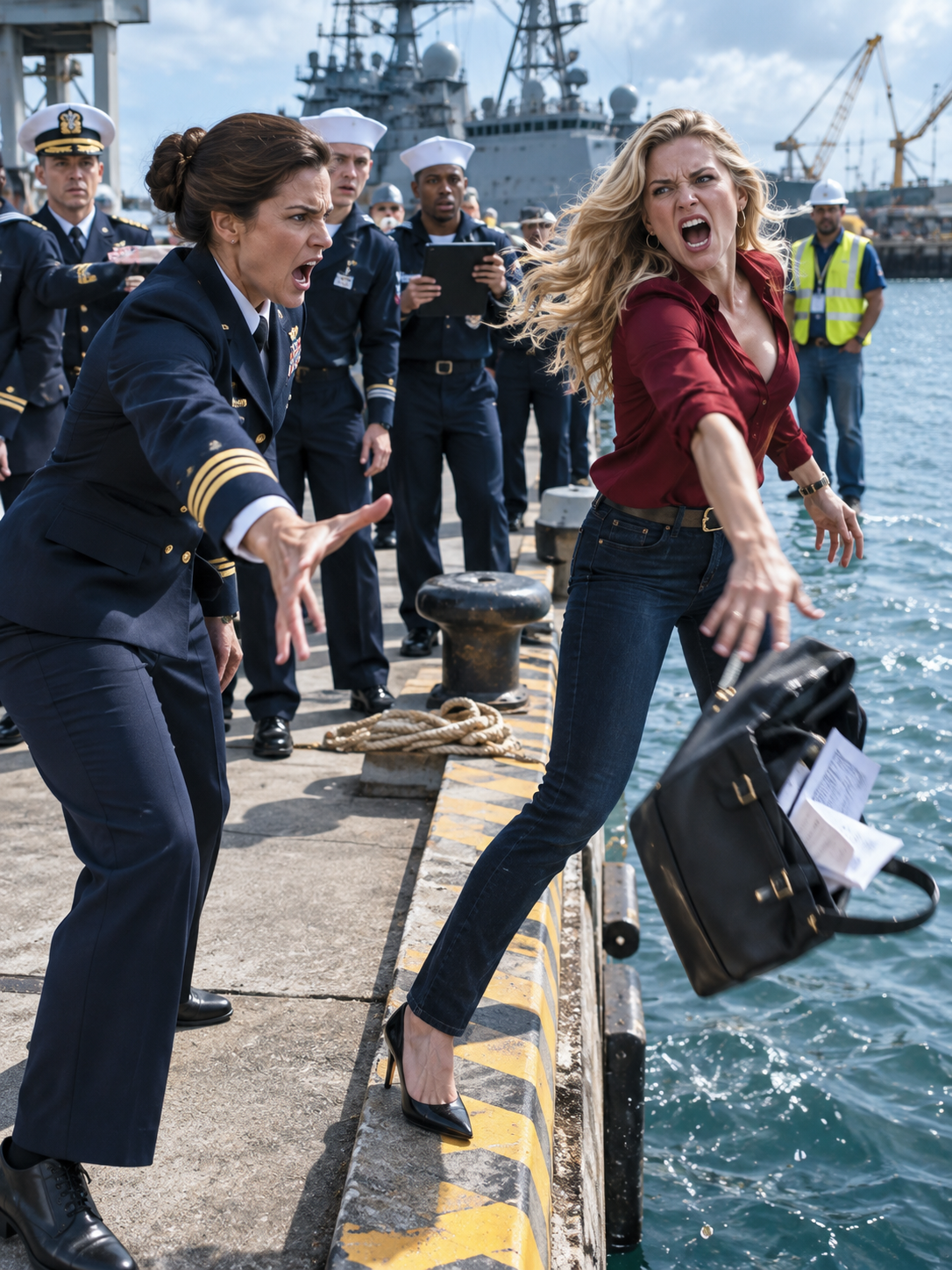
“Put the bag down, Camille.” My sister turned at the edge of the pier, her red heels braced against the wind, and smiled like she was about to win an argument we’d been having since childhood. “You want everybody to look at you, Evelyn?” she asked, swinging the strap of my black canvas case. “Fine. Let’s give them something to look at.” Before I could reach her, she threw it into the Elizabeth River, where it slapped the green water and vanished beneath a smear of diesel-colored ripples.
A young sailor beside a forklift whispered, “Did she really do that?” and nobody answered him. I kept my hands at my sides because I knew the expression Camille was waiting for: the angry, helpless face she could later describe as proof that I was unstable. She’d spent thirty-eight years calling me difficult whenever I walked away.
I joined the Navy at eighteen, but distance never softened her. At our mother’s funeral, Camille had told relatives my uniform was a stunt designed to get attention, so I’d gone outside and stood beside the funeral home’s humming air conditioner until the service began. She never asked about my assignments; she assumed I’d eventually fail. I still sent birthday cards. Last Christmas she’d returned hers unopened, with a note saying I should stop pretending our lives had anything in common.
That morning, I was at a waterfront facility in Norfolk to lead an inspection of repair work along the operational piers. Master Chief Adrian Pike and civilian engineer Tessa Moreno were reviewing repair records when I spotted Camille’s catering van. She was catering a retirement reception nearby, not authorized to enter our pier. Then her heels struck the concrete behind me.
“You couldn’t let me have one day,” she said, loud enough for the contractors to turn around. “Grant told me you’d show up and make my client think I was incompetent.” I told her I wasn’t there for her, pointed toward the authorized delivery area, and asked her to leave. She mocked my uniform and snatched the bag I’d placed beside the inspection crate.
I warned her twice that it held government property, including a secured work tablet and inspection records that couldn’t simply be replaced. She glanced at the spectators with the same calculating look I’d seen at family dinners. She wanted me to chase her, grab her arm, and give her a scene someone could repeat. My stomach dropped, but I wouldn’t give her that scene.
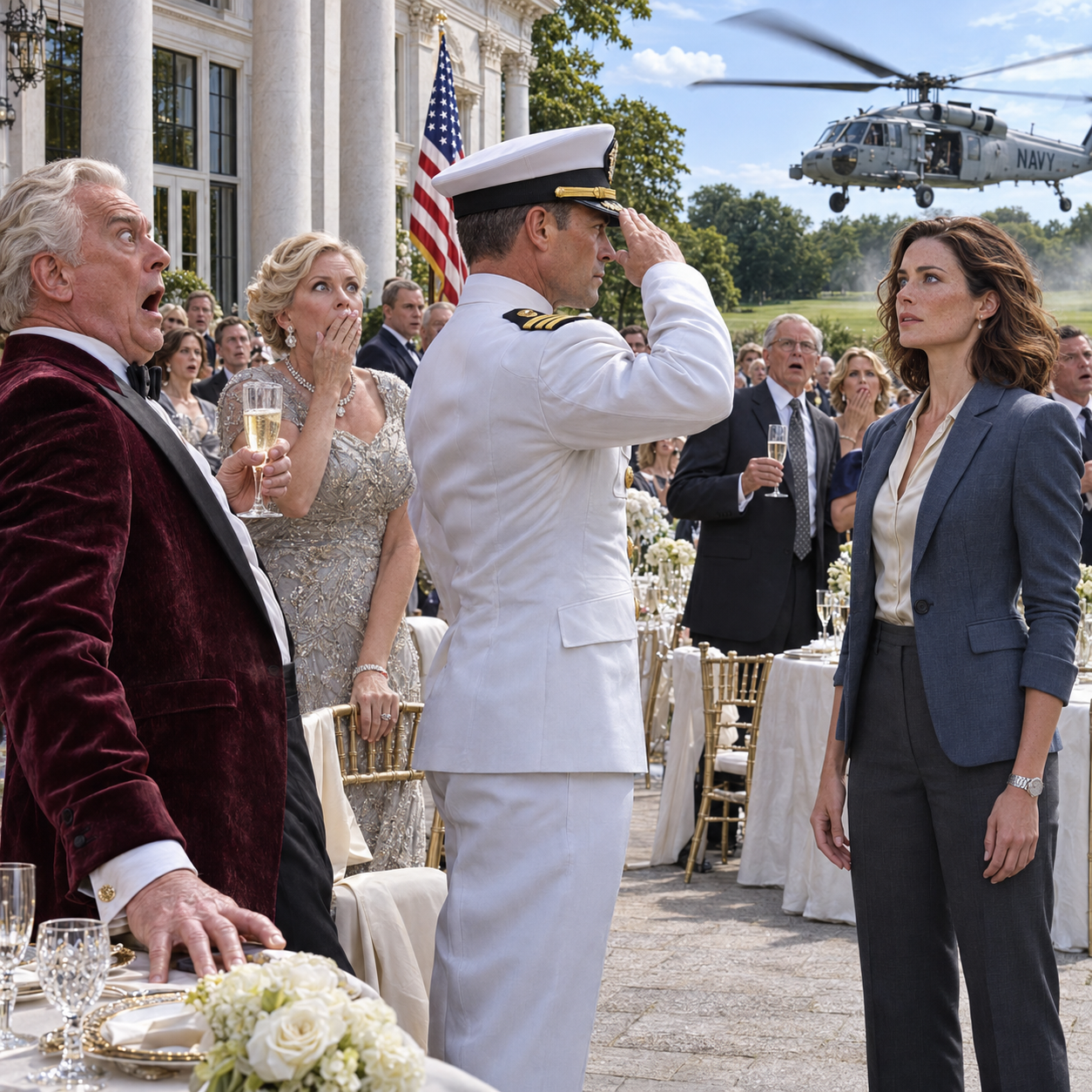
“Master Chief, notify harbor patrol and base security,” I said, keeping my eyes on the spot where the case had sunk. “We need a controlled recovery and an inventory of anything that may have been exposed.” Pike answered, “Aye, Commander,” and Camille’s expression finally changed. She stared at my silver oak leaf, waiting for Pike to laugh.
“Commander?” she repeated, her voice suddenly small. “Since when are you a commander?” I said I’d been promoted last year and told her to stay. She opened her mouth to argue, but a man in a plain dark jacket approached, showed his credentials, and introduced himself as Special Agent Daniel Mercer with NCIS. He’d witnessed everything.
Camille insisted it was a family argument and “just a purse,” while Mercer quietly recorded her answers. Gulls circled above the arriving patrol boat. When Mercer asked how she’d gained access to the pier, she said she’d been following instructions from the event team. Pike, standing beside me with the visitor roster, frowned and tapped a time written near her name.
He waited until Mercer led her toward the security office before he showed me the entry record. Camille’s pass permitted the reception hall and delivery lot, but someone had tried to use it at our pier’s service gate nearly half an hour before our team arrived. I wanted to believe it was a mistake. Then Pike asked, “Ma’am, how did your sister know exactly when you’d be here?”
Part 2
By ten o’clock, a temporary barrier blocked the service road, and a harbor patrol crew was arranging to recover my case. In an office smelling of burnt coffee, I reviewed the inspection schedule while Camille argued outside. She was telling a security officer that I had planned the whole confrontation. I shut the window.
Pike brought the access report to my desk, along with a copy of the catering company’s approved personnel list. Footage showed Camille checking her phone beside a vending machine after her gate attempt failed. She hadn’t wandered onto the pier by accident; she’d entered through a service opening during a contractor delivery. I wanted to dismiss it, but I would have to sign the access report.
At 11:16, divers brought up the bag in a mesh recovery sling, dripping black-green river water across the concrete. The tablet and binder were inside, though water had ruined several pages. Security inventoried everything and began reviewing the exposure, including my decision to set the bag down. My rank exempted me from nothing.
Mercer interviewed us separately. I described Camille’s accusations, my warnings, and the moment she smiled before throwing the case. He paused when I mentioned Grant’s warning. “Her husband knew about this inspection?” he asked, and I said I didn’t know how he could have, because I hadn’t spoken to either of them in months.
That afternoon, catering supervisor Beth Lawson apologized. Flour streaked her black sleeves as she watched someone else set out the sandwiches. “Camille told us she’d been having trouble with a family member on the base,” she said. “I thought she meant an argument at home, not this.” When I asked when Camille had mentioned it, Beth checked her phone and said, “Last Thursday.”
That was six days earlier. The retirement reception and the waterfront inspection belonged to different departments, with different supervisors and entirely different responsibilities. I hadn’t known about Camille’s catering assignment, much less spoken to her about it. Beth offered to send her communications to investigators. I thanked her; Camille’s employment wasn’t mine to decide.
At dusk, I returned to my quarters and ignored my cold vending-machine soup. Grant’s name flashed on my personal phone, followed by a message: “Stop ruining her career. She only threw a bag.” A second text appeared before I’d finished reading: “You always needed people to know you’re important.” I forwarded the messages to Mercer and turned the phone facedown.
Then a knock rattled my door chain. Camille stood outside with Grant, her mascara smudged and his jaw tight. “Tell them it was a misunderstanding,” she demanded, pushing past his shoulder. I told her I wouldn’t change my statement. She looked as though I’d refused a favor, rather than refused to alter a record several witnesses had already corroborated.
Grant said, “You’re in charge there, Evelyn; make this disappear,” and I explained that I wasn’t in charge of NCIS or the security review. Her tears stopped, and she accused me of enjoying her fear. “You threw the bag after I warned you,” I said, keeping one hand on the door. “I didn’t make you do that, and I’m not going to pretend I did.”
Grant looked confused. “You said she was screaming at you,” he told her. “You said she threatened your job before you even got to the pier.” Camille told him to be quiet, which only made him look more unsettled. “Then why did you have me film it?” he asked, and her face changed.
“Film what?” I asked. Grant swallowed and admitted Camille had asked him to record our encounter from the delivery lot. She’d wanted evidence I’d lose control and messaged him instructions before dawn. He offered to show me the clip, but I refused to touch his phone and asked him to give it to Mercer. Camille’s face turned white.
Part 3
The next morning, I gave my formal statement in a room with beige walls and a recorder that blinked red beside Mercer’s notebook. I told him about the visit to my door, Grant’s phone, and the pressure to change my account. He reminded me the investigation belonged to NCIS. I was relieved; I didn’t want my rank mistaken for leverage.
Grant provided the video voluntarily that afternoon. From the delivery lot, his phone had captured Camille marching past the warning sign, snatching my bag, and looking back at me as if waiting for a reaction. Wind muffled our words, but witnesses confirmed my warning. Grant also handed over the message Camille had sent before sunrise: “Keep filming. If she grabs me or yells, they’ll finally see what she’s really like.”
Mercer showed me the message. Seeing the plan in her own words hurt more than watching the bag disappear, because she’d wanted to damage something that couldn’t be recovered by divers. I’d spent years hoping restraint might earn respect. Now I understood she’d been counting on the one day I couldn’t manage it.
There was another detail the investigators wouldn’t let me ignore. The catering company supplied emails showing Camille had complained, before the event, that a Navy officer was using an official inspection to target her. One included a routine vendor schedule Grant had obtained from a subcontractor friend. She’d used an ordinary schedule to imagine a threat.
She had tried to establish a grievance before we ever met on the pier. When the review found no interference with her contract, Camille claimed she’d wanted only an apology. The security camera, witness accounts, and her own earlier messages contradicted the idea that she’d been cornered or surprised. The outburst had been partly staged. That realization didn’t make the splash any less reckless; she’d watched for an audience, waited for the equipment team to gather, and picked the moment she believed would cause the most damage.
My own conduct was reviewed as well. Investigators found no unauthorized access, but our team strengthened its equipment-handling rules. I accepted my share of responsibility. My team deserved that much from me, even on the worst day of my career. Camille, meanwhile, was barred from returning to the installation while the case and her employer’s review proceeded.
Aunt Miriam called the following Sunday, the kind of call I used to dread. Her kitchen clock ticked as she said Camille might lose her job. “Your mother wouldn’t want this,” she said, and I felt the familiar request forming before she finished: be the bigger person, smooth it over, make the family comfortable again. I shared only the basic facts.
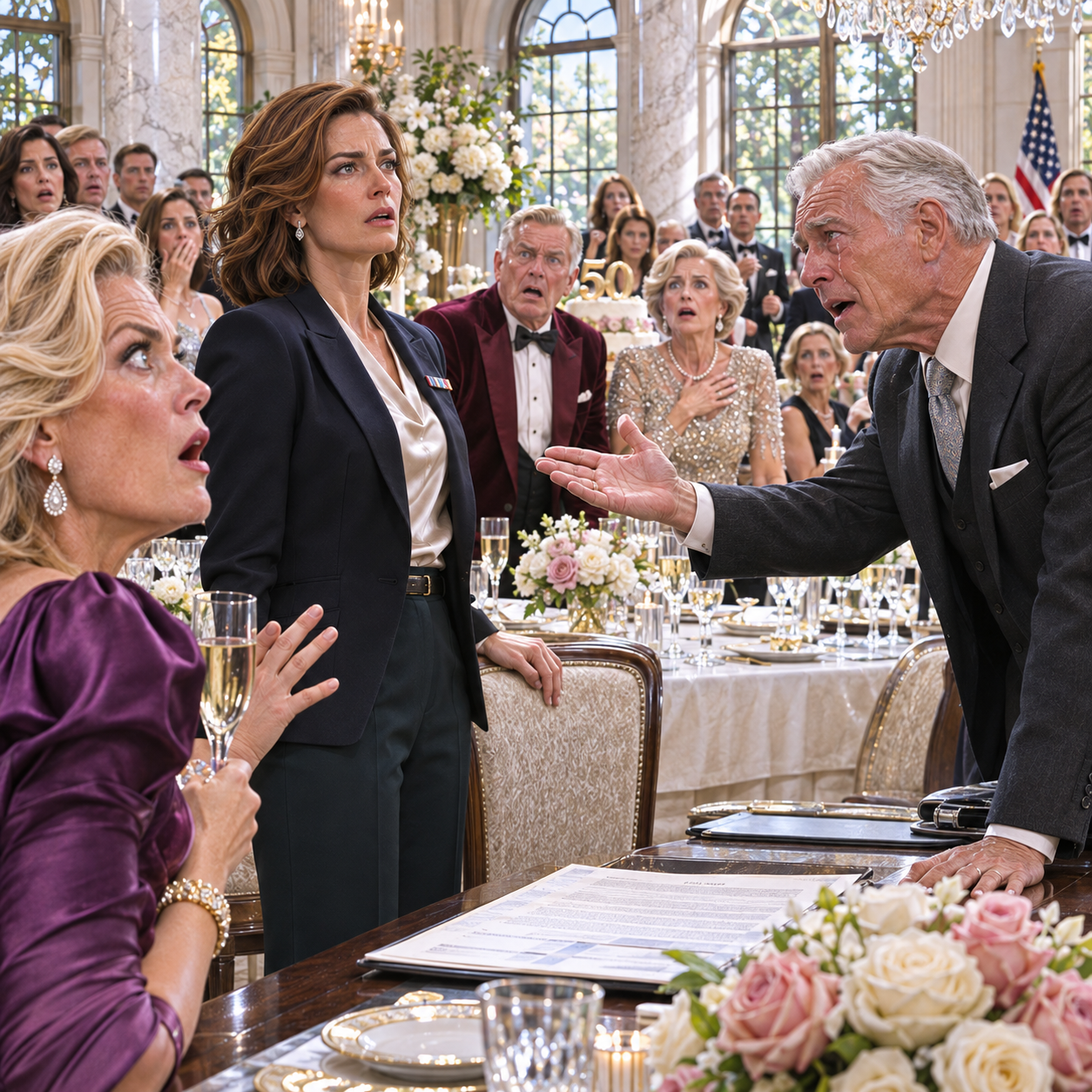
Miriam was quiet for a long time. Then she said, “Camille told me you showed up at her workplace and tried to have her escorted out because she wouldn’t praise your promotion.” I stared at the rain sliding down my window and said, “I didn’t even know she was working that event until I got there.” My aunt apologized for expecting me to absorb Camille’s anger.
A month later, Beth told the investigators that Camille’s employment had ended after the company’s own review. I knew Camille was good at her work, but her dismissal wasn’t mine to undo. She’d had several chances to walk away. Each time, she’d chosen a fresh accusation.
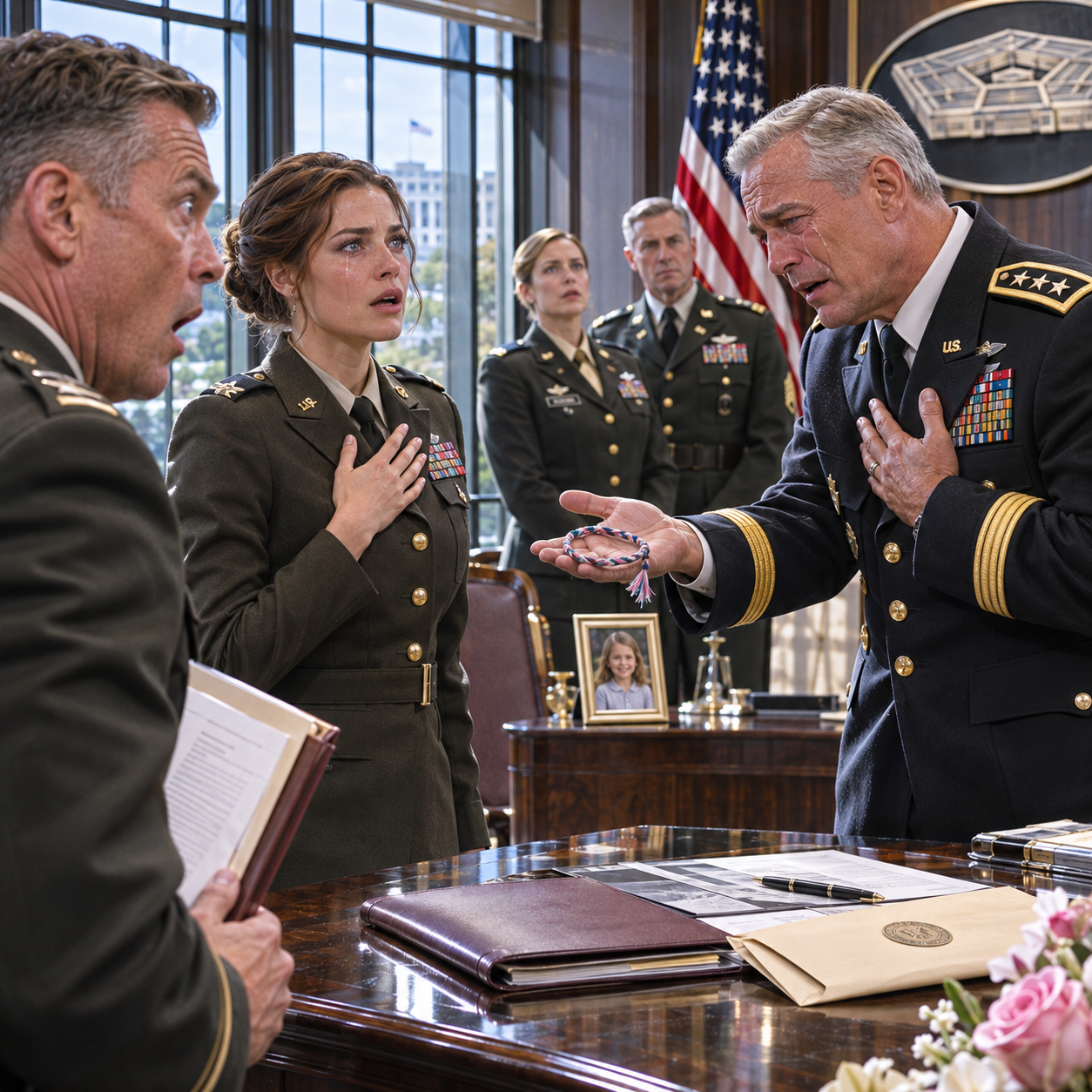
I thought the evidence would finally quiet her, but a letter arrived through my aunt addressed in Camille’s tidy handwriting. Inside was an old photograph of our mother pinning the insignia on my uniform, a photograph Camille had once sworn Mom had thrown away. On the back, in Mom’s handwriting, was a sentence I’d never seen: “For Evelyn, who always made me proud.” Below it, Camille had written, “There’s something else I lied about.”
Part 4
For two days, the photograph lay on my kitchen table beneath a shaft of morning sunlight. I remembered Camille claiming Mom was embarrassed by my career. Mom hadn’t always understood me, but she’d hugged me after that ceremony and demanded another photo. I had allowed my sister to replace that memory with a sentence Mom had never said.
Camille had found the photograph after the funeral and hidden it out of jealousy. She’d spread stories that I looked down on everyone. She even admitted telling Mom that I refused invitations because I was ashamed of our family, though most of those invitations had never reached me. Suddenly, years of strained phone calls made awful sense. She wrote, “I wanted you to feel small when you saw me on that pier, and when you wouldn’t, I tried to make you look cruel instead.”
The apology that followed was more specific than anything she’d ever offered me. She acknowledged the bag, the camera plan, the lies, and the years of making my accomplishments sound like insults directed at her. She hoped we’d share Thanksgiving someday. I believed her remorse but didn’t want her back in my life.
The legal process continued for months after that. A federal property-related case ended with restitution and court conditions, without any finding that she’d tried to steal information. The employment and security reviews remained separate. None of it belonged to me to reverse, and for the first time, I didn’t feel responsible for making it painless for her.
I wrote one reply in a diner as rain rattled the windows. “I received the photograph, and I appreciate the truth,” I began, then crossed out three paragraphs that sounded like comforting her. I wrote that I wouldn’t be taking calls or meeting for holidays. “I don’t wish you harm,” I wrote, “but I’m not returning to the relationship we had.”
Miriam understood when I told her, though she had clearly hoped for a different ending. We ate lemon pie in Richmond and laughed about Mom’s early tomatoes. When I said I wouldn’t forgive Camille, my aunt nodded. “You don’t owe anyone access to you,” she said, and I almost cried into my coffee.
Work carried me forward in ways family drama had once crowded out. Tessa, Pike, and I improved waterfront entry procedures. One afternoon, the young sailor who’d witnessed the splash stopped me outside the maintenance building to say she’d earned her qualification. She remembered how I’d stayed calm, and I told her, “Being calm doesn’t mean you weren’t hurt.”
By the next spring, Camille had found office work with a small events business. Miriam told me without pressing for a reunion. Grant sent a brief apology for believing stories he hadn’t checked, and I acknowledged it but declined his invitation to talk. No court ruling could repair thirty-eight years of mistrust, so I stopped checking my phone for angry messages and filled weekends with people who weren’t keeping score. On Sundays I took long walks with Tessa and her old rescue dog, who greeted every stranger like a friend.
On a bright April morning, I returned to the same pier with a new work bag secured beside my equipment. The river smelled of fuel as Pike handed me the checklist. For a moment, I could see Camille standing at the edge, waiting for me to become the frightened younger sister she’d always preferred. Then the image passed, and I looked at the work in front of me.
“Ready, Commander?” Pike asked, adjusting his safety glasses against the wind. “Absolutely,” I said, and we walked toward the first checkpoint with the rest of the team. My sister couldn’t give back the years I’d spent begging for approval. I didn’t need her forgiveness, her praise, or even her understanding anymore; I had stopped handing her the power to decide who I was.
Legal Notice: This story is a work of fiction. Names, characters, businesses, events, and incidents are the product of the author’s imagination or are used fictitiously. Any resemblance to actual persons—living or dead—or to actual events is purely coincidental. Thank you! 💓