My Father Called Me a Military Failure at His Birthday Party—Then a Helicopter Landed for Me
At my father’s seventy-fifth birthday party, he told eighty guests that the Navy had turned me into an expensive disappointment. I stood beside the cake, listening to my brother laugh, when a helicopter descended onto the lawn. A Marine walked straight toward me and called me Admiral. My father’s smile disappeared, but not for the reason I expected. By the end of that afternoon, I would discover he had known exactly who I was—and had been hiding something far worse than his contempt.
Part 1
The first thing my father said when I arrived was, “You wore that?” I was in a plain navy dress and sensible heels, standing beneath the white portico of the country club he’d rented outside Annapolis. A florist brushed past with lilies, their sweetness mixing with fresh asphalt from the driveway. I kissed his cheek anyway; I’d spent fifty-one years mistaking good manners for peace.
“Happy birthday, Dad,” I said, handing him a small wrapped box. Victor Kessler weighed it in his palm without opening it, then passed it to a waiter as though it were a coat. “Seth got me a vintage watch,” he said, nodding toward my younger brother, who was showing it off near the bar. “But it’s the thought that counts, I suppose.”
My mother, Diane, intercepted me by the seating chart, smelling of her familiar rose perfume. “Please don’t argue with him today,” she whispered, straightening my collar. I hadn’t even finished my first coffee. Across the room, a slideshow celebrated Seth’s graduation, wedding, and new warehouse; my face appeared once, half hidden behind a Christmas tree in 1998.
Mom had called twice that week, saying Dad was getting older; she wanted us together long enough to resemble a family. I’d flown from Virginia the night before. That morning, my aide changed my briefing schedule and arranged an unusual pickup I didn’t intend to discuss over birthday cake.
Seth dropped beside me at lunch, his linen jacket stained with cocktail sauce. “Still doing paperwork at some base? Sounds relaxing,” he said, tapping the service pin on my purse. When I asked about his manufacturing contracts, he said, “Big things are coming,” then flipped his phone facedown as a notification flashed.
Seth could describe a forty-dollar steak in detail but had never asked what ship I’d served on. I once sent photographs from ports around the world and waited for questions. Dad answered my last promotion announcement with a thumbs-up, Mom with a picture of hydrangeas. Eventually I stopped mistaking replies for interest.
Waiters carried champagne past tables decorated with miniature steel beams, a tribute to Dad’s company. Above the cake, a banner read, SEVENTY-FIVE YEARS OF VICTOR KESSLER, with KESSLER & SON: BUILT TO LAST beneath it. Dad called Seth to the microphone and thanked his golfing friends and “the son who knew enough to carry on the family name.”
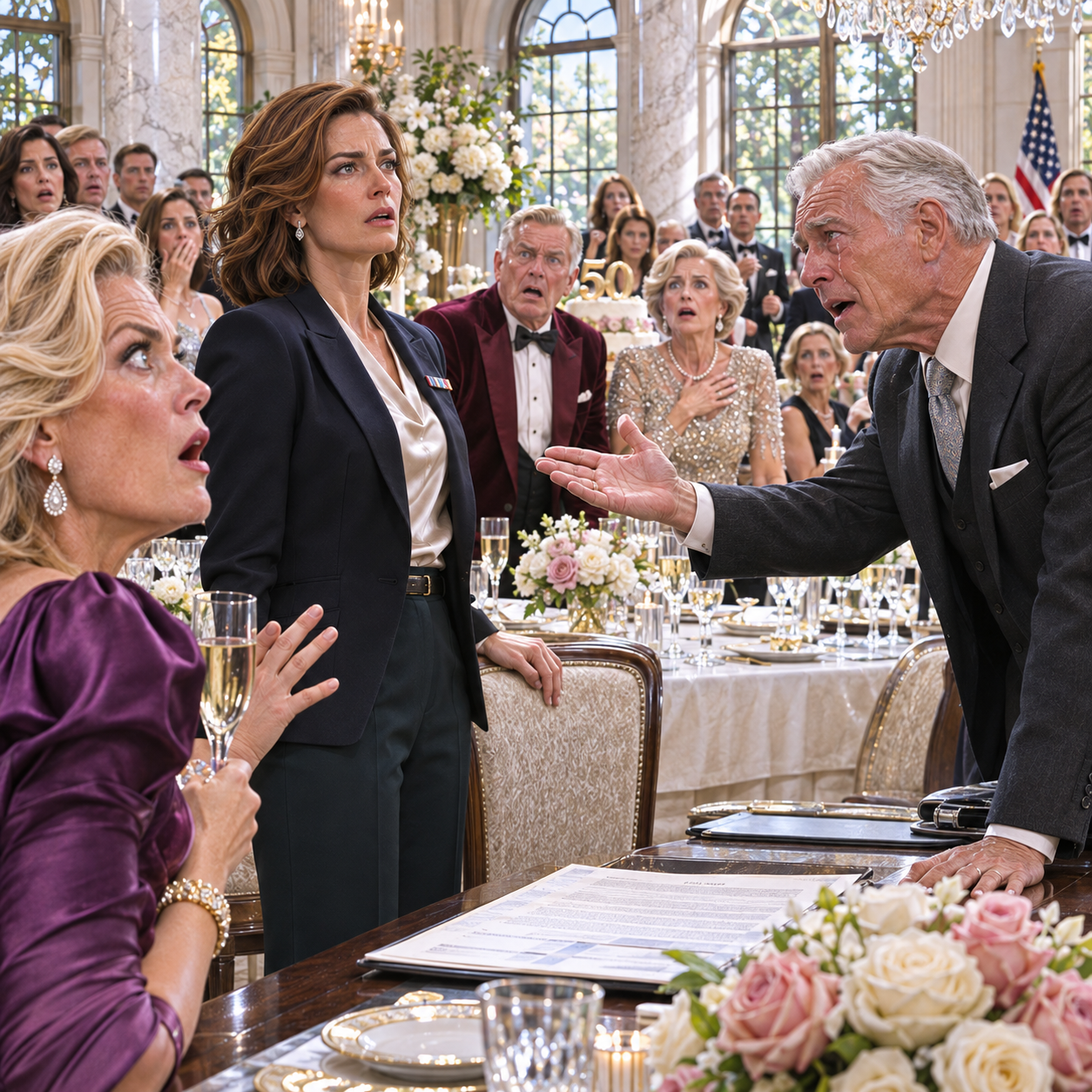
Then his eyes found me at the back of the room. “And there’s Nora,” he said into the microphone, his voice cheerful in that dangerous way I remembered from childhood. “I told her the Army would chew her up and spit her right back out, but she wouldn’t listen. Thirty years later she’s still running around in uniform, and we’ve got no idea what she actually does.”
Laughter moved through the room in little bursts, first from Seth and then from people who didn’t know whether the joke was supposed to be cruel. I felt the rim of my water glass press into my thumb and watched my mother study the tablecloth. Dad raised his glass again. “Here’s to children who make us proud, and children who keep us humble.”
My phone vibrated against my wrist where I’d slipped it under the table. A short message from Commander Jo Medina read, “Aircraft inbound. Landing zone confirmed. Four minutes.” I set down the glass and stood, intending to slip out before Dad could turn my departure into another joke. Instead, the windows began to rattle, and a heavy pulsing noise swallowed the music.
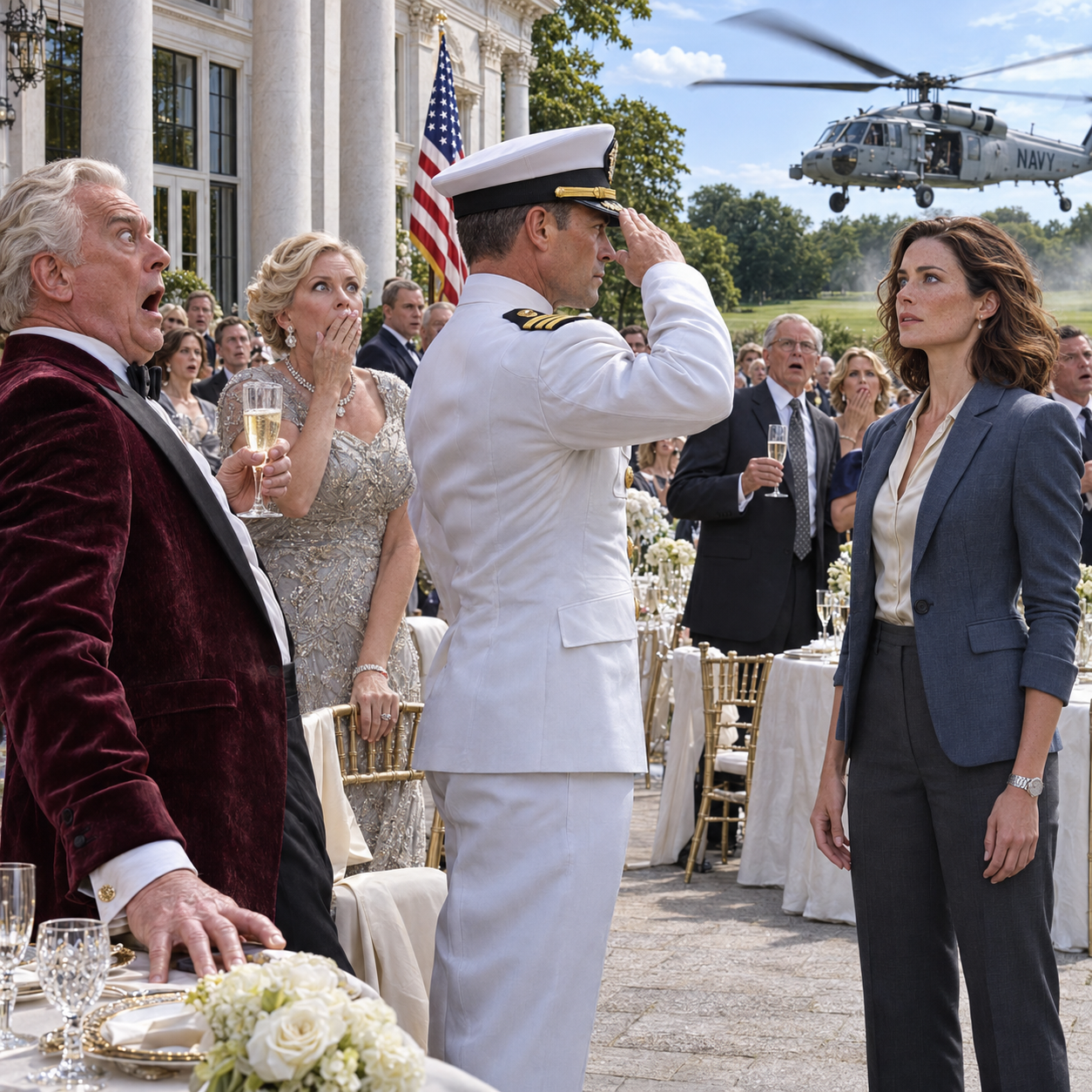
Someone on the terrace shouted that a helicopter was coming in over the trees. Napkins lifted off the outdoor tables, and a server grabbed the silver cake knife before it slid off its tray. Dad pushed through the crowd toward the glass doors, furious that something had interrupted his toast. When he turned and saw me checking my watch, he asked, “Nora, what have you done?”
Part 2
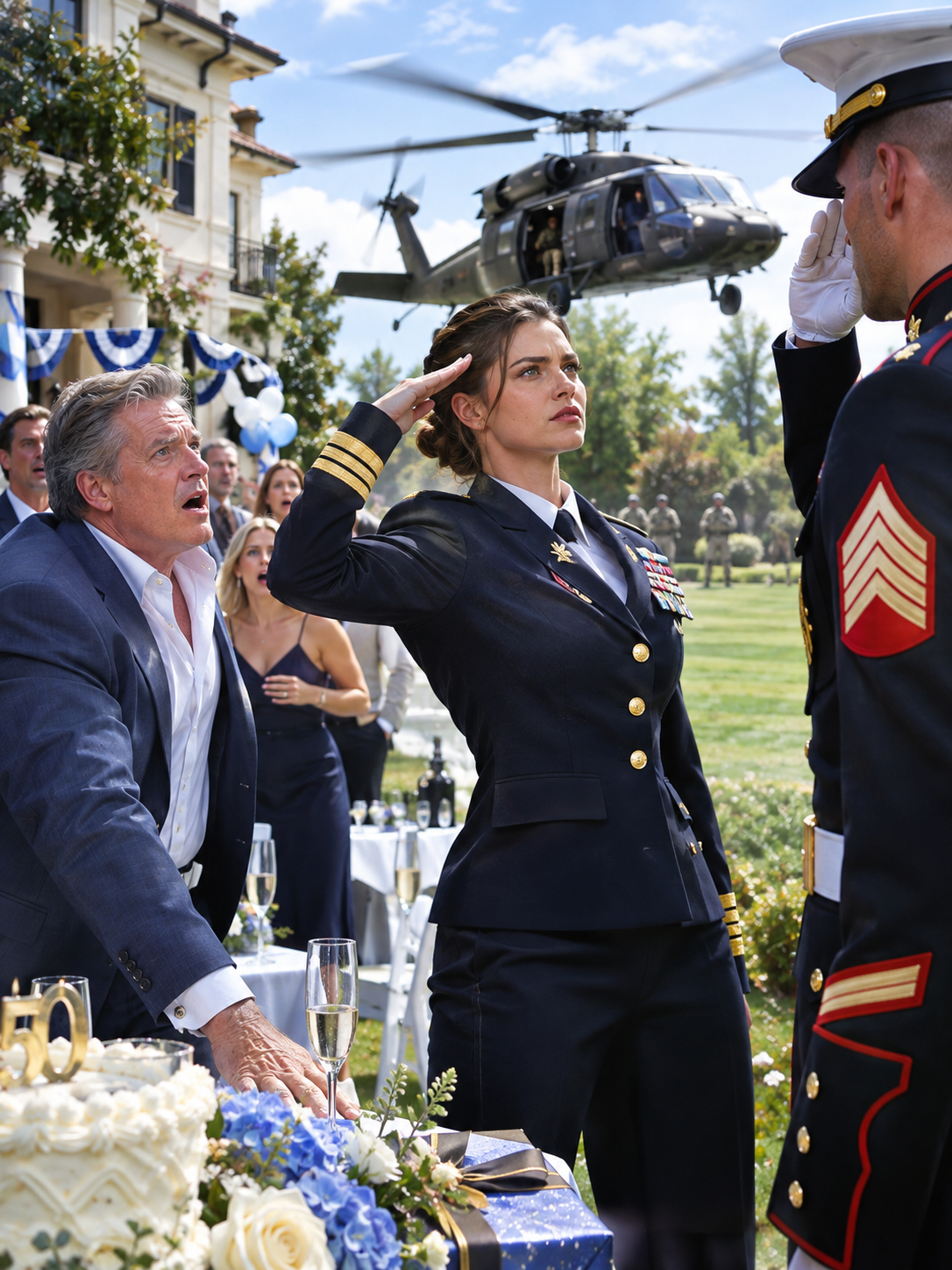
The Black Hawk descended onto the far lawn, where the club manager and security team had cleared a landing area. A line of orange markers bordered the grass, nearly invisible from the banquet room. I’d arranged the pickup for a time-sensitive briefing, not a birthday surprise; no one would have approved this flight merely to make a point to my father. Phones rose along the windows as rotor wash flattened the grass. Beside me, Dad stood openmouthed, the gold birthday crown Seth had given him crooked.
“Is this some kind of stunt?” he demanded. “You can’t just bring the military to my party.” I told him the pickup had been approved and that I was leaving on government business, but he barely listened. He was staring at the helicopter as if it were a competitor arriving with a bigger gift. Then a Marine major stepped onto the terrace and came directly toward us.
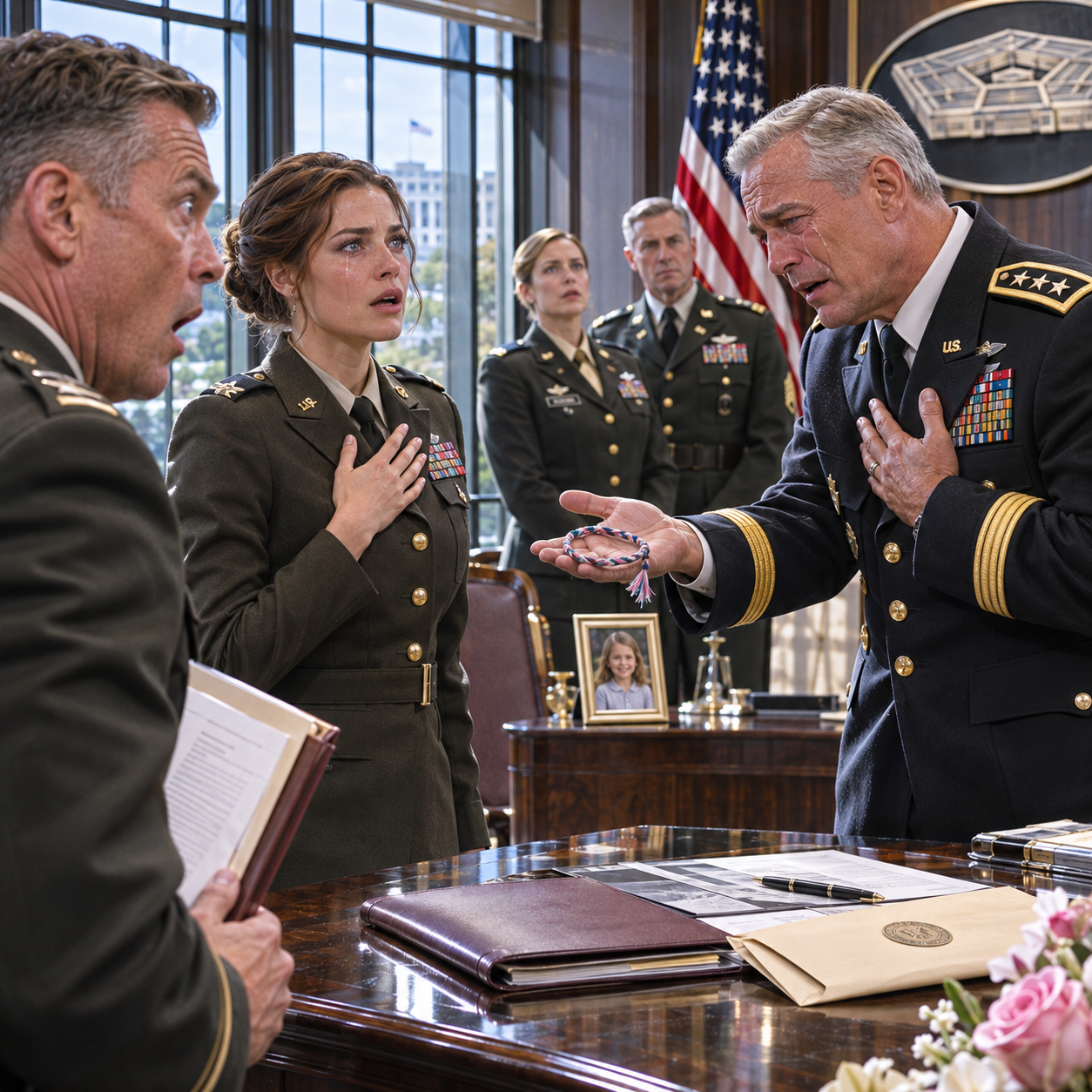
He stopped in front of me, squared his shoulders, and saluted. “Admiral Kessler. Ma’am, your aircraft is ready, and the President is expecting you at the briefing.” I returned the salute and thanked him, keeping my voice level even though I could feel eighty pairs of eyes on my back. Someone dropped a fork, and the small metallic clatter sounded absurdly loud after the major stepped aside.
“Admiral?” Seth repeated, looking at me as though I’d changed clothes when he wasn’t watching. “Like an admiral in the actual Navy?” “Rear admiral,” I said, “and yes, the actual Navy.” He made a helpless movement with his hands, while my father laughed once, sharply, as if the room had misunderstood a punch line. “You never told us that,” Dad said.
I looked at the man who had once driven me to a recruiting office without speaking for the entire forty-minute trip. “I sent invitations to my promotion ceremony, mailed photographs, and called last spring about my new assignment,” I said. Dad frowned and said that he’d assumed it was another desk job. “You said you were busy and hung up before I could explain,” I reminded him.
Mom approached, gripping her handbag strap. “The ceremony in Norfolk? Your father said it wasn’t anything special. We thought you’d understand why we didn’t travel.” I remembered the empty chairs and my closest friend, Jo, sitting alone with flowers. I’d kept watching the entrance until the band began to play, certain they’d appear at the last minute. I couldn’t find an answer now, either.
A gray-haired man stepped away from Dad’s table, holding his phone against his chest. It was Martin Bell, who had supplied metal fittings to Kessler Fabrication for nearly twenty years. “Admiral, I recognized you from a Navy industry event,” he said, shaking my hand. “You spoke about public service and the importance of keeping procurement decisions independent. My daughter sent me the recording.”
“Thank you,” I said, surprised by the kindness in his face. Dad moved between us and announced that there was no need to turn his birthday into a business meeting. Martin didn’t retreat; he glanced from me to the company banner, then back at my father. “Victor, this is awkward, but I thought Nora had already agreed to advise your new maritime division.”
For a moment I thought I’d misheard him over the helicopter. My father had told me his company was expanding, but he’d never once mentioned a maritime division. “Advise what division?” I asked, and Martin’s smile disappeared. He turned his phone toward me, displaying a glossy cover page with Dad’s company logo above a photograph of me in dress whites. The caption under my picture read, ADMIRAL NORA KESSLER — STRATEGIC ADVISER.
I hadn’t seen that photograph outside my official biography in years. I’d certainly never given anyone permission to put it in a sales proposal, and the sight of my name on Dad’s letterhead made my stomach tighten. Behind Martin, Seth quietly took a step away from the table. My father reached for the phone and said, “That document isn’t supposed to be circulating yet.”
Part 3
I asked Martin to send the presentation to my attorney, and he agreed. Dad hissed that I was embarrassing him in front of his friends. On Martin’s screen were proposals for shipyard equipment, claims about government relationships, and one line saying my “direct guidance” would help the company navigate federal requirements. The language was polished enough to sound official and vague enough to hide the fact that I’d never agreed to any of it.
“I have never advised Kessler Fabrication,” I said, loudly enough for the nearby guests to hear. “I don’t work for this company, and my rank does not endorse its proposals.” A silence opened around us, interrupted only by the thudding rotors outside. Martin looked genuinely shaken and told me he’d received the packet from Seth three weeks earlier. That was how I learned the words had already traveled farther than my father’s dining room.
“It’s a preliminary marketing deck,” Seth said, his face now shiny beneath the chandeliers. “Nobody was trying to trick anybody. Dad said we’d run it by you before signing a deal.” I asked why they hadn’t run it by me before using my photograph, and he looked at the carpet. Dad pulled himself upright and announced, “I’ve supported this family my whole life. You could at least support us once.”
There it was: not ignorance, but entitlement. He understood my career well enough to sell the appearance of my influence. He could mock my work at a microphone and put my title on a brochure in the same afternoon. Mom read the page and moved toward him, not me.
“Victor, tell her this is a mistake,” she whispered. He snapped that it was all going to be fine if everybody stopped making a scene. I asked him directly whether he’d known about my promotion when the invitations arrived, and he hesitated just long enough to answer. “Of course I knew,” he said, his voice low. “I read the announcement; I just didn’t see why we had to rearrange our lives for another ceremony.”
I remembered Jo squeezing my shoulder after the ceremony while I searched the crowd. Dad hadn’t missed my achievement; he’d decided what it was worth. I thought about the years I spent sending letters home from distant ports, each one carefully written so he could share a little of my life. He’d taught Mom and Seth to dismiss all of it, yet now wanted to borrow it for a business that had never included me in its family portrait.
The major approached and said we needed to move. I told Dad that my attorney would contact the company and that the materials had to be withdrawn from every recipient immediately. He reached for my arm but stopped when I stepped back. “We can discuss this in private,” he said, eyeing the guests who had begun to move away from him.
“You made the joke in public,” I answered. “And you used my name without asking. Those are two different things, and neither is yours to excuse.” Mom began to cry, but I couldn’t make myself soothe her as I’d done after every family argument since I was twelve. I thanked Martin for speaking up, picked up my handbag, and walked out into the hot wind.
At the helicopter, I turned once and saw Dad standing beneath his enormous birthday banner. Seth was talking urgently into his phone, and Mom had sat down beside the untouched cake. For the first time, I did not wish I could fix the picture they made. I climbed aboard, secured my headset, and watched the country club shrink beneath the aircraft.
Only after the briefing that evening did I turn on my personal phone. There were eleven missed calls, but it was a message from Seth that caught my attention: “Dad told me you would refuse if we asked. He said to use the bio until the contracts were secured. I didn’t think Martin would show you.” I read it three times before setting the phone down, because the betrayal had not begun that afternoon; it had been planned.
Part 4
My attorney contacted the company the next morning; it stopped circulating the presentation. I reported the misuse of my name through Navy ethics channels. The company notified recipients I had no role in its business and withdrew the materials. Whether Seth lost a contract didn’t matter. What mattered was that no one could mistake my silence for consent.
Dad emailed me under the subject FAMILY SHOULD COME FIRST. He said the helicopter humiliated him, the marketing was harmless, and I should “consider how badly this reflects on us.” He apologized for nothing. I forwarded it to my attorney and didn’t reply. A week later he sent a picture of the cake, blaming me for ruining the party. I deleted it.
Mom called on a rainy November Sunday and said Dad wasn’t sleeping, and the guests were still talking. Water ticked against my kitchen window as I asked, “Remember when you told me my promotion wasn’t worth traveling for?” She fell silent. I thought the call had dropped.
“I remember what your father told me,” she finally said. “And I remember choosing not to ask you myself.” That was the first honest thing she’d said about it, and it hurt more than another excuse would have. I told her I might talk to her someday if she stopped speaking for him. I didn’t promise when.
Two months later, Dad appeared uninvited at my Virginia home, carrying my unopened birthday gift. He wore Seth’s expensive coat, and the steps smelled of wet leaves. For a moment I was nineteen again, hearing him say I’d come crawling back. Then I remembered whose doorway this was. I didn’t invite him in.
“People make mistakes,” Dad said, pressing the box toward me. “Your mother thinks we should start over. Maybe a picture together would settle things down.” He still thought the problem was what other people could see. I could almost picture the photograph he’d post: a proud father with his admiral daughter, everyone smiling, nobody mentioning the proposal or the years in between.
“Do you know what’s in that box?” I asked. Dad glanced down, confused, and said he hadn’t had a chance to open it. “It’s the compass Grandpa gave me when I left for boot camp,” I told him. “I wanted you to have it because I thought you’d finally understand why I kept going.” His face changed, though I couldn’t say why.
“Nora, I am proud of you,” he said. I’d wanted those words at nineteen, and at every milestone after. Now they came with a request for a photograph and an unopened gift. “You don’t get to borrow my accomplishments and call that love,” I said.
He started to argue that I was being dramatic, then caught himself. I told him I wouldn’t be rebuilding a relationship just because he was uncomfortable with the consequences, and that he shouldn’t come to my home again without being invited. When he left, he carried the box back to his car; I didn’t chase him to make the moment kinder. The door clicked shut, and for once my house felt quiet rather than empty.
That spring, Jo came over with takeout and her teenage daughter, who wanted advice about applying to a service academy. We ate noodles while she asked about leadership, mentors, and fear. Before she left, Jo spotted a photograph of my promotion ceremony on a low bookshelf: the two of us laughing beside the vacant chairs. “You should put that one somewhere people can see it,” she said.
I moved it to the mantel that night, beside a chipped mug Jo’s daughter had painted for me years ago. It reminded me I had never needed Dad’s permission to build a meaningful life. Dad had spent decades deciding which version of me belonged in his story. I didn’t forgive him, and I didn’t need to hate him to keep my distance. At last, my life didn’t have to be explained before it could be respected.
Legal Notice: This story is a work of fiction. Names, characters, businesses, events, and incidents are the product of the author’s imagination or are used fictitiously. Any resemblance to actual persons—living or dead—or to actual events is purely coincidental. Thank you! 💓