I Bought My Dream Lake House in Secret—Then Found My Brother Moving His Family In, and Police Uncovered Their Real Plan
I stood frozen outside my dream house, watching security footage of my brother drinking champagne on my new sofa while my parents assigned themselves bedrooms. Above my fireplace hung a banner declaring the property belonged to our family, and someone had replaced my face in the closing photograph with my brother’s. I’d spent seven years saving for this house, yet they had taken possession before I moved in. When I called the police, the dispatcher asked one terrifying question: “Did you authorize a change to your property records?”
Part 1
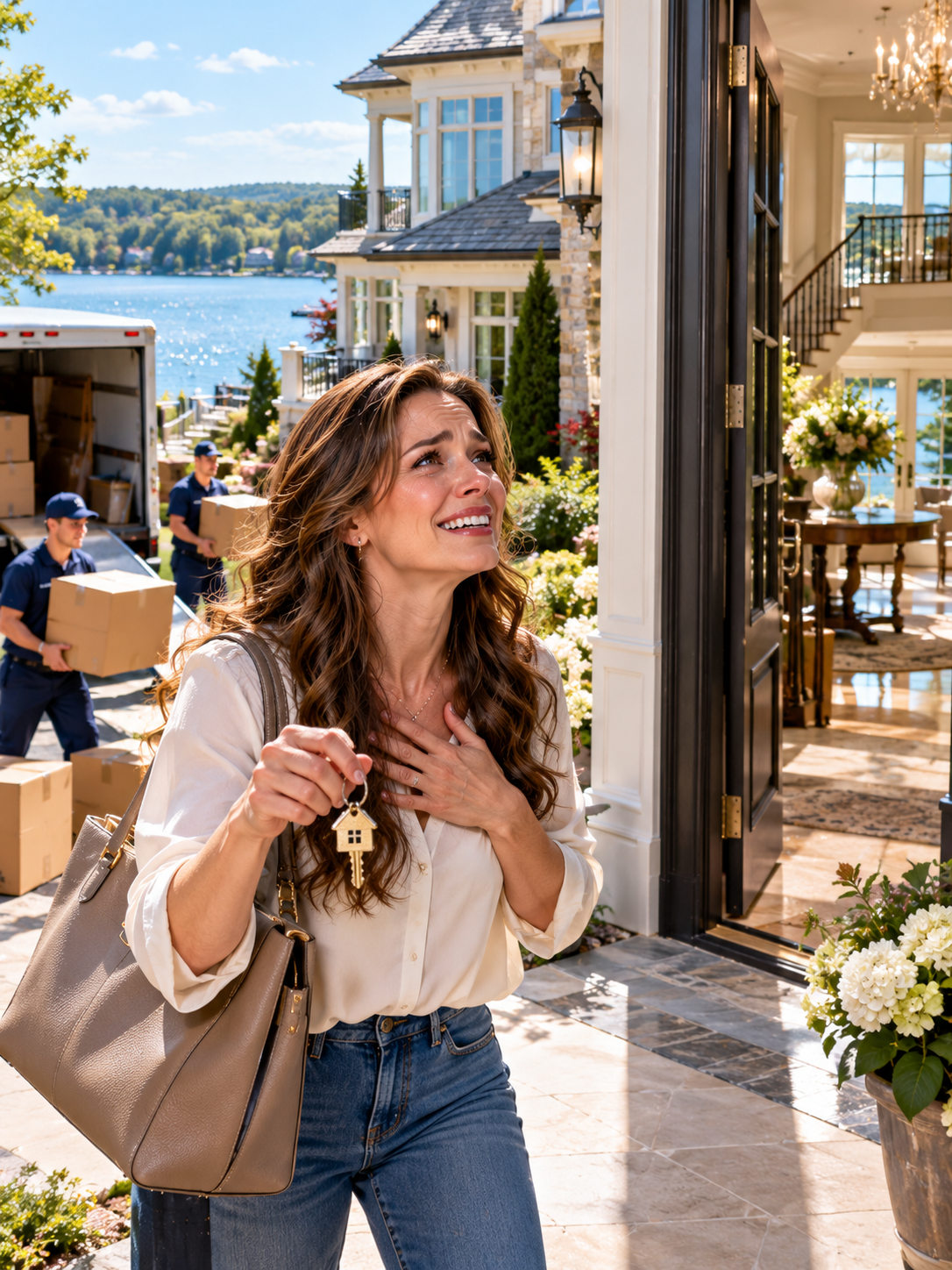
The first thing I heard was laughter coming from a house that was supposed to be empty. I sat in my car at the end of the gravel driveway, gripping the keys to the lakefront property I’d spent seven years saving to buy. Through the open windows came music, children’s voices, and the unmistakable sound of someone dragging furniture across hardwood. My moving truck wasn’t scheduled to arrive until noon, and I hadn’t invited a single person.
My name is Claire Whitmore, I’m thirty-three, and Cedar Hollow was supposed to be my fresh start. The twelve-acre property sat beside a quiet Wisconsin lake, surrounded by pine trees and a long stretch of private shoreline. I’d purchased it after years of working exhausting hours as a software engineer, postponing vacations, driving a ten-year-old Honda, and saving nearly every bonus. More importantly, I’d bought it without telling my family.
Secrecy wasn’t something I enjoyed, but my parents had spent my entire adult life treating my financial stability as a shared resource. When my brother, Nolan, needed help with his truck payments, they volunteered my savings before asking me. When his wife, Brielle, wanted a larger apartment, Mom suggested I contribute because I didn’t have children. I’d learned that announcing something good usually meant somebody else immediately calculating how to benefit from it.
Still, I hadn’t expected to see Nolan’s silver SUV parked beside Brielle’s minivan on my property. Pink and gold balloons fluttered from my deck railing, and somebody had propped a folding sign beside the front steps. I opened the security app the installer had activated two days earlier, hoping there was some absurd explanation. Instead, the living-room camera showed my mother arranging flowers on my kitchen island while Dad inspected my cabinets.
Nolan stood near the fireplace holding a champagne glass, looking perfectly comfortable on the pale blue sofa I’d purchased for my new living room. Above him hung an enormous banner reading “OUR FAMILY LAKE HOUSE,” and several relatives wandered through the rooms carrying plates of food. My closing photograph rested on the coffee table beneath a flower arrangement. Someone had taped Nolan’s smiling face over mine.
I switched to the hallway camera, where Brielle was telling her children which bedroom would belong to them. She explained that they could bring their toys next weekend and that Grandma had promised they’d spend every summer at the lake. I recognized the yellow quilt she’d placed on one bed as something I’d packed in a sealed box at my apartment. Somehow, they’d already gained access to deliveries intended for me.
Then I checked the camera overlooking the front entrance and scrolled backward. At 9:14 that morning, my real estate agent, Meredith Shaw, had arrived carrying a folder and a key envelope. Mom greeted her with a hug, and Meredith handed Nolan the spare keys before returning to her car. I stared at the recording until my phone screen dimmed.
My agent had known I wanted this purchase kept private. She’d helped me arrange the inspection, financing, and closing without anyone from my family becoming involved. Yet there she was, handing over access to the people I’d specifically wanted to keep away. I felt suddenly foolish for believing a locked door and a signed deed could guarantee peace.
Messages began arriving while I watched. Mom wrote, “Don’t ruin the surprise by making a scene,” and Brielle sent photographs of the children’s new bedrooms. Dad explained that a house this large should benefit everyone, while Nolan announced he’d rescheduled my furniture delivery to make room for his family’s belongings. None of them asked permission, and none seemed concerned that I might refuse.
I stepped onto the porch, opened the front door, and heard Nolan proposing a toast. Mom was telling someone that I’d eventually appreciate having a house full of people because living alone was unhealthy. For one terrible moment, I considered marching inside and screaming until they left. Instead, I quietly closed the door and called the sheriff’s nonemergency number, reporting unauthorized entry and explaining that I was the legal owner.
The dispatcher asked for my address and placed me on a brief hold. When she returned, her tone had changed, and she said officers were already responding to a separate report involving the same property. Apparently, someone at a local title office had flagged questionable documents connected to Cedar Hollow. She asked whether I’d recently authorized anyone to claim an interest in the house.
“I haven’t authorized anything,” I answered, staring at Nolan through the living-room camera. The dispatcher asked me to remain outside until the officers arrived, then requested the name of anyone who might have access to my closing paperwork. I was about to say Meredith’s name when another notification appeared on my phone. It was a photograph from Nolan showing him holding a ring of keys beneath the banner, accompanied by five words: “You’re welcome. We handled everything.”
Part 2
The first patrol SUV appeared six minutes later, followed by a second vehicle driven by a deputy named Officer Hayes. I showed him my identification, purchase documents, and the security footage while explaining that nobody inside had permission to be there. He watched Meredith hand over my keys, then asked me to remain on the porch. His partner knocked firmly and announced that they needed to speak with whoever was inside.
Nolan opened the door smiling, but his expression changed when he saw me standing beside the officers. “What’s going on?” he asked, still holding his champagne glass. Hayes asked who owned the property, and Nolan answered, “My sister bought it, but we’re using it as a family place.” I watched the officer write that sentence down before asking whether Nolan had anything showing permission to occupy the house.
My mother hurried outside, insisting that everything was a surprise celebration. Dad claimed I’d verbally agreed to share the property, while Brielle stood behind him with her youngest child in her arms. I denied giving permission and showed the officers my messages, including Nolan’s announcement about moving in. The officers explained that they couldn’t determine ownership disputes on the porch, but everyone was being asked to leave while the reported documents were investigated.
Nolan protested that the children had already chosen their bedrooms. I told him they could choose bedrooms in a house he actually owned. His face reddened, and Mom gasped as though I’d said something unforgivable. Hayes interrupted before the argument escalated, asking Nolan to explain why a statement submitted to a local office claimed his family had been living at Cedar Hollow for several months.
My brother stopped speaking. Brielle looked at him sharply and said, “You told me that was just for the mailing address.” Hayes explained that the reported paperwork contained a declaration of occupancy apparently signed by me. The dates were particularly troubling because the statement claimed Nolan lived at an address I hadn’t purchased until the previous week.
Dad immediately blamed a clerical error, but Nolan refused to explain who had prepared the statement. Instead, he accused me of embarrassing the family over a celebration. I asked why a simple party required paperwork asserting that he lived in my home. He looked past me toward the driveway, where the officers had begun documenting the vehicles and asking everyone to collect their belongings.
Once my relatives agreed to leave, I inspected the house with an officer. The rooms smelled of pizza, perfume, and the lemon cleaner my mother always used, while muddy footprints crossed the pale entryway rug. Several delivery boxes had been opened, and someone had scratched the dining table while moving it. The worst damage wasn’t expensive, but seeing my private belongings handled like communal supplies made me feel physically sick.
Meredith finally answered my call from her office. She claimed Mom had shown her a message approving the key pickup and said she’d believed I wanted a surprise celebration. I asked why she’d accepted instructions from someone other than her client, particularly after I’d requested privacy throughout the purchase. She promised to send me the message and apologized, but couldn’t explain why she hadn’t called me directly.
Before leaving, Officer Hayes gave me the incident number and recommended preserving the camera recordings and contacting a real estate attorney. He couldn’t promise charges or immediate action on the suspected forgery, but he said the documentation report would be reviewed. I called a locksmith, contacted the title company, and canceled the remaining deliveries until I knew who had access. By sunset, Cedar Hollow was empty again, though it no longer felt entirely safe.
At 7:38 that evening, an email arrived from the title company’s compliance manager. Attached was a proposed amendment showing Nolan as a partial owner of my property, bearing what appeared to be my electronic signature. The manager confirmed it hadn’t been accepted for recording because the verification details didn’t match my closing file. I enlarged the signature and felt my stomach drop: whoever had copied it had also included private information from my mortgage documents.
Part 3
I slept badly at the little roadside hotel where I’d planned to stay until my furniture arrived. Every time I closed my eyes, I saw Nolan laughing beneath that ridiculous banner. By seven the next morning, I’d changed my banking passwords, secured my personal email, and scheduled a consultation with attorney Rachel Mercer, who specialized in real estate disputes. I wasn’t interested in another family meeting disguised as an apology.
Rachel’s office overlooked the county courthouse, and the waiting room smelled of fresh coffee and carpet cleaner. She examined the suspicious documents, confirmed my recorded deed showed me as sole owner, and explained that an unaccepted ownership amendment didn’t automatically change my title. However, the attempted submission and false signature required prompt attention. She recommended documenting the suspected fraud with the appropriate authorities and requesting additional monitoring of the property records.
The next question was how someone obtained my private closing information. I had used a secure portal for nearly everything, and Meredith was among the few people who’d handled the complete transaction. Rachel asked the title company to preserve its communications and access records, while I requested a copy of the approval message Meredith claimed to have received. When it arrived, I recognized my email address immediately, except one letter had been replaced with a nearly identical character.
The message authorized Meredith to release duplicate keys to my mother and contained a copied version of my usual email signature. It looked convincing at a glance, but it had never come from my account. Meredith admitted she’d accepted the message without confirming it through the phone number in my client file. Her managing broker contacted me that afternoon, saying the brokerage would investigate and preserve its records.
Meanwhile, my phone filled with messages from relatives demanding that I apologize. Mom insisted Nolan simply wanted his children to enjoy the lake, and Dad described the whole thing as an unnecessary legal disaster. I replied once, explaining that someone had impersonated me and attempted to alter property documents. Mom answered, “You’re choosing a house over your family,” as though the crime was my refusal to surrender what I’d purchased.
That afternoon, I returned to Cedar Hollow with the locksmith. The house felt different without the music, and I found a gold balloon trapped behind the back door. My new bedroom smelled faintly of Brielle’s perfume, and somebody had left measurements written on painter’s tape across the closet wall. I removed the tape slowly, wondering whether my family had ever considered that I might actually want to live in my own house.
While checking the garage, I discovered a cardboard box containing copies of my furniture delivery instructions. Nolan had marked several items for storage, including the antique desk I’d inherited from my grandmother. Beside the documents lay a promotional folder for an investment company called Ridgeway Development Partners. I’d heard the name before at Sunday dinners, usually when Dad complained about delayed construction projects.
My father and his older uncle, Calvin, had operated a contracting business for years, with Nolan occasionally helping manage their projects. They’d blamed recent losses on inflation, unreliable suppliers, and clients who didn’t pay on time. I’d never invested in the company because their bookkeeping was chaotic and their promises rarely matched the results. Now I wondered why a folder advertising their business had been left in my garage.
I photographed everything and sent the images to Rachel. Within an hour, she called to say the proposed ownership amendment identified Nolan’s interest through an entity connected to Ridgeway Development Partners. She couldn’t yet tell whether that connection represented a planned investment, a potential loan, or another arrangement. She asked me not to confront anyone until we’d obtained the supporting documents.
That evening, Nolan sent a message from a number I hadn’t blocked. “You need to talk to Dad before you blame me for everything,” he wrote. A second message arrived seconds later: “Uncle Calvin promised we’d all benefit, but there’s something about the loan Mom doesn’t know.” I read it twice while staring across the dark lake, realizing my family hadn’t entered my house merely because they wanted a free vacation property. They’d been preparing it for something much more expensive.
Part 4
The following morning, Rachel received a copy of the preliminary financing package from the lender’s compliance department. Ridgeway Development Partners was seeking $310,000 to cover overdue obligations on several commercial renovation projects. The application listed Cedar Hollow as proposed collateral, with Nolan represented as a future partial owner. My signature appeared on an authorization form, even though I’d never spoken to the lender or discussed securing anybody else’s debts.
Rachel confirmed that no loan had been funded and no lien from that transaction appeared on my title. Still, somebody had used private information and a false ownership arrangement in an attempt to qualify for financing. She explained that the lender was reviewing the application and that we needed to continue working with investigators. I felt a moment of relief that my home remained legally mine, followed immediately by anger that my family had come so close to putting it at risk.
The company’s financial records weren’t mine to inspect, but Nolan’s messages and the loan package explained enough. His children had been promised summer vacations, his wife believed they were gaining a second home, and my parents expected me to accept their occupation rather than create a public fight. My name had been the missing ingredient in a plan I’d never agreed to join. They had gambled on my lifelong habit of swallowing mistreatment to keep everyone comfortable.
That afternoon, Calvin arrived at the front gate with Dad in his black pickup truck. Calvin had spent forty years telling younger relatives how they should manage their money, marriages, and careers. He stood beneath the security camera wearing an expensive wool coat, demanding I open the gate so we could discuss things like adults. I told him through the intercom that any communication about the property needed to go through Rachel.
Dad stepped forward, looking older than he had at my closing celebration. “Honey, your uncle was trying to keep the company alive,” he said. “We thought you might understand once you saw how much this could help everyone.” I asked whether he’d known the application carried a signature I hadn’t provided. He hesitated, then admitted Calvin had told him the paperwork could be corrected after I agreed.
Calvin interrupted, insisting that people with successful careers had obligations to support struggling relatives. He said I had more money than I needed, no children to support, and a valuable property sitting unused. I reminded him that I intended to live there, that I’d paid for it myself, and that supporting his company wasn’t my responsibility. When he claimed family loyalty required sacrifices, I asked why every sacrifice seemed to be mine.
Dad begged me not to involve the authorities further, warning that Nolan could lose his job if the investigation continued. I told him I hadn’t forced anyone to impersonate me or submit unauthorized documents. Calvin called me selfish, and I asked them both to leave. They finally returned to the truck, but Dad paused long enough to say, “Your brother believed we’d all share in this.”
Afterward, Rachel forwarded a communication she’d received from the brokerage’s internal review. An employee had supplied copies of portions of my closing packet after accepting the fraudulent authorization email as genuine. The brokerage was cooperating with the investigation, and Meredith’s handling of the keys had been referred for professional review. At least I finally understood how my relatives had obtained information I’d never shared with them.
Then Rachel showed me a message recovered from the correspondence provided by the lender. It was from Dad to Calvin, written four days before my closing, discussing whether Nolan should move belongings into Cedar Hollow immediately. Dad had suggested establishing the family’s presence before telling me about the financing proposal. His final sentence read, “Claire will complain, but once they’re settled, she won’t throw the children out.”
I sat at my kitchen island staring at those words until the afternoon sunlight faded from the floor. Dad hadn’t been misled by a complicated investment proposal, and Nolan hadn’t innocently accepted a surprise from his parents. They’d deliberately arranged everything around what they believed I would be too guilty to stop. The people who’d raised me had studied my kindness carefully enough to mistake it for permission.
Part 5
I didn’t answer any more calls from my parents. Instead, I gave Rachel permission to continue addressing the false documents, property access, and any resulting financial claims. The lender confirmed in writing that the application had been canceled without funding, while the title company verified that my recorded deed remained unchanged. For the first time since move-in day, I knew the immediate threat to my home had been contained.
The investigation continued for months. I supplied the security footage, messages, and documents requested by the authorities, and Meredith’s brokerage faced a separate professional review over its handling of my information and keys. Eventually, the county prosecutor filed charges against Calvin and Nolan related to the attempted use of fraudulent documents. Dad’s involvement was also investigated, and I stopped asking relatives for updates because official information was more reliable than family gossip.
My mother sent increasingly emotional messages during that time. Sometimes she accused me of destroying Nolan’s future; other times she recalled childhood Christmases, birthday cakes, and how hard she’d worked raising us. She never acknowledged that she’d entered my home without permission and helped my brother claim it as his family’s property. When she finally asked whether we could have dinner and put everything behind us, I answered, “No, Mom. I won’t rebuild a relationship on the expectation that I should forget what happened.”
The brokerage eventually reached a civil settlement covering documented losses connected to the unauthorized key release, without requiring me to pretend its conduct had been harmless. Rachel helped me finalize the arrangements, verify the title records again, and resolve the remaining property concerns. I paid for additional security and replaced the damaged furniture I’d originally intended to keep for years. None of those expenses felt fair, but they were preferable to living with uncertainty about who could enter my home.
Nearly a year after the disastrous move-in day, Nolan entered a negotiated guilty plea to charges arising from the falsified application documents. The court ordered restitution and imposed a sentence that included probation, while Calvin faced separate consequences for his role in organizing the scheme. I attended the proceedings because I wanted to understand the outcome, not because I expected an apology. When Nolan looked toward me from across the courtroom, I kept my attention on the judge.
Outside, he approached with his attorney standing nearby. His shoulders were rounded, and he looked nothing like the confident man who’d raised champagne inside my house. “Claire, I know I messed up,” he said. “I just wanted my kids to have something better than I had.” I told him his children deserved security, but that didn’t entitle him to steal mine.
He began crying and asked whether I could forgive him someday. I thought about all the times I’d rescued him financially, all the arguments I’d avoided, and all the years I’d believed that being a good sister meant never saying no. “You knew exactly what you were doing,” I answered. “You weren’t confused about whose house it was. You were counting on me being too afraid to stop you.”
I walked away without hugging him. My parents stood near the courthouse entrance, watching, but neither approached. I knew they would tell people I’d abandoned my family over money, and I also knew the truth didn’t depend on their willingness to repeat it. For the first time in my adult life, their disappointment no longer felt like an emergency I had to solve.
That autumn, I finally hosted a housewarming party at Cedar Hollow. I invited coworkers, two friends from college, and several neighbors who’d helped me settle into the area. We ate barbecue on the deck, watched the sunlight stretch across the lake, and laughed when my friend Hannah accidentally dropped a paper napkin into the lemonade pitcher. Nobody assigned themselves a bedroom, demanded a key, or suggested that my property should belong to somebody else.
Later that evening, after everyone left, I walked through the quiet house and stopped in front of the fireplace. Above the mantel hung my original closing photograph, professionally restored after Nolan had taped his face over mine. The picture still showed a woman standing outside a beautiful house, smiling with the nervous excitement of someone who had finally achieved a dream. But I no longer saw only the house when I looked at it.
I remembered the younger version of myself who worked weekends, skipped vacations, and saved patiently while relatives insisted I was selfish for keeping what I’d earned. I remembered sitting in my car on move-in day, listening to strangers celebrate inside a home they hadn’t purchased. Most of all, I remembered the moment I’d closed the door and called for help instead of surrendering to another family demand. That decision had cost me relationships I once believed would last forever, but it had also given me something I’d never truly possessed before.
I stepped onto the back deck, carrying a cup of tea while the last orange light disappeared behind the trees. The lake was almost perfectly still, and the evening air smelled of damp pine needles and freshly cut grass. Somewhere across the water, a loon called, its voice echoing through the darkness. I smiled because, for once, the silence around me belonged entirely to me.
My family had called my success community property and mistaken my generosity for weakness. They had tried to take the one place where I wanted nothing from anyone except peace, and when that failed, they’d demanded forgiveness as though it were another debt I owed them. I didn’t give it.
Cedar Hollow was still my dream house, but it had become something greater than that. It was proof that I could love the life I’d built without handing its ownership to people who had never respected me. And when I locked the door that night, I knew nobody on the other side had the right to demand that I open it.
Legal Notice: This story is a work of fiction. Names, characters, businesses, events, and incidents are the product of the author’s imagination or are used fictitiously. Any resemblance to actual persons—living or dead—or to actual events is purely coincidental. Thank you! 💓