Chapter 2
I found Isaac in the garage working on his truck.
I didn’t say anything.
I simply held up the folded paper.
He looked at it, wiped his hands on a rag, and gave me a crooked smile.
“So you finally cleaned your closet.”
I laughed.
Then he laughed.
Then neither one of us did.
I crossed the garage and hugged him.
For a moment he was eight again, thin and frightened in a hospital bed.
“I’m sorry,” I said.
“For what?”
“For not telling you.”
He pulled back.
“Dad, I knew.”
“I know that now.”
“I mean I knew what mattered.”
We sat on the tailgate of his pickup.
I told him everything about Whitney and Colton’s threats.
He listened quietly.
When I finished, he shook his head.
“They’re going to tell me?”
“That’s what they think.”
He laughed bitterly.
“Did they think I’d suddenly decide Colton was my dad?”
“I wanted you to decide what any of this meant for yourself.”
“I did.”
“When?”
“When I was thirteen.”
He stared down at his hands.
Then he said, “There’s something else.”
My stomach tightened.
“What?”
“I told Grandpa.”
“When?”
“I was fourteen. I couldn’t carry it alone anymore.”
I closed my eyes.
“What did he say?”
Isaac’s voice softened.
“He said he already knew.”
I looked at him.
“He told me he was sitting in the hospital hallway the day Bernadette closed her office door. Later he heard Mom on the phone begging Colton to keep quiet.”
Dad had known for nine years.
Suddenly the porch conversation made sense.
A man’s son is the boy he shows up for.
Dad hadn’t been giving me advice.
He had been telling me what he believed.
The next morning, I took the hospital file to Margaret Doyle.
She read every page.
When she finished, she tapped the folder.
“This matches what your father told me.”
“You knew?”
“I knew what Arlo wanted me to know.”
“What did he do?”
Her mouth almost smiled.
“You’ll hear that at the reading.”
She folded her hands.
“Your father understood something many people don’t. A will is only as strong as the preparation behind it.”
“Is Colton going to contest it?”
“He may threaten to.”
“And?”
“Threatening is easy.”
She slid the file back toward me.
“Bring Isaac to the reading.”
“Why?”
“Because people who believe they’re about to win often become very generous with the truth.”
The week before the reading, Whitney began posting vague complaints online about selfish relatives and children being denied what belonged to them.
Then Molly messaged Isaac.
He showed me the phone.
Mom keeps saying you got stuff that should be ours. I don’t even want a farm. Are we still cousins?
Isaac stared at the message.
Then typed:
We’re more than cousins. I’ll explain someday when the adults stop being weird. You’re always welcome at the farm.
He handed me the phone.
“None of this is Molly or Wren’s fault.”
“I know.”
“That’s why you stayed quiet.”
“Yes.”
He nodded.
“I get it.”
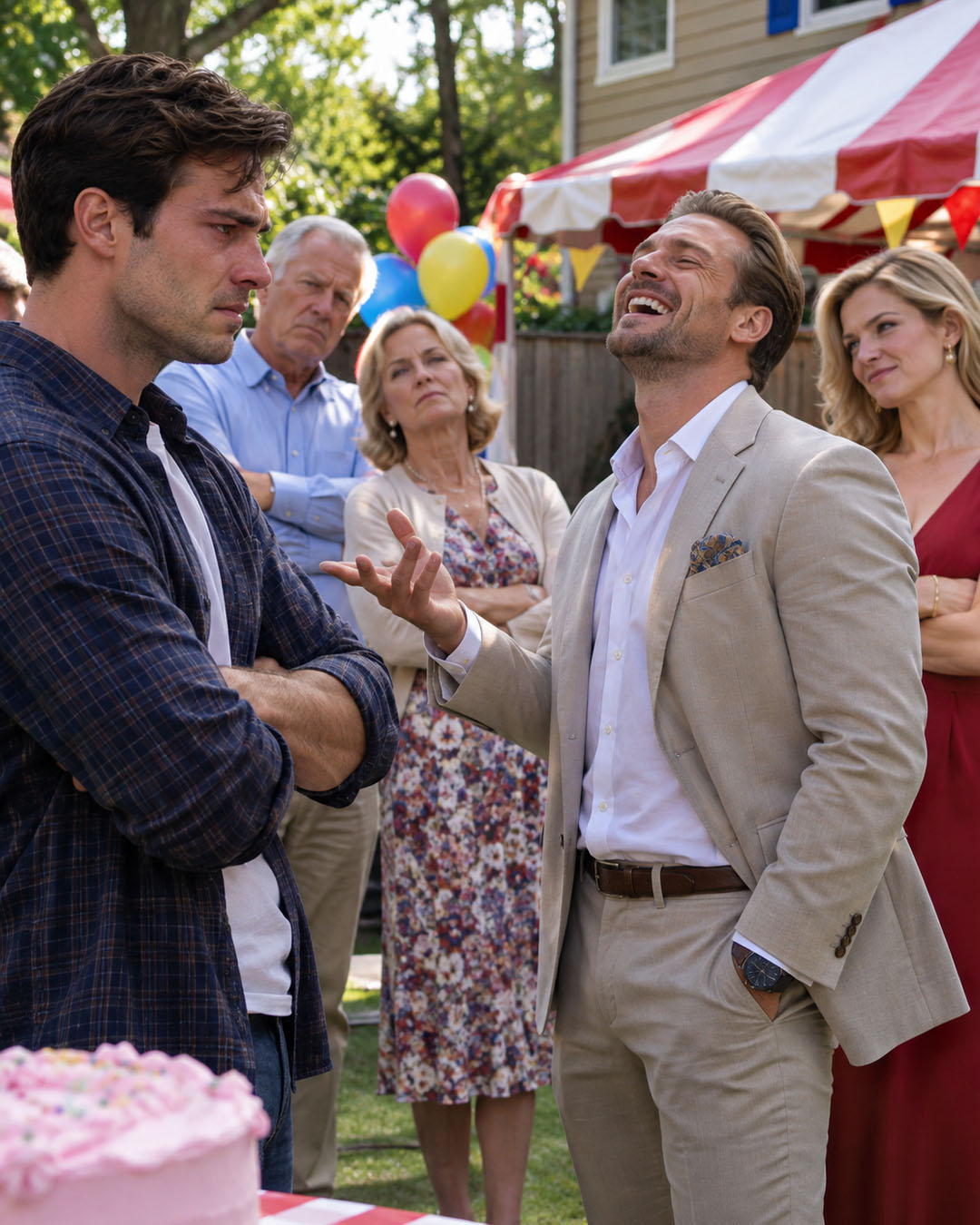
Two days later, Colton appeared on my porch.
“Whitney wants something signed before Saturday.”
“No.”
“You didn’t even hear me.”
“I don’t need to.”
“She wants the farm split and the college money arranged before the reading.”
“No.”
“She’s talking to a lawyer.”
“Good.”
His face tightened.
“She’s talking about paternity tests. Back support. Court.”
“Who’s paying for the lawyer?”
He looked away.
Then I asked, “Does Whitney know about the $23,400?”
All the color left his face.
“Why would you bring that up?”
“I’m checking something.”
“What?”
“The line.”
He stared at me.
I closed the door.
Two days later, I was working storm repairs when his text arrived.
Time to tell him who his real dad is.
I answered.
He’s known since he was 13.
Colton called eleven times that evening.
I answered none of them.
Whitney sent one message.
Nice try. See you Saturday.
She thought I was bluffing.
Chapter 3
Margaret Doyle’s office sat across from a feed store in Cheney. The conference room had an oak table, six padded chairs, a box of tissues, and one window facing a grain elevator.
Colton and Whitney arrived first.
Whitney carried a folder with colored tabs.
Isaac and I walked in together.
When Colton saw him, his face went pale.
“What’s he doing here?”
“He’s almost eighteen,” I said. “It’s his grandfather’s estate.”
Whitney didn’t wait for Margaret to begin.
She opened her folder.
“We need to address something before the will is read.”
Margaret leaned back.
“Go ahead.”
Whitney spoke like she had rehearsed every sentence.
“We have reason to believe Isaac is Colton’s biological son. If that’s true, then Arlo’s estate should treat all three of Colton’s children equally.”
Isaac said nothing.
Whitney continued.
“Beckett has spent substantial money raising Colton’s son, including a large college fund. Fairness would mean he does the same for Molly and Wren.”
Then she turned to Isaac.
Her voice softened.
“Sweetheart, I’m sorry you have to find out like this, but somebody needs to tell you who your real dad is.”
Isaac leaned back.
“You’re right.”
Colton’s eyes widened.
Isaac pointed at me.
“He’s sitting next to me.”
Whitney blinked.
“I mean biologically.”
“I know what you mean.”
Silence.
“I’ve known about Colton since I was thirteen.”
Whitney stared at him.
“I found the hospital records. I looked up the transplant markers. You’re about four years late.”
Her folder seemed to shrink in front of her.
Colton looked down at the table.
Then Whitney recovered.
“Fine.”
She pulled another tab.
“Then we make it official.”
She turned to Margaret.
“I contacted Daphne.”
That caught my attention.
“She mailed you a signed statement confirming paternity.”
Margaret opened a desk drawer and removed a sealed envelope.
Whitney folded her arms.
“Read it.”
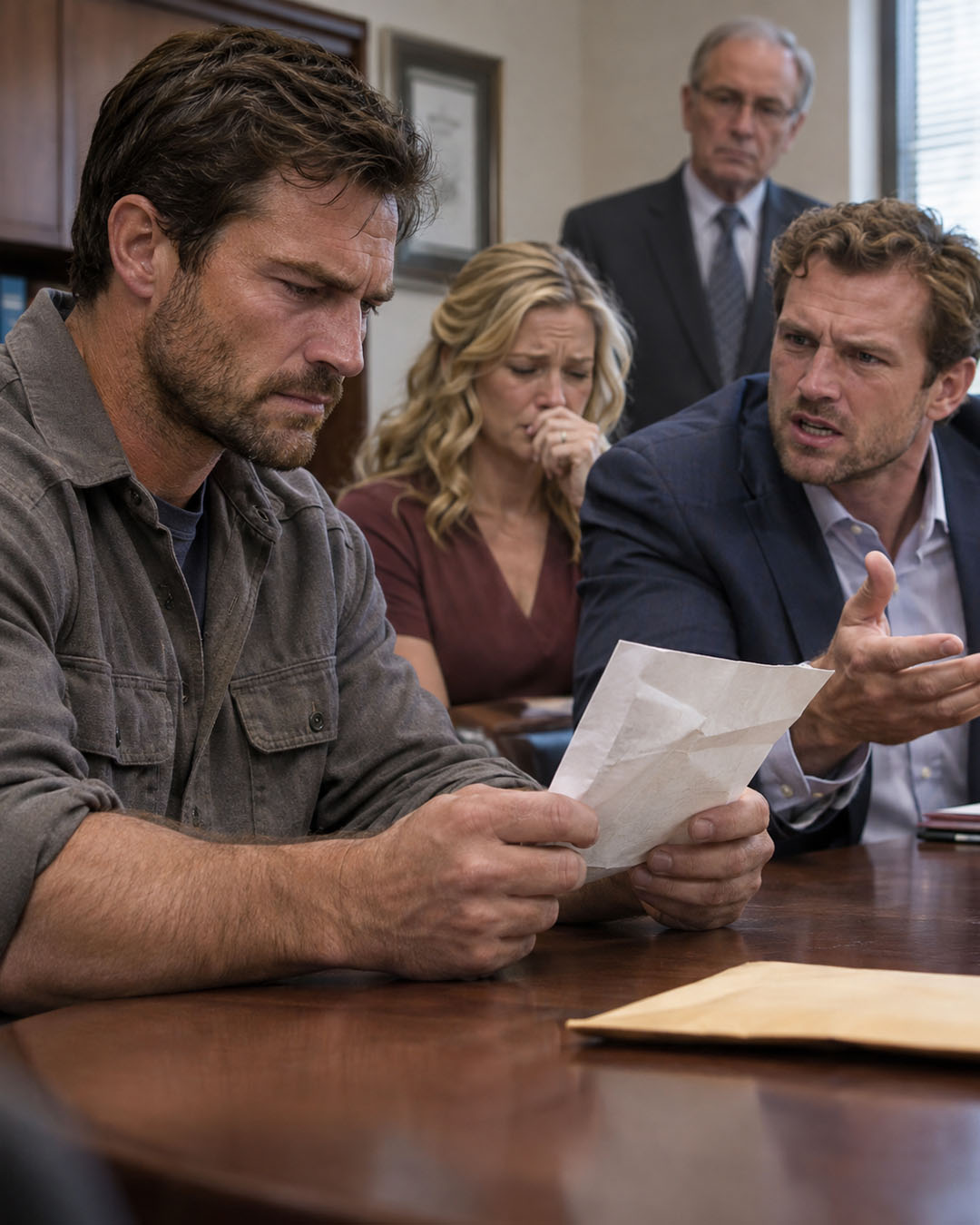
Margaret opened the letter.
Daphne confirmed Colton was Isaac’s biological father.
Then Margaret paused.
Whitney frowned.
“There’s more?”
“Yes.”
Margaret continued reading.
Daphne admitted that what she had once called “one summer” had actually lasted nearly a year.
Colton had pursued her for months.
And when she tried to end it, he had told her why.
My brother gets everything. I wanted one thing that was his.
I looked at Colton.
My bike.
My glove.
My truck.
My wife.
The same pattern, grown poisonous.
Daphne’s letter ended by saying I was the only father Isaac had ever known and asking Whitney not to use Isaac as leverage against the man who raised him.
Margaret set the page down.
Whitney turned slowly toward her husband.
“Almost a year?”
Colton said nothing.
“Almost a year?”
“Whitney, it doesn’t matter now.”
Her expression changed.
I knew that look.
A marriage had just moved onto different ground.
Then I took two sheets of paper from my jacket.
“You wanted fairness.”
Whitney looked at me.
“I still do.”
“Good.”
I slid the first sheet toward her.
“This is what Isaac’s father gave him.”
She looked down.
Hospital visits.
Follow-up care.
School expenses.
A used pickup.
An $81,000 college fund.
Seventeen years of ordinary costs and extraordinary ones.
Then I slid over the second sheet.
“This is what Colton gave.”
The marrow donation was listed first.
Under it were eight years of transfers from me to him.
$23,400.
Beside every transfer was the message he had used.
I saved his life.
Whitney picked up the paper.
Her fingers began trembling.
“You said the food-truck money was a business loan.”
Colton stared at the table.
“You told me Arlo helped with the mortgage.”
Still nothing.
I looked at Whitney.
“I am grateful he donated marrow. Isaac might not be here without him.”
Then I turned toward my brother.
“But you used the best thing you ever did as a bill you kept charging me for.”
His jaw tightened.
Whitney whispered, “You lied about all this?”
Colton said, “Can we not do this here?”
Margaret cleared her throat.
“If everyone is finished, perhaps we can finally discuss Arlo’s estate.”
Chapter 4
Margaret opened my father’s will.
“The farmhouse, red barn, equipment, and approximately 320 acres are left to my grandson Isaac, the son Beckett raised.”
Whitney inhaled sharply.
Colton closed his eyes.
Margaret continued.
Dad’s remaining savings, roughly $190,000, were divided into two parts.
Half came to me.
The other half went into an education trust for Molly and Wren.
Whitney looked up.
“For my daughters?”
“Yes.”
The trust covered tuition, books, and housing.
Colton could not borrow against it.
Could not withdraw from it.
Could not control it.
For a moment, nobody spoke.
My father had protected Colton’s girls more carefully than Colton had.
Whitney recovered first.
“Then we’ll challenge the farm.”
Margaret looked over her glasses.
“You may want to hear the next clause.”
She explained that Dad had included a no-contest provision.
Anyone who challenged the will risked losing whatever inheritance or benefit the will gave them.
“If you initiate a contest over Isaac’s inheritance,” Margaret said, “the education trust for Molly and Wren could be forfeited under the terms your counsel would need to evaluate.”
Whitney stared at her.
“That’s ridiculous.”
“It is legally documented.”
“Arlo wasn’t thinking clearly.”
Margaret opened another file.
“Your father-in-law signed his original estate plan nine years ago and reviewed it three years ago. His physician documented his competency both times.”
She tapped the folder.
“Copies are available.”
Whitney sat back.
Then Margaret reached into a drawer.
She removed another envelope.
My father’s handwriting was on the front.
Colton, for when you try.
My brother stared at it.
“I don’t want it.”
“Your father instructed me to read it aloud if you refused.”
Colton looked trapped.
Margaret opened it.
Dad’s letter was short.
Of course it was.
Dad never used ten words when five would do.
He wrote that he had been in the hospital hallway.
That he knew what Colton had done.
That he also knew what I had done afterward.
He said donating marrow to Isaac was something Colton should always be proud of.
Then came the line that broke him.
You gave that boy your marrow, then spent years sending your brother the bill.
Colton put both hands over his face.
Margaret kept reading.
A man’s son is the boy he shows up for.
You had the chance to show up for three children.
Show up for the two you still can.
Dad.
Nobody spoke.
Whitney stood, gathered her folder, and walked out.
She didn’t slam the door.
Somehow, that made the silence heavier.
Colton remained seated with his head down.
Eventually, he stood.
Before he reached the door, Isaac got up.
“Colton.”
My brother stopped.
Isaac walked toward him.
I didn’t know what he was going to say.
Neither did Colton.
“Thank you for the marrow.”
Colton looked up.
“I mean that. I wouldn’t be alive without it.”
His eyes filled.
Isaac continued.
“But you don’t get to use it anymore.”
Colton swallowed.
“Not on me. Not on my dad.”
Then Isaac glanced toward the hallway Whitney had disappeared into.
“And Molly and Wren are my sisters. They’re welcome at the farm whenever they want. Nobody gets to bargain with that.”
I had never been prouder of him.
Chapter 5
Whitney separated from Colton three weeks later.
Once she started examining their finances, she found problems that had nothing to do with me. A hidden credit card. Another loan. Money moved around in ways she hadn’t understood.
She took the girls and stayed with her sister for a while.
About a month after the will reading, she texted me.
I’m sorry. I didn’t know the whole story. I should have asked instead of believing him.
I answered:
The girls are always welcome.
Colton moved into a small apartment above a tire shop.
Then, one evening, he came to my house.
He wasn’t drinking.
He wasn’t crying.
He didn’t kneel.
“I want to pay you back.”
I looked at him.
“The $23,400?”
He nodded.
“I can’t do much.”
“How much?”
“Two hundred a month.”
“First of every month.”
“All right.”
He has paid every month since.
I don’t know whether that makes him a different man.
But it makes him a man doing one different thing.
A few months later, he asked Isaac if they could meet for coffee.
Isaac agreed on one condition.
I would be nearby.
They sat in a diner for forty minutes while I drank bad coffee two booths away.
When Isaac climbed back into my truck, I asked, “How was it?”
He stared through the windshield.
“He’s not a monster.”
“No.”
“He’s just… small.”
I understood exactly what he meant.
Daphne called from Reno after hearing what happened.
She apologized for the affair.
Then she apologized for minimizing it all those years.
I accepted the apology.
That was all I accepted.
Isaac graduated in June wearing my father’s old wristwatch under his gown. The band was too big, so he had wrapped a tiny strip of tape beneath it.
After the ceremony, he surprised me.
Standing near the bleachers was an older woman with silver hair and reading glasses on a beaded chain.
Bernadette.
She had retired.
Isaac had invited her himself.
He walked up to her and said, “You’re the one who closed the door.”
She stared at him.
Then she started crying.
He hugged her.
“Thank you for telling my dad to ask the hard question.”
She wiped her eyes.
“You turned out all right.”
Isaac smiled.
“I had help.”
That fall, he planned to study agriculture at Washington State and eventually take over the farm full-time.
The day after graduation, we drove to Dad’s grave.
Isaac stood quietly for a while.
Then he reached into his wallet and removed the folded notebook paper I had found in the fireproof box.
He handed it to me.
“You kept that?”
“Yeah.”
“Why?”
He shrugged.
“Because it mattered.”
I unfolded it again.
You’re my dad. That’s the end of it.
Isaac nodded toward the paper.
“Put it back with the hospital records.”
“In the box?”
“That’s where the true stuff goes.”
That summer, Molly and Wren came to the farm for two weeks.
Isaac taught Wren to drive Dad’s old flatbed.
She made it about fifty yards before running through a section of fence.
Nobody was hurt.
The fence was less fortunate.
Isaac laughed so hard he had to sit in the dirt.
Molly yelled at him to stop laughing.
Wren blamed the steering.
I stood on Dad’s porch watching the three of them argue and repair the fence together.
It was the exact place where Dad had once said, “A man’s son is the boy he shows up for.”
For years, I had thought silence meant weakness.
Sometimes it does.
But sometimes silence is protection.
Sometimes it is patience.
Sometimes it is refusing to hand children a burden before they are strong enough to carry it.
I don’t regret waiting to tell Isaac.
The truth belonged to him, and when he found it, he chose what mattered.
Colton was his biological father.
That fact never changed.
But biology explained where Isaac came from.
It didn’t explain who raised him.
It didn’t sit beside his hospital bed.
It didn’t pack lunches.
It didn’t teach him to drive.
It didn’t stay up at two in the morning eating cereal after his first heartbreak.
It didn’t promise an eight-year-old boy that he would never be abandoned.
Fatherhood was never hidden in a lab report.
It was in seventeen years of showing up.
My brother had been right about one thing.
Eventually, it was time for Isaac to know who his real dad was.
He just hadn’t realized Isaac had answered that question years before any of us knew he was asking it.
THE END.
⚠️ All characters and events are fictional. Do not imitate or apply them in real life. 😌😌😌