Chapter 2
My parents had always been generous in ways that eventually became expensive.
When Sophie was younger, they picked her up from school if one of my flights landed late. They kept her overnight during work trips. They came to concerts when I was stuck in airports.
But the help was never allowed to remain help.
“We’re the reason you still have a career,” Mom once reminded me after Sophie’s third-grade spring concert.
I had landed at O’Hare less than two hours before showtime and rushed straight to the school.
“You look terrible,” Mom said in the lobby.
“Thanks.”
“She was upset all afternoon.”
“I called her twice.”
“She needed somebody physically here.”
“I’m here now.”
Mom smiled. “Because we covered for you.”
That was the pattern.
Every kindness became credit they believed they could spend later.
When Melissa wanted $9,000 for a kitchen remodel, Dad called it a family emergency. I had just paid thousands for Sophie’s dental work and told him I couldn’t afford it.
“She has three children,” he said.
“I have one.”
“She has more pressure.”
The next morning, exhausted by the fight, I transferred Melissa $5,000.
She never paid me back.
Later came a company travel credit I had earned after taking a difficult assignment overseas. I told Sophie we might use it for California because she had never seen the Pacific.
Three days later, Mom announced that she and Dad planned to use it for New York.
“I promised Sophie.”
“She’s a child,” Mom said. “She’ll forget.”
She didn’t.
Sophie had been eight, standing beside me in a grocery store holding a cereal box. After the call ended, she quietly returned the box to the shelf.
“It’s okay,” she said. “Grandma probably needs it more.”
That sentence stayed with me.
An eight-year-old was already learning that wanting something for herself was selfish.
I blocked the transfer, and Dad refused to speak to me for three weeks. The credit eventually expired because I became too tired to fight about using it.
That was how my family won.
Sometimes they didn’t take something directly. Sometimes they made keeping it so exhausting that I surrendered it.
Japan was supposed to be different.
When Sophie became fascinated with Japan after a school presentation, she made her savings jar herself. She wrote JAPAN in purple marker and taped a paper cherry blossom to the glass.
“How much does Japan cost?” she asked.
“A lot.”
“How much is a lot?”
“Several thousand dollars.”
She thought about that, opened a birthday card, and dropped twelve dollars into the jar.
“I started.”
So we made a deal. I would save airline miles. She would save spending money. We would aim for the year she turned twelve.
Every few months, I showed her the balance.
180,000.
“Getting closer.”
230,000.
“Still closer.”
When we crossed 300,000, she hugged me.
My father knew all of this.
He had seen the jar and the maps. Sophie had told him about Tokyo, Kyoto, and Nara. Once she asked if he thought she could learn enough Japanese to order dinner by herself.
“You’ll probably lose interest before then,” he said.
She didn’t.
Monday morning, my phone began ringing before sunrise.
Dad.
Mom.
Melissa.
At 6:31, Melissa texted:
Please don’t ruin this for the kids.
I replied with one sentence.
Please send written confirmation that I gave permission to redeem 340,000 miles and charge $6,842.17 to my credit card.
She didn’t answer.
At 9:40, from a glass conference room at work, I called the airline.
The first representative sounded uncertain when I explained that I knew the passengers but hadn’t authorized the booking.
Then I mentioned my credit card.
Her tone changed.
She transferred me to account security.
A specialist named Lena verified my identity, reviewed the account, and asked whether I had ever shared credentials.
“Years ago for a specific purpose,” I said. “Not for this.”
She sent me an unauthorized-access form.
I answered everything carefully.
I didn’t claim my father had broken through airline security. I wrote exactly what happened: he had retained family-linked access and used it outside its intended purpose, without notice or permission.
At 11:18, the airline issued a case number.
At noon, Dad appeared in the lobby of my office.
Security called upstairs.
“There’s a man here saying he’s your father.”
“Don’t send him up.”
“He says it’s a family emergency.”
“It isn’t.”
Two minutes later, my cell phone rang.
“You had security remove me?”
“You came to my workplace.”
“Because you won’t answer.”
“I filed a report with the airline.”
Silence.
Then his voice changed.
“Cancel it.”
“No.”
“Deborah, you gave me access.”
“I didn’t authorize 340,000 miles.”
“We’re all going together.”
“Sophie and I weren’t invited.”
“The resort package had limits.”
I almost laughed.
“You used the miles we saved for her dream trip to pay for a family vacation that excluded us.”
“You’re making this emotional.”
“Did you know the fees were being charged to my Visa?”
Pause.
“That’s how the account was set up.”
“That isn’t an answer.”
“We planned to reimburse you.”
“When?”
“After the trip.”
“Why didn’t you tell me beforehand?”
His reply came immediately.
“Because we knew you would complicate it.”
There it was.
Not confusion.
Not misunderstanding.
They had avoided asking because they already knew my answer.
Chapter 3
At 2:07 Monday afternoon, another alert appeared on my phone.
Someone had tried to remove my credit card from the airline profile.
Then came a password-reset request.
Then an attempted change to the family-account administrator.
I took screenshots.
Changed the password.
Turned on stronger account security.
Then I called my card issuer and froze the Visa.
The fraud specialist asked, “Do you know who made the charge?”
“Yes.”
“Would you like to identify that person?”
I closed my eyes.
“Yes.”
My voice shook once when I gave her Dad’s full name.
At 3:04, Melissa emailed me under the subject line LET’S BE REASONABLE.
Dad shouldn’t have used the card without asking, she wrote, but canceling the trip would be extreme. Everyone had made plans. They could reimburse me monthly. Besides, the miles weren’t “real money” because my employer had paid for most of the travel that earned them.
I read that twice.
Eleven years away from home apparently had no value.
Neither did the promise I’d made my daughter.
At 4:30, Sophie’s school called.
The secretary sounded uncomfortable.
“Your mother contacted us about adding herself as an approved pickup person. She said you might be traveling unexpectedly.”
Everything inside me went still.
“Do not release Sophie to anyone except me.”
“We won’t.”
“Please put a note on her file that no changes can be made without confirming them directly with me.”
The secretary paused. “Is everything all right?”
I nearly said yes out of habit.
Then I stopped.
“No. But I’m handling it.”
I left work early.
When Sophie climbed into the car, she put her backpack between her feet.
“Grandma called the school,” I told her.
Her face tightened. “Why?”
“I don’t know.”
“Was she going to take me somewhere?”
“I don’t know.”
That frightened me more than anything else had.
The airline miles were replaceable.
My daughter’s sense of safety wasn’t.
At home, I removed my parents from every school and emergency authorization. I added my friend Nia, who lived across the hall and had known Sophie since preschool.
Then I printed everything.
The airline records.
The credit-card charge.
The security alerts.
Melissa’s email.
The school’s confirmation.
The folder grew thicker.
At 6:12, Dad sent a group message to the entire family.
Deborah is threatening to cancel everyone’s trip because she is upset she wasn’t included. We are trying to resolve this privately.
I replied once.
My airline account was accessed without permission. 340,000 miles were redeemed and $6,842.17 was charged to my credit card. Reports have been filed with the airline and card issuer. Do not contact Sophie.
The family group erupted.
Aunt Karen reminded me that Dad had once had access.
A cousin complained about vacation time.
Aaron insisted the flights were nonrefundable.
I answered nobody.
At 8:03, Mom appeared outside my apartment holding a white envelope.
I spoke through the door camera.
“What do you need?”
“Open the door.”
“No.”
“I brought a check.”
“For how much?”
“Two thousand.”
“The charge was nearly seven.”
“We’ll pay the rest later.”
“And the miles?”
“Deborah, open the door.”
“No.”
Her expression hardened. “This isn’t how family behaves.”
I looked at the woman who had tried to add herself to my daughter’s pickup list.
“How does family behave?”
“Your father didn’t mean any harm.”
“He knew I would say no.”
“That doesn’t make him a criminal.”
“It means he avoided asking.”
She held the envelope toward the camera.
“Take the check and stop the report. The children will be devastated.”
“My child already is.”
“She’ll get over Japan.”
Mom’s face changed immediately.
She knew she had gone too far.
I asked, “Why did you contact Sophie’s school?”
Silence.
“Mom?”
“I thought we might pick her up tomorrow.”
“For what?”
“To spend some time together before the flight.”
“Without asking me?”
“You weren’t answering.”
“That is not permission.”
She left the envelope outside my door.
After she walked away, I picked it up.
The memo line on the check read:
TRAVEL SHARE — NOT REIMBURSEMENT.
I photographed it.
Then tore it in half.
Sophie stood behind me in pajamas, holding her stuffed cat.
“Are they going tomorrow?”
I looked at the clock.
9:26 p.m.
“I don’t know.”
She hesitated. “Do you want them to?”
“No.”
“Me neither.”
Then guilt crossed her face.
“Is that bad?”
I knelt in front of her.
“No. You’re allowed to be angry when somebody benefits from something taken from you.”
“What about Japan?”
I wanted to give her a perfect answer.
Instead, I gave her an honest one.
“I’m going to do everything I can.”
Tuesday morning, I called Lena at airline security.
She had reviewed my report.
“The access came through a linked family profile,” she explained, “but the account notes show no authorization for the redemption or the card charge.”
“Can you stop the tickets?”
“One final verification is required. If we proceed, all fourteen passengers may be denied boarding.”
I looked across our kitchen table.
Sophie was eating toast.
Her Japan jar sat beside her cereal bowl.
“I understand.”
Lena read every passenger’s name.
After each one, I said the same word.
“Unauthorized.”
Then she asked, “Would you like us to proceed?”
I looked at Sophie.
“Yes.”
Chapter 4
At 7:53 a.m., Lena came back on the line.
“The tickets have been flagged for immediate fraud review. Airport personnel have been notified.”
“Have they checked in?”
“All fourteen passengers.”
My phone began vibrating before the call ended.
Dad.
Mom.
Melissa.
Aaron.
Aunt Karen.
Then came a voicemail from Dad.
“They pulled our boarding passes. Call me now.”
Thirty seconds later:
“This is serious.”
Then Melissa:
“The kids are crying. Fix this.”
Sophie looked up from breakfast.
“Did it happen?”
“Yes.”
Her eyes dropped to the jar.
For a moment I thought she might cry.
Instead she asked, “Are our miles back?”
“Not yet.”
At 8:11, an unfamiliar Chicago number called.
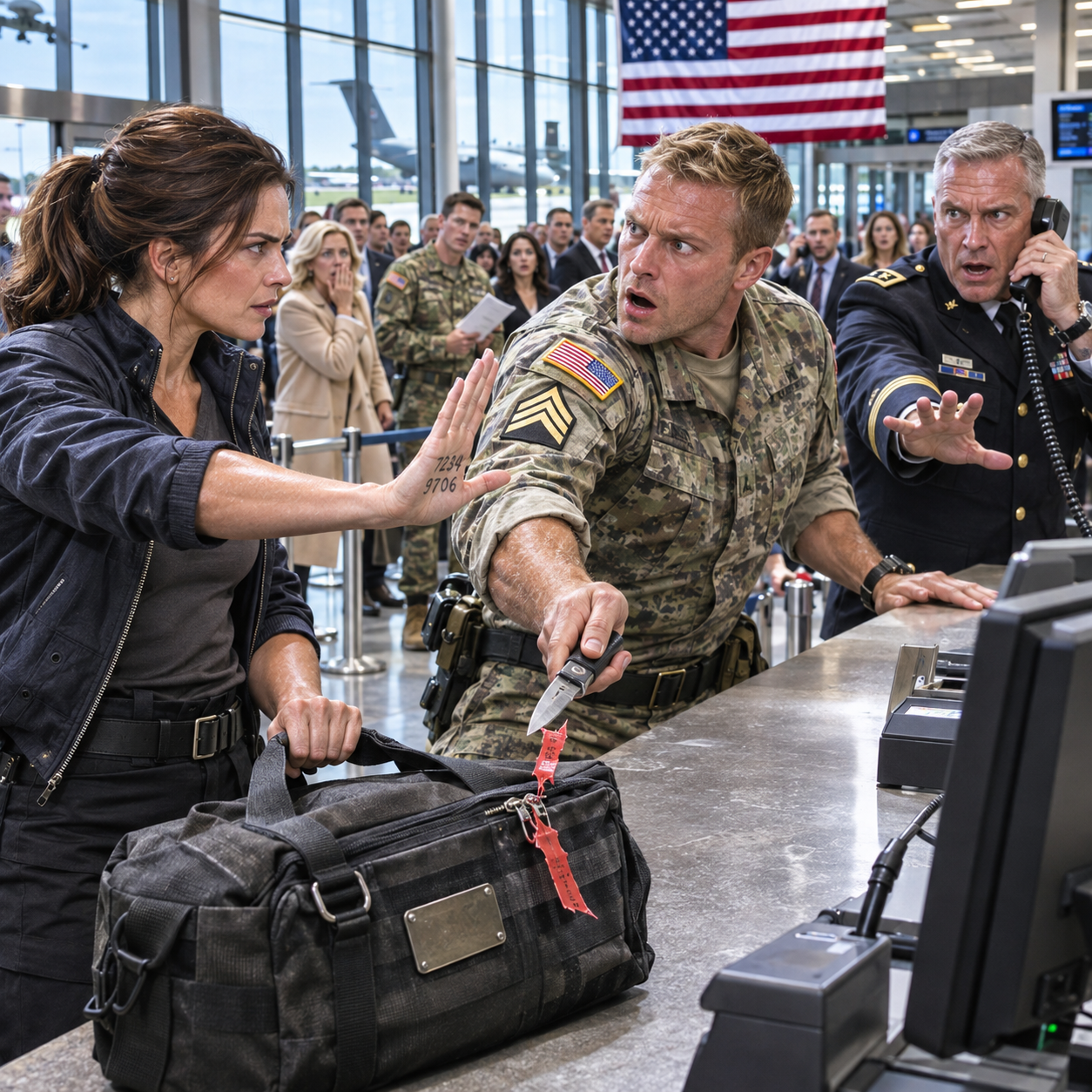
“This is Officer Ramirez. I’m at O’Hare with several members of your family.”
My heart thudded.
“Okay.”
“Your father says this is a misunderstanding involving airline points.”
“It also involves an unauthorized credit-card charge.”
“Do you have documentation?”
“Yes.”
He gave me an address to send it to.
I emailed the account activity, messages, login alerts, card dispute information, school confirmation, and the photograph of Mom’s carefully worded check.
Fourteen minutes later, Officer Ramirez called back.
His voice sounded different.
“Ms. Walsh, I want to make sure I understand. Your father accessed your airline account, redeemed 340,000 miles for fourteen travelers, and placed $6,842.17 on your card without your authorization.”
“Yes.”
“He also told you he didn’t ask beforehand because he believed you would object.”
“Yes.”
I heard voices in the background.
Dad, loud enough to carry through the phone.
“She gave me access!”
Officer Ramirez answered him calmly.
“Access is not the same as authorization.”
Then Melissa shouted something about it being a family matter.
“The credit-card charge is not only a family matter,” the officer replied.
I closed my eyes.
For years, my parents had controlled disputes by deciding which facts counted.
Now somebody outside the family was reading those facts aloud.
Officer Ramirez asked whether I wanted a formal report.
I looked at Sophie, holding the Japan jar in both hands.
“Yes.”
At 8:47, Dad sent one final message.
You have five minutes to fix this before you destroy the family.
I answered:
You are not authorized to access my accounts, my home, or my child. All future communication must be in writing.
At 9:02, the airline confirmed the tickets were canceled pending completion of the fraud review.
At 9:14, my apartment intercom began buzzing.
Once.
Twice.
Then continuously.
I checked the camera.
Dad stood outside the building entrance. Mom was beside him. Melissa stood behind them clutching her phone.
They had come directly from O’Hare.
“Open the door,” Dad demanded into the intercom.
I called building security.
Then Officer Ramirez.
Dad began pounding on the glass entrance doors.
“You made children cry!” Melissa shouted.
Sophie stepped out of her bedroom.
When she heard the pounding, her face changed.
I took her straight across the hall.
Nia opened her door before I finished knocking.
“I’ve got her.”
Sophie gripped my hand.
“Are you coming back?”
“Yes.”
“Promise?”
“Yes.”
I returned to my apartment.
Building security arrived first. Then Officer Ramirez and another officer.
Only after they were there did I open my door.
I stayed behind the threshold.
Dad pointed at me.
“She stole our vacation.”
Officer Ramirez told him to step away from the apartment.
“She canceled fourteen tickets!”
“They were purchased through an account she says was used without permission.”
“She gave me the password.”
“She withdrew your authority to use the account.”
“This is ridiculous.”
Dad looked at me, his face flushed with anger.
“You think filing a police report makes you powerful?”
“No,” I said. “It makes the facts recorded.”
Mom flinched.
Melissa began crying.
Not because Sophie had been hurt.
Not because they had taken something from us.
Because consequences had finally reached the front door.
Dad shook his head. “You’ll regret this.”
“All communication in writing.”
The officers escorted them out.
At 10:30, I called a locksmith.
Before noon, my locks had been changed.
The building removed my parents from the visitor list. The airline ended every linked family permission. My credit-card company issued a new account number. Sophie’s school added a security password to her file.
For the first time, I understood that canceling Bali wasn’t the most important thing I had done.
Removing their access was.
Chapter 5
Two weeks later, the $6,842.17 charge was reversed.
Twenty-six days after that, all 340,000 miles returned to my account.
The airline sent written confirmation that the redemption had been unauthorized and that the linked access had been misused.
I saved the letter.
Not for revenge.
For reality.
In my family, inconvenient facts had a strange way of becoming debatable after enough time passed.
The peaceful moment I remember most came on a Thursday evening.
Sophie and I were eating noodles on the living-room floor when she opened her Japan map for the first time in weeks.
She pointed to Kyoto.
“Can we still go here?”
“Yes.”
“Tokyo?”
“Yes.”
“The deer place?”
“Nara.”
“That too?”
I smiled. “That too.”
She studied my face.
“For real?”
“For real.”
Her smile came slowly, then all at once.
A few weeks later, we booked two round-trip business-class seats to Tokyo using 286,000 miles.
I let Sophie press the confirmation button.
Her finger hovered over the screen.
“What if somebody takes them again?”
“No one else has access.”
“Not even Grandpa?”
“Especially not Grandpa.”
She pressed the button.
Reservation confirmed.
Sophie let out a shriek, covered her mouth, and began laughing.
I laughed with her.
Nia came over with sparkling cider and three mismatched glasses.
“To Japan,” she said.
Sophie lifted hers.
“To passwords.”
The family made one final effort to restore the old arrangement without admitting what had happened.
In March, a cake arrived at my office with a card in Mom’s handwriting.
We miss you. Families make mistakes. It’s time to move forward.
There was no apology.
No mention of the miles.
No mention of my Visa.
No mention of the school.
No mention of Dad pounding on the building doors.
I emailed her.
I am willing to consider written communication after you and Dad acknowledge the unauthorized account use, the credit-card charge, and the attempt to collect Sophie from school without my permission. Until then, do not visit my home, workplace, or her school.
Mom replied eleven minutes later.
We will not confess to crimes just to satisfy you.
My answer was simple.
Then the boundary remains.
Melissa sent Sophie a birthday gift through Aunt Karen—a yellow suitcase covered in tiny cherry blossoms.
Sophie stared at it.
“Do I have to say thank you?”
“No.”
“Can I keep it?”
“That’s your decision.”
She thought for nearly a minute.
Then she shook her head.
“I don’t want a suitcase from somebody who tried to use mine.”
I knew what she meant.
We donated it.
Dad never apologized.
He sent three letters.
One accused me of humiliating him.
One listed everything he had ever done for me.
The third said he was willing to forgive me if I withdrew the police report.
I didn’t respond.
The report remained.
So did the new locks, the school restrictions, and the account protections.
In April, Sophie and I finally flew to Japan.
At O’Hare, she counted everything three times.
“Two suitcases.”
“Correct.”
“Two passports.”
“Correct.”
“Two boarding passes.”
“Correct.”
Then she grinned.
“Two people.”
I looked at her.
“Exactly two.”
At the gate, she sat beside the window in a red hoodie with the Japan jar in her lap. We had already transferred its contents into her spending-money account, but she insisted on bringing it.
“Because we did it,” she explained.
“Yes, we did.”
When our boarding group was called, she stood so quickly she nearly dropped her backpack.
Hours later, while the lights of Chicago disappeared beneath us, she reached for my hand.
“Mom?”
“Yes?”
“Did you ruin their trip?”
I looked at my daughter.
“They say you did.”
I thought carefully before answering.
“No. They planned a trip using something that wasn’t theirs. The truth stopped it.”
She nodded.
That seemed to be enough.
Japan wasn’t perfect.
We missed a train. We got hopelessly turned around in Shinjuku Station. Sophie spent too much money on tiny desserts. She took forty-seven nearly identical pictures under the cherry blossoms.
In Nara, a deer tried to eat the corner of her beloved map.
Sophie laughed so hard she had to sit down on the grass.
I watched her there, breathless and happy, clutching the wrinkled map we had protected for years.
For most of my life, my family had taught me that love meant access.
Access to my time.
My money.
My work.
My daughter.
My forgiveness.
They believed boundaries were insults because boundaries prevented them from taking what they had grown accustomed to receiving.
I wanted Sophie to learn something different.
Love asks.
Love respects the answer.
Love does not make a child surrender her dream so adults can avoid paying for their vacation.
And love does not transform something wrong into something right simply by calling it family.
My parents still tell relatives I overreacted.
Maybe they always will.
I no longer spend my energy auditing their version of events.
The accounts are secure.
The passwords are changed.
The door stays locked to anyone who believes love gives them unlimited access.
And somewhere in Sophie’s room, beside photographs of Tokyo, Kyoto, cherry blossoms, and one extremely determined deer, sits an empty glass jar with JAPAN written across it in purple marker.
She keeps it because it reminds her of the promise we made.
I keep it because it reminds me of the promise I finally learned to make to myself.
Some things can be shared.
Some things can be forgiven.
But trust without permission is not generosity, and peace purchased by surrendering your boundaries is not peace at all.
THE END.
⚠️ All characters and events are fictional. Do not imitate or apply them in real life. 😌😌😌