Chapter 2
The invitation arrived in a cream-colored envelope three weeks before Vanessa’s nursing pinning ceremony.
I hadn’t received the date from my sister. Mom had casually mentioned it during a phone conversation, sounding surprised when I said nobody had told me.
“Oh, Laura, I assumed you knew,” she’d replied.
Then, after a pause, she’d added, “I wasn’t sure you’d want to drive all that way.”
I wanted to go.
Despite everything, I still wanted to watch my little sister receive the nursing pin she’d worked so hard to earn.
I’d imagined that moment for years.
Maybe Vanessa would turn around, find me in the crowd, and smile.
Maybe she’d hug me afterward and say, “We did it.”
Maybe all the missed dinners, postponed vacations, and difficult months would finally feel worthwhile.
I chose a simple blue dress from the back of my closet. It was the nicest dress I owned, the one I’d worn to a cousin’s wedding two summers earlier.
Mark watched me getting ready.
“You sure you want to go?”
I adjusted an earring.
“She’s my sister.”
He nodded but didn’t smile.
“Just remember, you don’t have to earn your place in this family.”
I kissed him goodbye.
My mother-in-law had agreed to watch Sophie while Mark finished a landscaping job. I drove three hours to the hotel where the ceremony was being held, listening to the radio and rehearsing what I’d say when I saw Vanessa.
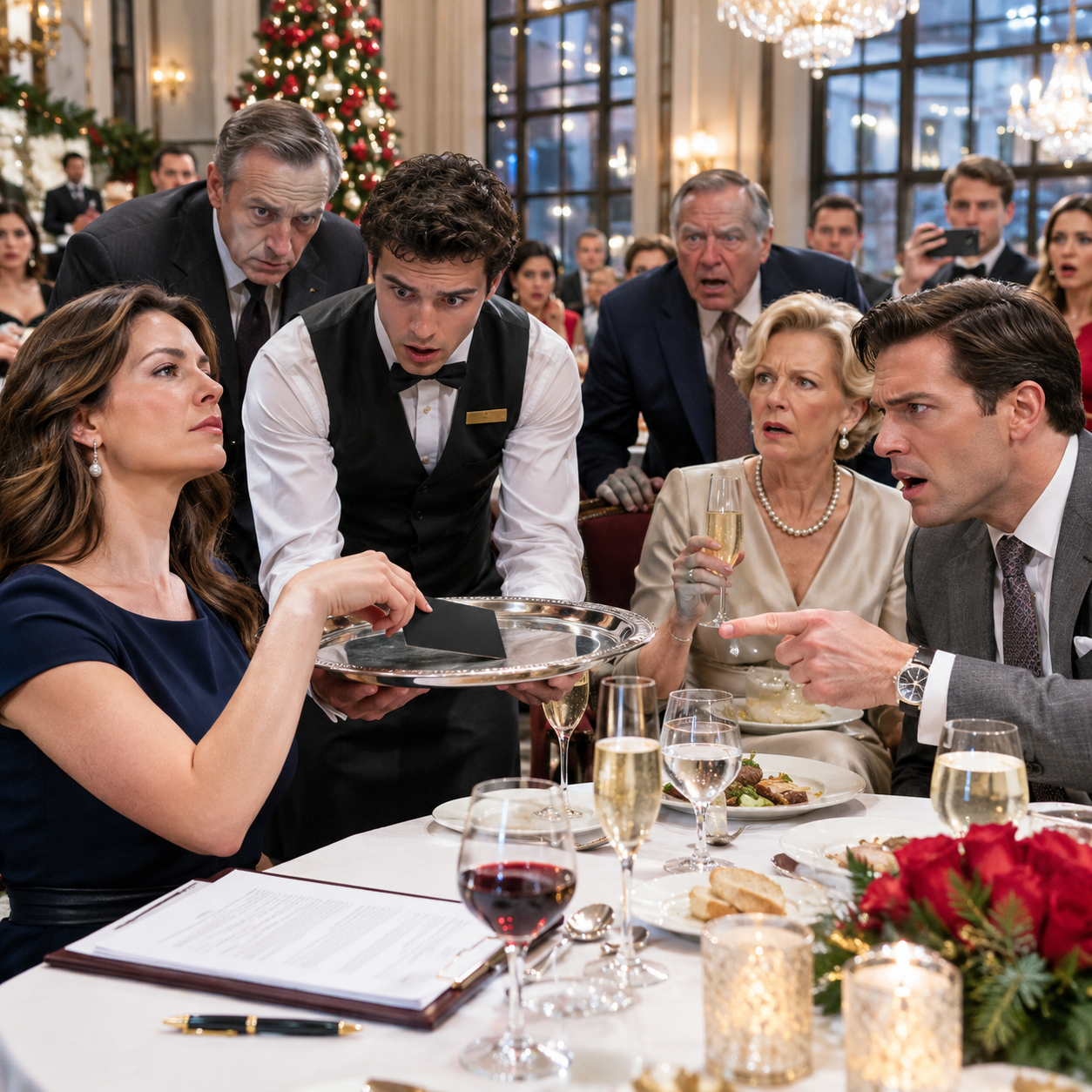
The ballroom was beautiful.
Crystal chandeliers hung above tables decorated with white roses. Graduates wearing formal dresses and tailored suits posed for photographs beneath a banner celebrating their nursing program.
Parents held flowers.
Grandparents wiped away happy tears.
I approached the registration table and gave the woman my name.
“Laura Bennett.”
She scanned the guest list.
Then she scanned it again.
“I’m sorry, ma’am. Could you repeat your name?”
“Laura Bennett. I’m Vanessa Miller’s sister.”
Her polite smile tightened.
“One moment, please.”
Before she could say anything else, I heard my mother’s voice.
“Laura?”
I turned.
Mom stood beside Vanessa, who wore a cream blazer and expensive-looking heels. Her hair had been styled into elegant waves, and a delicate gold necklace rested against her collarbone.
For a moment, I felt proud.
She looked like a successful young woman ready to begin an important career.
“Vanessa!” I said warmly. “Look at you!”
I stepped forward to hug her.
She moved back.
“What are you doing here?”
I stopped.
“I came for your pinning ceremony.”
Her expression hardened.
“Why?”
I glanced at Mom, confused.
“Because you’re my sister.”
Vanessa looked toward the registration table, where two women in formal dresses were watching us.
“Laura, this isn’t a good time.”
“I drove three hours.”
“I didn’t ask you to.”
My face grew hot.
Mom shifted uncomfortably but remained silent.
I held up the invitation.
“I received this.”
Vanessa glanced at it.
“That was a misunderstanding.”
“What do you mean?”
She lowered her voice.
“This is an important professional event. My professors are here. My classmates are here. Their families are here.”
“I understand.”
“No, I don’t think you do.”
Her eyes traveled over my dress, my inexpensive handbag, and the sensible shoes I wore because years of cleaning houses had left my feet aching by evening.
Then she said something I’ll never forget.
“You’re embarrassing me.”
For several seconds, I thought I’d misheard her.
“I’m what?”
“You’re embarrassing me by showing up uninvited.”
I stared at her.
“Vanessa, I’ve been paying for your education for four years.”
She looked irritated.
“You helped with money, Laura. That doesn’t mean you were part of my college experience.”
The words struck harder than I expected.
“Helped with money?”
“Yes. And I appreciate it. But this is about the people who supported me emotionally. The people who understand what I’ve been through.”
I could hardly believe what I was hearing.
“I worked extra jobs so you wouldn’t have to worry about tuition.”
She folded her arms.
“And nobody forced you.”
I turned to our mother.
“Mom?”
She avoided my eyes.
Then she quietly said, “Laura, sometimes you just don’t understand where you belong.”
That was the moment something changed.
Not when Vanessa insulted my clothes.
Not when she dismissed the money I’d sent.
But when my mother, the woman who had asked me to make those sacrifices, agreed that I didn’t belong at the celebration they’d helped make possible.
I looked at the two people I’d spent so much of my life trying to please.
For once, I couldn’t think of anything to say.
Finally, I nodded.
“I understand.”
Vanessa looked relieved.
“Good. I really don’t want any drama today.”
I placed the invitation on the registration table.
“Congratulations on graduating.”
Then I turned and walked away.
No one followed me.
No one called my name.
When I reached the parking garage, I got into my car and closed the door.
I sat there for nearly forty minutes.
The air was warm and still. I could see my reflection in the rearview mirror, my carefully applied makeup beginning to smudge.
I thought about the day Vanessa had first called me from college, excited because she’d passed her anatomy examination.
I thought about Mark quietly putting his own plans aside so we could help her.
I thought about Sophie’s birthday party.
And I thought about the simple fact that nobody inside that beautiful ballroom would ever know whose hands had scrubbed floors to help pay for the nursing education being celebrated.
Finally, I started the engine.
I drove to a diner several miles away and ordered coffee.
When the waitress brought it, she noticed my face.
“Honey, are you all right?”
I looked down at the untouched cup.
“I think I just learned something about my family.”
She placed an extra napkin beside my plate.
“Sometimes those lessons are the hardest.”
I managed a small smile.
Then I drove home.
Mark was sitting at the kitchen table when I arrived.
He looked up.
“How was it?”
I tried to answer.
Instead, I started crying.
He stood immediately and wrapped his arms around me.
For several minutes, I couldn’t speak.
When I finally told him everything, he listened without interrupting.
I confessed things I’d kept hidden even from him.
The expensive vacation photographs.
The money requests that never seemed to end.
The lake house trip on Sophie’s birthday.
Every time I’d suspected Vanessa was taking advantage of us but had convinced myself otherwise.
When I finished, Mark remained quiet.
Then he asked, “What do you need from me?”
I looked at him.
Not once had he said, “I told you so.”
Not once had he made me feel foolish.
“I need a little time to think,” I whispered.
He nodded.
“Take all the time you need.”
But three days later, I had reached a decision.
I wasn’t going to keep paying for a place in my family’s heart.
And this time, I wasn’t going to walk away empty-handed without at least understanding where our money had gone.
Chapter 3
Monday morning, I opened the filing cabinet in our home office.
Inside were four folders labeled with Vanessa’s name, one for each year of nursing school.
I had kept everything.
Tuition confirmations.
Bank statements.
Copies of money transfers.
Text messages requesting additional support.
Receipts for books, uniforms, and fees.
At first, I’d organized the paperwork simply because Mark and I needed to track our household expenses.
Now, looking at those records spread across the dining room table, I realized how much we’d actually given.
The tuition alone totaled approximately thirty-six thousand dollars.
The additional living expenses were another matter.
Three hundred dollars one month.
Five hundred the next.
Eight hundred when Vanessa claimed she couldn’t cover rent and school-related costs.
Over several years, those extra transfers had grown into a substantial amount.
I sat staring at the total.
Mark came into the room and stopped beside me.
“That’s a lot of money.”
I nodded.
“It’s more than I realized.”
He pulled out a chair.
“Laura, what are you thinking?”
I took a deep breath.
“I want to speak to an attorney.”
He studied my face.
“About the money?”
“About whether I have any options. I know I gave most of it willingly, and I’m not pretending otherwise. But I want to understand what happened.”
Mark reached for my hand.
“Then let’s find someone who can give us honest answers.”
Two days later, I met with Margaret Ellis, a local attorney who handled civil disputes.
She was a woman in her fifties, with silver-streaked hair and a calm, direct manner.
I explained everything.
The tuition agreement.
The additional requests for living expenses.
The photographs showing expensive vacations during the same periods Vanessa claimed she couldn’t afford basic necessities.
And finally, the pinning ceremony.
Margaret listened carefully.
When I finished, she closed the folder.
“Laura, I want to be clear about something.”
I nodded.
“Money given voluntarily to family members can be difficult to recover. Paying someone’s tuition doesn’t automatically create a loan.”
“I understand.”
“And social media photographs don’t necessarily prove where the money came from.”
I felt my hopes sink.
But she continued.
“However, some of these additional transfers deserve closer examination. You have detailed written requests describing specific financial emergencies. We can review whether any representations were materially false and whether there’s a reasonable basis for a civil claim.”
“So there might be something we can do?”
“Possibly. But I won’t promise a result.”
I appreciated her honesty.
For years, I’d listened to people who told me what I wanted to hear.
It was strangely comforting to sit across from someone willing to tell me the truth.
Margaret asked me to provide copies of the relevant messages and financial records.
Over the next several evenings, Mark helped me organize everything.
We created a timeline.
There was the month Vanessa claimed she couldn’t afford electricity.
Two days later, she’d posted photographs from an expensive weekend resort.
There was the request for additional grocery money, followed by pictures from a shopping trip.
And there was the message claiming she had an emergency clinical rotation on Sophie’s birthday.
That final lie had nothing to do with recovering money.
But I included it in my personal notes because it reminded me why I could no longer keep pretending everything was normal.
Margaret eventually sent a formal demand letter seeking repayment of certain living-expense transfers that appeared to have been obtained through misleading claims.
Vanessa’s response came quickly.
Not through a phone call.
Not through an apology.
Through an attorney of her own.
I remember sitting in Margaret’s office when she explained the response.
“Her attorney disputes your claims,” she said. “But they’ve proposed a settlement.”
I looked at her.
“How much?”
“Approximately forty percent of the additional living expenses we’re disputing.”
I sat back.
It wasn’t everything.
Not even close.
The tuition payments weren’t included, and Margaret had already warned me that those were unlikely to be recoverable.
But this was the first time anyone had acknowledged that part of the financial arrangement might deserve a second look.
“What do you recommend?” I asked.
“We can make a reasonable counteroffer. There are costs and risks to continuing, so I want you to consider those carefully.”
I thought about Sophie.
I thought about the college savings account Mark and I had been struggling to build.
Then I thought about how many extra houses I’d cleaned to send Vanessa money she claimed she desperately needed.
“Let’s counter,” I said.
The negotiations continued for six weeks.
There were letters, revised offers, and uncomfortable conversations about what could realistically be proved.
Some days I questioned whether pursuing the matter was worth the stress.
Other days I reminded myself that this wasn’t about punishing Vanessa for embarrassing me.
It was about finally taking our family’s finances seriously.
Eventually, both sides reached an agreement.
Vanessa would repay a little less than sixty percent of the disputed living-expense transfers, without admitting wrongdoing. In exchange, we would settle the claims and move on.
It wasn’t a courtroom victory.
There was no dramatic confession.
No judge declaring that I’d been right all along.
There was simply a signed agreement and a payment.
When the money arrived, I transferred it directly into Sophie’s college savings account.
I sat at the kitchen table, looking at the new balance.
For years, money had flowed out of our home toward someone who treated our sacrifices as insignificant.
Now, for once, some of it had returned to the person who’d quietly sacrificed alongside us.
Mark came into the kitchen.
“Did it clear?”
I nodded.
He looked at the screen.
“Good.”
I expected to feel triumphant.
Instead, I felt tired.
“I thought I’d be happier,” I admitted.
Mark sat beside me.
“You weren’t doing this to win a prize.”
“Then why does it still hurt?”
“Because you wanted a sister who loved you. Money can’t give you that.”
His words settled over me.
He was right.
I hadn’t wanted repayment when I agreed to help Vanessa.
I’d wanted to see her succeed.
I’d wanted to be part of her life.
I’d wanted my daughter to grow up with an aunt who loved her.
And somewhere along the way, I’d mistaken being useful for being valued.
That evening, I made another decision.
I blocked Vanessa’s personal number.
Then I blocked Mom’s.
Not because I wanted revenge.
Because I needed space to heal.
I couldn’t continue listening to people who treated my boundaries as betrayal.
But the silence didn’t last.
Two months later, my mother found another way to call.
And the words she spoke would finally reveal how she’d viewed me all those years.
Chapter 4
“How could you do this to your own sister?”
My mother’s voice was sharp enough that I instinctively moved the phone away from my ear.
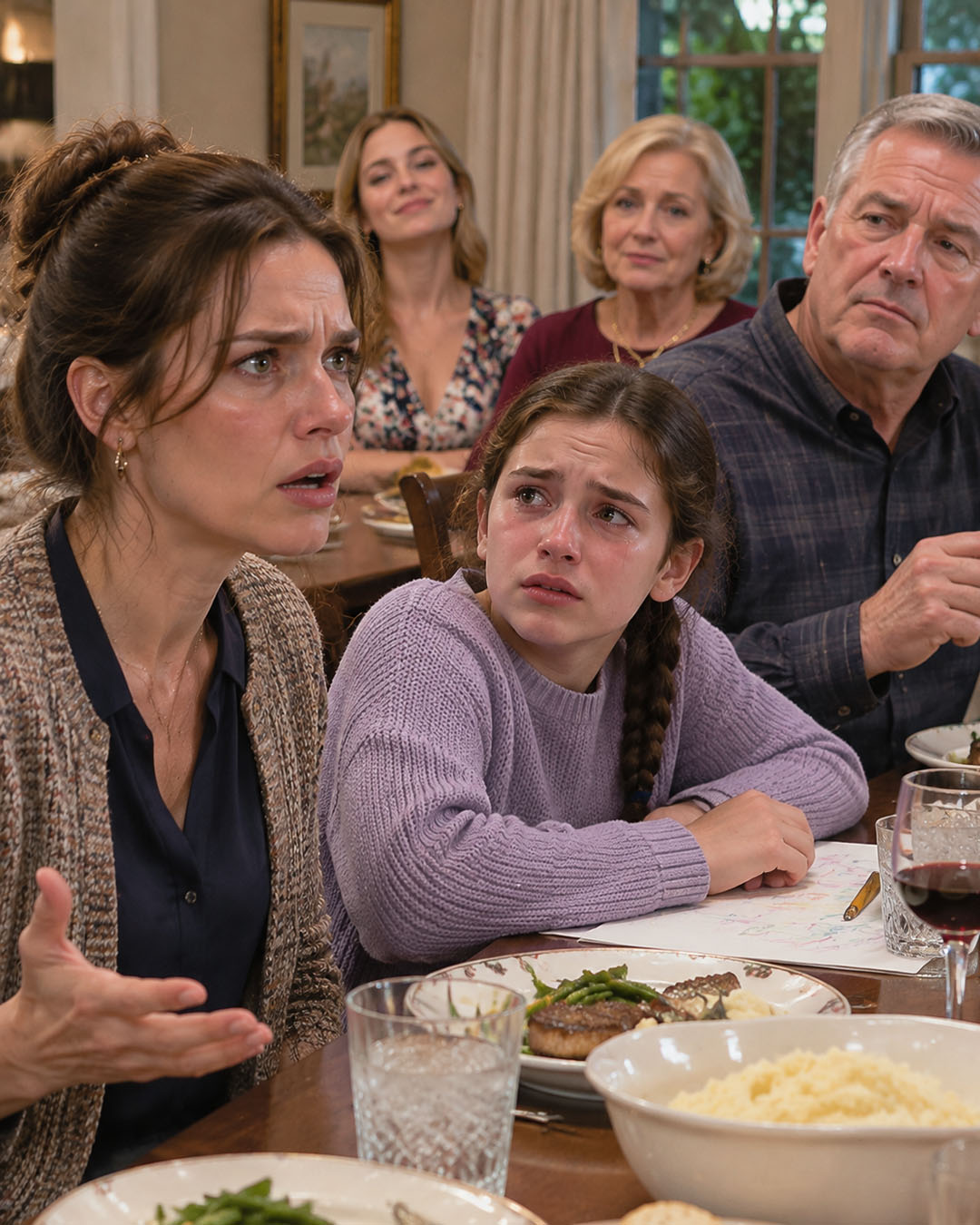
I was standing in the laundry room, folding towels after a long day of work. Sophie was in the kitchen finishing homework, and Mark was outside trimming the hedges.
I recognized the number as unfamiliar, but the moment I answered, I knew who it was.
“Hello, Mom.”
“Don’t ‘hello, Mom’ me. You dragged your sister into a legal dispute right after she graduated. Do you have any idea how humiliating that was?”
I leaned against the washing machine.
“I handled a financial matter through an attorney. We reached an agreement.”
“You made her pay you back!”
“She agreed to settle the disputed expenses.”
“After everything she’s accomplished, this is how you treat her?”
I closed my eyes.
For seven years, I’d listened to my mother explain why Vanessa deserved more.
More money.
More opportunities.
More understanding.
More forgiveness.
And somehow, I’d always been expected to provide it.
“Mom, I paid for her tuition. I sent money for years. I missed parts of my own daughter’s childhood working extra hours to help Vanessa.”
“You keep bringing up money like that’s all family means to you.”
“No,” I said quietly. “That’s exactly the problem. Family meant much more than money to me.”
She scoffed.
“You’ve always needed people to be grateful. You give something, then expect everyone to bow down and thank you.”
I stared at the neatly folded towels.
“Did you know she didn’t want me at the ceremony?”
There was a pause.
“She was nervous, Laura. It was an important day.”
“Did you know?”
“She didn’t want an awkward situation.”
I swallowed.
“Why would my presence be awkward?”
Mom sighed impatiently.
“You know how Vanessa feels about your work.”
The room went strangely quiet.
“My work?”
“She moves in different circles now. She’s building a professional career. You can’t expect her to explain everything to people.”
I looked down at my hands.
The skin around my knuckles was dry from years of scrubbing kitchens and bathrooms. My nails were short because long ones made cleaning difficult.
Those hands had earned the money that helped Vanessa get her nursing degree.
And my mother was telling me they were something to hide.
“So she’s embarrassed that I clean houses?”
Mom didn’t answer directly.
“Laura, don’t make this harder than it needs to be.”
I felt something inside me settle.
For years, I’d been trying to earn approval from two people who apparently believed my worth depended on whether I fit into their image of success.
I had mistaken their need for my help as evidence of their love.
Now I understood the difference.
“Mom, I’m proud of what I do.”
She made a dismissive sound.
“I clean homes for people who work hard and deserve to come back to a peaceful place. I run my own schedule, pay my bills, and help support my family.”
“Nobody said you shouldn’t be proud.”
“You just told me my job makes Vanessa uncomfortable.”
“You’re twisting my words.”
I took a slow breath.
“No, Mom. I think I’m finally hearing them clearly.”
She began talking again, accusing me of selfishness and disrespect.
For the first time in my life, I didn’t interrupt.
I didn’t defend myself.
I let her finish.
Then I said, “I hope you and Vanessa are both happy. I truly do. But I won’t keep accepting this treatment.”
“Laura—”
“Goodbye, Mom.”
I ended the call.
My hands were shaking.
But my heart felt strangely steady.
Mark found me sitting at the kitchen table a few minutes later.
He looked at the phone beside my coffee cup.
“Your mother?”
I nodded.
He pulled out a chair.
“You okay?”
“I think so.”
He waited.
I told him what she’d said about my work.
His jaw tightened.
Then he reached across the table and took my hands.
“Laura, look at me.”
I raised my eyes.
“There’s nothing shameful about earning an honest living.”
I felt tears gathering.
“I know.”
“No, I want you to hear me. You’ve built a business from nothing. Your clients trust you. They give you keys to their homes because they know the kind of person you are.”
I squeezed his fingers.
“And you raised our daughter while helping your sister through college. If Vanessa can’t see the value in that, it’s her loss.”
I started crying.
Mark moved around the table and held me.
For once, I didn’t try to stop the tears.
Later that evening, Sophie appeared in the doorway wearing her pajamas.
“Mommy?”
I wiped my face.
“Yes, sweetheart?”
“Are you sad?”
I hesitated.
“A little.”
She came over and climbed into my lap.
“Is it because of Aunt Vanessa?”
I looked at Mark.
We hadn’t told Sophie every detail. She was too young to carry adult disagreements, and I didn’t want her growing up believing family relationships were something to fear.
“Your aunt and I aren’t talking much right now,” I said gently.
“Did you have a fight?”
“We had some disagreements, honey.”
Sophie considered that.
“Will you be friends again?”
I brushed a strand of hair away from her forehead.
“I don’t know. Sometimes grown-ups need time apart.”
She nodded thoughtfully.
Then she wrapped her arms around my neck.
“Well, I’m always your friend.”
I hugged her tightly.
And in that moment, I understood something my sister and mother had never taught me.
Love wasn’t supposed to make you feel ashamed of who you were.
Love was supposed to make room for you.
That night, after Sophie went to bed, Mark and I opened our family budget.
For years, almost every spare dollar had gone toward Vanessa.
Now we had choices.
We increased our monthly contribution to Sophie’s education fund.
We scheduled overdue repairs around the house.
And for the first time in years, we planned a family vacation.
Not an extravagant trip.
Just seven days at the beach, where Sophie could build sandcastles and Mark could sleep past sunrise without worrying about his landscaping crew.
I looked at the numbers.
Then I looked at my husband.
“Why did we wait so long to do things for ourselves?”
He smiled sadly.
“Because you kept thinking everyone else needed you more.”
I reached for his hand.
“Not anymore.”
Chapter 5
The summer after the settlement, we drove to the Outer Banks in North Carolina.
Sophie had never seen the Atlantic Ocean.
When she spotted the water through the windshield, she squealed so loudly that Mark nearly missed the turn into our rental cottage.
“Mommy! Look at all that water!”
I laughed.
“I see it, sweetheart.”
She was out of the car almost before we’d finished unloading.
We spent the week collecting seashells, eating ice cream, and walking along the beach after dinner.
Mark taught Sophie how to fly a kite.
I sat beneath an umbrella with a paperback novel I’d been trying to finish for two years.
One afternoon, Sophie built an elaborate sandcastle with towers, tunnels, and a little bridge made from driftwood.
She worked on it for nearly three hours.
When the tide came in, the waves washed away half the castle.
She stood staring at the ruins.
Her lower lip trembled.
“Oh, honey,” I said, walking over. “I’m sorry.”
She looked up at me.
“I worked so hard on it.”
“I know.”
“Now it’s gone.”
I knelt beside her.
“It was a beautiful castle.”
She wiped her cheeks.
“But it’s not here anymore.”
I looked at the waves.
“No, sweetheart. But that doesn’t mean making it was a waste.”
She thought about that.
Then she glanced toward her little plastic shovel.
“Can I build another one tomorrow?”
I smiled.
“Of course you can.”
She picked up her bucket.
“Maybe I’ll build it farther from the water.”
I laughed softly.
“That sounds like a good plan.”
That evening, as Mark and I sat on the porch watching the sunset, I thought about what Sophie had said.
For years, I’d believed that if something I’d worked hard to build fell apart, all the effort had been wasted.
That was why I’d kept sending Vanessa money even after I began suspecting she wasn’t being honest.
I’d already invested so much.
How could I stop?
But watching Sophie rebuild her sandcastle helped me understand something simple.
Sometimes you have to stop pouring effort into something that can’t last in its present form.
Sometimes you have to pick up what you’ve learned and begin again somewhere safer.
When we returned home, I noticed changes in myself.
Small ones at first.
I stopped apologizing when clients asked what I did for a living.
Instead of saying, “Oh, I just clean houses,” I began saying, “I own a residential cleaning business.”
Because that was the truth.
I had regular clients, managed my own schedule, handled expenses, and maintained relationships that had lasted more than a decade.
There was no reason to make my work sound smaller than it was.
One afternoon, Mrs. Whitaker, an elderly client whose home I’d cleaned for nearly ten years, invited me to sit down for a glass of lemonade.
She was seventy-three, widowed, and lived alone in a beautiful brick house filled with family photographs.
“Laura,” she said, “I’ve been meaning to tell you something.”
I smiled.
“Is everything all right with the cleaning?”
“Oh, goodness, yes. The house looks wonderful.”
She leaned forward.
“I know some people think housekeeping is ordinary work. But when my husband died, I barely had the strength to get out of bed.”
I listened quietly.
“You kept coming every Thursday. You opened the curtains, cleaned the kitchen, and made everything feel normal again.”
My eyes grew warm.
“Mrs. Whitaker—”
“No, let me finish.”
She placed her hand over mine.
“You gave me a home I could feel comfortable in when my life was falling apart. That mattered more than you know.”
I swallowed.
“Thank you.”
She smiled.
“Never underestimate the difference you make simply by doing your work with care.”
I drove home thinking about her words.
For years, I’d allowed my mother and sister to define success for me.
A college degree meant success.
An impressive title meant success.
An expensive outfit and the right social circle meant success.
And because I didn’t have those things, I’d accepted the idea that my own achievements were somehow less important.
But Mrs. Whitaker had reminded me that dignity doesn’t come from a diploma.
It comes from character.
It comes from honesty.
It comes from how you treat people who have nothing to offer you except their humanity.
Months passed.
I didn’t hear from Vanessa.
Occasionally, mutual acquaintances mentioned that she’d started working at a hospital and was settling into her new career.
I was glad to hear it.
Despite everything, I’d never wanted her to fail.
I’d wanted her to become a nurse, help patients, and build a secure life.
The difference was that I no longer believed I had to sacrifice my own happiness to make her successful.
As for Mom, I sometimes wondered whether she missed me.
I missed parts of her.
I missed the woman who used to sing while preparing Sunday dinner. I missed the way she’d rub my back when I was sick as a child.
But I didn’t miss feeling responsible for everyone’s needs while my own were dismissed.
I didn’t miss being told to be grateful for whatever scraps of affection I received.
And I didn’t miss being made to feel ashamed of honest work.
Sophie turned nine that fall.
We celebrated with a backyard party, just as we always had.
There were balloons tied to the fence, a homemade birthday cake, and a dozen children running across the grass.
Mark grilled hamburgers.
My mother-in-law brought potato salad.
Mrs. Whitaker even stopped by with a small gift and stayed long enough to sing “Happy Birthday.”
Watching everyone gather around my daughter, I suddenly remembered her seventh birthday.
Back then, Sophie had been disappointed because Vanessa hadn’t come.
This year, she didn’t mention her aunt.
She was too busy laughing with the people who had shown up.
That realization brought tears to my eyes.
Not because I wanted Sophie to forget her aunt.
But because I was learning that family wasn’t simply a matter of blood.
Family was also the people who made time.
The people who kept promises.
The people who showed up when it mattered.
Later that evening, after everyone had gone home, Sophie climbed onto the couch beside me.
“Mommy, did you have a good day?”
I kissed her forehead.
“The best.”
She leaned against my shoulder.
“I think we’re lucky.”
I looked around our living room.
There were wrapping-paper scraps beneath the coffee table, a few forgotten balloons, and dishes waiting in the kitchen.
Mark was humming while putting leftovers away.
The house wasn’t spotless.
But it was full of warmth.
“Yes, sweetheart,” I whispered. “We really are.”
One year after Vanessa’s pinning ceremony, I found the blue dress hanging in the back of my closet.
I’d avoided wearing it because it reminded me of that awful afternoon.
I took it out and held it against myself in the mirror.
The fabric was still beautiful.
There was nothing wrong with it.
There had never been anything wrong with it.
The following Sunday, I wore it to dinner with Mark and Sophie.
We went to our favorite little Italian restaurant, the kind of place where the owner remembered our names and always brought Sophie extra breadsticks.
Mark looked up when I came downstairs.
“Wow.”
I laughed.
“What?”
“You look beautiful.”
Sophie nodded enthusiastically.
“Mommy, you look like a princess!”
I smiled at my reflection.
For so long, I’d connected that dress with rejection.
Now I wanted to give it a different memory.
We spent the evening talking, laughing, and sharing a slice of chocolate cake.
Nobody cared that I cleaned houses.
Nobody questioned whether I belonged at the table.
Nobody made me feel that my presence was an inconvenience.
On the drive home, Sophie fell asleep in the back seat.
Mark reached across the console and took my hand.
“Happy?” he asked.
I looked at our daughter in the rearview mirror.
Then I looked at the man who’d stood beside me through everything.
“Yes,” I said.
And I meant it.
I still clean houses.
I still wake up early, pack my supplies, and spend my days making other people’s homes more comfortable.
Some evenings, my back aches and my feet hurt.
But when I come home, my daughter runs to greet me, my husband asks about my day, and I know that I belong.
Not because of what I earn.
Not because of what I give.
Not because I have the right degree or wear the right clothes.
I belong because I’m loved.
Vanessa has her nursing degree. She worked for it, and I helped make it possible. Whatever she chooses to do with that opportunity is now her responsibility.
I have my own life to build.
And I’ve finally learned that giving generously doesn’t mean giving endlessly, especially when it begins taking away from the people who depend on you.
Seven years ago, I thought helping my sister achieve her dream would bring our family closer.
Instead, I discovered how easily generosity can be mistaken for an obligation.
I drove three hours to celebrate someone I loved and was told I didn’t belong.
But the journey home taught me something I should have known much earlier.
I never needed an invitation to prove my worth.
I never needed a prestigious title to deserve respect.
And I never needed to make myself smaller so someone else could feel important.
These days, I save for my daughter’s future, take pride in my business, and make time for the husband who supported me through years of difficult choices.
I no longer measure my value by how much I’m willing to sacrifice.
I measure it by the life I’m building and the love I give without losing myself.
That blue dress still hangs in my closet.
When I see it, I no longer remember the humiliation of standing outside a ballroom.
I remember a wonderful dinner with my husband and daughter.
I remember laughter, warm bread, and the feeling of being welcomed exactly as I am.
And if there’s one thing I’ve learned, it’s this:
A person who looks down on the hands that helped lift them up hasn’t learned the most important lesson of success.
Because real success isn’t about standing above the people who supported you.
It’s about remembering them with gratitude and treating them with dignity.
My sister received a nursing pin that afternoon.
I received something different.
I finally understood that my own life was worth protecting.
And that was an achievement no one could ever take away from me.
THE END. ⚠️ All characters and events are fictional. Do not imitate or apply them in real life. 😌😌😌