
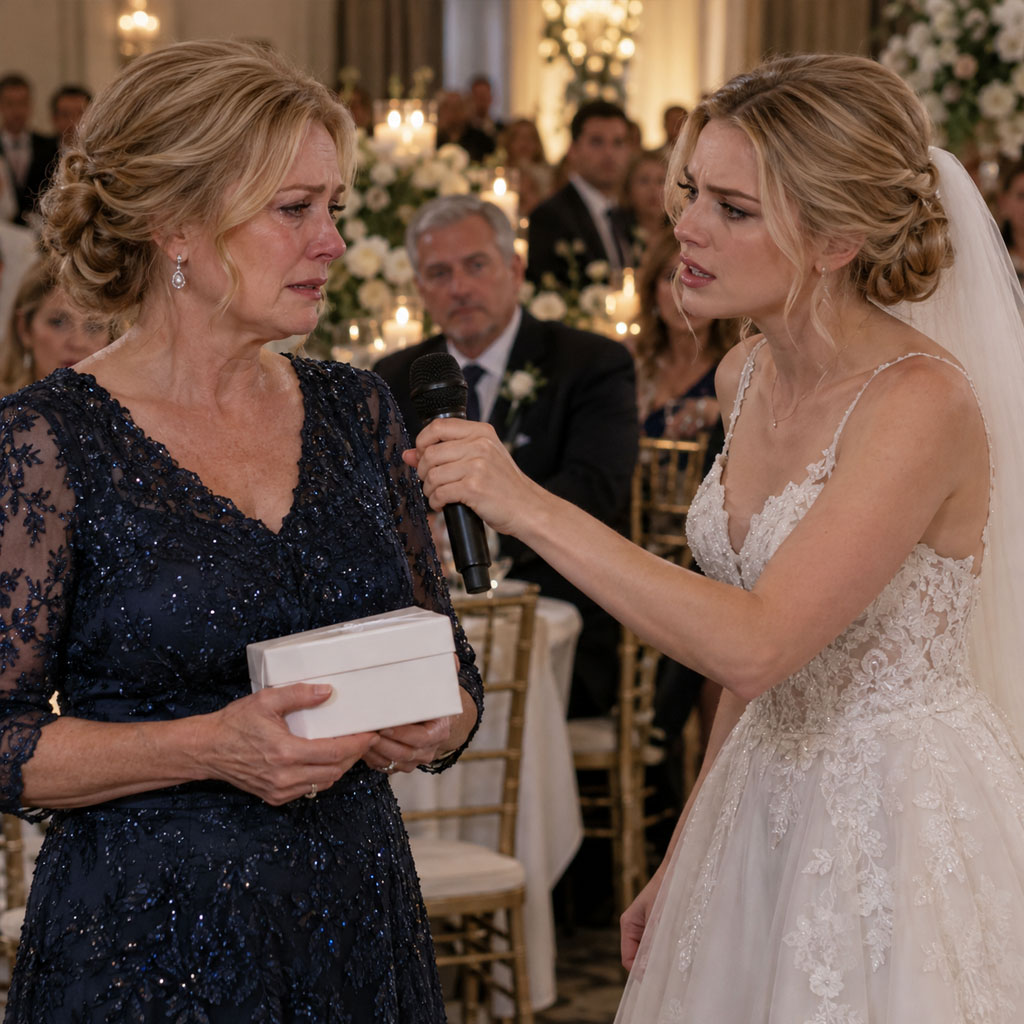
Chapter 2
The following morning, I woke at six o’clock despite having slept less than four hours. I made coffee, sat at my kitchen table, and placed Sandra’s message beside the unopened white box.
The condominium had been my proudest financial accomplishment outside of raising Brooke. I’d purchased it six years earlier after saving carefully for decades, and its value had grown to approximately $280,000. A tenant lived there, paying rent that covered the small remaining mortgage and most of the expenses.
I’d intended to transfer the property gradually and legally, with the assistance of my attorney.
Nothing had been signed.
Nothing had been promised in writing.
Yet Sandra’s message suggested that my daughter had already begun spending money based on the assumption that the condominium would soon belong to her.
At nine o’clock, Sandra called.
“Janet,” she began, using the pleasant voice people reserve for uncomfortable conversations, “I hope we can put last night’s little misunderstanding behind us.”
“Misunderstanding?” I repeated.
“Brooke was emotional. Weddings are stressful, and sometimes people say things they don’t mean.”
I looked out my kitchen window.
“Sandra, my daughter told me I wasn’t important enough to speak at her wedding.”
“Well, I’m sure she didn’t intend it the way you understood it.”
“Then she chose a very unfortunate way to express herself.”
Sandra sighed.
“Let’s not make this into something bigger than it needs to be. I’m calling because Brooke and Colt are concerned about the condominium.”
There it was.
Not my feelings.
Not the relationship between a mother and daughter.
The property.
“What exactly are they concerned about?” I asked.
Sandra hesitated.
“Colt has been planning to expand his business. He found a small office space that would be ideal for his company.”
Colt owned a growing home-renovation business. He was hardworking, respectful, and generally practical, which was one reason I’d been pleased when Brooke announced their engagement.
“What does that have to do with my condominium?”
“Well, they put down a $15,000 deposit on the office lease. They were counting on the condo as a financial cushion once the transfer was completed.”
I set down my coffee.
“Whose money did they use?”
“Their savings.”
“And who told them the condominium was theirs?”
Sandra paused again.
“Brooke said you’d already decided to give it to her.”
“I had considered it,” I said carefully. “I had not completed any transfer or authorized anyone to make financial decisions based on my property.”
“But surely you wouldn’t withdraw such a generous gift because of one unfortunate moment.”
Something about her tone made my stomach tighten.
“I’m not withdrawing anything, Sandra. I can’t withdraw a gift I haven’t made.”
“Janet, please don’t punish the children.”
I closed my eyes.
“Brooke and Colt are thirty-one and thirty-three years old. They are adults, not children. And decisions involving my property are mine to make.”
Sandra’s voice cooled.
“I see.”
“I hope you do.”
I ended the call before either of us could say something worse.
Two hours later, Brooke appeared at my door.
She wore jeans, a gray sweater, and the exhausted expression of someone who had spent the morning being told she was the victim of an injustice.
“Mom, can we talk?”
I stepped aside.
She walked directly into the kitchen.
Her eyes settled on the white box.
“Is that the condo paperwork?”
“Part of it.”
She sat down.
“Mom, I can’t believe you’re doing this.”
I remained standing.
“Doing what?”
“Taking back our wedding gift.”
I pulled out the chair opposite her.
“Brooke, that property was never your wedding gift in any legal sense. It was something I intended to discuss with you after your honeymoon.”
She crossed her arms.
“Dad said you’d already decided.”
I looked at her.
“Your father said what?”
“He told me you’d been planning to give me the condo for months. He said you were just waiting for the right occasion.”
My thoughts shifted.
Rick hadn’t discussed my finances with me in years.
“How would your father know that?”
Brooke shrugged impatiently.
“Mom, that’s not the point.”
“It is exactly the point.”
She looked away.
Then she said, “Dad also warned me you’d probably make some big emotional speech at the wedding. He said you’d talk about how hard it was raising me alone and make everyone feel sorry for you.”
For a moment, I could hardly breathe.
“Is that why you took the microphone?”
Brooke looked uncomfortable.
“I didn’t want my wedding turned into another story about everything you sacrificed.”
I studied her face.
Another story.
Those words stayed with me.
“Brooke,” I said slowly, “do you remember asking me to speak?”
“Yes.”
“And did I tell you what I planned to say?”
“No, but I knew.”
“You assumed.”
She pressed her lips together.
I reached for the box and removed the old letter.
“This is what I intended to read from.”
She stared at the yellowed paper.
“What is that?”
“A letter I wrote the night you left for college.”
Her expression shifted.
I unfolded it carefully.
“I wrote about how proud I was of you. I wrote that I hoped you’d build a beautiful life without ever feeling responsible for the sacrifices I made. I was going to tell you that being your mother was the greatest privilege of my life.”
Brooke said nothing.
I folded the letter again.
“That’s what you stopped me from saying.”
She stared at the table.
For several seconds, I thought she might apologize.
Instead, she whispered, “Dad said you always make things about yourself.”
I felt a tired sadness settle over me.
“Then perhaps your father and I need to have a conversation.”
Brooke stood.
“Mom, I don’t want another family argument.”
“Neither do I.”
She looked at the box one final time.
“So what happens to the condo?”
I met her eyes.
“For now, it stays exactly where it is.”
She left without hugging me.
I watched her car disappear down the street, then returned to the kitchen and called my attorney.
Her name was Christine Marshall, and she’d handled my property purchase and estate documents for years.
After I explained the situation, she reassured me that nothing had legally changed.
“The condo is still yours, Janet,” she said. “No transfer has been initiated.”
Then she hesitated.
“There’s something else you should know.”
I gripped the phone.
“What?”
“About six weeks ago, a woman called my office asking general questions about transferring your Dublin property to a family member.”
My heartbeat quickened.
“Who?”
“She identified herself as your daughter’s future mother-in-law.”
I closed my eyes.
Sandra.
Six weeks before the wedding.
She had been making inquiries about my property long before Brooke publicly humiliated me.
And suddenly, the entire situation looked very different.
Chapter 3
The following Saturday, I met my oldest friend, Connie, at a little diner on Henderson Road. We’d been friends since our daughters were in kindergarten, and she knew enough about my life to recognize when I was pretending to be stronger than I felt.
Connie listened without interrupting while I described the wedding, Sandra’s messages, and Brooke’s visit.
Then she put down her coffee.
“Janet, somebody has been telling that girl a story about you.”
I nodded.
“I think I know who.”
“Rick?”
“Every time I ask Brooke why she believes something terrible about me, his name comes up.”
Connie leaned back.
“Then stop letting him speak through her. Ask him directly.”
That afternoon, I went home and opened a storage box I hadn’t touched in years.
Inside were old court documents, financial records, school photographs, and letters from the years after my divorce.
I wasn’t searching for ammunition.
I wanted to understand how the history I’d lived had become so different from the history Brooke apparently believed.
There were copies of child-support records, including long periods when Rick had fallen behind.
There were emails apologizing for missed visits.
One was dated the week of Brooke’s fifth-grade school play.
“Sorry, Janet. Business came up. Tell Brooke I’ll make the next one.”
Another concerned her twelfth birthday.
“Flights are expensive this month. Maybe I can visit in October.”
I remembered both occasions.
I remembered Brooke standing onstage after the school play, scanning the audience for her father. I remembered buying a birthday cake with pink frosting and quietly placing Rick’s unopened gift card beside her plate.
For years, I’d carried the burden of explaining his absence.
And now, somehow, I had become the reason for it.
I sat on the floor surrounded by those old papers until evening.
Then I picked up my phone and called Rick.
He answered after three rings.
“Janet.”
“Rick, we need to talk.”
A long silence followed.
“I figured you’d call eventually.”
I took a breath.
“What have you been telling Brooke about me?”
He sighed.
“Are we really going to do this after all these years?”
“We are.”
“I’ve only told her what happened.”
“Your version of what happened.”
“Well, naturally. Everyone has their own perspective.”
I looked at the old emails spread across my coffee table.
“Did you tell her I made it difficult for you to see her?”
He didn’t answer immediately.
“Sometimes you were difficult.”
“When?”
“You worried about her visiting Arizona. You questioned my plans. You always wanted details.”
“She was eight years old, Rick. You were living two thousand miles away. Asking where she’d be staying wasn’t unreasonable.”
He exhaled.
“I know.”
“Did you tell her that you missed school concerts because I discouraged you from coming?”
Another silence.
“Rick?”
“I didn’t say it exactly like that.”
I closed my eyes.
“Then how did you say it?”
He sounded suddenly older.
“I told her there was tension between us. That things were complicated.”
“Things were complicated,” I agreed. “But you also chose not to come.”
His voice dropped.
“I know that too.”
For the first time in years, neither of us seemed interested in winning an argument.
I waited.
Then he said something I hadn’t expected.
“I was ashamed, Janet.”
I sat very still.
“Of what?”
“Of how much I missed.”
The words came slowly.
“When Brooke got older and started asking questions, I didn’t know how to explain why I hadn’t been there more. I wanted her to believe I was a good father.”
“You could have told her you were sorry.”
“I know that now.”
“You could have loved her without making me the reason you were absent.”
He didn’t argue.
Instead, he said quietly, “You’re right.”
I looked down at a photograph of Brooke at age nine, grinning through missing front teeth.
“I never wanted her to hate you, Rick.”
“I know.”
“I wanted her to have a father she could love without feeling guilty.”
His voice trembled slightly.
“And I wanted her to admire me.”
For a moment, I felt something close to pity.
Not because his excuses were acceptable, but because I could hear how much regret lay beneath them.
“Then tell her the truth,” I said.
He promised he would.
I didn’t know whether to believe him.
But I had finally said what needed saying.
Ten days later, someone knocked on my door.
It was Colt.
He stood on the porch wearing work boots and a navy jacket, looking uncomfortable.
“Mrs. Callaway, could I have a minute?”
I stepped aside.
“Of course.”
We sat in the kitchen.
He refused coffee at first, then accepted a cup after several minutes of awkward conversation.
Finally, he looked at me.
“I owe you an apology.”
I waited.
“At the wedding, I knew Brooke was planning to stop your speech. She told me she was worried you’d embarrass her.”
My chest tightened.
“And you agreed?”
He looked down.
“I believed what she’d been told.”
“By Rick?”
“Mostly.”
He rubbed his palms together.
“I should’ve asked you. Instead, I sat there and watched her hurt you.”
I studied the young man across from me.
Colt had always seemed decent, though we’d never been particularly close.
“What changed your mind?”
He hesitated.
“After the wedding, Brooke showed me the messages from her mother-in-law.”
“Your mother.”
He nodded.
“I didn’t realize she’d contacted your attorney. And I didn’t realize how much pressure she’d been putting on Brooke about the condo.”
I frowned.
“What kind of pressure?”
“She kept telling us we’d be foolish not to use the property to build our future. She made it sound like everything was settled.”
He looked embarrassed.
“I let myself believe it because it was convenient.”
“And the office lease?”
“I spoke with the landlord. We can cancel if we act quickly. We’ll lose a small portion of the deposit, but we’ll recover most of it.”
I felt some of the tension leave my shoulders.
“That’s good.”
He nodded.
“I should never have counted on money that wasn’t ours.”
For the first time since the wedding, someone had said exactly what I’d needed to hear about the property.
Not that I was cruel.
Not that I was withholding a gift.
Simply that it had never belonged to them.
Colt glanced toward the white box.
“Brooke told me there was a letter in there.”
“There is.”
“She thinks you were going to make her feel guilty about everything you’ve done for her.”
I shook my head.
“The letter says the opposite.”
He looked genuinely troubled.
“Then she needs to read it.”
I thought about that for a moment.
“Perhaps she does.”
Before leaving, Colt paused at the door.
“Mrs. Callaway?”
“Yes?”
“I know you may not believe this right now, but Brooke loves you.”
I gave him a tired smile.
“I’ve never doubted that she loves me. I’ve only begun to wonder whether she respects me.”
He nodded slowly.
Then he left.
Two days later, Brooke called.
Her voice sounded different.
Quieter.
“Mom, Colt told me he came to see you.”
“He did.”
“He said you talked about the wedding.”
“Yes.”
She hesitated.
“And the letter.”
I looked toward the white box on my dresser.
“Yes.”
A long silence followed.
Then my daughter asked a question that nearly broke my heart.
“Mom, could I please read it?”
Chapter 4
We agreed to meet at Brooke and Colt’s house that Friday evening. I almost canceled twice, not because I wanted to punish her, but because I didn’t know whether I could sit across from my daughter without remembering the microphone being pulled from my hand.
I drove through familiar Columbus neighborhoods with the white box resting on the passenger seat. Every red light gave me another opportunity to reconsider, but I kept going.
Colt opened the door.
“Thank you for coming,” he said.
Brooke stood in the kitchen beside a pot of freshly brewed tea.
She looked tired.
Not physically exhausted, exactly, but worn down by thoughts she could no longer ignore.
“Hi, Mom.”
“Hello, sweetheart.”
For a moment, neither of us moved.
Then she stepped forward and hugged me.
I held her carefully.
Her hair smelled like the same lavender shampoo she’d used in high school, and the familiarity of it brought tears dangerously close to the surface.
When we sat down, Brooke kept her hands wrapped around her mug.
“Mom, before we talk about the letter, I need to apologize.”
I waited.
She looked directly at me.
“What I did at the wedding was cruel.”
My throat tightened.
“I let Dad convince me you were planning to make the reception about yourself,” she continued. “And instead of asking you what you wanted to say, I decided I already knew.”
She swallowed.
“Then I humiliated you in front of everyone.”
I looked down at my hands.
“I know.”
Her eyes filled.
“I’m so sorry.”
I had imagined hearing those words dozens of times during the weeks since the wedding.
I’d expected relief.
Instead, I felt sadness, love, and anger tangled together.
“Brooke,” I said quietly, “I’ve made mistakes as your mother. I’m sure there were times I talked too much about how difficult things were.”
She shook her head.
“Mom…”
“Let me finish.”
She nodded.
“When you were growing up, I worked hard. And I know you heard about that work more often than you should have. Sometimes I was exhausted, and sometimes I probably made you feel responsible for sacrifices that were never yours to repay.”
A tear rolled down her cheek.
“I didn’t realize you knew that.”
“I didn’t,” I admitted. “Not fully. But I’ve had time to think.”
She wiped her face.
“At my high school graduation, remember that dinner afterward?”
I nodded.
“I gave a speech.”
“You talked about working two jobs and raising me alone.”
“I remember.”
“I know you were proud of me,” she said. “But I felt like everyone was looking at me as proof of how much you’d suffered.”
The words stung.
Not because they were unfair, but because I could see how the moment had looked from her side.
“I thought I was celebrating us,” I said.
“I know.”
She looked at me.
“That’s what made it hard. I knew you loved me, but sometimes I felt like I could never thank you enough.”
I reached across the table.
“Sweetheart, you were never supposed to thank me enough.”
She cried then.
Quietly, without trying to hide it.
“I wish I’d known that.”
“So do I.”
We sat together for a while.
Then Brooke asked, “What about Dad?”
I took a breath.
“He admitted he hasn’t always been honest about those years.”
She nodded.
“He called me yesterday.”
I looked up.
“He did?”
She wiped her eyes again.
“He told me he missed things because he chose other priorities. He said it was easier to blame problems between you than admit he hadn’t tried hard enough.”
I was silent.
“He cried, Mom.”
That surprised me.
Rick had always been skilled at controlling his emotions.
“How did you feel?” I asked.
Brooke stared into her tea.
“Angry. Sad. Mostly confused.”
She looked up.
“I spent so many years believing you were the reason he wasn’t around more.”
“I know.”
“And you never defended yourself.”
“I tried not to make you carry our divorce.”
She nodded.
“I understand that now.”
I reached for the white box.
For several seconds, I simply looked at it.
Then I opened the lid.
The letter lay on top, folded into thirds, its edges slightly yellowed with age.
I removed it carefully.
“I wrote this on the night you left for college,” I said. “I never found the right moment to give it to you.”
Brooke accepted it with both hands.
She unfolded the paper.
And she began to read.
I watched her eyes move across the page.
At first, her expression was thoughtful.
Then her lips began to tremble.
Halfway through, she stopped.
“Mom…”
“Take your time.”
She looked back at the letter.
Then she read a passage aloud.
“My sweet Brooke, if someday you look back and remember how hard I worked, please don’t mistake that work for a debt you owe me. Every choice I made was mine. You were never responsible for giving my life meaning, because loving you had already made my life richer than I could ever explain.”
Her voice broke.
She pressed the paper against her chest.
“Oh, Mom.”
I felt tears slip down my cheeks.
“There’s more.”
She kept reading.
The letter described the little girl who used to leave dandelions on my kitchen counter because she believed every flower deserved a vase.
It remembered the night Brooke had stayed awake helping a frightened stray kitten until we found its owner.
It recalled how she’d defended a classmate who was being teased, even though doing so meant losing the friendship of several popular girls.
And at the end, I’d written:
“Wherever life takes you, I hope you choose people who treat you with kindness, and I hope you offer that same kindness in return. I want you to build a home where love is freely given, not earned through sacrifice. And if we sometimes disagree, remember that nothing you do can erase the fact that you are my daughter and I love you.”
Brooke finished reading.
Then she folded the letter carefully.
For several moments, she couldn’t speak.
Finally, she whispered, “You were going to read this at my wedding?”
“Only a little of it.”
She covered her face.
“I stopped you from telling me you loved me.”
I reached for her hand.
“No, sweetheart. You stopped a speech. You didn’t stop me from loving you.”
She looked at me through tears.
“But I hurt you.”
“Yes,” I said. “You did.”
She nodded.
“I’m not going to pretend it was nothing.”
“Neither am I.”
She squeezed my hand.
“And I don’t expect you to forgive me just because I finally understand.”
I studied her face.
For the first time in weeks, I could see the daughter I knew beneath the defensiveness and confusion.
“I want to forgive you,” I said. “But forgiveness doesn’t mean we pretend it never happened.”
“I know.”
“It means we learn to treat each other differently.”
She nodded again.
“I want that too.”
Colt had remained quietly in the adjoining room, giving us privacy.
When he returned with fresh tea, Brooke reached for his hand.
“We need to talk about the condo,” she said.
I felt myself tense.
Then she surprised me.
“Mom, you were right.”
I looked at her.
“We had no business making plans around your property. Colt canceled the lease. We got most of the deposit back.”
Colt nodded.
“We’ll find a smaller office when the business can support it.”
Brooke continued.
“And I don’t want you to give me the condo because you feel guilty, or because you think it’s the only way to prove you love me.”
My eyes filled again.
“Thank you.”
She looked down at the letter.
“If you decide to keep it forever, that’s your right.”
I sat back.
For the first time since the wedding, I felt as though we were speaking the same language.
“Brooke, I still want to help you build a secure future.”
She shook her head gently.
“Then help me make good decisions. That’s worth more than a property deed.”
I smiled through my tears.
“That sounds like something a very wise woman would say.”
She laughed softly.
“I had a pretty good teacher.”
We talked for another hour.
Not just about the wedding.
We talked about childhood memories, disappointments, missed opportunities, and the things we’d misunderstood about each other.
There were no perfect solutions.
But there was honesty.
And after weeks of silence, honesty felt like the beginning of something precious.
Chapter 5
The next morning, I woke to a message from Brooke.
“Good morning, Mom. Thank you for coming yesterday. I know we still have things to work through, but I love you.”
I read it twice.
Then I replied.
“I love you too, sweetheart. One day at a time.”
For the first time since the wedding, I made breakfast without feeling that familiar heaviness in my chest.
The reconciliation didn’t happen overnight.
Brooke and I had spent years developing habits we barely recognized, and one honest conversation couldn’t undo every misunderstanding.
But we began trying.
She called more often without asking for anything. Sometimes we talked about her work, sometimes about Colt’s business, and sometimes about nothing more important than a recipe she’d found online.
I practiced listening without immediately offering solutions.
When she described a problem, I asked whether she wanted advice or simply someone to hear her.
It was a small change.
But it mattered.
A week later, Sandra sent me a message.
“Janet, I’ve been thinking about what happened. I overstepped regarding your property, and I apologize.”
I looked at the words for a long moment.
Then I replied.
“Yes, Sandra, you did overstep. I appreciate your acknowledgment.”
I didn’t add anything else.
We weren’t suddenly going to become close friends.
We could be civil at family gatherings, and for the time being, that was enough.
Rick eventually called again.
His voice sounded unusually hesitant.
“Janet, I spoke with Brooke.”
“She told me.”
“I owe you an apology.”
I sat down.
“For what specifically?”
He exhaled.
“For allowing her to believe you kept me away. For pretending I was more involved than I was.”
I looked out the window.
It had taken nearly twenty-five years for him to say those words.
“I appreciate that, Rick.”
“I know it doesn’t change the past.”
“No,” I said. “It doesn’t.”
He paused.
“But maybe it can help us stop making the future worse.”
I thought about that.
“Maybe it can.”
We ended the call peacefully.
There was no grand reconciliation, no sudden friendship between former spouses.
But I no longer felt the need to defend every choice I’d made as a young mother.
I knew what those years had cost.
I also knew how much joy they’d given me.
And I was beginning to understand that both truths could exist without canceling each other out.
Several weeks later, Brooke invited me to dinner.
She and Colt had cooked chicken with roasted vegetables, and the kitchen smelled wonderfully familiar.
As I helped her set the table, she opened a drawer and showed me something.
It was a small photograph from her wedding.
I stood beside her in my pale blue dress, adjusting the veil around her shoulders.
We were both smiling.
The picture had been taken before the reception.
Before the microphone.
Before everything changed.
“I almost couldn’t look at these pictures,” Brooke admitted.
I studied the photograph.
“You looked beautiful.”
She smiled sadly.
“So did you, Mom.”
I reached out and straightened the picture.
“Then let’s remember that part too.”
She nodded.
After dinner, Brooke brought out a small envelope.
“I have something for you.”
I looked surprised.
“What’s this?”
“Just open it.”
Inside was a handwritten letter.
Her handwriting was neat and familiar, the same careful letters I’d watched her practice at our kitchen table so many years ago.
I unfolded the paper.
“Dear Mom,” it began. “For most of my life, I thought love meant remembering everything someone had done for you and finding a way to repay it. I didn’t understand that real love doesn’t keep a running balance.”
My eyes blurred.
She continued:
“I believed stories about you because they fit feelings I hadn’t known how to explain. I didn’t ask questions. I didn’t give you the same kindness you’ve spent your life trying to teach me.”
I paused.
Brooke watched quietly.
Then I read the final lines.
“Thank you for loving me enough to tell me the truth, even when it hurt. Thank you for teaching me that an apology means changing what comes next. I hope I can become the kind of daughter who makes you feel respected, not just loved.”
I folded the letter.
For several moments, neither of us spoke.
Then I reached for her.
She came into my arms immediately.
We stood in the kitchen holding each other, two grown women who had spent years loving each other imperfectly and were finally learning how to do it better.
“Mom?” she whispered.
“Yes?”
“I’m glad you came back.”
I held her tighter.
“So am I, sweetheart.”
That winter, Brooke and Colt made a decision that surprised everyone.
Instead of stretching their finances to rent a larger office, Colt continued running his business from their modest workspace. They began saving more aggressively and meeting with a financial adviser to plan their next steps.
Brooke told me they wanted to build something they could truly afford.
“I think we were rushing,” she admitted one Sunday afternoon. “We were so focused on looking successful that we forgot success is supposed to make life more stable, not more stressful.”
I smiled.
“That sounds like a valuable lesson.”
She laughed.
“An expensive one, too.”
“Those are often the lessons we remember.”
As for the Dublin condominium, I kept it.
Not because I stopped loving my daughter.
Not because I wanted to punish her.
I kept it because a gift that large deserved careful planning, mutual understanding, and freedom from emotional pressure.
My attorney helped me review my estate documents, and I made sure my future intentions were clear without putting myself in a financially vulnerable position.
Brooke understood.
At least, she was learning to.
On Mother’s Day the following spring, she arrived at my house carrying flowers and a homemade lemon cake.
We spent the afternoon on the back porch, drinking iced tea and watching birds gather around the feeder.
After a while, she turned toward me.
“Mom, can I ask you something?”
“Of course.”
“Do you still wish you’d given that speech at my wedding?”
I thought about it.
The memory still hurt.
I could still picture the ballroom, the startled faces, and the microphone disappearing from my hand.
But time had given the moment a different shape.
“Yes,” I admitted. “I wish I’d been allowed to finish.”
Brooke lowered her eyes.
“I’m sorry.”
“I know you are.”
She reached for my hand.
“If I could do it over, I’d hand you the microphone myself.”
I smiled gently.
“Sweetheart, we don’t get to do those moments over.”
She nodded.
“But we do get to decide what happens afterward.”
We sat in comfortable silence.
Then Brooke said something I’ll never forget.
“You know, Mom, I used to think being a good daughter meant never disappointing you.”
I looked at her.
“And now?”
“Now I think it means being honest enough to admit when I have.”
I squeezed her hand.
“That’s a much better definition.”
She leaned her head against my shoulder.
For a moment, she seemed like the little girl who used to fall asleep beside me on the couch after a long school day.
And I realized something that had taken me far too many years to understand.
I didn’t need Brooke to admire my sacrifices.
I didn’t need her to tell everyone what a devoted mother I’d been.
I didn’t even need her to understand every difficult choice I’d made.
I needed us to treat each other with kindness while we still had the chance.
Because love without respect can become painful, and sacrifice without boundaries can quietly turn into resentment.
But love joined with honesty has a way of healing things that once seemed beyond repair.
The white box still sits on my bedroom dresser.
The condominium documents have been returned to my attorney’s files, where they belong until I’m ready to make a decision.
And the old letter, the one I wrote when Brooke left for college, is still inside the box.
She asked whether she could have it someday.
I told her yes.
But for now, I want to keep it a little longer.
Some memories need time before we’re ready to let them go.
And some gifts mean more when they’re given without expectation.
Looking back, I don’t regret walking out of my daughter’s wedding.
I regret that we reached a moment when leaving felt like the only way to protect my dignity.
But I also know that staying might have taught both of us the wrong lesson.
Walking away wasn’t the end of my relationship with Brooke.
It was the beginning of learning that being her mother did not mean I had to accept every hurt in silence.
And being my daughter did not mean she owed me perfection.
Today, our relationship is stronger than it was before the wedding, not because we’ve forgotten what happened, but because we’ve finally begun telling each other the truth.
Sometimes the greatest gift a parent can give an adult child isn’t money, property, or another sacrifice.
Sometimes it’s the quiet courage to say, “I love you, but I matter too.”
And sometimes the greatest gift a child can give a parent is simply to answer, “I understand. I’m sorry. And I’ll do better.”
That was the gift I finally received.
And it was worth far more than anything I’d carried out of that ballroom in a little white box.
THE END. ⚠️ All characters and events are fictional. Do not imitate or apply them in real life. 😌😌😌


