Chapter 2
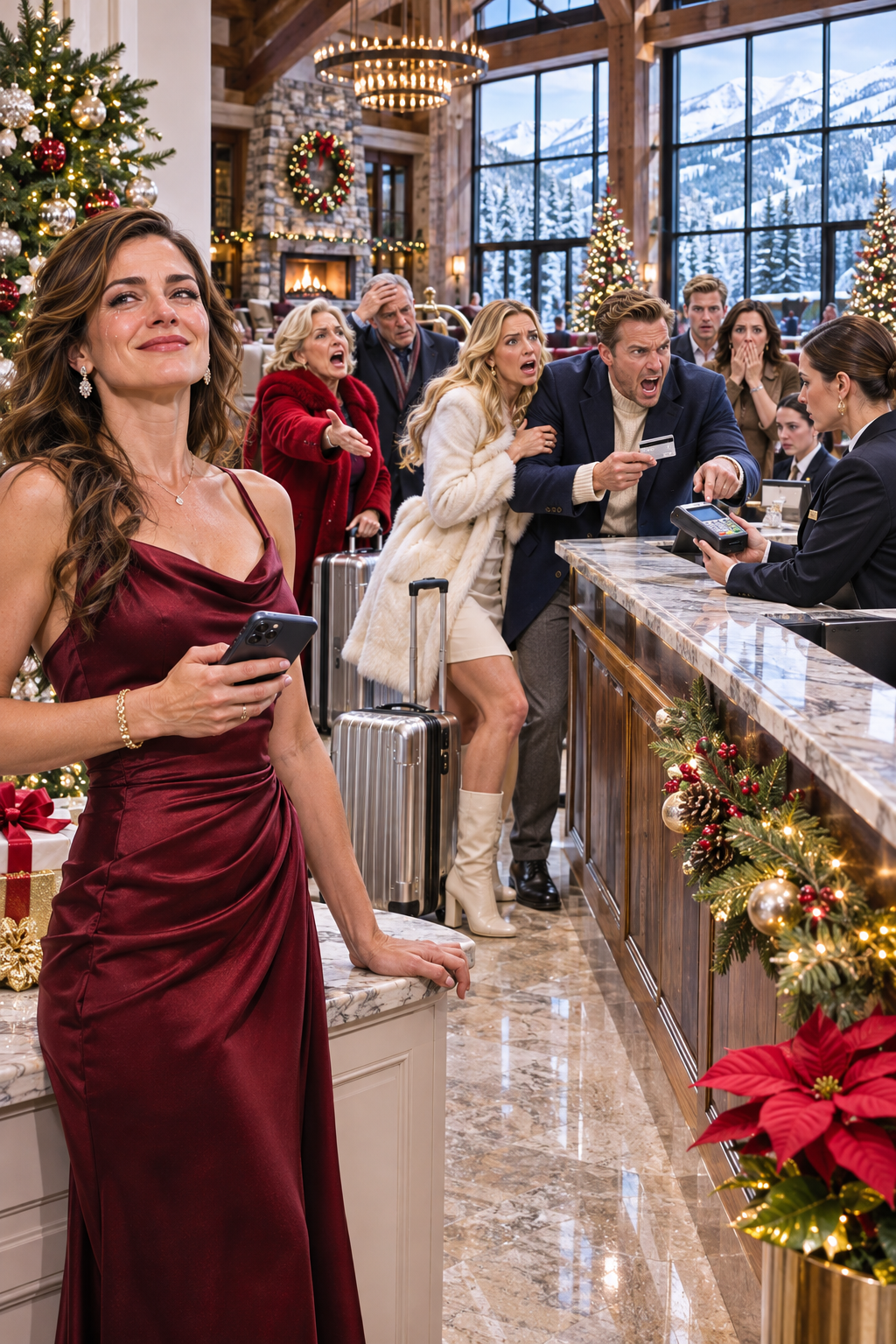
Fifteen miles away, at Bal Harbour Shops, Daniela was enjoying the best afternoon she’d had in months.
She stood beside the Bentley in the VIP parking area, one hand resting proudly on its polished hood.
Her leopard-print blouse was paired with oversized sunglasses, diamond earrings, and enough jewelry to attract attention from across the parking lot.
Three women from her social club had gathered around her.
“That’s a beautiful car, Daniela,” one of them said.
Daniela smiled.
“My son bought it for me. He insisted.”
“Ricardo bought you a Bentley?”
“Of course. He’s doing extremely well at Harrington Hotels. He’s practically running the place.”
The truth was that Ricardo held a midlevel position I’d created for him. He had never managed a department, let alone the company.
But Daniela enjoyed telling stories.
She opened the driver’s door and showed her friends the leather interior.
“Look at these seats. Heated, ventilated, and they even have massage settings. The sound system alone costs more than some people’s cars.”
One woman glanced toward her own vehicle.
Daniela noticed.
“It’s important to invest in safety, dear. These newer cars have all the technology.”
Her friends exchanged uncomfortable looks.
Daniela didn’t notice. She was too busy imagining how many people would see her arriving at the spa in her new car.
She slid into the driver’s seat, adjusted the mirror, and pressed the start button.
Nothing happened.
She tried again.
Suddenly, a loud alarm filled the cabin.
The dashboard flashed red.
UNAUTHORIZED USE DETECTED.
ENGINE BLOCKED BY ADMINISTRATOR.
A computerized voice repeated the warning through the speakers.
Daniela frowned.
“What is this?”
She pressed the button several more times.
The alarm grew louder. The horn began sounding, and the doors automatically locked.
She pulled the handle.
It wouldn’t open.
Outside, her friends turned toward the car.
“Daniela?”
She began knocking on the window.
“Help! Something’s wrong!”
A few shoppers stopped. Someone pointed. Another person took out a phone.
Within seconds, a small crowd had gathered.
Then an orange recovery truck entered the parking area.
The words HARRINGTON PROPERTY RECOVERY were printed across its side.
Two uniformed employees stepped out carrying electronic equipment and official documents.
One approached the vehicle and unlocked it remotely.
Daniela practically stumbled onto the pavement.
“Thank goodness! There’s been a terrible mistake. This is my son’s car!”
The employee checked his paperwork.
“Ma’am, this vehicle is registered as a Harrington Hotels corporate asset. Its use has been unauthorized, and we’ve been instructed to recover it.”
“You can’t take it! My son works for Harrington!”
“I’m afraid we’ll need you to step aside.”
Daniela began protesting, but the employees followed their instructions.
One connected the Bentley to the recovery truck while the other asked Daniela to move away from the vehicle.
Her purse slipped from her shoulder and landed on the pavement. Its contents spilled everywhere.
Lipstick, receipts, a wallet, and several loose papers scattered across the ground.
Her friends stood nearby, suddenly uncertain whether to help or pretend they hadn’t witnessed anything.
The Bentley was secured on the truck.
Daniela watched helplessly.
“Ricardo! Somebody call Ricardo!”
But the truck was already moving.
One of her friends, Wanda, quietly recorded the scene on her phone. Daniela noticed and shouted at her, but Wanda lowered the device without apologizing.
By the time the truck disappeared, at least twenty people had witnessed the entire incident.
Back at my house, my phone vibrated.
Tomas had sent a photograph.
It showed Daniela standing on the sidewalk, her makeup running, her purse open beside her.
I stared at the picture for a moment.
I didn’t feel particularly happy about humiliating her. But I wasn’t going to reverse a legitimate recovery simply because she was embarrassed.
I slipped the phone into my pocket.
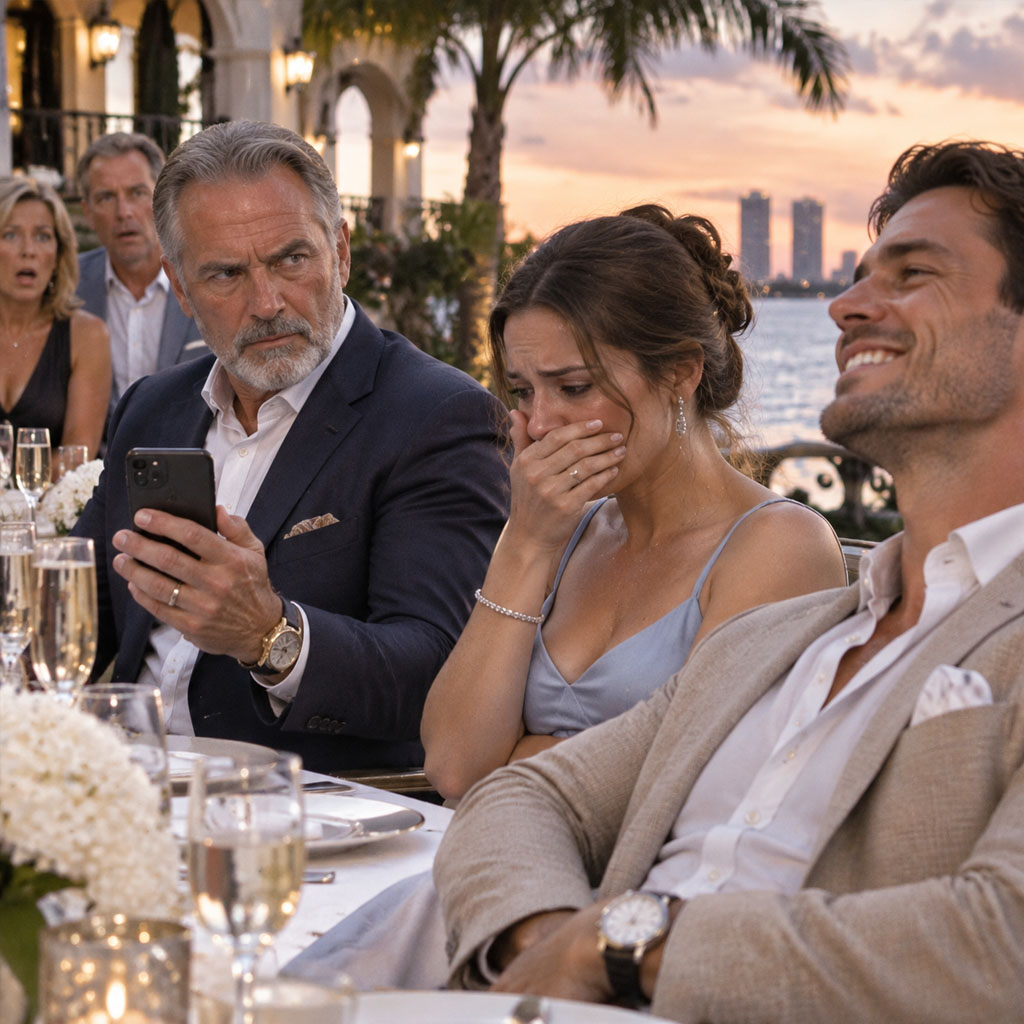
Across the table, Ricardo was laughing at something Tito had said.
Then his phone rang.
He glanced at the screen.
MOM.
His expression brightened.
“Excuse me, everyone. My mother probably wants to thank me for the car.”
He answered and immediately switched on the speaker.
“Hey, Mom. Everything okay?”
What followed wasn’t a thank-you.
It was a scream.
“RICARDO! THEY TOOK THE BENTLEY!”
His smile disappeared.
“What?”
“They locked me inside! There were security guards with documents! Everybody was filming! They took your car!”
Ricardo scrambled to turn off the speaker, but the entire table had already heard.
His face changed from confusion to disbelief.
“Mom, calm down. I’ll handle it.”
He ended the call and looked directly at me.
“Did you do this?”
I set down my champagne glass.
“The car belongs to Harrington Hotels,” I said evenly. “It was being used without authorization.”
“That’s ridiculous! My mother needs that vehicle!”
I tilted my head.
“Then perhaps you should explain why you gave away company property without permission.”
He stood so abruptly that his chair scraped across the terrace.
“I’ll go to the office tomorrow and fix this.”
I looked at my watch.
“There’s no need.”
His eyes narrowed.
“What does that mean?”
“It means your employment ended at five o’clock this afternoon. Your access has been suspended, and your termination paperwork will be delivered Monday.”
The table fell silent again.
“You can’t fire me!”
“I can. And I have.”
He looked around, apparently expecting someone to defend him.
Nobody did.
I stood and held out my hand.
“Your company keys, Ricardo.”
For the first time that evening, he looked genuinely frightened.
Chapter 3
Ricardo stared at my outstretched hand.
“You’re doing this because of a car?”
“No,” I answered. “I’m doing this because of a pattern of behavior that has gone on for three years.”
He shook his head.
“You’re letting your personal feelings interfere with business.”
I almost laughed.
“Your personal feelings are precisely what got you into this situation.”
He finally removed the company keys from his pocket and placed them in my palm.
I put them away, then took a fifty-dollar bill from my wallet.
I folded it and tucked it into his shirt pocket.
“For a taxi.”
His face turned red.
“Don’t insult me.”
“You told my daughter that taking a taxi was perfectly acceptable. I assumed you’d agree.”
Nobody spoke.
I nodded toward Jorge, my driver, and the two security employees standing near the garden entrance.
“Please escort Mr. Ricardo to the gate.”
They didn’t grab him or raise their voices. They simply stood beside him until he understood that the evening was over.
As he walked away, rain began falling over the terrace.
I turned to Catalina.
“Come on, sweetheart. Let’s go home.”
She stood slowly.
For a moment, she looked toward the gate where her husband had disappeared.
Then she took my arm.
In the back of the Mercedes, she leaned against my shoulder and finally began to cry.
I didn’t ask questions.
I simply held her hand.
We drove through the rain without saying much.
A few minutes later, she whispered, “I’m sorry, Dad.”
I turned toward her.
“What on earth are you apologizing for?”
“For causing trouble at your birthday.”
My heart tightened.
“Catalina, you didn’t cause any trouble. You came to dinner. That’s all.”
She looked out the window.
“He’s going to be furious.”
“He has a right to be upset about losing his job. He doesn’t have a right to mistreat you.”
She didn’t answer.
That night, I realized that removing Ricardo from my company was only one part of the problem.
My daughter needed to understand that she didn’t have to spend the rest of her life making excuses for someone who repeatedly hurt her.
The following Monday, Ricardo discovered that his termination was final.
He drove to the Harrington Hotels headquarters in Brickell, wearing the same navy suit he’d worn at my birthday party.
He walked through the marble lobby, approached the security turnstiles, and swiped his employee badge.
A red light appeared.
ACCESS DENIED.
He tried again.
The same result.
A security officer approached and asked him to leave.
Tomas later sent me a photograph. Ricardo was standing near the reception desk holding a cardboard box containing his personal belongings.
Three years of employment had been reduced to a few pens, a coffee mug, and a framed photograph.
He tried calling several hotel executives.
None offered him a position.
Some didn’t answer. Others told him directly that they weren’t interested.
I hadn’t called anyone to damage his reputation. But the hotel industry in Miami was smaller than he imagined, and his behavior had become known to people who valued trust.
Meanwhile, Catalina began making changes of her own.
She canceled the supplementary credit cards Ricardo had been using. She transferred her personal financial records to a secure account and arranged for an attorney to review their marriage.
For the first time in years, she began spending time with friends without asking permission.
She slept better.
She smiled more often.
Ricardo, however, was having a difficult time adjusting.
Without his salary and access to Catalina’s accounts, the lifestyle he’d enjoyed began disappearing.
He sold some expensive watches and designer clothing. Daniela complained constantly that he had ruined her afternoon and embarrassed her in front of her friends.
Their arguments became frequent enough that neighbors began noticing.
Then, three weeks after my birthday, Catalina called me.
Her voice was shaking.
“Dad, Ricardo filed for divorce.”
I closed my office door.
“All right, honey. How are you feeling?”
“Relieved, actually. But there’s something else.”
I waited.
“He wants half of everything.”
I leaned back in my chair.
“Half of what?”
“The condo, my investments, my boutiques. His lawyer says he contributed to our household and deserves compensation for everything he supposedly sacrificed.”
I closed my eyes.
The condo had been purchased with funds Catalina had inherited. Her investment accounts were hers long before the marriage, and her boutique business was independently owned.
Ricardo had contributed very little financially.
But he had become very comfortable spending her money.
“Does he have a lawyer?”
“Yes. And he’s threatening to sue you over the termination and the car. He says you destroyed his career because of a personal disagreement.”
I took a slow breath.
“Don’t worry about that.”
“Dad, I don’t want another fight.”
“Neither do I, sweetheart. But we aren’t going to let someone take what you’ve worked for.”
I picked up another phone.
There was one person I wanted handling this.
Ernesto Delgado was one of Florida’s most respected family law attorneys. He had represented several of my business associates and had a reputation for being thorough, patient, and exceptionally difficult to intimidate.
I called him.
“Ernesto, I need your help with my daughter’s divorce.”
He listened carefully as I explained the situation.
Then he asked one question.
“Do you have access to the financial records?”
I looked toward the window.
“I believe we have more than enough to begin.”
What Ricardo didn’t understand was that Catalina’s financial records contained a history of spending he’d never expected anyone to examine.
And I intended to make sure every dollar was accounted for.
Chapter 4
A month later, I sat quietly in the back row of the Miami family courthouse.
Catalina didn’t know I was there.
I wore a simple gray suit and kept my head down. I wasn’t interested in attracting attention or making a public appearance.
I wanted to see my daughter stand up for herself.
When she entered the courtroom, I barely recognized the woman who had arrived at my birthday party in that pale blue dress.
She wore a navy business suit. Her hair was neatly arranged, and her shoulders were straight.
There was no nervous smile or apology in her expression.
She looked composed.
Ricardo entered a few minutes later.
His suit was inexpensive and slightly loose. He had lost considerable weight, and the confident appearance he’d once maintained was beginning to disappear.
Daniela sat in the front row.
She wore a formal church outfit and carried a handbag that looked considerably less expensive than the ones she’d previously shown off.
She still seemed convinced that her son would leave the courthouse with a substantial settlement.
The judge entered, and everyone stood.
Ricardo’s attorney began presenting his case.
He claimed that his client had contributed significantly to the marriage, supported Catalina’s business ambitions, and maintained the household.
He requested half the value of the couple’s claimed marital assets.
His calculations included a condominium valued at approximately $1.2 million, investment accounts worth $800,000, and Catalina’s boutique business, which he estimated at $500,000.
He also requested damages for wrongful termination and emotional distress.
Ricardo sat beside him, occasionally nodding.
When asked to speak, he leaned forward.
“Your Honor, I was treated like a criminal. I lost my job, my reputation, and my home. I spent three years supporting my wife, and now I’m being left with nothing. I only want what is fair.”
Daniela nodded enthusiastically.
I watched Catalina.
She didn’t react.
Her attorney, Ernesto, remained perfectly still.
When Ricardo’s lawyer finished, the judge turned toward him.
“Mr. Delgado, your response?”
Ernesto stood.
“Your Honor, we request permission to present financial evidence, including the results of an independent forensic audit.”
“Granted.”
Ernesto returned to his table and lifted a large cardboard box.
It was heavy enough that he needed both hands.
He placed it on the table.
Ricardo looked at it with visible confusion.
Ernesto began with the household finances.
He presented mortgage records, utility payments, insurance statements, and grocery expenses.
According to the records, Catalina had paid every major household expense throughout the marriage.
Ricardo had contributed nothing toward the mortgage or regular bills.
Then came the credit card statements.
Ernesto explained that Ricardo had been given supplementary cards connected to Catalina’s accounts. The agreements required her written authorization for certain transactions, and the records showed that she had never approved the purchases in question.
He opened another folder.
“Your Honor, the audit identified approximately $185,000 in unauthorized spending during the marriage.”
Ricardo shifted in his chair.
“That’s not true.”
Ernesto continued without looking at him.
The spending included approximately $45,000 in designer purchases and jewelry for Daniela, $28,000 in trips Ricardo had taken with his mother, and $67,000 in renovations to Daniela’s house.
There were also luxury watches, personal purchases, and vehicle-related expenses.
Daniela’s expression changed.
“Those were gifts!” Ricardo protested. “My wife knew about them!”
Ernesto calmly placed copies of the credit card agreements before the judge.
“Then perhaps Mr. Ricardo can explain why he repeatedly instructed his mother and others to conceal the purchases.”
He turned on a screen.
Several text messages appeared.
They had been recovered from financial records and backed-up messages.
One exchange showed Ricardo writing:
Use the card. She won’t notice.
Another message read:
Keep the receipts hidden. I’ll handle it.
The courtroom became completely silent.
Catalina looked at the screen.
For a moment, her eyes closed.
I knew those messages hurt more than the financial figures. They confirmed that what she’d suspected for years hadn’t been her imagination.
Ricardo wasn’t simply careless with money.
He had deliberately hidden his behavior.
Ernesto continued.
“Your Honor, the financial records establish that the claimed household contributions are unsupported. The assets Mr. Ricardo seeks to divide were independently owned by Mrs. Harrington or purchased with her separate funds. We ask that his claims be dismissed and that the unauthorized spending be addressed through reimbursement and appropriate judgments.”
He then presented records tracing the $67,000 spent on Daniela’s house.
The money had come directly from Catalina’s accounts.
Ernesto requested that the court approve appropriate measures against the property to recover the funds.
Daniela suddenly stood.
“You can’t take my house! I had nothing to do with this!”
The judge struck the bench with her gavel.
“Ma’am, sit down. You will have an opportunity to respond through the proper process.”
Daniela lowered herself into her chair.
Ricardo’s attorney began reviewing the documents with increasing urgency.
The judge studied the financial records for several minutes.
Then she looked directly at Ricardo.
“Mr. Ricardo, do you have any documentation supporting your claim that these purchases were authorized?”
His attorney whispered something to him.
Ricardo shook his head.
“Your Honor, these were family expenses.”
“Family expenses do not automatically become authorized expenses simply because someone describes them that way.”
The judge continued reviewing the evidence.
Finally, she announced her decision.
The divorce was granted.
Ricardo’s claims to Catalina’s separately owned assets were dismissed. His claims for wrongful termination and related damages were also rejected.
The court approved recovery proceedings for the unauthorized spending, including the funds traced to Daniela’s property.
Ricardo was held responsible for the documented debt, legal costs, and additional court-ordered amounts.
He stood there without moving.
Daniela began protesting again.
The judge warned her to remain seated.
A moment later, Daniela became visibly unwell. Court staff called for medical assistance, and paramedics arrived to evaluate her before taking her to the hospital.
Ricardo barely seemed to notice.
He was staring at the papers in front of him.
Then his eyes moved across the courtroom.
They stopped when he saw me.
Recognition crossed his face.
Then came shock, anger, and something that looked like shame.
He hadn’t known I was there.
I stood, buttoned my jacket, and walked toward the exit.
I didn’t smile.
I didn’t need to.
My daughter was already walking out of that courtroom with her head held high.
And for the first time in three years, she was walking without looking over her shoulder.
Chapter 5
Five years passed.
Time has a way of revealing what people are capable of when the things they once depended on disappear.
Catalina didn’t collapse after the divorce.
She rebuilt.
The small fashion boutique she’d opened during her marriage had always been her dream. Ricardo used to call it her little hobby, something she did to keep herself occupied.
She had never forgotten those words.
During the first year after the divorce, she opened a second location in Coral Gables.
I offered to invest.
She refused.
“Dad, you’ve given me enough. I want to know I can build this myself.”
I understood.
By the second year, she had opened two more locations, one in Coconut Grove and another in Wynwood.
Her designs began attracting attention from customers outside Miami.
By the third year, a fashion magazine published a feature about her growing business.
The headline called her one of Miami’s rising fashion entrepreneurs.
She didn’t discuss her marriage or the divorce. She simply talked about fabrics, design, customer service, and the importance of building something that reflected her own values.
I was proud of her.
By the fifth year, she had opened her fifth boutique in South Beach.
The grand opening attracted business owners, local politicians, athletes, and people from the fashion industry.
Catalina moved through the crowd with confidence.
She no longer looked like someone trying to prove she deserved to be there.
She belonged there because she’d built it.
But the boutiques weren’t the only wonderful thing that had happened.
Two years earlier, I’d organized a charity gala supporting a local children’s foundation.
Catalina attended.
So did a man named Andre Fuentes, a successful architect who had spent years designing residential and commercial properties throughout South Florida.
Andre was quiet, thoughtful, and comfortable with himself.
I noticed something about him almost immediately.
When Catalina spoke, he listened.
He didn’t interrupt. He didn’t try to impress her by discussing his income or professional connections. He simply seemed interested in what she had to say.
They began dating.
Six months later, Andre proposed during a quiet evening by the water at Key Biscayne.
There was no extravagant display or elaborate announcement.
Just the two of them, a sunset, and a question.
Catalina said yes.
I walked her down the aisle the following spring.
This time, I wasn’t worried.
I watched Andre take her hand and felt a peace I’d never experienced during her first marriage.
A few years later, I became a grandfather.
Her little girl, Graciella Elizabeth Fuentes, arrived weighing just over seven pounds.
Catalina chose the name because she said the word grace reminded her of the second chance she’d been given.
Whenever I hold that little girl, I think about the years when her mother was so unhappy that she could barely recognize herself.
I’m grateful she had the courage to leave.
As for Ricardo and Daniela, I heard occasional updates from Tomas.
Daniela suffered a serious stroke during the second year after the divorce. She eventually moved into a nursing facility, where she received the care she needed.
The proceedings involving her property left her with considerably fewer financial resources than she’d once enjoyed.
Ricardo, meanwhile, worked several jobs.
He took shifts as a hotel valet, stocked shelves at a grocery store, and occasionally delivered groceries on weekends.
Tomas told me he visited his mother regularly, helped with her meals, and read to her when she was having difficulty concentrating.
Apparently, he had become a more responsible son.
I didn’t celebrate his difficulties.
I had never wanted him to suffer simply for the pleasure of seeing him suffer.
But I also didn’t regret protecting my daughter.
People sometimes ask whether I would have handled the situation differently.
Perhaps.
But I know one thing: I would never again confuse keeping the peace with allowing someone to mistreat a person I loved.
Then, one Saturday evening, Catalina called.
“Dad, dinner tonight?”
“What’s the occasion?”
“My fifth boutique is doing wonderfully. I want to celebrate.”
“Where?”
“Zuma. My treat.”
I laughed.
“Since when do you pay for dinner?”
“Since I became a successful businesswoman. You should get used to it.”
I accepted.
We met at the restaurant in Brickell, where the windows overlooked the water and the evening lights reflected across the river.
Catalina looked radiant.
She wore a cobalt-blue dress, and her hair was pulled back neatly. Her smile was genuine, the kind that reaches the eyes.
We talked about the new boutique, a customer who had flown in from New York, and her plans to expand toward Palm Beach.
“How’s Graciella?” I asked.
Catalina smiled.
“Growing too fast. Andre says she’s inherited his eyes, but I think she’s got my stubbornness.”
I laughed.
“That’s a dangerous combination.”
She reached across the table and squeezed my hand.
“Dad, thank you for everything.”
I looked at her.
“You don’t owe me thanks.”
“I know. But I still want to say it.”
The waiter brought our dinner.
Catalina was describing a possible new location when I noticed her attention shift toward the windows.
Her expression changed slightly.
I followed her gaze.
Outside, near the valet station, a man in a black vest was arguing with another employee.
His shirt was wrinkled, his hair looked unkempt, and his face was thinner than I remembered.
It was Ricardo.
He was working as a valet.
A customer had apparently arrived, and Ricardo was trying to take the keys. A younger employee stepped forward first and accepted them.
Ricardo’s shoulders dropped.
He stepped back, put his hands into his pockets, and turned toward the restaurant.
Through the glass, his eyes found our table.
He recognized Catalina first.
Then he saw me.
For several seconds, he simply stared.
I watched his expression change.
Surprise.
Embarrassment.
Then something that might have been regret.
He saw Catalina sitting comfortably in an elegant restaurant, wearing a beautiful dress, discussing a successful business and a happy family.
He saw the woman he had once treated as though she were fortunate to have him.
But she wasn’t the same woman anymore.
Catalina didn’t look away.
She held his gaze calmly.
There was no anger in her face. No satisfaction. No desire to prove anything.
Ricardo raised one hand slightly.
It was an uncertain gesture, almost a greeting.
Catalina didn’t respond.
Instead, she turned toward me.
“Dad?”
“Yes, sweetheart?”
“Would you mind asking the waiter to lower the blind?”
I looked at the window.
“The light bothering you?”
She gave me a small smile.
“A little.”
I understood.
I called the waiter over.
“Would you mind lowering the shade?”
“Of course, sir.”
The waiter pulled the cord, and the translucent blind descended smoothly.
Ricardo disappeared from view.
There was no argument, no confrontation, and no dramatic final exchange.
He was simply no longer part of our evening.
Catalina picked up her fork and returned to her dinner.
“Where was I?” she asked.
“You were telling me about Palm Beach.”
“Oh, right. I think the location near Worth Avenue would be perfect.”
I watched her speak.
Her hands were steady.
Her voice was relaxed.
And I realized that the blind hadn’t really been about the light.
It was about a woman who had finally decided that she no longer needed to look back.
For years, I had believed that I had defeated Ricardo when I recovered the Bentley, removed him from my company, and exposed his financial behavior in court.
But sitting across from my daughter that evening, I understood something more important.
Ricardo had lost the marriage long before the divorce.
He had lost it when he decided that his wife’s dignity was less important than his mother’s approval.
He had lost it when he treated her kindness as weakness and her money as his personal property.
He had lost it every time she made herself smaller to protect his pride.
I hadn’t created those consequences.
I had simply stopped shielding him from them.
And Catalina had done the rest.
She had built a business, found a man who respected her, become a mother, and rediscovered the confidence she’d once thought she had lost forever.
As we finished dinner, she began telling me about a new design collection she wanted to launch the following spring.
I listened, smiling.
That was what I wanted to hear.
Not another story about Ricardo.
Not another discussion about the divorce.
Just my daughter talking about her future.
There is something every parent eventually learns.
Children grow up. They make their own decisions, marry people we may not have chosen, and sometimes walk through difficulties we cannot solve for them.
We cannot control every part of their lives.
But we can remind them that they deserve respect.
We can offer a place to turn when they feel alone.
And when someone tries to convince them that their worth is less than what they provide, we can help them remember who they are.
I didn’t give Catalina that Bentley because I wanted her to owe me anything.
I gave it to her because I loved her.
And when her husband gave it away, what hurt me most wasn’t the price of the vehicle.
It was the look on my daughter’s face when she realized that someone she loved had decided her feelings didn’t matter.
That was the moment I knew I had to act.
Some people believe that protecting family means staying quiet, avoiding arguments, and tolerating behavior that should never be tolerated.
I disagree.
Peace that requires someone you love to surrender their dignity isn’t peace at all.
It’s simply silence.
And sometimes, the most loving thing a father can do is refuse to remain silent.
That evening, as Catalina and I walked out of the restaurant, she slipped her arm through mine.
“Dad?”
“Yes?”
“I’m happy.”
I stopped for a moment.
I looked at her and smiled.
“I know, sweetheart.”
She leaned her head against my shoulder.
And I realized that this was what the entire struggle had been about.
Not the Bentley.
Not the job.
Not the courtroom.
Not even Ricardo.
It was about giving my daughter the chance to live a life in which she never had to beg someone to recognize her value.
A life in which she could be loved without being diminished.
A life in which she could finally be herself.
I had spent thirty years building a hotel empire.
But the greatest thing I ever protected wasn’t a company, a property, or a fortune.
It was my daughter’s chance to be happy.
And I would make that choice again without hesitation.
THE END.\
⚠️ All characters and events are fictional. Do not imitate or apply them in real life. 😌😌😌