Chapter 2
Eight months earlier, Aaliyah had walked into my apartment wearing oversized sunglasses and carrying a thick envelope.
“Mom, I need you to sign something.”
She dropped the papers onto my dining table without asking how I was.
“Dad’s helping me launch my cosmetics line. The bank wants another signature on the financing documents. It’s just routine.”
I opened the folder.
Within minutes, I knew something was terribly wrong.
The company wasn’t organized like an ordinary cosmetics business. There were several interconnected corporations, complicated ownership provisions, and financial guarantees that made little sense for a new entrepreneur.
One company, Apex Holdings, appeared to control the money flowing through the others.
More troubling, Aaliyah was listed as its chief executive.
“Sweetheart, who’s your attorney?”
She frowned. “Dad has lawyers.”
“Your attorney, Aaliyah. Someone whose responsibility is to protect you.”
“Why would I need my own lawyer?”
“Because these documents make you personally responsible for financial activities you may not control.”
She rolled her eyes.
“Here we go.”
I kept reading.
“Some of these investors are connected to Greg’s property companies. And the agreements give other people authority to move money while leaving your name on the official records.”
“Dad says this is how wealthy people structure businesses.”
“Sometimes. But not like this. There are serious warning signs.”
She snatched the papers away.
“You’re jealous.”
I looked up.
“Excuse me?”
“You can’t stand that Dad believes in me. You want everyone to live the same boring life you do.”
“Aaliyah, I’m trying to protect you.”
“No. You’re trying to make me afraid of success because you never had any.”
She headed for the door.
I followed her.
“Please, don’t sign anything until an independent attorney reviews it.”
She turned around, her expression hard.
“You lost Dad because you never understood ambition. I’m not going to make the same mistake.”
The door slammed behind her.
I stood in my kitchen for a long time afterward, staring at the empty chair where she used to sit and finish her homework.
That was the final time she’d visited my apartment.
What Aaliyah didn’t know was that I’d spent nearly 20 years developing a career in forensic accounting. My work involved following complicated financial records and helping investigators determine whether money had been obtained or transferred illegally.
I had already noticed troubling connections among Desmond’s real estate ventures.
After Aaliyah’s visit, I began examining publicly available corporate filings and records I was lawfully authorized to review. What I uncovered was serious enough to warrant an official report.
Over the following months, investigators assembled evidence of a massive investment fraud.
Desmond and Greg had persuaded business owners, retirees, and community organizations to invest in properties they claimed were worth far more than their actual value.
Early investors received payments funded largely by later investors. False financial statements concealed mounting losses, while substantial amounts disappeared into accounts controlled by Desmond’s associates.
The estimated damage eventually reached $150 million.
Some victims had invested their retirement savings. Others had borrowed against their homes. Several small-business owners believed they were supporting neighborhood revitalization.
Instead, they were financing Desmond’s lavish lifestyle.
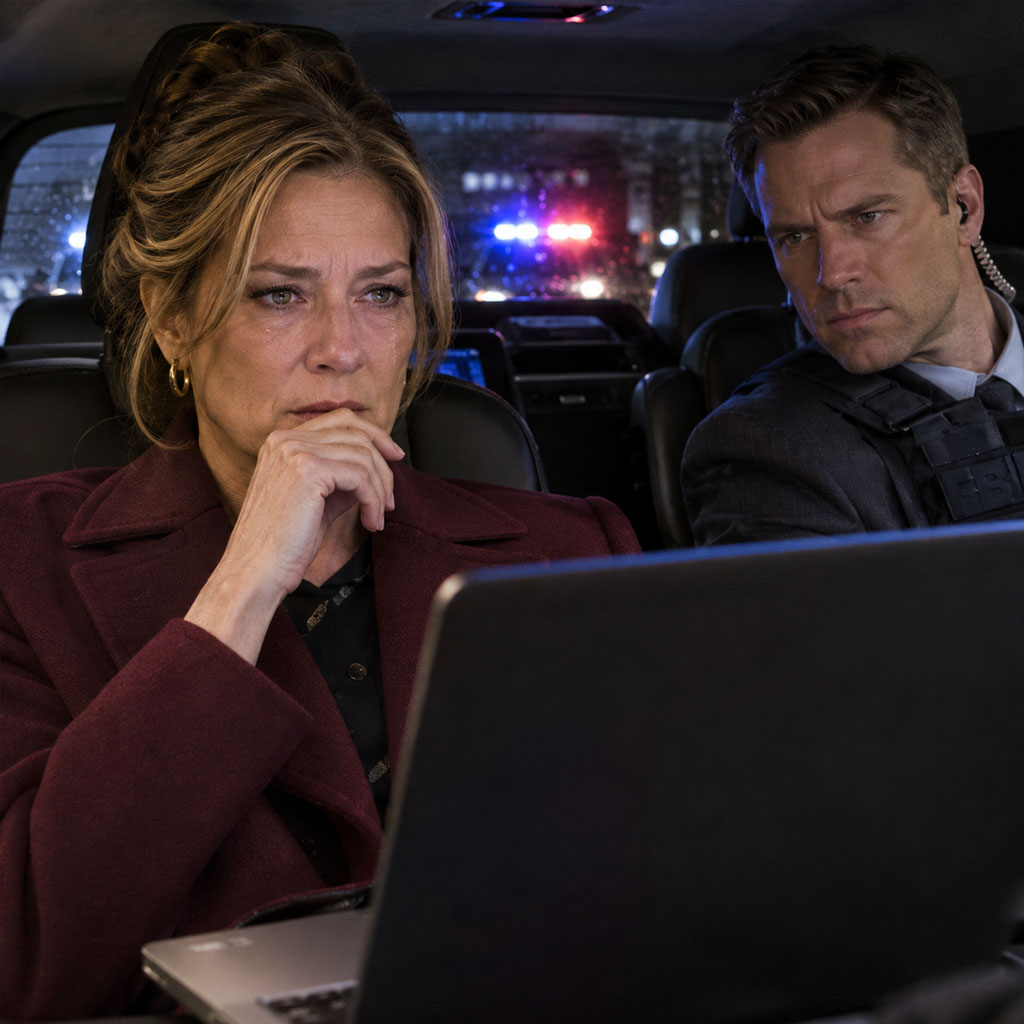
And now, sitting in the government SUV on Christmas Eve, I was watching those same men prepare another suspicious transfer.
Agent Miller pointed at the monitor.
“Five million dollars is moving through a series of associated accounts. Apex Holdings is among the recipients.”
“Who’s authorizing it?”
“Greg appears to be directing the operation. Desmond has been communicating with him.”
I studied the records.
The federal investigation had already established that Desmond controlled the financial decisions behind the scenes. Yet Aaliyah’s name appeared prominently on the company documents.
My stomach tightened.
“He’s positioning her to take responsibility,” I said.
Miller nodded grimly.
“We’re investigating that possibility.”
I remembered Aaliyah standing in my kitchen, telling me that her father wanted her to become somebody.
Now I understood how useful that dream had become to him.
At 9:30 that evening, a new photograph appeared on my phone.
Desmond stood proudly beside Aaliyah, presenting her with an enormous ceremonial check for $200,000.
Vanessa smiled beside them.
The caption read, “Building generational wealth. So proud of our girl.”
I enlarged the photograph.
Aaliyah looked radiant in her emerald gown. Her eyes shone with the excitement of someone who believed her future was finally secure.
I remembered those same eyes looking up at me on Christmas mornings when she was seven.
“Mommy, is this really for me?”
I closed the photograph before the memory overwhelmed me.
Miller’s phone rang.
He listened briefly, then turned toward me.
“Desmond and Greg have gone upstairs to the study. The financial monitoring team is seeing increased activity.”
The next hour passed slowly.
Investigators compared transaction records, reviewed previously obtained evidence, and coordinated with agents positioned near Desmond’s estate.
I wasn’t directing the arrests. That responsibility belonged to the federal officers. My job was to make certain the financial evidence was correctly understood and preserved.
At 11:15 p.m., the monitoring team confirmed the crucial transaction.
Five million dollars had entered an account associated with Apex Holdings.
The money’s documented path connected Desmond’s investment operation, Greg’s real estate network, and the corporate structure registered in Aaliyah’s name.
Miller spoke into his radio.
“The evidence is confirmed. Proceed with the warrants.”
I watched the estate on a secure video feed.
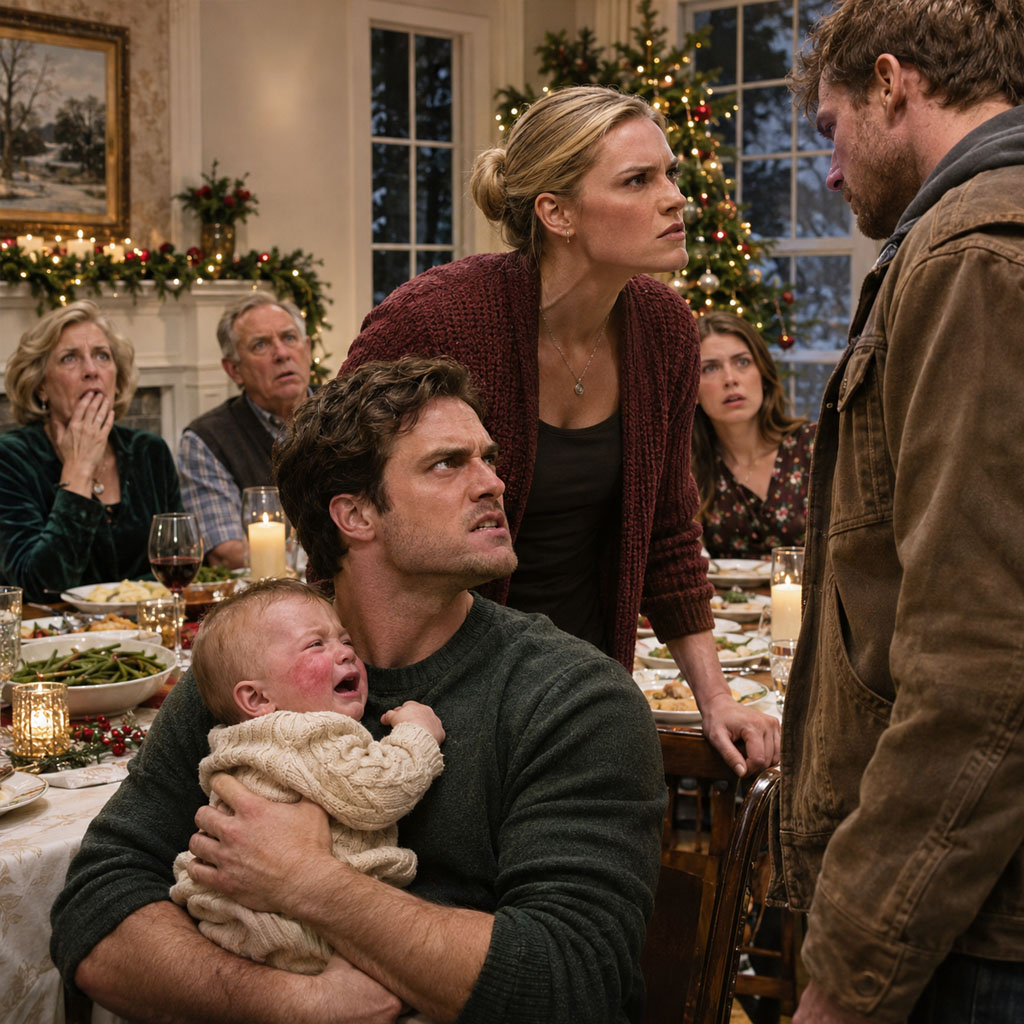
Inside, guests were laughing beneath enormous chandeliers. A string quartet played near the staircase. Waiters carried trays of desserts toward the dining room.
Desmond stood beside the fireplace, apparently preparing another speech.
Then federal vehicles approached the entrance.
The music stopped.
Agents entered, identified themselves, and instructed everyone to remain where they were.
Desmond’s smile disappeared.
Greg tried to leave through a side entrance but was stopped outside.
Vanessa began protesting as investigators secured the property and explained that certain assets were subject to seizure.
Aaliyah stood near the Christmas tree, still holding the ceremonial check.
I watched an agent approach her.
He spoke to her quietly, showed his identification, and asked whether she understood her role as the registered head of Apex Holdings.
She shook her head.
Then he informed her that she needed to accompany investigators for questioning.
My daughter began crying.
Desmond was standing a few yards away as agents placed him under arrest.
“Dad!” she called. “Tell them there’s been a mistake!”
He turned toward her.
For one brief moment, I thought he might finally behave like a father.
Instead, he raised his voice.
“That’s her company! She signed those documents. I didn’t authorize anything!”
Aaliyah went still.
“Dad?”
“Talk to her,” he told the investigators. “She’s the CEO. Check the paperwork.”
My daughter stared at him.
He looked away.
Beside the staircase, Vanessa was pleading with an investigator, insisting she knew nothing about the finances.
When Aaliyah called her name, Vanessa didn’t turn around.
The young woman who’d told me I wasn’t family stood alone among strangers.
At 12:07 a.m., my personal phone rang.
Aaliyah.
I answered.
“Mom?” Her voice trembled, and I could hear sirens in the distance. “Mom, why are you on the news?”
I glanced at the television monitor inside the vehicle.
A local station was showing footage from the estate, followed by an earlier photograph of me identifying me as a financial specialist connected with the investigation.
“Aaliyah, where are you?”
“With the agents. They said I could make a call.” She struggled to breathe evenly. “Mom, they arrested Dad. They said my company is involved in something terrible.”
“I know.”
A long silence followed.
“What do you mean, you know?”
I closed my eyes.
“Sweetheart, listen carefully. Tell the investigators the truth. Ask for a lawyer before answering detailed questions about the company. Don’t sign anything you don’t understand.”
“But Dad said—”
“I know what your father said.”
Her voice broke.
“Mom, he told them it was all me.”
I stared through the dark window.
“I’m sorry, Aaliyah.”
“Please don’t let them take me to prison.”
I wanted to promise her everything would be fine.
But promises were what Desmond had used to ruin her life.
So I gave her the only answer I could.
“Tell the truth, sweetheart. That’s where we have to begin.”
Chapter 3
By Christmas morning, Desmond Washington’s arrest was national news.
Reporters gathered outside the mansion, and financial analysts began explaining how a respected developer had allegedly operated a fraudulent investment network.
Within hours, photographs of Desmond’s glamorous holiday celebration appeared beside reports of frozen accounts and federal charges.
The enormous $200,000 Christmas check became an especially painful symbol of the scandal.
My daughter was being questioned in connection with companies registered in her name.
I didn’t sleep that night.
At the federal office, investigators continued comparing financial records while attorneys evaluated who had actually authorized the transfers.
Desmond’s defense was becoming painfully clear.
He intended to blame Aaliyah.
Greg was already cooperating with investigators in hopes of reducing his own punishment. According to the evidence they reviewed, Desmond had controlled the investment fund while Greg arranged inflated property valuations and helped conceal the movement of money.
But Aaliyah’s name appeared on several critical documents.
Some carried her genuine signature.
Others raised questions.
I examined the records alongside the investigative team and noticed discrepancies in several electronic authorizations.
The dates didn’t match Aaliyah’s documented activities. Certain approvals had originated from devices associated with Desmond’s office. Internal emails indicated she hadn’t been included in important financial discussions.
The more we examined, the clearer the picture became.
My daughter had willingly accepted the title, the expensive gifts, and the prestige. She’d ignored obvious warnings because she wanted to believe the story her father was selling.
But accepting lavish gifts wasn’t the same as knowingly arranging a $150 million fraud.
And the evidence suggested Desmond had deliberately hidden the criminal activity from her.
I carefully organized my findings into a detailed report for the prosecution team.
At the same time, prosecutors made certain I wasn’t placed in a position to influence decisions involving my own daughter. Independent investigators reviewed the evidence, and her attorney was given the appropriate information.
I couldn’t decide whether she would be charged.
I could only make sure the facts were not buried beneath her father’s lies.
Three days after Christmas, I encountered Desmond in a federal interview room where investigators were reviewing financial evidence.
He looked exhausted.
For years, he’d carried himself like a man who owned every room he entered. Now his expensive suit hung loosely from his shoulders.
When he saw me, his expression changed.
“Renee.”
I said nothing.
He leaned forward.
“You know me. You know I would never intentionally hurt our daughter.”
I placed a photograph on the table.
It showed him handing Aaliyah the enormous ceremonial check.
“You told everyone you were investing $200,000 in her company,” I said.
“I was supporting her dream.”
“The investigators have found no evidence that the promised investment was properly funded. They have, however, documented substantial amounts passing through companies registered under her name.”
He looked away.
“Business is complicated.”
“So is raising a daughter without her father’s help.”
His jaw tightened.
“Are you really going to bring our marriage into this?”
“No. Our marriage ended years ago. I’m talking about what you did afterward.”
For a moment, the old charm returned.
“Renee, we’ve known each other for 30 years. Surely you understand there are things I can explain.”
I remembered the nights I’d worked overtime while he promised that one more opportunity would change everything.
I remembered Aaliyah waiting by the window when he failed to arrive for her birthday.
And I remembered my daughter standing in my kitchen, defending him while I begged her to read the documents.
“Then explain them to your attorney,” I said.
Desmond’s expression hardened.
“You’ve always wanted to see me fail.”
“No, Desmond. I wanted you to be the man our daughter needed.”
I picked up my folder.
“You had every opportunity.”
When I left, he called my name again.
I kept walking.
Later that week, Aaliyah’s attorney contacted me.
Independent reviews had confirmed that several important documents had been electronically authorized without my daughter’s knowledge. Records also showed that Desmond and Greg controlled the relevant transactions.
After further investigation, prosecutors determined there wasn’t sufficient evidence that Aaliyah had knowingly participated in the fraud.
She would not face criminal charges.
She remained responsible for answering questions and cooperating with the investigation, but she was free to go.
When her attorney told her, she cried.
Then she asked a question that made my chest ache.
“Did my mom help?”
Her attorney told her the truth.
I’d helped identify evidence that clarified her role.
I hadn’t erased her choices. I hadn’t purchased her freedom or asked anyone to bend the rules.
I’d simply made certain the records told the complete story.
Aaliyah wanted to see me immediately.
I declined.
Not because I’d stopped loving her.
But because I knew there was something she needed to understand before we could talk.
Her father had given her money without teaching her responsibility. Vanessa had given her attention as long as she looked beautiful beside her.
I’d spent years giving her forgiveness before she ever learned to apologize.
I couldn’t keep repeating the same mistake.
Meanwhile, everything around her was collapsing.
Her designer car was repossessed. Accounts connected to the fraudulent businesses were frozen. She had to leave the luxury apartment her father had been paying for.
Vanessa stopped answering her calls.
The friends who had crowded around her at parties suddenly became unavailable.
Her cosmetics brand, which had barely progressed beyond a logo, promotional photographs, and expensive launch events, was effectively finished.
Aaliyah had spent years believing she was an independent businesswoman.
Now she had to apply for ordinary jobs.
Several employers hesitated because of her association with the scandal. Others simply chose applicants with better experience.
She moved between temporary accommodations, sold some remaining personal belongings, and began learning how quickly money disappeared when there was no wealthy father to replenish it.
I learned bits of this through her attorney and occasional messages.
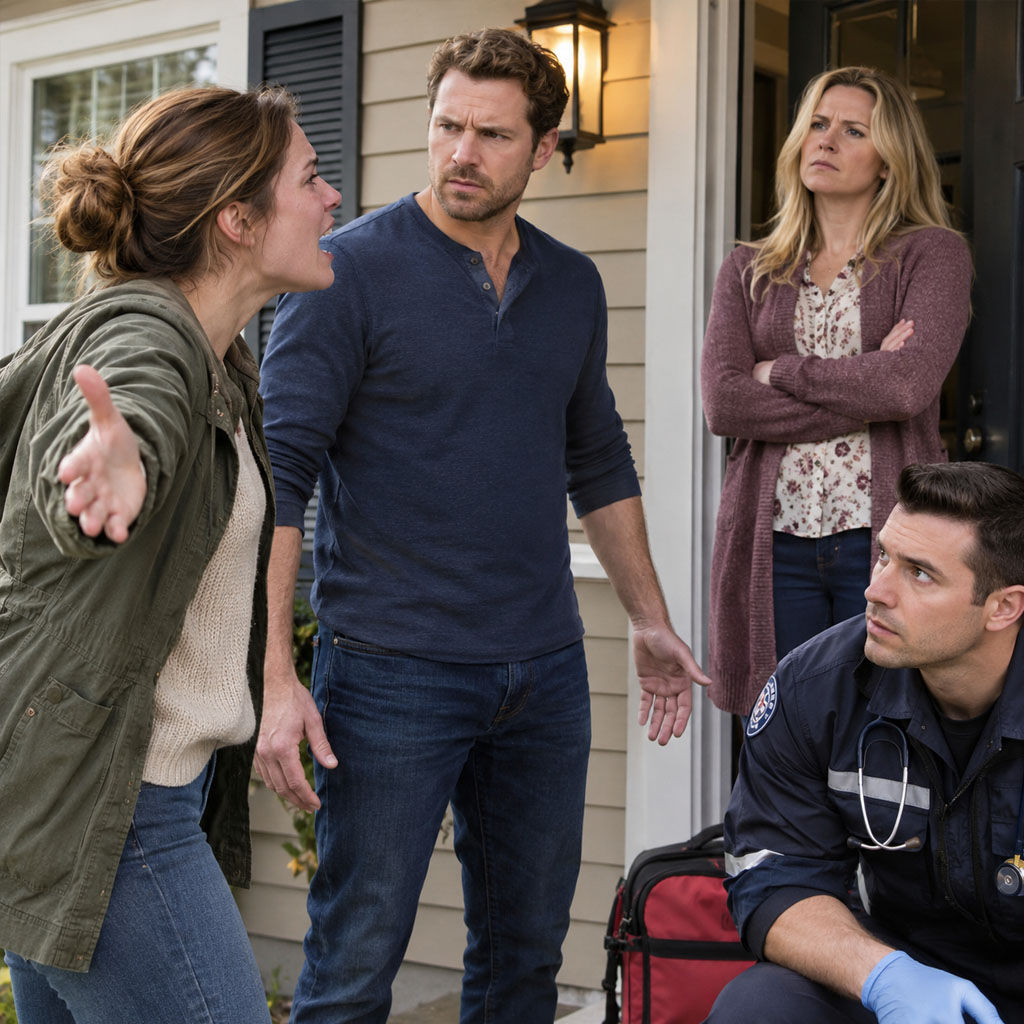
Then, one cold evening, she appeared at my front door.
Rain swept across the porch.
Aaliyah wore an old jacket, inexpensive sneakers, and no makeup. Her hair was damp, and she carried everything she owned in a black travel bag.
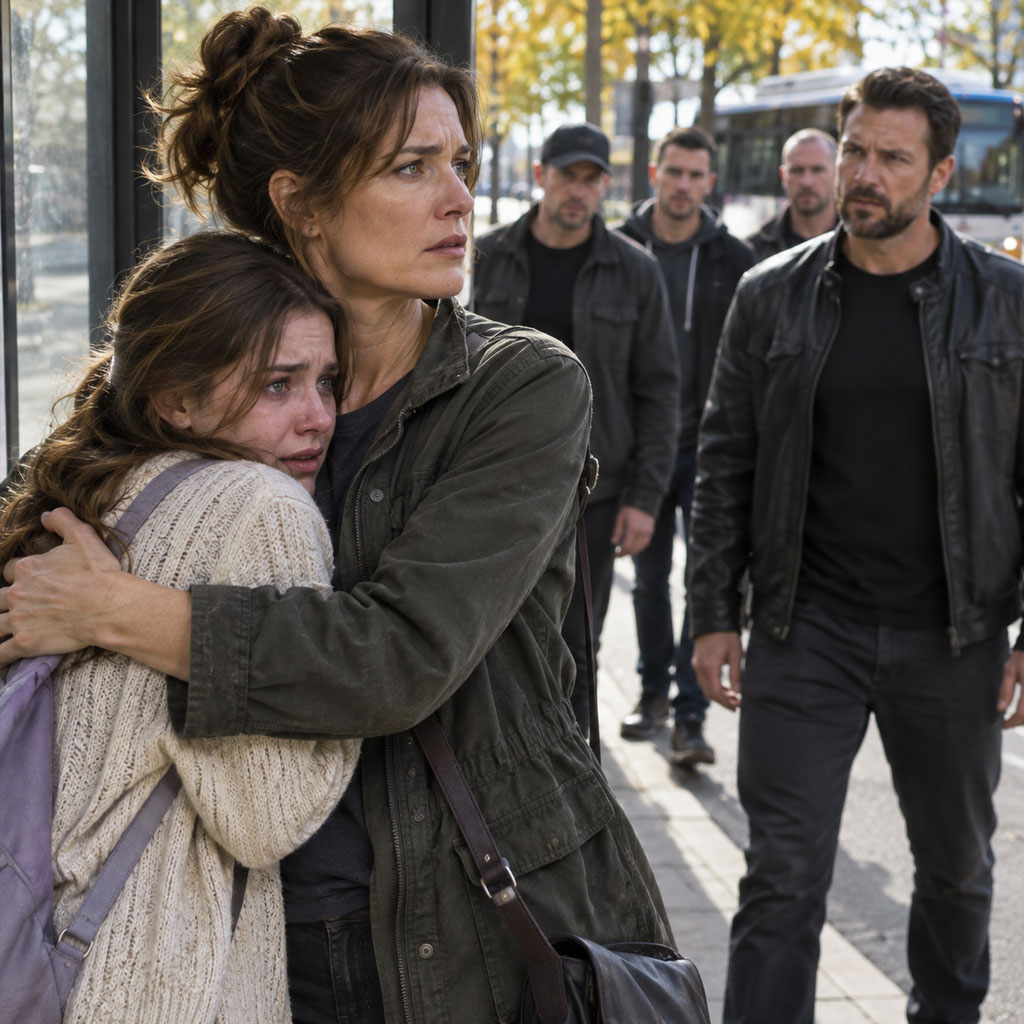
For a second, I saw the little girl who used to run into my arms after a bad day at school.
“Mom,” she whispered.
I held the door open but didn’t step aside.
“What happened?”
She began crying.
“Vanessa blocked my number. Dad’s lawyers won’t help me. I don’t have anywhere else to go.”
I waited.
She wiped her face.
“I know I treated you terribly.”
“Yes,” I said. “You did.”
She looked startled by my answer.
“I was stupid, Mom. I believed everything Dad told me. I thought having money meant being important.”
“You also believed having money made other people less important.”
Her chin trembled.
“I know.”
I looked at the daughter I’d once carried in my arms.
“You humiliated me because I lived modestly. You mocked the work that fed you and put you through school. You told me another woman was your real mother because she could give you expensive things.”
Aaliyah lowered her head.
“I remember.”
“Do you?”
She nodded, tears running down her cheeks.
“I remember all of it.”
For several seconds, neither of us spoke.
Then she reached toward me.
“Please, Mom. Can I come home?”
Chapter 4
My daughter’s hands were shaking.
Part of me wanted to pull her inside, make hot chocolate, find dry clothes, and pretend we could return to the days when every problem had an easy answer.
But Aaliyah was no longer a frightened child.
She was a 28-year-old woman who had made choices that deeply wounded the people who loved her.
I stepped onto the covered porch and closed the door behind me.
“Aaliyah, I believe you’re sorry.”
“Then please let me stay.”
“Being sorry is important. But it doesn’t automatically restore trust.”
She stared at me.
“I’m your daughter.”
“I know that better than anyone.”
“Then how can you leave me like this?”
I felt the familiar pull of guilt.
It was the same feeling that had made me overlook years of cruel remarks, forgotten birthdays, and phone calls that came only when she needed something.
I took her hand.
“I haven’t abandoned you. I helped make sure the truth came out about those documents. I made sure investigators saw how your father used your name.”
Her eyes widened.
“That was you?”
“I contributed the financial analysis. Your attorney and the investigators established the facts. You were cleared because the evidence supported it.”
She covered her mouth.
“Oh, Mom.”
“But I can’t rebuild your life for you.”
She began shaking her head.
“I’ll do anything. I’ll get a job. I’ll pay rent. I’ll clean the house.”
“That’s exactly what you need to do. Work. Learn. Become someone who doesn’t measure her worth by what other people buy for her.”
“Please don’t shut me out.”
I reached into my coat pocket and handed her an envelope.
Inside was $500, along with information about temporary housing, job assistance, and community programs that could help her get back on her feet.
“There’s enough here for a few nights somewhere warm while you make arrangements. I’ve included the number of a housing counselor who can help you find something affordable.”
She looked at the envelope.
“That’s all?”
The question hurt, but it also told me how much she still had to learn.
“That’s what I’m offering tonight.”
She looked toward the house.
“Can we at least talk again?”
I paused.
“Yes. When you’re settled and ready to have a conversation that isn’t just about what you need from me.”
She pressed the envelope against her chest.
“I really am sorry.”
“I hope someday you understand what that means beyond tonight.”
Aaliyah stood on the porch another moment.
Then she walked down the steps and disappeared into the rain.
I watched until she reached the street, where she climbed into a waiting rideshare vehicle.
Only then did I go inside.
I sat in my favorite chair and cried.
Not because I regretted refusing to become her financial safety net again.
I cried because love could be genuine, permanent, and painfully insufficient to repair a relationship that had been neglected for years.
The months that followed were difficult for everyone connected to Desmond’s enterprise.
Greg cooperated with prosecutors, providing evidence about the fraudulent appraisals and hidden accounts.
Brenda filed for divorce, but investigators discovered financial irregularities involving some of the assets she had received. Her comfortable lifestyle vanished beneath legal expenses and unpaid obligations.
Vanessa also filed for divorce.
Without the money that had supported her glamorous online identity, she lost much of her audience and eventually took a job at a diner outside Atlanta.
Desmond’s former friends stopped returning his calls.
Several investors publicly described how they’d trusted him with retirement accounts and business savings.
One couple had invested money intended to reopen their neighborhood grocery store. Another woman had used the proceeds from selling her parents’ house because Desmond promised her investment would support local entrepreneurs.
Their stories stayed with me.
Behind every account number was a person.
That’s what Desmond had never understood.
Money wasn’t simply a number on a screen. It represented years of work, postponed vacations, medical bills carefully paid, and dreams that people might only have one opportunity to pursue.
Eventually, Desmond accepted a plea agreement.
He was sentenced to 25 years in federal prison.
Greg received 15 years for his role in the operation.
The government recovered substantial assets through account seizures, property sales, and other proceedings. Restitution was arranged for the victims, although some losses could never be fully repaired.
I attended the sentencing quietly.
Desmond looked toward the gallery before the judge spoke.
For a moment, his eyes met mine.
I saw no trace of the confident man who’d once laughed at my ordinary apartment and sensible car.
I didn’t smile.
There was nothing joyful about seeing someone waste so many lives, including his own.
When the proceedings ended, I walked outside into the sunshine.
For the first time in years, I felt as though I could breathe freely.
Several months later, I traveled to Washington, D.C., for a meeting concerning the financial disclosures I’d originally submitted.
My work had helped expose the scheme, and part of the evidence had been provided through an authorized whistleblower process separate from my official accounting duties.
After reviewing the qualifying information and the applicable enforcement proceedings, the agency had approved a substantial award.
I sat across from the attorney who explained the decision.
“Mrs. Washington, your original documentation was instrumental in identifying the financial misconduct and tracing assets.”
She passed me the award notice.
I looked at the amount.
$15 million.
For several seconds, I couldn’t speak.
I’d spent most of my adult life watching every dollar. Even after my career became successful, I’d continued living modestly because financial security mattered more to me than appearances.
Now I was looking at a sum that could change my life completely.
The attorney smiled.
“Congratulations.”
I thanked her.
But my thoughts weren’t on luxury cars or beautiful houses.
I was thinking about the woman who’d sold her parents’ home to invest with Desmond.
And the small-business owners who had believed his promises.
I knew what I wanted to do.
Chapter 5
By the following spring, the paperwork was complete.
I established the Washington Women’s Enterprise Foundation, a nonprofit organization focused on helping aspiring women entrepreneurs build legitimate businesses.
We offered financial education, mentorship, and carefully reviewed funding opportunities, with particular attention to women who’d lacked access to reliable business advice.
The foundation wasn’t about making me famous.
It was about creating opportunities without deception.
Our first three participants were women from the Atlanta area.
One wanted to open a neighborhood bakery. Another had developed an affordable line of hair-care products. The third hoped to expand a home health service she’d operated for years.
They reminded me of the young woman I’d once been.
Hardworking. Determined. Full of plans that were bigger than their bank accounts.
I made certain each understood the documents she signed.
No mysterious guarantees. No promises of effortless wealth. No titles handed out merely to make someone feel important.
Real businesses required real work.
And respect had to be earned.
One afternoon, after a foundation meeting, a local magazine called to request an interview.
The reporter asked why I’d chosen to support women entrepreneurs instead of retiring.
I smiled.
“Because I know what it means to have a dream and not enough resources to pursue it. I also know how important it is to have someone tell you the truth.”
The article appeared several weeks later.
It included a photograph of me standing beside the three women we’d funded.
The headline described a former federal financial specialist helping Atlanta entrepreneurs build honest, sustainable businesses.
I received kind messages from people across the city.
But there was one person I didn’t hear from.
Aaliyah.
I knew she’d found work at a discount grocery store.
I knew she was renting a small room and taking the bus to her shifts. She was learning to manage her expenses without expensive credit cards or family money.
Beyond that, I respected the distance between us.
I hoped she was safe.
I hoped she was becoming stronger.
And I hoped the lessons she’d learned would eventually matter more to her than what she’d lost.
One Friday evening, I was sorting through foundation applications when an envelope arrived in the mail.
My daughter’s handwriting was on the front.
I recognized it immediately.
For several minutes, I simply held the letter.
Then I opened it.
“Dear Mom,
“I’ve started this letter so many times that I’ve lost count.
“I wanted to ask you to forgive me. Then I realized I was still thinking about what I wanted instead of what I’d done.
“I saw the article about your foundation. You looked happy, and I cried when I saw the picture.
“Not because you have money now.
“I cried because those women were standing beside you the way I used to stand beside you when I was little.
“You looked proud of them.
“I remembered when you used to look at me that way.
“I work at a grocery store now. Sometimes I have to count change before I can buy lunch. I take the bus, and I wear the same shoes almost every day.
“I used to think people with ordinary jobs were failures.
“Now I work beside people who are raising families, caring for sick parents, and showing up every morning even when they’re exhausted.
“They’re good people, Mom.
“You tried to teach me that.
“I didn’t listen.
“I finally understand that Dad didn’t make me important when he gave me expensive things. And you weren’t less important because you couldn’t.
“You gave me a childhood where I felt safe. You worked for everything we had. You loved me even when I made it difficult.
“I repaid you by making you feel ashamed of the life you built for us.
“I’m sorry.
“I’m not writing to ask for money or a place to stay. I know I have to earn my own way.
“I just wanted you to know that I remember what you did for me.
“And I remember what I did to you.
“If you ever want to have coffee, I’ll be there.
“Love, Aaliyah.”
I read the letter twice.
Then I placed it beside the family photograph on my desk.
In that photograph, Aaliyah was nine years old. We stood outside our little apartment beside a Christmas tree we’d carried home together.
She was missing one front tooth.
Her arms were wrapped around my waist.
Both of us were laughing.
I touched the edge of the picture.
For years, I’d believed that being a good mother meant preventing my daughter from experiencing pain.
Now I understood that sometimes love required allowing someone to live with the consequences of her decisions.
I couldn’t make Aaliyah become thoughtful, honest, or responsible.
She had to choose those things herself.
And for the first time in a long while, her letter suggested she might be choosing them.
I took out a sheet of stationery.
My response was short.
“Dear Aaliyah,
“Thank you for your letter. I appreciate the thought you put into it.
“I’m glad you’re working toward a stable life, and I hope you continue.
“We still have things to discuss, and rebuilding trust will take time.
“But I would be willing to meet for coffee.
“Love, Mom.”
I sealed the envelope before I could overthink it.
The following Saturday, we met at a small coffee shop near her apartment.
Aaliyah arrived ten minutes early.
She wore jeans, a plain blue sweater, and a pair of clean but well-worn sneakers.
When she saw me, she stood so quickly that her chair scraped the floor.
“Hi, Mom.”
“Hello, sweetheart.”
Her eyes filled with tears, but she managed a smile.
We sat across from each other.
There were no expensive gifts on the table. No promises of business investments. No photographers waiting to capture a perfect family moment.
Just two cups of coffee.
For a while, we talked about ordinary things.
Her job. My foundation. The weather. A book she’d recently borrowed from the library.
Then she looked down at her hands.
“I don’t expect everything to go back to the way it was.”
“Neither do I,” I said.
She nodded.
“But I’m grateful you’re here.”
I reached across the table and touched her hand.
“So am I.”
It wasn’t a complete reconciliation.
There were still painful memories, difficult conversations, and years of trust to rebuild.
But it was an honest beginning.
And that mattered more to me than any grand apology delivered in desperation.
As we left the coffee shop, Aaliyah asked if she could walk with me to my car.
We moved slowly along the sidewalk, passing storefronts and people hurrying through their Saturday errands.
At the curb, she stopped.
“Mom?”
“Yes?”
“Do you remember our old Christmas tree? The crooked one?”
I laughed softly.
“How could I forget? We had to put a book under one side of the stand.”
She smiled.
“I used to think it was the prettiest tree in the world.”
“It was pretty special.”
Her expression grew thoughtful.
“I think I was happiest back then.”
I looked at her.
“We didn’t have much.”
“I know.” She swallowed. “But I had you.”
I felt tears gather in my eyes.
This time, I didn’t try to hide them.
Aaliyah hugged me carefully, as though she wasn’t certain I’d welcome it.
I hugged her back.
Neither of us made promises about the future.
We didn’t need to.
We had finally begun telling each other the truth.
That evening, I returned to my home overlooking Atlanta.
The city lights glittered beyond the windows, and a warm breeze moved across the balcony.
I thought about Desmond, who’d mistaken wealth for power. I thought about Vanessa, who’d treated public admiration like love. And I thought about the people whose savings had helped finance a world built on deception.
Most of all, I thought about Aaliyah.
She’d learned that a designer dress couldn’t give her dignity, a luxury car couldn’t give her character, and a wealthy father couldn’t guarantee her safety.
I had learned something too.
I could love my daughter without rescuing her from every hardship. I could forgive her without pretending the past hadn’t happened. And I could protect my own peace without closing my heart forever.
The $15 million award had changed what I could accomplish.
But it hadn’t changed what I valued.
A secure home. Meaningful work. Honest relationships. The chance to make someone else’s life a little better.
Those were things money could support, but never purchase.
I stepped inside, where the letter from my daughter rested beside our old Christmas photograph.
Then I turned off the balcony lights.
For the first time in years, I wasn’t waiting for Desmond to change or for Aaliyah to choose me over someone else.
I had chosen a life built on honesty, kindness, and self-respect.
And whatever tomorrow brought, that was a life I intended to keep.
THE END.
⚠️ All characters and events are fictional. Do not imitate or apply them in real life. 😌😌😌