Chapter 2
Cory graduated on a hot Sunday in June. Mom did not attend, and neither did Jenna. Floyd sat beside me in the bleachers wearing his best bolo tie and applauded so hard when Cory’s name was called that people turned around to look at him.
That evening Mom sent a text saying she hoped I was proud of what I was teaching my son. I answered, I am. Good night, Mom. Then I put the phone down.
Before we left for Japan, Floyd helped Cory prepare the Civic. They disconnected the battery, checked the tires, and covered the car in the garage. Then Floyd glanced at the spare-key drawer in my kitchen and asked whether Mom still had a key to my house.
I told him she did. I had given it to her after Spencer died, back when there were days I could barely remember where I had left my shoes. Nine years had passed, and somehow she still had access to my home. Floyd offered to change the locks.
I should have said yes. Instead, I told him no because some stubborn part of me needed to know whether my mother still had a line she would refuse to cross. A new lock would have protected me from the answer. I wanted the truth.
Tokyo gave Cory and me room to breathe. We ate noodles beneath train tracks, walked until our feet hurt, and spent Saturday night in a waterfront parking garage where car enthusiasts gathered around polished machines as respectfully as people in a museum. At 11:58, Cory pulled an old photo from his phone.
Spencer and seven-year-old Cory were sitting on our old couch with popcorn between them, both pointing toward the television. “Almost midnight,” Cory said. I slipped my arm through his and told him two minutes was close enough. Neither of us said what we were really thinking.
Two mornings later, I took one picture of Cory grinning over breakfast near an outdoor market. I posted it with a simple caption: Two weeks, just the two of us. Proud of you, kid. Twenty minutes later, Jenna commented publicly, Call me right now.
Then my phone started ringing. Jenna called, then Mom, then a cousin who usually contacted me only when someone was sick or dead. Finally Aunt Hollis texted, asking where I was because everyone was standing at the pavilion and nobody was there to set anything up.
I stared at the message while Cory watched me. “The party,” I said. “There are people at the pavilion.” He frowned and reminded me that I had canceled it nearly a month earlier.
I opened the text I had sent Mom twenty-six days before. The READ receipt was still there. I took a screenshot and sent it to Jenna with one sentence: I told Mom twenty-six days ago. Ask her why she didn’t tell you.
I sent the same proof to Aunt Hollis and apologized that she had traveled. Then I put my phone away. Cory asked if I was going to call everybody. I told him no and pointed at his breakfast.
Aunt Hollis reached me later that day. Sixty-two relatives had shown up, including cousins who drove from Indiana and Hollis herself, who had flown from Arizona. Before I could apologize again, she told me she had seen the screenshot and knew the truth.
One week after I canceled the party, Mom had sent relatives a new invitation. She said the event was still happening but had become a family celebration for all the grandchildren. There would also be a “special surprise” for Seth.
The surprise was Cory’s Civic. Mom had told everyone that Cory would hand Seth the keys in front of the family and that I would eventually come around. She had planned the public moment as if pressure from sixty people would make my son surrender.
When nobody arrived to set up the pavilion, Mom told everyone I had canceled without warning. Then Jenna found my Tokyo photo, and Mom claimed I had taken money meant for the family and spent it on a vacation. Hollis showed the relatives my screenshot.
That night, Mom left four voicemails. I listened to the beginning of the first one, which started with, “You humiliated me in front of this entire family.” I deleted it before she finished and never listened to the other three.
Jenna texted, You could have told me. I replied that I had told Mom and that Mom had been the one sending new invitations after the cancellation. Then I turned my phone off and went back to my son.
For several days, Japan became quiet again. In Kyoto, Cory and I walked through a bamboo grove before the crowds arrived, and he told me he had changed his college major from business to mechanical engineering. He said his father probably would have suggested business because it was safer.
I told him Spencer would have said to choose whatever made him look the way he looked right then. Cory asked what that meant. I said, “Like somebody who finally knows what belongs to him.”
Six nights after the Tokyo photo, I woke in Kyoto to a strange three-note alarm coming from Cory’s phone. He sat upright and stared at the screen. “Mom,” he said, “the car is moving.”
The tracking app showed a blue dot leaving our address. For a moment, neither of us spoke. Then the dot turned onto Maple Avenue and headed toward the highway.
I asked whether Cory had given anyone permission to use the car. He said no. When I asked about the spare key, he reminded me that it was in the kitchen drawer. We both knew exactly who still had a house key.
I called Floyd first. He did not ask questions before telling me he was putting on his shoes. Then I called the sheriff’s office and explained that my adult son’s vehicle had been removed from our locked garage without permission while we were overseas.
The dispatcher asked whether I knew who might have taken it. Forty years of family conditioning told me to soften the answer and protect everyone from embarrassment. Instead I said, “My mother, my sister, or my nephew.”
The tracking dot stopped at Jenna’s house. About fifty minutes later, Floyd called and said deputies were there. The Civic was in the driveway, and Seth had been sitting behind the wheel when they arrived.
Mom was standing on the lawn insisting that she had given permission. Floyd’s voice went flat when he told me that part. “Permission for a car she doesn’t own,” he said.
The deputy asked to speak with Cory. My son sat on the edge of a hotel bed six thousand miles away and answered every question carefully. No, he had not given Seth permission, and no, Seth was not insured to drive the Civic.
The deputy asked whether Cory wanted the situation handled informally as a family misunderstanding. Cory looked at me, and I deliberately said nothing. After a moment, he answered, “No, sir.”
Floyd drove the Civic home. He removed the spare key from my kitchen drawer and called a locksmith, who changed every lock in the house that afternoon. Mom called me eleven times.
The twelfth contact was a text: Call off the police or don’t bother coming home. I read it beside the hotel window and felt something surprising. I was no longer afraid enough to obey her.
Chapter 3
We finished the trip. My mother had already taken enough time from my life, and I refused to give her the final six days of Cory’s graduation gift. When we landed back in Ohio, Floyd was waiting at the curb in the silver Civic.
Cory stopped when he saw it. He walked over and laid his palm flat on the hood, exactly as he had the night he bought it. Floyd told him there wasn’t a scratch.
On the drive home, Floyd unclipped the dashboard camera and handed it to me. He reminded me that it recorded sound whenever the engine was running. He had not listened because, in his words, “It wasn’t mine to listen to.”
That evening, Cory and I sat at the kitchen table with the memory card in my laptop. There were six recordings from the afternoon the Civic was taken. We played every one.
When the last recording ended, Cory put his head down on his folded arms. I rested a hand between his shoulders and waited until his breathing evened out. Neither of us needed to discuss what came next.
The next morning, Aunt Hollis forwarded a message Mom had sent to the family group chat. Family meeting Sunday, 2 p.m. Mandy owes this family an explanation and Seth an apology. It is time we settled this.
Cory told me I didn’t have to go. I said I knew that, but I was going anyway. Then he asked if he could come too, and I told him he had earned a chair at that table.
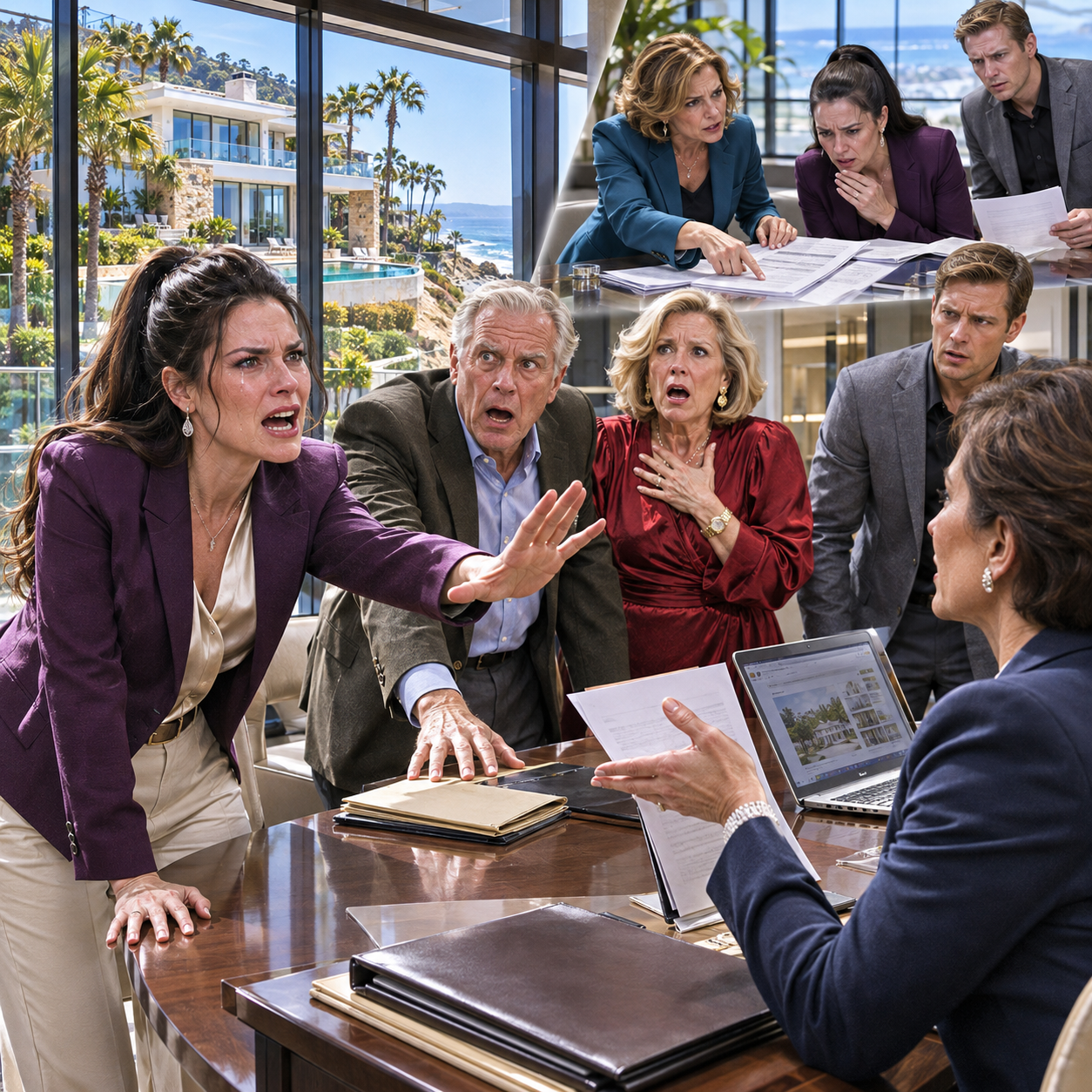
Mom’s living room was full Sunday afternoon. My Indiana cousins were there, along with Aunt Hollis, Jenna, Seth, two church friends, and relatives who had stood around the empty pavilion. Mom wore her pearls and stood in front of the fireplace like she had prepared opening remarks.
When Cory, Floyd, and I entered, the room went quiet. Mom told me to sit down. I said I preferred to stand.
She turned to everyone and announced that I had planned a celebration for the entire family, canceled it because Cory refused to help Seth, and then flown to Japan with money supposedly meant for everyone else. She also described Seth taking the Civic as borrowing it for one afternoon. In her version, I had humiliated a seventeen-year-old by involving law enforcement.
Jenna mentioned Seth now had a juvenile court appointment. Mom nodded and announced her solution. I would withdraw the complaint, reimburse relatives for their travel expenses, and Cory would sign the Civic over to Seth as an apology.
Then, Mom said, we could all move on and be a family again. Nobody spoke. She looked at me as if she expected me to begin apologizing.
I asked if she was finished. Mom said she would be finished when I apologized. I took out my phone and told her calmly that no apology was coming.
I reminded everyone that I had canceled the party twenty-six days in advance and sent Mom written notice. She had read the message within one minute. Mom immediately said she hadn’t believed I was serious.
I asked whether she had read the text. She admitted she had but claimed she thought I was being dramatic. Aunt Hollis shifted in her seat.
I placed my phone on the coffee table. “Then let’s hear exactly what you thought.” I turned the volume up and pressed play.
The recording began inside my garage. We heard Seth reconnecting the Civic’s battery and boasting that it took only a minute. Then the engine started.
Seth laughed and said the car had more power than he expected. Mom’s voice came from the passenger seat. “Slow down. You’ll get us all hurt before it’s even yours.”
Seth stared at the carpet while the room listened. Then Jenna’s recorded voice asked, “What if Mandy calls somebody when she finds out?” My mother laughed.
“Mandy hasn’t said no to me and meant it in forty-five years,” she said on the recording. “She’ll yell on the phone and then she’ll sign the title because I’ll tell her it’s what keeps the family together.”
Nobody moved. The recording continued, and Jenna asked what they were going to do about the canceled graduation party because Aunt Hollis and the other relatives were furious.
“Let them be furious at her,” Mom answered. “I got her text. I read it twice. I just didn’t believe she’d follow through. Now she looks like the one who embarrassed everybody instead of me.”
Aunt Hollis slowly turned toward her sister. Before anyone could speak, Seth’s recorded voice came through again, quieter and younger.
“Grandma, I keep telling you, Cory didn’t shove me on Easter. I grabbed the keys from his jacket. He only took them back.” My mother replied in the same warm voice she had used on us as children. “Nobody needs to know that part, sweetheart.”
I stopped the recording. The only sound in the room was the grandfather clock ticking in the hallway. Aunt Hollis was the first to speak.
“You read Mandy’s cancellation twice,” she said. Mom tried to call the recording out of context, but Hollis asked what possible context could make it acceptable. One of my cousins reminded her that his wife had taken unpaid time off to attend the fake party.
For once, Mom had no easy audience. Every person in the room had heard the truth from her own mouth. Floyd looked at Cory and quietly said his name.
Cory stepped forward and told his grandmother he had never shoved Seth. He reminded her that she had repeated that story for two months even though she knew it was false. Then he turned toward his cousin.
“I would’ve driven you anywhere you needed to go,” Cory said. “I told you that.” Seth’s face crumpled and he said he knew.
Then I looked at Mom. I told her about my Corolla, about working eighteen months to buy it, about watching her give it to Jenna, and about hearing her later rewrite the story as her own generosity.
Mom dismissed it as something that had happened thirty years ago. I told her she was right, and that I had spent those thirty years pretending it had not taught me exactly how our family worked. I was always expected to give, then smile while somebody else received the credit.
“You were right about something else,” I said. “I usually did give in.” For most of my life, I signed whatever would calm the room, paid whatever would solve the problem, and apologized even when I had done nothing wrong.
“But this car is not mine to surrender.” I looked at Cory. “It belongs to him, and I will not be the reason he learns the same lesson I learned in this living room.”
Mom’s voice rose. “You’re going to let your nephew go to court over a Honda?” I told her Seth had made a choice and would have an opportunity to learn from the consequences.
Then I looked at Jenna. “We are not withdrawing the complaint.” Jenna lowered her eyes and covered her mouth with one hand.
I turned back to Mom and told her there was one more thing. For six years, I had quietly sent her six hundred dollars every month to help cover property taxes and homeowners insurance after Dad died. Several relatives looked at her in surprise.
Seventy-two payments came to $43,200. I had never told anyone because I believed helping my mother did not need to become a public performance. The latest payment had already cleared.
“There won’t be another one,” I said.
Chapter 4
That was the moment Mom finally lost control of the room. It wasn’t only about losing six hundred dollars a month. What hurt her more was that everyone had just learned the daughter she called selfish had quietly helped pay her bills for six years.
“Get out of my house,” she said. I told her we were already leaving. Aunt Hollis stood and picked up her purse.
Mom stared at her sister. “Where are you going?” Hollis said she was getting a hotel. When Mom called that ridiculous, Hollis reminded her that she had just flown across the country because of a lie.
There was no screaming confrontation after that. The consequences came slowly, mostly through silence. Family members simply stopped calling Mom as often.
Her annual Fourth of July cookout had been a tradition for more than thirty years. That year, almost everyone declined the invitation. The gathering quietly disappeared.
The story about Cory also died. For weeks, relatives had been told about the grandson who shoved his grieving cousin. Now everyone had heard Seth admit the truth in his own voice.
Seth entered juvenile diversion. He completed community service at a food pantry, took a driving-safety course, and wrote Cory a formal letter of apology. The letter arrived in August.
Cory read it twice at the kitchen counter. Near the end, Seth wrote that Grandma had kept promising Cory would give in, and he wanted to believe her because then taking the Civic wouldn’t feel like stealing. He also admitted that Cory had never shoved him on Easter.
Cory sat quietly with the letter for a while. Then he picked up his phone. I asked what he was doing.
“Texting Seth,” he said. Floyd and Cory were changing the Civic’s oil on Saturday, and Cory invited his cousin to help. Seth came.
I watched the three of them through the kitchen window. Floyd stood between the boys with one hand resting on the edge of the engine bay, explaining something while both teenagers listened. They did not become best friends overnight.
They did something more useful. They started over with the truth between them.
Jenna sent me one message that summer. She said she genuinely had not known Mom read the cancellation text and swore she believed the party was still happening. I mostly believed her.
I also remembered that she had been sitting in the back seat of my son’s car when it left my garage. I told her I believed that she had not known about the text, but I was not ready for anything more. For once, she did not push.
Without my monthly help, Mom eventually sold her house. It was too large and expensive for one person anyway, though she told people she was selling because the market was favorable. She moved into a two-bedroom condo across town.
I expected to feel triumphant when I heard. Instead I felt tired and strangely light. I had not taken her home away from her.
I had simply stopped paying for the stage where she had spent years directing the rest of us.
Mom called me once in October. “I suppose you’re happy,” she said. I told her I was not happy.
“I’m finished,” I said. “Those aren’t the same thing.” There was a long silence on the line.
Then she used one of the oldest weapons she had. “Your father would have been ashamed of you.” Dad had been dead eleven years, and he had spent most of his marriage avoiding confrontation.
For years, I had mistaken his silence for kindness. Maybe it had been fear. Maybe it had been exhaustion.
“Maybe,” I said. “But Spencer wouldn’t have been.” Then I ended the call.
I waited for the old panic to arrive. Usually, after upsetting Mom, I would feel compelled to call back, soften my words, or make sure she was all right. That urge never came.
It had been part of me for so long that I only noticed it was gone when I went looking for it.
Chapter 5
Cory started college at the end of August. He drives the Civic forty minutes each way, five days a week, and every Friday he takes it through the same car wash near the grocery store where he once bagged groceries. On the passenger side of the dashboard, he keeps a photograph tucked near the windshield.
It shows Spencer and seven-year-old Cory sitting on our old couch with a bowl of popcorn between them. Both are pointing at a television showing Japanese cars. Cory keeps the picture where he can see it whenever he drives.
The morning he left for his first college class, I stood in the driveway wearing my robe and holding a travel mug for him. He came outside with his backpack over one shoulder and looked at me. “You’re going to cry,” he said.
I told him I absolutely was not. He said I was already making “the face.” I told him I did not have a face.
He laughed and hugged me before getting into the car. By then he was six-foot-one, so his chin rested on the top of my head. Then he backed carefully down the driveway.
At the street, Cory stopped and lowered the window. “Mom?” he called. I answered.
“Thanks for not signing.”
I knew he did not mean only the title to the Civic. He meant all of it. He meant the moment I finally refused to decide that family peace was worth more than his right to keep what he had earned.
For most of my life, I believed being a good daughter meant giving something up before anyone had to ask twice. Sometimes it was money, sometimes time, sometimes holidays, and sometimes nothing more visible than my right to be angry. I thought keeping the family together meant becoming the easiest person to disappoint.
Then my son spent three years earning one silver Honda. He said no when someone tried to claim it. Because he said no, I finally learned that I could too.
The blue graduation binder still sits on a shelf in my kitchen. Inside the front cover, my handwriting says: $8,600 — Tuition. I meant it as the cost of finally learning a lesson I should have learned decades earlier.
A few weeks after college started, Cory found the binder. Under my note, he added two words in black pen. Worth it.
He was right. Family can ask for help, disagree with you, or even be disappointed in you. But love does not give anyone ownership of something they did not earn.
Sometimes protecting your child means refusing to keep the peace for people who only feel peaceful when you are the one surrendering. Sometimes the most important inheritance you can give your child is not money, property, or a car. It is permission to say no without believing that love requires an apology.
THE END.
⚠️ All characters and events are fictional. Do not imitate or apply them in real life. 😌😌😌