“You Fly Helicopters? That’s Cute.” My Sister Said It In Front Of Everyone. I Just Smiled—Until Her Fiancé’s Colonel Heard My Old Callsign. He Turned, Stared At Me, Then Asked, “Kestrel… Is That Really You?”
At my sister’s engagement dinner, she told forty-three guests I was too gentle to have seen combat. Our father stared at his plate, and her fiancé let the insult hang between us. I asked her, calmly, to return the brass coin she had taken from my purse. By dessert, nobody was laughing, and the man she planned to marry was asking questions she couldn’t answer. Three weeks later, an email from the museum showed me that her cruelty hadn’t been spontaneous.
Part 1
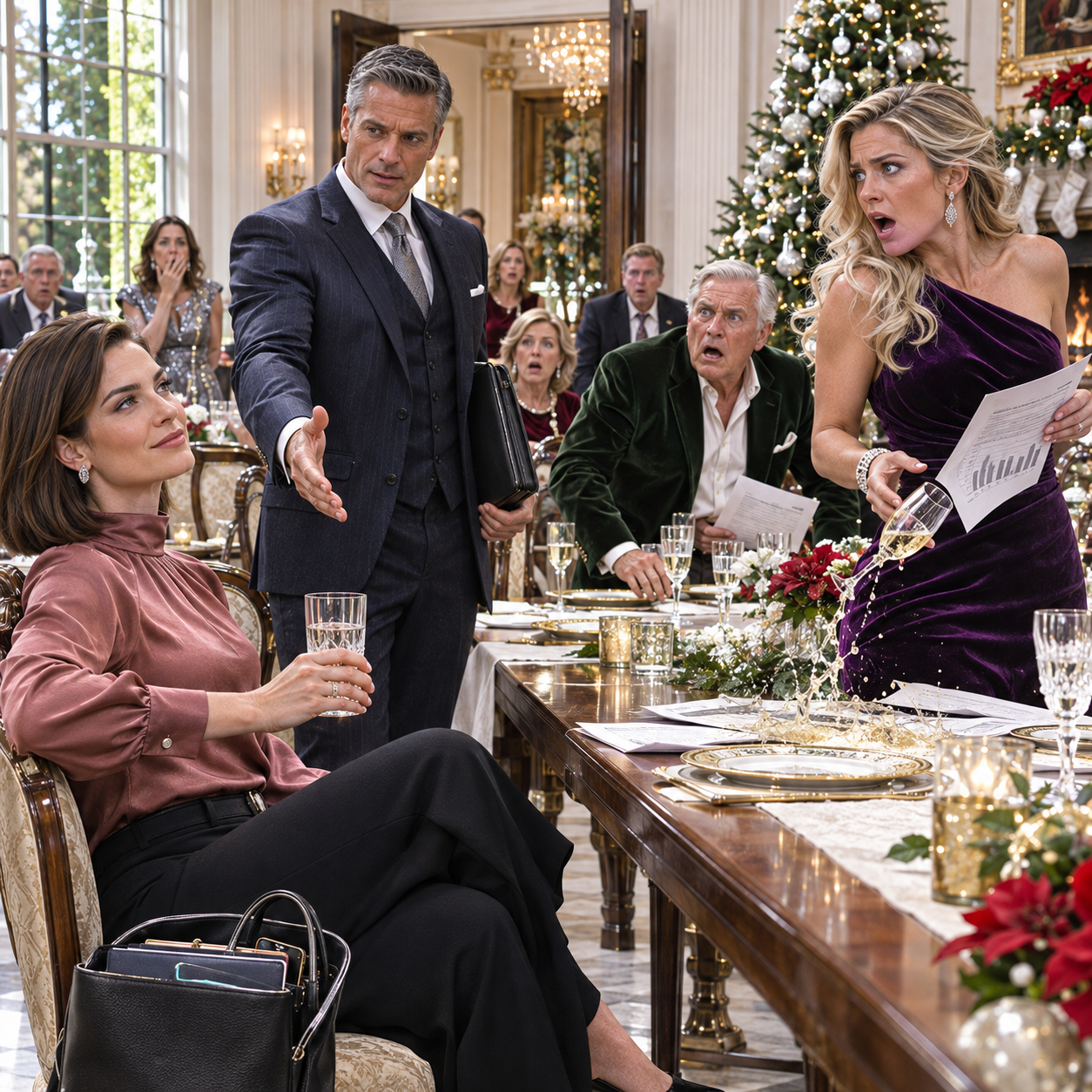
My sister waited until the waiters had cleared the salad plates to tell forty-three people I was too soft for combat. She worked in public relations and knew when a room would carry a remark. “Eliza did her Army years behind a desk,” she said, resting one manicured hand on her fiancé’s shoulder. “Which is fine. Somebody has to keep the real soldiers organized.” Dad examined his glass; Major Graham Ellery, her fiancé, did not laugh. I laid my napkin across my knees and asked the waiter for more water.
Blythe was thirty-five, and had a gift for making insults sound affectionate. She had planned her engagement dinner at the Front Range Aviation Museum outside Colorado Springs, where aircraft hung under steel rafters and mountains filled the windows. Her slideshow featured her and Graham hiking, laughing, and posing beside an Apache helicopter. Under that photograph she had written, “Graham showing me what the Army actually does.” I had flown that aircraft for years. At the next table, a couple asked whether Graham had flown one himself, and Blythe promised he could explain the aircraft after dessert.
When our mother died, I was nineteen and Blythe was thirteen, and my grief apparently could wait. I took a semester off college, paid bills and packed lunches while Dad, a high school principal, sat among wilting lilies. Blythe slept on a mattress beside my bed for six months. Dad praised my reliability, then praised Blythe’s achievements with undisguised excitement. I became the person who handled trouble quietly; she became the person whose successes were announced. I taught her to drive, paid the deposit on her first apartment, and answered calls after breakups without reminding her how seldom she called just to talk.
After graduating with an engineering degree, I joined the Army and went to flight school. Dad told his colleagues I worked in military logistics, because he found “aviation” frightening. When I corrected him, he said, “At least it sounds stable.” Stability seemed an odd word for a vibrating cockpit. In flight school, I learned how much trust it takes to put an aircraft in someone else’s hands and how quickly a careless assumption can break that trust. Over the years, the practical shorthand became family history: Eliza handled schedules; Eliza didn’t do danger; Eliza was sensitive. Eventually, I stopped correcting them.
I never told them about the day my gunner, Chief Warrant Officer Nora Keene, spotted a possible rifle on a hillside. Soldiers in the valley were taking fire, and we had clearance to respond. The figure moved strangely, so I told Nora to hold. Four seconds later, the shape resolved into a length of irrigation pipe and a child appeared behind the man carrying it. We found the actual source of the gunfire farther up the ridge. Those four seconds sent two children home alive.
The pale scar crossing my left wrist came from another deployment, one I almost never discussed. Tonight, long sleeves concealed it. A brass challenge coin lay beside my keys, its edges worn smooth against my thumb. Nora was retiring that week, and her photographs of our old crew had made me reach for it before leaving home. Graham had noticed my wrist when we first met; he had also noticed how I chose the chair that faced the restaurant door. When he asked about aircraft, Blythe answered, “Transport things.”
He was an armor officer with a slight stiffness in one knee and a manner that suggested he preferred listening to talking. I liked him until I noticed how easily he let Blythe speak for others. At Christmas she told him I’d never deployed anywhere dangerous, and his eyes moved to me for confirmation. I said I’d spent time overseas, but she began another story before I finished. Later he said, “Your sister seems certain about your career.” “About most things,” I replied; he changed the subject.
Before the speeches, an older guest fainted near an exhibit railing. I knelt beside him, asked a server to call emergency services, and told Graham to make room for the paramedics. The man woke bewildered, clutching his jacket. He thanked me twice as the medics lifted him onto their stretcher, while Graham held the door. A paramedic recognized me from an aviation safety course. “Colonel Voss,” he said, examining the man. Blythe heard him and laughed afterward that people around military bases called everyone colonel. “Lieutenant colonel,” I clarified when Graham asked. “Active duty.” Blythe changed the subject.
Now, at dinner, Graham’s former platoon sergeant, Owen Pike, stopped beside us to say hello. He walked with a dragging right leg. “You said you were aviation?” he asked me. “What did you fly?” “Apaches,” I said. Owen went still, and Graham turned toward me. Blythe gave the indulgent smile she used when correcting a child. “She worked around them,” she said. “I flew them,” I answered, and watched surprise flicker across Dad’s face. Blythe’s smile hardened. “There’s no shame in an office job, Eliza. Why make things up?”
The question was louder than it needed to be. The nearest tables stopped eating. I refused to turn my service into evidence at my sister’s party. “I’m not making anything up,” I said. “Let’s leave it there.” Blythe leaned forward, triumphant in the space my restraint gave her. “You apologized to spiders when we were children. You were always too soft for combat.” Then, as I reached into my purse for my keys, she spotted the brass coin and took it before I could close the clasp.
“Put that back,” I said. Blythe held it under the chandelier and read the word engraved beneath a small bird with spread wings. “Kestrel,” she announced, laughing. “Is that supposed to be your action-hero name?” Owen’s wineglass touched the table with a sharp click. Graham pushed back his chair so abruptly that it struck the wall behind him. He stared at the number etched along its rim, fear gathering in his face.
Part 2
“Where did you get this?” Graham asked, holding the coin. “It’s mine,” I said, reaching across the table. He returned it, then studied Task Force Beacon’s emblem and the number seventeen. Owen’s face had gone slack. “That belonged to Kestrel,” he said. Blythe searched for smiles and found none. Graham swallowed. “Were you flying above Darren Pass on October seventeenth, twenty fourteen?” The air seemed thinner. “Yes.”
He sat, watching me. “What was your aircraft?” “Viper Two-Six.” His knuckles whitened. “And when higher headquarters told you to break station, what did you say?” For twelve years I had tried to forget my voice that morning. “Negative,” I said. “Twelve friendlies remain in the valley. Request eleven minutes.” Owen covered his mouth with one hand. Graham looked toward the dark windows. “I was Falcon Red Six,” he said. “That was my troop.” I remembered a captain who refused to leave his wounded soldiers, even when his breathing sounded like gravel over the radio. Nobody had transmitted his name.
I remembered dust scouring the canopy. Our Apaches were covering a reconnaissance troop when its lead vehicle was disabled. Four soldiers were wounded, the road was blocked, and gunfire came from both sides of the valley. The troop sheltered casualties behind a wall; armed men climbed above them. The slope concealed those men from Graham. The next relief flight had been sent elsewhere, and our fuel was running low. The ground unit had planned to use the western notch, but I had spotted movement there minutes earlier, something a planner reading maps from far away could not have known.
A controller told us to leave the area and return to base. Nora calculated enough fuel for one more orbit if the wind held. She was telling me what the aircraft could do. Dust rose from an eastern track that could lead the wounded toward evacuation. I requested more time and described the threat moving behind Graham’s position. I stayed because I could see what leaving meant. There is a difference between defying an order and requesting a better decision; afterward I spent hours explaining that distinction to commanders who had heard only my first word.
For eleven minutes, we marked threats and guided Graham’s soldiers toward a dry channel. Owen was among the wounded, his leg trapped under part of the vehicle until two men freed him. The first medical helicopter had to pull away when rounds struck near its approach. I guided it toward the eastern saddle while my wing aircraft watched the ridge. A burst of fire tore through our own cockpit frame, cutting my wrist amid the smell of scorched insulation. Nora pressed a dressing into my hand; I held it against the wound while keeping our aircraft steady. We landed nearly empty. At the forward pad, Nora unlatched my harness because my fingers would not close. A medic cut away my glove while I kept asking whether the final evacuation helicopter had cleared the ridge.
We had not saved anyone alone. Graham led his troop, Owen dragged a wounded soldier to safety, and the medical crew returned. My report focused on routes and timing to help future crews. I was recommended for a medal, but a recommendation couldn’t tell the whole truth of that valley. I remembered a young soldier asking over the radio whether we were still there. “Still overhead,” I answered then, and he started crying so quietly I almost missed it.
“I didn’t know your name,” Graham said at the dinner table. “I sent three letters through the unit after we got back, but they said the crew had rotated.” Owen sat, his injured knee rigid beneath the tablecloth. “I was the one who kept asking if the helicopter was leaving,” he said. I finally had a face for the voice. Blythe looked bewildered. “Graham, why are you acting like she’s a legend?” she asked. His expression closed. “Because the person you have been mocking helped bring my soldiers home.” He did not raise his voice, which made the words carry farther. One of Blythe’s coworkers put away her phone without recording us, and I was grateful for that small courtesy.
Dad touched my forearm. I eased away from his touch. “Eliza,” he said, “why didn’t you tell us?” I thought of all the promotions he had called paperwork. “I told you I flew helicopters,” I said. “You both preferred a different answer.” Blythe’s cheeks were flushed. “You made it sound ordinary.” “It was ordinary to me,” I answered. “It was my work.” I wanted to give our audience neither a fight nor reconciliation.
Graham carefully set his own glass aside. “Blythe, when you said she had never been outside a secure base, did she tell you that?” “No, but she didn’t correct me.” “She corrected you tonight,” he said. “You called her a liar.” Blythe’s eyes filled, her usual signal for Dad. This time he stared at the linen tablecloth. Owen excused himself to call his wife, saying he wanted her to know he’d finally met Kestrel. Guests began trading versions of a story I had not offered. I turned my coin facedown beside my plate.
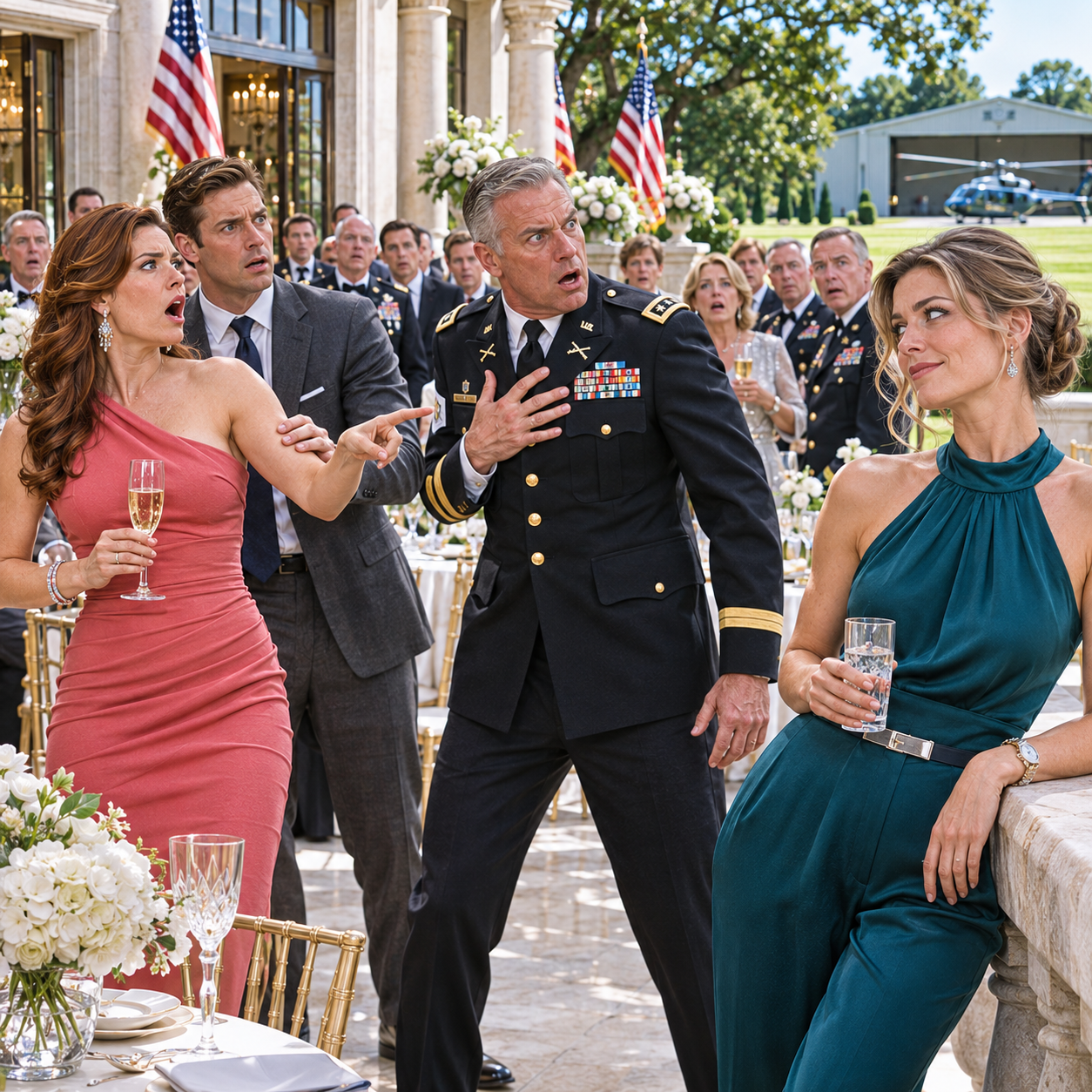
Cold air entered with late guests. Retired Brigadier General Adrian Sloane had arrived late, delayed by a highway accident, and several guests rose to welcome him. He had commanded our task force and advised the museum. I hadn’t seen him in years. His gaze found me, then the coin. “Kestrel,” he said, smiling with genuine surprise. “You look better without the flight helmet.” He embraced me briefly, then noticed the entire table watching.
Blythe found her voice first. “General, there’s been a misunderstanding about my sister’s service.” Sloane glanced between us. “That’s strange,” he said. “Your name came up in an email sent to the museum last month.” I had sent no email; Blythe tightened her grip on her napkin. He turned toward her. “Blythe, would you like to explain what you asked us to do?”
Part 3
I wanted to disappear beneath the chandelier. Blythe looked at Sloane and said, “I only asked your staff to keep tonight focused on Graham. You know how families can be.” Sloane folded his program. “Your sister’s service is not a competing attraction,” he said. He turned to me. “We can discuss the email another time.” I was grateful he didn’t invite another public spectacle. Graham kept staring at Blythe, calculating something painful.
Sloane had recommended my Distinguished Flying Cross, but we spoke privately about other things. I had insisted the citation mention Nora and our wing crew; he remembered how much arguing that request had required. He asked about Nora and a pilot we’d mentored. He congratulated me on commanding a combat aviation training squadron. Then he looked toward our table. “I didn’t realize your family knew so little,” he said. “They knew what they wanted to know,” I answered. “That’s different from being told nothing.” He didn’t press.
After dessert he delivered a brief toast about partnership, not battlefield heroics. “You can spend years beside someone and still fail to see them,” he said. “Attention is something we owe the people we love.” He congratulated the couple without mentioning me. But Graham stood apart while the photographer arranged the family picture. He hesitated when Blythe asked him to hold her. In her photograph, he looked miles away. Nobody looked happy.
Owen found me by a display case containing an old pilot’s helmet. His middle-school daughter wondered whether brave people ever felt frightened. “Tell her fear is information,” I answered. “You pay attention to it, then decide what the situation requires.” He smiled wearily. “I wanted to thank you all those years,” he said, “but I didn’t know how to find you.” I told him he had already thanked me by walking out of the valley and going home to his family. We exchanged numbers. He showed me a picture of his daughter standing beside a crooked science-fair volcano, and I realized how many ordinary days had followed that terrible morning for him.
Dad caught me outside the coatroom. He didn’t joke about my being sensible. “I made you smaller because it was easier than imagining what you were doing,” he said. “When your mother died, I couldn’t bear another person I loved being at risk.” I remembered him crying over grocery receipts after the funeral. “You could have asked me,” I said. He nodded, struggling for words. “I should have.” His regret couldn’t erase those years. Once, after I missed Christmas during a deployment, he told relatives I was covering an inventory emergency; I learned that from a neighbor months later.
Rain rattled against the museum’s metal awning when Blythe stopped me near the parking lot. Her lipstick was worn away. “You ruined my engagement,” she said, and the accusation was so familiar I nearly reached for her hand. Instead I tightened the strap of my purse. “I didn’t arrange your words.” “You knew Graham would recognize that coin.” “I didn’t even know he was Falcon Red Six.” She stepped closer, her heels clicking on wet concrete. “Then why couldn’t you just laugh and let it go?”
“Because you called me a liar,” I said. “And you took something from my purse after I told you not to.” Her eyes shone with angry tears. “He’s never going to look at me the same way.” There it was: the center of her concern, untouched by what she’d learned. I remembered the child who had slept beside my bed. “What he thinks of you now depends on what you do,” I said. I opened my umbrella and walked away without checking whether she followed.
Graham called two days later to apologize for his silence. He had noticed contradictions and deferred to family. “It was easier than making a scene,” he said. “That’s exactly how it works,” I answered. He asked whether I would meet Blythe and help explain the misunderstanding. “There isn’t a misunderstanding,” I said. “She heard me. I won’t do the explaining for her.” “That’s fair,” he said, earning some respect. Before hanging up, he admitted his friends had noticed how Blythe introduced him by rank, even in places where nobody else used titles. He sounded embarrassed, not accusing.
Blythe tried to control the retelling. She called Owen and asked him not to discuss his service with the guests, claiming Graham was having trouble with painful memories. She told Dad I’d taken an innocent joke too seriously and suggested the general had exaggerated what he’d witnessed. Owen said she sounded interested only in keeping people quiet. I didn’t confront her. I recorded his account and returned to training young pilots. At night I heard her demand that I laugh.
Three weeks after the dinner, a museum coordinator named Maeve Linton wrote to me. Blythe had demanded a refund, alleging that a guest had made false military claims; since she named me, Maeve requested my account. She attached Blythe’s instructions. Maeve explained that her team had not encouraged anyone to challenge a guest, though they had followed the seating request, believing it was a harmless family preference. I expected an unkind description of my job. Instead I found an email sent five weeks before the party: “My sister tends to inflate what she did in the Army. Please put her near Graham’s military friends, and don’t intervene if they ask her questions. She needs to see how ridiculous it sounds to people who actually served.”
A line beneath her signature stopped me. “Most importantly, Graham needs to see the difference between someone who has been to war and someone who likes the attention.” I sat motionless before my laptop. She hadn’t simply mistaken my silence for weakness. She had arranged an audience for my humiliation, expecting the man she loved to help deliver it. Across the room from my desk, the light on my old flight helmet caught the last afternoon sun; I could barely look at it.
Part 4
I told Maeve my rank and aircraft and asked the museum to correct its records privately. I attached a public Army biography, nothing about Darren Pass. I asked her to preserve the false complaint. Maeve wrote back with an apology and confirmed that the museum had declined Blythe’s refund request. The museum would no longer book events through Blythe’s firm. I imagined her coworkers explaining that lost account. At first I considered calling her employer to explain, but that would have made me the manager of her consequences again.
Graham called after hearing about the complaint. He asked about the emails; I referred him to the museum. “I won’t be your witness against my sister in an argument about your wedding,” I told him. “But I will correct a false claim about my military record.” He understood the distinction. Then he admitted he’d asked Blythe three times what she had written before the dinner, and each time she’d told a different story. First she had protected my privacy; then she feared exaggeration; finally the museum had misunderstood. He sounded exhausted. I had spent years watching other people edit my life, and I would not give a man I barely knew editorial control just because we had shared a battlefield.
Nora visited with a cracked unit mug and a dusty photograph. She still arranged pens like a cockpit checklist. When I told her about the dinner, she didn’t ask whether my family knew about our medals. “Did you tell your sister to stop?” she asked. “Several times.” Nora reached for the mug. “Then there’s the whole story.” She recalled a mechanic who mocked caution until a cautious pilot discovered a deadly inspection error. “Not every mistake announces itself as cruelty,” she said. “Some wear the costume of confidence.” Nora placed the mug on my desk as if it were evidence, then waited for my answer with the steady expression I remembered from the cockpit.
We spoke of Darren Pass again. Nora remembered burning plastic and the metallic lemonade at the medical station. For months she’d questioned whether we’d been lucky, skilled, or foolish. “All three,” I said, and she laughed without arguing. The mission had reshaped our training: realistic evacuations, better communication, questioning incomplete information. One heroic speech couldn’t teach those lessons. They learned it by making mistakes in simulation while an instructor still had time to stop them. Confidence without the ability to reconsider teaches people to defend their first answer instead of finding the right one; that problem existed in my family too.
Dad appeared Sunday with a folder and two coffees. His hands shook. Inside were flight-school letters, a homecoming invitation, and an award clipping. They had yellowed beneath tax documents. “I knew more than I admitted,” he said. “I told myself that if I called your work logistics, it wasn’t as dangerous. Blythe heard me do that for years, and when she laughed at you, I let her.” He stared at the clipping. “I taught her that pretending you were ordinary mattered more than knowing you.” His handwriting slanted toward the bottom of the last letter.
I’d wanted to believe he was merely uninformed. “You received these and never once asked me about them?” I asked. Dad shook his head. “I worried a question would make it real.” He had steered every call toward his school or Blythe. The refrigerator hummed. “I’m sorry,” he said. “You have every right to be angry.” I wasn’t ready to resume family Sundays. He nodded and took his coffee with him. I did not hug him. He had come expecting honesty, not absolution, and for once I could give him exactly that.
Four days after the email arrived, Graham postponed the wedding. It wasn’t because Blythe had mistaken my career; people could learn. She’d silenced Owen, accused the museum, and blamed Graham’s combat memories. He suggested counseling, and Blythe agreed on the condition that he stop speaking to me. He refused. She told Dad Graham’s injuries made him gullible. Dad told her to stop exploiting his pain. Graham told me later he had wanted to believe her promise to apologize, but every conversation required somebody else to be wrong.
Blythe parked outside that evening. The wipers squeaked across the windshield although the rain had stopped; I wondered how long she had been rehearsing what to say. She asked whether I’d seen the postponement announcement. I said yes. “One phone call from you could fix this,” she said. “Tell him you forgive me, that it was all a family misunderstanding.” The words felt rehearsed. “I don’t forgive you,” I answered. She flinched, then asked how I could be so cold after everything we’d survived as children. I remembered years of caring for her and said, “Those things mattered. They don’t give you permission to hurt me now.” She drove away, signal blinking.
Graham called the following week. He’d moved into temporary quarters and sounded sleepless. “I asked her to show me everything she’d written about you,” he said. “She finally did, but only because I showed her the museum’s reply.” I waited as he found the words. “Eliza, I am ending the engagement. Not because you saved us, not because of the dinner. I can’t marry someone who keeps changing the facts to make other people carry the blame.” I grieved the sister I once imagined. I said he owed me no explanation.
He asked if he could send me one document. “It’s not about Darren Pass,” he said. “It’s about your family.” An hour later he forwarded an old email from Blythe’s archive. It was six years old, subject: “Eliza?” It included the award article Dad had saved. Blythe’s message to him contained only one sentence: “Do you think Eliza actually did all this, or is this another thing we’re supposed to applaud?” Dad’s reply was the part that made me put down my phone. It came from his old school account, the one he hadn’t used since retiring.
Part 5
Dad’s reply was dated six years earlier, the day after the newspaper announced my medal. “Yes, it’s real,” he’d written. “Eliza has been flying combat missions for years. Please don’t bring it up with her. She needs one place where things are normal.” I read those three sentences until the words stopped making sense. Blythe had known. She had seen the article and Dad’s confirmation, yet told everyone I was too soft for combat. I felt sick remembering how fiercely I’d protected her. I remembered her first apartment deposit, the sick nights, and the thousand ways I’d made life easier for her.
I called Dad the next morning and read the exchange aloud. He let me finish. “I thought I was protecting you,” he said. “From what? Having a family that knows who I am?” For a while, I heard only his breathing. “I was protecting myself from losing you,” he said. He’d instructed Blythe to call my dangerous work ordinary. “You didn’t make the war disappear,” I said. “You just made me disappear from the conversation.” He began to cry, and for once I didn’t hurry to console him. His sadness mattered; it no longer required me to make mine invisible.
Blythe called that afternoon. She demanded to know why Graham had forwarded her email. “You kept it,” I said. “He found it when you finally showed him what you’d written.” She claimed she’d doubted the article, then admitted she’d suspected the truth. “I was tired of everyone treating you like the responsible one,” she said. “Dad always depended on you. Then Graham started asking about you, and I thought I’d spend my marriage being compared to you.” Even her honesty accused me of making her smaller. “You didn’t need to believe in me to be my sister,” I said. “You did need to stop lying about me.”
She asked if we could start over. I remembered the museum email, the false complaint, and the way she’d exploited Graham’s injuries. One cruel remark might have been repairable; this was a series of decisions with chances to reconsider. “No,” I said. “I won’t be helping you repair your reputation, and I won’t pretend we are close.” She went quiet, then whispered, “So you’re just going to abandon me?” I nearly remembered my promises to Mom. Instead I said, “I’m going to stop being the person you can hurt without losing.” I ended the call and blocked her number.
For weeks, silence felt like a rearranged house. I reached for my phone when I heard songs she’d loved. Then I remembered that missing someone was not a requirement to invite them back. Dad wrote without asking me to intervene: “I’m seeing a counselor about why I needed you to be the dependable one. I don’t expect that to fix what I did.” I answered that I hoped it helped him. We began meeting for monthly coffee. He asked questions about my work, sometimes awkward ones, and finally listened to the answers.
Graham called once before transferring to a new assignment. The engagement was over, and he had returned the ring without a public explanation. He and Owen had talked about Darren Pass, grateful finally to meet the crew. “I spent years imagining Kestrel as some impossible person,” he said. “Then I met a woman who was trying to eat dinner without being insulted.” I smiled despite myself. He added that he wished he’d spoken sooner that night. “So do I,” I said. We had shared one terrible morning, not a promise of anything beyond mutual respect. We agreed the past didn’t bind our futures.
At Nora’s retirement, I stood beside pilots whose quiet labor rarely made headlines. Warrant Officer Laila Cross had paused a simulated strike when the target picture contradicted the radio report. Another trainee had complained that hesitation meant failure. During the debrief, I told them how four seconds of uncertainty had changed a day on a mountainside. I didn’t mention Blythe. I showed them the timing marks and asked what else they might have missed. Their twenty-minute discussion taught more than a speech about courage.
Owen arrived with his wife and daughter, who showed me her science-fair volcano. She asked whether I had been frightened at Darren Pass. “Yes,” I told her. “I was afraid we’d leave too early, and I was afraid we’d stay too long.” She thought about that while the adults talked. “Then how did you know what to do?” I showed her the worn brass coin in my palm. “I didn’t know everything. I had people I trusted, and I kept checking what I could see.” She accepted the answer without looking disappointed or expecting a superhero.
Seven months after the dinner, a handwritten letter arrived from Blythe. She had left her firm after losing the museum account and begun counseling, she said, not to win Graham back but to change. There were no demands in the letter, which I noticed. I read it once, placed it in a drawer, and did not write back. I could still picture the child who copied my handwriting on homemade birthday cards. Her effort might change her life, and I hoped it would; it didn’t entitle her to mine. The distinction had taken years to learn. I could wish my sister well without reopening a door she had repeatedly used to hurt me.
I still keep coin seventeen beside a photograph of Nora laughing with a paper cup of terrible coffee in her hand. I hold it before difficult classes, when new pilots are eager to sound certain. I tell them gentleness strengthens courage, and one more question can bring someone home. I once thought silence protected my worth. Now I know silence can protect the people who refuse to see you. My sister called me soft because she thought it meant I would always absorb the blow. I no longer confused my patience with permission to be cruel. She was wrong about that, too.
THE END!
Disclaimer: Our stories are inspired by real-life events but are carefully rewritten for entertainment. Any resemblance to actual people or situations is purely coincidental.