My sister sent me a formal schedule telling me when I was allowed to visit the lake house where I’d spent every summer since childhood. That was how I discovered my parents had quietly transferred the entire property to her because she had children and I didn’t. They expected anger, arguments, and eventually surrender. Instead, my husband and I simply stopped going. Six months later, when my mother called asking whether we were still coming for Thanksgiving, she finally learned what their decision had actually cost.
### Part 1
One email turned my childhood home into somebody else’s property overnight.
The email arrived at 8:17 on a Wednesday morning while I was standing barefoot in my kitchen waiting for the coffee maker to finish sputtering. The subject line read, “Lake House Scheduling — Important,” and because it came from my older sister, Brooke, I assumed she was organizing another family weekend. Brooke loved schedules. She made spreadsheets for Christmas dinner and sent calendar invitations for birthday brunches, so nothing about the title immediately alarmed me. Then I opened the attachment and saw the words “Guest Policy and Approved Visitation Schedule.” I stared at my laptop while the smell of coffee filled the kitchen and reread the heading, wondering when people who had spent thirty-four summers together had started referring to each other as guests.
The property was a weathered three-bedroom house on Lake Tahoe that my grandparents had built decades earlier. My brother, Ethan, Brooke, and I had learned to swim off its dock. Dad had taught me to bait a fishing hook on the back steps. Mom used to burn pancakes every July Fourth because the old stove heated unevenly, and nobody cared because we ate them outside with strawberries anyway. Even after I married Daniel and moved three hours away, I helped repaint the deck, paid toward a new water heater, and drove up whenever my parents needed an extra pair of hands. I had never thought of the house as an asset belonging to whoever held the paperwork. It was simply ours.
Apparently, I had misunderstood.
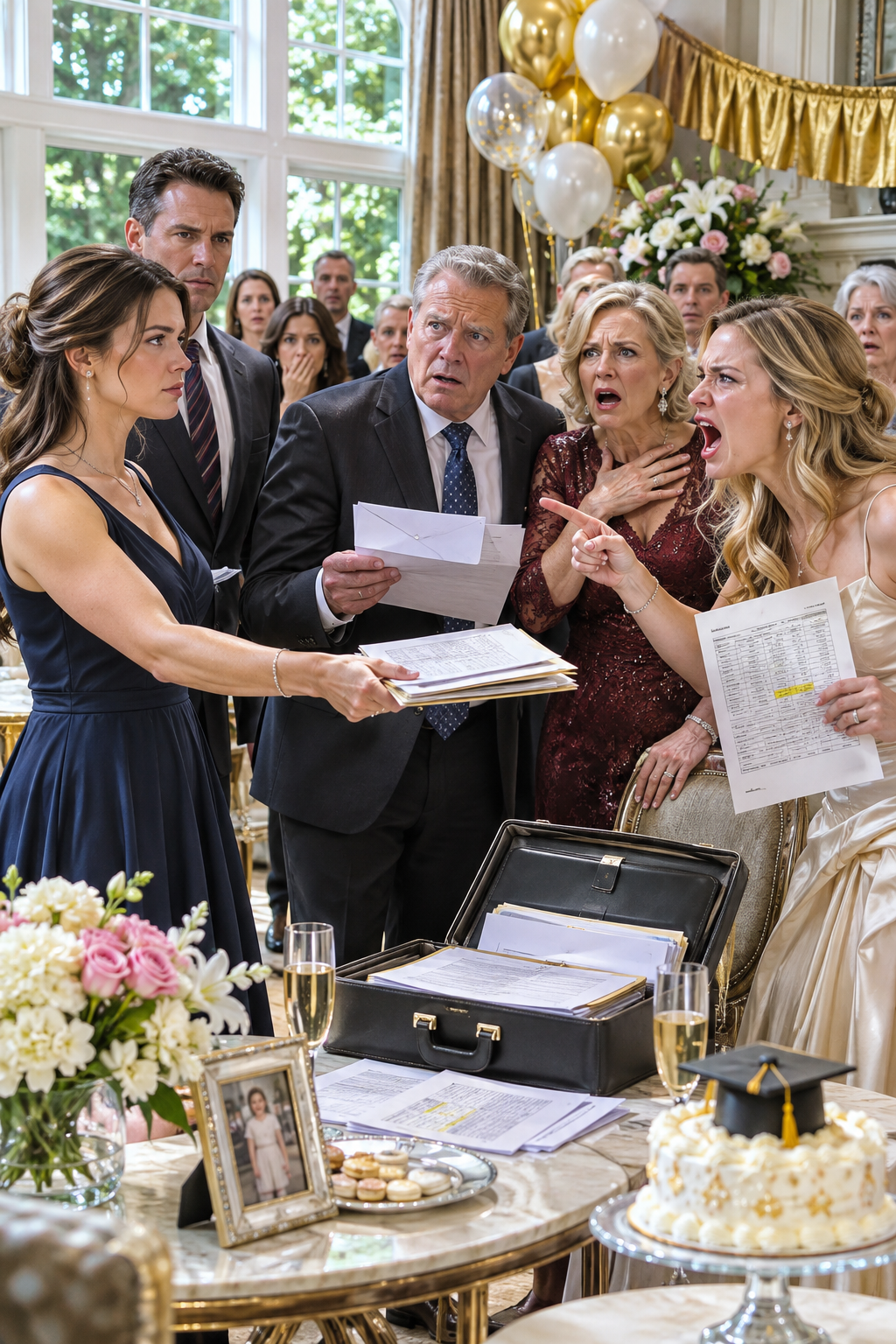
Brooke’s document assigned me two weekends in August and the week following Christmas. Any visit outside those dates required advance approval. Certain periods were “reserved for the owner’s immediate household,” and longer stays could involve what she called a “maintenance contribution.” Her email beneath the attachment was almost cheerful. “Hi, Natalie. Now that Mom and Dad have transferred the lake house to me, I want everyone on the same page. I’ve included your approved dates for this year. Let me know if you have conflicts.”
I read that sentence twice. Then a third time.
Daniel walked into the kitchen adjusting his tie and stopped when he saw my face. “What happened?”
“My parents gave Brooke the lake house.”
He frowned. “Gave her their share?”
“No. The house. All of it.”
I called my mother before the coffee had finished dripping. “Did you give Brooke the lake house?”
There was a pause long enough to answer the question. “Honey, we were going to talk to you.”
“After you transferred it?”
“We thought it made sense. Brooke lives closer. She has the kids. She uses the property more, and she offered to manage everything.”
“I’ve offered to help manage it.”
“I know, but your career is demanding, and you and Daniel travel. Brooke’s children adore that house. Your father and I wanted it preserved for another generation.”
There it was. Not said cruelly, perhaps, but clearly enough. Brooke had three children. Daniel and I had deliberately chosen not to. Therefore, in whatever private calculation my parents had made, her connection to our shared history counted more.
“Did it occur to you to ask me?” I said.
“We didn’t want arguments.”
“So you avoided conflict by making the decision secretly.”
Mom sighed. “Natalie, please don’t make this bigger than it needs to be.”
I forwarded Brooke’s document to her. “Read that.”
The line stayed quiet for several minutes. When Mom finally spoke, she sounded uncomfortable. “The fee part seems excessive. I’ll talk to her.”
“The fee isn’t the point.”
“She probably just wants structure.”
“No, Mom. Structure is asking who wants Thanksgiving weekend. This is Brooke informing me when I’m permitted to enter the house where I spent my childhood.”
My father called later that afternoon. His explanation was calmer but almost identical. Brooke had proximity, children, time, and enthusiasm. I had a demanding job, no children, and supposedly less need for a multigenerational property. When I reminded him that I had contributed money to repairs, he admitted I had. When I reminded him I had asked several times about long-term ownership, he said they hadn’t realized I was serious.
That sentence hurt more than I expected.
That evening, Daniel and I sat on our balcony while traffic hummed several floors below. I had moved past anger into something colder. “They want me to fight,” I said.
“You think?”
“They expect me to complain, Mom will smooth things over, Brooke will loosen one or two rules, and eventually I’ll show up smiling because it’s easier.”
Daniel leaned back. “So what do you want?”
I looked at the email again. Three weeks. Approved visitation. Guest policy.
“I don’t want any of them.”
I wrote Brooke four lines. “Thanks for sending the information. I won’t be using any of the approved dates. Please remove me from future scheduling communications.”
Her response arrived fourteen minutes later.
“Are you serious?”
Then another.
“I spent hours coordinating everybody.”
Then: “You’re being childish.”
I finally answered. “I’m not protesting your ownership, Brooke. I’m accepting it. Mom and Dad gave you the house. It’s yours. I don’t schedule approved visitation to somebody else’s private property, so you don’t need to schedule me.”
Her phone call came almost immediately. “You’re twisting this.”
“You own the house, right?”
“Yes.”
“You decide who comes and when?”
“I have to. Somebody needs to manage it.”
“Then manage it.”
“You’re going to skip family vacations just to punish me?”
“No. I’m going to take vacations somewhere else.”
She went silent.
That was the part none of them understood yet. I wasn’t demanding the house back. I wasn’t asking them to change their decision. I wasn’t even asking for an apology.
I was simply stepping out of the role they had already reassigned me to.
And by summer, they would discover that a guest could always choose not to come.
### Part 2
My absence exposed how quickly ownership had changed our family traditions.
August arrived with hot afternoons and wildfire haze hanging faintly above the mountains. My “approved weekend” came and went without me. Daniel and I rented a small cabin on the opposite side of the lake, slept late, hiked in the mornings, and ate dinner overlooking the water without once checking anyone else’s schedule. On our second night, I could see distant lights across the lake and wondered whether Brooke was sitting on the old deck. I felt sad, but the sadness was surprisingly clean. I missed the place. I did not miss being managed.
Labor Day had always been one of our biggest family weekends. Aunts, cousins, folding chairs dragged onto the deck, too much food, music drifting through open windows. This year I received no invitation from Brooke because Labor Day wasn’t one of my assigned dates. My mother apparently assumed I would come anyway. She called Sunday afternoon. “Everybody keeps asking where you are.”
“I’m home.”
“Brooke thought you’d change your mind.”
“Labor Day wasn’t on my approved schedule.”
Mom exhaled sharply. “Natalie, you know you’re always welcome.”
“Do I?”
“Of course.”
“Then why did I receive a document telling me when I could visit?”
“She regrets how formal that sounded.”
“It wasn’t the wording, Mom. It was the reality.”
By October, I had muted the family group chat. Ethan occasionally sent me screenshots, usually accompanied by comments such as, “This is getting weird.” Brooke was arranging Thanksgiving at Tahoe. She wanted a large gathering with our parents, cousins, and several family friends. The irony wasn’t lost on me. She had spent months establishing that the house was privately hers, then seemed bewildered that everyone had begun behaving like invited guests.
In early November, Mom called while Daniel and I were packing for a weekend trip. “I need your Thanksgiving headcount.”
“You don’t need ours.”
There was silence. “What does that mean?”
“We’re not coming.”
“Natalie, it’s Thanksgiving.”
“I know.”
“This has gone on long enough.”
“Nothing is going on. Daniel and I are spending Thanksgiving in Maui with his sister’s family.”
Her voice hardened. “You’re choosing his family over your own.”
“I’m choosing to spend Thanksgiving somewhere I don’t need permission to enter.”
“You are punishing everyone because Brooke tried to organize a complicated property.”
“No, Mom. You gave Brooke the property because you decided her family mattered more to its future. Brooke then treated it exactly like the private property you gave her. I’m respecting both decisions.”
“You know that’s not what we meant.”
“Maybe not. But it’s what you did.”
Thanksgiving morning, I woke to palms moving in the ocean breeze outside our rental. Daniel’s sister was already downstairs arguing cheerfully with her husband about the turkey. Nobody was watching me to see whether I appeared sufficiently grateful. Nobody wanted me to admit I’d overreacted. Nobody had handed me a calendar telling me when I was allowed to belong. I realized halfway through breakfast that I hadn’t thought about Tahoe for nearly an hour.
Ethan began texting that afternoon. “Mom has mentioned you six times.” Then: “Brooke says you’re being dramatic.” Fifteen minutes later: “Dad changed the subject to football.” Finally: “Honestly, the whole thing feels like a corporate retreat. Everyone keeps asking Brooke before using anything.”
I laughed despite myself.
“Having fun?” I asked.
“Not really. Aunt Diane asked whether she was allowed to invite Uncle Greg for Saturday. Brooke said she’d have to check because sleeping arrangements were already finalized.”
“That sounds relaxing.”
“I might leave tomorrow.”
The same pattern repeated before Christmas. My parents called. Brooke called. An aunt called. A cousin sent me a long message about forgiveness even though nobody had actually apologized. My grandmother left a voicemail saying family traditions were more important than pride. Each person spoke as though my presence was a resource I was maliciously withholding.
Brooke finally called one evening while I was wrapping gifts.
“This is ridiculous,” she said. “You’ve missed Thanksgiving and now you’re skipping Christmas.”
“Yes.”
“You’re making everybody uncomfortable.”
“I haven’t discussed this with everybody.”
“You don’t have to. Your absence makes the point.”
“What point?”
“That you disapprove of me owning the house.”
“I’ve never said you shouldn’t own it. Mom and Dad gave it to you.”
“Then why won’t you come?”
“Because it isn’t my family home anymore.”
She made an exasperated sound. “That’s so dramatic.”
“No, it’s literal. You own it. You control it. I’m a guest.”
“I got rid of the fees.”
“That doesn’t change ownership.”
“I’ve told you that you can come whenever you want.”
“Until you decide otherwise.”
“I wouldn’t.”
“You already did. Your first instinct after receiving the house was to send me approved dates.”
Brooke was quiet for several seconds. When she spoke again, her voice had changed. “I thought if I didn’t establish rules immediately, everyone would keep treating the place like nobody was responsible for it.”
“And that’s exactly the point. We did treat it like no single person controlled it. That was what made it family space.”
“So you’re never coming back?”
“Not like this.”
She hung up.
Christmas with friends in Colorado was uncomplicated. We skied, cooked, played cards, and spent Christmas Eve around a fireplace while snow pressed softly against the windows. Meanwhile, Brooke posted pictures from Tahoe with captions about “real family traditions” and “people remembering what matters.” I didn’t react. Ethan later told me the pictures were more cheerful than the gathering itself.
The day after Christmas, my mother called. She sounded exhausted.
“I think,” she said slowly, “your father and I may have made a mistake.”
I didn’t answer immediately.
She continued. “People didn’t feel at home this Christmas. They kept asking Brooke what they were allowed to do. Even your aunt asked whether she needed permission before staying an extra night.”
“That was always going to happen.”
“We didn’t understand that.”
“No. You didn’t.”
She took a shaky breath. “Your father wants all three of you here in January. Brooke, Ethan, and you. We need to talk about what we’ve done.”
For the first time since that email arrived, my parents weren’t asking when I would come back.
They were finally asking whether what they’d broken could be repaired.
### Part 3
A family meeting revealed the real cost of my sister’s inheritance.
We met at my parents’ house on a rainy Sunday afternoon in January. Daniel offered to come, but I went alone. I didn’t want anyone claiming he had influenced me, and I didn’t need backup to explain something I’d spent months understanding. Brooke arrived last wearing a wool coat still dotted with rain. Ethan sat near the fireplace. Dad had made coffee nobody touched. Mom looked as though she’d rehearsed an opening speech and forgotten every word.
She finally said, “We handled the lake house badly.”
Brooke shifted in her chair. “Can we not start by acting like giving me the house was some terrible mistake?”
Dad rubbed his forehead. “That’s what we’re here to discuss.”
Ethan spoke before I did. “It feels weird now.”
Brooke looked at him. “What does?”
“The house. I used to drive up whenever Mom and Dad were there. Now I feel like I should text you first.”
“You should text first. I could have plans.”
“Exactly.”
Brooke frowned.
Ethan continued. “I’m not saying you’re wrong. It’s your house. That’s the problem. It used to feel like ours.”
“I’ve invited everyone constantly.”
“That’s different from belonging there.”
For months, Brooke had framed my reaction as uniquely unreasonable. Watching Ethan say essentially the same thing changed something in her expression.
I leaned forward. “Nobody is accusing you of violating some rule, Brooke. This is what ownership means. Mom and Dad gave you complete control. You accepted it. That’s legal, understandable, and permanent. But everybody else became visitors the moment that happened.”
“I didn’t want that.”
“You wanted sole ownership.”
“I wanted responsibility.”
“You also wanted final authority.”
Her cheeks reddened. “Because somebody had to make decisions.”
“And you got that authority. You can’t have sole authority and shared belonging at the same time.”
Mom looked down at her hands. “We thought we were solving practical problems. Maintenance. Taxes. Repairs. We thought Brooke being closer made things easier.”
Dad added, “We also assumed you wouldn’t want the responsibility, Natalie.”
“You assumed.”
“Yes.”
“You never asked.”
“No,” he said quietly. “We didn’t.”
That acknowledgment landed differently from every explanation they’d offered before. No excuses about my career. No mention of children. Just the truth.
Mom said, “We saw the transfer as giving Brooke something. We didn’t recognize that we were also taking something from you and Ethan.”
Brooke crossed her arms. “So what’s the solution? You want the house back?”
Dad hesitated. “We’ve discussed several possibilities.”
Her face changed instantly.
“One possibility,” he continued, “would be buying it back from you at fair market value.”
“You gave it to me.”
“Yes.”
“And now because Natalie refuses to visit, you want to take it away?”
“Nobody said take,” I said. “Dad said buy.”
Brooke turned toward me. “You started this.”
“No. You sent the email that made the new arrangement impossible to ignore. Mom and Dad started it when they transferred the house without talking to us.”
“I spent thousands fixing that place.”
“And that’s exactly why I’m not asking for it. It’s yours.”
That seemed to confuse her more than anger would have.
Dad mentioned another possibility: buying a smaller cabin elsewhere and structuring ownership equally among the three of us. Clear rules. Equal financial responsibilities. Major decisions requiring agreement. No one sibling controlling everyone else’s access.
Ethan nodded slowly. “That makes more sense.”
Brooke looked miserable. “So everybody gets another cabin while I get blamed for the old one?”
“Nobody needs to blame you,” Mom said. “But we do need to accept that things changed.”
Brooke’s voice cracked slightly. “When you offered me Tahoe, I thought you were trusting me with something important. I thought I could preserve it for my kids.”
“I believe you,” I said.
She looked at me, surprised.
“But preserving the building isn’t the same as preserving what it meant. The house mattered because nobody had to ask whether they belonged there.”
Brooke stared toward the window. “I didn’t think people would stop coming.”
That was perhaps the most honest sentence she’d spoken since this began.
“You thought everything would stay exactly the same,” I said, “except you’d be in charge.”
She didn’t deny it.
Over the next six months, my parents shifted almost every major family event to their Sacramento home. Easter, Mother’s Day, Father’s Day. I attended them all. Brooke and I remained polite but distant. Nobody discussed Tahoe unless necessary. Ethan visited less often, and several relatives followed his lead. Brooke eventually eliminated every formal rule she’d created, but the psychological boundary remained. People no longer drove up casually. They waited for invitations because it was her house.
At the Father’s Day barbecue, Ethan pulled me aside near the grill. “Brooke thinks you’re convincing everybody to avoid Tahoe.”
“I haven’t told anyone where to go.”
“I know. I told her that.”
“What did she say?”
“That people used to visit constantly.”
“They used to believe it belonged to all of us.”
He nodded. “She didn’t understand that owning it would change that.”
A full year after the transfer, my parents held another meeting. This time their proposal was concrete. They had found a modest cabin in the Sierra Nevada foothills. It wasn’t waterfront and wasn’t nearly as large, but ownership would be divided equally among Brooke, Ethan, and me.
I asked to see the legal structure before agreeing.
Dad almost smiled. “I expected you would.”
The documents required unanimous consent for sale, major renovations, or changes to access. Expenses were divided by ownership share. Scheduling rules applied equally to all three owners. Nobody could declare another sibling a guest.
I signed.
Then Mom asked the question she’d been avoiding.
“If we create this new place together, would you consider coming back to Tahoe sometimes?”
I looked at her and realized something important.
I wasn’t angry anymore.
But that didn’t mean I wanted to go back.
“No,” I said. “The new cabin can be something new. Tahoe belongs to Brooke now.”
Across the table, Brooke looked away.
And for once, nobody tried to argue with me.
### Part 4
I rebuilt my traditions without returning to the home I lost.
The new cabin was smaller, quieter, and surrounded by tall pines instead of sitting directly on the lake. The first weekend we all stayed there, everything felt slightly artificial. Mom brought the same battered pancake griddle she used at Tahoe, as though familiar objects might transplant decades of memory. Ethan brought fishing poles despite the nearest decent fishing spot being twenty minutes away. Brooke’s children ran between rooms arguing over bunk beds, and Daniel quietly squeezed my hand when nobody was looking. We were all trying too hard. Then somebody burned breakfast, Dad opened the windows because the smoke detector wouldn’t stop shrieking, and suddenly everyone was laughing. That was the first moment the place felt real.
Over time, it became ours precisely because nobody owned more of it than anyone else. Brooke couldn’t decide that one bedroom belonged permanently to her family. I couldn’t block July because I preferred summer weekends. Ethan couldn’t approve renovations without us. The rules didn’t feel oppressive because they applied equally to owners rather than dividing one owner from a collection of guests.
Brooke and I never became close again.
People sometimes expect family conflicts to end with a dramatic reconciliation, tears, hugs, and promises that everything will return to normal. Ours didn’t. We became courteous adults connected by blood, holidays, and shared paperwork. She wished me happy birthday. I sent gifts to her children. We spoke pleasantly at dinner. I stopped expecting her to understand why that first email had changed my opinion of her, and she stopped trying to make me admit I’d overreacted.
Two years after she received Tahoe, Brooke mentioned during dinner that maintaining it cost far more than she’d anticipated. Property taxes had risen. The dock needed major work. A plumbing problem required repairs during winter.
Mom looked toward me almost instinctively.
I kept eating.
Brooke said, “I’m considering selling it.”
Ethan and I exchanged a glance but said nothing.
A younger version of me might have immediately offered money. I might have suggested buying a share, rebuilding the old arrangement, reclaiming some fragment of what I’d lost. Instead, I felt almost nothing.
The house was hers.
That had been the entire lesson.
She eventually kept it, taking out a loan for repairs. Mom later mentioned the financial strain in a tone that seemed designed to invite sympathy. I said I hoped Brooke worked it out and changed the subject. Nobody asked me directly for money because, by then, they knew what my answer would be.
Three years after the transfer, Daniel and I had built traditions that didn’t depend on Tahoe. Some Thanksgivings were with his sister. One Christmas we rented a house with friends in Oregon and woke to rain tapping against cedar shingles. Another year we stayed home and hosted twelve people around our dining table, using mismatched chairs because we didn’t own enough. Nobody needed approved dates. Nobody cared who had children and who didn’t. People came because they were wanted.
I still missed Tahoe sometimes.
Memory is inconvenient that way. You can accept losing something and still feel your chest tighten when you smell wet pine. I remembered the squeak of the third stair, the cold shock of lake water in June, the faded blue bedroom where I’d slept beneath an open window while boats hummed somewhere in the darkness. I remembered Dad carrying sleepy children from the dock, Mom yelling that dinner was getting cold, Ethan and me racing barefoot across sun-warmed boards.
But I no longer confused missing those memories with needing access to the property.
One summer afternoon, Mom and I were drinking coffee on her patio when she said, “Brooke wants everyone at Tahoe for Labor Day. No schedules. No rules. She specifically asked me to tell you that you’re welcome.”
I smiled slightly. “Tell her thank you.”
Mom waited.
“But we’re not going.”
Her face fell. “Even now?”
“Especially now.”
“I thought enough time had passed.”
“Time doesn’t restore something just because everyone is tired of the consequences.”
“She really does regret how she handled everything.”
“I believe that.”
“Then why not forgive her?”
“I have.”
Mom looked confused.
“Forgiving somebody doesn’t mean returning to the old relationship. It just means I’m not carrying anger around anymore.”
She stared into her coffee.
“I don’t hate Brooke. I don’t hate you or Dad. I’m not trying to prove anything. Tahoe simply isn’t home to me anymore.”
Mom’s eyes filled slightly. “I wish we’d asked you.”
That was the apology I had needed three years earlier.
“So do I.”
“We thought because Brooke had children, keeping the property with her family made sense.”
“My family mattered too, Mom. Even if it was just Daniel and me.”
“I know that now.”
I believed her.
And still, I didn’t go back.
My parents gave my sister the vacation home where I’d spent thirty-four years believing I belonged. Brooke’s first act as owner was sending me a document telling me exactly when I was allowed to return. Everyone expected me to rage, negotiate, demand my share, and eventually accept whatever compromise preserved the appearance of family harmony.
Instead, I declined my dates.
Six months later, when Mom called asking whether Daniel and I were still coming for Thanksgiving, I said no. The following Christmas, I said no again. When the rental fees disappeared, I still said no. When Brooke loosened the rules, I said no. When she finally apologized in her imperfect way, I accepted the apology without accepting the invitation.
That distinction saved me years of resentment.
The Tahoe house still stands. Brooke still owns it. Maybe someday one of her children will inherit it and hear stories about summers when three siblings raced down the dock together before ownership turned a family home into someone’s private asset.
That’s fine.
The new cabin has its own stories now.
So does my home with Daniel. So do the places we’ve traveled, the friends we’ve welcomed, and the holidays we’ve built for ourselves.
I learned that belonging isn’t created by a deed, inheritance, or address. It’s created when people make room for you without first calculating how useful you are, whether you have children, or how conveniently you fit into their plans.
My parents chose who would own the lake house.
Brooke chose what kind of owner she wanted to be.
And I chose not to spend the rest of my life asking permission to visit a place where I’d once belonged automatically.
Some family traditions deserve to survive.
Others end the moment somebody turns belonging into a privilege.
I didn’t lose my dignity when my parents gave Brooke the house.
I kept it by knowing when to stop knocking on the door.
THE END!
Disclaimer: Our stories are inspired by real-life events but are carefully rewritten for entertainment. Any resemblance to actual people or situations is purely coincidental.