
My family always said they loved my grandmother, but when she shattered her hip three days before Thanksgiving, love suddenly came with deadlines, excuses, and return flights. They left me a note telling me to watch her dog while they “handled things,” then disappeared one by one as soon as Grandma needed actual care. I stayed because leaving never occurred to me. Fourteen months later, we sat across from each other in an attorney’s office, and my mother finally learned what Grandma had noticed long before I did.
### Part 1: A Thanksgiving fall revealed who considered Grandma an obligation
The smell of my grandmother’s house reached me before I pushed the front door open: cinnamon, old pine floors, coffee, and the faint sweetness that had clung to her kitchen for as long as I could remember. I hadn’t been back to Clarksville, Tennessee, in eight months. My mother had called two days earlier and said, “We’re doing a family Thanksgiving at Grandma’s this year. You should come.” She had a particular way of saying family gathering, as though those two words erased every birthday they forgot, every holiday plan they changed without telling me, and every four-hour drive I made while everyone else simply expected me to appear. Still, on Wednesday afternoon I pulled into Grandma’s driveway with an overnight bag and a homemade pecan pie balanced carefully on the passenger seat.
The white porch and green shutters looked exactly the same, right down to the metal wind chime Grandma had bought at a craft fair before I was born. What wasn’t normal was the silence. I rang once, waited, then used the old brass key Grandma had given me years earlier. “Grandma?” My voice carried through the hallway. No television answered from the living room. No pans clattered in the kitchen. Instead, I found the kitchen light burning over a pot of coffee that had cooked down to black sludge. Beside Grandma’s half-finished crossword puzzle sat a folded sheet of stationery with my name written across it in my mother’s handwriting.
“Megan, Grandma fell this morning. We took her to the hospital in Nashville. Ryan is with us. Please stay here, take care of Chester, and make sure the house is secure. We’ll call when we know more. Don’t panic. Mom.” That was it. No phone call. No “drive safely.” No “we’re sorry you found out this way.” My seventy-nine-year-old grandmother was in a hospital two hours away, and my family had reduced the situation to instructions for dog care. Chester, her aging beagle, wandered into the room, pressed his warm body against my ankle, and stared up at me. I picked him up, sat at the kitchen table, and read the note again while the burned-coffee smell grew bitter around us.
Grandma Evelyn Callahan had spent forty-one years building Callahan’s Bakehouse from almost nothing. She started with cinnamon rolls, honey cake, and chess bars on a folding table at a farmers market, then opened a downtown bakery that eventually supplied several grocery stores across Tennessee and Kentucky. In 2019, she sold the operating business to a regional food company for a number large enough that my mother refused to discuss it in anything except whispers. Grandma never behaved like a wealthy woman. She still clipped coupons, still saved rubber bands around the kitchen faucet, and once lectured me for twenty minutes because I was paying too much in mutual-fund fees. “Money isn’t decoration,” she told me. “It’s a tool. Tools get ruined when people wave them around instead of using them.”
My brother Ryan had never enjoyed those conversations. He was a corporate attorney in Atlanta, six years older than me, with expensive suits and a talent for turning every dinner into a presentation about his career. My parents adored him with an enthusiasm they never bothered disguising. Dad helped with his law-school expenses. Mom flew to Atlanta repeatedly when he bought his condo because, according to her, “Ryan has demanding hours and can’t worry about furniture.” When I finished my master’s degree in education, she mailed me a card containing twenty dollars. I taught fourth grade outside Nashville and had spent years pretending the difference didn’t hurt. Eventually, I stopped calling it favoritism. I just called it weather. You couldn’t argue with rain. You carried an umbrella.
That evening I fed Chester, dumped the ruined coffee, placed my pie in Grandma’s refrigerator, and drove straight to Nashville. My mother saw me entering the hospital waiting room and immediately frowned. “What are you doing here?” It was such an absurd question that for a moment I thought I had misunderstood her. Dad stood and hugged me. Ryan remained seated, staring at his phone. Mom said Grandma had fractured her hip and would have surgery Thursday morning. “Why didn’t anyone call me?” I asked. “We were handling it,” she replied. “Ryan did the intake paperwork. There was no reason for everyone to panic.” Ryan finally looked up. “She’s stable, Meg. We’ve got it covered.” The phrase irritated me more than it should have. My grandmother was behind those doors, frightened and injured, and my family sounded as though they had efficiently filed a claim.
A nurse eventually let me see her. The room smelled like disinfectant and warm plastic. Machines clicked softly beside the bed. Grandma looked smaller underneath the white blankets, her silver hair flattened against the pillow and a dark bruise spreading along one cheekbone. When her eyes opened, she stared at me for half a second before smiling. “You came.” I took her hand. “Of course I came.” Her fingers tightened around mine. “Your mother called you?” “She left me a note.” Something subtle changed in Grandma’s face. Not shock. Recognition. As though I had confirmed an answer to a question I didn’t know she had been asking.
Then she sniffed the air near me and smiled again. “You baked.” I laughed. “Pecan pie.” “Good. Hide it from Ryan.” “He doesn’t even like pecan.” Grandma’s eyes closed. “That has never stopped your brother from taking the biggest piece.”
Her surgery went well Thanksgiving morning. Mom, Dad, and Ryan spent most of the afternoon downstairs complaining about hospital cafeteria turkey while I sat beside Grandma watching the parade on a television mounted near the ceiling. I had smuggled in a small piece of pecan pie wrapped in foil, and Grandma ate two bites before announcing that mine was almost as good as hers, which from her was practically a national award. During a commercial she looked at me and asked, “How are you?” I gave my automatic answer. “Fine.” She shook her head. “No. How are you when you’re not answering your mother?”
That question landed harder than I expected. I told her about school, about applying for a department-head position without telling my family because I didn’t want my promotion compared with Ryan making partner someday. I told her about the previous Christmas, when Mom and Dad booked a cruise and forgot to mention it until after I had turned down invitations from friends. “I keep showing up,” I admitted. “I’m starting to wonder whether that’s loyalty or just a habit I never learned to break.” Grandma stared at the parade for several seconds. “Your grandfather used to say the world is held together by people who keep showing up. The loud ones usually get thanked. The quiet ones usually do the work.”
I thought she was comforting me. I didn’t understand yet that she was also taking inventory.
And over the next twelve days, I would discover that Grandma had been quietly counting far more than visits.
### Part 2: Everyone left after the surgery, and Grandma remembered everything
My parents lasted five days after Grandma’s surgery. Ryan lasted three. He announced his departure while standing in Grandma’s living room wearing a wool coat that probably cost more than my monthly rent. “I’ve got a client issue Monday,” he said, lifting his suitcase. “Besides, she’s doing well.” Grandma could barely make it from the couch to the bathroom with a walker, but apparently “doing well” meant she was no longer in immediate danger of dying. Before Ryan left, I watched him carry a sealed cardboard box from Grandma’s upstairs office to his car. When I asked what it was, he said, “Some old things Grandma told me I could take.” His voice had that familiar warning in it—the one that meant questioning him would somehow become evidence of my bad personality.
Mom and Dad left two mornings later. Mom stood in the kitchen scrolling through her phone while I organized Grandma’s therapy schedule on a yellow legal pad. “We’ve already missed Thanksgiving at home,” she said. “Your father has appointments, and I need to get ready for December.” I looked at Grandma sleeping in the recliner ten feet away. “She can’t shower by herself yet.” Mom sighed. “Megan, she has you.” The sentence was meant to end the discussion. Somehow my presence had become permission for everybody else’s absence. Dad squeezed my shoulder before leaving and whispered, “Call if you need anything,” but when I said, “Could you stay through the weekend?” he glanced toward Mom and replied, “You know how she gets when plans change.”
So they drove away. I stood on the porch listening to their SUV disappear down the road while the wind chime clicked above me in the cold. When I walked back inside, Grandma was awake. “They gone?” she asked. “Yeah.” She nodded once. No complaint, no expression of surprise. That bothered me more than anger would have. “Did you expect them to stay longer?” I asked. Grandma adjusted the blanket across her knees. “Expectations are expensive, sweetheart. Eventually you learn not to buy the same disappointment twice.”
The next week became a rhythm of practical things. I helped her into the car for physical therapy, washed her hair over the kitchen sink when climbing into the shower felt unsafe, picked up prescriptions, changed sheets, cooked soup, and set alarms on my phone so we didn’t miss anything important. Chester followed us from room to room. At night, after Grandma went to bed, I graded my students’ assignments remotely at her kitchen table beneath the same brass light fixture that had hung there when I was ten. Sometimes I resented Ryan. Sometimes I resented my parents. Mostly I resented myself for being surprised.
Grandma talked more during those days than she had in years. Not because she was lonely exactly, but because recovery forced her to sit still. She told me about the winter she nearly lost the bakery after a freezer failed overnight, about sleeping in the storeroom during a snowstorm because she couldn’t afford to close, and about Grandpa Daniel standing beside her at two in the morning kneading dough because her wrists had swollen from working fourteen-hour days. “He never knew a thing about baking,” she told me. “His first pie crust could’ve stopped a bullet.” I laughed so hard I spilled tea. She smiled at the memory, then said quietly, “But he showed up. Being useful is sometimes more loving than being impressive.”
One evening I found her staring at a stack of bank envelopes on the kitchen table. She closed the top folder when I entered. “Need help?” I asked. “Not yet.” Her answer was gentle but definite. I didn’t push. Later, while putting away towels in the hallway cabinet, I overheard her speaking on the phone. “No, Patricia. I’ve made my decision. I want the documentation clean.” When she noticed me passing the doorway, she continued the conversation without lowering her voice. “Yes. Capacity evaluation too, if you think it’s useful.” I walked away before I heard more. Patricia was her attorney. I knew that much. I told myself elderly people reviewed estate documents all the time after accidents.
Still, the conversation stayed with me.
On my final evening in Clarksville, Grandma and I sat wrapped in blankets on the porch. Sunset turned the neighbor’s field copper, and Chester slept across my shoes. Grandma reached for my hand. “There’s something you need to understand about your parents and Ryan.” I waited. “I love them,” she said. “I have always loved them. But love is not the same thing as trust. And neither one changes the truth.” I looked at her, but she had turned toward the field. “What truth?” “That people eventually tell you what matters to them. Usually they don’t use words.”
I returned to Nashville the next morning. Grandma stood behind the storm door with one hand on her walker and waved until I reached the end of the driveway. Afterward, we spoke every Sunday. Sometimes Wednesday too. We discussed Chester, school, books, recipes, physical therapy, and the tomatoes she wanted to plant when spring came. Nobody kept score. That was why I didn’t think of the calls as effort. They were simply part of my week.
My mother called occasionally, usually when she needed information. “How’s your grandmother?” she would ask, but what she meant was: Is there anything I need to deal with? Ryan sent Grandma flowers once. The card had been printed automatically by the florist. Grandma placed them on the dining table and said, “Very pretty.” She never mentioned them again.
In March she called me on a Tuesday evening. “Can you come down Saturday?” “Everything okay?” “Perfectly. I need help with the attic.” I pictured heavy boxes, dusty Christmas decorations, and Grandma ignoring every rule her physical therapist had given her. “I’ll be there.”
The attic took forty minutes. Most of what she wanted moved consisted of old bakery ledgers and Christmas ornaments. Afterward Grandma made coffee, placed two mugs on the kitchen table, and sat across from me with a blue folder resting beside her elbow.
“I lied about the attic,” she said.
My stomach tightened because, for the first time since her accident, Grandma looked nervous.
Then she slid the folder toward me and said, “I changed my will.”
### Part 3: Grandma’s new will exposed what my family never noticed
I didn’t touch the folder. Outside the kitchen window, March rain tapped against the glass, and the refrigerator gave its familiar low hum. Grandma wrapped both hands around her coffee mug. “Before you say anything, I need you to listen all the way through.” I nodded. “I’m not telling you because I want gratitude. I’m telling you because someday other people will accuse you of things you didn’t do, and I don’t want their anger to make you question the truth.”
That sentence frightened me more than the folder.
Grandma explained that the bakery sale had been complicated. She had sold the stores, distribution contracts, equipment, and operating business years earlier, but she had refused to sell every piece of intellectual property. The acquiring company licensed several original recipes and certain elements of the old Callahan brand from her separately. She had also invested much of her sale proceeds conservatively. “I have more than I need,” she said. “And your mother knows enough about the original sale to believe she knows what that means. Ryan believes he understands the rest because he’s an attorney. He doesn’t.”
She had revised her estate eighteen months earlier, before the fall, then modified portions again afterward. Mom, Dad, and Ryan would each receive two hundred thousand dollars. “Grandma, that’s still an enormous amount of money.” “Exactly.” She gave me a pointed look. “Remember that sentence when they call it nothing.” The remaining assets—her investment accounts, the house, several smaller properties, and valuable licensing rights—would come to me. Her attorney estimated the financial estate available after taxes and planned charitable gifts could be worth between six and seven million dollars, while the intellectual-property income might continue generating tens of thousands annually.
I stared at her until the numbers stopped sounding like language. “Why?” She almost smiled. “That’s the wrong question.” “It feels like the obvious question.” “Then the obvious answer is because it belongs to me.” She reached across the table. “But I know what you’re asking. Megan, I have watched this family for forty years. Your mother checks on me when something needs arranging. Your father loves me but follows the easiest path. Ryan visits when there’s something interesting to discuss, inherit, borrow, or photograph for social media. You visit when nothing is happening.”
I opened my mouth, but Grandma raised one finger. “You came to the hospital after they left you a note. You stayed twelve days. You called before the accident and after it. When you were twenty-three and making almost nothing, you drove here every month and never once asked me for money. You know how my investments work because you listened when I explained them. And you know what compound interest is.” I laughed through tears at the last line.
“Grandma, I don’t want you thinking I did any of that for this.”
“I don’t.”
That broke something open in me. I cried hard enough that I had to turn away and wipe my face with a dish towel. It wasn’t greed or relief. It was the sensation of being accurately seen after years of feeling like an extra in my own family. Grandma waited without trying to stop me. When I finally calmed down, she said, “Patricia has medical documentation from independent doctors showing I’m competent. She has written notes explaining my decisions. She also has records showing the timeline began before Thanksgiving. If anyone challenges you, let Patricia handle it. Do not let Ryan turn grief into a courtroom performance.”
For the next six months, we mostly pretended that conversation had never happened. Grandma planted tomatoes. I received the department-head position and told her first. She screamed so loudly into the phone that Chester started barking. My parents reacted with, “That’s nice, honey,” before Mom immediately told me Ryan might be made senior counsel. For once, I didn’t feel the old sting. Maybe because Grandma’s reaction was enough.
She died the following September at eighty years old.
There was no dramatic final speech. She went to sleep in her own bed and did not wake up. The caregiver who had begun visiting three mornings a week found her shortly after sunrise. When Patricia called me, I was standing in my classroom arranging folders before the students arrived. For several seconds, I could hear children laughing in the hallway but couldn’t understand why the world was still making noise.
The funeral was full of people who remembered Grandma differently. Former bakery employees told me she had paid emergency rent for them without telling anyone. Customers talked about birthday cakes she had made when their parents couldn’t afford one. A retired delivery driver said she once kept him on payroll for three months after heart surgery even though he couldn’t work. Ryan gave a polished eulogy about “Grandma’s extraordinary business instincts.” Mom cried into a lace handkerchief and told everyone, “She was my best friend.” I didn’t argue. Grief makes people rewrite things. I wasn’t interested in editing theirs.
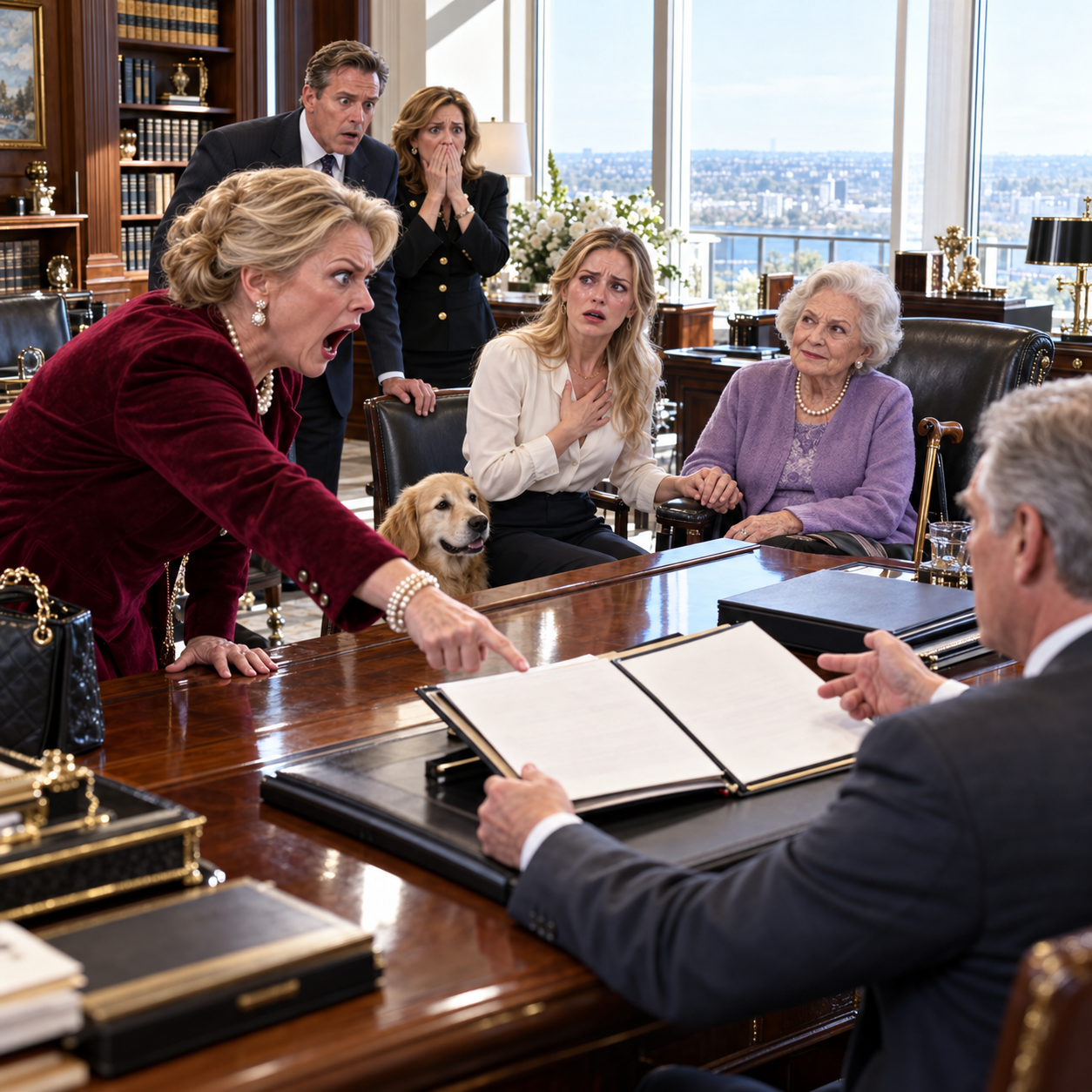
Three weeks later we gathered in Patricia Lowell’s conference room. Mom wore black. Dad looked exhausted. Ryan arrived carrying a leather portfolio, as though he intended to negotiate Grandma’s death. Patricia explained the charitable donations first. Then the specific gifts. Then the two-hundred-thousand-dollar bequests.
Mom frowned. Ryan stopped taking notes.
Patricia continued.
When she reached my name, the room became so quiet I could hear the air-conditioning vent clicking overhead.
Mom blinked twice. “I’m sorry. Could you repeat that?”
Patricia did.
Then Mom asked her to repeat it again.
Ryan slowly turned toward me, and for the first time in my life, my brother looked at me as though I possessed something he couldn’t simply take.
“This isn’t right,” Mom whispered.
Patricia folded her hands.
What she said next ended any chance my family had of pretending Grandma had made a mistake.
### Part 4: The inheritance cost my family more than money ever could
“Mrs. Bennett,” Patricia said to my mother, “your mother made these decisions while fully competent, with independent medical confirmation and extensive documentation. The principal structure of this estate plan predates her Thanksgiving accident.” Mom’s face changed. “Predates it?” “Yes.” Ryan immediately leaned forward. “By how long?” Patricia glanced at her notes. “Approximately eighteen months before the fall, with later amendments that did not substantially change the beneficiary structure.”
That was the moment Ryan’s expression finally cracked. Until then, I think he had been constructing a theory in which I manipulated a vulnerable elderly woman during twelve days of recovery. Learning Grandma had already reached similar conclusions before the accident took that weapon away from him. “Did Megan know?” he asked. “Not when the initial documents were executed.” Patricia’s voice remained calm. “And when Mrs. Callahan later informed Megan of portions of the plan, I documented that conversation afterward at your grandmother’s request.”
Mom stared at me. “You knew?” “Since March.” “And you didn’t tell us?” I almost laughed. “It wasn’t my will.” “We’re your family.” There it was again. The magic word. Family. The word that was supposed to make every imbalance reasonable and every demand mandatory. “Grandma was your family too,” I said. “So why was I the one helping her into the shower while you were home getting ready for December?”
Dad shut his eyes. Ryan whispered, “This is ridiculous.” He turned to Patricia. “Two hundred thousand dollars each out of an estate worth millions? There’s clearly an argument for undue influence.” Patricia slid a second folder across the table. “You are welcome to retain counsel. Before you do, I recommend reviewing this. It contains competency evaluations, contemporaneous notes, communications with your grandmother, earlier drafts of the estate plan, and written explanations in her own hand. She anticipated a possible challenge.”
Mom did not touch the folder. “Megan talked her into this.”
“No,” I said.
“You were here constantly.”
“I showed up.”
The words came out softer than I expected, but they changed the room.
“I showed up when you left me a note telling me to watch the dog. I showed up at the hospital. I stayed after you went home. I drove her to therapy. I called her every week. I did those things because she was Grandma, not because I knew anything about her money.”
Mom’s mouth tightened. “We had responsibilities.”
“So did I.”
“Ryan had work.”
“So did I.”
“He’s an attorney.”
“And I’m a teacher.”
She stopped. For years, those statements had ended every argument because Ryan’s time was automatically considered expensive while mine was considered available. That day, hearing the comparison spoken aloud made it sound as absurd as it had always been.
Dad finally spoke. “Susan, enough.” Mom turned toward him in disbelief. He rubbed both hands over his face. “She’s right about Thanksgiving.” It was the closest thing to an apology I had ever heard from him. “We left.” Mom stared at him as though he had betrayed her. “Because Megan said she could stay.” “No,” I said. “Nobody asked. You simply decided I would.”
There was no family dinner afterward. Ryan left first. Mom walked out without looking at me. Dad paused beside the elevator and said, “Your grandmother loved all of you.” “I know.” He looked relieved until I added, “That doesn’t mean she trusted all of us equally.” I had learned that sentence from Grandma, and saying it aloud felt like closing a door that had been swinging open and hitting me for years.
The threats started within forty-eight hours. Ryan sent long messages about “fairness” and “family expectations.” Mom alternated between anger and guilt. “How can you live with yourself knowing your brother has children someday to provide for?” she wrote, although Ryan wasn’t married and had no children. Then came, “Your grandmother would hate seeing this divide us.” I answered once: “Grandma wrote the document creating this division because she saw a division already existed.” After that, I stopped responding.
Ryan consulted another attorney. Nothing happened. Patricia later told me the attorney apparently advised him that contesting the will would be expensive and unlikely to succeed. Within two months, everyone accepted their two hundred thousand dollars.
They did not accept me.
That was fine.
I sold one small property and kept Grandma’s house. I paid off my remaining student loans but stayed at my school. Leaving teaching simply because I could afford to seemed like exactly the kind of mistake Grandma would have mocked. Instead, I created a fund providing classroom supplies, field-trip fees, winter coats, and emergency meal assistance for students whose families were struggling. I named it the Evelyn Callahan Fund. The first year, we helped forty-three children. My principal cried when I explained why.
I hired a licensing specialist for Grandma’s remaining bakery rights. The first royalty payment arrived the following February. I invested most of it and used a portion to restore Grandma’s kitchen. I changed almost nothing—the same cabinets, the same table, the same brass lamp—but I repaired the floor and replaced the stove. Chester came to live with me immediately because Grandma had included that request in her documents. My cat, Harold, spent two weeks pretending Chester was a disgusting intruder before I caught them sleeping against each other beside the radiator.
My parents occasionally tried to restart contact without discussing what had happened. Mom sent birthday messages with cheerful emojis. Dad called twice and asked about work. Ryan sent a holiday card addressed to “Megan and family,” which felt hilariously formal considering we had grown up fighting over the same bathroom. I was civil. I wasn’t cruel. But I stopped doing the work required to manufacture closeness with people who only noticed me when I stopped carrying my end of their relationship.
Forgiveness never became the dramatic ceremony my family seemed to expect. I didn’t announce that I hated them. I didn’t spend my inheritance punishing them. I simply stopped chasing them.
That was enough.
One cold Sunday the following fall, I drove to Clarksville and opened Grandma’s house. The wind chime moved above the porch exactly as it had the afternoon I arrived for that last Thanksgiving. Inside, the kitchen smelled faintly of wood and cinnamon because I had baked the night before. While organizing an old recipe box, I found an envelope Patricia had given me months earlier but that I had somehow overlooked.
Inside was Grandma’s original cinnamon-roll recipe written on a stained index card. Measurements covered the front in her narrow handwriting. On the back, beneath a smear of flour that had probably been there twenty years, she had added one sentence.
“For Megan, the one who kept showing up. You always smelled like vanilla.”
I sat alone at the kitchen table and cried harder than I had in the attorney’s office.
Not because Grandma had left me millions.
Because she had left me proof that someone had noticed.
My family spent years believing inheritance was a reward waiting at the end of Grandma’s life. Grandma understood something they didn’t: what people inherit from us begins long before we die. We leave behind the memory of who answered, who stayed, who listened, who carried the groceries, who sat beside the hospital bed, and who disappeared once caring became inconvenient.
My parents and Ryan received exactly what Grandma chose to give them.
I received the house, the investments, the recipes, and the licensing rights.
But the thing I protected most carefully was a stained index card that wasn’t worth a dollar.
Because after a lifetime of being treated like the less important child, Grandma had written down the truth in her own hand.
I was the one who kept showing up.
And once I understood what that was worth, I never again begged people to notice me.
THE END!
Disclaimer: Our stories are inspired by real-life events but are carefully rewritten for entertainment. Any resemblance to actual people or situations is purely coincidental.

