### Part 2: Hidden Financial Records Reveal Betrayal and a Dangerous Family Secret
Eighteen months before that disastrous evening, I had noticed a number that didn’t belong.
Ronald Pike, my finance director, had placed the quarterly financial report on my desk.
“Linen expenses rose eleven percent,” he said.
“Did occupancy increase?”
“Four percent.”
I called Grant.
He blamed overseas supply problems. When costs climbed another nine percent, he sent me an article about cotton prices.
Then our East Wing renovation went $1.24 million over its approved $3.1 million budget.
“Old pipes, asbestos, emergency contractors,” Grant explained. “I was trying to protect you from the headaches.”
He sounded so genuinely exhausted that I nearly apologized for questioning him.
Instead, I requested every original invoice.
For four nights, I studied documents from Coastal Linen Group, Atlantic Fixture and Millwork, and Palmetto Provision Supply.
The invoices were perfect.
Too perfect.
Every document had identical formatting, immaculate signatures, and suspiciously convenient totals.
I hired Beth Calloway, a fifty-eight-year-old former fraud investigator recommended by my attorney, Raymond Hale.
“If I find something,” she warned over coffee at a roadside diner, “your life gets considerably harder.”
“I hope you find nothing.”
She looked at me over her glasses.
“People usually say that before I find everything.”
Only Ronald and Raymond knew about the investigation.
Then Luis Ortega, our purchasing manager of eleven years, came to my office carrying his cap in trembling hands.
“Mr. Holloway’s been making me enter orders for companies I’ve never dealt with,” he confessed. “The paperwork comes already filled out.”
I thanked him and promised discretion.
Unfortunately, Grant’s assistant, Keisha, saw Luis leaving my office.
Two days later, Grant appeared in my grandmother’s sixth-floor apartment holding a folder.
“I think Luis is stealing,” he said.
Inside were suspicious invoices bearing Luis’s initials.
“I wanted to be certain before telling you.”
I asked for a week to investigate.
Grant suspended Luis the following morning anyway.
His wife, Marisol, called the hotel crying. Housekeepers signed a petition demanding his reinstatement. Grant responded by gathering department heads and announcing that protecting the business required difficult decisions.
When I challenged one of his figures, he smiled sympathetically.
“Savannah, you’re confusing two quarters.”
I wasn’t.
But his confidence made everyone else doubt me.
Then he approached me privately with another problem.
His ex-wife, Jolene, supposedly wanted child support raised from $2,800 to $4,500 monthly, along with their nine-year-old daughter Mazie’s full tuition.
“Just an advance on my bonus,” he begged. “I can’t let Mazie lose her school.”
I remembered the shy little girl carrying her stuffed otter.
For one terrible moment, I wanted to give him the money.
When I hesitated, Grant mentioned my grandmother.
“She understood what people were owed.”
Something in his voice disturbed me.
I remembered another peculiar incident. Our architect had suggested moving Grandma Maggie’s portrait six feet to accommodate the renovation lighting. Grant had refused so fiercely that we spent an additional $18,000 redesigning the plan.
Why did he care so much about that painting?
Soon afterward, my uncle Warren called.
“Grant thinks you’re losing your judgment,” he warned. “He’s talking about a board vote of no confidence.”
That evening, I sat on my kitchen floor staring at the wall.
Grant was isolating me from my own employees while stealing the company I had inherited.
I called Beth.
“Please tell me you have something.”
“Give me three days,” she replied. “We need documents and witnesses.”
Three days later, Beth summoned me to Raymond’s office.
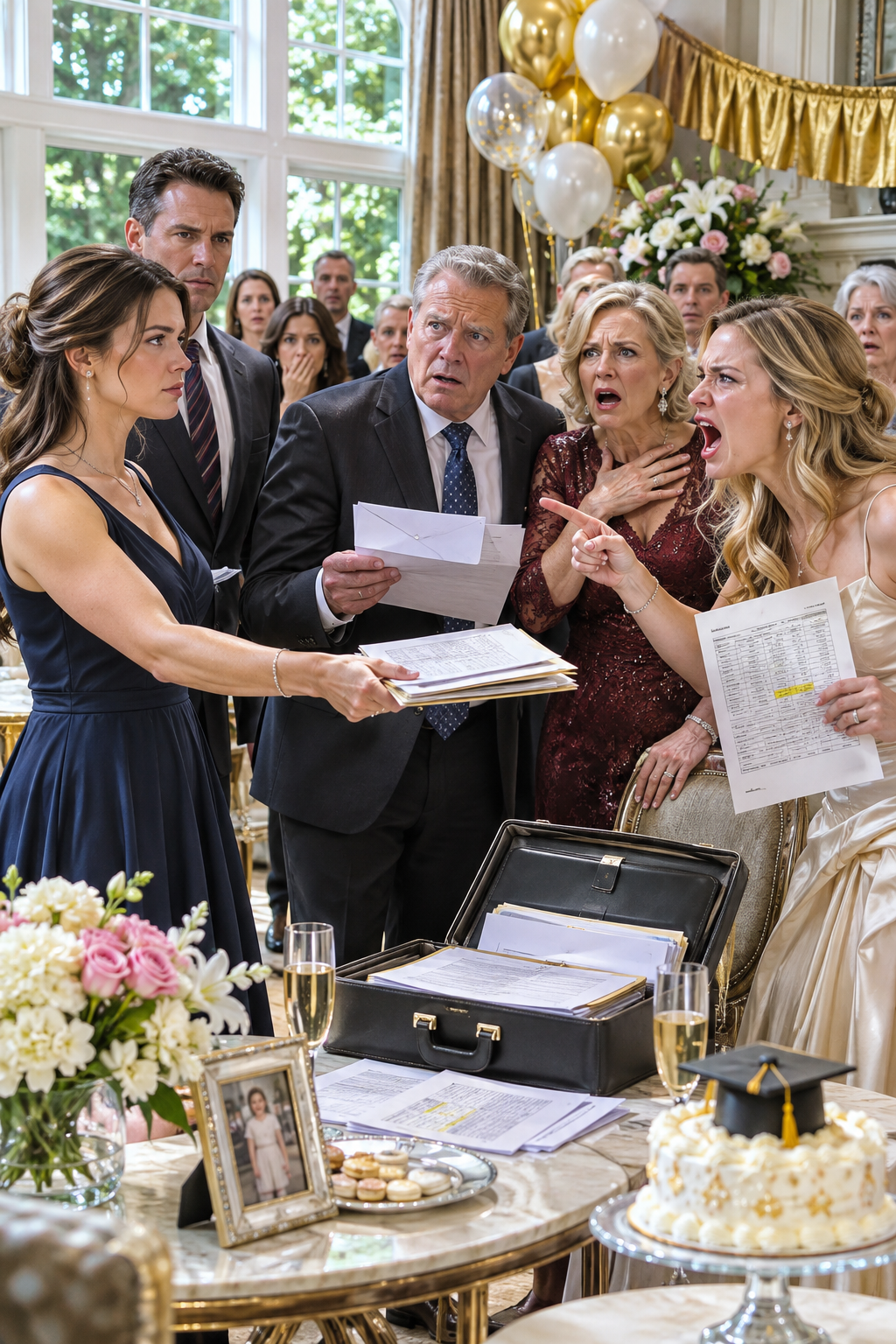
She laid out bank records showing eighteen months of transfers through three shell companies registered in Delaware.
Every payment ended in Grant’s personal account.
Total: $2,340,000.
Raymond wanted to contact law enforcement immediately.
But Luis had been publicly humiliated, and Grant had convinced half my staff that I was unstable.
I wanted the truth established where everyone could witness it.
So Beth arranged to attend the March 15 gala with Raymond and his junior partner, Daniel Cho. I told Grant I would be in Boston, checked into Charleston under a false name, and waited.
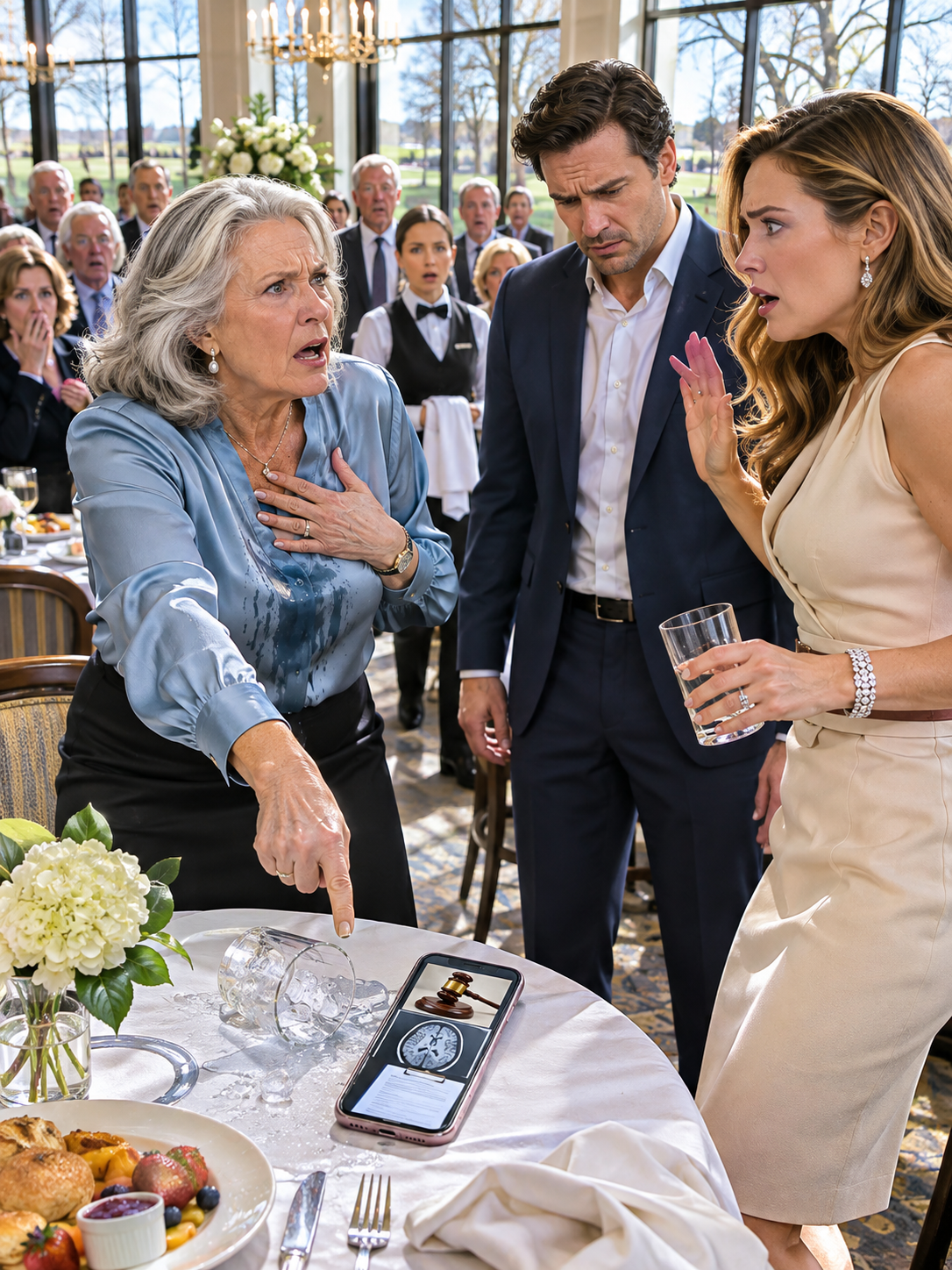
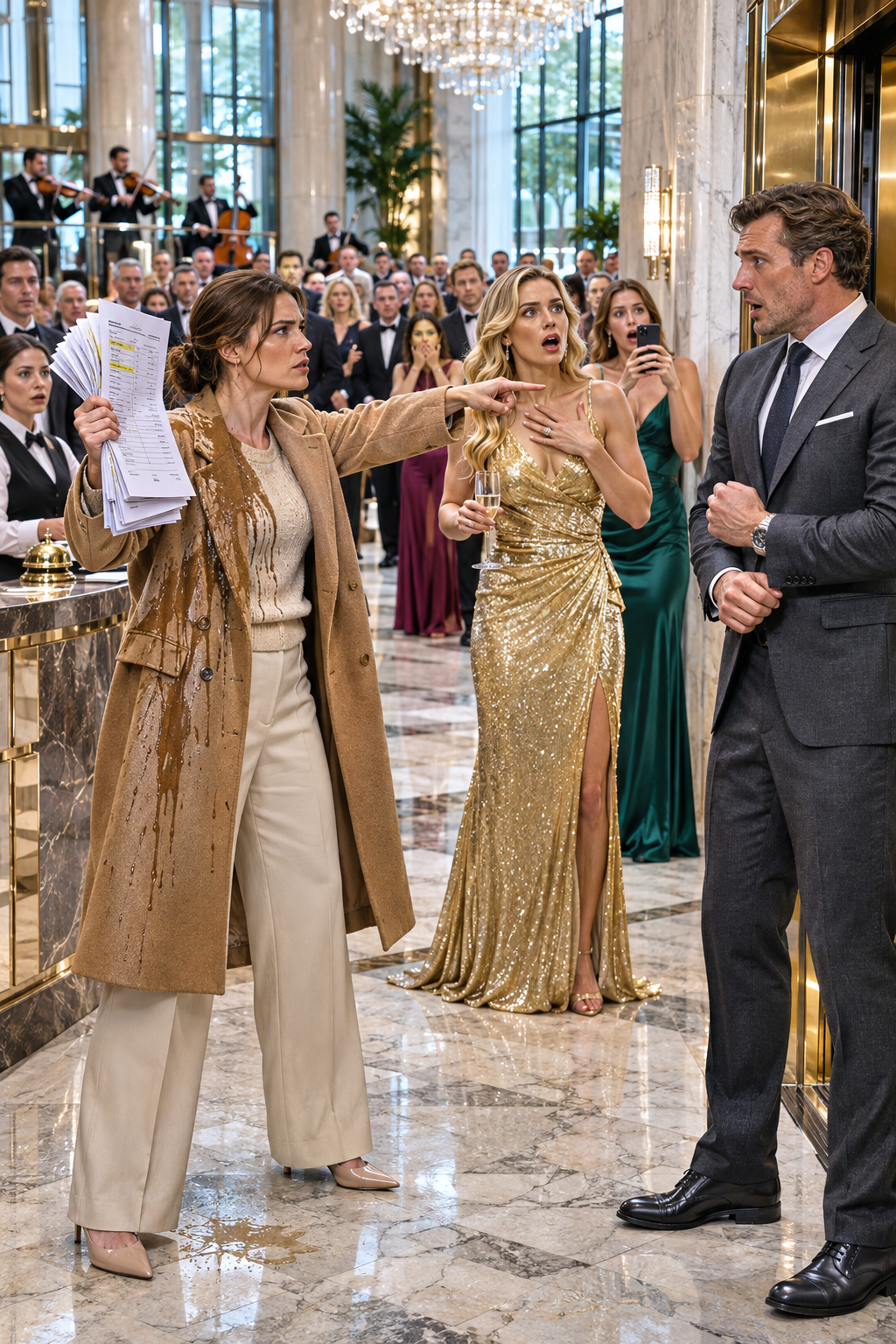
That was how I found myself drenched in champagne while Grant’s fiancée laughed.
Back in the lobby, after Grant mentioned the fourth account, Beth hurried through her papers.
Then her expression changed.
“Savannah, I found something unusual during the audit. I thought it was an old pension.”
“How much?”
“Four thousand two hundred dollars a month.”
“Paid to whom?”
Beth turned the page.
“D. Holloway.”
The name belonged to Dolores Holloway.
Grant’s mother.
The woman who had helped raise me.
And the first payment had been authorized in June 1996 by someone whose handwriting I could recognize anywhere.
Margaret Whitaker.
My grandmother.
### Part 3: A Portrait Conceals an Inherited Debt and Devastating Truth
The strangest family secret was hidden behind my grandmother’s portrait.
Beth placed a scanned check in front of me.
Margaret Whitaker’s signature stretched across the bottom in that familiar slanted handwriting.
The payments had continued for twenty-three years, ending when Dolores died in January 2019. Eight months later, the same monthly amount had resumed, redirected to Grant’s account through a legacy budget category I had unknowingly approved.
“Why?” I asked him.
He pointed toward the portrait.
“Ask her.”
Mr. Ames brought a stepladder without being asked.
I climbed toward the heavy gilt frame, pushed against its edge, and felt it swing outward on a concealed hinge.
Behind it was a small steel safe.
My grandmother had always reused the date she signed her first hotel loan: March 2, 1989.
I turned the dial using the combination 030289.
The lock clicked.
Inside lay a leather portfolio tied with red ribbon, canceled checks, and an old cassette recorder.
I carried the portfolio downstairs.
The first document was dated May 14, 1989.
It was a partnership agreement between Margaret Whitaker and Walter J. Holloway, Grant’s grandfather.
Walter had contributed $140,000 in cash and construction labor to establish the hotel.
In exchange, he was promised fifteen percent of its net operating profits for as long as the hotel operated.
Walter died in 1990, leaving his interest to his daughter, Dolores.
Then I found my grandmother’s letter from 1996.
She admitted that the hotel had grown far beyond its original value. Paying fifteen percent would create financial questions she feared the bank might not tolerate.
Instead, she offered Dolores $4,200 monthly.
She knew it wasn’t what Walter had been promised.
She called herself a coward.
My hands trembled as I unfolded another letter, written one month before Grandma Maggie died in October 2017.
It was addressed to me.
Savannah, I built this family on a promise I broke. Dolores accepted what I offered because she had a son to feed. I’ve never paid what was owed. Fix it. Do not let this debt outlive you.
A tear struck the page.
For twenty-five years, I had believed my grandmother was incapable of dishonesty.
She had raised me after my parents died on Highway 17 when I was nine. She taught me to fold bedsheets, balance ledgers, and remember the names of employees who cleaned rooms long after guests went home.
Now I understood the shame concealed behind her favorite saying.
Keep the lights on and keep the people fed. Everything else is vanity.
Grant stood across the room watching me.
“My mother cleaned your family’s toilets,” he said bitterly. “She knew what that hotel owed us. And every Christmas, she stood beneath that painting pretending everything was fine.”
“How long have you known?”
“Since I was fifteen.”
“Why didn’t you tell me?”
He laughed without humor.
“So your lawyers could tell me the agreement was too old to enforce?”
“I would have listened.”
“You don’t know that.”
“No,” I whispered. “But you never gave me the chance.”
Beth stepped beside us carrying her calculator.
“Grant, your mother’s payments totaled approximately $1.3 million. After accounting for the historical agreement and reasonable interest, our preliminary estimate of the remaining obligation is $412,000.”
His jaw tightened.
“You stole $2,340,000,” she continued.
For the first time, he had no immediate answer.
I stepped toward him.
“Your grandfather was wronged. Your mother deserved better. And I am going to make that right.”
His eyes glistened.
“But you framed Luis. You tried to destroy my credibility. You stole from employees whose livelihoods depended on this business.”
“Savannah—”
“You bought a diamond ring with stolen money while telling people I couldn’t manage my own hotel.”
Camille covered her mouth.
“Grant told me he was getting ownership,” she whispered. “He said the ring came from a bonus.”
I looked at her.
“Please give the ring to Raymond. Its purchase will need to be investigated.”
She nodded, struggling to remove it.
Then I faced the assembled guests.
“My grandmother broke a promise to the Holloway family. That was wrong, and I intend to correct it. Grant Holloway also stole from this hotel. That is wrong, too.”
Raymond approached quietly.
“The officers are here.”
Two uniformed officers entered the lobby and took Grant into custody.
He offered no resistance.
As they escorted him past the fireplace, he looked once toward my grandmother’s open safe.
I couldn’t tell whether his expression held anger or relief.
Afterward, Devon brought me tea. Mr. Ames brought a towel.
“I’m sorry we didn’t stop her,” Devon whispered.
“You were afraid,” I told him. “We need to build a workplace where you aren’t.”
At 9:15 that evening, I called Luis Ortega.
“Luis, you’re reinstated. Full back pay. And I owe you a personal apology.”
He said nothing for several seconds.
Then I heard him call to his wife.
“Marisol, it’s over.”
I remained at the front desk long after the call ended, my hand covering my mouth.
But the next morning, my uncle Warren warned that the scandal could destroy the company.
And three days later, a newspaper headline made me wonder whether he was right.
### Part 4: Justice Restores Stolen Trust and Finally Heals an Old Wrong
The headline read: Hotel Heiress Accused of Cheating Housekeeper’s Family Out of Founding Stake.
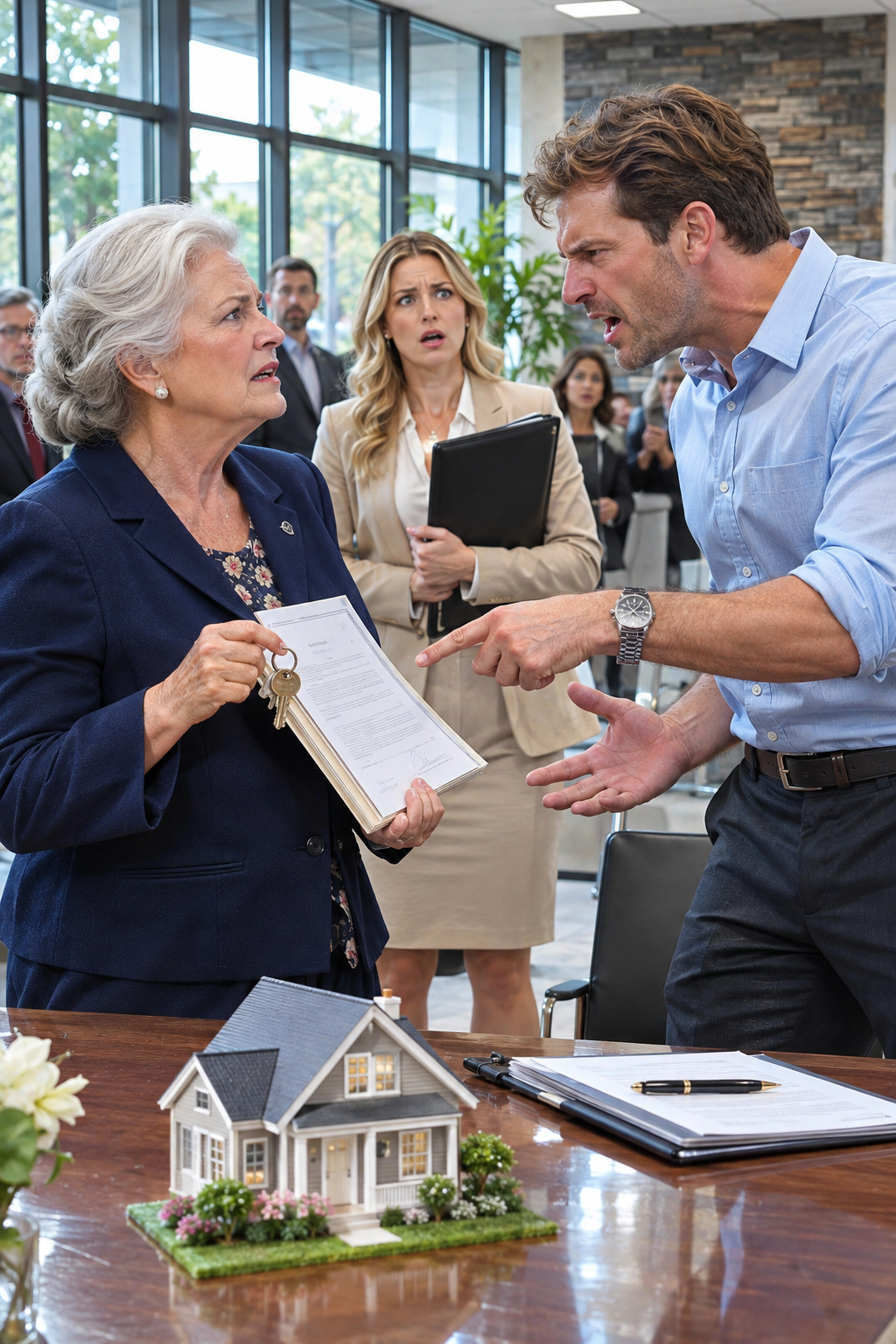
Grant’s attorney, Preston Dukes, had obtained a copy of the 1989 partnership agreement and presented the scandal as a wealthy family’s attempt to silence an injured heir.
Then came a civil claim seeking fifteen percent of the Charleston hotel’s value.
The property was worth approximately $38 million.
My uncle Warren urged me to sell.
“It’s going to become a circus,” he warned.
“Then we’ll survive the circus.”
The hotel divided into uneasy factions. Some employees defended me. Others remembered Dolores and wondered what my grandmother had taken from her.
I understood their anger.
Then Camille Draper called.
“I have something you should see.”
She arrived at Raymond’s office wearing jeans and a gray sweater, without the diamond ring or the confident expression I’d seen in the lobby.
She handed us her phone.
Three months of messages revealed Grant’s manipulation.
He had called me a gullible heiress, boasted about controlling the staff, and predicted he would own part of the hotel by summer.
One message made my stomach twist.
Savannah’s so trusting it’s almost sad. She’ll thank me when I’m done.
Camille admitted that Grant had encouraged her to create a scene at the gala, telling her that intimidating an unwanted guest would make him appear protective of the event.
“I knew throwing the champagne was cruel,” she said. “I did it anyway.”
She returned the diamond ring, valued at $31,400, and provided a formal statement.
I didn’t suddenly forgive her.
But I respected her decision to tell the truth.
Beth spent the following months rebuilding our accounting system. No additional fraud appeared at the other hotels, though she discovered seven forgotten legacy payments. Four honored old kindnesses; three represented outstanding debts.
I settled the debts.
Meanwhile, Grant’s criminal case proceeded.
In July, his attorney requested a meeting.
Grant entered the conference room looking twenty pounds thinner. He barely raised his eyes.
He was prepared to plead guilty to one federal wire fraud count, accept restitution, and withdraw his civil counterclaim in exchange for a negotiated resolution of the other allegations.
There was one personal request.
“Please don’t let Mazie pay for this,” he said.
For the first time in months, I recognized the boy who once let me win at checkers in the laundry room.
“She won’t,” I answered.
In August, a federal judge sentenced Grant to forty-six months in custody, followed by three years of supervised release, and ordered $2,340,000 in restitution. Much of the money was recovered through frozen accounts, the sale of his Mount Pleasant condo, and other assets.
His ex-wife, Jolene, sat in the courtroom with Mazie on her lap.
The little girl clutched a stuffed otter.
She looked toward me once, confused by the silent adults surrounding her.
I looked away.
That evening, Raymond called about the Holloway family’s outstanding obligation.
Our negotiated settlement was $412,000 plus $160,000 in interest, totaling $572,000.
Dolores’s estate had passed through Grant, but a court-appointed trustee could administer the settlement for the next beneficiary, his daughter.
“Put the money in a protected trust for Mazie,” I said. “Let Jolene oversee it. Mazie can receive it at twenty-five.”
In October, Jolene signed the documents in Raymond’s office.
“Why would you do this after what Grant did?” she asked.
“Because Mazie’s great-grandfather helped build our hotel. He was promised something he never received.”
Her eyes filled with tears.
Outside, Mazie held up her stuffed otter.
“His name’s Biscuit.”
I smiled.
“That’s a fine name.”
For the first time in months, the future seemed larger than the past.
By November, the East Wing reopened, finished under its revised budget. I dedicated a small meeting space overlooking Charleston Harbor as the Holloway Room, honoring Walter’s contribution and Dolores’s years of service. Mrs. Tillery, who had worked with Dolores, selected a photograph of her laughing beside a laundry cart.
Luis became our director of purchasing, receiving an $18,000 raise.
On his desk sat a handwritten note from me.
I should have trusted you sooner.
Beth established an internal auditing program across all four properties.
I also moved Grandma Maggie’s portrait into her old sixth-floor apartment. I left the hidden safe empty except for a small vase of white tulips.
I no longer needed her secrets behind a wall.
Months later, I received a postcard from Grant’s federal facility in Kentucky.
There was no signature.
Only one sentence.
Tell Mazie her otter is the best one.
I placed it in the safe beside the flowers.
I still own all four hotels, and sometimes I still visit them wearing that camel coat. The dry cleaner never completely removed the champagne stain from its left sleeve.
I keep it anyway.
It reminds me that my grandmother’s legacy was neither spotless nor worthless. Her courage built a hotel, her fear created a debt, and her silence allowed bitterness to travel through three generations.
Grant’s suffering had been real. His choices had also been wrong.
Those truths could exist together.
One evening, standing beneath the soft lights of the Charleston lobby, I called the front desk.
“Whitaker Charleston,” Devon answered. “How may I help you?”
“It’s Savannah. Everything all right down there?”
“Yes, ma’am. Quiet night.”
“Good. Keep the lights on.”
I hung up and looked across the marble floor where champagne had once pooled around my shoes.
Grandma Maggie had taught me to keep the lights on and the people fed.
I finally understood that the promise wasn’t simply about running a successful hotel.
It was about making sure no one standing beneath those chandeliers ever felt invisible.
Because a person’s worth doesn’t change when someone discovers their name, their bank balance, or who owns the building.
And if another woman ever pours champagne over my plain coat because she thinks I’m nobody, I won’t need to threaten her.
I’ll simply ask her why she believed a stranger deserved so little respect.
That is the lesson I intend to pass on, long after the last stain has faded.
THE END.
All characters and events in this story are fictional, created for storytelling and entertainment purposes. Thank you sincerely for reading. Your feedback and support are invaluable and motivate me to continue sharing more stories with you.