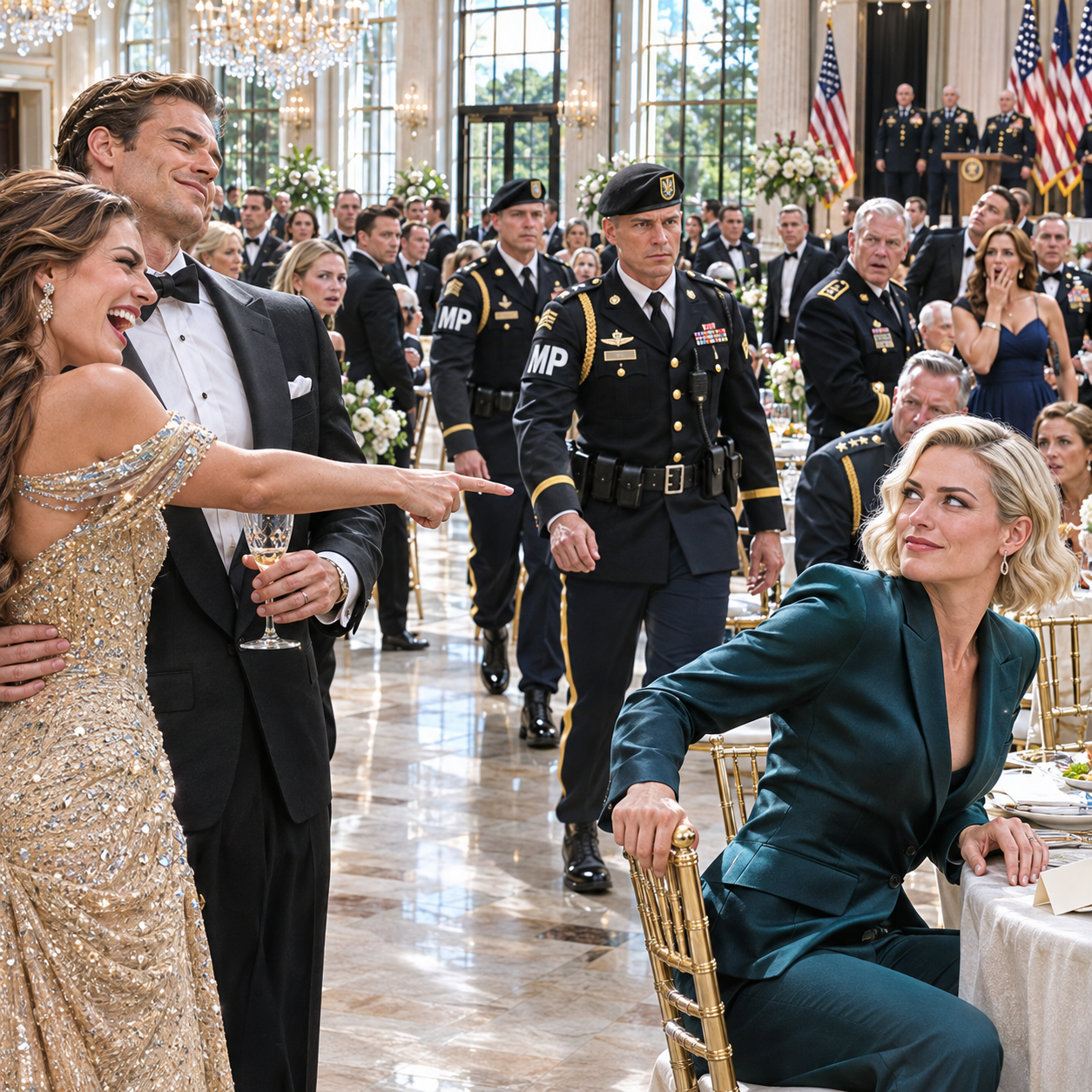
“It Was Just For Fun!” My Sister Said As Strangers Dragged Me Out Of The Deep End. My Parents Laughed. I Couldn’t Swim—And She Knew It. Her New Husband Overheard Everything. By 4:30 A.M., He’d Checked Out Of The Hotel Without Her.
My sister shoved me into the deep end of a swimming pool during her wedding reception, then laughed while I struggled to breathe. Our parents watched without moving, just as they had twenty-three years earlier when she nearly drowned me at our family lake house. I didn’t scream at her afterward or demand that anyone choose sides. I simply stopped protecting her. Three days later, her new husband showed me a folder containing evidence that made me question everything our family had told me about loyalty.
## Part 1/5
The first thing I remember is the sound of my sister laughing. Not the splash, not the music from the wedding reception, not even the terrible moment when my feet searched for the bottom of the swimming pool and found nothing. I remember her laughter because I recognized it immediately, even underwater. It was the same delighted, breathless laugh I’d heard twenty-three years earlier, when she stood on a wooden dock and watched me disappear beneath a Michigan lake.
My name is Maren Whitcomb, I’m twenty-nine years old, and until that Saturday in September, I’d spent most of my life trying to become someone my family wouldn’t find inconvenient. I work as a pediatric nurse in Grand Rapids, where children regularly throw up on my shoes, parents ask questions they are terrified to hear answered, and a good day sometimes means convincing a frightened five-year-old to let me check her temperature. I’m patient, dependable, and usually the person everyone calls when something goes wrong. My older sister, Tessa, has always found those qualities boring.
Tessa is thirty-two, beautiful in a way that makes strangers turn their heads, and capable of making someone feel like the most interesting person in a room for exactly as long as she needs something from them. Our parents, Philip and Judith Whitcomb, describe her as spontaneous, passionate, and impossible to contain. When she borrowed my car without permission and returned it with a damaged bumper, she was spontaneous. When she announced my first serious boyfriend’s embarrassing childhood nickname at Thanksgiving, she was passionate about making everyone laugh.
When I cried afterward, I was told I needed thicker skin. By eleven, I’d learned to smile before deciding whether something hurt, because hesitation invited another joke and another lecture about how my sister didn’t mean anything by it. By sixteen, I understood that being easygoing was less a personality trait than the price of peace in our house. It took me another thirteen years to recognize the difference between peace and surrender.
When I was six, my family spent Independence Day weekend at a cabin on Elk Lake. Tessa was nine and had decided we should play a game that involved seeing how long I could hold my breath underwater. I remember the splintered edge of the dock, the smell of sunscreen, and her hand pressing firmly against the top of my head. I kicked until my sandals slipped off, but she didn’t release me until a man from the neighboring property shouted and jumped into the water.
My mother wrapped me in a towel afterward and told me I had frightened everyone. My father argued with the neighbor, insisting that children had to be allowed to play without adults imagining disasters. Tessa cried because she thought she was going to be punished, so my mother comforted her while I sat on the cabin steps, coughing into a paper napkin. By dinner, the official family story was that I’d panicked during an innocent swimming game.
I never learned to swim after that. I could manage showers and shallow water, but the sight of a dark pool or a lake without a visible bottom made my chest tighten until I could barely speak. My parents called it an unfortunate childhood fear, and Tessa liked to remind people that I’d once been scared of a bathtub. Even as an adult, I avoided vacations involving boats because I couldn’t bear another weekend of being told to relax.
When Tessa announced her engagement to Nolan Pierce, I hoped marriage might change something between us. Nolan was a civil engineer with quiet manners, a slightly crooked smile, and the habit of listening until someone finished a sentence. He’d never met a family where everyone competed so aggressively for attention, and I sometimes caught him watching our dinners with an expression I couldn’t quite interpret. Once, after Tessa mocked me for leaving a party early, he quietly asked whether she always spoke to me that way.
I told him she was only joking. I said it so automatically that I barely noticed the disappointment on his face. He didn’t challenge me, but he didn’t laugh either. Looking back, I think that was the first time someone outside my family had offered me a chance to tell the truth.
The wedding took place at an expensive resort near Traverse City, with sweeping lawns, a glass-walled reception hall, and an illuminated outdoor pool overlooking the lake. Tessa appointed me maid of honor before asking whether I wanted the responsibility. During the following eight months, I organized bridal appointments, assembled welcome baskets, corrected vendor mistakes, and spent nearly every available weekend handling emergencies that seemed to appear whenever my sister became bored. My mother praised my generosity while reminding me that Tessa deserved a perfect wedding.
By the reception, I was exhausted but relieved. The ceremony had been beautiful, and Nolan had looked genuinely moved as Tessa walked toward him through rows of white flowers. During dinner, I gave a short toast about finding someone who made ordinary days feel special, carefully avoiding the childhood stories my sister had forbidden me to mention. She kissed my cheek afterward and whispered, “See? You can be useful when you don’t make everything awkward.”
Around ten that evening, Tessa found me speaking with two women from Nolan’s engineering firm. She wrapped an arm around my shoulders, announced that I was the family’s resident bore, and told them my idea of excitement was checking expiration dates on medical supplies. When their smiles turned uncomfortable, she squeezed my shoulder hard enough to hurt. I excused myself and walked toward the quieter end of the pool deck, where the water reflected the strings of white lights overhead.
I heard her heels approaching but didn’t turn around immediately. She said my name in a bright, teasing voice, and before I could answer, both her hands struck the middle of my back. My shoes scraped the tile, the edge disappeared beneath me, and suddenly I was falling backward toward eight feet of water. The last thing I saw before the surface closed over my face was my sister’s enormous smile.
## Part 2/5
The water was colder than I expected, and for one horrible second, my body couldn’t decide which direction was up. I kicked wildly, reached for something solid, and swallowed water when I tried to scream. My green bridesmaid dress wrapped around my legs, making every movement feel slow and useless. Somewhere above me, distorted by the water, I could still hear music.
I broke the surface once and caught a glimpse of the reception terrace. Tessa stood at the edge holding her champagne glass, laughing so hard that she had bent forward at the waist. Behind her, my father wore the amused expression he used whenever one of her jokes went too far, while my mother covered her mouth with her hand. Then my head slipped underwater again, and I felt the same awful certainty I’d experienced at six years old: nobody who was supposed to protect me was coming.
Someone finally jumped in. An arm locked across my chest from behind, and a man’s voice told me to stop fighting because he had me. I couldn’t follow his instructions at first, but he kept speaking calmly until we reached the side, where two guests pulled me onto the wet tile. I lay there coughing, my throat burning, while water streamed from my hair and collected beneath my cheek.
The man who rescued me introduced himself as Micah Holt, an old college friend of Nolan’s and a swimming instructor at a community recreation center. His gray suit was soaked, his dress shoes squelched when he moved, and he looked more frightened than anyone in my family. He asked whether I could breathe comfortably and insisted that I needed medical attention after inhaling water. Meanwhile, Tessa complained that everyone was ruining her reception.
“Relax, Maren,” she announced, loud enough for the nearest guests to hear. “It was a joke, and you’re obviously fine.”
My mother knelt beside me, but her first words weren’t about my breathing. “Honey, please get up,” she whispered, pressing a towel into my shaking hands. “People are staring, and your sister is going to remember this for the rest of her life.” I looked past her toward the silent guests, some holding phones and others staring at Tessa with open disbelief. Then I noticed Nolan standing outside the glass doors, watching his bride as though he no longer recognized her.
Micah helped me inside while one of Nolan’s coworkers called the front desk for medical assistance. A resort employee brought a wheelchair, and I was taken to a nearby emergency department, where a physician examined me and gave instructions about symptoms that would require immediate attention. I spent several hours under observation before being discharged, physically stable but too shaken to sleep. My best friend, Willa Mercer, drove from Grand Rapids after hearing what had happened.
She found me sitting upright on the hotel bed at nearly three in the morning, wearing borrowed sweatpants and clutching a paper cup of water I couldn’t bring myself to drink. When I described my parents laughing, her expression changed from concern to something harder. “Maren, that’s not a family misunderstanding,” she said. “Your sister knew you couldn’t swim, and she pushed you anyway.”
I wanted to argue because defending Tessa had become almost instinctive. Instead, I told Willa about the lake, about the neighbor who’d saved me, and about the way my parents had spent two decades insisting nothing serious had happened. She listened without interrupting, then asked a question nobody had ever asked me before. “Did anyone ever apologize to you?”
I couldn’t think of a single person.
The next morning, the resort was buzzing with news that Nolan had left shortly before dawn. His suitcase was gone, his car had disappeared from the parking lot, and he wasn’t answering his new wife’s calls. Tessa found me at breakfast with Willa and immediately accused me of turning Nolan against her. She was still wearing yesterday’s expensive wedding earrings, but her makeup was smeared and her hands trembled as she pointed at me.
“You’ve been jealous of me your entire life,” she shouted. “You finally found a way to destroy something that mattered to me.”
My father stepped between us and demanded that I apologize for embarrassing the family. My mother insisted that Nolan would come home once he understood I’d exaggerated what happened. Willa rose from her chair so abruptly that it scraped against the restaurant floor. Before she could speak, I put down my fork and looked directly at my parents.
“I went to the emergency room because your daughter pushed me into deep water,” I said. “You watched it happen, and neither of you tried to help me.”
My mother’s face tightened. “You’re making this sound deliberate.”
“It was deliberate.”
Tessa laughed sharply and demanded that I prove it. I didn’t argue, because I was beginning to understand that convincing my family wasn’t the same thing as establishing the truth. Willa and I collected my luggage, checked out, and drove home without attending the farewell brunch. For the first time, I didn’t send anyone a message explaining why I’d left.
On Tuesday afternoon, an unfamiliar number appeared on my phone while I was folding laundry. The caller was Nolan, and he sounded exhausted when he asked whether we could meet somewhere private. He said he needed to apologize for failing to help me, but there was something else he couldn’t explain over the phone. When I arrived at a coffee shop outside Grand Rapids, he was waiting with a thick folder beside his untouched coffee.
“I didn’t leave because you ruined my wedding,” he told me before I sat down. “I left because I finally understood who I’d married.”
He opened the folder and showed me a bank statement bearing his name, followed by several credit accounts he insisted he’d never opened. More statements followed, each one documenting purchases, cash advances, and payments he couldn’t explain. Then he turned to a transfer record involving the savings account he’d shared with Tessa. Across the bottom of the page was a signature that looked almost exactly like his.
“She’s been using my identity,” he said quietly. “And I think your parents knew.”
## Part 3/5
For several minutes, I studied the documents without understanding why Nolan had brought them to me. His attorney had helped him identify six credit accounts opened without his permission, with balances totaling nearly seventy thousand dollars. Another thirty-two thousand had disappeared from the couple’s joint savings account through transfers he hadn’t authorized. The charges included designer clothing, expensive hotel deposits, and payments to a wedding vendor Nolan believed had already been paid in full.
“Why would she do this?” I asked.
“I think she was counting on me never checking closely,” he answered. “She handled our wedding expenses because she said I was too busy at work, and I trusted her.” He explained that after leaving the resort, he’d driven to the townhouse they’d purchased together and searched the household records. Hidden among wedding invoices were collection notices, unopened account statements, and correspondence from a lender requesting updated financial information. Some envelopes had his name on them, although he’d never seen them before.
He’d spent most of Sunday calling financial institutions and arranging to protect his accounts. On Monday, his attorney advised him to report the suspected identity misuse and preserve every document before Tessa discovered what he’d found. He’d also contacted the resort’s wedding videographer, who confirmed that a camera had captured the pool deck throughout the reception. Nolan’s voice faltered when he told me Micah had obtained a copy of the relevant footage.
“I watched it twice,” he said. “Your sister looked back to make sure you were near the edge, and then she pushed you with both hands.”
He turned his laptop toward me. I watched Tessa approach from behind, reach toward my shoulders, and drive me into the pool with a sudden forward movement. My father grinned in the background, while my mother covered her mouth as if trying to hide a laugh. The camera continued recording as Micah ran across the deck, jumped into the water, and pulled me toward the side.
The footage was worse than my memories because it showed everything I’d been unable to see. Nolan appeared near the doors, frozen for several seconds, before another guest pushed past him to help. When the video ended, he closed the laptop and apologized without trying to excuse himself. I told him he could regret his hesitation without accepting responsibility for Tessa’s actions.
He nodded and handed me a copy of the recording, along with the videographer’s contact information. He wanted me to have evidence of what happened, regardless of what I decided to do next. Then he showed me the last document in the folder, an agreement financing a significant portion of the wedding. My parents had signed as guarantors, and the amount owed exceeded eighty thousand dollars.
That explained something I hadn’t understood about the reception. My father had repeatedly praised Nolan’s career and talked about the wedding as if it were an investment in Tessa’s future. Now I realized my parents had taken on obligations that depended on a marriage they expected Nolan to finance. They weren’t merely protecting their favorite daughter from embarrassment; they had a financial reason to pressure everyone into pretending the wedding had been perfect.
That evening, I called my grandmother, Bernice Whitcomb, because she was the only relative who had ever challenged my father openly. She listened as I described the video, then became quiet when I mentioned the childhood incident at the lake. Finally, she asked whether I remembered the neighbor who had pulled me out. I told her I remembered his red fishing boat but had never known his name.
“His name was Walter Sloane,” she said. “He came to your parents’ house afterward because he was worried about you.”
According to Grandma Bernice, Walter had insisted that Tessa deliberately held me underwater, and my father had threatened to accuse him of frightening a child if he repeated that account. My grandmother knew because Walter had told her directly during a neighborhood gathering. She’d argued with my parents but eventually accepted their promise that Tessa would receive counseling. Until that conversation, I’d never heard anything about counseling.
“Did she actually go?” I asked.
Grandma hesitated. “I don’t know, sweetheart.”
That answer hurt more than I expected. For twenty-three years, my family had treated the lake incident as proof that I was overly sensitive, while the adults who witnessed its aftermath had quietly disagreed about what happened. My grandmother admitted that she should have followed up, and I believed she meant it. Still, I couldn’t ignore how easily every adult had stepped aside when confronting my father became uncomfortable.
On Thursday, my parents began calling about the wedding debt. Tessa had returned to their house, Nolan was pursuing a legal separation, and the lender wanted clarification about the payments. My father demanded that I contact Nolan and convince him to reconsider. When I refused, my mother sent a message containing a request for twenty-five thousand dollars.
I stared at the number while sitting in my hospital parking lot. My sister had pushed me into deep water, and my parents’ first practical concern was whether I could help pay for her wedding. I forwarded the messages to Willa, then contacted an attorney about preserving the video and documenting the assault. By the following morning, I had filed a police report and sent my family a single message saying I would no longer discuss Tessa’s finances.
That afternoon, Grandma Bernice called again. She’d found an old envelope among her papers from the lake house, containing a letter Walter Sloane had written after rescuing me. His account described Tessa holding me underwater and refusing to release me when he shouted. Across the bottom was a handwritten note indicating that my father had asked Walter to change his description before speaking with anyone else.
For the first time, I understood that my family hadn’t simply forgotten what happened to me. Someone had worked to make sure the truth stayed buried.
## Part 4/5
I visited my grandmother that weekend, and she handed me Walter’s letter in a faded envelope that smelled faintly of cedar. The paper had yellowed along the folds, but his handwriting remained clear. He described hearing a little girl screaming, seeing an older child pressing her beneath the surface, and jumping from his dock when the older child ignored his warning. At the end, he’d written that he feared something similar might happen again if the adults continued describing it as harmless play.
Grandma Bernice watched me read without trying to explain away her silence. When I asked why she hadn’t shown me the letter years earlier, she admitted that she’d been afraid of losing contact with her grandchildren. My father had threatened to stop bringing us to family gatherings if she continued questioning his parenting. She had chosen access over confrontation, hoping she could protect me simply by staying nearby.
“You should have told someone,” I said.
“I know,” she answered. “I convinced myself being there was enough.”
I appreciated that she didn’t ask me to forgive her immediately. She offered to support whatever decision I made, including speaking with my attorney about the letter and what Walter had told her. I explained that the childhood incident might be too old to pursue legally, but the letter mattered to me regardless. For the first time, I had something concrete contradicting the story I’d been forced to repeat since kindergarten.
A week later, I sent a carefully written message to our extended family. I explained that Tessa had intentionally pushed me into the resort pool, that I couldn’t swim, and that I’d received medical care afterward. With guidance from my attorney, I shared the relevant video with relatives who requested to see it, but I didn’t include Nolan’s private financial records. His case belonged to him, and I wasn’t interested in turning someone else’s personal information into family entertainment.
Responses arrived slowly. My aunt Laurel called to apologize for laughing at stories about my fear of water because she’d never understood where it came from. Two cousins remembered Tessa boasting about her wedding prank before the reception, although neither had believed she would actually do it. Another relative accused me of publicly humiliating my parents, and I replied that anyone concerned about their embarrassment could speak with them directly.
The strongest response came from Tessa herself. She left a voicemail saying I’d deliberately destroyed her reputation and that the video made her look worse than she’d intended. She never asked about the hospital visit or acknowledged that I could have drowned. Instead, she demanded that I contact Nolan and tell him the financial records were a misunderstanding.
I saved the message for my attorney. Then I turned off my phone and went back to work, where a little boy recovering from surgery wanted to know whether the plastic dinosaur beside his bed could have a hospital bracelet. I found a spare paper band and carefully fastened it around the dinosaur’s neck. The boy smiled, and for several minutes, life felt wonderfully uncomplicated.
Over the following months, Nolan’s financial investigation uncovered more than either of us had expected. The unauthorized accounts had accumulated substantial balances, and several transfers from his savings had benefited Tessa directly. Her explanations to investigators changed as the records were reviewed, while her former employers began asking questions about financial information she’d submitted during her work as a real estate agent. Nolan filed for divorce and pursued repayment through his attorney, making it clear that he wanted no private reconciliation.
My parents faced problems of their own. They had guaranteed the wedding financing based on Tessa’s assurances that Nolan would eventually contribute toward the balance. With the marriage collapsing and additional debts coming to light, they had to negotiate repayment terms without the financial help they’d expected from their son-in-law. Eventually, they decided to sell the lake property rather than keep borrowing against their remaining assets.
My mother called the sale a tragedy. My father called it an injustice and complained that I’d allowed one bad joke to destroy three generations of family memories. Neither acknowledged that they’d signed the financing agreements voluntarily or that Tessa had created the circumstances leading to their financial problems. They still wanted a version of events where I was responsible because I’d refused to make everything disappear.
Meanwhile, I started therapy with a counselor named Dr. Simone Ellis. During our first appointment, I told her I wasn’t sure whether my fear of water was the real problem or whether my family’s treatment had made the fear impossible to overcome. She asked how I’d responded as a child whenever I felt unsafe around Tessa. I told her I’d learned to be quiet, agreeable, and useful because those were the only ways to avoid becoming a target.
“Those habits helped you survive your childhood,” she said. “But you don’t have to organize your adult life around keeping your sister comfortable.”
I thought about that conversation constantly. I stopped volunteering for extra responsibilities simply because someone expected me to handle them, and I began accepting invitations I’d previously declined to avoid family arguments. Willa noticed I was laughing more, although the nightmares continued. Sometimes I woke convinced I was still underwater, with my sister’s hands pressing against my shoulders.
In January, Tessa’s attorney contacted mine about resolving the pool incident. She was willing to acknowledge that she’d pushed me but wanted any agreement to describe it as an impulsive prank without intent to cause harm. I refused to sign anything containing that characterization. My lawyer explained that the video, witness statements, and medical records gave investigators evidence to assess independently.
Two days later, I received notice that prosecutors were proceeding with an assault charge related to the wedding. Tessa’s separate financial case was also moving forward, and for the first time, our parents couldn’t negotiate her way out of everything with apologies and family pressure. I expected the news to frighten her into finally admitting what she’d done.
Instead, she sent me a handwritten letter. The first three pages blamed Nolan, Micah, the guests who recorded the incident, and me for refusing to understand her intentions. On the last page, she wrote that she’d always known I would eventually turn everyone against her. Reading those words, I realized she still believed I’d caused her problems simply by surviving them and telling the truth.
## Part 5/5
The first hearing took place on a gray morning in March, six months after the wedding. I arrived at the county courthouse wearing a navy blazer and carrying a folder containing my hospital records, correspondence, and a written account of what happened. Willa accompanied me, and Micah had agreed to provide his witness statement about the rescue. Nolan was there separately, meeting with his attorney about the financial proceedings that were continuing alongside the assault case.
Tessa entered the hallway between our parents, wearing a plain cardigan and almost no makeup. She looked tired and angry, but when she noticed me, her expression changed into the familiar look she used whenever she wanted someone to feel guilty. My mother touched her elbow and whispered something I couldn’t hear. My father stared straight ahead, avoiding the strangers who recognized Tessa from the wedding.
Tessa eventually entered a plea to a misdemeanor assault charge rather than contest the recorded evidence at trial. During the sentencing hearing, the prosecutor presented the video, supporting witness accounts, and records from my emergency department visit. I watched the judge study the footage carefully, stopping at the moment my sister pushed me and again when Micah jumped into the water. For the first time, nobody interrupted the evidence to explain that Tessa was only having fun.
When I was allowed to speak, I didn’t deliver the angry speech I’d imagined during sleepless nights. I explained what had happened when I was six, how the adults in my family had dismissed the danger, and why the wedding incident had affected me far beyond the physical injuries. I told the judge that my sister had known I couldn’t swim and had chosen to push me anyway. My hands shook, but I finished without looking toward my parents.
Tessa received probation, community service, and orders to comply with the court’s conditions. The financial case continued through additional hearings, eventually resulting in a guilty plea involving unauthorized accounts and identity misuse, along with restitution obligations. Her real estate license was suspended while the professional investigation proceeded, and the brokerage where she’d worked terminated her employment. Nolan recovered some of his losses through financial institutions, although repayment and disputes over the remaining balances continued.
None of it happened as suddenly as the dramatic reversals in movies. There were repeated meetings, missing documents, legal expenses, and long stretches when nobody had any new information. My parents sold their lake property and moved into a smaller condominium, still insisting that they were the people suffering most. Tessa complained that employers no longer trusted her, without recognizing how thoroughly she’d damaged that trust herself.
After the final hearing, my family approached me near the courthouse entrance. My father looked older than I remembered, his shoulders rounded beneath a coat he’d owned for years. My mother had been crying, and Tessa stood beside them with her arms tightly crossed. For one strange moment, they looked almost ordinary, like any family exhausted by a difficult day.
“Are you satisfied?” Tessa asked. “I lost my husband, my career, and practically everything I worked for.”
I looked at her carefully before answering. “I wanted you to leave me alone that night.”
She shook her head. “You really can’t accept that I was joking.”
“No,” I said. “Because you knew I might drown.”
My father stepped forward and started explaining how much the legal problems had cost them. He mentioned the lake house, their retirement plans, and how difficult it had become to support Tessa. I listened until he began suggesting that I should contribute toward their expenses because I was still earning a good salary. Then I told him I wasn’t going to finance the consequences of choices I hadn’t made.
My mother reached for my hand. “We’re still your family, Maren.”
“That’s why it took me so long to leave,” I answered.
She began crying harder, but I didn’t stay to comfort her. I explained that I wouldn’t attend future family gatherings or accept private calls from Tessa, and that any necessary communication could go through my attorney. I also told my parents that I needed distance from them indefinitely. They could disagree with my decision, but they no longer had permission to negotiate it.
I walked outside with Willa, feeling neither victorious nor devastated. I felt tired, as though I’d finally put down something heavy I’d been carrying for most of my life. She asked whether I wanted to go somewhere for lunch, and we ended up eating grilled cheese sandwiches at a small diner. We talked about her new apartment and a ridiculous argument she’d had with her landlord over a broken dishwasher.
In April, I contacted Micah about adult swimming lessons. He remembered my rescue immediately and told me he worked with adults who had experienced frightening incidents around water. We agreed that I’d begin with individual sessions at the community recreation center, outside the busiest hours. He made no promises about how quickly I would improve and told me I could stop whenever I needed.
The first morning, I sat on the shallow-end steps for almost half an hour before allowing the water to reach my knees. My hands trembled, and my breathing became uneven whenever I looked toward the deeper section. Micah stayed nearby without touching me or telling me to be brave. When I finally stood waist-deep in the water, I cried so suddenly that I surprised myself.
Over the next several months, I learned to float with support, control my breathing, and move through shallow water without panicking. Some lessons were harder than others, and occasionally I returned home convinced I’d made no progress. But I kept attending because nobody treated my fear as entertainment or demanded that I recover for their convenience. Little by little, the pool became somewhere I could make decisions rather than somewhere decisions were made for me.
Grandma Bernice came to watch one morning and waited quietly in the observation area. Afterward, we sat outside with coffee while she asked what she could do to support me. I told her that I wasn’t ready to forget her silence about the lake, but I appreciated that she’d stopped defending it. She nodded and said she intended to keep showing up, whether forgiveness came eventually or not.
Nolan moved out of Michigan that summer after accepting a position with an engineering firm in Colorado. Before leaving, he sent me a short note saying he’d learned more about trust during his brief marriage than he’d expected to learn in a lifetime. He thanked me for being honest when the truth was uncomfortable. I wished him well, and we went on with our separate lives.
Tessa occasionally tried contacting me through relatives or unfamiliar numbers. Her messages alternated between apologies that contained excuses and accusations that I’d deliberately ruined her future. I stopped reading them because each one repeated the same demand: she wanted me to make her feel innocent again. I finally understood that I didn’t owe her that comfort.
One Saturday, almost a year after the wedding, I swam the length of the shallow section without anyone holding me. Micah stood near the wall as I reached it, and I gripped the edge, breathless and smiling. There was no crowd, no applause, and no dramatic declaration of victory. Just the ordinary sounds of water moving against tile and children laughing somewhere beyond the changing rooms.
For years, I’d believed recovering meant convincing my family to acknowledge what they’d done. Now I understood that I could build a life without their permission, whether they apologized or not. My sister had spent decades teaching me that fear was something to be ashamed of, and I’d wasted too much time believing her. I pushed away from the wall and began swimming back, knowing I could stop, stand, or ask for help whenever I chose.
THE END!
Disclaimer: Our stories are inspired by real-life events but are carefully rewritten for entertainment. Any resemblance to actual people or situations is purely coincidental.