### Part 2: Two Secret Credit Accounts Exposed a Betrayal Years in Making
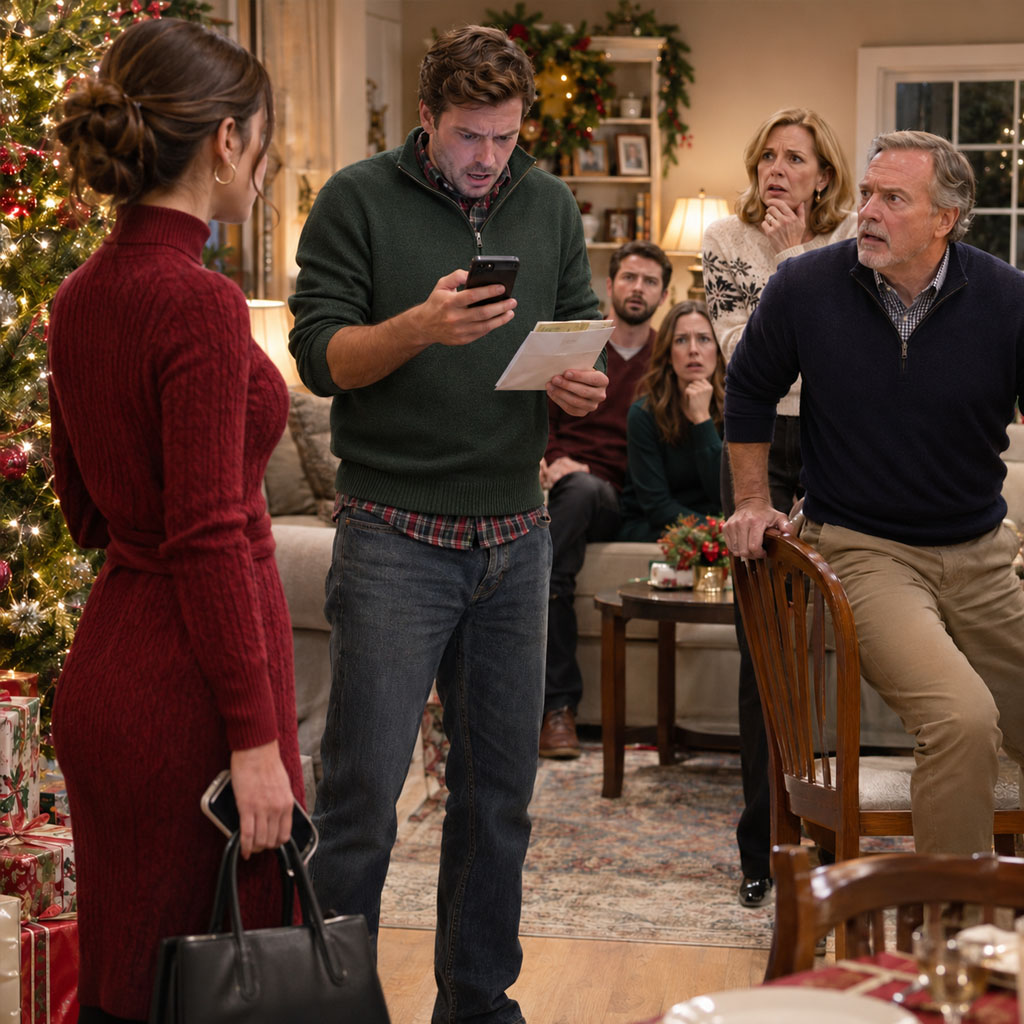
I printed the credit report at the little printer beside my desk. The machine pulled each page through with an irritating squeak, depositing evidence onto the tray while I stood there in my slippers. One account showed a balance of $4,870; the other carried $3,250.
Both had been opened using my name and Social Security number.
I called the first card issuer, worked through its automated menu, and eventually reached a fraud specialist named Denise. She asked me to verify my identity, then listened while I explained that I hadn’t opened the account.
“Do you recognize the mailing address?” she asked.
“Yes. It’s my parents’ house.”
“Do you have access to that address?”
“Not anymore. I moved out years ago.”
Denise explained that she couldn’t disclose every detail while the investigation was pending, but she could flag the account, initiate a fraud review, and send me a written dispute packet. She advised me to contact the other issuer, freeze my credit files, and submit an identity theft report through the Federal Trade Commission.
I wrote everything down on the back of a graduation program.
The second company confirmed another disputed account. It had been used for charges connected to an event-planning business, a formalwear boutique, and a photography studio. Those names were familiar from the party invitations my mother had been sending to relatives.
I spread the statements across my kitchen table.
My parents hadn’t simply wanted me to contribute to Avery’s celebration. Someone had already used my identity to finance part of it.
That evening, I called my father.
He answered from his car, where the turn signal clicked steadily in the background. “Can this wait until I get home?”
“No. Did you know Mom opened credit cards in my name?”
The clicking stopped.
“Your mother said she was handling some temporary expenses.”
“Using my Social Security number?”
“Camilla, I don’t know the particulars.”
“Did she tell you I agreed?”
He exhaled. “She said you’d always helped with family expenses, and that you two had an understanding.”
“We didn’t.”
For several seconds, neither of us spoke. Then Dad said, “Things have been tighter than you realize. My commissions were down last quarter. Your mother didn’t want Avery to feel the strain.”
I sat down slowly. “So she let me carry it instead?”
“She intended to pay it back.”
“Then why didn’t she ask me?”
He didn’t answer that question.
Instead, he asked whether I could come over so everyone could discuss the situation calmly.
I refused.
The next morning, I filed an identity theft report, froze my credit with the major bureaus, and organized the statements in a folder. I also emailed my parents, asking them to communicate with me in writing about the accounts.
Mom responded forty minutes later.
You are blowing a family misunderstanding completely out of proportion. We have always supported you. I will not apologize for trying to give your sister a beautiful birthday.
I read the message at my desk, then forwarded it to a separate folder with the account statements.
At lunchtime, Avery called.
She sounded nervous. “Mom says you’re trying to ruin my party.”
“I’m not trying to ruin anything.”
“She said you promised to help and changed your mind.”
“I never promised her money.”
Avery shifted the phone, and I heard a door close. “She told me the credit cards were yours. That you were letting her use them until Dad’s bonus came.”
I rubbed my forehead. “They’re in my name, but I didn’t open them. I didn’t know they existed until yesterday.”
“Oh.”
I could picture her sitting cross-legged on her bedroom carpet, surrounded by shoes and dresses, trying to reconcile two versions of the same story.
“Did you know the party cost that much?” I asked.
“Not really. Mom said she wanted something special because I didn’t get a big eighth-grade graduation.”
I remembered Avery’s eighth-grade celebration. There had been a restaurant dinner, a custom cake, and photographs of our parents holding her certificate.
“You’re not responsible for this,” I told her.
She was quiet for a moment. “Are you going to call the police on Mom?”
“I’ve reported the accounts to the companies. I have to protect myself.”
“But she could get in trouble.”
“Yes.”
Avery whispered, “Okay,” and hung up.
That conversation stayed with me longer than the argument with my mother. Avery had grown up believing that expensive celebrations were proof of being loved, because our mother had worked hard to make them feel that way. I didn’t want her punished for something she hadn’t arranged.
Two days later, my father asked to meet at a diner near Highlands Ranch.
I agreed on one condition: Mom needed to bring any documents she believed authorized her to use my identity.
They arrived fifteen minutes late.
Dad looked tired, his collar unbuttoned beneath a gray sweater. Mom wore a pale blue blouse and carried a leather handbag that I remembered buying her for Mother’s Day. Avery came with them, although nobody had mentioned she’d be attending.
We settled into a corner booth.
Mom immediately ordered coffee. “I hope we can behave like adults today.”
I placed my folder on the table. “I need to know why these accounts were opened.”
“I was helping you establish a stronger financial history.”
“I already have credit.”
“Not the kind you need for a mortgage.”
I took out the first statement. “This paid for a photographer and a venue deposit.”
She glanced at the page without touching it. “Those were temporary charges.”
“Did you sign my name?”
Mom looked toward the waitress, who was carrying a tray of pancakes to another table. “I filled out the applications. I thought that was understood.”
“It wasn’t.”
Dad leaned forward. “Linda, just tell her what happened.”
My mother straightened the sugar packets beside her cup. “The party was already booked. Robert’s bonus didn’t come through. I knew Camilla would help once she understood, and I couldn’t bear telling Avery we had to cancel everything.”
“You could have scaled it down,” I said.
“You don’t understand what it’s like when every other parent can give their child something wonderful.”
I looked at her across the table. “I think I understand more than you realize.”
Avery had been staring at her hands. Now she raised her head. “Mom, you told me Camilla offered.”
“I said your sister would take care of it.”
“That’s not the same thing.”
Mom’s face tightened. “I was trying to protect your birthday.”
Avery pushed her untouched orange juice away.
I slid a copy of the credit report toward my father. “The balance is over eight thousand dollars. The companies are investigating. I need both of you to cooperate and stop using my information.”
Dad studied the numbers, his glasses slipping down his nose.
“Eight thousand?” he repeated.
Mom reached for her coffee. “There were other expenses.”
“What other expenses?” Dad asked.
She didn’t answer.
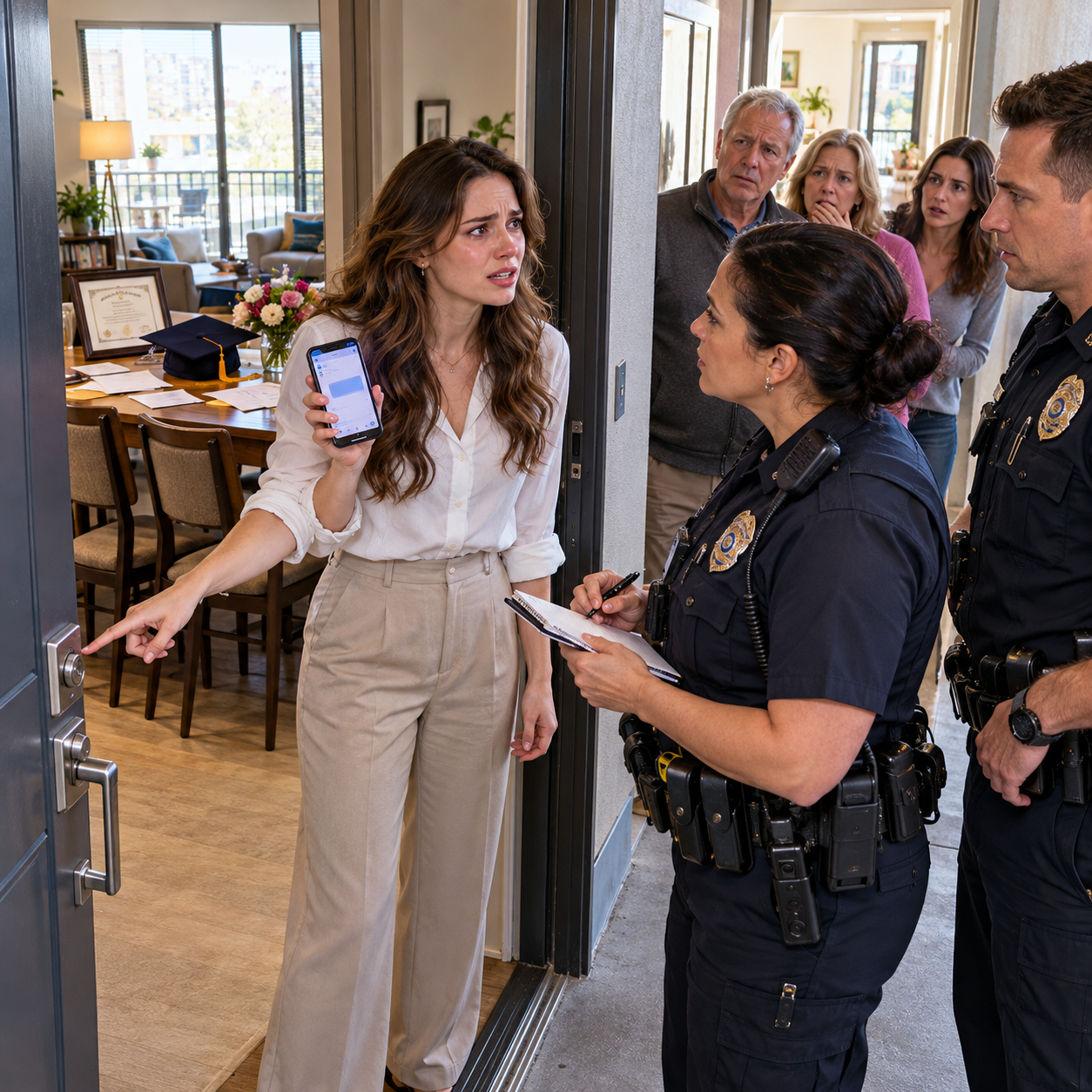
I took out a printed copy of her email and placed it beside the statements. “You called the police because I refused to pay you. You told them I was behaving dangerously.”
“I was frightened,” she said.
“Of what?”
“Of losing you.”
Her voice had become smaller, and for a moment I saw the woman who used to sit beside my bed when I was sick, holding a cool washcloth against my forehead.
Then she added, “You’ve been pulling away for years.”
I folded my hands. “I was growing up, Mom. That’s what children are supposed to do.”
Dad finally spoke. “Linda, did you tell the officers about the money?”
“No.”
He stared at her.
“Then you need to correct that,” he said.
Mom looked from him to me, searching for someone who would soften the moment.
Nobody did.
Before leaving, I handed my father a written list of the disputed accounts and the contact information for the investigators.
Outside, Avery followed me to my car.
“Camilla?”
I turned.
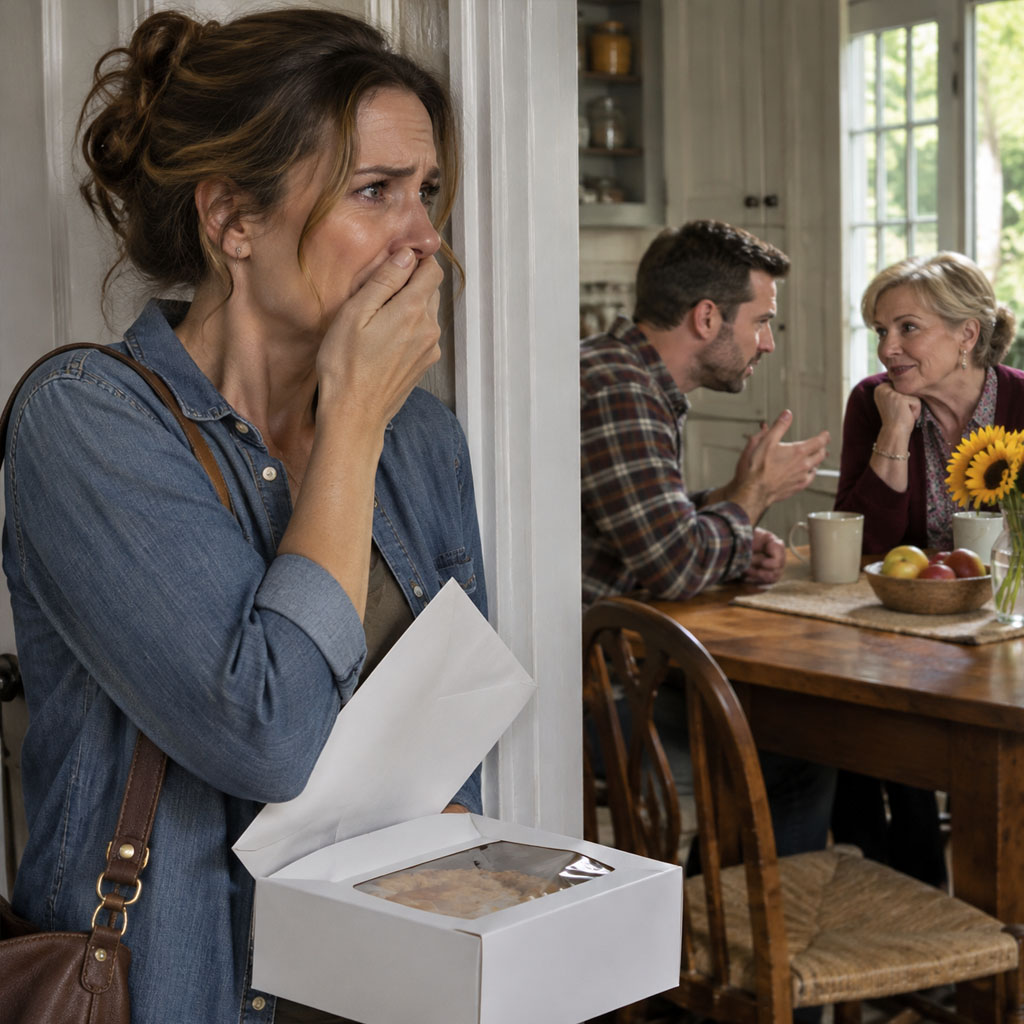
She held a small envelope, creased at the corners. Inside was a photograph Natalie had mailed to our parents after graduation. It showed me smiling with my diploma, standing between Natalie and her mother.
“I found this on the kitchen counter,” Avery said. “Mom hadn’t opened it.”
I studied the picture.
Avery touched my sleeve. “You look really happy.”
“I was, for a little while.”
She nodded, then walked back toward the diner.
### Part 3: The Investigation Forced My Family to Face the Truth
Avery’s birthday arrived on Saturday.
I didn’t attend the party, although she sent me a message that morning saying I was welcome if I wanted to come. I thanked her and told her I hoped she had a good evening.
At six, I ordered takeout and settled on the couch with a documentary I’d been meaning to watch.
At eight-thirty, my father called.
“The venue’s asking for another payment,” he said. “One of the cards was declined.”
“The accounts are disputed, Dad.”
“I know. Your mother thought we could settle the balance afterward.”
I put my food down. “You can’t keep charging things to accounts that were opened without my permission.”
“We aren’t. I’m paying with my own card. We’re canceling the extra photography package.”
He sounded embarrassed, but not angry.
“Camilla,” he added, “I’m sorry we missed your graduation.”
I waited.
“I knew you were counting on us. I let your mother convince me Avery needed both of us at the fitting. It was easier than arguing.”
“That doesn’t make it hurt less.”
“I know.”
We talked for another minute before he returned to the party. I spent the rest of the evening reading on my balcony, listening to distant traffic and someone’s television through an open window.
There was no satisfaction in imagining the birthday going badly. Avery hadn’t deserved any of this.
Over the following weeks, I completed identity theft affidavits, answered questions from investigators, and provided copies of my communications with my parents. The card issuers requested additional documentation, including verification of where I’d lived when the applications were submitted.
My mother stopped calling after an investigator contacted her.
Dad emailed me twice, asking about repayment options. I told him any arrangement needed to go through the lenders and that I wouldn’t assume responsibility for the disputed balances.
Eventually, my mother acknowledged in writing that she’d submitted the applications without my authorization. The companies continued their reviews, and I received confirmation that the disputed balances were being removed from my responsibility, subject to their final processing.
There was no dramatic arrest, no courtroom speech, and no public confrontation. There were forms, phone calls, anxious waiting, and the ordinary inconvenience of repairing financial damage someone else had caused.
The police department also documented my concerns about the earlier welfare-check request. An officer explained that my mother’s call had not resulted in any finding against me, and I kept the incident number with my other records.
One afternoon in late July, Dad asked to visit.
I agreed to meet him at a coffee shop near my office.
He arrived carrying a paper bag from the bakery we used to visit when I was little. Inside were two cinnamon rolls, still warm.
“I remember you liked these,” he said.
“I still do.”
We sat by the window while people hurried past in the afternoon heat.
Dad stirred his coffee for a long time before speaking. “Your mother and I are separating our finances. She’s arranging repayment through the companies, and I’ve insisted she get some help managing the debt.”
“How is she taking it?”
“Not well.”
I pulled apart a piece of cinnamon roll.
“She thinks you’re punishing her,” he said. “I told her I don’t see it that way.”
That surprised me more than I wanted to admit.
He looked at his hands. “I spent years letting her make the difficult decisions because I didn’t want conflict. When you were younger, you were so capable that I convinced myself you didn’t need as much attention.”
“I needed you at graduation.”
He nodded. “I know.”
“Not because I needed a gift. I just wanted you there.”
Dad removed his glasses and wiped them with a napkin. “I should have been.”
We didn’t hug when we left. But he asked about my job interviews, and for once, he listened all the way through my answer.
In September, I accepted a position as a data analyst at a healthcare technology company. The salary was better than I’d expected, and my new manager, a woman named Susan, sent flowers to my apartment after I signed the offer.
The card said, We’re glad you’re joining us.
I placed it beside my diploma.
Avery and I began talking again around the same time. She told me the birthday party had been smaller than planned, but her friends stayed late, and they’d danced in the living room after the venue closed.
“Honestly,” she said, “that part was better.”
We met for lunch the following Sunday. She wore jeans and an oversized sweatshirt instead of the expensive clothes Mom usually chose for her.
“Can I ask you something?” she said after ordering.
“Sure.”
“Did Mom always treat you differently?”
I considered giving her an easy answer.
Instead, I told her about the missed college graduation, the money I’d contributed when I was a teenager, and the years I’d spent believing that being useful was the same as being appreciated.
Avery listened without interrupting.
“I thought you liked doing everything yourself,” she said eventually.
“I got good at it.”
She picked at the corner of her napkin. “I think Mom made me feel like everything had to be perfect or people would think we weren’t doing well.”
“That sounds exhausting.”
“It is.”
We walked through a nearby park afterward, talking about school, music, and the dog she wanted someday. Before leaving, she hugged me tightly.
“I’m proud of you,” she said. “For graduating, I mean.”
I held her a little longer than usual.
My mother sent a letter in October.
It was three pages long, written in her careful cursive on cream-colored stationery. She explained the financial pressure, the embarrassment of disappointing Avery, and her fear that I’d become independent enough to stop needing her.
Some passages were defensive. Others were painful to read.
Near the end, she wrote that she had convinced herself she was borrowing from a daughter who would eventually understand. She admitted she hadn’t asked because she already suspected my answer would be no.
She also apologized for calling the police.
I read the letter twice, then put it in the drawer beside my spare apartment key.
I didn’t reply immediately.
A week later, I wrote back. I told her I appreciated the acknowledgment, but that trust would require more than an apology. I needed her to respect my privacy, stop asking me for money, and accept that I might choose a different kind of relationship with her.
She responded with a short message.
I understand. I’m trying.
I hoped she meant it.
By November, the disputed accounts had been removed from my credit reports, and I had written confirmation that I wasn’t responsible for their balances. My parents were working through repayment arrangements and their own difficult conversations. I no longer tried to manage those problems for them.
On the first cold morning of December, I invited Dad and Avery to dinner at my apartment.
I made roast chicken, mashed potatoes, and green beans, the kind of meal my grandmother used to prepare on Sundays. Avery brought a chocolate cake from the grocery store, and Dad arrived with flowers that were slightly crushed from being carried in his coat.
After dinner, Avery noticed my framed graduation photograph above the bookshelf.
“That’s the one I gave you,” she said.
I nodded.
Dad walked over and stood beside her. He studied the picture for several seconds, then turned toward me.
“Would you mind if we took another photograph tonight?”
I looked at the two of them, at Avery’s hopeful expression and my father’s uncertain smile.
“Sure,” I said. “Let’s take one.”
We stood together in front of the bookshelf while Avery balanced her phone on a stack of cookbooks and set the timer.
The first picture caught Dad blinking. In the second, Avery was laughing because he’d accidentally stepped on her sock.
The third was good.
After they left, I washed the dishes and set the photograph as my phone’s background. It wasn’t a replacement for graduation day, and it didn’t erase what had happened.
But it was a picture of three people who had chosen to show up.
Before going to bed, I checked that the front door was locked. My spare key remained in the drawer, where I had put it months earlier.
This time, I knew exactly who had access to my home.
And I was learning that loving my family didn’t require giving them the key to everything I owned.
The End .
All characters and events in this story are fictional, created for storytelling and entertainment purposes. Thank you sincerely for reading. Your feedback and support are invaluable and motivate me to continue sharing more stories with you.