Chapter 2
To understand why I initially trusted Miss Harper, you need to understand what my life looked like that fall.
My name is Danielle Whitfield, although most people call me Danny. I was 33 years old, and I had worked at Westbrook Family Dental for seven years. My salary was $54,000, which covered the mortgage, groceries, utilities, and the ordinary expenses of raising a child.
Ryan and I had bought our two-bedroom house in 2019. The mortgage was $1,340 a month. I knew that number by heart because I checked our account every payday.
After Ryan died, his life insurance covered most of the hospital expenses and car loan. The funeral had cost nearly $12,000, and the money that remained went toward keeping the house.
I still carried around $9,000 in credit card debt.
My mother-in-law, Carol, lived in Tucson. She was 71, widowed, and had driven a school bus for 34 years. Every month, she mailed me a $200 check and called on Sundays.
She had offered to move closer, but I always told her I wasn’t ready.
I was afraid to change anything.
Our life was already different enough.
Mrs. Okafor, my 68-year-old neighbor, watched Mason from three until five-thirty each afternoon. I paid her $150 a week, although she tried to refuse the money every Friday.
She was the closest thing I had to a village.
So when Mason started first grade, I was nervous.
There was a new building, a new teacher, and a school form asking for the names of both parents. Every time I reached the section marked Father’s Information, I had to leave part of it blank.
Back-to-school night had been August 22.
I arrived early and sat in a tiny plastic chair while Mason examined the classroom books.
Miss Harper came toward us wearing a yellow dress.
She already knew his name.
She knelt in front of him, took both his hands, and said, “I’m so sorry about your daddy, sweetheart. I think about you every day.”
My throat tightened.
I hadn’t told her about Ryan.
Mrs. Dalton must have mentioned it in Mason’s student file.
Still, nobody at school had ever spoken so openly about his father. Most people became uncomfortable when they learned Ryan had died.
Miss Harper seemed different.
Her eyes filled with tears, and she pressed a small sticky note into my hand.
It had her personal cell phone number written in bubbly blue ink, with a little heart above the letter i.
“Anything you need,” she whispered. “Day or night.”
That evening, I told Mrs. Okafor I thought we had been lucky to get such a caring teacher.
I believed it.
Looking back, I can see the warning signs.
On September 5, Miss Harper called me at work because Mason had complained of a stomachache.
I drove across town in eleven minutes.
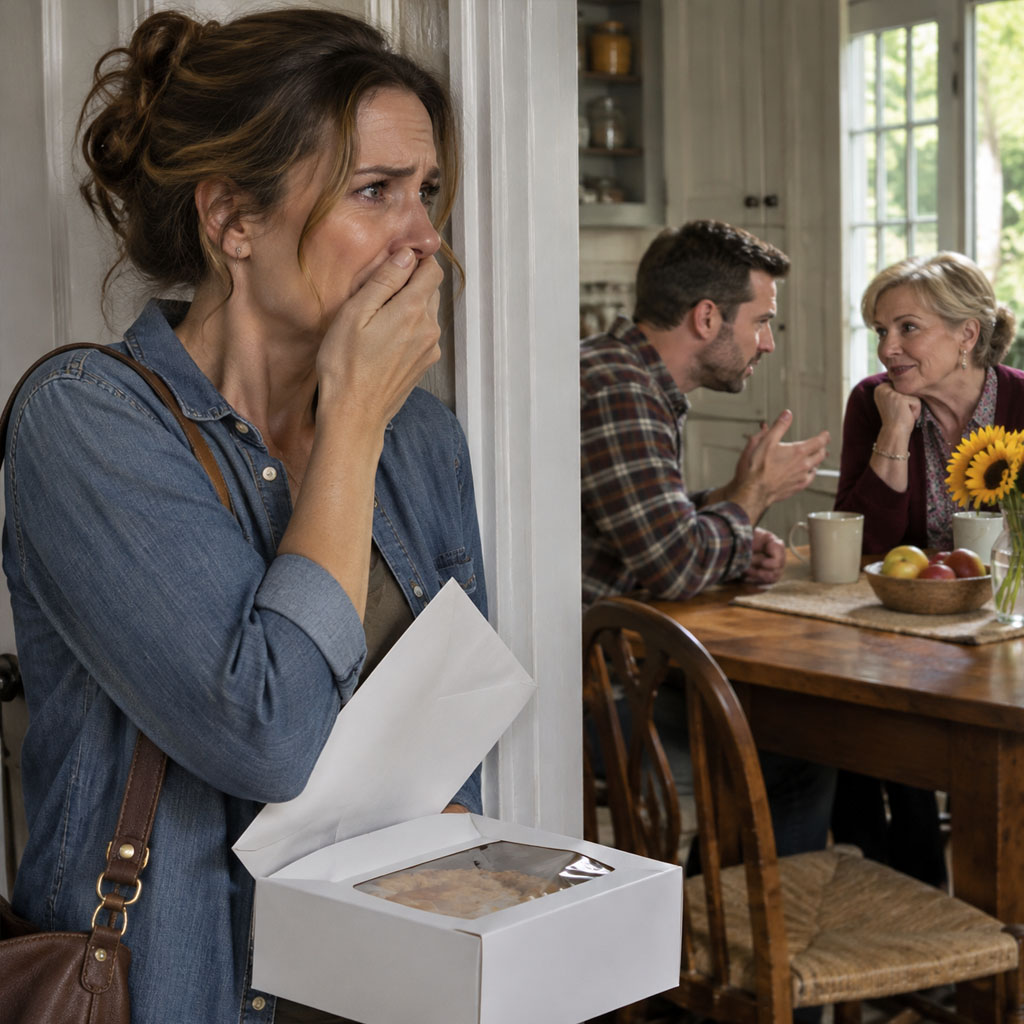
When I arrived, I found him sitting in her lap in the reading corner. She was brushing his hair with a brand-new comb, and the price tag was still attached to the handle.
“He just needed a little mothering,” she said with a smile.
I laughed awkwardly and thanked her.
That afternoon, she asked about my support system.
Who watched Mason after school? Who helped when I worked late? Was there family nearby?
I told her about Mrs. Okafor and Carol.
I even made a joke about how exhausted I sometimes was after work. Some evenings, I fell asleep on the couch with the television playing. Mason would occasionally pull a blanket over me and turn off the lamp.
I had thought it was the sweetest thing in the world.
Miss Harper wrote something in her blue binder.
I didn’t think much of it.
On September 12, I gave her a $50 coffee gift card as a thank-you for being so kind to Mason.
She hugged me for a long time.
“I wish I’d had a mother like you,” she said.
I went home feeling fortunate.
After two years of loneliness, I wanted so badly to believe someone at school genuinely cared about us.
That was my first mistake.
The next few weeks revealed a different side of Miss Harper.
After Mason told me about the circle-time comment, I sat him on my lap and asked what else had happened.
I didn’t rush him.
Six-year-olds don’t always explain things in the order adults expect. Sometimes they need to remember a detail, stop to ask for a drink, or tell you something completely unrelated before returning to the subject.
So I listened.
He told me that on Friday, September 20, the class had celebrated Storybook Character Day.
I had spent three evenings sewing felt dinosaur spikes onto one of Ryan’s old green hoodies. It wasn’t perfect, but Mason had been excited to wear it.
When he walked into Room 14, Miss Harper wrinkled her nose.
She took a different outfit from a bin behind her desk: a stiff blue jacket, gold buttons, and a plastic crown.
She said it would look nicer in the class photograph.
Mason had worn it.
When I later asked him why, he shrugged and said, “I wanted to try something new.”
He was protecting me.
He was six years old, and he was already trying to keep me from being hurt.
Then he told me about his haircut.
I cut Mason’s hair myself at the kitchen table with a $24 clipper set. Ryan used to do it, and I had never been particularly good at following the lines around Mason’s ears.
Miss Harper had told him she knew a woman who could fix it.
She said it was a shame nobody at home noticed how messy it looked.
Then there were the lunches.
For four days that week, she had called Mason to her desk at 11:45.
She gave him pasta with Parmesan cheese, strawberries in a glass container, and cookies from a bakery box.
She called them special lunches.
And she told him they were a secret.
“Why did she say that?” I asked.
Mason picked at the hem of his shirt.
“She said moms don’t always understand.”
“Did she tell you not to tell me?”
He nodded.
“She said it would make you sad.”
His voice cracked.
“But I wanted to tell you.”
I pulled him against me.
After he fell asleep, I went to the hall closet and found a green composition notebook left over from his school supplies.
On the first page, I wrote one word.
Harper.
Then I began recording everything Mason had told me, including dates, times, and his exact words.
I made a rule for myself.
I would not secretly record conversations. I checked our state’s recording laws and decided I wasn’t going to give anyone an opportunity to dismiss my concerns over how I had gathered information.
Everything would be documented on paper.
The next morning, I packed Mason’s lunch.
Turkey sandwich, apple slices, and two pretzel sticks.
I cut the sandwich into a stegosaurus shape, just as Ryan used to do.
At 7:12 a.m., I took a photograph of the open lunchbox sitting on our kitchen counter. The time stamp was visible.
It felt ridiculous.
I did it anyway.
At 3:42 that afternoon, an email arrived from Miss Harper.
She wrote that Mason had come to school without a lunch, so she had shared hers. She added that it happened to many families and that there was no judgment if finances were tight.
She even offered to help me locate assistance programs.
I read the email three times.
Then I attached the photograph I had taken that morning.
I replied politely.
“I packed his lunch myself at 7:12. Mason says it was taken from him. Could you help me understand what happened?”
Her response arrived nine minutes later.
“Oh gosh, I must have misunderstood. Mason is just so forgetful. Bless him.”
I stared at the screen.
Mason remembered the exact shape of rocks he had collected at the lake. He remembered which cabinet held his favorite cups. He remembered his father’s birthday every July.
He had never lost a single thing I gave him.
The story had changed.
A lunch taken away had become a lunch forgotten.
A teacher who had thrown it out had become a teacher who had rescued a child.
And I had become a mother who couldn’t keep track of her son’s belongings.
I printed both emails at the public library and added them to my notebook.
Then, on September 30, I sent Miss Harper another polite message.
I asked her to stop providing separate lunches and allow Mason to eat what I packed.
Her reply came four hours later.
She said she understood how difficult things must be for me.
She said grief could make people defensive.
Then she wrote a sentence I read until the words seemed to blur.
“Mason deserves better than what he has at home. A child who has lost so much needs stability, and I am worried he isn’t getting it. I would love to be a bigger part of his life. Please think about it.”
For nearly an hour, I wondered whether she might be right about me.
I thought about the dishes in the sink, the laundry waiting in the hallway, and the nights I fell asleep before Mason’s bedtime.
I wondered whether he was struggling more than I realized.
That is what made her words so dangerous.
She didn’t have to invent every weakness.
She only needed to take the ordinary imperfections of an exhausted mother and make them sound like proof of failure.
Chapter 3
On October 1, at 8:04 in the evening, my phone rang.
It was Carol.
Her voice sounded unusually thin.
“Danny, a young woman called me today.”
“Who?”
“She said her name was Belle. She told me she was Mason’s teacher.”
I sat down on the arm of the couch.
“Miss Harper?”
“Yes. She said she was worried about you.”
My stomach tightened.
“What did she tell you?”
Carol hesitated.
“She said you’re overwhelmed. She said Mason is practically raising himself. She mentioned that he tucks you in on the couch at night and turns off the lamp.”
I closed my eyes.
“Did she say anything else?”
“She said it was too much responsibility for a little boy. She sounded very concerned, sweetheart. She said she thought family should know.”
I gripped the phone.
“Carol, I need you to listen to me. She is not concerned. She is making things sound worse than they are.”
Carol was silent.
Then she said, “I’m booking a flight.”
“No. Please don’t.”
“I can be there Friday.”
“I’m okay. Mason is okay. Let me explain everything first.”
It took nearly forty minutes to convince her not to get on a plane that night.
When we hung up, I opened my notebook.
I wrote the date, the time, and everything Carol had told me.
Then I stopped.
I had never told Carol about the lamp.
I had never told Mrs. Okafor.
I had never told anyone in my life.
I had mentioned that detail casually to exactly one person.
Miss Harper.
I underlined the word lamp.
I didn’t yet understand why it mattered so much, but I knew it wasn’t a coincidence.
The following afternoon, I took three hours of unpaid leave and waited in the school pickup line.
I wanted to talk to other parents.
A woman standing nearby wore hospital scrubs and had a name tag that read Jessica Reyes.
I recognized her from back-to-school night.
“Hi,” I said. “I’m Danny. Mason’s mom.”
“Jessica. Hannah’s mom.”
We exchanged a tired smile.
Then I asked something that made her expression change.
“Has Miss Harper ever said anything unusual to Hannah about your family?”
Jessica looked down at her phone.
“What did she say to Mason?”
I swallowed.
“She told him she would be a better mother than me.”
Jessica went pale.
“My daughter’s father moved out in June,” she whispered. “Miss Harper told Hannah that her parents didn’t love her enough to stay together.”
She paused.
“I thought it was just a misunderstanding. I wrote it off.”
Before I could answer, another mother approached.
She wore glasses and carried a small backpack covered in dinosaur stickers.
Her name was Priya Nair. Her son, Eli, was six and had a stutter.
“I don’t mean to interrupt,” she said, “but did you mention Miss Harper?”
Jessica nodded.
Priya looked toward the school doors.
“She told Eli he could call her Mommy. She said it was okay, just between them. He came home and asked if he had two mothers now.”
Jessica covered her mouth.
A fourth parent joined us before the buses finished unloading.
Her name was Tanya Ford. She worked nights at a hospital laundry facility, and her son Caleb was also in Room 14.
Tanya listened quietly.
When Priya finished, she folded her arms.
“Miss Harper told Caleb his mama works too much. She said she was there for him more than I was.”
Nobody spoke for several seconds.
Four families.
Four children.
Four versions of the same message.
Your parent isn’t enough.
I am.
Don’t tell them.
We exchanged phone numbers on the back of a pharmacy receipt.
Jessica offered to host a private meeting at her home on Friday evening.
I went back to my car and sat for several minutes.
Until then, I had thought I was dealing with a teacher who had developed an inappropriate attachment to my son.
Now I knew there were other children.
That night, I added three pages to my notebook.
On Thursday, October 3, I attended a meeting with Mrs. Dalton and Miss Harper.
I brought my folder.
Inside were the emails, my handwritten notes, and the dates of every incident.
I spoke calmly.
I described the lunches, the costume, the comments about Mason’s haircut, and the phone call to Carol.
Miss Harper listened with her hands folded.
When I finished, her eyes filled with tears.
It happened almost instantly.
One tear rolled down her cheek, followed by another.
“I’m so sorry you feel that way,” she said.
Her voice trembled.
“I have only ever tried to help. I grew up in a house where nobody showed up for me. I promised myself that no child in my classroom would ever feel that way.”
She pressed her fingers against her lips.
“I see Mason alone and hurting, and I just can’t look away.”
Mrs. Dalton reached for a tissue box.
“Let’s remember that Belle is a dedicated professional, Danny. I nominated her for the district’s Teacher of the Year award.”
I looked at her.
“You nominated her?”
“The ceremony is October 17. It would be unfortunate to cloud that with misunderstandings.”
I stared at the principal.
My son had been humiliated in front of his classmates, and she was worried about an awards ceremony.
Mrs. Dalton continued.
“I’m sure Miss Harper contacted Carol out of concern. I’d ask that you extend a little grace for everyone’s sake.”
I glanced toward the blue binder resting on Miss Harper’s lap.
It was nearly three inches thick, with colored tabs sticking out along the side.
One tab had a W written on it.
Another had an M.
Miss Harper noticed me looking.
She closed the binder and rested her palm on the cover.
“Just my little notes,” she said. “I keep them on all my children.”
I thanked them both and left.
In the parking lot, I sat in my car for ten minutes without starting the engine.
Mrs. Dalton had nominated her.
That explained why my complaint had been treated as an inconvenience.
The principal had already invested her own judgment in Miss Harper’s reputation.
If I wanted anyone to take this seriously, I needed evidence that couldn’t be explained away with tears.
On Friday evening, I drove to Jessica’s house.
Priya brought printed screenshots of drawings Eli had made.
Tanya brought a box of doughnuts.
I brought my notebook.
We went around the kitchen table, comparing dates and incidents.
The similarities were disturbing.
Miss Harper had given the children special food, small gifts, and extra attention. She had encouraged private conversations and told them not to repeat certain things to their parents.
She had also made comments about their families that left the children confused and frightened.
“She’s choosing families that are already struggling,” Jessica said.
She looked at me.
“Single parents. Divorce. Widowed parents. People who are tired and already wondering whether they’re doing enough.”
Nobody disagreed.
Priya folded her hands.
“We can’t just complain to the principal again. She’ll say we’re jealous or misunderstanding.”
“We need something in her own handwriting,” I said.
Jessica became quiet.
Then she stood and walked down the hallway.
We heard a drawer open.
A moment later, she returned with a small folded note.
“Hannah found this inside a library book in her backpack.”
She placed it in the middle of the table.
I unfolded it.
The writing was blue, round, and bubbly.
There was a tiny heart above the letter i.
“Our special lunches are our little secret. Moms don’t always understand. Love, Miss Harper.”
I recognized the handwriting immediately.
It was the same writing on the sticky note she had given me at back-to-school night.
The same little heart.
The same woman who had promised to help me day or night was telling my child to keep secrets from me.
I carefully placed the note inside a clear folder.
For the first time, I had something more than a child’s memory and a mother’s suspicion.
I had a teacher’s own words.
Chapter 4
On Monday, October 7, I called Maple Ridge Elementary in the neighboring town of Ostrander.
Miss Harper’s biography on the Lake View parent portal mentioned that she had worked there for two years before joining our district.
I asked to speak with someone who might remember her.
A woman named Dorine answered.
When I explained that my six-year-old son was currently in Miss Harper’s classroom, there was a long silence.
“Honey,” she finally said, “I’m not allowed to discuss personnel matters.”
“I understand. I’m not asking for confidential records. I’m asking whether I should be worried.”
I heard a chair move.
Then her voice dropped.
“How old is your boy?”
“Six.”
“His father?”
“He passed away two years ago.”
Dorine let out a slow breath.
“Oh, sweetheart.”
She hesitated.
“Last year, we had parents complain about Belle getting too close to a grieving little boy. She spent extra time with him after school. There were lunches and gifts. The parents said she was crossing boundaries.”
“What happened?”
“She resigned in June. The school sent a polite letter, and she left. Nobody contacted your district. That’s not usually how these things work.”
“Was the family okay?”
Dorine was quiet.
“The mother was in a terrible state by the end.”
I gripped my pen.
“Do you know how I can reach her?”
Dorine hesitated again.
“She asked me once to keep her number in my desk in case another parent ever called asking about Belle Harper. I’ve kept it for sixteen months.”
She gave me the name.
Rachel Kemp.
I wrote it inside the cover of my notebook and drew a box around it.
That afternoon, I felt something I hadn’t felt since Mason first told me what had happened.
I felt less alone.
But I also understood that this was bigger than a personality conflict between a teacher and a parent.
On Tuesday, October 8, Mason came home with a sealed envelope in his school folder.
My name was written on the front in Miss Harper’s familiar blue handwriting.
Inside was a $25 grocery gift card, a printed student support referral, and a folded note.
“Dear Danny, for real groceries, honey. No shame at all. Please sign the attached form so we can get Mason the help he needs. Grief can look like many things. As a mandated reporter, I have to take any refusal seriously. I only want what’s best for him.”
I read the note several times.
The form had already been filled out.
Under observed concerns, Miss Harper had written:
Neglect of nutritional needs.
Emotional instability of caregiver.
Inadequate evening supervision.
I looked at the gift card.
Then I looked at the form.
She was offering me grocery money while suggesting that my son might be neglected.
And she was making it clear that if I refused to sign, she might report me.
I put everything back in the envelope and added it to my folder.
That evening, I emailed the district school counselor requesting a meeting. I copied Mrs. Dalton.
I didn’t mention the gift card or the referral.
I wanted to see what happened next.
After dinner, I washed Mason’s hair while he sat on the edge of the bathtub.
He was unusually quiet.
Finally, he asked, “Mom, are you going to be sad forever?”
I stopped pouring water over his hair.
“Why do you ask that?”
“Miss Harper said sad moms sometimes have to give their kids to somebody who isn’t sad.”
My hands went cold.
He stared at the bubbles.
“I don’t want to be given away.”
I put down the cup and knelt in front of him.
“Mason, look at me.”
He lifted his eyes.
“Nobody is giving you away. Not ever. I’m not sad forever. I’m just tired sometimes. Tired is not the same as gone. Do you understand?”
He nodded slowly.
But he didn’t look convinced.
I held him until the water became cold.
On Thursday, October 10, I was unlocking our front door when a woman stepped out of a gray sedan.
She was about 45, wearing a navy blazer and carrying a leather folder.
“Mrs. Whitfield? My name is Renata Tran. I’m with Hollis County Children’s Services.”
My keys slipped from my hand.
“Is Mason hurt?”
“No. He’s fine. I’m sorry. I should have said that first.”
She showed me her identification.
“We received a report on October 2. I’m required to follow up. I need to see the home and speak with your son.”
I could barely feel my fingers.
“A report about what?”
She explained the general allegations.
She walked through our kitchen, checked the refrigerator and pantry, and looked at Mason’s bedroom.
His dinosaur sheets were neatly arranged. His books were on the shelf. His clothes were folded in the dresser.
I answered her questions honestly.
Then we sat at the kitchen table.
She opened her folder.
“The caller states that the child is often unsupervised in the evenings. That the mother sleeps through the night on the couch. The report says the child tucks her in and turns off the lamp.”
My teacup stopped halfway to my mouth.
“Could you repeat that?”
“The caller mentioned the lamp.”
I stood so quickly that my chair scraped backward.
I went to my bag and pulled out the green notebook.
I opened it to October 1 and turned it toward her.
There was the entry.
8:04 p.m. Carol called. Harper contacted her. Said Mason tucks me in.
Beneath it, I had underlined the word lamp.
“I told that detail to exactly one person,” I said. “His teacher.”
Renata studied the page.
“Mrs. Whitfield, I can’t confirm who made the report. But the language is unusually specific.”
“Was the report actually made on October 2?”
She checked her notes.
“Yes. At 2:40 in the afternoon.”
I sat down hard.
That was the same day I had first spoken to Jessica in the pickup line.
The report had already been made before I even knew other families were experiencing similar problems.
Renata interviewed Mason privately in his bedroom after Mrs. Okafor brought him home.
I waited in the hallway.
I heard his little voice, followed by hers. At one point, he laughed.
Forty minutes later, she stepped out.
“He’s clean, fed, and clearly attached to you,” she said. “He speaks about his father comfortably. He’s afraid of something, though. I suspect it involves an adult who has been telling him things.”
“Miss Harper?”
She didn’t answer directly.
“I’m closing this as unfounded. You’ll receive a letter within ten business days. Keep your notebook and every document you’ve collected.”
At the front door, she paused.
“I’ve been doing this work for nineteen years. A report with this much detail and so little context doesn’t usually come from someone who is simply worried.”
“What does it come from?”
She looked toward Mason’s bedroom.
“Someone preparing.”
That night, after Mason fell asleep, I called the number Dorine had given me.
Rachel Kemp answered on the second ring.
I introduced myself and said four words.
“Belle Harper. Maple Ridge.”
There was a long silence.
Then Rachel said, “I’ve been waiting sixteen months for this call.”
Chapter 5
Rachel told me about her son, Theo.
His father had died of leukemia when Theo was five. During his first-grade winter, Belle Harper had begun spending extra time with him after school.
At first, Rachel thought it was tutoring.
Then came the lunches.
Then small gifts.
Then the private conversations.
Finally, Belle had started telling Theo he could call her Mommy.
In April, a county worker appeared at Rachel’s door after receiving an anonymous report.
The allegations were unfounded.
But the experience left Rachel terrified. For three months, she slept poorly and worried that someone might come back and take her son.
“We complained to the school,” she said. “That was the only reason she left. They gave us a letter saying she wouldn’t be returning.”
“Did you ever learn what happened to her?”
“No. I tried to move on.”
She paused.
“I kept that letter. I knew something wasn’t right. I just didn’t have enough proof to explain it.”
I asked if she would send me a copy.
“I’ll drive it to you tonight.”
It was almost eleven when Rachel arrived at my house.
She sat at my kitchen table with a cup of tea she barely touched. Then she slid the letter across to me.
It was dated June 6.
Four polite sentences, a principal’s signature, and a closing thanking her for her cooperation.
At the bottom, Rachel had written something in pen.
She did it to me, too. I know she did.
I read those words twice.
For the first time, I had confirmation that what happened to Mason was not an isolated incident.
I thanked Rachel.
She shook her head.
“Don’t thank me. I wish someone had listened when it was my turn.”
By Friday morning, I knew I needed to take the matter beyond Lake View Elementary.
I emailed Superintendent Gerald Grant and requested an urgent meeting. I explained that several families had reported similar concerns involving the same teacher, and that a child welfare report had been filed against my family using a private detail known only to the teacher.
I received an automatic reply.
He was out of the office until October 21.
I nearly threw my phone across the kitchen.
The Teacher of the Year ceremony was October 17.
Miss Harper would still be teaching Mason for another week, and the superintendent wouldn’t return until after the ceremony.
That afternoon, I scheduled a consultation with an attorney named Paul Reinhold.
His office was above a pharmacy on Main Street. He was in his sixties, with a gray mustache and a habit of reading documents without interrupting.
I laid out the notebook, the emails, the handwritten note, the referral form, and Rachel’s letter.
He read everything carefully.
When he finished, he looked at me.
“Two rules. Don’t post any of this online, and don’t make accusations you can’t support. Truth is only useful if you can prove it.”
“I have four families.”
“Then get their statements in writing. Dates, exact words, and what each child reported. No exaggeration. No adjectives.”
“What do I do about the ceremony?”
He looked at the program information.
“The superintendent will be there, correct?”
I nodded.
“Then you need to get this evidence into his hands before he presents that award.”
He did not tell me to confront Miss Harper publicly.
He told me to get the information to the person responsible for overseeing the district.
But I had another reason for wanting to be in that auditorium.
I wanted Belle Harper to experience what my son had experienced.
I wanted her to stand in a room full of people and realize that the person she had been humiliating was no longer standing alone.
I wasn’t proud of that feeling.
But I wasn’t going to pretend it didn’t exist.
Over the weekend, the four families prepared their statements.
Jessica, Priya, Tanya, and I wrote down what had happened to our children. We included dates, exact words, and copies of the notes we had received.
We signed everything at Jessica’s kitchen table in front of a notary.
Priya’s husband, Dev, worked in sound and lighting for district events. When he learned about the ceremony, he asked for a scan of the handwritten note.
“What do you need that for?” Priya asked.
“Just in case.”
He didn’t explain further.
On Sunday, I finally told Carol everything.
The lunches.
The comments.
The call to her.
The children’s services investigation.
The notebook.
She listened without interrupting.
When I finished, she was silent for almost a minute.
Then she said, “I’m driving down Wednesday.”
“You don’t have to.”
“I know.”
Her voice became firm.
“Ryan would have wanted me there.”
I couldn’t answer.
It was the first time she had used my husband’s name in weeks.
I let her come.
I also made one more decision.
On Tuesday evening, I wrote Miss Harper an email.
I told her I had been overwhelmed and defensive. I said I appreciated her concern and would like to let her help.
Every word felt uncomfortable.
But I had learned that she used disagreement as evidence against parents.
I wanted her to believe the conflict had passed.
Her reply arrived two minutes later.
A string of heart emojis followed by:
“I knew you’d come around.”
The following morning, I walked Mason to Room 14.
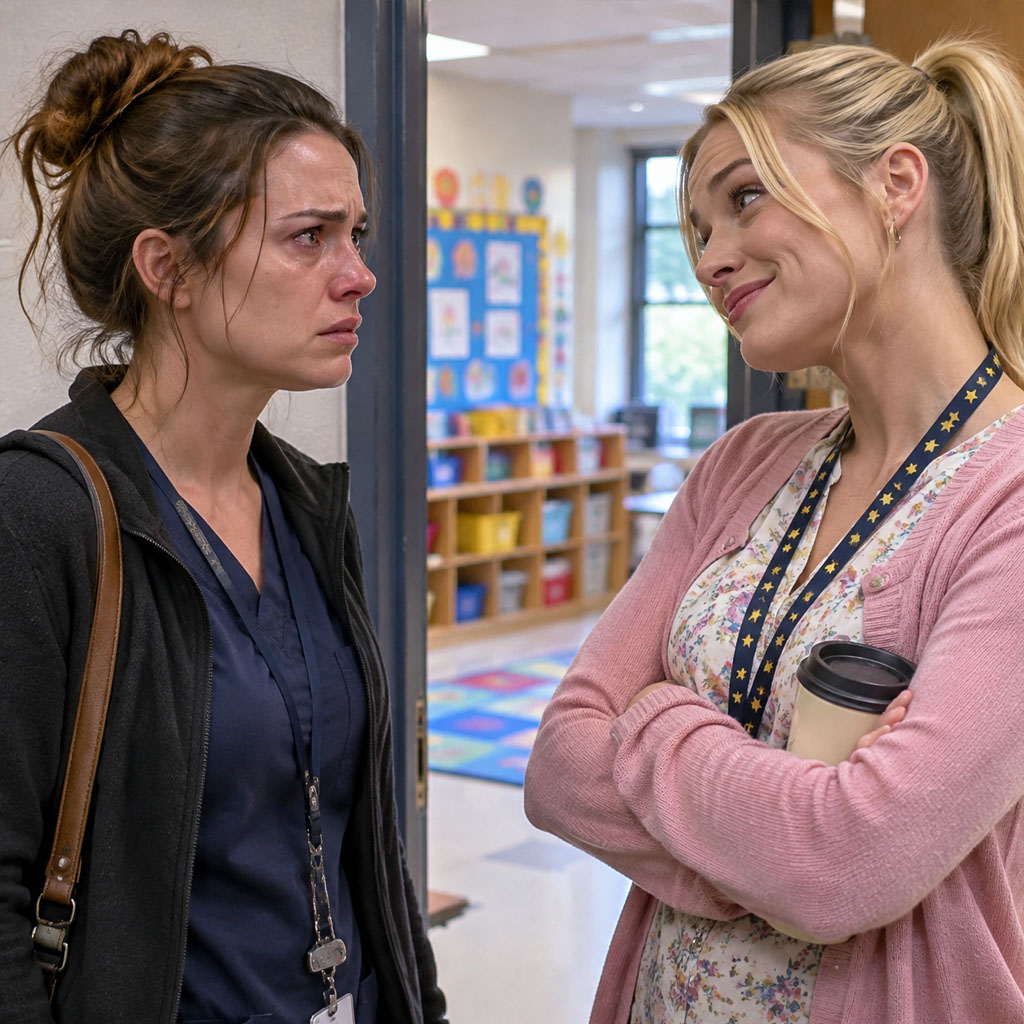
Miss Harper stood in the hallway with her travel mug.
She patted my shoulder twice.
“I’m so glad you’re finally letting me help,” she said.
I smiled.
“Me, too.”
She looked pleased.
Mason, however, was unusually quiet that week.
He had come home the previous Friday with chalk dust on his sleeves and a story about recess. He had kept his backpack on through dinner, which he never did.
I had been so busy preparing the folder that I hadn’t asked him enough questions.
I wrote one word in my notebook.
Quiet.
Then I returned to the paperwork.
Chapter 6
The Teacher of the Year ceremony took place on October 17 at the Harland Valley Performing Arts Center.
There were 612 seats.
I wore the gray blazer I had worn to job interviews. Carol stayed home with Mason and Mrs. Okafor. They were going to eat pizza and watch a dinosaur documentary.
Before I left, Carol placed both hands on my face.
“Go,” she said. “Your husband would be proud of you for standing up for that boy.”
Jessica, Priya, and Tanya were waiting in the lobby.
We were all dressed plainly, carrying folders.
The program was printed on cream-colored card stock. Near the bottom, in gold letters, was the name of the Teacher of the Year recipient.
Belle Harper.
We found seats in the sixth row, near the aisle.
The ceremony began at 7:15.
Superintendent Gerald Grant walked onto the stage wearing a silver tie. He was in his sixties, tall, with a polished public-speaking voice.
Several teachers received smaller awards.
There was applause.
Then came the main presentation.
“And now,” he announced, “our Teacher of the Year, a young educator who has brought extraordinary heart to her classroom.”
Belle Harper walked onto the stage in a pink dress.
Her blonde ponytail rested over one shoulder. She held a bouquet and smiled as the audience applauded.
She looked exactly as she had looked in the classroom.
Warm.
Gentle.
Untroubled.
Superintendent Grant handed her the microphone.
“Belle, a few words.”
She held it with both hands.
“I just love every child like they’re my own,” she began.
The audience grew quiet.
“I know some of my students come to me carrying so much hurt. They come to school hungry for something their homes can’t give them.”
She pressed one hand against her heart.
“Some children simply need a better mother figure than the one they have at home.”
The audience applauded.
Several people nodded.
A woman in the row ahead of me wiped her eyes.
I stood.
I hadn’t planned the exact words.
I simply couldn’t remain seated.
“Funny you should say that.”
My voice carried across the auditorium.
Belle’s smile faltered.
She looked toward the sixth row.
“Excuse me?”
I walked down the aisle holding the folder.
Every step seemed louder than the one before it.
I climbed the three steps at the side of the stage and approached Superintendent Grant.
“Would you please read this before you present that award?”
He looked at the folder.
Then he looked at me.
I explained that I was Mason Whitfield’s mother, that he was in Belle’s first-grade classroom, and that several other families had documented similar incidents.
He accepted the folder.
Inside were the emails, the children’s statements, the handwritten note, the referral form, and Rachel’s letter from Maple Ridge.
I turned toward the back of the auditorium.
The large screen behind the stage flickered.
Then the handwritten note appeared.
It had been enlarged until every letter could be seen clearly.
“Our special lunches are our little secret. Moms don’t always understand. Love, Miss Harper.”
The room became completely silent.
More than 600 people were looking at six lines of blue handwriting.
Belle stared at the screen.
“That’s taken out of context!”
A voice rose from the sixth row.
“Is it?”
Jessica stood.
She walked down the aisle and came to stand beside me.
Then Priya rose.
Then Tanya.
Four parents stood together near the stage.
Belle’s face changed.
The pink color disappeared from her cheeks.
“You people are jealous,” she said.
Her voice cracked.
“Those children love me. I was the only one who cared!”
I looked at her.
“On October 2, someone made a report to Children’s Services about my family.”
She gripped the microphone.
“That was a legitimate concern.”
“The report included a private detail I had told exactly one person. It described my son turning off a lamp after I fell asleep on the couch.”
I let the words settle.
“Only one person knew that story.”
Belle’s expression changed.
She opened her mouth, then closed it.
For a moment, she looked as though she might cry again.
Then the words came out.
“Someone had to see him!”
The microphone carried her voice throughout the auditorium.
“You sleep on a couch while a six-year-old covers you with a blanket. He’s a baby. Somebody had to do something.”
The audience was motionless.
Superintendent Grant stepped forward.
“Miss Harper, that’s enough.”
But I had one thing left to say.
I spoke slowly.
“My son is not a project. I am not a problem you get to solve.”
Belle looked at me.
“I lost my husband two years ago. I’m tired. I’m grieving. Sometimes I fall asleep in front of the television. None of that makes me an absent mother.”
My voice shook, but I continued.
“I love Mason every single day. I pack his lunch, take him to school, listen to his stories, and hold him when he’s afraid. I will still be standing beside him long after this ceremony is over.”
I looked directly at her.
“You told a six-year-old boy, in front of his entire class, that his mother wasn’t good enough.”
I paused.
“You had no right.”
Superintendent Grant was reading Rachel’s letter.
His jaw tightened.
“Miss Harper,” he said quietly, “please hand me the microphone.”
She didn’t move.
Two security officers began approaching the stage.
The room remained silent.
For a moment, I thought it was over.
Then Belle leaned toward me.
The microphone hung at her side.
Her expression changed in a way I couldn’t quite understand.
“You really think I only picked your son?” she whispered.
My stomach dropped.
“Ask Mason what he drew for me on Friday.”
She stepped away before I could respond.
I didn’t remember much of the drive home.
I remembered the porch light.
I remembered Carol standing in the doorway with her hand over her mouth because she could see something was wrong.
Mason was asleep.
I stood in his bedroom for several minutes, watching him breathe.
I didn’t wake him.
I would ask him in the morning.
Chapter 7
At 7:15 the next morning, Mason walked into the kitchen wearing his dinosaur pajamas.
His hair was sticking up on one side.
I poured cereal into his bowl and sat across from him.
I tried to sound casual.
“Buddy, can I ask you something?”
He nodded.
“What did you draw for Miss Harper last Friday?”
His spoon stopped halfway to his mouth.
A little milk dripped back into the bowl.
“Am I in trouble?”
“No. Never.”
He placed the spoon down.
“She said not to tell.”
I felt my stomach tighten.
“Why?”
“She said it would hurt your feelings.”
I reached across the table.
“You can tell me anything. I promise.”
He stared at the table for a long time.
Then the story came out in pieces.
On Friday, October 11, Miss Harper had kept him inside during recess.
She told him that someone from the county had visited our house.
She said it was nothing to be afraid of.
Then she gave him a piece of white paper and a box of markers.
She asked him to draw what home looked like at night.
“So I drew it,” he whispered.
“What did you draw?”
“The couch. And you sleeping. And me turning off the lamp.”
I closed my eyes.
He continued.
“She said it was perfect. She took a picture with her phone. She said it was for her special folder.”
His lower lip began to tremble.
“She said I was brave for showing the truth.”
He looked up at me.
“Mom, did I do something bad? I thought I was helping.”
I came around the table and lifted him out of his chair.
I held him in my lap, just as I had the night he first told me what Miss Harper had said.
“You did nothing wrong.”
He buried his face in my shoulder.
“You drew something beautiful. You were taking care of me. That’s a loving thing to do.”
I held his face between my hands.
“She took something loving and tried to use it against us. That’s her fault. Never yours.”
He began to cry.
I cried, too.
Carol stood in the kitchen doorway, pretending she hadn’t heard.
On Monday, October 21, Superintendent Grant called me.
He had been back in his office for barely an hour.
His voice sounded very different from the polished voice I had heard at the ceremony.
He told me that Belle had been placed on administrative leave at 8:01 that morning.
The district’s attorney had retrieved her blue binder from Room 14 over the weekend.
Grant said he wasn’t supposed to share everything inside it with me.
Then he told me anyway.
The binder had five tabs.
Each tab contained a child’s name, photographs of drawings, dates, and handwritten notes.
Under the W tab, which belonged to Mason, Belle had written:
Single. Widowed. No family nearby. Behind on sleep. Child bonded to me. Needs 90 days documentation.
I sat down at the kitchen table.
“Documentation of what?”
There was a pause.
Grant continued.
Under the Maple Ridge letter, Belle had written a note to herself.
Do not rush. Last time I rushed.
Then he told me about something found in the back pocket.
A county application dated August 9.
It was an application to become a licensed foster parent.
The preferred age range was five to eight.
The preferred sex was male.
I couldn’t speak.
Grant’s voice became quieter.
“She believed she was rescuing these children. That’s what troubles me most. I read every page. I don’t think she thought she was doing anything wrong.”
I looked toward the hallway.
Mason was playing with his dinosaur figures.
“I know,” I said.
And I did.
That was the part I couldn’t make peace with.
A villain would have been easier to understand.
Belle had a logic of her own. She had a wound she had never addressed. She looked at exhausted mothers and saw empty chairs she wanted to occupy.
But whatever she believed about herself, she had no right to make a child question whether his mother loved him.
I told Grant that I expected the district to investigate every child listed in that binder.
He agreed.
Then he apologized.
“I owe you an apology, Mrs. Whitfield. And I owe one to the other families.”
“Yes,” I said. “You do.”
The school began unraveling quickly.
Mrs. Dalton found me in the pickup line that Wednesday.
She looked ten years older than she had at our first meeting.
“I should have listened to you,” she said.
“Yes, you should have.”
She nodded, her eyes wet.
“I was protecting my own judgment. I nominated her. I didn’t want to believe I had been wrong.”
I didn’t comfort her.
She needed to understand that her decision had consequences.
A few days later, the night custodian approached me near the bike rack.
His name was Mr. Delgado. He was around 60 and wore a ring of keys on his belt.
He twisted his cap between his hands.
“Mrs. Whitfield, there’s something I need to tell you.”
I waited.
“Since the second week of September, I’ve been pulling lunches out of the trash in Room 14.”
My breath caught.
He explained that he had found Mason’s lunch bags several times. Instead of throwing them away, he had kept them in his supply closet because something about the situation didn’t seem right.
“Eleven lunches,” he said. “I kept the bags. One had a little dinosaur cut out of the bread.”
I covered my mouth.
The custodian had quietly saved the evidence while the adults responsible for the school had dismissed my concerns.
The district photographed each bag and added the records to its investigation.
I baked Mr. Delgado an apple pie.
It took me three tries.
Mrs. Okafor also wrote a statement.
She explained that Belle had approached her in September and asked whether I seemed emotionally unstable.
Mrs. Okafor had told her to mind her own business.
She had been protecting me the entire time without telling me because she didn’t want to add to my worries.
That taught me something.
People sometimes carry burdens for us quietly. But we have to let them know when we need help.
Chapter 8
Not everyone believed us.
Within days, a Facebook group appeared supporting Belle.
The PTA president wrote a long post suggesting that a grieving mother had embarrassed a beloved young teacher at the happiest moment of her career.
Someone started a fundraising campaign titled Teacher Targeted by Jealous Parents.
It raised more than $3,000.
Two neighbors stopped waving when I drove past.
A mother I had known for years crossed the cafeteria rather than speak to me.
I tried not to let it bother me.
But it did.
On October 28, a letter arrived from an attorney representing Belle Harper.
It accused me of defamation and demanded $50,000 and a public retraction.
I read it at the kitchen counter with shaking hands.
Then I called Paul Reinhold.
He listened while I explained.
When I finished, he laughed.
“Every statement you made at that ceremony is backed by documentation. You gave the evidence directly to the superintendent. This looks like an attempt to frighten you.”
He offered to represent me.
His fee was $2,500.
I paid it from the savings I had been keeping for the roof.
I didn’t regret a dollar.
On October 31, he sent a six-page response.
By November 20, Belle’s attorney had withdrawn the demand.
But Belle wasn’t finished.
On October 30, I found a gift bag on my front porch.
It had pink tissue paper and a small white card.
Inside was the blue prince costume she had given Mason for Storybook Character Day.
The plastic crown rested on top.
The note was written in familiar blue ink.
“He’ll want this for Halloween. He deserves to feel like a prince. I love him. B.”
I stood on the porch for a long time.
Then I called the non-emergency police number.
Officer Dunn arrived, took a report, and placed the costume in a bag.
He advised me to keep the doors locked and document any further contact.
I told him I already did.
The next afternoon was Halloween.
At 3:15, while children were gathering outside Lake View Elementary, a woman in a long coat appeared beyond the school fence.
She was scanning the line of children.
The teacher who had taken over Mason’s class, Mr. Alvarez, noticed her first.
Then Mason saw her.
He froze on the sidewalk, his little green dinosaur lunchbox swinging from one hand.
Mrs. Okafor was waiting nearby.
She immediately placed her hands on his shoulders and turned him away.
Mr. Alvarez stepped between the woman and the children.
Belle called Mason’s name once.
“Mason, sweetheart. It’s Miss Harper.”
He didn’t turn around.
He walked toward Mrs. Okafor.
That evening, I held him for a long time.
He didn’t ask why she had been there.
He didn’t need to.
On November 12, we appeared at the county courthouse.
Belle arrived wearing a gray suit, accompanied by her attorney.
She looked smaller than she had in the classroom.
The judge reviewed the documentation, including the repeated unwanted contact, the gift left at my home, and the incident outside the school.
The court issued a one-year no-contact order covering Mason, me, and the school.
Before the hearing ended, the judge asked Belle whether she had anything to say.
She turned toward me.
“I only wanted him to be safe.”
I looked at her for a long moment.
Then I answered quietly.
“He was safe before you.”
She lowered her eyes.
Belle resigned on November 15, one day before the school board was scheduled to vote on her termination.
The county denied her foster-parent application on November 25.
In January, the state licensing board held a formal hearing. Rachel testified for two hours about what had happened to Theo.
Other parents provided statements.
The investigation included the notebook, the letters, the lunches, and the children’s accounts.
On March 6, I received an email confirming that Belle Harper’s teaching license had been permanently revoked.
I read it twice.
I thought I would feel victorious.
Instead, I felt tired.
A few months of fear, meetings, paperwork, and difficult conversations had finally come to an end.
But there were still things I couldn’t put away.
On November 22, at 10:41 p.m., my phone buzzed.
A voicemail had arrived from a blocked number.
I almost deleted it.
Then I played it.
It was Belle.
She was crying.
“You took everything from me,” she said. “I loved him. I loved all of them. Nobody ever loved me like that. I only wanted to be somebody’s.”
The message ended abruptly.
I stood in the kitchen and listened to it twice.
I didn’t feel pity.
I didn’t feel hatred.
What I felt was closer to grief.
I believed she meant every word.
That was the part I couldn’t easily understand.
She had genuinely convinced herself that what she was doing was love.
But love doesn’t require a child to keep secrets from his mother.
Love doesn’t turn another person’s grief into an opportunity.
Love doesn’t require someone else to lose their place so you can take it.
I saved the voicemail and sent a copy to Paul.
I never called her back.
Chapter 9
The quieter grief came later.
Sometime in early November, I noticed that Mason had stopped turning off the living room lamp.
I came home late one evening and found him standing beside the couch, one small hand hovering near the switch.
He had been standing there for a while.
When he saw me, he pulled his hand away.
“Is it okay if I don’t?”
I knelt beside him.
“Don’t what, sweetheart?”
“Turn the lamp off anymore.”
I looked at his face.
He was afraid of something I hadn’t realized had become so important to him.
“You never have to do that, Mason. Not ever.”
“But I used to like helping you.”
“I know.”
He looked down.
“I just don’t want it to be a bad thing.”
I put my forehead against his.
“It was never a bad thing. You were being kind. Nobody should ever make you feel ashamed of being kind.”
That night, after he went to bed, I sat on the couch with the lamp still on.
I stayed there until two in the morning.
I thought about the young woman in the yellow dress at back-to-school night, kneeling in front of my son and crying real tears.
I thought about how badly I had wanted her to be genuine.
For about ten days that fall, I had believed I had found someone who cared about us.
Someone who understood what it meant to raise a child after losing a husband.
Someone I could call when I was overwhelmed.
I missed that feeling.
I missed someone who had never really existed.
It was a strange kind of mourning, one without a funeral or a sympathy card. You simply carried it around with you, alongside the lunchbox and the house keys.
Spring arrived.
The maple tree outside our kitchen window turned bright green, and Mason turned seven.
We celebrated with a dinosaur-shaped cake.
I made it myself.
It looked more like a mitten with spikes.
Mason ate two slices and declared it perfect.
Carol had sold her house in Tucson and moved into a small rental four streets away. She picked Mason up on Tuesdays and Thursdays and told him stories about her years driving a school bus.
Mrs. Okafor still came on Wednesdays.
She still tried to refuse my $150 every Friday.
I had finally stopped letting her.
Mason began seeing a child therapist named Dr. Owens every other Thursday. It cost $90 a session, and I didn’t mind a single dollar.
He had a new teacher, Mr. Alvarez, who wore mismatched socks on Fridays and had never once suggested that someone else could be a better parent.
Mason had three best friends, a loose front tooth, and an endless supply of dinosaur facts.
He was becoming himself again.
Last week, he brought home a drawing from therapy.
It showed three people standing beside a lake.
There was Mason, there was me, and there was a very tall figure wearing a green hoodie with felt dinosaur spikes.
I pointed to the tall figure.
“Who’s that?”
He smiled.
“That’s Daddy.”
I studied the drawing.
“Why does Daddy have dinosaur spikes?”
Mason shrugged.
“Because he’s a dinosaur now.”
I laughed.
“That sounds right.”
Some things never came back completely.
I still checked his lunchbox every morning before school. I knew I didn’t have to, but I did it anyway.
When a stranger was especially kind to me, I counted to three before allowing myself to trust the gesture.
I read important emails twice.
I kept the green notebook in a drawer, and I knew exactly which drawer.
There was a version of me that had been easy to love and easy to fool.
I don’t think she’s coming back.
I miss her.
She was lonely, trusting, and eager to believe that people who cried at the right moment must have good intentions.
But I also understand something now.
Kindness is not a weakness.
Trust is not a mistake.
And being tired does not make a mother less worthy of her child.
I lost something else that fall.
I lost the comfort of believing cruelty always looks cruel.
Belle Harper had looked like every good thing.
She wore pastel cardigans. She knelt beside children. She remembered birthdays. She cried when she spoke about families.
That was what made it so difficult to recognize what she was doing.
Harm doesn’t always arrive with an angry voice or an obvious warning.
Sometimes it arrives carrying a gift card and telling you that you need help.
Sometimes it comes with a smile.
Sometimes it calls itself love.
I’ve thought about the auditorium many times.
I don’t regret handing Superintendent Grant that folder. I would do it again tomorrow.
Five children were protected because the adults around them finally compared what was happening.
Rachel Kemp sleeps through the night now.
Priya’s son, Eli, has become more confident about speaking up when something bothers him.
Jessica and Tanya have both told me their children are doing better.
But I do regret how good it felt for those forty seconds when Belle’s face went white.
I had wanted her to experience the embarrassment she had caused Mason.
And when it happened, I felt something close to satisfaction.
Then the feeling passed.
There was no happiness waiting for me afterward.
Only a tired mother, a frightened little boy, and a long road toward feeling safe again.
I won the fight to protect my son.
But I had also learned that winning doesn’t always feel like winning.
The most important thing I learned was much simpler.
A better mother does not exist.
Motherhood isn’t a competition.
It isn’t measured by the prettiest lunches, the cleanest house, the neatest haircut, or the costume that looks best in a school photograph.
A mother isn’t a score that someone else can improve.
She is the person who shows up on a Tuesday evening after a long day at work.
She is the one who remembers which dinosaur sandwich her child likes.
She is the one who stays, even when she’s tired, even when she’s grieving, even when she doesn’t have all the answers.
She makes mistakes.
She apologizes.
She tries again.
And most importantly, she doesn’t make her child responsible for her happiness.
I never claimed to be better than anyone.
I was Mason’s mother.
When a woman stood in front of twenty first-graders and told my son she could do that job better, she wasn’t offering him a better life.
She was trying to make him believe the person who loved him most wasn’t enough.
I won’t let him carry that belief.
Last night, around eleven, I fell asleep on the couch.
The television was still murmuring softly in the background. A blanket lay folded on the armrest, and the living room lamp was on.
Sometime after midnight, I felt something soft settle over my shoulders.
A blanket.
Then I heard a small click.
The lamp went out.
I didn’t open my eyes.
I lay still and listened to little bare feet padding down the hallway toward Mason’s bedroom.
My eyes burned.
For the first time in six months, Mason had done it again.
Not because anyone told him to.
Not because he was afraid.
Not because he thought he had to take care of an adult.
He had simply seen his mother sleeping and wanted her to be warm.
I lay in the dark and cried quietly so he wouldn’t hear.
He probably thinks I never know.
That’s all right.
Someday, I’ll tell him how many nights I stayed awake remembering that little gesture and wondering how anyone could have mistaken it for evidence that I wasn’t a good mother.
Because the truth is something I can finally say without questioning myself.
I am not a better mother than anyone else.
I am simply his mother.
And a child doesn’t need a better mother than the one who stayed.
THE END.\
⚠️ All characters and events are fictional. Do not imitate or apply them in real life. 😌😌😌