
Part 2: The Rental Papers Exposed A Debt Nobody Wanted To Discuss
The following morning, I called Gary, our neighbor near Two Harbors, who had watched over the cabin since Richard became ill. Gary was a retired conservation officer with a habit of noticing unfamiliar vehicles, and he told me a man had stopped near our driveway earlier that week to photograph the exterior. When Gary questioned him, the man identified himself as a representative of a vacation rental company. He said Ashley Collins had requested an assessment of the property.
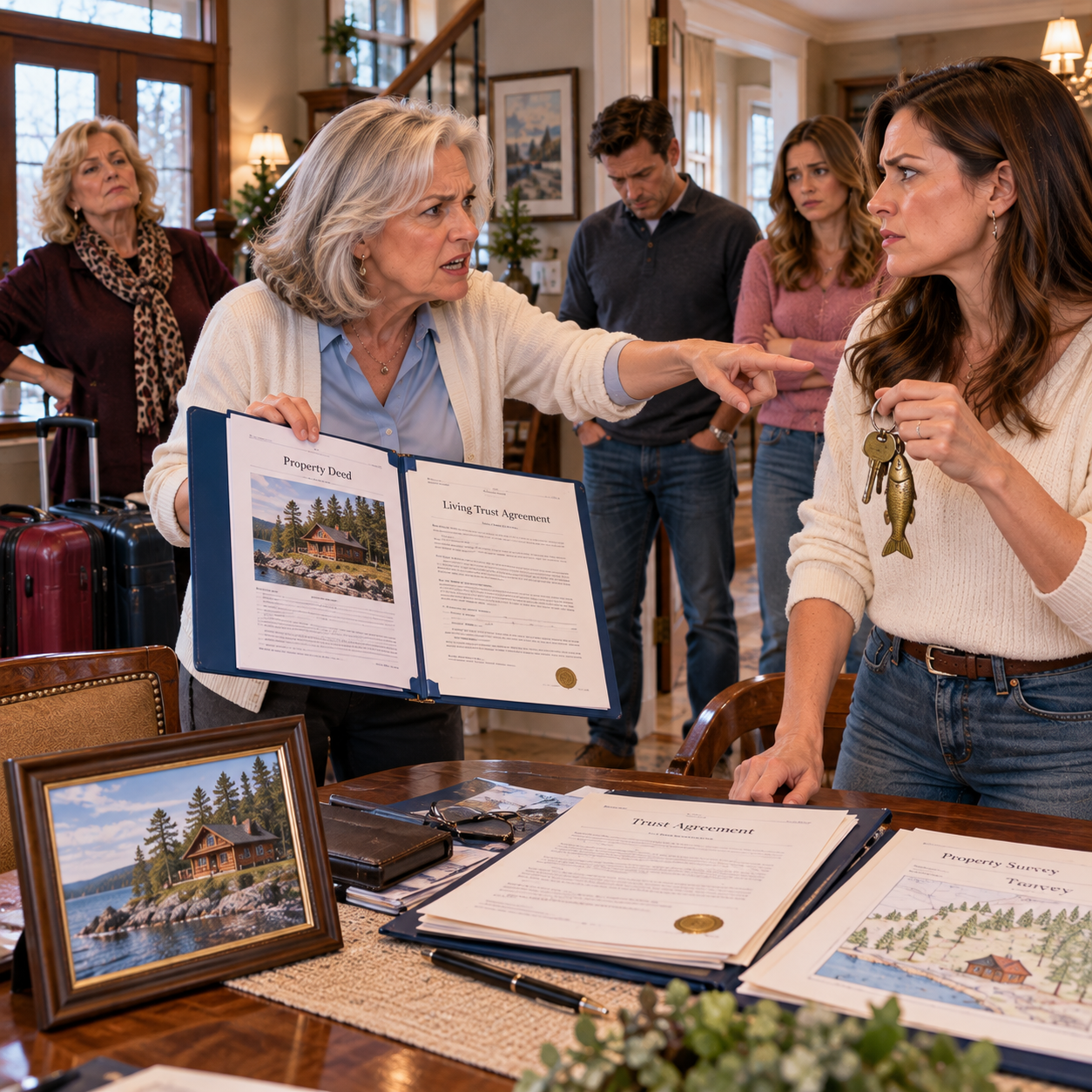
I took Pamela’s photograph and my ownership documents to my attorney, Margaret Ellis, that afternoon. Margaret contacted the company and confirmed that Ashley had submitted a preliminary listing application, describing herself as an authorized family representative. The paperwork included photographs, proposed nightly rates, and a plan to rent the cabin throughout the busy summer season. Nothing had been finalized, but Ashley had already provided a payment account in her own name.
Margaret prepared written notices confirming that I had authorized neither the listing nor anyone’s occupancy. She also contacted the rental company, which agreed to suspend its assessment and remove the cabin from consideration. “You can refuse this without making a criminal matter out of it,” Margaret told me, sliding the documents across her desk. “But I strongly recommend changing the locks and clarifying your estate arrangements before somebody else misunderstands them.”
That evening, Pamela came to my house alone, carrying a worn envelope. She explained that Brenda had accumulated nearly eighty thousand dollars in gambling-related debts, including expensive private loans taken out after her savings were exhausted. Selling the St. Cloud house had covered some obligations, but not enough to give her a secure retirement. Ashley had proposed using the cabin for summer rentals, and Brenda had embraced the idea because it promised income without requiring her to confront how she had lost her money.
“Mom told me we’d stay there until spring,” Pamela said, turning the envelope between her hands. “I didn’t know what happened afterward. I thought Ashley had permission, and when I realized she didn’t, I should have said something sooner.” She showed me a handwritten page of projected rental income, with generous estimates and almost nothing allowed for maintenance, insurance, or taxes. Someone had circled the projected two-year total and written, “Enough to get Mom clear.”
Brandon arrived two days later, looking tired and considerably older than he had the previous week. He admitted that Ashley had spent money from their joint savings on photographs and marketing preparations, and that he had ignored warning signs because he was afraid of another argument about her mother. “I let Ashley think I owned the cabin because I liked being the husband who could fix things,” he said, staring into his coffee. “Then I couldn’t admit I was wrong without disappointing everybody.”
“You disappointed me by refusing to tell the truth,” I answered. “Not by being unable to solve Brenda’s problems.”
Ashley called while Brandon was still sitting at my table, and he put the conversation on speaker after telling her I was present. She insisted that the rental income would have helped everybody and that she had intended to explain the arrangement once it was operating. When I asked why my consent had to come last, she hesitated, then admitted she had believed I would refuse. “I couldn’t watch my mother lose everything,” she whispered, and I told her that I understood her fear but would not finance a solution she had concealed from me.
Before Brandon left, he placed Richard’s spare key ring on the table and apologized for allowing his wife and mother-in-law to pressure me. I told him I loved him, but love did not erase what he had permitted, and trust would have to be rebuilt through his choices. He agreed to attend marriage counseling with Ashley and to establish clear limits on financial help for Brenda. After he drove away, I put the brass fish back in its drawer, knowing the immediate danger to the cabin had passed while the damage within our family remained.
Part 3: Protecting The Cabin Forced Us To Rebuild More Than Trust
Brenda called the following Monday, demanding to know why I had involved an attorney instead of handling things privately. Beneath her irritation, I heard embarrassment, particularly when she admitted that Pamela had stopped giving her money. She said she had begun gambling after her husband’s death because the casino was somewhere she could go without feeling alone. I listened without interrupting, but when she asked whether I might loan her enough to settle her most urgent debts, I told her I would not be lending her money.
We eventually met at a diner in Duluth, with Pamela sitting beside her mother. Brenda looked smaller without her expensive coat and confident smile, and she admitted she had convinced herself the cabin was a reasonable answer because it belonged to relatives. Pamela quietly told her that she would help research debt counseling and treatment resources, but would no longer sign loans or cover unexplained expenses. Brenda cried into a paper napkin, and although I felt sorry for her, I didn’t offer the cabin again.
Over the following months, Pamela found temporary administrative work through a local employment program and moved into a modest apartment with a roommate. Brenda went to stay with her sister in North Dakota under an arrangement that required her to contribute toward living expenses and seek financial counseling. Her debts did not disappear, and neither did the consequences of her decisions. But for the first time, her family was helping her address the problem rather than hiding it behind somebody else’s generosity.
Brandon and Ashley began counseling, and their marriage remained strained. Ashley eventually sent me a handwritten letter acknowledging that she had planned to profit from my property without my knowledge and had encouraged Brandon to misrepresent his authority. She did not ask me to forgive her immediately, and I appreciated that more than another elaborate apology. I replied that I hoped they could repair their marriage, but I wasn’t ready to invite her back into my home.
I also met with Margaret to review my trust, update the cabin’s access arrangements, and make my intentions clear to Brandon in writing. I wasn’t removing him as a future beneficiary to punish him, but neither would I allow uncertainty to become another excuse for interference. When I explained the documents to him, he read every page before asking questions. For once, neither of us pretended that an uncomfortable conversation could safely be postponed.
In May, Brandon came to help replace several deteriorating boards on the cabin porch. He found Richard’s old measuring tape in the workshop, its yellow casing cracked and his initials scratched into the plastic. We worked together through the afternoon, pausing occasionally to remember the way Richard insisted on measuring every board twice. At one point Brandon set down the drill and said, “I kept telling myself Dad would’ve wanted me to help them, but I never asked what helping was going to cost you.”
I told him his father had been generous, sometimes more generous than we could afford, but he had always believed people should be honest about what they needed. Brandon nodded and admitted that he had been afraid of seeming unsuccessful in front of Ashley’s family. I reached across the porch table and touched his hand, remembering how small it had once been when Richard taught him to tie fishing knots. We stayed there until the afternoon light faded, without pretending one good conversation had repaired everything.
Before we left, Brandon carried the tools inside while I locked the porch door. He waited beside the truck, making no attempt to take the keys or assume he would be welcome whenever he pleased. When he asked whether he might return the following weekend, I smiled and told him to call first. He smiled back, and for the first time in months, that small exchange felt natural.
The cabin still belongs to my trust, and its windows still look across the water Richard loved. Brenda has her own difficulties to resolve, Ashley and Brandon have a marriage to rebuild, and I have learned that family affection cannot replace honesty or consent. I still hope the cabin will someday become part of Brandon’s life in the way his father imagined. But now I understand that protecting what Richard left us includes teaching our son how to respect it.
The End .
All characters and events in this story are fictional, created for storytelling and entertainment purposes. Thank you sincerely for reading. Your feedback and support are invaluable and motivate me to continue sharing more stories with you.


