### Part 2: An unexpected letter revealed my childhood had been built on lies.
The first time I wondered why I didn’t belong in my family, I was six years old. I stood in our hallway looking at a wall filled with photographs of Emily, including an entire scrapbook titled Emily’s Magical First Year. When I asked my mother where my baby pictures were, she stopped arranging flowers and told me they’d been destroyed in a flood.
“What about my first birthday?” I asked.
“Those were ruined too, Patsy. Now go play.”
There had never been a flood that I could remember, but children believe the adults who feed them dinner and tuck them into bed. I accepted her explanation, just as I accepted being punished when Emily broke something and being excluded from family celebrations because there supposedly wasn’t enough room. I spent years trying to earn affection that was given to my sister without conditions.
Everything began changing when an envelope arrived at my parents’ house.
I’d stopped by one Saturday to help my father repair a kitchen cabinet. While sorting the mail he’d left on the counter, I noticed an envelope bearing my full legal name in a reference line beneath a financial institution’s address. It was addressed to my parents, so I put it aside and asked my father why my name appeared on it.
His reaction was immediate.
“That’s nothing,” he snapped, pulling it from my hand. “Old paperwork.”
I didn’t believe him.
Two weeks later, another financial notice appeared among documents my mother had asked me to organize. This time, the account reference included my name, and an attached statement identified a trust established for my benefit. My mother snatched it away before I could finish reading.
That night, I searched public records and located the attorney who had prepared the original estate documents.
A week later, I was sitting across from David Mercer.
He placed a certified document on his desk. “Patsy, before we discuss the account, there’s something you need to understand about your parents.”
I felt my stomach tighten. “What about them?”
“They aren’t your biological parents.”
The words seemed to empty the room of air.
David explained that my biological parents, Daniel and Rebecca Whitman, had died in a car accident when I was fourteen months old. My mother’s sister Rebecca had been my birth mother, and the people who raised me were actually my aunt and uncle. They had become my legal guardians after the accident, assuming responsibility for my care and for managing a substantial inheritance left in my name.
I stared at the documents. There were death certificates, guardianship orders, signatures, and a photograph of a couple standing outside a small white house.
The woman in the picture had my eyes.
“Why didn’t anybody tell me?” I whispered.
David’s expression softened. “I can’t answer that. But I can tell you what happened to the money.”
My parents had controlled a trust intended to provide for my upbringing, education, and financial security. They were required to manage the assets for my benefit and maintain accurate financial records.
Instead, the transactions revealed something extraordinary.
Emily’s private school tuition had been paid from accounts connected to my inheritance. So had her undergraduate education, portions of her graduate-school expenses, and the car she’d received for her sixteenth birthday. There were also substantial transfers associated with the family house and the condominium Emily had occupied for two years.
I remembered being eighteen and asking my parents to help me buy a used laptop so I could apply for better jobs.
My father had told me that money didn’t grow on trees.
David slid another statement across the desk. It showed a withdrawal of almost twelve thousand dollars during that same month, labeled as an educational expense.
“Whose education?” I asked.
He turned the page.
Emily’s name appeared beside the payment.
For several minutes, I couldn’t speak.
The most painful discovery wasn’t that my parents had money. It was that they’d repeatedly claimed they didn’t have any for me while spending funds legally intended for my future.
David and I spent the next three months examining records. We obtained account histories, compared transfers against tuition invoices, traced property purchases, and uncovered financial reports bearing signatures that didn’t match mine. Several documents showed Emily had approved or acknowledged transfers after becoming an adult.
“She knew?” I asked one afternoon, staring at her signature.
“These records strongly suggest she did,” David answered. “And they give us a basis to investigate further.”
I thought about every holiday dinner when Emily had described her achievements while our parents insisted I should be grateful for my modest life.
One afternoon, David placed the completed evidence file on his desk.
“Is this enough?” I asked.
He folded his hands. “Enough to bring a serious civil case and pursue recovery of the assets. What we’ve found is devastating.”
I looked at the thick stack of papers, remembering the little girl who believed she’d somehow failed to deserve the same opportunities as her sister.
“Then file it,” I said.
David studied me. “Are you prepared for what happens afterward?”
I nodded.
Two days later, a cream-colored invitation arrived in my mailbox.
Please join us in celebrating Emily’s graduation.
I held it beneath my kitchen light, studying the elegant lettering.
My parents had spent years using celebrations to remind me of everything I wasn’t.
This time, they’d invited me to bring the evidence.
### Part 3: The graduation party became a courtroom before anyone reached court.
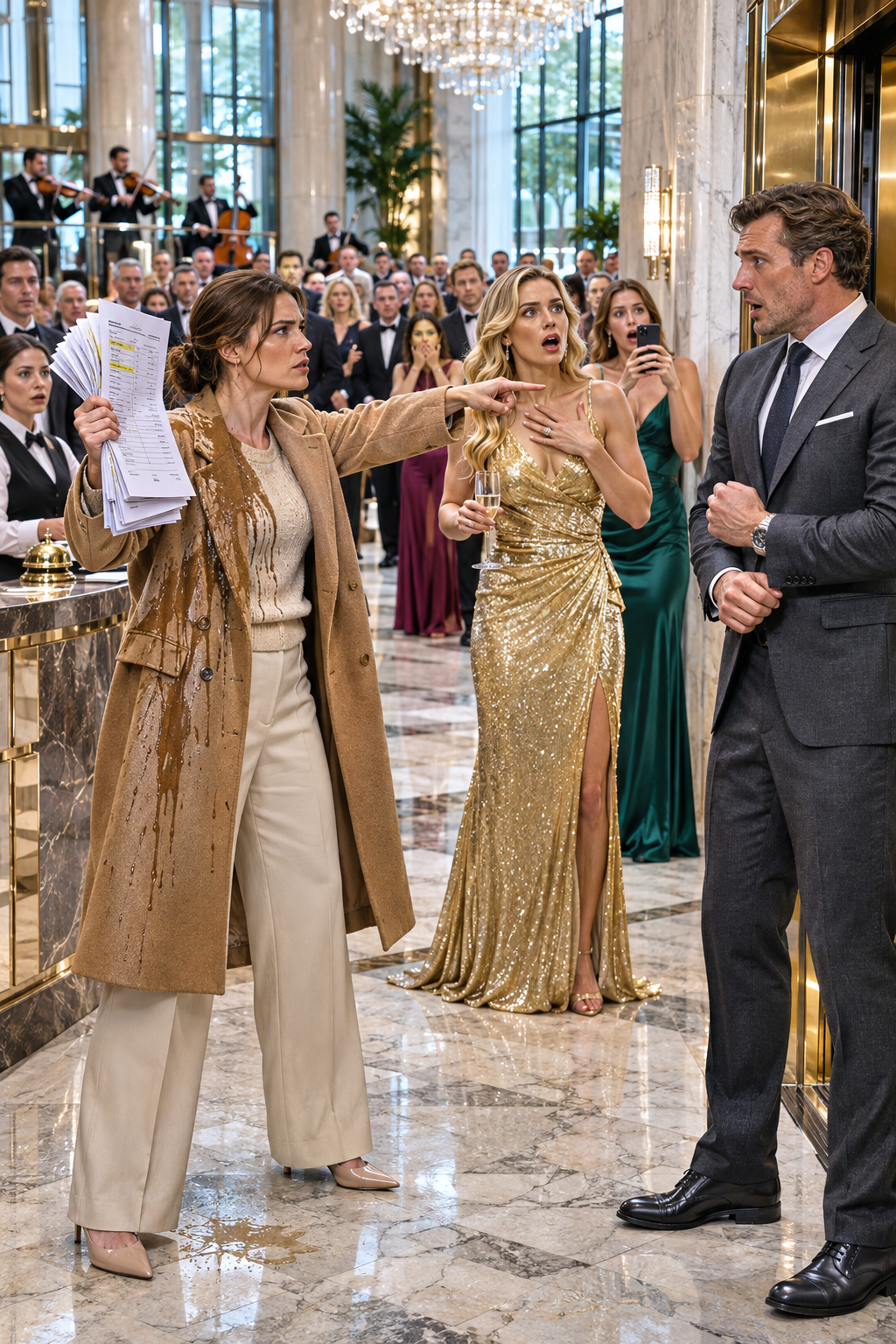
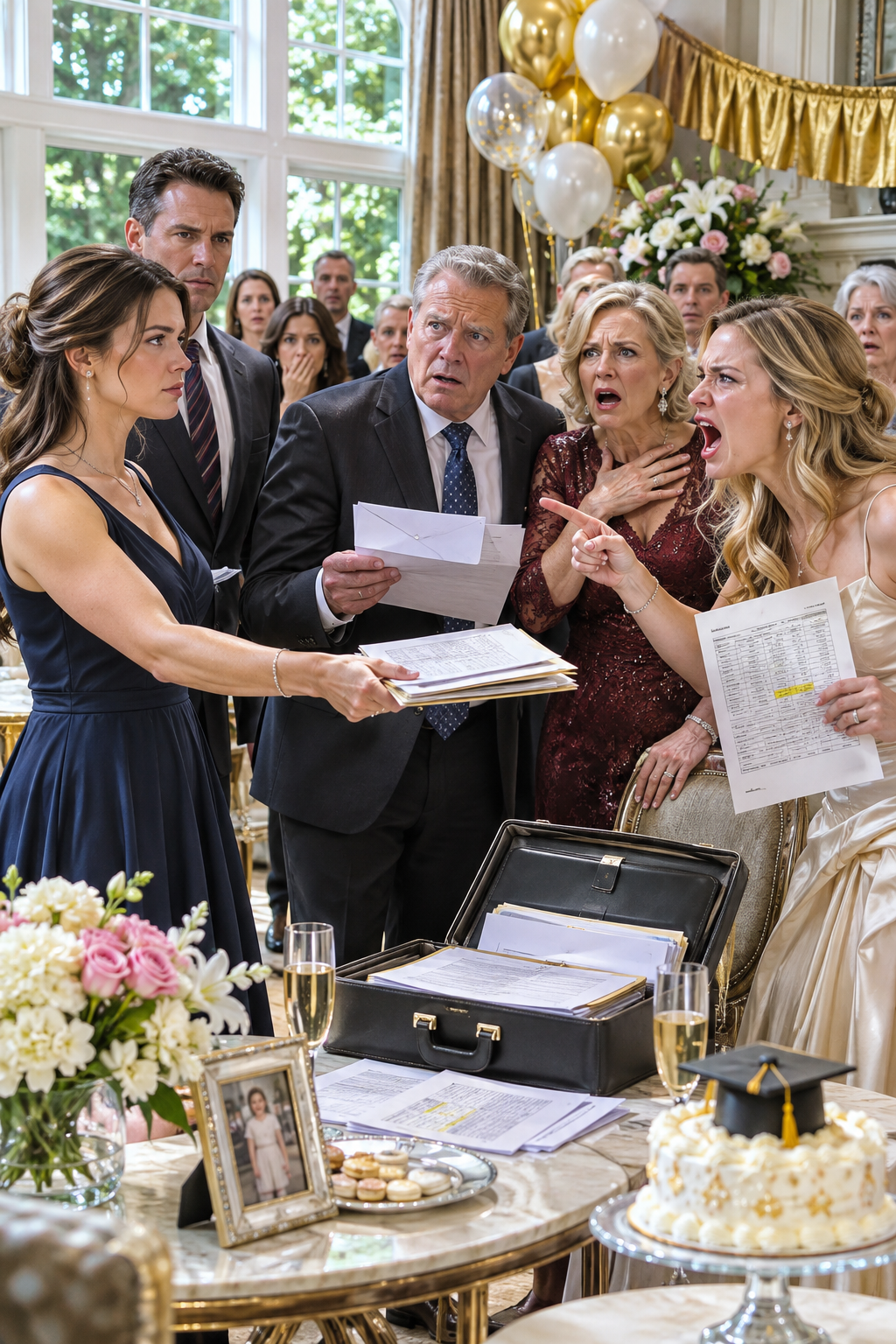
My father’s hands were shaking as David opened his briefcase beneath the glittering graduation banner. Across the room, our grandmother stood beside the dessert table, clutching her handbag. Emily kept staring at the paperwork as though the figures might change if she looked long enough.
“This is a misunderstanding,” my father announced. “Patsy has always been emotional about money.”
David placed a copy of the filed civil complaint beside his champagne glass. “Mr. Whitman, these records were obtained from banks, educational institutions, and property filings. We have spent three months verifying the transfers.”
My mother stepped toward him. “Who exactly are you?”
“David Mercer. I’m Patsy’s attorney.”
The silence that followed felt different. People who’d been whispering moments earlier now stood perfectly still.
My father straightened his jacket. “We will discuss this privately.”
“No,” I said. “We’ve discussed everything privately for twenty-nine years. You told everybody I lacked ambition while you spent my inheritance on Emily. They deserve to know what was happening behind all those speeches about sacrifice.”
Emily threw the papers down. “You’re just jealous because I made something of myself!”
I picked up one of the statements. “When you enrolled in graduate school, nearly forty thousand dollars was transferred from an account established for me. You signed the disbursement acknowledgment.”
Her eyes flickered toward our mother.
“Emily,” I continued, “did you know whose money it was?”
She swallowed. “Mom said it was family money.”
“Did she tell you my biological parents left it for my education?”
No answer.
David opened another folder.
“This acknowledgment was signed after Ms. Emily Whitman became an adult,” he said. “It identifies the funds as belonging to the Patsy Whitman Trust.”
Emily grabbed the back of a chair.
My mother finally exploded. “We did what was best for our family!”
I turned toward her. “I was part of that family.”
“Of course you were!”
“Then why did you treat me like an expense you regretted?”
Her mouth opened, but nothing came out.
I stepped closer, lowering my voice. “You knew I wanted to study. You knew I worked two jobs to pay rent. You let me believe I wasn’t capable of something while spending my education money on somebody else.”
My father struck the table with his palm, rattling the glasses. “We raised you! We gave you a home!”
“And my biological parents left you the resources to help do it,” I replied. “You didn’t have permission to use those resources to buy Emily a better life.”
Grandma sank into a chair.
She looked at David. “Are you saying Rebecca left that money for Patsy?”
“Yes, ma’am.”
Grandma covered her mouth. “They told me it was used for medical bills and taking care of her.”
For the first time, I saw genuine shame cross my father’s face.
Emily suddenly snatched a property record from the table.
“My apartment?” Her voice cracked. “What does my apartment have to do with this?”
David pointed to a sequence of transactions. “The purchase funds can be traced to Patsy’s trust. We’re asking the court to recognize her financial interest in the property and order appropriate recovery.”
“You can’t take my home!”
“That will be for the court to determine,” he answered.
Emily turned toward our mother, tears streaking her makeup. “You told me nobody could ever find out.”
The words escaped before she could stop them.
My mother closed her eyes.
Every guest heard.
I had imagined this moment for weeks. I thought I would feel triumph when Emily finally admitted knowing the truth, but all I felt was a heavy, exhausted sadness. My sister had been given opportunities I could only dream of, and even knowing where the money came from, she’d chosen to protect herself.
“How long?” I asked her.
She shook her head.
“How long did you know?”
“Since I was nineteen,” she whispered.
I thought about the birthday she’d celebrated that year with an expensive vacation. I remembered working overtime to repair my car, refusing invitations because I couldn’t afford the gasoline.
“You watched me struggle,” I said.
Emily began crying harder. “I didn’t know what I was supposed to do!”
“You could have told me.”
My father reached for the documents, but David gathered them neatly into his briefcase.
“The case has been filed,” he said. “Further records will be addressed through the legal process. There will be an opportunity for everyone to respond.”
My mother looked around the room, searching desperately for someone to defend her.
Nobody moved.
Then Grandma stood up, crossed the room, and took my hand.
“Rebecca would have been heartbroken,” she whispered.
My mother stared at her. “Don’t you dare bring my sister into this.”
Grandma didn’t look away. “She trusted you with her little girl.”
My mother began ordering guests to leave. Chairs scraped across the floor, coats were gathered, and the photographer quietly packed his equipment.
Emily remained beneath the enormous gold banner, crying over the documents that exposed how her success had been financed.
I walked toward the front door with David beside me.
Behind us, my father called my name.
I stopped.
“After everything we’ve done for you,” he said, “you’re really going to destroy this family?”
I looked back at the people who’d raised me.
“No, Dad,” I answered. “I’m finally going to stop letting you destroy my future.”
### Part 4: The final judgment restored my inheritance and revealed one last secret.
The courtroom was smaller than I expected, with pale wooden benches and a clock whose ticking seemed louder than the attorneys. My father sat beside my mother, looking older than I’d ever seen him. Emily occupied the chair behind them, avoiding my eyes.
Their attorneys argued that the money had been used for family purposes, that my guardians had acted in good faith, and that certain expenses reflected reasonable decisions made while raising a child. David responded with financial records, invoices, bank statements, property histories, and evidence showing my signature had been falsified on multiple documents.
The judge listened without interruption.
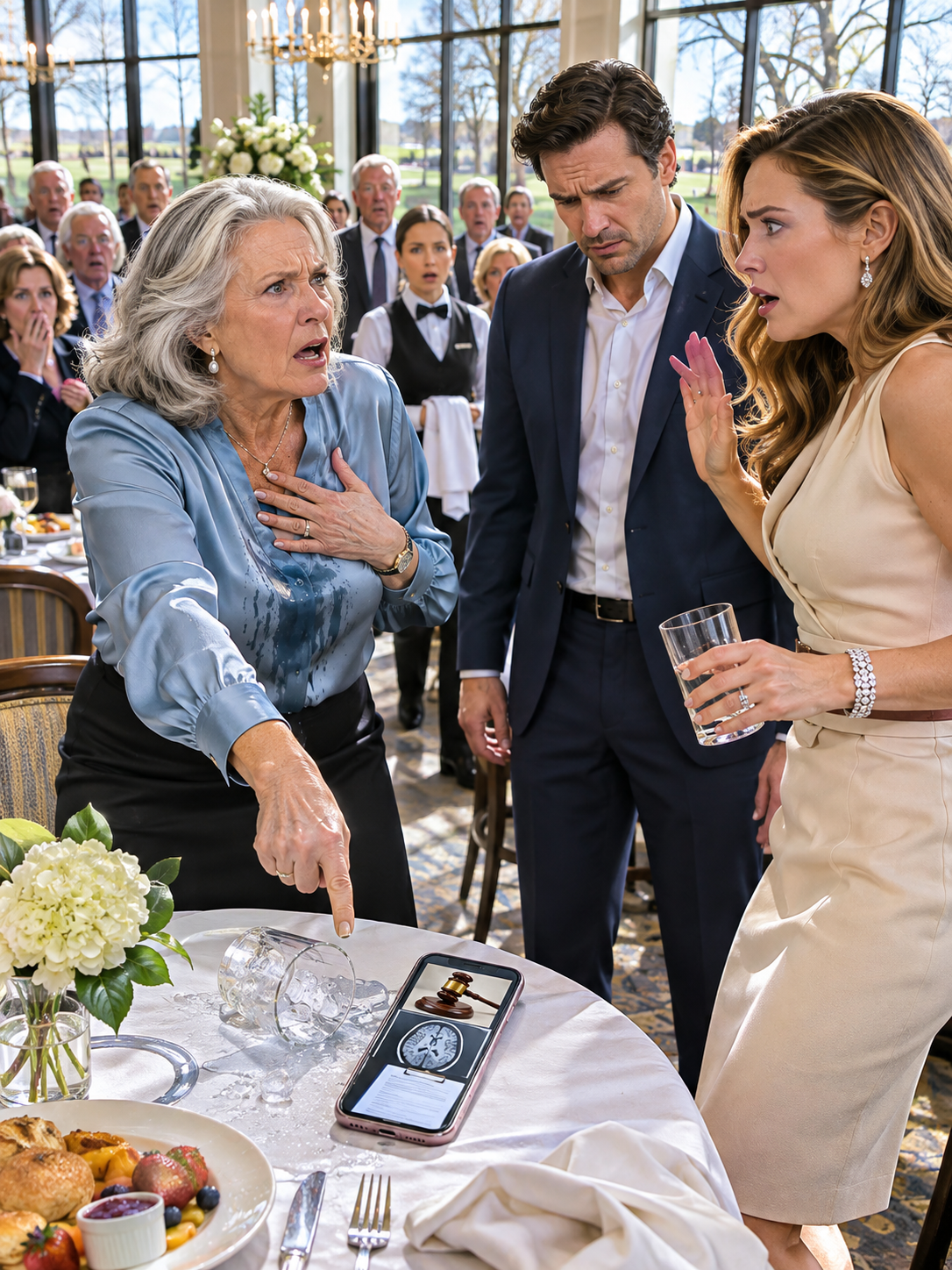
When my father testified that I’d shown no interest in education, David placed an old notebook page before him. It contained the college application checklist I’d written at seventeen, including the dates of entrance exams and schools I’d wanted to visit.
“You remember telling Patsy that college wasn’t appropriate for her?” David asked.
My father shifted in his chair. “I was trying to be realistic.”
“And yet the trust specifically provided resources for her education?”
“Yes.”
David waited.
My father lowered his eyes.
During Emily’s testimony, the court examined transfers she had knowingly authorized as an adult. She admitted that our mother had explained the trust’s origin years earlier but insisted she’d believed everything would eventually be resolved.
The judge asked why she’d continued accepting payments.
Emily stared at her hands. “Because I didn’t want to lose what I had.”
It was the first completely truthful thing I’d heard her say in years.
After the hearings and months of proceedings, the court found that my guardians had breached their fiduciary duties and misappropriated substantial trust assets. The judgment required repayment, transfer or recovery of certain assets acquired with trust funds, and an accounting of the remaining losses. Emily was also held responsible for transactions in which the evidence established her knowing participation.
Their appeals failed to overturn the central findings.
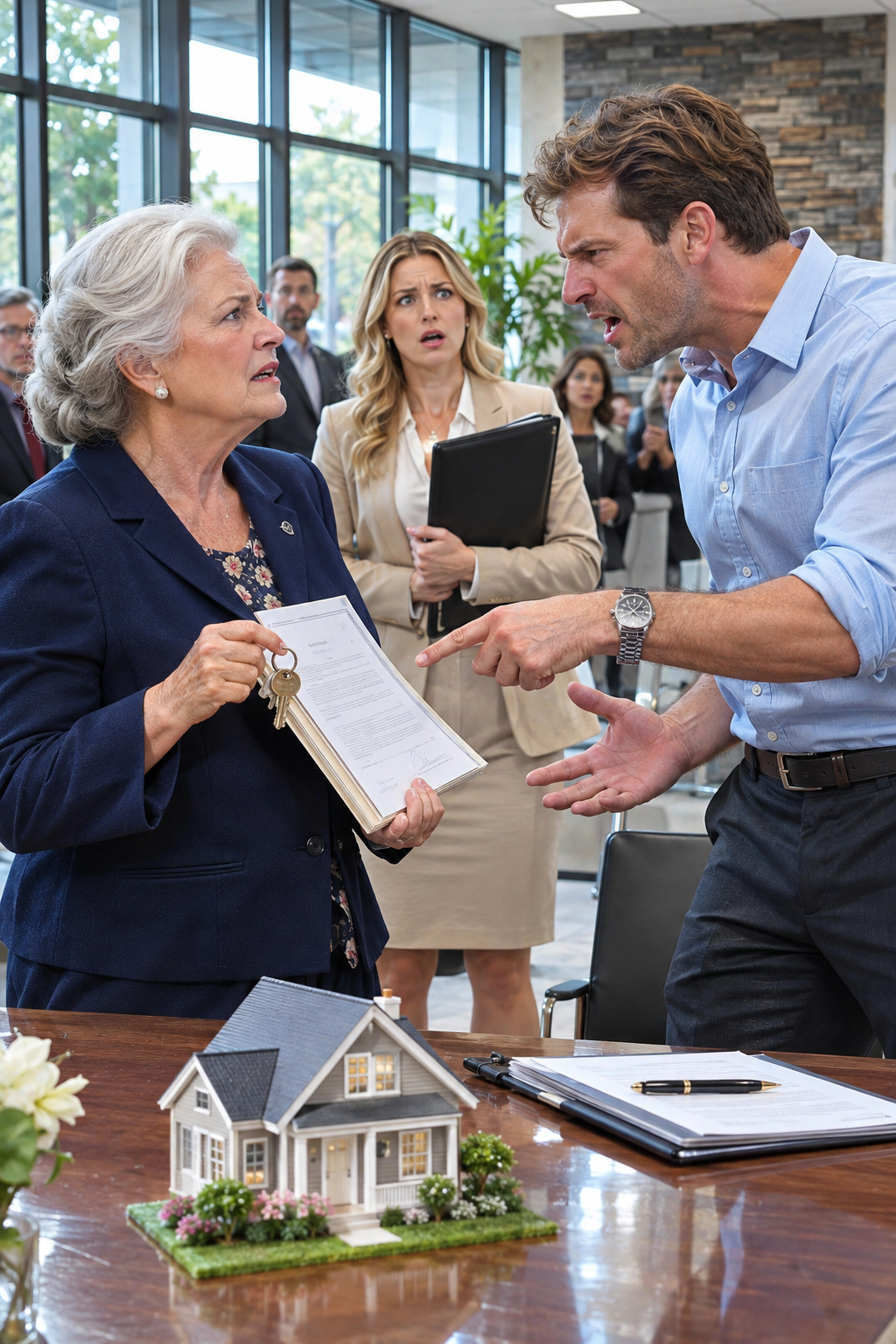
My parents lost their claim to the family house, which was transferred to me as part of the recovery. Emily’s condominium was also transferred under the final settlement and court orders. Remaining debts were addressed through enforceable payment arrangements, including deductions from income where legally permitted.
My father complained bitterly about nearing retirement. My mother said the judgment would destroy their comfortable life. Emily cried that she’d have to make payments for years, possibly until she was forty.
I didn’t celebrate.
I remembered how frightening it felt to count coins at the grocery store, wondering whether I could afford milk and enough gasoline to get to work.
They were being asked to repay money they had taken.
I’d been asked to build an entire life without it.
The social consequences arrived almost as quickly as the legal ones. Friends who’d applauded my father’s graduation speech stopped inviting my parents to dinner. Relatives called with awkward apologies, and Grandma admitted she’d spent years believing their stories about my lack of ambition.
I accepted her apology. I didn’t need her guilt.
Three months after the settlement, Emily called me from the condominium.
“You’re really making me move?”
I stood in the hallway of the house that had once belonged to my parents, looking at the empty spaces where their photographs had hung.
“The notice gives you time to find another place,” I said.
“I have nowhere to go.”
“You have a job and a graduate degree, Emily.”
“You don’t have to punish me for something Mom and Dad did!”
I closed my eyes. “You signed the paperwork. You knew.”
She remained silent.
“I wanted a sister,” I said quietly. “Not somebody who could watch me suffer and pretend she didn’t understand why.”
She hung up.
Eventually, Emily moved in with a coworker. My parents rented a smaller house across town, and my father found part-time employment after retiring. My mother started selling decorated cookies online. Once, a colleague brought a box into my office without knowing who’d baked them, and I recognized the delicate blue frosting immediately.
For a moment, I almost laughed.
Life moved forward.
I enrolled in college, balancing classes with work until I earned the degree I’d once been told I couldn’t achieve. Later, I opened a small business. It wasn’t glamorous, but when I turned the key in the office door each morning, everything inside existed because of decisions I’d made myself.
I renovated the old family house, turning my childhood bedroom into a bright workspace. I removed the cramped laundry-room partition where I’d once been made to sleep when relatives visited. Sunlight finally reached corners I’d remembered only as dark.
Then, one afternoon, David called.
“There’s one more thing from the original estate records,” he said. “Something your mother was supposed to give you when you turned eighteen.”
He arrived carrying a narrow wooden box.
Inside were photographs.
Dozens of them.
My first Christmas. My first steps. My biological father holding me beneath a maple tree. My mother laughing as I reached for her necklace.
I sat on the floor, unable to move.
There had been no flood.
Those pictures had been preserved all along, stored with personal effects from my parents’ estate. My guardians had claimed the box contained nothing worth keeping and left it unclaimed until David traced the original inventory.
Beneath the photographs lay an envelope addressed to me in delicate handwriting.
David stepped outside while I opened it.
My mother’s letter was dated several months before the accident. She’d written it to accompany the estate documents, intending it to reach me when I was old enough to understand.
She described the little girl who pointed at everything she couldn’t name, who laughed when someone opened a book, who tried to climb onto her father’s desk to examine his papers.
Then I reached the final paragraph.
Patsy, wherever life takes you, never let anyone convince you that your dreams are too large or that your mind is too small. Your father and I have tried to leave you opportunities, but the most important thing we want you to have is the freedom to choose your own life. You are loved beyond anything we could ever measure.
I read those words again and again.
For twenty-nine years, I’d believed that something inside me was missing. I’d spent my childhood trying to become worthy of a family that treated me like an inconvenience.
But before I could even speak in complete sentences, two people had already believed I could become anything.
I pressed the photograph of my mother against my chest and cried.
Not because of the house. Not because of the money.
Because somebody had loved me without asking me to earn it.
The letters from my guardians still arrived occasionally. My father wanted to talk. My mother wanted forgiveness. Sometimes Emily sent brief messages about how difficult her life had become.
I never answered immediately, and most remained unanswered.
I didn’t wish them harm. I simply understood that forgiveness, if it ever came, did not require surrendering my boundaries or pretending nothing had happened.
One evening, several years after the graduation party, I sat at my desk finishing paperwork for my business. The house was quiet, the windows were open, and a framed picture of my biological parents stood beside my college diploma.
The monthly restitution payment had arrived that morning.
I filed the notice without thinking about it again.
Then I looked at the photograph, at the young woman smiling with a baby in her arms, and remembered the gold banner at Emily’s party.
My parents had spent nearly three decades telling me I wasn’t the academic type. They’d taken my opportunities, rewritten my childhood, and convinced me that wanting more was selfish.
But they couldn’t erase the truth forever.
I hadn’t ruined my family by opening that envelope.
I’d finally discovered the family that had loved me first.
And for the first time in my life, I didn’t need anyone else’s permission to be proud of who I’d become.
THE END.
All characters and events in this story are fictional, created for storytelling and entertainment purposes. Thank you sincerely for reading. Your feedback and support are invaluable and motivate me to continue sharing more stories with you.