Part 2: A Secret Recording Reveals The Cruelty Behind My Mother’s Plans
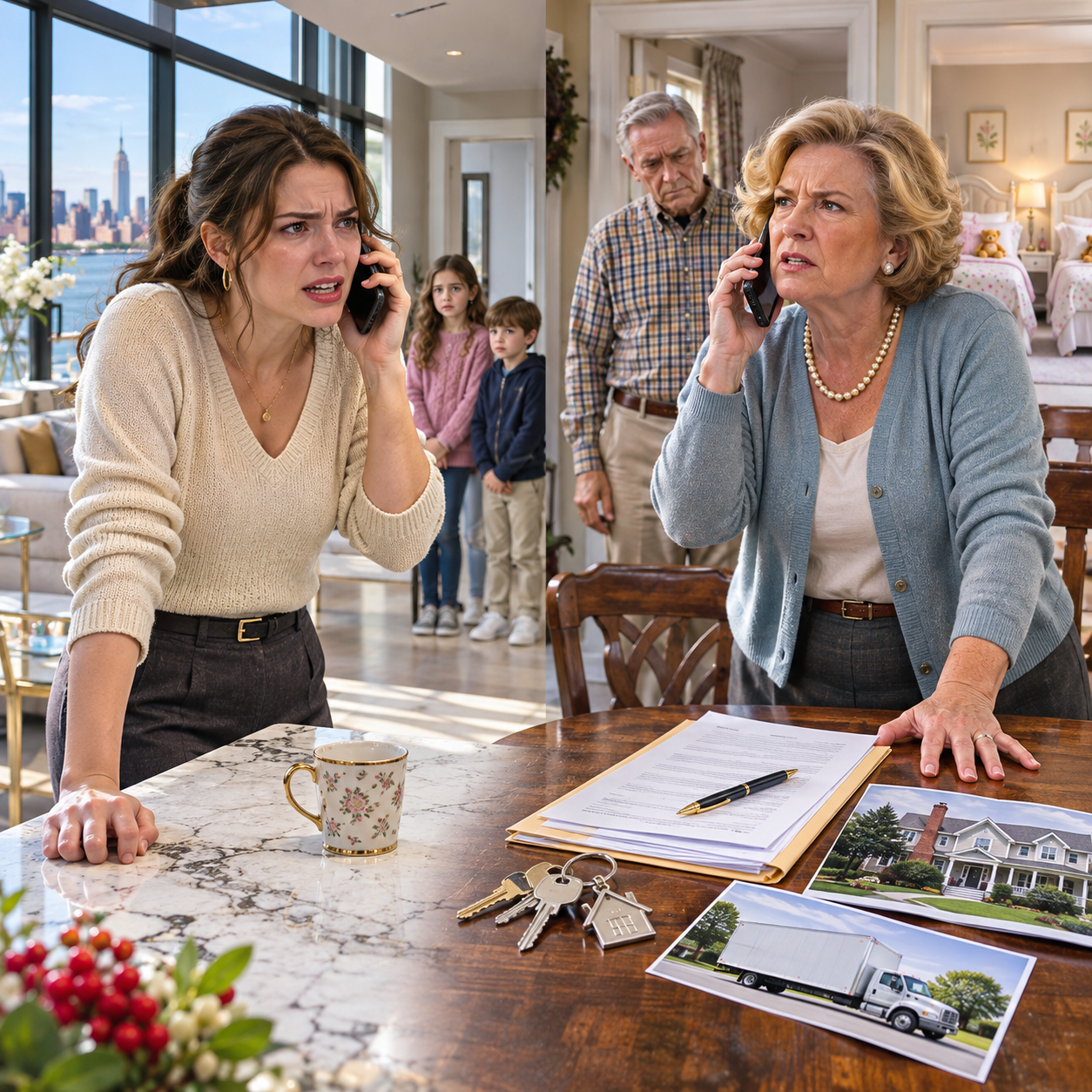
The next morning, Mom sent three messages before breakfast. First, she claimed Dad was devastated; then she accused me of forgetting how she’d raised me; finally, she sent a photograph of Paige’s twins in Christmas sweaters, announcing that they’d already told their friends about their upcoming Manhattan holiday. I ignored the guilt trips, but when Paige called during lunch, I answered. “How can you live in a penthouse while our parents have nowhere to go?” she demanded.
“Where were Iris and Rusty supposed to sleep?” I asked. Her silence lasted just long enough for my professional instincts to awaken. “Mom said she’d handled everything,” Paige finally admitted, before accusing me of interrogating her and hanging up. Later, Brooks texted that family mattered more than money, and I nearly replied that he was buying his new house with our parents’ retirement savings. Instead, I wished him a merry Christmas and put down my phone.
The following morning, I visited Kurt’s office to make sure nobody could enter my apartment without permission. When I mentioned my mother’s name, his expression changed. “Interesting you should ask, Miss Bishop,” he said, opening a file. “On October twentieth, a woman identifying herself as Judy Bishop contacted management, claimed to be co-owner of your penthouse, and requested the freight elevator for December twentieth.”
My fingers tightened around the visitor’s chair. Kurt continued, explaining that she’d requested two additional electronic keys, but the reservation remained pending because I hadn’t authorized it. He apologized for the oversight, explaining that he’d been attending his daughter’s wedding in Lisbon when the request arrived. Then he slid a thumb drive across his desk. “Our calls are recorded,” he said quietly. “You should listen to this somewhere private.”
That evening, after the children went to bed, I stood on the terrace with the recording playing through my headphones. I listened to my mother’s familiar voice confidently discussing my apartment as though it belonged to her, and what I heard left me shaking in the cold. I didn’t call her or confront her that night. Instead, I sat beside Rusty on his beloved window seat, watching him sleep, and understood that my mother had never considered my children’s needs part of her calculations.
Kurt immediately canceled the elevator reservation and instructed the doormen that nobody was permitted upstairs without my express consent. I also sent both parents an email and matching text, explicitly forbidding the move while inviting them to Christmas dinner from two until eight. Mom replied, “Unbelievable.” Dad stayed silent.
I called him privately at the hardware store where he worked part-time after retiring. He confirmed the $385,000 sale and the planned $300,000 gift, leaving them just $85,000 and no permanent home. “Don’t transfer that money until you’ve secured somewhere to live,” I pleaded. “Mom already signed the gift letter,” he answered, and when I reminded him that a signed letter wasn’t the same as wiring the money, he sighed.
“Your mother says you’ll come around,” he admitted.
“Dad, you said the same thing when she put me in the basement.”
He went quiet. I told him I loved him, but I would not rescue them from a decision made against my wishes.
A week before the move, nine-year-old Iris appeared beside me while I was speaking with my lawyer. “Grandma isn’t taking my room, is she?” she whispered, and something inside me twisted. I promised nobody would ever take her bedroom, then ordered wooden letters so both children could decorate their doors. Iris painted hers blue with silver stars, while Rusty chose bright red letters and a little anchor, insisting that captains didn’t need to explain their artistic decisions.
When we finished hanging them, Iris stood motionless before her door. “Now we have names on our doors, too,” she said, smiling. I hugged her, then slipped into the bathroom and cried with the faucet running. I had spent twenty-four years believing that the basement was behind me, but my daughter had somehow inherited the same fear.
On December nineteenth, Dad texted a single word: “Done.” I asked whether he meant the house closing or the money transfer, but he never answered. At 9:04 the following morning, the lobby phone rang, and Kurt announced that my family had arrived with a twenty-six-foot moving truck, two movers, and a brown recliner parked beside a fire hydrant. My elderly neighbor, a retired music teacher who loved a little excitement, offered to make waffles for my children while I went downstairs.
I buttoned my coat, fastened my grandmother’s watch, and entered the elevator. As the floor numbers counted down, I reminded myself of the most important rule from eleven years investigating fraud: let people tell their story before showing them the evidence. By the time the doors opened, I was ready to hear my mother’s explanation.
And this time, she would have an audience.
Part 3: One Recording Destroys The Lie My Family Believed For Years
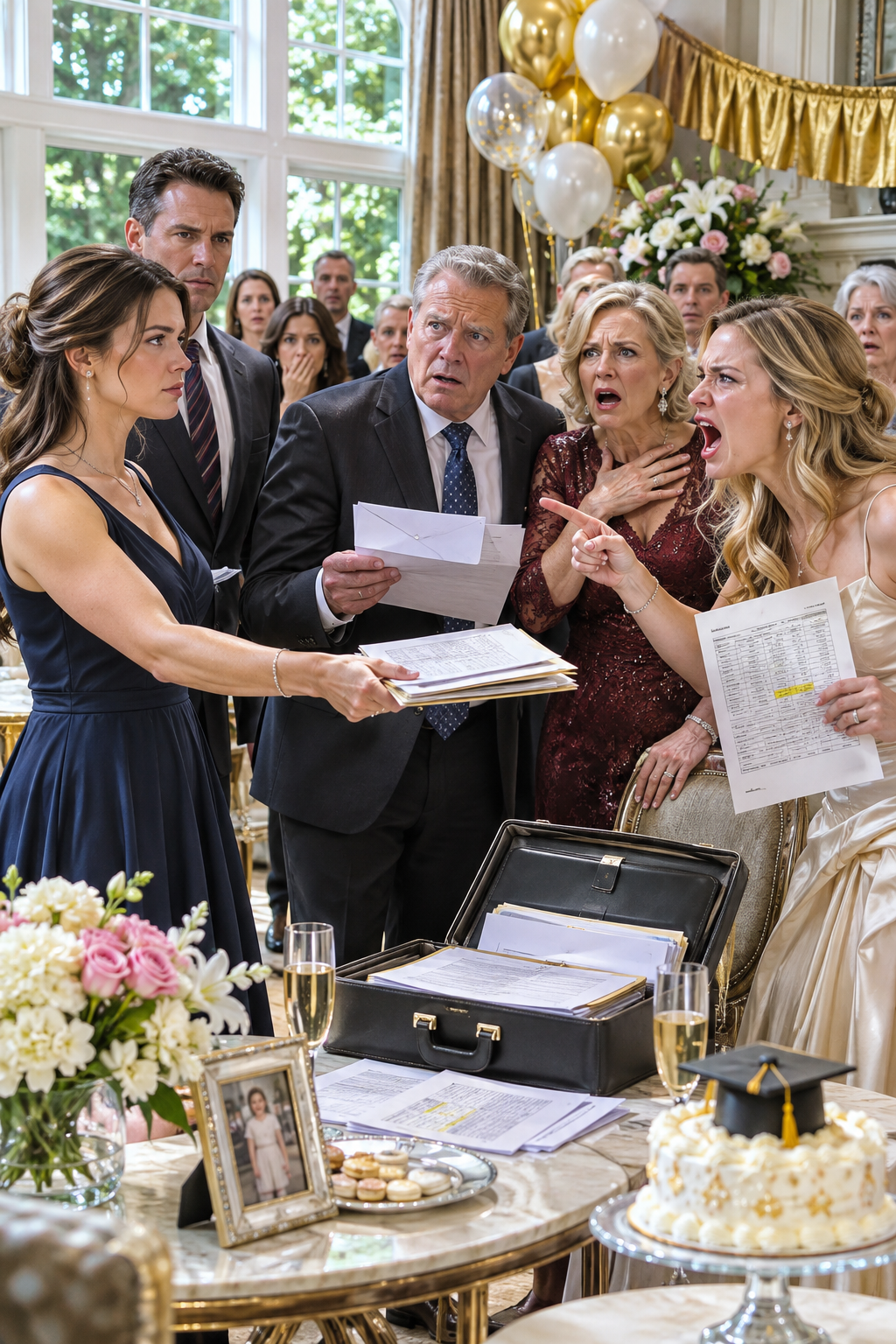
My mother stood in the middle of the elegant lobby wearing her best camel-colored coat, smiling as though she owned the building. Dad wore a Christmas sweater with a loose red pompom on the reindeer’s nose, while Paige hid behind oversized sunglasses and Brooks balanced four coffees in a cardboard tray. The twins were staring through the glass doors at the skyscraper above them, and outside, two movers waited beside the truck. A retired judge from the eighth floor and a woman walking her poodle had also stopped to watch.
“There she is!” Mom exclaimed, spreading her arms. I remained six feet away, although I warmly hugged the twins when they ran toward me. Mom raised her voice so the bystanders could hear, explaining that her older daughter had endured a difficult few years and that they were moving in to help her. “I’m doing perfectly well, Mom,” I answered. “And nothing from that truck is coming upstairs.”
Paige accused me of embarrassing everyone, while Brooks suggested we behave like adults. I agreed, pointing out that adults generally requested permission before moving into someone else’s property. When Mom insisted that everything had already been arranged with management, Kurt stepped forward and calmly explained that the reservation was canceled because she wasn’t an owner. “I’m her mother,” she protested, as if motherhood automatically granted a property deed.
“Mom,” I asked, “are you certain you told the building the truth?”
“Of course I did. I only asked about the elevator.”
I turned to Kurt. He opened his laptop, placed it on the reception counter, and pressed play.
My mother’s cheerful recorded voice filled the lobby, identifying herself as co-owner and requesting permanent moving access and two additional keys. She claimed her divorced daughter couldn’t manage such an expensive home and needed her parents to take charge. Then came the instruction that made my father’s face change: she specifically asked the employee not to tell me about the arrangements because I might become emotional.
The recording continued, and I watched Paige slowly remove her sunglasses. Mom explained that she and Dad would occupy the bedroom overlooking the Empire State Building, while Paige’s twins would use the other bedroom whenever they visited. When the employee asked about my children, Mom laughed. “Their father lives in Ohio,” she said. “They can stay with him. There’s simply no space for Tasha’s children once we’re settled.”
I heard Paige’s voice faintly in the recording, asking whether the twins could celebrate their next birthday on my terrace. Kurt stopped playback, and nobody spoke for several seconds. Then Brooks lowered his coffees onto the counter. “Judy, you told us Tasha invited you,” he said, his voice suddenly quiet.
Paige shook her head. “You told me Iris and Rusty were going to share a bedroom.”
Dad sank onto the lobby bench. “You were sending those children to Ohio?” he asked. “Their father has barely seen them in six years.”
Mom looked around for an ally, but nobody met her eyes. She insisted she had intended to explain everything eventually, and something in that word made me finally step toward her. “For six Christmases, you told me there was no space for my children,” I said. “I believed you meant there weren’t enough bedrooms. But there was never a problem finding space for Paige’s kids.”
My voice trembled only once. “You watched me drive home through snow with a crying newborn. You watched Iris stare at her cousins’ bedroom door and wonder why she didn’t deserve one. And now you’re standing here planning to send my children away from the home I bought for them.”
Mom opened her mouth, but I raised one hand. “You don’t get to make that decision.”
Turning to the movers, I apologized and explained that their truck wouldn’t be unloaded. Mom immediately ordered them to take everything to Paige’s townhouse, but Paige protested that their closing was still two days away and the house was packed with boxes. Brooks looked at the twins beside the lobby aquarium, then back at his mother-in-law.
“I’m sorry, Judy,” he said. “We don’t have room.”
Dad stared at the floor. He admitted he’d transferred the $300,000 despite my warning, trusting Mom’s assurance that I would eventually surrender. One mover offered temporary storage in New Jersey for $240 a month, plus additional labor charges. For the first time that morning, my mother seemed to understand that nobody was coming to rescue her plan.
“Where are we supposed to sleep, Tasha?” she whispered.
I felt the pull of old habits, the familiar urge to surrender my comfort so somebody else wouldn’t have to face consequences. Instead, I told her about reasonably priced hotels in Secaucus and promised to send Dad a few addresses. My invitation to Christmas dinner still stood, but my home would remain my children’s home. Mom tightened her coat and stormed outside, declaring she’d rather spend Christmas at a highway rest stop.
Dad lingered at the door. “Two o’clock on Christmas Day?” he asked.
“Two o’clock, Dad.”
Through the glass, I watched him sit briefly in the brown recliner on the sidewalk, exhausted beneath the gray winter sky. Then he stood and allowed the movers to carry it back into the truck.
Upstairs, Iris met me with syrup on her chin. “Is my room still mine?” she asked. I pointed down the hallway, and she ran toward her painted door, laughing when she saw everything untouched. Only then did my knees feel weak enough to collapse onto the living-room rug.
Rusty lay beside me, studying the ceiling.
“Are we pretending to be dead, Mommy?”
“Something like that, Captain.”
He grinned and told me he was better at it.
For the first time in years, I believed our Christmas could begin without somebody else’s permission.
Part 4: An Old Notebook Reveals The Truth That Finally Heals Us
At exactly two o’clock on Christmas Day, Kurt called upstairs to announce that my father had arrived alone. Dad stepped out of the elevator holding a poinsettia and an old shoebox, his face lined with fatigue from several nights in a Secaucus hotel. “Your mother sends her love,” he began, before stopping himself. “Actually, she doesn’t. But I do.”
I laughed, and he laughed too, and suddenly the space between us felt less crowded. The children proudly showed him the terrace, their bedrooms, and Rusty’s imaginary boat. When Iris pointed to the blue wooden letters on her door, Dad ran his fingers across one of the silver stars. “These are good doors,” he whispered, his eyes glistening.
After dinner, while Iris and Rusty built a fortress from couch cushions, Dad placed the shoebox on my kitchen counter. Inside lay a faded purple spiral notebook, its corners bent and its pages yellowing. He explained that he’d found it beneath my old folding cot while clearing the basement before the house sale. I opened it and recognized my twelve-year-old handwriting immediately.
The pages contained hundreds of tiny numbers arranged in columns. I’d recorded every time the basement furnace awakened me at night, apparently trying to predict when I might finally sleep without interruption. On the final page, beneath a long column of calculations, I had written one sentence in careful purple ink:
“When I have a house, everybody gets a room.”
My chest tightened so painfully that I had to place the notebook flat on the counter. I hadn’t remembered writing those words, yet every decision I’d made for my children seemed to have begun there. Dad studied the little girl’s handwriting for a long time before speaking. “I convinced myself you were strong enough to handle that basement,” he said. “But you were twelve, Tasha. You shouldn’t have needed to be strong.”
He admitted that he’d let Mom decide which child deserved comfort because disagreeing with her seemed harder than watching me suffer. “I should have protected you,” he whispered. I took his trembling hand and told him that acknowledging the truth didn’t erase the past, but it mattered. He stayed until nearly eight, lost several games of checkers to Rusty, and hugged me tightly before leaving.
I didn’t offer him my office as a bedroom.
And he didn’t ask.
That was the first sign that something in our family had genuinely changed.
Paige and Brooks closed on their four-bedroom Bethlehem house two days after the confrontation. Mom asked to move in, but Brooks refused, explaining that he and Paige needed to establish their own household. Because the $300,000 had been formally documented as an unconditional gift for the mortgage lender, my parents had no automatic right to demand repayment. By late January, they were renting a small one-bedroom apartment above a dry cleaner in Allentown.
Dad increased his hours at the hardware store, while Mom started selling her craft supplies online. He began calling me for help with a budget spreadsheet, and I answered whenever I could. I didn’t send money, and he never requested any. Slowly, he learned that respecting my boundaries didn’t mean losing his daughter.
At Easter, Paige hosted a family gathering at the new house, and Mom asked whether she could stay overnight rather than drive home in heavy rain. Paige explained that the twins now had separate rooms and Brooks’s mother occupied the guest bedroom. There was nowhere for Mom to sleep. She drove back to Allentown in a downpour and called me shortly before midnight, crying because her own daughter had turned her away.
“Now you know what it feels like,” I said gently.
“Is this what you wanted, Tasha? Revenge?”
“No, Mom. If I wanted revenge, I’d be happy about this. I’m not happy. But I’m finished pretending it didn’t hurt.”
She hung up, yet called again the following Sunday. Our conversations remained awkward and brief, usually about weather, grocery prices, or Dad’s work schedule. She never offered the complete apology I hoped for, but when Iris turned ten that June, a birthday card arrived on time for the first time in her life. Inside, my mother had written, “Happy birthday, sweetheart. I’m sorry about your room. Love, Grandma.”
I didn’t tell Iris how to respond. She read the card twice, considered it quietly, and pinned it to the bulletin board beside her bedroom window. For now, that was enough. I understood that forgiveness couldn’t be demanded any more than a bedroom could be claimed, and that my children deserved the freedom to decide what kind of relationship they wanted with their grandmother.
The following Christmas Eve, Kurt joined us after his shift for our traditional midnight chocolate-chip pancakes. Rusty presented him with a paper captain’s hat, which he wore without complaint, while Iris arranged strawberries across everyone’s plates. Snow drifted beyond the terrace windows, and the apartment smelled of warm chocolate and butter. Nobody had to pack a car, negotiate sleeping arrangements, or worry about being sent somewhere else.
Later, after our guests left and the children settled into bed, I stood in the hallway between their two decorated doors. Iris’s blue letters shimmered beneath the night-light, and Rusty’s red anchor hung slightly crooked because he insisted it looked more nautical that way. I thought about the little girl who had counted furnace clicks in a Pennsylvania basement and promised herself that someday, everyone would have a room.
She hadn’t known how difficult keeping that promise would become.
She hadn’t known she’d have to defend it against her own mother.
But she’d known something essential about love long before the adults around her understood it.
Making space for somebody matters only when it comes from the heart, not from guilt, entitlement, or fear.
I switched off the hallway light and listened to the peaceful silence behind those two painted doors. There was no furnace rumbling beside a narrow cot, no frightened child wondering where she belonged, and no mother waiting for permission to protect her family.
For the first time in my life, I didn’t have to squeeze myself into whatever space somebody else had left.
I’d finally built a home where my children belonged.
And so did I.
THE END.
All characters and events in this story are fictional, created for storytelling and entertainment purposes. Thank you sincerely for reading. Your feedback and support are invaluable and motivate me to continue sharing more stories with you.