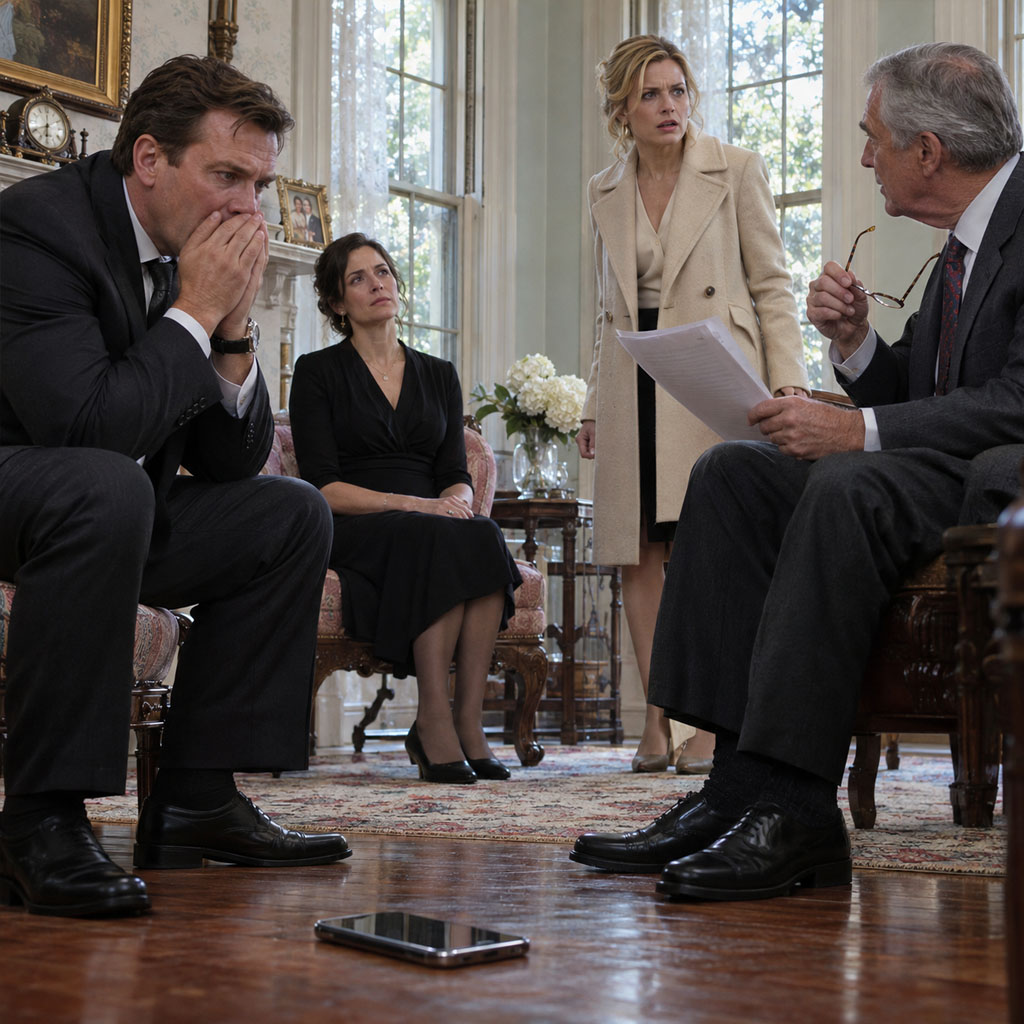
Part 2: My mother’s excuse revealed years of deliberate family favoritism.
I moved the phone away from my ear and stared at my wedding ring.
For two days, I had protected Mom in my own mind. Maybe Dad had dragged her into some crisis. Maybe she had been sick. Maybe she had tried to reach me and something had gone wrong.
There was no emergency.
My parents had skipped my wedding to attend a venue meeting for Jason’s future wedding.
“It was important,” Mom said carefully. “They had limited availability.”
“Was Jason getting married that day?”
“No.”
“Was the venue closing forever the next morning?”
“Sarah, don’t do this.”
That sentence cleared the fog.
Don’t do this.
Not them.
Me.
I was somehow being unreasonable for asking why my own parents had skipped my wedding without making a single phone call.
“You’ve always been stronger than Jason,” she continued. “You’re independent. He needs more support.”
There it was.
The sentence that had excused almost everything for years.
I was strong, therefore I could be neglected. Responsible, therefore my money was available. Capable, therefore disappointment supposedly hurt me less.
“Do you know exactly what Dad texted me this morning?”
She hesitated.
I read it aloud.
“We need $9,200 for your brother’s venue deposit.”
Mom sighed. “That was poorly worded.”
I almost laughed.
“Poorly worded?”
“He should have congratulated you first.”
“So ‘congratulations, now send $9,200’ would have fixed it?”
“That isn’t what I mean.”
Her voice sharpened.
“Your wedding happened, Sarah. I’m sure it was beautiful. Now your brother needs help with his.”
I’m sure it was beautiful.
My own mother hadn’t seen one photograph.
That sentence hurt more than anger because it proved she was discussing my wedding like an event she had heard about from a neighbor.
“How much are you and Dad contributing?”
“We’ve helped with several things.”
“How much?”
“That isn’t the point.”
“It became the point when Dad sent me an invoice disguised as a text.”
Eventually, she admitted my father had used part of their emergency savings. He had expected a work bonus that never arrived.
“So you can’t afford this venue.”
“We can afford it. We just need temporary help.”
“From me?”
“From family.”
“No, Mom. From me.”
She didn’t deny it.
Then she said the sentence families like mine always use when fairness becomes inconvenient.
“Jason would do the same for you.”
I looked at the pages covering my dining table.
“No one has ever required him to prove that.”
Silence.
For once, I didn’t rush to fill it.
I ended the call, opened my laptop again, and started searching old emails, invoices, automatic payments, subscriptions, and forgotten accounts.
Money was only part of the system.
I was attached to the family phone plan because Dad had once had credit problems. I was paying for a storage unit everyone used. My card covered a vacation membership I had used once and two household services I had forgotten were even mine.
Individually, the amounts looked harmless.
Together, they told the same story.
My name appeared whenever responsibility was required.
Jason’s appeared whenever benefits were distributed.
Two days later, Melissa sent me a screenshot from Jason’s social media.
“Please tell me this isn’t why they missed your wedding.”
The first photograph showed Jason and his fiancée, Lauren, beneath an enormous wooden arch at the venue.
The second showed my parents beside them.
All four were smiling.
The caption read:
Perfect venue. Perfect people beside us. Couldn’t ask for a more supportive family.
I stared at the words until Ethan came into the room.
He read the post.
“That’s cold.”
“I don’t think he even realizes it is.”
And that was almost worse.
Jason had received support so automatically his entire life that he no longer noticed who rearranged their plans, who paid, or who disappeared into the background to make his life easier.
Then I found an email from six months earlier.
The subject line was “Venue Options.”
Buried deep in the thread was one sentence from Jason.
“If it’s over budget, Sarah can probably cover the deposit. She has savings.”
Directly beneath it was my father’s reply.
“Leave Sarah to me.”
I read those four words three times.
They hadn’t asked me for $9,200 because something unexpected had happened.
They had been planning to spend my money for six months.
Part 3: Hidden emails proved my father had already spent my money.
Ethan leaned over my shoulder.
“He volunteered your savings before your own wedding?”
“Six months before.”
The words felt unreal.
Before the venue appointment. Before my wedding. Before Dad’s demand.
My father’s reply made it sound as though managing me was simply another item on Jason’s wedding checklist.
Venue.
Flowers.
Catering.
Leave Sarah to me.
That evening, Dad contacted Ethan instead.
“Please tell Sarah to stop behaving like this. We thought she’d be happy for her brother. She always makes everything about herself.”
For once, the accusation didn’t hurt.
It relieved me.
“Tell him I received the message,” I said.
Nothing more.
Dad answered almost immediately.
“Family dinner Friday. She needs to come. We’re settling this face-to-face.”
He wasn’t inviting me.
He was summoning me.
Three days earlier, I would have refused. Instead, I opened a spreadsheet.
Direct transfers: more than $18,000.
Shared expenses over two years: more than $7,000.
Current demand: $9,200.
Then I found the venue contract attached to an older email my father had forwarded.
I opened it.
The deposit had already been charged to Dad’s card.
My stomach tightened.
“He already paid it.”
Ethan frowned. “Then why is he asking you for the deposit?”
“He isn’t.”
I turned the laptop toward him.
“He’s asking me to reimburse him.”
The contract stated that the $9,200 became non-refundable after seventy-two hours.
I checked the timestamp.
Friday afternoon.
Family dinner was Friday evening.
Dad had already spent money he couldn’t afford because he assumed I would replace it before the consequences arrived.
“For years,” I said, “they made their emergencies my deadlines.”
Ethan looked at the contract.
“And Friday?”
“Friday, they keep their own deadline.”
I didn’t need revenge. I didn’t need to interfere with Jason’s wedding or publicly humiliate anyone.
I only needed to stop standing between them and the consequences of decisions they had made themselves.
On Friday evening, Ethan and I entered a rented community hall and discovered nearly thirty relatives, friends, and people connected to Jason’s wedding.
Dad had wanted an audience.
He simply assumed the audience would work for him.
Jason spotted me first.
“Sarah. You actually came.”
His smile was nervous.
“You should’ve been at the planning meeting. The venue is incredible.”
I looked straight at him.
“Was that before or after Dad decided I was paying your deposit?”
His smile vanished.
“What?”
I opened my black folder.
“You wrote that if the venue was over budget, I could probably cover it because I had savings.”
Recognition crossed his face.
Not confusion.
Dad appeared immediately.
“This is exactly why I didn’t want this discussed by text.”
It was the first time I had seen him since before my wedding.
Still no apology.
Instead, he looked around nervously.
“Not here.”
“You invited me here to settle this face-to-face.”
“Privately.”
“You contacted my husband, called me selfish, told relatives I was refusing to help Jason, and demanded money the morning after skipping my wedding. Privacy stopped being the issue a while ago.”
Mom approached.
“Sarah, please. We can sit down.”
“I’m fine standing.”
Dad pointed at my folder.
“The theatrics are unnecessary.”
I nodded.
“You’re right about one thing. I shouldn’t have sent you a dollar.”
For one second, satisfaction crossed his face.
Then I finished.
“I should have sent nothing.”
Someone near the buffet laughed before quickly pretending to cough.
I opened the folder.
“Over the last three years, I’ve transferred more than eighteen thousand dollars directly to this family. I’ve covered thousands more in shared expenses. Starting tonight, that ends.”
Mom stared at me.
“You can’t just cancel things.”
“I’m not canceling your services. I’m canceling my responsibility for paying for them.”
Dad’s face darkened.
“You’re doing all this because we missed one event?”
“No. I’m doing this because you taught me what that event meant to you.”
Then I looked directly at him.
“I also know the $9,200 became non-refundable this afternoon.”
His expression changed instantly.
And the entire room realized I knew far more than he had expected.
Part 4: A public confrontation shattered the lies protecting my brother.
“You knew?” Dad asked.
“You signed the contract.”
“We don’t have $9,200 sitting around.”
The room went silent.
There it was.
They had committed money they didn’t have because they believed I would absorb the consequence.
Jason turned toward Dad.
“You told me the deposit was handled.”
“It is.”
“How?”
Mom answered almost too quietly to hear.
“The emergency account.”
Jason’s face changed.
“You used your emergency savings?”
Dad snapped, “Because we had a plan.”
I shook my head.
“No. You had an assumption.”
My aunt Carol, standing beside the buffet, finally spoke.
“She’s right.”
Dad glared at her.
“This is a private family matter.”
Carol raised one eyebrow.
“Then maybe you shouldn’t have called half the family telling us Sarah promised money and backed out.”
I turned toward him.
“You told them I promised?”
Dad said nothing.
Jason stared at him.
“You told me she agreed.”
“I said she had always helped.”
“That isn’t the same thing.”
I removed another page from the folder and read Dad’s exact $9,200 text. Then his “Very mature, Sarah” email. Then the message accusing me of making everything about myself.
I placed the page on the table.
“Show me the promise.”
Nobody spoke.
Lauren stepped closer to Jason.
“Did Sarah ever tell you she would pay?”
“No.”
“Did you ever ask her?”
Jason rubbed the back of his neck.
“No.”
Lauren’s face tightened.
“Then why did you tell me your family had the deposit covered?”
“Dad said he’d figure it out.”
“And Sarah was how he planned to figure it out?”
Dad interrupted.
“The plan was for members of this family to behave like family.”
Lauren stared at him.
“She got married last weekend.”
Dad looked away.
“You didn’t even go.”
Jason whispered, “Lauren—”
She ignored him.
“This venue appointment happened during Sarah’s wedding?”
“It was the only slot available,” Jason said.
Lauren looked stunned.
“You told me Sarah understood.”
“I thought she did.”
“No. You told me she was fine with it.”
That was the moment I understood Jason hadn’t merely benefited from the favoritism.
He had helped maintain it.
He knew my wedding date. He knew the appointment conflicted. Instead of refusing, he had told his fiancée I understood.
“Did you call me?” I asked.
“No.”
“Text me?”
“No.”
“Congratulate me?”
His eyes dropped.
That answer was also no.
Then something unexpected happened.
Other relatives started talking.
A cousin mentioned money he had lent Jason and never received back. An uncle remembered a holiday Dad had rearranged around Jason, costing me a non-refundable flight.
“I always wondered why Sarah stopped coming,” he said.
For years, Dad’s control had depended on everyone hearing these incidents separately.
Now they were comparing notes in the same room.
He slapped one palm against the table.
“We are not putting this family’s history on trial.”
“I’m not interested in a trial,” I said.
I closed the folder.
“This is a resignation.”
Dad frowned.
“From what?”
“The job you gave me without asking. Fixer. Emergency fund. Backup plan. The person who has to understand whenever everyone else disappoints her.”
Mom looked at me.
“What do you want from us?”
“Nothing.”
That answer seemed to frighten them more than anger would have.
I didn’t want reimbursement. I didn’t want forced apologies. I didn’t want promises made because thirty people were watching.
“I wanted you at my wedding,” I said. “That was the test you didn’t know you were taking.”
Dad folded his arms.
“So you’re cutting off your entire family over one day?”
“No. I’m changing my relationship with people who decided that day was expendable.”
Jason swallowed.
“What does that mean for my wedding?”
“It means your wedding is yours.”
He understood immediately.
No bailout.
No vendor money.
No honeymoon loan.
Dad stepped toward me.
“If you walk out now, don’t expect us to come running when you realize you made a mistake.”
I picked up my bag.
“You already proved you won’t come running.”
I held his gaze.
“You couldn’t even come when I got married.”
Then I walked out.
Three weeks later, Jason’s dream venue disappeared from his social media.
And that was when the real cost of my one-dollar transfer finally came due.
Part 5: Losing their bailout finally forced my family to face reality.
Aunt Carol called me first.
“They canceled the venue.”
The $9,200 deposit had secured the date, but another large payment came due shortly afterward. Once Jason and Lauren reviewed the full budget without assuming my savings would fill every gap, the numbers collapsed.
Lauren also discovered several “confirmed” family contributions weren’t confirmed at all.
They were conversations Dad intended to have later.
She refused to sign another contract.
The wedding was postponed. The venue was lost. Dad’s $9,200 deposit disappeared.
My parents canceled a vacation, gave up the membership I had stopped funding, and moved their phone plan into their own names.
Nothing catastrophic happened.
That mattered to me.
I hadn’t destroyed anyone’s life. I had simply allowed their choices to reach them without traveling through my bank account first.
A month later, Jason sent me a long message.
It began badly.
“I think you embarrassed us on purpose.”
I almost stopped reading.
Then he admitted something.
Dad had always told him I would contribute. Jason had known the venue appointment conflicted with my wedding, but he had gone anyway.
Then came one sentence that explained our entire relationship.
“I figured you’d understand because you always do.”
I stared at those words for a long time.
Then I replied.
“I did understand. That was the problem. I understood exactly what everyone expected from me. I hope you build a wedding you can afford and enjoy. I won’t be financing it.”
Then I blocked him.
Mom wrote letters.
Her first apology was vague.
Her second was different.
She admitted she had attended the venue meeting because Dad convinced her I would “be fine.” She admitted they had spent years treating my competence as permission to give me less attention.
That might have been the most truthful thing either of my parents had ever said to me.
I didn’t immediately welcome her back into my life.
A sincere apology can matter without purchasing instant access to the person you hurt.
Dad never apologized.
His final email contained only five words.
“You’ve made your point, Sarah.”
He still believed everything I had done was a performance aimed at punishing him.
I never answered.
Months passed, and the biggest consequence turned out not to be financial.
Once relatives knew what really happened, Dad could no longer casually describe me as the daughter who didn’t care about family. Aunt Carol invited Ethan and me to holidays herself. Cousins called me directly.
Dad had tried using a crowded family dinner to pressure me back into my role.
Instead, he lost control of the story he had spent years telling about me.
Jason eventually planned a smaller wedding. Fewer guests. No extravagant venue. No invisible assumption that my checking account would cover the difference.
I wasn’t invited.
I was fine with that.
Healing didn’t mean standing outside another event hoping someone would finally choose me.
On my first wedding anniversary, Ethan and I returned to the little restaurant where we had eaten after our reception.
He lifted his glass.
“One year.”
I smiled.
“One year.”
Then he asked, “Do you ever regret sending the dollar?”
I thought about that transfer.
At first, I had sent it because I wanted Dad to feel insulted.
Later, I finally understood why it mattered.
For years, I believed boundaries required explanations, agreement, understanding, and permission. I thought my family had to admit they treated me unfairly before I was allowed to stop participating.
They didn’t.
A boundary isn’t a debate about whether someone agrees with your pain.
It is a decision about what you will do next.
Dad lost $9,200 because he signed a contract using money he assumed someone else would replace. Jason lost his venue because he built a wedding around support nobody had promised. Dad lost control of the family narrative because he made our conflict public and discovered that public pressure could work both ways.
And I lost something too.
The fantasy that if I gave enough, forgave enough, helped enough, and stayed quiet enough, I would eventually earn equal treatment.
Losing that fantasy hurt.
But it also freed me.
I opened my phone and found the old screenshot of Dad’s $9,200 message.
For months, I had kept it as proof.
That night, I deleted it.
Not because I had forgotten.
Not because everything had been repaired.
I simply no longer needed evidence to prove to myself that what happened had happened.
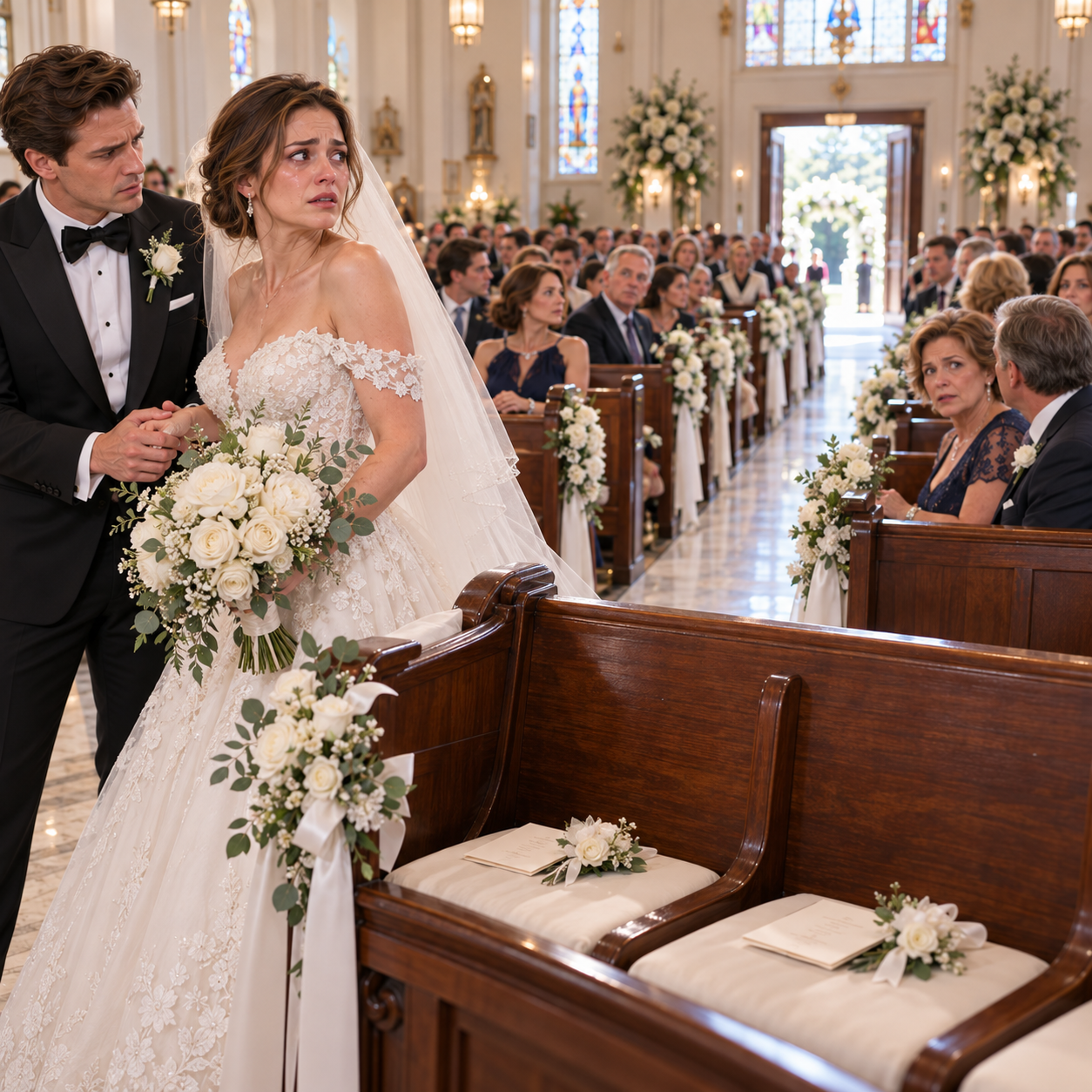
One year earlier, I had walked down an aisle, looked at two empty seats, and wondered what I had done wrong.
Now I knew.
Nothing.
They had made a choice.
Then another.
And another.
Eventually, so did I.
My father’s lesson cost him $9,200.
Mine cost exactly one dollar.
THE END.
All characters and events in this story are fictional, created for storytelling and entertainment purposes. Thank you sincerely for reading. Your feedback and support are invaluable and motivate me to continue sharing more stories with you.