### Part 2: An Old Security Camera Revealed My Son’s Real Plans
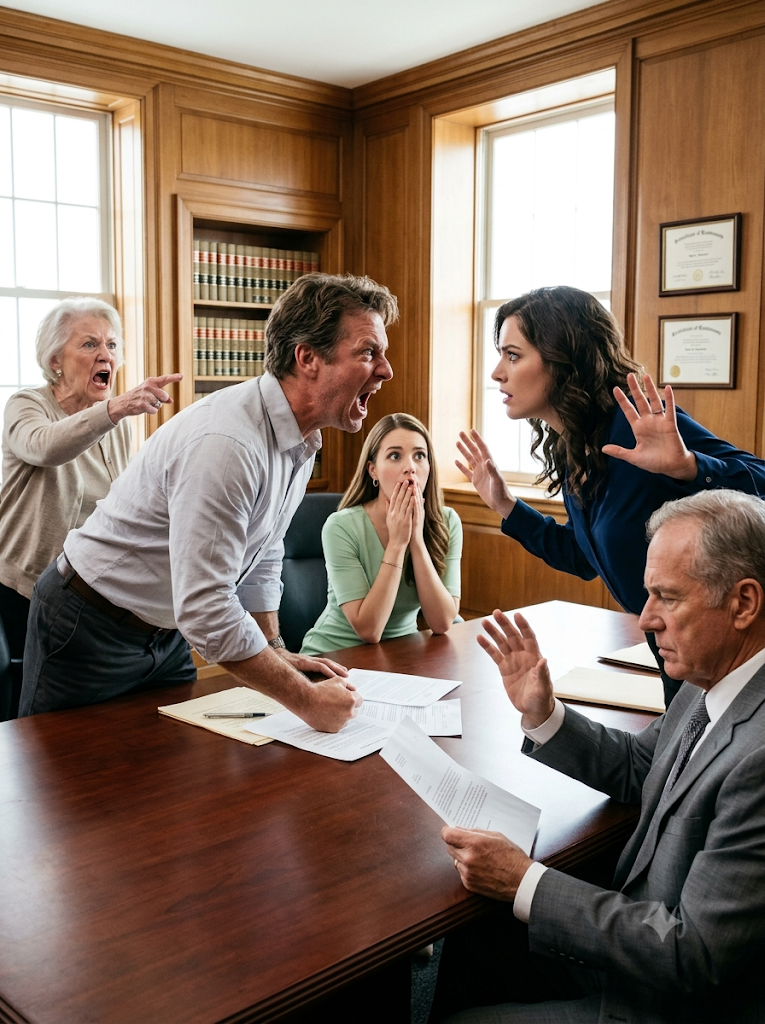
My attorney, William Lawrence, arrived at the lake house before lunch. He’d handled my legal affairs for nineteen years, and I’d never known him to waste a sentence. After inspecting the boxes, he instructed me to photograph everything and preserve every security recording. “This isn’t a family misunderstanding, Gary,” he said. “Someone entered your property without authorization and began moving in.”
Then William pointed toward the garage ceiling. “What about that old camera?”
I’d almost forgotten it existed. Seven years earlier, during a string of boat-trailer thefts, I’d installed a motion-activated camera connected to a recording drive. William brought in Glenn Stettle, a forensic video specialist, to examine the footage.
We stood beside my workbench while Glenn searched through months of recordings. Deer appeared in the driveway. A raccoon investigated a trash can. Then, on a Thursday afternoon in late June, the garage door rose.
Scott entered first. Ronald Griffin followed, dressed in a sport coat despite the summer heat. Scott handed him a steel tape measure, and Ronald began measuring the garage as though planning where his furniture would go.
Glenn enhanced the audio. Ronald asked whether the dock could accommodate a twenty-four-foot pontoon boat. Scott answered easily. Then came the sentence that changed everything.
“When Dad’s not managing things anymore, this place is yours.”
Glenn paused the recording. My son’s face remained frozen on the screen, calm and confident. He wasn’t discussing temporary accommodations. He was promising his father-in-law ownership of a property that still belonged to me.
I’d spent forty years building a business from one pickup truck and a borrowed trailer. At its height, ninety-one employees depended on me for their paychecks. Yet my own son had apparently reduced me to an obstacle standing between another man and an inheritance.
I asked Glenn for a certified copy of the recording. Outside, I called my brother Bruce in Arizona and told him everything. His rocking chair creaked through the phone. “Gary, a man doesn’t measure somebody else’s garage unless he expects to use it,” Bruce said. “And Scott didn’t promise them a vacation. He promised them your future.”
I watched a breeze disturb the water around Judy’s dock. “I know,” I said.
But Ronald’s measuring tape wasn’t the worst discovery.
Three days before the Griffins’ planned arrival, Cheryl called. “There’s something you need to see. Your house is advertised as a vacation rental.”
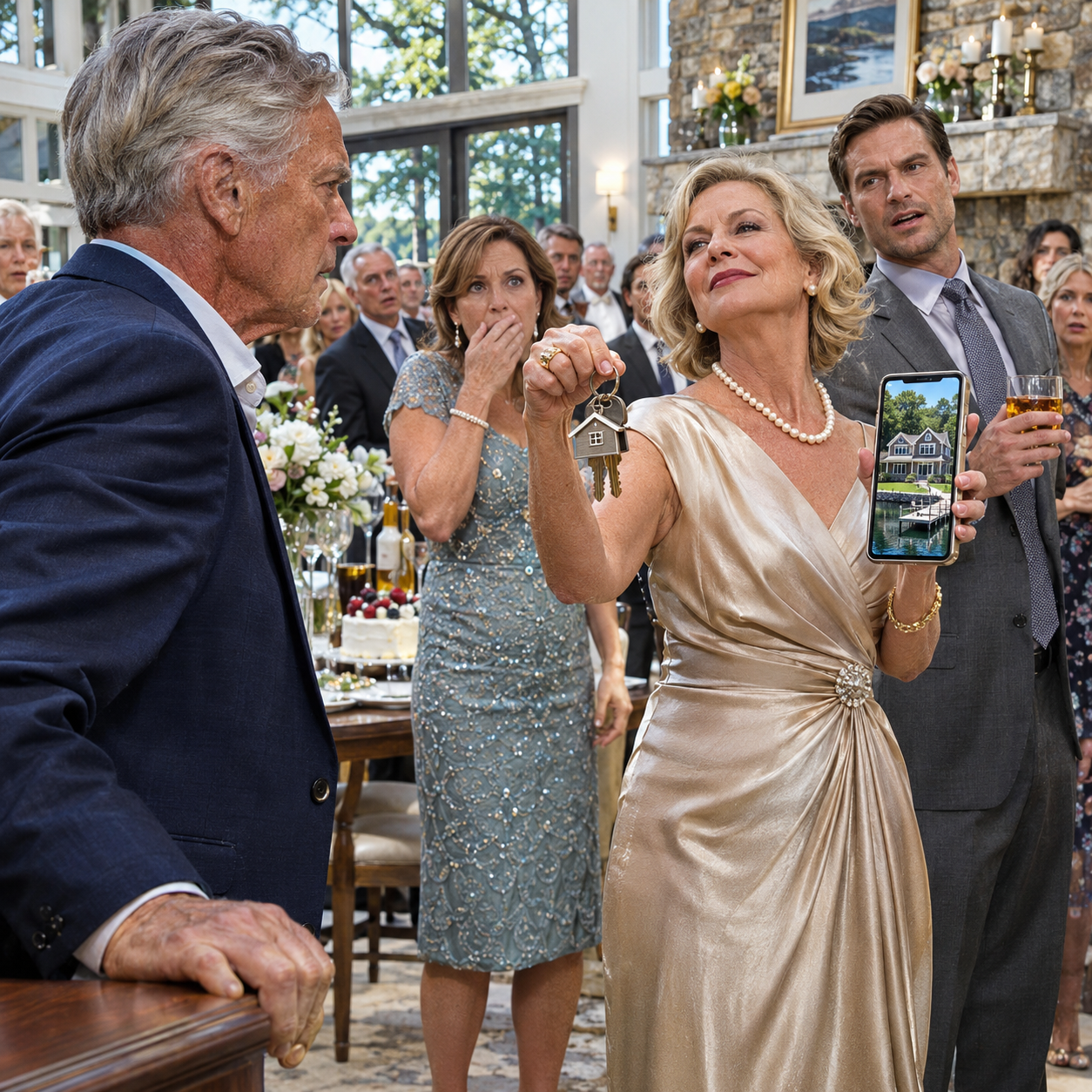
She sent me a link. The listing showed my stone fireplace, my private dock, and the porch where Judy used to drink her morning coffee. Holiday weekends were advertised for $900 a night. The host identified herself as Donna G.
Eleven families had already paid deposits totaling $6,200.
Donna hadn’t merely planned to occupy my house without permission. She intended to make money from strangers who believed she had the legal right to rent it. And she’d apparently begun collecting their money before carrying a single suitcase through my door.
I printed every page and forwarded the evidence to William. He called almost immediately. “Don’t confront her,” he instructed. “Preserve the listing and leave the communication to me. We’ve got enough to protect your property, but I want the full picture documented.”
For nine days, I watched my phone whenever it rang. Scott never called to ask whether I’d changed my mind about helping his in-laws. Donna never contacted me for permission. Ronald never thanked me for the generous arrangement he believed he was receiving.
Instead, they quietly prepared to move.
On Saturday morning, Troy Tucker called at 8:40. His voice was steady, but I heard something unusual beneath it.
“Mr. Hunt, there’s a moving truck in your driveway. Two people are standing outside saying this house belongs to them.”
I picked up my keys. “Don’t argue with them, Troy. I’ll be right there.”
I was already reaching for the front door when he added, “The woman has a key. She’s been trying to get inside.”
I looked at Judy’s photograph on the mantel.
For the first time in fourteen months, I was going to the lake house without dreading the memories waiting inside.
### Part 3: The Moving Truck Arrived, But My Tenants Were Already Home
The orange-and-white moving truck sat crooked across my driveway, its rear doors open and furniture stacked inside. Donna Griffin stood on my porch, repeatedly forcing a key into the front-door lock. Beside her were two expensive handbags and a potted orchid wrapped in cellophane. Ronald paced near their silver SUV, shouting into his phone.
Cheryl waited beside her car with a folder. Wanda stood by the fence holding a coffee mug. As I approached, Donna turned toward me with a relieved smile. “Gary, thank goodness. Something’s wrong with the locks.”
“Nothing’s wrong,” I answered. “I had them changed.”
Her smile vanished. “Why would you change the locks on our house?”
Before I could answer, the front door opened. Troy Tucker stood in the doorway, his broad shoulders nearly filling it. Keith appeared beside him, while Heather watched from the hallway with a dish towel over her shoulder.
“Morning, Mr. Hunt,” Troy said. “Everything okay?”
“Perfectly fine. These folks were just leaving.”
Donna stepped backward, clutching her handbag. “We certainly are not! Ronald, get Scott here immediately!”
Nineteen minutes later, my son arrived with Ashley in the passenger seat. He stopped beside the moving truck and stared at the three people standing inside the house he’d promised away. His face drained of color.
Ashley stepped out slowly. “Scott,” she said, “what did you tell my parents?”
Ronald stormed across the yard. “You said everything was settled! We gave up our apartment because you promised this house was ours!”
Scott looked at me instead of answering. Donna came down the steps, hugging her orchid against her chest. “You said your father had agreed,” she whispered. “You promised us.”
Ashley looked from her parents to her husband. “Did Dad ever actually give you permission?”
Scott lowered his eyes.
The silence that followed was worse than an argument. Donna began crying, and Ashley instinctively wrapped her arms around her mother. I almost felt sorry for them. They had trusted a promise that never should have been made.
Then I remembered the eleven families who’d paid for vacations in my house.
I nodded toward Cheryl. She handed me the signed lease and the printed rental listing. A sheriff’s deputy, whom I’d requested that morning to help keep the peace, pulled onto the shoulder behind us.
“This property is legally leased to the Tucker family,” I said, showing Ronald the document. “They paid six months in advance. They’re staying.”
Ronald stared at the paper. “You rented it out?”
“Yes. I own it.”
Donna’s eyes widened. “But where are we supposed to live?”
“That’s a question for the man who promised you my home.”
Scott finally spoke. “Dad, please. We can work something out.”
I raised the second document. “Before we discuss anything else, Donna, perhaps you can explain why eleven families paid you $6,200 to rent a house you don’t own.”
Ashley released her mother. Ronald stopped moving. Donna stared at the printout as though she couldn’t understand the words.
“The advertisements offered holiday rentals for nine hundred dollars a night,” I continued. “My lawyer has preserved the listing, the photographs, and the booking records.”
Donna shook her head. “Scott said the house would be ours.”
“Did Scott authorize you to collect money from strangers?”
She looked desperately toward him. He said nothing.
Deputy Collins stepped forward, introduced himself, and explained that the Griffins would be receiving written notice to stay off my property. He also wanted a statement about the rental deposits. When he mentioned referring the matter to the county prosecutor, Donna’s expression collapsed.
“Where’s the money?” Ronald demanded.
Ashley answered quietly. “They used it for the truck deposit and a storage unit. Mom told me they’d make it back from the holiday bookings.”
Ronald turned toward Scott, his hands trembling. “You stood in that garage and told me it would be mine. Now my wife could face charges because we believed you.”
Scott swallowed. “I never thought it would go this far.”
“But you knew it could,” I said.
The deputy glanced at his notes. “Mr. Hunt, there’s also the matter of the copied key. Would you like that included in your complaint?”
Everyone looked at me.
I remembered Scott at ten years old, running along the dock with a fishing pole too large for his hands. I remembered Judy telling him that character was what a person did when nobody was watching.
“No,” I finally said. “I’ll address that with my son.”
It was the only mercy I could give him that morning.
The moving truck left for a storage facility that afternoon, with Scott paying the bill. Donna and Ronald went to a motel. Ashley didn’t return home with her husband.
And I remained on the porch as the vehicles disappeared, listening to the quiet water beyond the trees.
I’d protected Judy’s house.
What I hadn’t protected was the family she left behind.
### Part 4: My Wife’s Hidden Message Finally Taught Us What Matters
Ashley called at 9:47 that evening. I was sitting at my kitchen table, staring at a glass of water I’d forgotten to drink. “Dad,” she asked, “did you ever tell Scott you’d give him the lake house?”
“Never.”
Her breathing changed. “He told me last year it was already decided. I believed him. I even helped Mom plan flower beds by the dock.”
I closed my eyes. Ashley had grown up around that lake, too. She wasn’t responsible for Scott’s lies, but she’d been drawn into them. “I’m sorry,” I told her.
She was quiet for a long moment. “What kind of man did I marry?”
“That’s something only Scott can answer.”
Ashley stayed with her sister for the next two weeks.
On Monday morning, Scott appeared at my door without calling. He wore the same jacket he’d worn on moving day, wrinkled at the elbows. I let him into the kitchen, and he sat across from me like a man waiting for a verdict.
“Dad, Donna and Ronald are in a motel. Ashley won’t come home. Donna needs a lawyer, and nobody can afford the retainer. You could make this right.”
I studied him. “You still believe I’m the one who caused this?”
His eyes dropped to the table.
“Your mother and I taught you to help people,” I said. “We never taught you that helping someone meant giving away what belonged to somebody else.”
I pushed a folder toward him. William had prepared the documents.
“The lake house is going into a trust. Troy and Heather will finish their lease. Cheryl will manage it afterward, and the income will fund my grandson’s education. You won’t control the house, the rent, the keys, or the decisions.”
Scott read the first page. His hands went still.
“Dad,” he whispered, “that’s everything Mom loved.”
“Exactly. That’s why I’m protecting it.”
He sat there a long time before speaking again. “I copied the key when I borrowed it. Ronald kept asking when the transfer would happen. Every time I told him I was working on it, telling the truth got harder.”
“You could have stopped after the first lie.”
“I know.”
“Then why didn’t you?”
He rubbed his face. “I wanted Ashley’s family to think I could take care of them. I wanted to be the man who solved everything.”
I looked toward Judy’s empty chair. “A decent man doesn’t have to own everything to be generous, Scott. And he doesn’t have to impress people who already love him.”
At the door, he turned. “Will you ever trust me again?”
“Forgiveness is something I can work toward,” I answered. “Trust is something you’ll have to earn.”
By December, Donna’s case had reached the prosecutor. The eleven families were refunded, and because she had no previous record, she accepted a negotiated plea involving restitution, two years of probation, and a conviction. Ronald sold his boat to cover their legal expenses. They eventually moved into a modest two-bedroom rental across town.
Scott helped with their bills for sixty days before Ashley asked him to stop. He began paying back what he’d contributed from his own paycheck. He wasn’t buying forgiveness anymore. He was accepting responsibility.
In January, he visited me again. This time, he wore jeans and a flannel shirt, and he didn’t bring a request. We drank coffee on the back porch while he told me Ashley was slowly speaking to him again. He said he understood that rebuilding their marriage would take patience and honesty.
When he stood to leave, we shook hands.
It felt strange to shake my own son’s hand. But perhaps we needed to meet again as two grown men, rather than a father who had given too much and a son who’d forgotten where the giving ended.
The following autumn, Troy called. His work contract was ending, and while moving furniture, Heather had discovered a small wooden box behind a loose panel in the cedar closet. Judy’s initials were burned into its lid.
I drove to the lake the next morning.
Troy handed me the box without ceremony. I carried it to my truck near the dock and opened it alone. Inside were photographs I’d never seen, along with old cards and letters Judy had saved.
One photograph showed Scott at ten, standing between Judy and me on the dock. All three of us were soaked from falling into the lake, laughing so hard our eyes had nearly disappeared.
On the back, Judy had written a sentence in her careful handwriting.
“A house is only walls. What we leave our children is how we taught them to live.”
I held that photograph for a long time.
For years, I’d believed providing for my son meant making certain he never lacked anything. I’d given him money, opportunities, second chances, and the assurance that his father would always be there. Somewhere along the way, I’d forgotten to teach him the difference between having a loving family and being entitled to everything that family possessed.
I couldn’t change that now. But I could change what my grandson learned from watching us.
I placed Judy’s photograph inside my jacket and stepped onto the dock. The boards creaked beneath my shoes, just as they had when she was alive. Across the water, sunlight scattered over the quiet surface.
For the first time since losing her, I didn’t feel like a stranger standing in our favorite place.
I felt like I’d finally come home.
I hadn’t kept the lake house to punish Scott. I’d kept it because love sometimes requires a boundary, even when setting it breaks your heart. My son had nearly given away the place where our happiest memories lived, but he hadn’t managed to destroy what those memories meant.
And when my grandson grows old enough to understand why his college education came from a house his father couldn’t inherit, I hope he understands one thing.
The greatest inheritance isn’t the property we leave behind.
It’s knowing how to become someone worthy of being trusted with it.
THE END.
All characters and events in this story are fictional, created for storytelling and entertainment purposes. Thank you sincerely for reading. Your feedback and support are invaluable and motivate me to continue sharing more stories with you.