## Part 2: The Records That Turned His Threats Into Evidence
By midnight, my phone showed twenty-three missed calls from Grant and several increasingly urgent messages. His first texts demanded that I return the children immediately, but the later ones accused me of interfering with his business accounts. I hadn’t touched those accounts, and Natalie assured me that the legal steps taken to protect disputed marital property were separate from anything I had done that evening. For the first time, Grant was facing restrictions he couldn’t simply override.
Months earlier, Natalie had introduced me to Daniel Cho, a forensic accountant who specialized in complicated divorce cases. Together, they had reviewed records showing that marital funds appeared to have paid for Tessa’s apartment, expensive vacations, jewelry, and a vehicle. They also identified an investment property purchased during our marriage whose impending sale raised questions about where the proceeds would go. Natalie had obtained a temporary court order preserving certain disputed assets until their ownership and use could be examined.
The order wasn’t a judgment against Grant, and it certainly didn’t mean I had won anything. It simply meant that money connected to our marriage couldn’t be moved without appropriate scrutiny while the legal process continued. Grant had apparently expected to control the timing of every decision, including when I would leave the house. Instead, the property sale scheduled for Wednesday was now subject to restrictions he hadn’t anticipated.
Natalie opened her laptop, and we listened to the recording together. Grant’s announcement about Tessa was unmistakable, as were his threats concerning my money, transportation, and insurance. The recorder had also picked up voices through the open doorway after I stepped outside. We heard Caleb ask what would happen if I hired an attorney, followed by Grant’s dismissive response: “With what money?”
Hearing his voice again made my stomach tighten, but Natalie reminded me that recordings had to be evaluated under the applicable legal rules before anyone could rely on them in court. She preserved the original file and documented when and how it had been made. I had started carrying the recorder because Grant frequently denied conversations I remembered clearly, leaving me questioning my own recollection. Now, whatever a court eventually decided about its use, I no longer had to wonder whether I had imagined those threats.
The following morning, Owen wandered into the kitchen while Natalie and I were discussing practical arrangements. He asked whether Tessa would become his new mother, and the question hurt more than anything Grant had said. I pulled him close and explained that no one could replace me, just as nobody was asking him to stop loving his father. When he asked whether we would ever go home, I promised that we would work toward a stable home where everyone could feel comfortable.
That afternoon, Grant’s attorney sent a formal letter alleging that I had abandoned our marital residence and removed the children impulsively. It also suggested that pregnancy-related emotional distress had influenced my judgment and that my actions were threatening the family business. Natalie helped me prepare a factual response supported by our documents and timeline. We avoided speculating about Grant’s motives because the evidence we could actually establish mattered more.
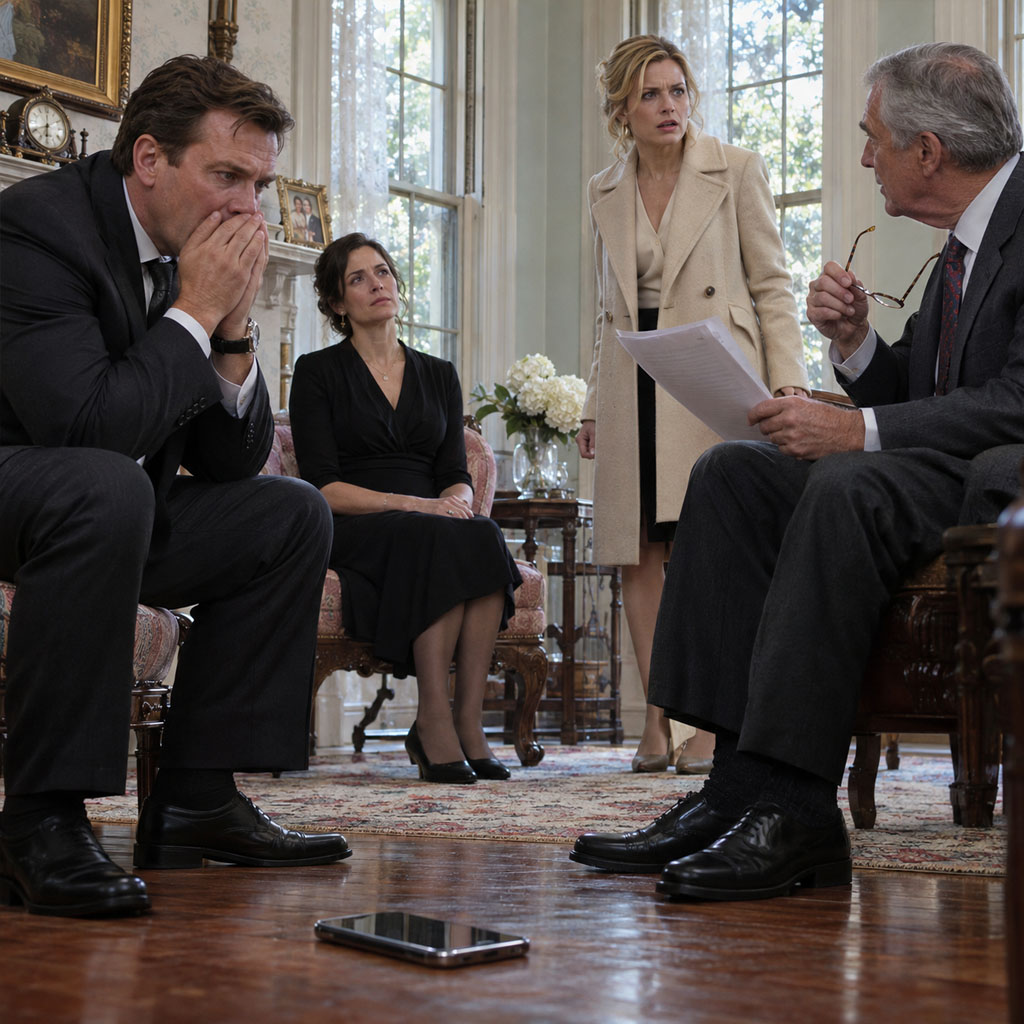
Later, I received a voicemail from Evelyn. Her voice trembled as she admitted Grant had invited the family to dinner because he expected an emotional confrontation and wanted witnesses present. She said she hadn’t known Tessa would be there and regretted remaining silent when Grant made his announcement. Then she told me something that made me replay the message twice: after we left, she had overheard Grant tell Caleb that my departure had happened exactly as he wanted.
I sat with that information for a long time, feeling both relieved and deeply disappointed. Evelyn had known more about our marriage than she ever admitted, yet she had finally chosen to tell me something uncomfortable about her own son. I forwarded the voicemail to Natalie and returned to the children, who were building a blanket fort in the living room. Their laughter reminded me that the legal conflict wasn’t the only thing deserving my attention.
On Wednesday, the property sale failed to close as planned because of the preservation order, and Daniel reported a second proposed transfer involving a recently created holding company. Grant’s messages suddenly changed from demands to requests that we talk privately. He wrote that Tessa could move out if that was what I needed, as though her presence had been a misunderstanding rather than a decision he made in front of our children. I didn’t answer immediately, choosing instead to focus on the temporary parenting arrangements Natalie was preparing.
That evening, Evelyn called again and told me Grant had asked Tessa to leave after consulting his attorney. Caleb had also left the family house, refusing to support statements he believed were misleading. Evelyn apologized for the years she had looked away from our problems, and I told her that acknowledging them now mattered more than pretending Sunday had been an isolated mistake. Before ending the call, she said Caleb wanted to speak with Natalie.
The next morning, Natalie called with news that Caleb had agreed to provide a signed statement. He would confirm what Grant had said before the dinner and explain why he believed the family had been invited to witness my reaction. I thanked him through Natalie, understanding that supporting an accurate account might permanently strain his relationship with his brother. But what Caleb had to say would soon be considered alongside the rest of the evidence.
## Part 3: In Court I Learned How Long He Had Been Planning
Two days later, I entered a Charlotte courtroom with Natalie beside me and my hands resting protectively over my stomach. Grant sat across the aisle in an immaculate navy suit, looking exactly like the successful businessman I had married. His attorney presented my departure as an abrupt decision that had disrupted the children’s lives and placed unnecessary pressure on the family business. For a moment, hearing our marriage reduced to those allegations made me feel as powerless as I had at home.
Natalie responded with the timeline we had spent months assembling. She presented financial records, the history of restricted access, our preparations for safe temporary housing, and the evidence concerning Grant’s conduct, subject to the court’s rules. Caleb’s signed statement supported our account of the family dinner and Grant’s expectation that I would react emotionally in front of witnesses. Evelyn’s voicemail also helped explain why the events of that evening were disputed.
When I glanced toward Grant, he was staring at his brother. Caleb remained seated quietly, his hands folded, without attempting to argue or defend himself. I wondered whether Grant felt betrayed or simply surprised that someone in his family had chosen not to repeat his version of events. Either way, the hearing wasn’t about punishing him for embarrassing me; it was about establishing fair arrangements while our marriage was being legally untangled.
The judge listened carefully and made clear that the temporary hearing would not resolve every disputed allegation. The financial preservation measures remained in place, temporary parenting arrangements were established, and both parents were directed to maintain necessary support and insurance protections while the case proceeded. Grant wasn’t granted his request to have the children returned to the marital residence that afternoon. I didn’t feel victorious, only grateful that the next stage of our lives would have clearer boundaries.
Outside the courtroom, Grant approached while Natalie stood nearby. “You planned all of this,” he said, studying me with an expression I couldn’t quite identify. I told him I had prepared because I no longer felt secure relying entirely on his decisions. When he accused me of hiding things from him, I answered, “I stopped sharing every concern with you because those conversations kept being used against me.”
He looked away before asking whether I understood what the court restrictions could mean for his company. I told him I wanted the business to survive, particularly because our children’s financial future was connected to it. What I couldn’t accept was being excluded from decisions involving assets we had helped build together. For the first time in years, our conversation ended without me apologizing for asking a reasonable question.
As Natalie and I walked toward the parking lot, her phone rang. Daniel had uncovered records involving another holding company and a second investment property that hadn’t appeared in the initial financial disclosures. More troubling, several documents contained signatures resembling mine, even though I couldn’t remember ever seeing them. Natalie cautioned me against drawing conclusions before the originals and their authentication could be examined.
Back at the apartment, Owen was constructing a cardboard castle while Lily arranged her stuffed animals around its entrance. I sat beside them, exhausted by the hearing, and felt the baby kick beneath my ribs. For a few precious minutes, I let myself enjoy their ordinary conversation about where the castle needed another window. Their ability to find happiness in a borrowed living room gave me more reassurance than any argument I had heard in court.
Then Natalie called with Daniel’s preliminary findings. The company archive contained three earlier versions of documents bearing different attempts at what appeared to be my signature. Although the records still needed independent verification, the oldest file dated back nearly three years, well before I had begun considering leaving Grant. I stood by the window, remembering the financial forms he had occasionally asked me to sign without allowing me much time to read them.
“Does that mean someone forged my signature?” I asked, feeling my voice tighten. Natalie explained that the similarities were concerning but that they needed to establish who created the documents, whether the signatures were authentic, and what transactions had actually occurred. She promised that the questions would be addressed through proper legal channels. I appreciated her caution, even though every instinct told me something important had been hidden from me.
That night, after putting the children to bed, I opened a folder containing the first financial records I’d saved eleven months earlier. I remembered how frightened I had felt simply asking for account statements and how difficult it had been to imagine a life outside Grant’s control. I had believed those eleven months marked the beginning of our marriage’s collapse. Now the documents suggested there might be an entirely different history waiting to be examined.
I didn’t know whether Grant had personally created the questionable paperwork or how much any investigation would ultimately establish. I also didn’t know what our divorce would look like, whether co-parenting would become easier, or where the children and I would live once the baby arrived. Those uncertainties still frightened me, but they no longer convinced me to surrender every decision to someone else. I had an attorney, access to support, and the ability to make choices for my family.
Before going to bed, I checked on Owen and Lily one last time. They were sleeping peacefully, their favorite blankets tucked beneath their chins, unaware of the complicated financial questions waiting for the adults. I closed their bedroom door gently and rested a hand against my belly, thinking about the little person we would soon welcome. Whatever the documents revealed, I knew the next chapter of our lives would have to be built on something more dependable than fear.
For years, I had mistaken keeping the peace for keeping my family safe. Leaving hadn’t solved everything, and I knew difficult months lay ahead, but it had given me the space to ask questions without being silenced. Three years of unexplained documents now waited to be examined, and I intended to understand them before deciding what came next. The affair had ended my marriage as I knew it, but it might not have been the earliest secret Grant had kept from me.
The End .
All characters and events in this story are fictional, created for storytelling and entertainment purposes. Thank you sincerely for reading. Your feedback and support are invaluable and motivate me to continue sharing more stories with you.