Part 2: A spare key exposed how far entitlement had spread
The locksmith came the next morning at nine. I asked him to replace the front and back deadbolts and install a keypad on the side entrance near the garage. While he worked, I walked through my own guest room seeing it through somebody else’s assumptions: clean sheets, empty dresser drawers, fresh towels, Martin’s old reading chair by the window. Diane had apparently discussed moving into that room before anyone had discussed it with me.
I sent Claire one message: I changed the locks. Diane does not have permission to stay in my house. Please do not give anyone access without asking me. Claire did not answer until evening, when a long response arrived explaining that nobody had been “moving Diane in,” that she only needed a temporary place while deciding whether to relocate, and that I was interpreting every decision in the harshest possible way.
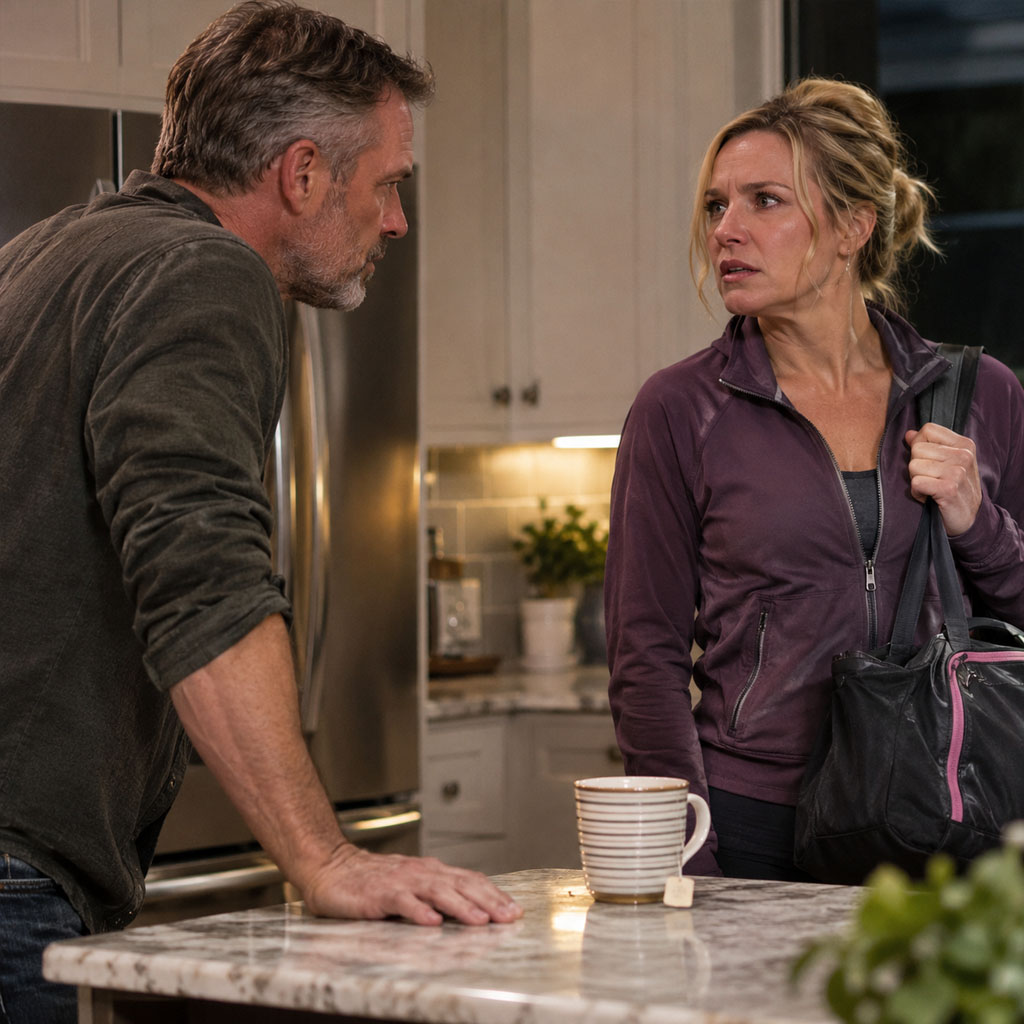
I called her. “Was Diane planning to sleep here?”
A pause. “For a little while.”
“Did you ask me?”
“You were supposed to be in Alaska.”
“That isn’t an answer.”
Claire exhaled. “I knew you’d say no if we asked at the last minute.”
“So you decided not asking was easier.”
“She has nowhere comfortable to go, Mom.”
Diane did have somewhere to go. Her divorce settlement included six months in the condominium she had shared with her husband, and Nathan had a furnished guest room in his own house. What Diane apparently did not have was the kind of quiet suburban base she wanted while viewing properties near me. My home had become another resource on Claire’s mental list: available, paid for, and unlikely to protest.
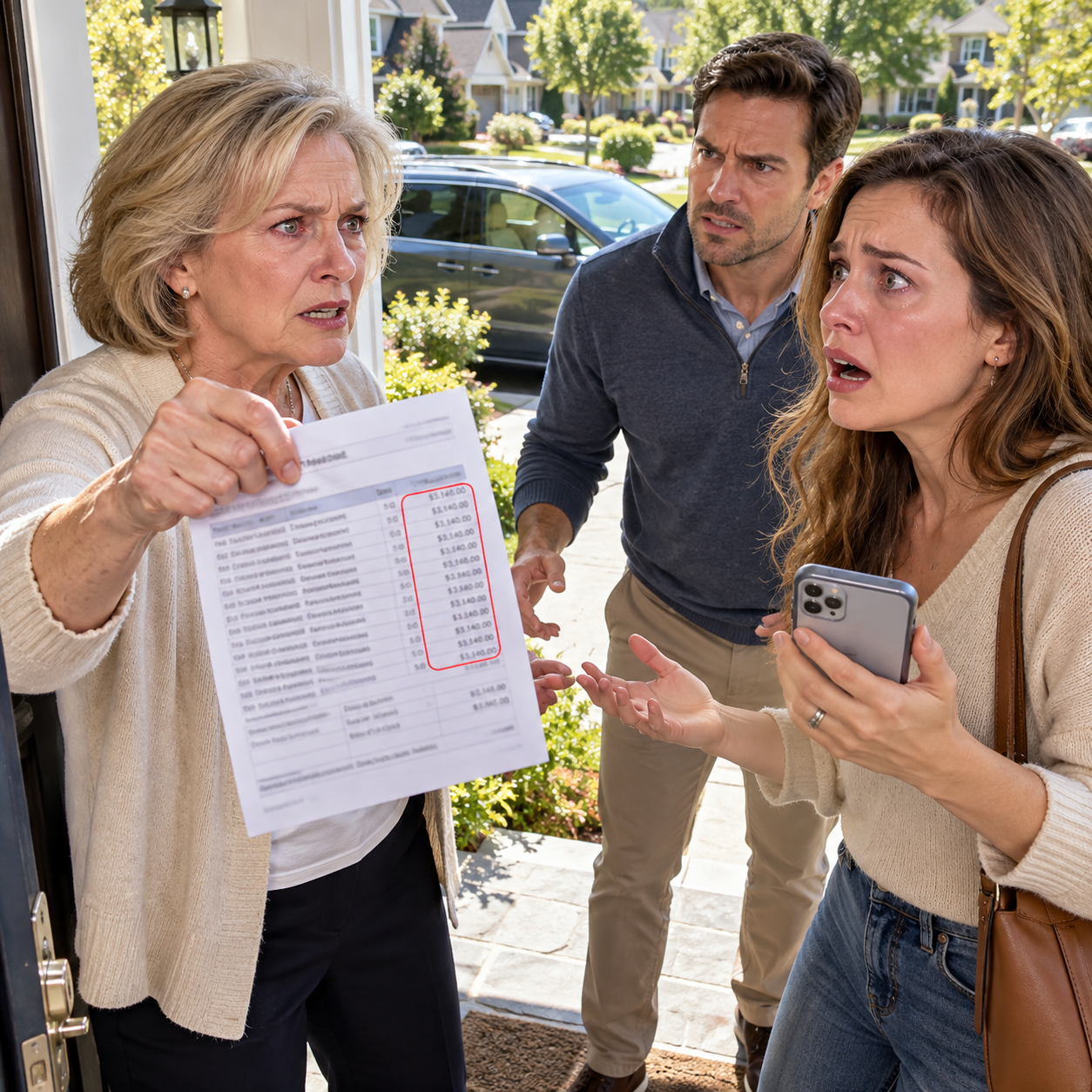
The following week, I met with a retirement adviser named Lillian Morris, a brisk woman in her fifties who wore red glasses and refused to treat family money as a sentimental subject. She helped me reconstruct five years of support from bank records, canceled checks, insurance statements, and credit-card histories. The total was just under $94,000, not counting the Alaska trip or the grandchildren’s college accounts.
Lillian turned her monitor toward me. “You’ve been spending roughly seventeen percent of your annual retirement income supporting another household.”
I stared at the figure. “That sounds worse when you say it like that.”
“It sounds measurable.”
I laughed despite myself.
She helped me separate generosity from dependency. I kept the education accounts, set aside a modest annual birthday-and-holiday budget for the grandchildren, and transferred the remaining family-emergency funds into an account only I controlled. I also changed the beneficiary structure on several accounts so nothing required Claire to manage my finances if I became ill. That part hurt more than canceling anything, because it acknowledged that trust was something I had assumed instead of examined.
Claire barely spoke to me for two weeks. Sophie called once to ask whether Grandma was angry at them, and I told her no. “Grandmas and parents sometimes have grown-up disagreements about money,” I said. “You didn’t cause any of it.” She accepted that explanation with the practical relief of a nine-year-old and spent ten minutes describing a papier-mâché volcano she was making for school.
Nathan was less restrained. He sent an email accusing me of “financially destabilizing the family without transition time.” I read it twice, then replied with three sentences: I gave notice on expenses I was not obligated to pay. Your household bills are your responsibility. I will discuss my relationship with Claire directly with Claire.
After that, he stopped writing.
The real surprise came from Diane. She called me on a Thursday afternoon.
“I owe you an apology,” she said.
I had expected excuses and found myself momentarily without a response. “For which part?”
“For assuming Claire had cleared the house arrangement with you.”
“Did she tell you she had?”
Diane hesitated. “She said you wouldn’t mind.”
That phrase had funded half my daughter’s adult life.
Diane continued more softly. “Nathan has been worried about money for longer than he’s admitted. I think he saw the trip as something that was already paid for and convinced himself swapping one person wasn’t really taking anything.”
“One person.”
“I heard it as soon as I said it.”
Her embarrassment sounded genuine. Diane was not a villain who had plotted to take my vacation. She was a frightened woman in a humiliating divorce who had accepted an extravagant offer because it made her feel wanted. That did not make the offer theirs to give, but it changed the shape of my anger.
“I’m sorry you’re going through a hard year,” I told her. “You still cannot stay in my house.”
“I understand.”
“And I’m not angry that you needed something. I’m angry that everyone decided I was the thing available to sacrifice.”
She was quiet for a moment. “I think they expected you to agree because you usually do.”
That sentence stayed with me.
At the end of October, Claire came to collect the last boxes from the storage unit. She did not ask me to help. Two days later, she appeared at my house alone and held out the old brass spare key.
“I should have returned this years ago.”
I took it from her. “Probably.”
She looked thinner. Not dramatically so, just tired around the eyes. “We moved the kids to the public school after Christmas break. Nathan sold his motorcycle. We refinanced the mortgage.”
I wanted to say I could help. The words rose automatically, almost physically, but I let them pass.
Claire noticed. Her mouth gave a sad little twist. “You’re trying not to rescue me.”
“Yes.”
“It’s annoying.”
“I imagine so.”
She sat at my kitchen table and traced a scratch in the wood Martin had made while repairing a chair. “I keep thinking about that text. The Alaska one. I honestly thought you’d be disappointed for a few days and then you’d get over it.”
“That may be the most honest thing you’ve said to me.”
“I knew it was your trip. I knew Dad wanted to go.” Her eyes filled, but she kept looking at the table. “I just also knew that whenever someone needed something, you found a way. I stopped thinking about what it cost you because you made it look easy.”
“It wasn’t always easy.”
“I know that now.”
Before she left, Claire placed an envelope beside my fruit bowl. Inside was a handwritten budget, not for my approval but apparently because she needed me to see it. At the bottom, beneath mortgage, groceries, utilities, school supplies, and insurance, she had written in small letters: No money from Mom.
For the first time in years, I believed she was beginning to understand the difference between losing support and losing me.
Part 3: We rebuilt our family after money stopped defining love
January came cold and bright. Claire and I did not repair thirty-four years of habits in a few conversations. She sometimes became defensive when I declined something, and I sometimes heard innocent requests as the beginning of another demand. We learned to stop and try again.
One Saturday, she asked if I could watch Sophie and Miles while she and Nathan attended a wedding. “If you’re busy, say no,” she added quickly.
“I can do it.”
“You don’t have to.”
“Claire, accepting help is not the problem.”
She gave me a wary smile. “I’m still learning the rules.”
“So am I.”
Nathan took longer. For months he was courteous without being warm, and I was fine with that. Pride has its own recovery schedule. At Easter, while the children hunted plastic eggs in my backyard, he found me washing dishes and said, “I was embarrassed about the money. I kept telling Claire the next promotion would fix everything.”
I handed him a towel. “That doesn’t explain Alaska.”
“No.” He dried a plate carefully. “That was me thinking your money had already bought the trip, so changing who enjoyed it wasn’t the same as asking you for more.”
“And now?”
“Now it sounds terrible.”
“It sounded terrible then, too.”
He nodded. That was all. No dramatic embrace, no speech about becoming a better man. But when he left that afternoon, he carried the trash out without being asked and did not mention money once. For Nathan, that was progress.
Claire apologized again in June, this time without tears. We were sitting on my back steps while Sophie taught Miles to throw a softball across the lawn. “I used to think you saying no meant you were withdrawing love,” she said.
“Maybe because I used money to express love too often.”
She glanced at me. “You’re taking some of the blame?”
“I’m taking mine. Don’t get greedy.”
She laughed, and it sounded like my daughter again.
The $27,200 refund had stayed untouched while I decided what I wanted. Alaska no longer felt right, at least not yet. Too much disappointment had attached itself to that particular dream, and I did not want to travel just to prove that nobody could stop me.
Instead, I opened Martin’s old notebook.
Near the back, in his cramped handwriting, he had written Spain? Walk part of Camino. Annie will complain about hills. Underneath, years ago, I had written: Martin will complain about my complaining.
I booked a flight to Lisbon.
I did not announce the price to anyone. I did not invite the family. I bought one ticket, one sturdy backpack, and a pair of walking shoes recommended by a woman at an outdoor store who looked young enough to be my granddaughter. I trained for two months on local trails, carrying water bottles and books to mimic the weight of my pack.
Claire drove me to the airport.
At the departure lane, she pulled my suitcase from the trunk and said, “Dad would be ridiculously jealous.”
“He’d claim he hated pilgrimages and then buy the most expensive walking stick in Portugal.”
She smiled. “Text me when you land.”
“I will.”
“And Mom?”
I waited.
“I’m glad you’re going.”
There was no request attached to it.
I walked the final stretch of the Camino slowly, through eucalyptus woods, stone villages, rain that soaked one sleeve because I had somehow put my jacket on incorrectly, and mornings when church bells carried across fields before the sun cleared the hills. Nobody there knew me as Claire’s mother, Martin’s widow, the retired counselor, or the woman who had once paid thirteen months of someone else’s mortgage.
On the fifth morning, I stopped on a rise where I could see the distant towers of Santiago. Other walkers passed me, some talking, some limping, some crying openly. I took Martin’s blue sweater from my pack and tied it around my shoulders.
For a while, I simply stood there.
I thought about the Alaska balcony we never stood on together. I thought about my daughter on my porch asking for a working credit card before she asked whether I was hurt. I thought about the spare key, the mortgage payments, the guest room somebody else had nearly occupied, and the $94,000 that had disappeared in increments small enough to call love.
Then I thought about Claire sitting at my kitchen table writing No money from Mom on a budget she had made herself.
That mattered, too.
When I reached the cathedral square, I called her. She answered on the second ring, and I could hear Miles arguing with Sophie somewhere behind her.
“You made it?” she asked.
“I made it.”
“Are you crying?”
“No.”
“You sound like you’re crying.”
“Spain has aggressive pollen.”
“In January?”
“Very aggressive.”
She laughed, then became quiet. “I love you, Mom.”
“I love you too.”
There had been a time when those words would have been followed by a problem I was expected to solve. That day, they were simply words between a mother and daughter who had finally stopped confusing access with affection.
I ate dinner alone near the square that night, soup and bread followed by a dessert I couldn’t pronounce. At the table beside me, two older couples compared blisters and train schedules. Outside the window, pilgrims crossed the wet stones carrying everything they needed on their backs.
My phone buzzed once.
Claire had sent a photograph of Sophie and Miles at my kitchen table, where she had brought them after school to water my plants. Beside Sophie’s elbow sat an envelope addressed to me.
The message underneath read: We didn’t use the house. We just checked the plants like you asked. Your keypad worked perfectly. Love you.
I smiled because she had understood something I once thought I would have to explain forever.
A boundary was not a locked door.
It was knowing who was allowed to open it.
The End .
All characters and events in this story are fictional, created for storytelling and entertainment purposes. Thank you sincerely for reading. Your feedback and support are invaluable and motivate me to continue sharing more stories with you.