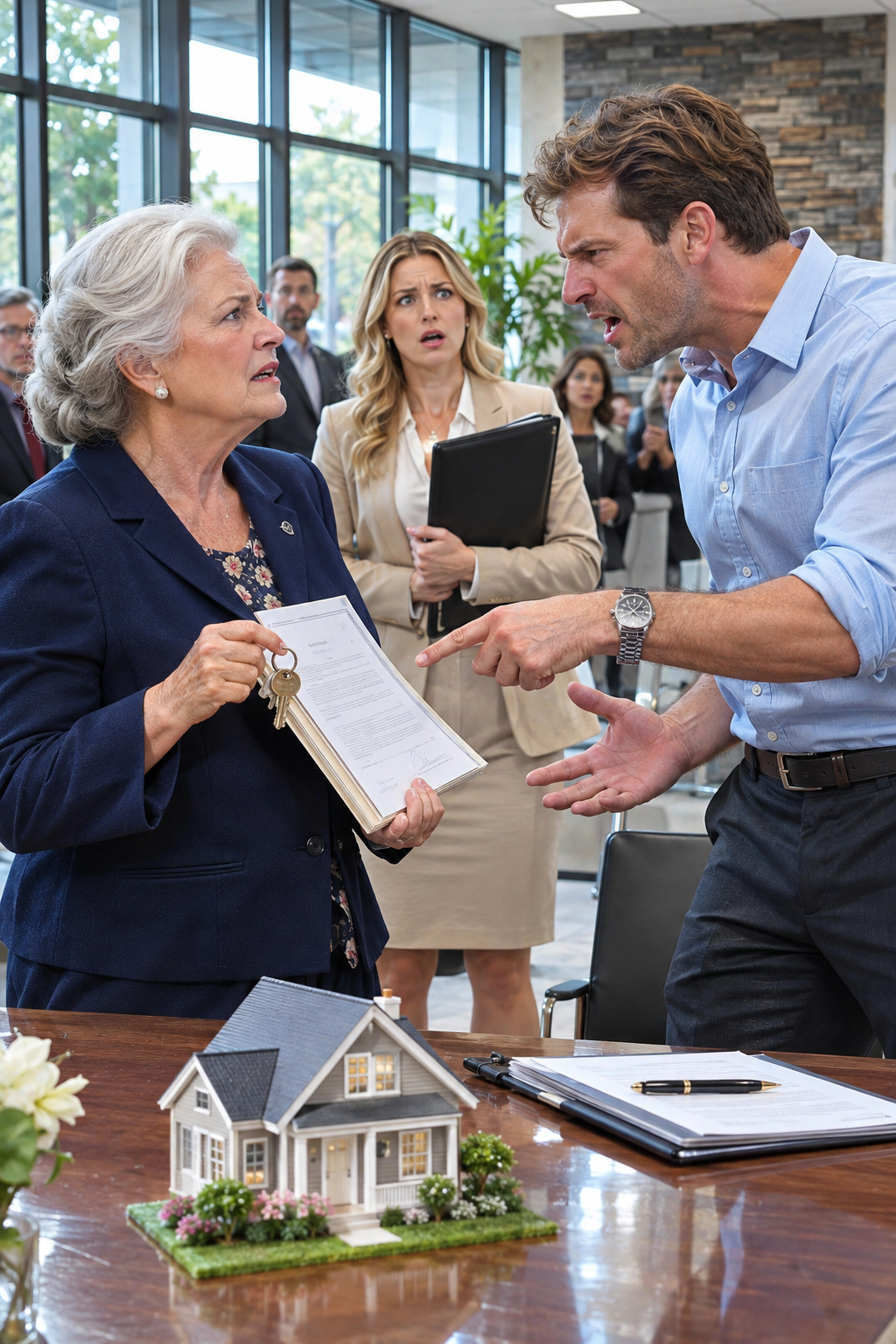
Danielle raised her wineglass, and the diamonds on her wrist flashed beneath my kitchen lights. “We’re skipping Christmas with you, Susan. We’re spending it with our real family.” My son stared at his phone. I set down the carving knife and smiled. “Then Christmas is canceled.” Neither of them knew what I was about to discover.
### Part 1: A Christmas rejection exposes the betrayal hidden inside my family
My name is Susan Ellis. I’m sixty-seven, a widow, and the owner of Allen Supply, a wholesale distribution company in Columbus, Ohio. Thirty-eight years ago, I started that business in a rented warehouse after my husband, Larry, died, leaving me with a four-year-old son, unpaid medical bills, and a pickup truck that barely started. Today, we employ 140 people across three distribution centers. I built it because I never wanted my son, Chad, to experience the fear of having nothing.
That Thanksgiving, I had been cooking since five that morning. Larry’s mother’s sweet potatoes were bubbling in the oven, and the dining table was set with the good china I only used for family gatherings. Danielle stood beside the kitchen island, swirling red wine while explaining that she and Chad had booked two weeks in Park City, Utah. She called it a much-needed vacation with people who understood their lifestyle.
“Your real family?” I repeated, looking toward Chad.
He slipped his phone into his pocket but couldn’t meet my eyes. “Mom, don’t make this difficult. Danielle’s parents already booked everything.”
Danielle smiled over her glass. “Besides, Christmas here is always the same. We wanted something special this year.”
I might have believed this was ordinary selfishness if I hadn’t noticed her bracelet. Diamonds surrounded her wrist in a custom setting worth at least forty thousand dollars. Chad earned $190,000 annually as my vice president of finance, enough for their beautiful Dublin home and two luxury SUVs. It wasn’t enough to explain that bracelet, their extravagant vacations, or the quiet confidence with which Danielle discussed money.
I served dinner without another argument. Danielle criticized the dressing, Chad praised their upcoming ski vacation, and neither asked whether I’d made Christmas plans. When they finally left, my son gave me a stiff embrace that lasted barely two seconds. I stood in the doorway watching their taillights disappear, remembering the little boy who once cried because he couldn’t afford to buy me a Christmas present.
Instead of washing dishes, I walked into my office and opened the company’s financial records.
Two years earlier, I’d granted Chad a broad durable power of attorney in case illness ever prevented me from managing my affairs. I expected to find expensive meals or questionable travel reimbursements. What appeared on my screen was a $400,000 home equity line secured against my house, which I’d owned outright since 2003. Chad had already withdrawn $380,000 and deposited it into an account he shared with Danielle.
My hands turned cold. Then I discovered monthly payments of $22,000 to Tucker Design Partners, supposedly for hospitality consulting services. The business registration identified Danielle Tucker, my daughter-in-law under her maiden name, as its owner. Its address belonged to her mother in Naples, Florida.
In eight months, more than $550,000 had been diverted from my home and company.
I stared at the records until dawn, thinking about the winters when I drove delivery trucks myself so Chad could have warm clothes and decent shoes. My first instinct was to call him. My second was to remember that he controlled financial documents and could destroy evidence before I reached his driveway.
Monday morning, I visited Rita Campbell at First Buckeye Bank. She’d managed my accounts for sixteen years, but when she saw me, concern crossed her face.
“Susan, Chad told me you’ve been having trouble remembering things.”
I sat down slowly. “Show me what he brought you.”
Rita opened a folder containing a physician’s letter describing progressive cognitive decline. Beneath it lay an application for a $1.5 million company credit line, supported by a corporate resolution bearing my signature.
The signature was an impressive imitation. It was also forged.
Rita reached toward her telephone. I stopped her.
“Preserve those documents and involve your fraud team confidentially. I don’t want Chad alerted before the evidence is secured. Restrict his personal-account access wherever you legally can, and require my direct approval for major transfers.”
She studied my face. “Susan, are you all right?”
“No,” I answered. “But I know exactly what’s happening.”
That Sunday, Chad insisted on driving me to church. In front of Pastor Dale Griffin, he whispered that my memory was deteriorating and asked everyone to pray for my health. I had helped finance that church’s roof and food pantry. Now people watched me as though I might forget where I was standing.
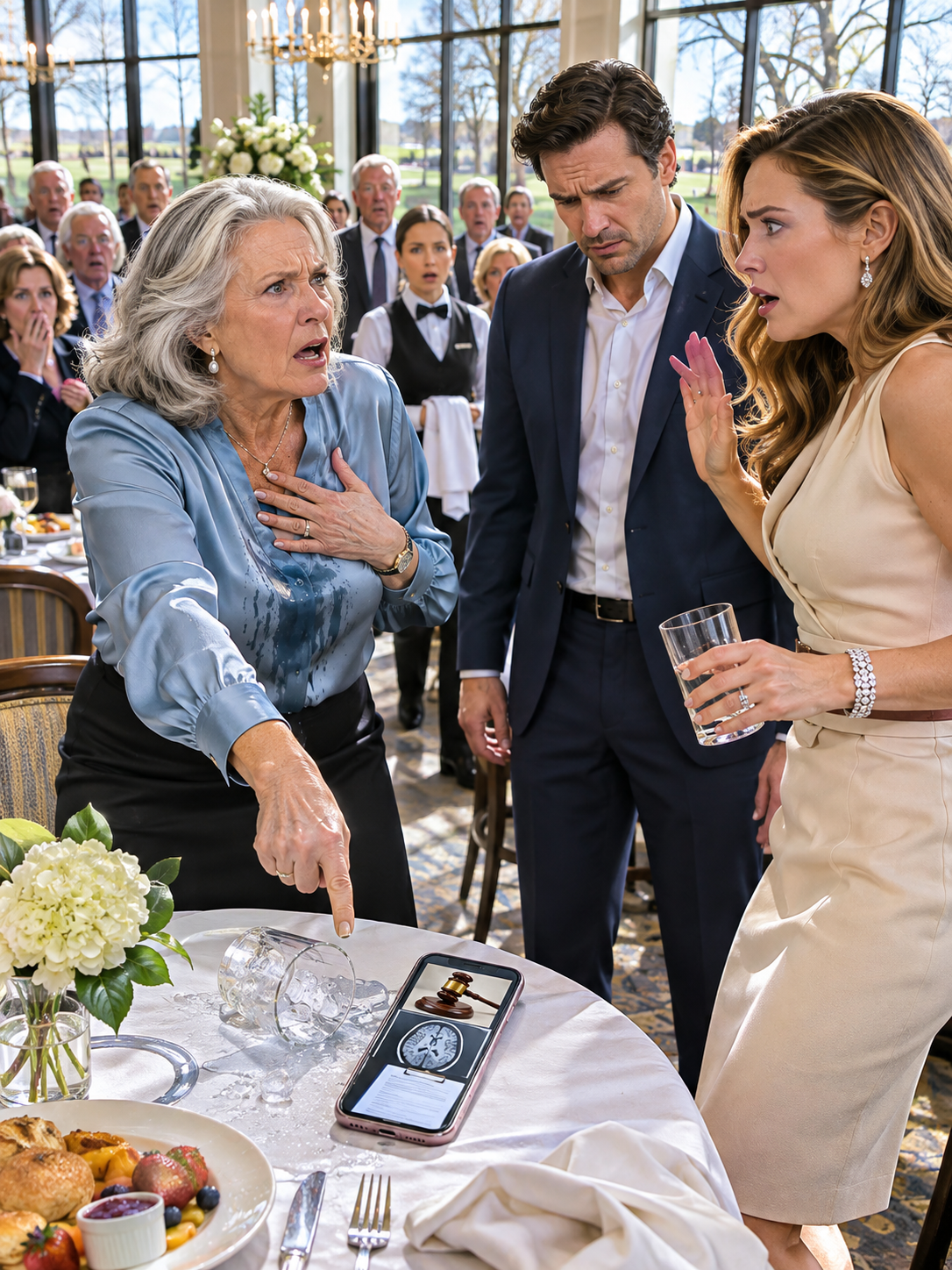
At brunch afterward, Danielle knocked over her water glass and immediately blamed my supposedly trembling hands. Dozens of country club members turned to stare while ice water soaked my clothes. She pretended to comfort me, then placed her phone beside my plate.
The screen illuminated.
A message from someone saved as Doug Lawyer appeared.
Dr. Parker confirmed for Thursday. Guardianship petition prepared. Make sure she’s cooperative.
I stared at those words without moving.
They weren’t simply stealing my money.
They intended to convince a judge that I was incapable of managing my own life.
And suddenly I understood why Danielle had looked so pleased when she told me I wouldn’t be spending Christmas with them.
### Part 2: My grandson uncovers the plan designed to erase me forever
Tuesday afternoon, my sixteen-year-old grandson, Miles, appeared at my door carrying work gloves and a rake. He was Chad’s son from his first marriage, a quiet teenager who spent more time with me than with his father. Danielle treated him like an unwelcome reminder of Chad’s past. I recognized the tension in his shoulders when he asked whether he could clean the leaves from my yard.
After two hours, I brought him inside for sandwiches. He barely touched his food before pulling an iPad from his backpack.
“Grandma, I found something. Please don’t tell Dad I showed you.”
His hands were shaking.
The tablet remained connected to an old family cloud account. While searching for a school assignment, Miles had discovered a folder labeled TRANSITION. Inside were documents that transformed my suspicions into something far more frightening.
The first was an unfinished medical affidavit from Dr. Parker. It claimed I wandered away from home, forgot relatives’ names, and couldn’t safely operate a vehicle. The second was a $28 million purchase offer for Allen Supply from a private equity firm. Chad had secretly negotiated the sale but needed control over my eighty-percent ownership interest to complete it.
The third document made my stomach tighten.
It was an admission agreement for a memory care facility two hours north, beyond Mansfield. Chad had already paid a $25,000 deposit using funds drawn against my home. The reserved room was on a secured floor, and the proposed care plan included sedating medication and sharply restricted visitation.
I read the agreement twice.
They planned to take my business, declare me incompetent, and place me somewhere I couldn’t challenge them.
Miles covered his face. “I heard Danielle telling Dad everything would be easier once you were gone. I thought they meant on vacation.”
I moved beside him and wrapped my arms around his shoulders.
“You were right to come here. Your job now is to go home and behave normally. Let the grown-ups handle the rest.”
He looked terrified. “What if Dad finds out?”
“Then he’ll answer to me.”
After copying the documents onto a flash drive, I drove directly to Ralph Weaver’s law office. Ralph had prepared my first incorporation papers for two hundred dollars nearly four decades earlier. He listened without interrupting, but when he reached the memory care contract, he removed his glasses.
“They’re preparing to take your legal independence, Susan. We need to protect you before they file.”
For four hours, we worked through documents, evidence preservation, and lawful protective measures. Ralph prepared a formal revocation of Chad’s power of attorney and arranged the necessary notices. We also established the Larry Ellis Family Trust, transferring my house, savings, and controlling business shares into a carefully structured estate plan. I remained trustee, with financial protections during my lifetime, and Miles became the eventual beneficiary, with distributions beginning at twenty-five.
“He thinks he’s inheriting an empire,” Ralph said, reviewing the documents.
“He isn’t inheriting anything,” I replied.
Ralph engaged a forensic accountant and arranged for a properly documented, consensual recording of a meeting in my home. We notified appropriate authorities and preserved every original record. Our goal wasn’t to provoke another crime; it was to establish what Chad and his associates had already done.
Thursday morning, Chad arrived with Danielle and a polished man wearing a camel-colored coat.
“Mom, this is Dr. Parker,” Chad announced. “He’s here for a routine insurance assessment.”
I hadn’t agreed to any such assessment. Nevertheless, I invited them into my living room, where Ralph had arranged for our meeting to be recorded.
Dr. Parker began asking ordinary questions. When I admitted that cooking for one sometimes felt tiresome, he wrote that I struggled with basic household responsibilities. I deliberately repeated a story about Larry’s old pickup truck, and he exchanged a satisfied glance with Danielle.
Then I went into the kitchen to make tea.
Their voices traveled through the doorway.
“She’ll be easy to establish as impaired,” Parker murmured.
“Can you finish the declaration before next week?” Chad asked.
“The board needs to believe she’s incapable of opposing the sale,” Danielle added.
Parker lowered his voice. “Once the court approves guardianship, she won’t have authority to interfere.”
I stood beside the kettle, listening to a physician discuss destroying my independence as casually as someone ordering lunch.
When I returned, Chad placed a packet on the coffee table.
“Just sign these papers so I can handle payroll while you’re recovering.”
I reached for my reading glasses. Danielle abruptly pushed the documents closer.
“You don’t need to examine every page, Susan. This stubbornness is exactly why we’re worried.”
Chad’s face hardened. “Sign before Tuesday, Mom, or I’ll have the board remove you.”
I folded my hands.
“I’ll consider everything before you leave for Utah.”
They departed believing they’d frightened me into submission.
I called Ralph immediately.
“The conversation is preserved,” I said. “And my son has just threatened me in my own living room.”
Ralph was quiet for a moment.
“Then we proceed with the board.”
For the first time since Thanksgiving, I felt something stronger than fear.
I had evidence.
### Part 3: My son’s forged documents become proof of his own betrayal
The following Monday, Ralph’s forensic accountant, Greg Clark, spread bank statements across his conference table. The supposed consulting payments had flowed directly into Danielle’s accounts. Four months earlier, she and Chad had purchased a six-thousand-square-foot ski property in Park City for $1.9 million. The down payment came from the credit line against my house.
Greg turned to the final mortgage page.
There was my forged signature again, accompanied by Allen Supply’s corporate seal.
Ralph leaned forward. “We’ve documented potentially serious bank fraud, wire fraud, and forgery. Once this evidence reaches investigators, you cannot control where the prosecution goes.”
I stared at the signature.
“I spent thirty-eight years protecting Chad from hardship,” I said. “I won’t protect him from what he’s done.”
That evening, I invited three trusted company executives to dinner: Terry Griffin, our chief financial officer; Wanda Spencer, who directed operations; and Michael Payne, our purchasing chief. Each had helped build Allen Supply through recessions, supplier failures, and years when we weren’t certain payroll would clear.
I placed the evidence before them.
Wanda read the fabricated medical affidavit, her eyes narrowing with every paragraph. Michael studied the sale agreement, then pushed his chair back.
“They’re selling us to a company that guts management after acquisitions.”
Terry examined the mortgage documents. “And they’re using Allen Supply to finance their vacation property.”
“They’re trying to take everything,” I said. “Including my right to object.”
We agreed to preserve the documents and let Chad submit his own claimed authority for formal verification. Terry would ensure every page entered into the board record, with a clear identification of who supplied it. Our attorney would handle the legal challenges.
Tuesday morning, I entered the boardroom in a plain gray cardigan. Chad was already seated at the head of the table, occupying the chair I’d used for twenty-seven years. He glanced at my clothes and gave Danielle, standing near the doorway, a faint smile.
“As everyone knows,” he began, “my mother’s mental health has declined significantly.”
He distributed Parker’s affidavit and announced that he was assuming control under the power of attorney. Then he introduced the $28 million purchase offer.
“The opportunity won’t remain open indefinitely. We need to approve the sale.”
Wanda folded her arms. “Who authorized these negotiations?”
“I did,” Chad answered.
“And your mother?”
“She’s no longer capable of making those decisions.”
Terry calmly opened the corporate minute book.
“Before considering anything, the board requires an authenticated record of every document you’re relying upon.”
Chad waved impatiently. “Then record them.”
Terry read each title aloud: the medical declaration, the power of attorney, and the purchase agreement. He placed the registry before Chad.
“Sign here confirming that you submitted these documents and represent them as authentic.”
Chad pulled a gold pen from his jacket and signed every acknowledgment without hesitation.
I stood slowly.
“The lights are bothering me,” I murmured. “Perhaps I should go home.”
My son touched my shoulder.
“Don’t worry, Mom. I’ll take care of everything.”
Outside the boardroom, I straightened my back and telephoned Ralph.
“He signed.”
Ralph had already coordinated the required trust notices, power-of-attorney revocation, and evidence submissions. The bank’s fraud department secured the suspicious applications, while investigators sought judicial orders to freeze accounts containing disputed funds. The board suspended Chad’s authority pending its formal review, then terminated him for cause after examining the evidence.
By that afternoon, the empire he expected to control was beyond his reach.
Chad didn’t know.
He was busy celebrating the coming sale.
On December 23, Chad and Danielle flew to Utah. Miles remained with me, helping decorate the Christmas tree with ornaments his grandfather had collected.
At four that afternoon, my phone vibrated.
Mom, my card isn’t working. The airport driver says the payment was rejected. Call the bank.
Ten minutes later another message arrived.
Every card is being declined. What did you do?
Miles glanced up from a cardboard box of ornaments.
“Grandma?”
I placed my phone on the mantel.
“The banks are protecting the money now.”
By evening, Chad’s messages grew frantic. The mortgage company had flagged the Park City property transaction, and they couldn’t gain access to the house. Their emergency payments were unavailable, and they were arguing with the property’s representative outside in the cold.
Danielle sent a message accusing me of deliberately ruining their Christmas.
Then Chad left a voicemail.
“You think you can embarrass me? I’ll get a judge to declare you incompetent the minute I come home.”
Miles went pale when I played it for Ralph.
“Could Dad actually do that?” he whispered.
I knelt beside him.
“He can make threats. That doesn’t make them true.”
Outside, snow began falling over Columbus. I looked at the tiny wooden truck hanging from the tree, the ornament Chad had made when he was eight.
For a moment, I remembered the child I’d raised.
Then another message arrived.
We’re coming home. You’d better be ready.
I handed the phone to Ralph.
“I’m ready,” I said.
### Part 4: Christmas Eve brings justice and reveals the family worth keeping
At 4:15 on Christmas Eve, a taxi stopped outside my house. Snow covered the front steps, and the Christmas lights glowed against the gray afternoon. Miles was safely upstairs with a family friend in the guest room, away from the confrontation Ralph had helped me prepare for.
Chad pounded on the door before I could reach it.
When I opened it, my son stood beneath the porch light, unshaven and exhausted. Danielle dragged a battered suitcase behind him, her expensive coat stained with melted snow.
“You did this!” she shouted, stepping into the foyer. “Our cards stopped working. We couldn’t get into our own vacation home!”
Chad marched toward my living room.
“Mom, you’ve made some terrible mistake in the banking system. Call Rita and reverse it.”
I closed the door.
“No mistake was made.”
He turned, visibly startled by my steady voice.
“I reported the forged credit agreements, the fraudulent consulting payments, and the money taken against my property. Investigators obtained the necessary account restrictions.”
Danielle’s mouth tightened.
“You have no idea what you’re talking about.”
“I know about Tucker Design Partners,” I replied. “I know about the $1.9 million ski house, the $28 million sale, and the medical declaration you paid Dr. Parker to prepare.”
Chad’s expression changed.
I stepped closer.
“And I know about the room you reserved near Mansfield. The one on the secured floor.”
His face drained.
“How did you find that?”
“Your son found the files. He was brave enough to tell me the truth.”
Danielle gripped her suitcase handle. “That little—”
“Finish that sentence,” I said quietly, “and you’ll be leaving this house immediately.”
Chad collapsed onto the sofa, rubbing both hands across his face.
“The board accepted my documents,” he said. “Everything’s already official.”
“Yes,” I answered. “Your submissions are officially recorded. Including your signatures identifying the forged paperwork as authentic.”
Ralph emerged from my office carrying a leather briefcase. Two federal agents, who had arrived earlier under an arranged meeting, entered behind him.
“Chad,” Ralph said, “your mother revoked your authority and protected her assets through the Larry Ellis Family Trust. Your attempted sale was never authorized. The board has removed you from your position.”
Danielle stared at him.
“What about our house? Our accounts?”
“The financial records are part of an active federal investigation. Court orders now protect the disputed funds.”
One agent stepped forward and identified himself. He informed Chad that a federal arrest warrant had been issued concerning the fraudulent transactions.
My son looked from the badge to my face.
“Mom, don’t let them do this.”
I felt the room grow painfully quiet.
This was the man whose first bicycle I’d repaired after midnight because I couldn’t afford another. The man I’d carried through childhood fevers, taught to drive, and trusted with every document attached to my life’s work.
“Chad,” I said, “you could have asked me for help. You could have told me you were in trouble.”
His eyes filled.
“I just wanted us to have more.”
“You already had more than I ever imagined having.”
Danielle suddenly pointed at him. “He handled the documents! I didn’t forge anything!”
Ralph’s expression didn’t change. The investigators had financial records connecting her company to the diverted payments, and she was also taken into custody under a separate warrant.
Chad stood as the agent directed him toward the door. He looked back once.
“I’m your son.”
I swallowed the ache rising in my throat.
“Yes,” I whispered. “And that’s what makes this unbearable.”
They escorted him outside without a struggle. Red and blue lights reflected against the falling snow, and I remained at the window until the vehicles disappeared.
That Christmas night, Miles came downstairs carrying Larry’s wooden truck ornament. He sat beside me on the sofa without asking what had happened. After a while, he reached for my hand.
“Are we still having Christmas?”
I looked toward the presents beneath the tree.
“Of course we are.”
He hung the truck on the lowest branch, where his grandfather used to place it.
The next morning, Dr. Parker was arrested following the investigation into fabricated medical evidence. Records eventually showed he’d accepted $40,000 for his role in the scheme, and his medical license was suspended. The criminal proceedings continued into the spring, uncovering additional records that corroborated what Miles had found.
Four months later, Chad accepted a federal plea agreement and received a six-year prison sentence, along with a substantial restitution obligation. Danielle cooperated with prosecutors, received probation and community service, and remained liable for part of the stolen funds. Their Dublin home and Park City property were lost in the financial proceedings, and her diamond bracelet was seized among the assets connected to the fraud.
She filed for divorce shortly after securing her release. The last I heard, she was living in her mother’s Naples condo and working at the reception desk of a dental practice.
Allen Supply survived.
Without the fraudulent payments, our margins improved, and Terry, Wanda, and Michael secured contracts with two hotel chains. For the first time in years, I could review a financial statement without wondering what someone had hidden.
But the greatest change happened inside my own home.
Miles came to live with me, and the family court formalized his living arrangements that March. His mother, who lived in Oregon, remained involved and called every Sunday. He began sleeping through the night, laughing at dinner, and leaving his schoolbooks scattered across the kitchen table.
One afternoon, he arrived carrying college brochures.
“Grandma, Ohio State has a supply chain management program.”
I lowered my reading glasses.
“Are you telling me you’d like to work at Allen Supply someday?”
He shrugged, trying unsuccessfully to hide his smile.
“Maybe. But I’d want to earn my place.”
I looked at the boy standing before me. He possessed something his father had forgotten long ago: the understanding that trust couldn’t be purchased, demanded, or inherited.
I pulled out the chair beside mine.
“Then we should start with the warehouse,” I said. “That’s where I started.”
Miles laughed and sat down.
Chad still has permission to contact me from prison. Some months, I listen to his messages. Other months, I cannot bring myself to press play. I haven’t decided whether forgiveness will ever be possible, but I know it won’t require surrendering my safety or pretending the betrayal never happened.
The following Christmas, I made Larry’s sweet potatoes again. Miles carried the turkey to the table, Terry and Wanda brought their families, and the dining room filled with conversation. Nobody wore a forty-thousand-dollar bracelet, and nobody complained about the decorations.
Before dinner, Miles lifted his glass.
“To Grandpa Larry,” he said. “And to Grandma, who kept everything together.”
I looked around at the people who had stood beside me when my own son tried to take everything away.
For years, I believed family meant protecting the people who shared my blood, whatever the cost. Now I understood that real family was made of people who protected one another without demanding ownership in return.
Danielle had once told me they were spending Christmas with their real family.
She had no idea that her cruel little announcement would finally show me who mine was.
THE END.
All characters and events in this story are fictional, created for storytelling and entertainment purposes. Thank you sincerely for reading. Your feedback and support are invaluable and motivate me to continue sharing more stories with you.