
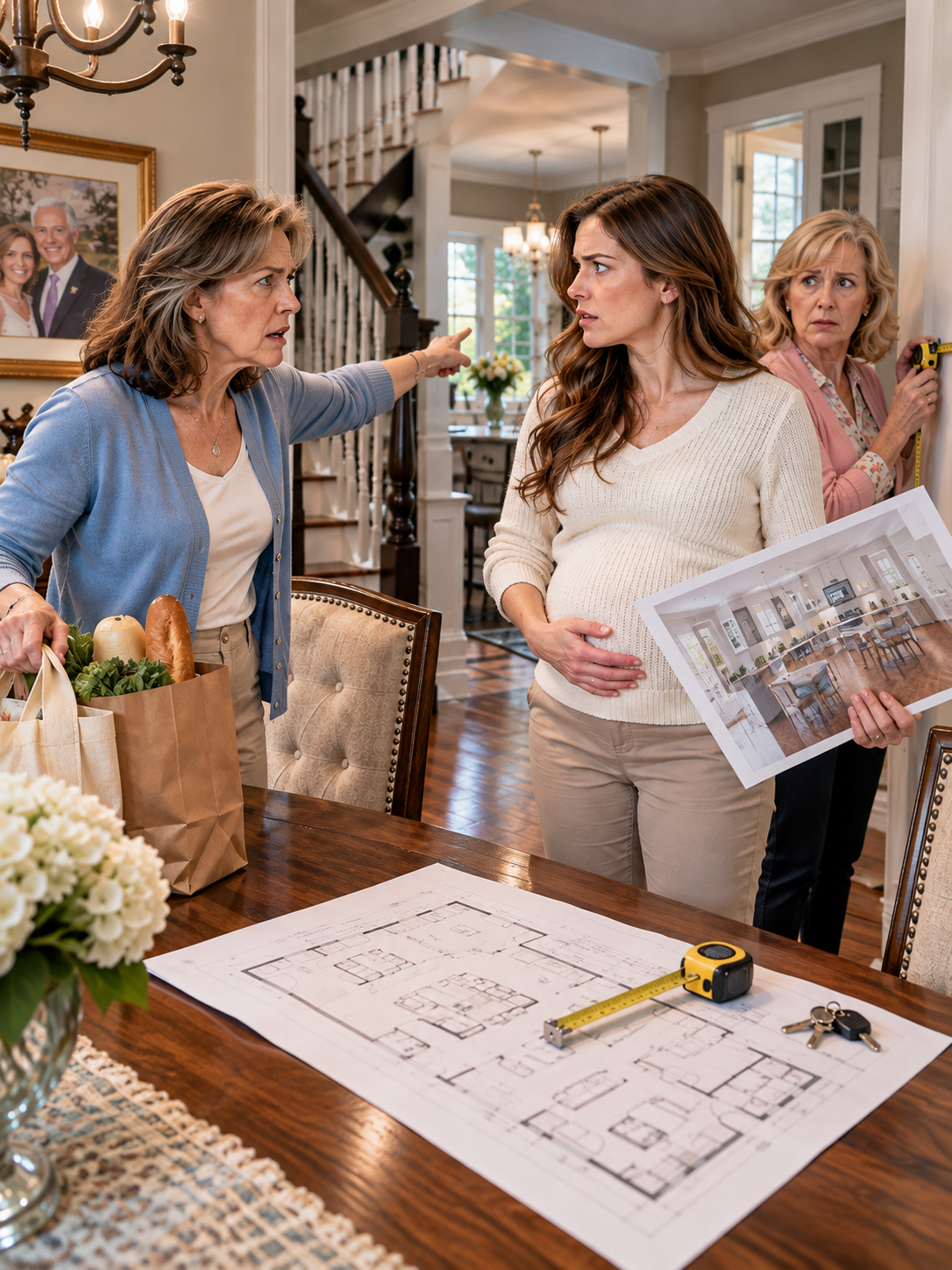
Part 2: The Papers On My Counter Force An Honest Choice
I was usually the first person awake. By seven, coffee would be brewing, toast would be warming, and the blinds would be open to the backyard. That morning, I slept until eight, showered, dressed, and made one cup of coffee for myself.
Tessa was standing at the kitchen island when I came downstairs, examining the empty coffeepot.
“Is something wrong with the machine?” she asked.
“No. I simply didn’t make a pot today.”
She glanced at the envelope beside it. Her name and Colin’s were written across the front.
“What’s that?”
“Something for the two of you to read together.”
Her eyes narrowed slightly. “Is this about the retirement communities?”
“In a way.”
I took my coffee into the sunroom and opened my book. Ten minutes later, I heard Colin’s bedroom door, followed by their voices downstairs. I couldn’t distinguish every word, but I heard paper being moved across the counter.
Then Colin appeared in the doorway.
“Mom, could you come into the kitchen?”
He was holding my letter, folded unevenly in one hand. Tessa stood behind the island, the retirement brochure lying beside the property documents.
“You’re asking us to pay rent?” she demanded.
“I’m asking us to stop pretending this is a temporary arrangement when nobody is making plans to leave.”
Colin pulled out a chair. “Eighteen hundred dollars a month?”
“That’s the proposed rent, beginning after sixty days if we agree on a proper lease. I’ve compared similar accommodations locally, and I intend to have an attorney review the arrangement before anyone signs.”
Tessa stared at him. “You told me we wouldn’t have a mortgage or rent once we settled here.”
I turned toward my son.
Colin rubbed his jaw. “I said we might not have to worry about housing forever.”
“That’s not what you said,” Tessa replied. “You said your mother wanted us to have this place.”
I set my coffee down carefully. “Colin, explain what you promised.”
His shoulders sagged. “After Dad died, you told me the house would always be here for me. I thought you meant that eventually—”
“Eventually, when I die,” I said. “Not when your wife decides the sunroom would make a better nursery.”
He looked down.
Tessa pulled out the neighboring chair but didn’t sit. “I didn’t know there was any disagreement. Colin made it sound like you were planning to downsize after the baby came.”
“I never said that.”
“I know that now.”
For the first time, I saw something beyond irritation on her face. She had built an entire future around an assumption she hadn’t bothered to confirm.
I unfolded my letter and pointed to the second page.
“If you stay, there will be a written lease, a fair division of expenses, and an understanding that my private rooms remain mine. You can decorate the bedrooms you’re using, but changing common areas requires my permission. And nobody suggests that I should move out of my home to make your life easier.”
Tessa folded her arms. “So we’re being punished because you don’t like me.”
“I’m not trying to punish you. I’m trying to establish an arrangement I can live with.”
“Right before the baby comes.”
“Your baby is a wonderful reason for us to be considerate of one another. It isn’t a reason for me to surrender my property.”
Colin looked from the letter to his wife.
“What brought this on so suddenly?” he asked.
I didn’t enjoy the answer, but I gave it.
“I heard your conversation last night.”
Tessa’s fingers tightened against the countertop.
“I heard the part about making my home uncomfortable enough that I’d choose to leave. I also heard you say you didn’t want to hurt me, Colin. What I didn’t hear was you telling her the plan was unacceptable.”
He closed his eyes briefly.
“Mom, I should have stopped it.”
“Yes,” I said. “You should have.”
Tessa pulled out the chair at last. She sat with one hand resting on her stomach and stared at the property deed.
“I was scared,” she said after a while. “We’ve been living out of boxes for almost a year. I thought when the baby came, we’d finally have a permanent place.”
“You can have a permanent place. You and Colin have jobs and savings. You can buy or rent somewhere that belongs to your own household.”
“Not somewhere this big.”
“Maybe not yet.”
She swallowed, but her expression remained guarded. “And if we don’t agree?”
“Then we make a reasonable plan for you to move, with proper notice and without fighting about it.”
Colin asked for a week to discuss everything. I agreed, provided that no more changes were made to the house without my consent.
Later that morning, he came back downstairs alone and found me trimming dead leaves from my geraniums.
“I didn’t think she’d actually try to push you out,” he said.
I snipped another stem. “But you knew she wanted me gone.”
“She kept saying we’d never have our own life while we were living with you.”
“That part is probably true.”
He looked startled.
“Colin, you’re thirty-five. You deserve a household where you and your wife make your own decisions. What you don’t get to do is make those decisions about somebody else’s home.”
He sat on the edge of the garden bench.
“I wanted her to feel secure.”
“And you used my house to promise her security.”
He didn’t argue.
That afternoon, I called my attorney, Margaret Bell. She had helped me settle Richard’s estate and knew how much the house meant to me. I explained the living arrangement, the proposed rent, and my concern that emotional pressure might eventually become a dispute over ownership.
Margaret listened without interrupting.
“First, we make sure any rental agreement complies with the applicable rules,” she said. “Second, we review your estate plan so your intentions are clear. And third, Evelyn, you stop discussing your property as if everybody gets a vote.”
I almost laughed. It was exactly the sort of thing she had told me when Richard died.
Over the following week, the atmosphere at home became strained. Tessa stopped asking whether I wanted anything when she ordered groceries. Colin stayed late at work twice, although I suspected his workload wasn’t the reason.
I maintained my usual schedule. I went to book club, met a friend for lunch, and spent an afternoon with Margaret reviewing a revocable living trust that would allow me to retain control of the house while planning for the future.
On Thursday evening, I came home and found Colin and Tessa sitting at the kitchen table with a notebook between them.
Tessa had been crying. There was a damp tissue beside her water glass, and her eyes were red.
“We’ve looked at rentals,” Colin said. “Nothing near my office is cheaper than what you’re proposing once we include utilities.”
“And buying?” I asked.
“We could manage a smaller townhouse,” Tessa answered. “But we’d be using most of what we saved.”
I sat across from them.
“Then perhaps this arrangement can help you save longer. But it has to work for all three of us.”
Tessa looked at the notebook. “Can I ask you something without you assuming I’m being disrespectful?”
“Certainly.”
“Do you actually want us here?”
I considered the question.
“I wanted you here when you needed help. I still want to know my son and my grandchild. But lately, I’ve felt as though I have to explain why I’m entitled to live in my own house.”
She brushed a tear from her cheek.
“I didn’t realize you felt like that.”
“You didn’t ask.”
For once, she didn’t offer an explanation.
Then Colin said something I hadn’t expected.
“We’d like to sign the lease. But I think we also need to agree on something else.”
I waited.
“When we save enough for our own place, we’ll move. Not because you want us gone, but because we’re ready to build something that’s actually ours.”
Tessa reached for his hand.
“And until then,” she added, looking directly at me, “I need to learn how to live here without acting like the house belongs to me.”
Part 3: Boundaries Become Real Through Work Neither Side Can Avoid
We signed the agreement the following week, after Margaret reviewed the final terms and explained them to everyone. The lease covered the rooms Colin and Tessa occupied, shared household spaces, rent, utilities, and notice requirements. I remained responsible for major repairs, property taxes, and decisions about the structure of the house.
It wasn’t a ceremony. We sat at the dining table with three pens, a pot of coffee, and a plate of cinnamon rolls Tessa had baked that morning.
Colin signed first. Tessa read the section about shared areas twice before adding her signature.
Then she pushed the papers toward me.
“I owe you an apology,” she said.
I looked up.
“Not for wanting a house of my own. I don’t think that’s wrong. But for thinking I could get one by making you feel unwanted in yours.”
Her voice was steady until the final words. She looked toward the window, blinking hard.
“I started seeing everything you did as something that got in my way. Even when you were just living your life.”
I placed my pen beside the document.
“Thank you for saying that.”
She waited, perhaps expecting me to declare everything forgotten.
Instead, I said, “I hope we can make a better start.”
Trust doesn’t return simply because somebody has found the right words. It returns when their behavior begins to match them.
Our first test came two weeks later.
I came downstairs to discover that my collection of antique blue-and-white plates had been removed from the hallway shelf. Tessa had replaced them with framed maternity photographs and a decorative basket.
I found my plates inside a cardboard box in the laundry room.
When she returned from an appointment, I showed her the box.
“I thought you’d like the photographs,” she explained.
“They’re lovely photographs. Where did you think these should go?”
“I wasn’t sure.”
“Then why did you move them?”
Her expression tightened. For a moment, I could almost hear the argument forming.
Then she exhaled.
“Because I wanted the shelf to look different, and I didn’t stop to ask.”
I nodded. “Please put the plates back.”
She did.
The next evening, she brought me one of the maternity photographs in a small wooden frame.
“I wondered whether you’d want this for your bedroom,” she said. “If not, that’s okay.”
I placed it beside Richard’s photograph.
“Thank you. I’d love to have it.”
There were other adjustments. Colin began paying his share of the grocery bills instead of letting me cover everything. Tessa took responsibility for cooking twice a week, although her first attempt at Richard’s old chicken casserole came out so salty that we ordered pizza.
One Sunday, I found Colin standing on the porch with a screwdriver, tightening the loose railing near the front steps.
“Dad never did finish fixing this properly,” he said.
“He said that every spring.”
Colin smiled, then grew thoughtful.
“I think I treated this place like it was waiting for me. I never thought much about you having another twenty or thirty years of plans for it.”
“That’s what I hope to have.”
He turned the screwdriver one final time.
“I want you to have them, Mom.”
We didn’t hug or make a grand declaration. I held the railing steady while he finished the repair, and afterward we shared a pot of tea.
In December, Margaret completed the trust paperwork. The house would remain under my control during my lifetime, with clear instructions for its management if I became unable to handle my affairs. Colin was still an intended beneficiary, but inheritance would not mean immediate ownership or the right to make decisions for me.
I told him about the arrangements during a quiet Sunday afternoon.
“That makes sense,” he said.
“Are you disappointed?”
He took a moment before answering.
“A little embarrassed that you even had to worry about it.”
I reached across the table and touched his wrist.
“I don’t want you to spend your life feeling guilty. I want you to understand why it mattered.”
“I do.”
January brought heavy snow, and Tessa’s pregnancy made the stairs increasingly uncomfortable. I offered to move my downstairs reading chair into the family room so she could rest there during the day. She accepted, but asked before rearranging anything else.
One afternoon, she found me searching through a drawer for Richard’s old measuring tape.
“What are you working on?” she asked.
“A watercolor of the porch. I can’t quite get the proportions right.”
She sat beside me and studied the unfinished painting.
“Did you ever think about selling after Richard died?”
I set down my pencil.
“For about three weeks. The house felt enormous, and every room reminded me he wasn’t coming back.”
“What made you stay?”
“One morning, I was having coffee on the porch, and a neighbor stopped to ask about my roses. I realized I still had a life here. I just needed to learn how to live it without him.”
Tessa looked toward the snow-covered backyard.
“My parents moved six times before I finished high school,” she said. “Every time we started to feel settled, something happened. A rent increase, a job loss, another landlord selling the place.”
I listened as she rubbed her hands together.
“When Colin told me we could stay here, I thought we’d finally be safe. I started planning everything because I was afraid that if I didn’t, we’d lose our chance.”
“Having a home matters,” I said. “But security you take from somebody else isn’t very secure.”
She nodded slowly.
“I understand that better now.”
I believed her, although understanding and changing were still two separate things.
In February, Colin and Tessa began attending open houses on weekends. They weren’t ready to buy, but they were learning what their savings could realistically provide. Sometimes they returned excited about a modest townhouse. Other times, they came home discouraged by prices.
I resisted the temptation to solve every disappointment for them.
When Tessa asked whether I thought they should wait another year, I told her it was a decision she and Colin needed to make together.
For the first time, that answer seemed to satisfy her.
Our granddaughter arrived on a rainy Thursday in March.
Colin called at five in the morning to say they were at the hospital. I dressed, fed the cat, and drove over with the overnight bag Tessa had accidentally left beside the front door.
I spent several hours in the waiting room, reading the same three pages of a novel without remembering a word.
Just before noon, Colin appeared.
He looked exhausted and happier than I had seen him in years.
“Mom,” he said, “come meet Willa.”
Tessa was resting against the pillows when I entered. Her hair was untidy, her face pale, and her eyes bright with tears. Beside her lay a tiny bundle wrapped in a hospital blanket.
“Would you like to hold her?” she asked.
I washed my hands and sat in the chair Colin pulled close to the bed. When he placed Willa in my arms, her little forehead wrinkled in concentration.
She had Richard’s brow.
I ran one finger gently along the edge of her blanket.
“Hello, sweetheart,” I whispered.
Tessa watched me for a while.
“We’d like you to be part of her everyday life,” she said quietly.
“I’d like that, too.”
“Not because we’re living in your house. Because you’re her grandmother.”
I looked up and met her eyes.
“Then we’ll make sure she grows up knowing all of us.”
A month later, on a warm Sunday afternoon, Colin brought home photographs from a townhouse showing. It was small, with a narrow backyard and an ordinary kitchen, but they could afford the down payment if they continued saving through the summer.
Tessa spread the photographs across my dining table.
“There’s no sunroom,” she said, smiling.
“You could always put a chair near a window.”
She laughed, and for once there was nothing guarded in the sound.
They decided to keep looking while honoring the lease. I was pleased they were taking responsibility for their future, even though I knew the house would seem unusually quiet when they eventually moved.
That evening, after they took Willa upstairs for her bath, I went into the sunroom and opened my sketchbook.
I had started a new painting: Richard’s porch in spring, with fresh green leaves appearing beyond the railing. In the foreground, I had added a small baby carriage, not because Willa would live there forever, but because she was part of the house’s history now.
Colin came downstairs carrying a folded blanket.
“Need anything, Mom?”
I shook my head. “I’m fine, sweetheart.”
He looked around the room, at my paints and books and the comfortable chair beside the window.
“I’m glad you kept this space.”
“So am I.”
After he went upstairs, I picked up my brush again.
For years, I had assumed that being a good mother meant making room whenever my son needed it. I still believed generosity mattered, but I had learned that love could become distorted when nobody knew where one person’s generosity ended and another person’s responsibility began.
The house was still mine. My son had begun building a life he could claim as his own, and my daughter-in-law was learning that belonging to a family didn’t require somebody else to disappear.
Outside, the porch light came on as the evening deepened. I remembered the envelope I had placed beside the coffee maker months earlier and how frightened I had been of what it might cost us.
I had been afraid of losing my family by protecting my home.
Instead, the boundaries had given us a chance to become a family that could sit together without pretending.
I turned back to the painting and added one last thin line of sunlight across the porch floor, exactly where Richard used to sit.
The End .
All characters and events in this story are fictional, created for storytelling and entertainment purposes. Thank you sincerely for reading. Your feedback and support are invaluable and motivate me to continue sharing more stories with you.


