
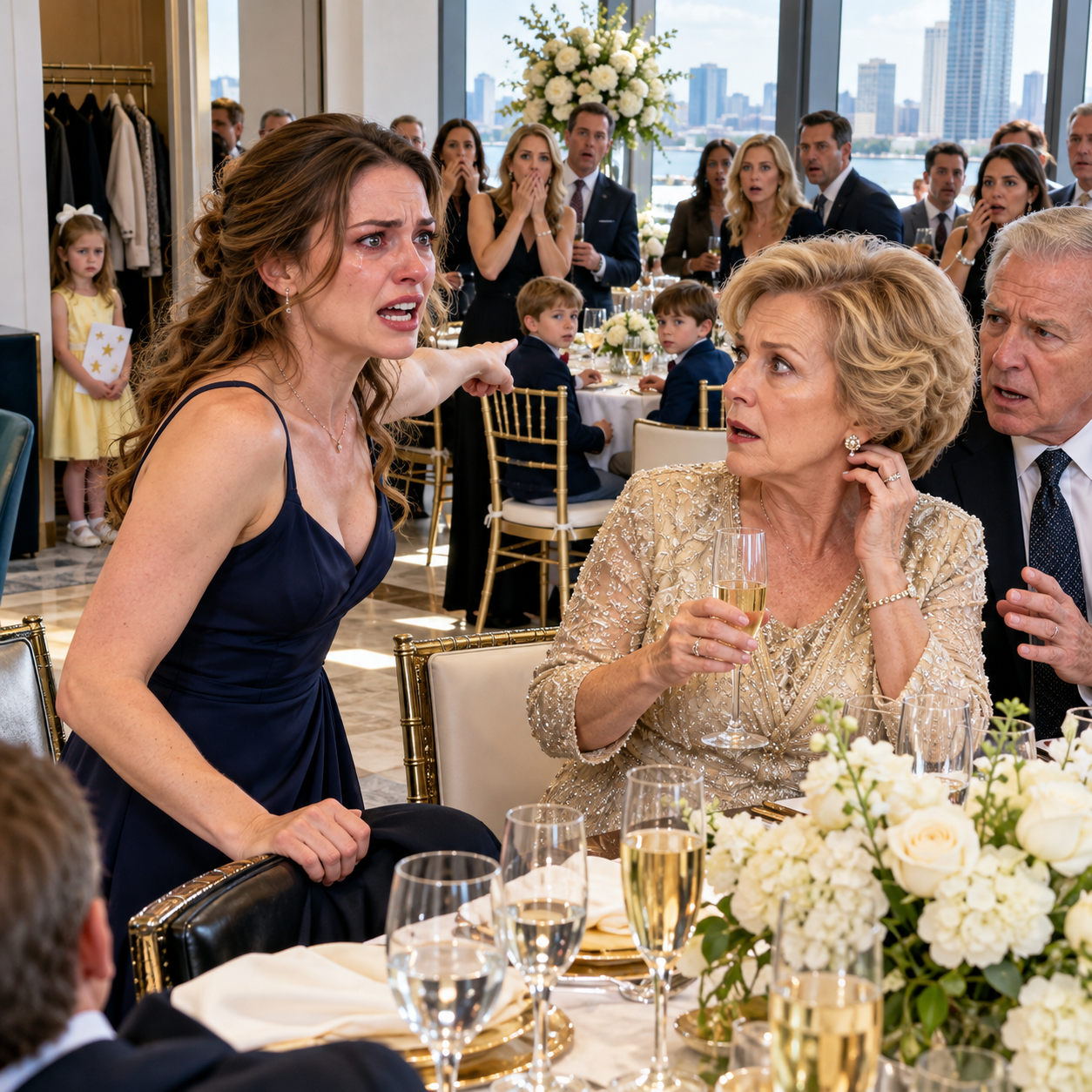
Part 2: A new guest list turned hurt into open conflict
The next morning I called my mother before touching the group chat. She answered brightly. “How’s Lena today?” I said, “Scared I’ll send her back.” After a pause, she replied, “Natalie, that child has fears because of things that happened before she came to you. You can’t blame every feeling on us.” “No,” I said. “But you don’t get to repeat the wound and call it concern.”
My father took the phone and told me Mom had been under pressure, that a ten-minute toast was hardly worth splitting the family. I asked whether he would have sent one of Mark’s sons into the hallway. He avoided the question twice before saying, “That’s different.” Those two words gave me more clarity than an hour of arguing could have.
I posted one message to the reunion chat: the lake weekend would still happen, but the cabins I had paid for were for people who treated Lena as a full member of the family. Anyone who believed my mother’s decision was acceptable should make other plans. Mark called within minutes. “You’re forcing everybody to take sides.” I said, “People took sides when a six-year-old sat outside alone and nobody got up.” He insisted he had not known what was happening. I reminded him that afterward he had texted, Mom didn’t mean anything by it.
By lunch, my aunt accused me of punishing everyone over one awkward moment, and my mother wrote that I had no right to hijack a family tradition. For nine years, that tradition had been charged to my credit card. I booked the cabins, bought groceries, and covered relatives who forgot to reimburse me. Apparently it belonged to everyone until the bill arrived.
I released six cabins and filled four with Daniel’s sister, my friend Rosa, and two families who knew Lena from school. When I told Lena Grandma and Grandpa would not be coming, she studied my face. “Are they mad?” “Yes, but that isn’t your job to fix.” She thought about it and asked whether she could still make fish-shaped name tags. We spent the evening with markers scattered across the kitchen table.
The weekend was almost painfully ordinary. Kids jumped from the dock, adults burned hamburgers, and Lena spent an afternoon teaching Rosa’s daughter to skip stones. Saturday night she fell asleep against Daniel beside the bonfire while people talked around her without treating her presence like a favor. I realized how much energy I had wasted asking my relatives to perform basic kindness.
Three days after we returned, my mother sent a text: You made your choices. Choices have consequences. Daniel read it and told me not to answer. I didn’t. The next morning, while Lena ate cereal before day camp, a woman with a county badge knocked on our door and introduced herself as Ms. Alvarez from child protective services. A report had been filed alleging instability in our home and concerns about Lena’s emotional safety.
I let her in. She was professional and calm, asking about school, discipline, sleeping arrangements, food, medication, and Lena’s adoption history. Lena watched from the stairs hugging her stuffed bear until Ms. Alvarez invited her to show off the purple walls in her bedroom. After the visit, Lena waited until the county car disappeared and asked, “Is she taking me somewhere?” I told her no, but I could hear how thin my confidence sounded.
That evening my mother left a voicemail. “I hope someday you understand we were worried. You’ve been cutting people off and making impulsive decisions. We thought a professional should make sure Lena wasn’t caught in the middle.” I played it twice. Daniel sat beside me and said, “Save that.” I saved the voicemail, her consequences text, and the group messages in one folder.
Then I opened my banking app. My parents’ lake-club dues came from an account I funded, along with part of their property tax, their annual vacation deposit, and a monthly transfer my father had once called temporary four years earlier. I stopped each payment. The amount I normally sent them went instead into a new education account for Lena. I did not send an angry message; I simply ended the arrangement.
Part 3: The final report forced everyone to choose a family
My parents came to our house the following Sunday with Mark behind them. My mother carried a bakery box, as though pastries could soften a government investigation. “Can we please talk like adults?” she asked. I left the door open but did not invite them beyond the entryway. Lena was spending the afternoon with Rosa’s family because my mother had texted that they were coming whether I liked it or not.
My father started with money. “The transfer didn’t come through this month.” I looked at him. “That’s what you came here to discuss?” He flushed and said it was only one issue. My mother stepped in quickly. “The report was not meant to hurt you. We were genuinely worried.” “Worried enough to call me first?” I asked. She looked toward Mark. “We knew you wouldn’t listen.”
Mark rubbed his forehead. “Mom told me she was calling someone for advice. I didn’t know she filed a report.” My mother turned on him. “Please don’t make me the villain.” “I’m not,” he said. “I’m telling her what I knew.” For once, our family’s usual machinery failed: Mom could not smooth it over, Dad could not redefine the problem, and Mark could not stay neutral without admitting neutrality had protected them.
I set my phone on the entry table and played the voicemail. When it ended, my father stared at the floor. My mother’s face had lost its color. “I was upset,” she said. “I thought you were becoming unreasonable.” I asked, “Did you tell them I neglected Lena?” She hesitated. “I said I was concerned about her environment.” “Because I didn’t invite you to a lake house I paid for?” “Because you were isolating yourself from family.”
Daniel, standing behind me, finally spoke. “She wasn’t isolating herself. She set a boundary.” My father told him to stay out of it. I said, “No. He gets a voice. He is Lena’s father. That seems to be the part none of you can accept.”
My mother’s eyes filled. “I love you,” she said. “I love Lena in my own way. Maybe I haven’t known how to handle all of this.” It was the closest she had come to saying something true. “I believe you love me,” I said. “I also believe you decided your idea of family mattered more than my daughter’s safety. Both can be true.”
My father asked what would make this stop. “An apology? Money? What do you want?” I told him there was nothing to negotiate. Until the county closed the case, they were to have no contact with Lena. After that, Daniel and I would decide whether any relationship could be rebuilt, and it would not include financial support, surprise visits, or messages sent through relatives. My mother whispered, “So you’re cutting us off.” I answered, “I’m removing your access to the child you treated as optional.”
They left the bakery box behind. Mark remained on the porch after our parents reached their car. “I should’ve said something at the birthday dinner,” he told me. “I saw Lena in the hallway. I told myself Mom was being weird and you’d handle it.” I looked at him. “Everybody knows I’ll handle it, Mark. That’s why nobody else has to.” He nodded and apologized without adding an excuse. I believed him.
Two days later, the county letter arrived. Daniel placed it on the kitchen table, and I opened it with a butter knife. The allegations were unsubstantiated, our home was considered safe, and no further action was required. Lena was building a cardboard castle on the floor when she saw my face and climbed into my lap. “Does that mean I stay?” she asked. I held her until the paper wrinkled between us. “Yes. You stay.”
A year passed. The lake reunion became smaller and easier. Mark returned with his boys after apologizing directly to Lena: “I saw something unfair and didn’t help. I’m sorry.” Some relatives drifted away because they thought I had been too severe; others admitted privately that my parents had favored Mark’s family for years. I stopped trying to persuade either group.
My parents eventually downsized after my support ended. I heard my mother took part-time work and my father sold his golf membership. I felt no triumph. Money had hidden how dependent our relationship was on my willingness to pay and stay quiet. Once I stopped doing both, there was much less holding us together than I had believed.
We eventually allowed my parents to send Lena birthday cards through Mark, but we did not resume visits. Maybe that will change someday; maybe it will not. I no longer confuse forgiveness with access or family with obligation.
Last summer, Lena made a new sign for our cabin door. She wrote our names in crooked blue letters, drew a circle around all three of us, and added Mark’s boys underneath because they were sleeping over. At the bottom she wrote, Everybody here belongs. I stood there looking at those four words until she tugged my sleeve and asked me to come outside because everyone was waiting by the lake.
The End .
All characters and events in this story are fictional, created for storytelling and entertainment purposes. Thank you sincerely for reading. Your feedback and support are invaluable and motivate me to continue sharing more stories with you.

