
Chapter 2
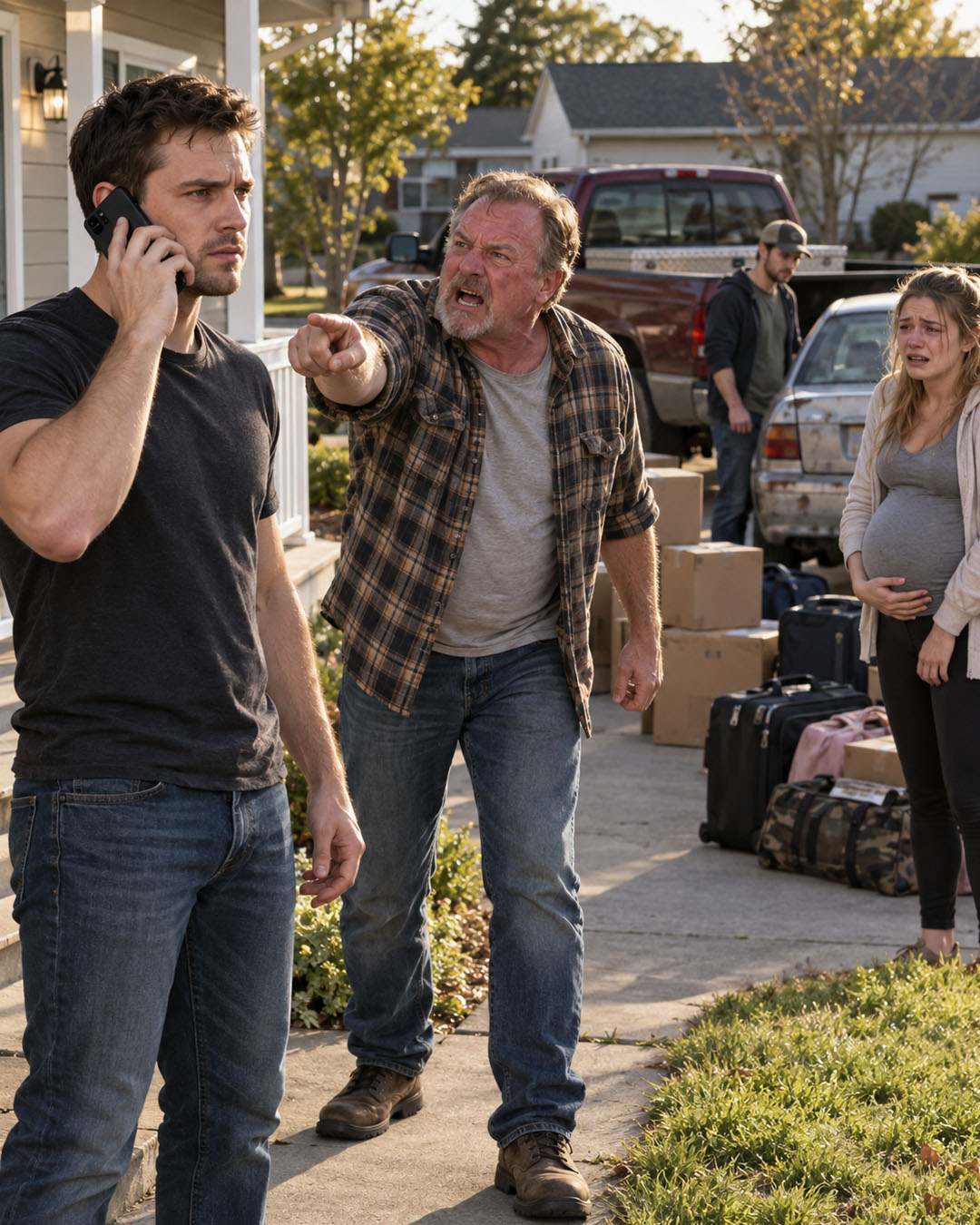
The dispatcher remained calm as I explained that three people were attempting to move someone into my home without permission. My father stood beside the porch steps, shaking his head in disgust. Jason paced around the driveway, muttering that I’d lost my mind, while Ashley sat in the passenger seat of Dad’s truck, crying into a tissue.
Twelve minutes later, two patrol cars pulled up.
Officer Patricia Johnson approached first. She was a middle-aged woman with tired eyes and a manner that suggested she’d already seen every variety of family argument imaginable.
“Who owns the property?” she asked.
“I do,” I replied. “My family tried to move someone in without asking, and they refused to leave when I told them to.”
Dad immediately interrupted.
“Officer, my son is making a mountain out of a molehill. His brother’s girlfriend is expecting a baby. We’re simply trying to help her.”
Officer Johnson turned toward him.
“Sir, that doesn’t give you permission to occupy someone else’s residence. You’ve been asked to leave, so you need to remove your belongings.”
Dad looked genuinely astonished.
“But I’m his father.”
“That doesn’t change who owns the house.”
For the first time that afternoon, Dad had nothing to say.
The officers supervised while Jason loaded everything back into the vehicles. When I asked that the incident be formally documented and that my family receive trespass warnings, Dad looked at me as though I were a stranger.
“You’ll regret humiliating me like this,” he said.
I met his eyes.
“I’m not the one who should be ashamed.”
After they drove away, I sat alone on my porch for nearly an hour. My hands wouldn’t stop trembling, though I wasn’t sure whether it was anger, relief, or grief.
That evening, I changed the locks. The next morning, I arranged for security cameras to be installed around the house.
I also called my longtime friend Jennifer Parker, an attorney I’d known since college. She listened without interrupting as I explained everything.
“Michael,” she finally said, “keep copies of every message and every recording. Your father doesn’t sound like someone who accepts being told no.”
She was right.
By lunchtime, my phone was overflowing with messages.
Mom called me heartless. Aunt Linda accused me of abandoning a pregnant woman. Uncle Christopher said Grandpa would have been ashamed of me.
Grandpa had been dead five years, but apparently everyone still felt entitled to speak on his behalf.
The following morning, my mother appeared at my front door carrying groceries.
“Michael, sweetheart,” she called through the camera, “I brought cinnamon rolls. Can’t we talk?”
I spoke through the intercom.
“Mom, you knew what Dad was planning, didn’t you?”
There was a long silence.
“Your father thought it would be better if we told you afterward.”
I closed my eyes.
“Then you knew.”
“Please understand. Ashley needs help.”
“And you decided I should provide it without asking me.”
Mom began crying.
“Families make sacrifices.”
“Yes,” I replied. “But sacrifices are supposed to be voluntary.”
She stood outside for several more minutes before finally returning to her car.
I wanted to run after her. Instead, I watched through the camera until she drove away.
Two days later, my father organized what could only be described as a protest.
Four cars arrived outside my house. Dad, Jason, Aunt Linda, and several cousins stood on the public sidewalk holding handmade signs.
One read, “FAMILY BEFORE PROPERTY.”
Another announced, “MICHAEL TURNED HIS BACK ON A BABY.”
The neighbors came out onto their porches. A woman across the street called to ask whether I was safe.
I felt humiliated, but I refused to give them the shouting match they wanted.
Then Jason published a Facebook post accusing me of leaving his pregnant girlfriend homeless.
Within hours, distant relatives and even a few coworkers were commenting.
I wrote one response.
I explained that nobody had asked to use my house, that Ashley had been told a lie, and that I had offered everyone a chance to leave peacefully. I also pointed out that the people calling me selfish were welcome to offer their own spare rooms.
Then I stopped responding.
That night, a message arrived from Ashley.
“Michael, I’m sorry. I really believed you’d agreed. Richard told me you’d offered the room because you wanted to help with the baby. I’m staying with my sister in Ohio now. I never meant to cause trouble.”
I stared at her words for a long time.
For the first time, I understood how thoroughly my father had manipulated her.
I replied that I didn’t blame her for believing him and hoped she and the baby were safe.
She sent back a small heart.
I thought the worst was over.
But at three o’clock the following Sunday morning, my phone sounded a security alert.
Someone was standing at my back door.
I opened the camera feed, expecting to see a raccoon or perhaps a neighbor’s wandering dog.
Instead, I saw Jason.
He was drunk, swaying beneath the porch light, with something metallic in his hand.
“Come on, Mike,” he slurred, jabbing at the lock. “Open the door. You owe me.”
Then he raised the object toward the glass.
I dialed 911.
Chapter 3
I stayed inside while Jason stumbled around my backyard. After failing to force the back door, he tried the padlock on my storage shed. When that didn’t work, he kicked a flowerpot off the patio and collapsed into a chair.
The police arrived while he was attempting to climb over the fence.
Jason slipped, landed face-first in the grass, and was taken into custody.
Officer Johnson recognized me immediately.
“Mr. Thompson,” she said, looking at the damaged lock, “I was hoping we wouldn’t meet again under these circumstances.”
“So was I.”
She watched the camera recording, then asked me to explain what had happened.
I told her everything.
When she asked whether I wanted the incident pursued formally, I said yes. My brother had crossed a line that couldn’t be excused by alcohol or family ties.
By breakfast, Dad had called fifteen times.
I finally answered.
“You let them take your brother to jail?” he shouted.
“Jason tried to break into my house.”
“He was upset!”
“Then he should have called a friend. Or gone home and gone to bed.”
“You’re destroying this family!”
I looked at the splintered wood around my back-door lock.
“No, Dad. I’m refusing to let this family destroy me.”
He hung up.
That afternoon, Ashley’s mother, Nancy Miller, called. Ashley had gone from her sister’s apartment to stay with her parents, who had room for her and the baby.
Nancy apologized for what had happened.
“Your father told Ashley everyone had agreed,” she explained. “She thought she was going somewhere she’d be welcome.”
“I know,” I said. “She told me.”
Nancy hesitated.
“There’s something else. Jason hasn’t checked on her. She’s called several times, but he keeps saying he’s too busy with his problems.”
That hurt more than I expected.
I’d known my brother was irresponsible. But ignoring the woman carrying his child was a different kind of failure.
“I’m sorry,” I said.
Nancy sighed.
“We’ll look after our daughter. What she needs now is peace, not another argument.”
I thanked her for calling.
For the next several days, I kept thinking about Ashley sitting in my father’s truck, clutching her belly and believing she’d found a safe place for her baby.
I wished I’d spoken more gently to her.
But I still knew I’d made the right decision.
Then the lawsuit arrived.
Dad had hired an attorney and filed a civil complaint accusing me of intentionally causing him emotional distress and violating some supposed obligation to support family members.
Jennifer read the paperwork twice.
“Your father is going to have a difficult time explaining why refusing to surrender your spare bedroom constitutes wrongdoing,” she said.
“Can he actually win?”
“Nothing in litigation is guaranteed. But based on what you’ve shown me, the claims look extremely weak. We’ll respond properly.”
I wasn’t laughing anymore.
The legal costs, the missed work, and the constant anxiety were beginning to wear me down.
One night, sitting alone in my kitchen, I wondered whether giving Ashley the room for a few months would have been easier.
Then I remembered Dad turning that key.
He hadn’t wanted my help. He’d wanted obedience.
A week later, Mom called from Aunt Patricia’s house.
Her voice sounded different, smaller somehow.
“Michael, I owe you an apology.”
I waited.
“Your father had no right to do what he did. And I had no right to let him.”
For a moment, I couldn’t answer.
She continued.
“I’ve spent so many years trying to keep everyone happy. Whenever Jason got into trouble, I helped clean it up. Whenever your father made a decision, I went along with it because disagreeing meant another fight.”
“Mom…”
“Please let me finish. I convinced myself I was keeping our family together. But all I was doing was teaching them that someone else would always pay for their mistakes.”
I pressed my fingers against my eyes.
“I’m glad you see that.”
“I’ve moved out for a while,” she said. “Richard and I need some distance.”
We talked for nearly an hour.
Before hanging up, she told me something I hadn’t heard from her in years.
“I’m proud of you, sweetheart.”
Afterward, I sat in silence, letting those words settle.
They didn’t erase what had happened. But they gave me hope that something good might still survive.
Unfortunately, Jason wasn’t ready to change.
He sent an angry email accusing me of ruining his future, breaking up our parents’ marriage, and caring more about my house than my family.
His final sentence stayed with me.
“When you’re old and alone, remember you chose an empty bedroom over your own blood.”
I almost responded.
Instead, I forwarded the message to Jennifer and closed my laptop.
Three months passed before another unexpected phone call changed everything.
It came from my ninety-one-year-old grandmother, Elizabeth Thompson.
“Michael,” she said, without bothering with hello, “your grandfather would have been ashamed of what your father has done.”
I sat down.
“Grandma?”
“And I’ve decided it’s time somebody in this family remembered what decency looks like.”
Chapter 4
Grandma Elizabeth had always been a formidable woman. At ninety-one, she still cooked Sunday dinner, balanced her own checkbook, and corrected anyone foolish enough to mistake her age for weakness.
She’d spent months watching our family unravel.
“Your father has forgotten something important,” she told me. “A parent is supposed to help his children stand on their own feet, not take what they’ve worked for.”
I swallowed hard.
“Grandma, I never wanted any of this.”
“I know, honey. That’s why I’m calling.”
She explained that she’d been reviewing her estate plans with her attorney.
The house she’d intended to leave my father would now go to me. The money she’d once reserved for Jason would instead be placed in an education trust for his daughter.
“Grandma, you don’t have to punish them on my behalf.”
“I’m not punishing anybody,” she said firmly. “I’m deciding what I want to do with what belongs to me.”
Then her voice softened.
“Your grandfather worked forty years to pay for this house. He taught your father that a man’s word mattered, but so did another man’s right to say no. Somehow Richard remembered the first lesson and forgot the second.”
Tears filled my eyes.
Grandpa had taught me how to repair a bicycle, plant tomatoes, and replace a broken faucet. He’d also given me the advice I remembered most clearly.
“A house isn’t much good, son, unless you can feel peaceful inside it.”
Grandma invited me over the following Sunday.
She made pot roast, mashed potatoes, and the green beans she’d been cooking the same way since the 1950s.
We talked about Grandpa, about my childhood, and about all the times she’d wished she’d confronted Dad’s controlling behavior sooner.
“I thought keeping quiet was the same as keeping peace,” she admitted. “Turns out silence sometimes just gives trouble room to grow.”
Six weeks after Dad filed his lawsuit, the court dismissed it. Jennifer explained that the allegations hadn’t established a valid legal basis for the relief he demanded, and the judge had rejected the case with prejudice.
Dad was furious.
He spent days posting bitter complaints online about disrespectful children and the decline of family values.
But something remarkable happened.
People stopped answering him.
Even relatives who had joined his sidewalk demonstration began distancing themselves from the arguments.
Mom filed for divorce shortly afterward.
She called me from her attorney’s office.
“I should have done this years ago,” she said. “I’m sixty years old, Michael, and I’m finally learning that keeping everyone else comfortable isn’t the same as being happy.”
She moved in with Grandma temporarily.
To everyone’s surprise, they got along wonderfully. They attended church together, watched old movies, and argued cheerfully over crossword puzzles.
Mom sounded lighter than she had in years.
Meanwhile, Ashley gave birth to a healthy baby girl named Emma.
I learned about it from a picture Nancy sent me.
The baby had dark hair, round cheeks, and tiny fingers curled around Ashley’s thumb.
I stared at that photograph for a long time.
Emma hadn’t chosen any of this.
She deserved love without conditions, without shouting, and without adults using her existence to win arguments.
Nancy told me Ashley planned to return to community college while her parents helped with childcare.
She also told me Jason hadn’t attended the birth.
He was serving a short jail sentence after pleading guilty to charges stemming from the attempted break-in at my house.
I thought about my brother sitting behind bars while his daughter entered the world.
It was heartbreaking.
But it was also the result of choices he’d made himself.
Two weeks after his release, Jason showed up at the security company where I worked.
Fortunately, our front desk called me before allowing him farther into the building.
I met him in the lobby with two security officers nearby.
He looked thinner than I remembered. His face was unshaven, and the familiar swagger had disappeared.
“Hey, Mike,” he said.
“Jason.”
He stared at his shoes.
“I’m not here to fight.”
“Then why are you here?”
His eyes filled with tears.
“Ashley won’t take my calls. Mom barely talks to me. Grandma changed her will. Dad just sits around getting angry at everybody.”
He paused.
“I don’t have anybody left.”
For a moment, I saw the little boy who used to follow me around the backyard, begging me to teach him how to throw a baseball.
I remembered carrying him home after he scraped his knees and helping him study for spelling tests.
I loved that boy.
But the man standing before me had to take responsibility for himself.
“Jason,” I said, “you still have a daughter.”
He nodded.
“I know.”
“Then stop worrying about what everyone owes you. Start thinking about what you owe her.”
He wiped his face with his sleeve.
“I messed everything up.”
“Yes,” I said. “You did.”
He looked surprised by how plainly I’d said it.
“But that doesn’t mean you can’t do better.”
He asked whether we could be brothers again.
I told him a relationship was possible, but it would require real changes: steady work, sobriety, counseling, respect for my boundaries, and consistent support for Emma.
“That sounds like a lot,” he whispered.
“Being a father is a lot.”
He stood quietly for several seconds.
Then he nodded.
“I’ll try.”
“Don’t do it for me,” I said. “Do it for your daughter.”
We didn’t hug.
He left through the glass doors, and I watched him walk toward the bus stop.
For once, I didn’t rush after him to make things easier.
Over the following weeks, I heard he’d enrolled in a welding program and started attending recovery meetings.
He eventually sent me a photograph of himself wearing a welding helmet.
Underneath, he’d written, “Day twelve. Still showing up.”
I replied, “Keep going.”
That was enough for now.
My father remained unwilling to apologize.
One evening, my cameras recorded his truck slowing outside my property. He sat behind the wheel for a few moments, looking at the house, then drove away.
There was still a protective court order in effect, so I was relieved he hadn’t approached.
I sometimes wondered whether he’d ever understand what he’d done.
But I’d stopped making my happiness depend on that answer.
Life gradually returned to something gentler.
I received a promotion at work. I began dating a kind woman named Sarah, who loved gardening and had a wonderful laugh.
One Saturday, she helped me plant flowers near the back porch where Jason had destroyed the old pots.
“Funny,” she said, brushing soil from her hands. “You’ve spent so much time protecting this place. Maybe it’s time to enjoy it, too.”
She was right.
I began inviting friends over for dinner again.
Mom came by with homemade cinnamon rolls, and this time she waited for me to open the door.
Grandma visited for Sunday lunch, declaring my pot roast almost as good as hers.
Almost.
A few weeks before Christmas, Nancy sent another picture of Emma.
She was smiling, her little hands reaching toward a stuffed rabbit.
I looked at the photograph and felt something shift inside me.
I still wasn’t ready to rebuild everything that had been broken. But I was beginning to understand that protecting myself didn’t mean closing my heart forever.
Maybe someday I’d meet my niece.
Maybe Jason would become the father she deserved.
Maybe Dad would finally recognize that love couldn’t be demanded like rent.
Or maybe none of those things would happen.
I couldn’t control them.
On Christmas Eve, Mom and Grandma came over for dinner. Sarah brought apple pie, and we gathered around my dining room table beneath the warm glow of the chandelier I’d installed myself.
Outside, snow began falling softly across the lawn.
Grandma raised her glass of sparkling cider.
“To family,” she said.
For a second, the room went quiet.
Then she smiled.
“Not the kind that thinks it owns you. The kind that knows how to love you.”
We laughed, and Mom reached over to squeeze my hand.
Later that night, after everyone had gone home, I stood in the doorway of the guest bedroom.
The bed was neatly made. A small lamp glowed on the nightstand, and fresh towels were folded in the closet.
It was still an empty room.
But it no longer felt like something I had to defend.
It felt like a space I could offer freely to someone I loved, whenever I chose.
I finally understood what Grandpa had meant all those years ago.
A home wasn’t truly yours because your name appeared on the deed. It was yours because you could close the door at night and know that the life inside belonged to you.
I’d lost the family I’d once believed I had.
But I’d found something stronger than obedience, something I hadn’t known was missing until my father stood in my driveway with that brass key.
I’d found the freedom to say no without surrendering my capacity to love.
And in the end, that one word hadn’t destroyed my family.
It had shown me which parts of it were worth saving.
THE END.
⚠️ All characters and events are fictional. Do not imitate or apply them in real life. 😌😌😌

