
Chapter 2
At six-forty on Christmas morning, Polly appeared at my bedside in her flannel nightgown to report that Santa had eaten the carrot we’d left for him but had forgotten to finish the green part. Freddy followed her, rubbing his eyes and asking whether Christmas could begin before breakfast.
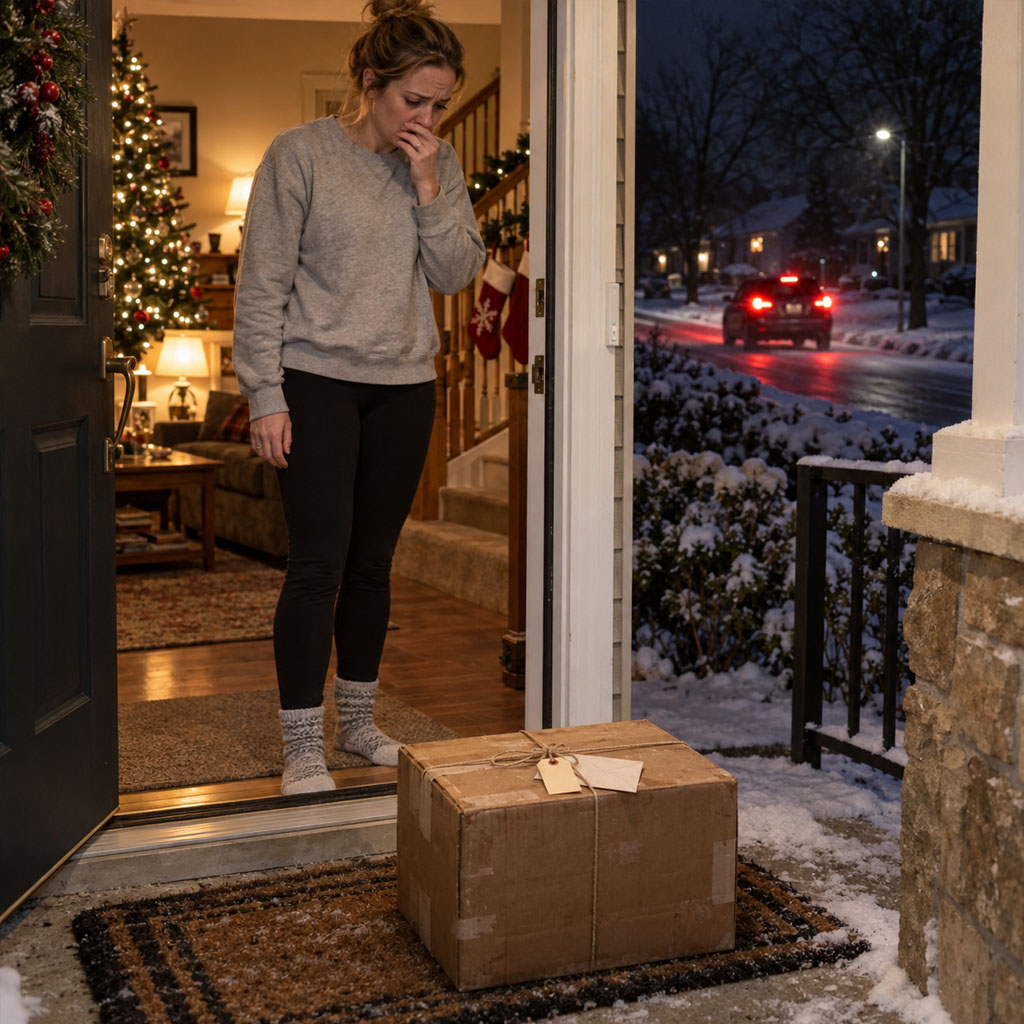
We went through their stockings first. There were clementines, toothbrushes shaped like dinosaurs, a small puzzle, and a pair of warm socks for each child. I had spent what I could afford, and the children were happy. When they had finished, I brought the box downstairs and set it on the living room rug.
“This one is from Grandpa,” I told them.
Freddy stopped chewing a piece of toast. Polly approached the box slowly and traced the letters on the tape with one finger.
“Grandpa’s in heaven,” she said. “How did he bring us presents?”
“He shopped early,” I answered.
That was the truth. My father had shopped for the following Christmas every December twenty-sixth of his adult life. He knew which stores marked down their merchandise after the holidays, and he would spend the next few days hunting for bargains, wrapping everything before New Year’s so he wouldn’t be tempted to give it away early.
He had continued the tradition even after his cancer diagnosis. The December before he died, I drove him to his Tuesday infusion and watched him tuck a receipt into his coat pocket. He refused to tell me what he had bought, claiming it was none of my business until Christmas came around.
I cut the tape with my house key. Inside were four packages wrapped in the red-and-white paper he had bought in bulk the year Polly was born. Each gift tag was a strip of masking tape bearing his familiar handwriting.
Polly received a wooden watercolor set with real paint tubes and a field guide to Indiana birds. Inside the cover, he had written, “For when you’re bigger, Polly Wally. Look up.” Freddy received a wooden dump truck with a working bed and a pair of child-size work gloves, the kind his grandfather had worn when he let Freddy help him in the garden.
For several minutes, I could barely speak. Polly hugged the bird book against her chest, and Freddy pulled on his gloves and walked around the living room holding his hands in front of him as though he were performing surgery.
Then I noticed a folded sheet of yellow legal paper taped beneath the lid.
The heading read, “Things I taped for the girls and the grandkids.” Below it was a numbered list in my father’s handwriting, twenty-three items in all, each followed by a name and sometimes a note explaining why he had chosen it.
Number one was a Martin guitar, marked for Freddy when his hands were big enough. Number three was my father’s Hamilton railroad pocket watch, intended for Polly when she was old enough not to drop it. Number seven was his red rolling tool chest, which he had promised to Amy’s boys.
There were twenty-three lines, but only eleven of the marked items had made it to the family after his death.
I sat on the floor with the yellow paper in my lap while the children played. Twelve items were missing, and the first was the guitar my father had intended for my son.
My parents had divorced in 2010, when I was sixteen. Amy was already married, and I had chosen to live with Dad rather than move with Mom into a rental apartment. My mother had stood in the doorway with her arms folded while I carried my suitcase to his truck. She later told me she had waited for me to turn around and change my mind.
I couldn’t remember whether I had looked back. I only remembered that my father had opened the passenger door for me and asked whether I wanted to stop for a hamburger on the way home.
He died at sixty-eight in February 2025, leaving a three-page will. His house would be sold, the proceeds divided between his daughters, and the household contents distributed according to the markings he had left on the items. Amy lived twenty minutes from his house and became the executor because I had two small children and a work schedule that began at six in the morning.
Our mother had married Daryl the previous summer. He ran Bixler Auction Service from a pole barn outside Brazil, Indiana, handling farm sales, estate clearances, and the occasional storage unit. When it came time to empty Dad’s house, Mom called Amy repeatedly, insisting that Daryl could do the job for a family rate.
Amy eventually signed a service agreement in August. Daryl would receive a thirty-five-percent commission, plus nine hundred dollars for hauling and cleanup. The estate sale took place in September, and the settlement statement showed gross proceeds of $11,840, leaving $6,796 for the estate after expenses.
Amy had trusted him. She had no reason to believe that the man her mother had married would take things out of a dead man’s house before the family had a chance to divide them.
On Christmas night, after the children had fallen asleep, I called my sister.
“You got it,” she said before I could ask.
“I got it. What is it?”
“I was dog-sitting for Mom while they were on the cruise. On Tuesday, I went into Daryl’s garage to get the dog’s food, and his trailer was open. The box was sitting on a pallet with a bunch of other things. I saw Dad’s handwriting from across the garage, Chrissy.”
Amy’s voice trembled. She explained that she had reminded Daryl three times that anything bearing Dad’s masking tape was supposed to be set aside for the family. When the guitar failed to appear among the estate items, Daryl had told her its top was cracked and he had sent it away with a load of junk.
“Did you see the crack?” I asked.
“No.”
“Did you see the junk load?”
“No.”
She had taken the box from his trailer while he and Mom were away, then driven it to my porch without knocking. She was frightened, ashamed, and uncertain whether she had committed a crime by rescuing something that should never have been there.
“Don’t call Mom,” I told her. “Don’t text Daryl. Just keep feeding the dog and act like everything is normal.”
“Why?”
“Because I need a little time to find out what happened.”
The following evening, I opened my laptop and searched for Daryl’s auction website. It was a simple page with a green banner, a clip-art gavel, and a photograph of him wearing a white cowboy hat. A slogan beneath the picture read, “Fair dealing since 1994.”
Under the past auctions tab, I found an online sale that had closed on October 25. There were 240 lots, each with photographs, descriptions, and final prices. I scrolled until I reached lot nine, a black guitar case with a green cartoon stegosaurus sticker peeling off the lid.
Freddy had put that sticker there at his grandfather’s kitchen table. Dad had pretended to be furious before declaring the case officially improved.
The second photograph showed the guitar inside. There was no crack in the top.
Lot nine was listed as a 1971 Martin D-28, sold for $3,100. The consignor code was BX-17.
I kept scrolling. My father’s cast-iron skillets had sold for $1,150. His desk, fly rod, silver dollars, electric train set, bicycle, pocket knives, and handmade quilt were all there, scattered across the auction catalog under the same consignor code.
Ten lots matched items on Dad’s yellow list. Nine had sold for a combined $19,375. The tenth was lot 214, the box of wrapped holiday items sitting on my bedroom shelf. It was marked sold for $85, unpaid, not collected.
Every photograph showed the objects sitting in front of a brown pegboard in my father’s garage. White outlines marked the places where the tools belonged, each shape painted by hand.
I had painted half those outlines when I was fourteen. Dad had held each tool against the board while I traced around it, explaining that the outlines would tell him if anything went missing.
I printed every page, saved screenshots, and recorded myself scrolling through the entire catalog. I wasn’t going to let anyone dismiss the evidence as something I had assembled after the fact.
Then I found another photograph, posted by Daryl’s daughter Mindy in November. It showed her husband holding a gold railroad pocket watch, its lid open and its chain draped across his palm. A small blue-and-gold machinist’s union pin hung from the chain.
My father’s initials, EH, were engraved on the back.
I stared at the photograph until the screen dimmed. The watch was supposed to belong to Polly someday, and the man who had sold it had done so under the same number he used for all the other missing belongings.
I called Amy again the next morning.
“We need a lawyer,” I said. “And before we do anything else, we need to know exactly what Daryl thinks he’s done.”
Chapter 3
The probate attorney Amy had hired was named Crandall. He was in his sixties, wore reading glasses pushed into his gray hair, and had a coffee mug that read WORLD’S OKAYEST GOLFER. He read the service agreement, the settlement statement, and every auction page I had printed without interrupting me.
“An executor has a duty to collect everything belonging to the estate,” he said when he finished. “If someone you hired removed estate property and sold it for himself, the estate has a claim. Depending on the circumstances, there may also be criminal charges.”
He recommended a formal demand for a complete accounting. I asked him to wait.
“If we send a letter now, Daryl has time to prepare a story,” I explained. “He can claim the guitar was damaged, the other things were junk, or the box was a misunderstanding. Right now, he doesn’t know we have the catalog.”
Crandall studied me for a moment. “What do you intend to do?”
“Give him a chance to tell us what he thinks is true. In writing.”
That evening, my mother sent a text demanding that I return the box. Daryl had discovered it missing from his trailer, she said, and was considering reporting the theft. The box was company property, she insisted, and someone had paid for it.
On Saturday, while I was cleaning toothpaste from the bathroom mirror, my phone rang in the kitchen. Polly answered before I could get there, using the formal voice she thought grown-ups used at offices.
“Headland residence. This is Polly speaking.”
My mother’s voice came through the speaker, sweet and gentle in a way I rarely heard directed at me.
“Those presents in the box weren’t really yours, sweetheart. They were supposed to go to somebody else. Your mommy needs to give them back tomorrow, okay? It’s not your fault. Grown-ups made a mistake.”
I took the phone from Polly and ended the call.
My daughter didn’t cry. She went to the table, closed the watercolor box, lined up all eleven paint tubes, and placed the bird book on top. Then she pushed them toward me with two fingers.
“You can give them back,” she whispered. “I didn’t use the purple very much.”
Freddy stood beneath the table clutching his dump truck against his stomach. “No,” he said firmly, but he was too young to understand why he was angry.
I knelt in front of Polly and asked her to look at me.
“Who wrote your name on the gift tag?”
“Grandpa.”
“Did Grandpa make mistakes about who he loved?”
She thought about it seriously. “He forgot my birthday was in July one time and said June.”
“That’s different, sweetheart. Did he ever forget that he loved you?”
She shook her head.
“Then these presents are yours. Nobody is taking them away. Not tomorrow, not ever.”
She opened the watercolor box again, and I stayed beside her until she began painting. That night, I sat at the kitchen table with the yellow list and let my hands shake for as long as they needed to.
Then I texted my mother: Sunday at five. I’ll bring it.
On Sunday morning, I carefully removed the gift tags from the children’s presents and saved every strip of masking tape. I placed the yellow list in a plastic sleeve, put the empty cardboard box in my car, and stopped at an ATM for exactly $85. I kept the receipt.
My mother and Daryl lived in a ranch house on the edge of Brazil. When I arrived, the dining room smelled of pot roast, and forty-one ceramic buildings from my mother’s Christmas village lined the sideboard. At the far end stood a small white church with a red door, the first piece my father had bought her back in 1991.
Amy was already seated at the table. Across from her sat Mindy and her husband, Kyle, while Daryl occupied the head of the table in a quilted vest.
I set the empty box in front of him, with the auction tag facing up.
“I’m sorry,” I said. “Amy shouldn’t have gone into your trailer, and I shouldn’t have kept something while ownership was unsettled. Fair is fair.”
My mother exhaled with relief. Daryl drew the box toward him, opened the flaps, and lifted the tissue paper.
“Where are the contents?”
“The kids opened the presents on Christmas morning before I knew any of this,” I replied. “They’re six and four. The tags said the gifts were from their grandfather.”
“That’s a problem,” he said calmly. “Somebody paid for that lot.”
“Then I’ll pay the amount it sold for. I want to make this right, but I want to pay the right person the right amount. Can you write down what it sold for and who I’m supposed to pay?”
He took out his phone and typed for a few seconds. A message appeared on my screen with the lot number, the $85 sale price, the BX-17 code, and instructions to pay Mindy.
I counted out the bills on the table. Then I asked for a receipt so no one could claim Amy still owed him anything.
Daryl waved at his daughter, who took a carbon receipt book from her purse. She wrote the details carefully, signed her name, tore off the top copy, and handed it to me.
“Paid in full,” I said, folding it into my coat pocket.
Daryl leaned back in his chair. “I’ve been doing this business for thirty-one years, kiddo. I’ve stood in plenty of dead people’s houses while their families fought over the silverware. I made myself a promise a long time ago that nobody would stand and watch me lose what’s mine. Not ever again.”
Nobody answered. My mother pulled the empty box toward herself and ran her fingers over the tape bearing my father’s handwriting. For a moment, her expression softened, and I wondered whether she had truly been unaware of what was inside.
Then she folded her hands and announced that dinner was getting cold.
We ate pot roast, carrots, and dinner rolls. Daryl told a story about a blackjack dealer he had met on the cruise, and my mother described a woman who had worn the same sequined dress three nights in a row. Amy barely touched her food.
When I left, Daryl walked me to the door.
“No hard feelings,” he said. “People get funny when somebody dies.”
“They do,” I answered.
On January 6, Daryl filed a report with the Clay County Sheriff’s Office, accusing Amy of taking company property from his trailer. He attached the auction record for lot 214 and noted that partial restitution had been made by a family member.
The detective, Fenwick, called Amy at work several days later. She phoned me from her car, her voice shaking as she described the accusation.
“He went ahead and reported me after you paid him,” she said.
“I know.”
“How?”
“Because he told us who he was at dinner. He said nobody would ever watch him lose what was his.”
The detective wanted statements from both of us. I asked Crandall to arrange an appointment after Daryl’s spring auction catalog went online.
“Why wait?” Amy asked.
“Because he keeps selling things. And because I want the next thing he sells to tell us the truth.”
Chapter 4
For six weeks, I let Daryl believe he had won. He posted on his business page that it was a sad day when people opened their homes to family members who helped themselves, and that in thirty-one years he had never taken anything that wasn’t his. He didn’t name us, but he didn’t have to.
People from his church liked the post. An old schoolmate sent me a message asking whether I was all right. My mother called Amy and told her not to come to Sunday dinner until she apologized, then warned me not to expect an invitation for Easter.
I didn’t respond. I packed lunches, took my children to school, and continued working at the cancer center, where people came to me every morning trusting that I would put them in exactly the right position for treatment. At home, I marked February 23 on the calendar and waited.
On February 20, Daryl’s spring auction catalog appeared online. I scrolled through the listings until I reached lot eighty-eight, a red rolling tool chest with eleven drawers, loaded with neatly arranged wrenches and sockets.
In the second photograph, the familiar brown pegboard hung behind it, complete with the white outlines I had painted as a teenager.
The description called the chest meticulously maintained and listed BX-17 as the consignor code. The opening bid was $1,500, with an estimate of $3,500 to $4,500.
I called Amy.
“That’s Dad’s tool chest,” she said after opening the listing. “He promised it to my boys.”
“It’s being sold under the same number Daryl used for the guitar.”
“Should we call the detective?”
“Monday,” I said. “Let the listing stay up all weekend.”
At ten o’clock on February 23, Amy and I sat in a small interview room at the sheriff’s office with Crandall beside us. Detective Fenwick laid out Daryl’s original complaint, including the lot record for the box we had returned.
I handed him the evidence one piece at a time. First came Dad’s will and the yellow list of twenty-three items. Then the service agreement, the estate settlement statement, and printouts from the fall auction showing nine lots sold under BX-17.
I showed him the photograph of the guitar case with Freddy’s stegosaurus sticker. I showed him the skillets and the pegboard, then a photograph my father had taken in 2009 of me standing in the garage with paint on my hands.
The outlines matched.
I gave him the receipt from Mindy for the $85 payment, along with my ATM slip. Then I showed him the photograph of Kyle holding my father’s pocket watch and the new auction listing for the tool chest.
Fenwick examined the evidence without speaking for several minutes.
“In January, Mr. Bixler told me BX-17 was his personal consignor number,” he said. “He specifically said everything under that code belonged to him. And now he’s selling another item photographed in your father’s garage before the estate sale.”
“Yes,” I said.
“What do you want to happen?”
“I want lot eighty-eight stopped before it sells. I want the tool chest returned to Amy’s boys. And I want someone to find out where the money went.”
That afternoon, Crandall helped us file a complaint with the Indiana Attorney General’s licensing division. We attached every document and photograph, including the auction receipt Daryl had insisted I obtain at dinner.
Eleven days later, Amy and I attended the preview for Daryl’s spring sale. The barn smelled of kerosene heat and old wood, and customers wandered between folding tables inspecting antiques and farm equipment. Daryl stood beside the red tool chest wearing his white cowboy hat, one hand resting on the lid as he talked to a group of potential bidders.
My mother sat at the cash table with Mindy. Kyle stood behind them, a gold chain looped across his vest.
At five past five, Detective Fenwick entered with a uniformed deputy. He walked straight to the tool chest and attached a bright orange evidence tag to the top drawer.
“Mr. Bixler, this item is being held as evidence in an open investigation. It cannot be sold, moved, or released until the hold is lifted.”
Daryl laughed nervously. “There must be some mistake. That’s my personal consignment.”
“You told me that in January,” Fenwick replied. “These photographs were taken in Eldon Headland’s garage before his estate sale. You’ll want to speak to an attorney before saying anything else.”
The barn fell quiet. Daryl looked down the aisle and found me standing beside Amy near the fishing poles. I didn’t nod or smile. I simply watched him.
Fenwick then approached the cash table and asked Mindy about the company’s escrow records. He noticed the gold watch chain across Kyle’s vest and requested to see the watch.
Kyle took it out slowly. Fenwick turned it over and found my father’s initials engraved on the back.
Mindy stared at it, then unhooked the chain from her husband’s vest and placed the watch in the detective’s hand. Tears gathered in her eyes.
“It’s the only nice thing I ever gave him,” she whispered.
Fenwick wrote a receipt for the watch, and customers began leaving the barn before six. By the following morning, the online auction had been suspended.
On March 18, Crandall called me at work. The escrow records had been obtained, and what he found was worse than we had expected.
Bixler Auction Service had written a check on October 30 for $17,437.50, payable to Daryl and Genie Bixler. The memo line read BX-17 fall sale, and Mindy had signed the check.
The next morning, $6,000 had gone from their joint account to the cruise line.
“The nine lots brought in $19,375,” Crandall explained. “The check was the proceeds after the house fee. Lot 214 was never paid for, so nobody actually bought that box. Daryl simply kept it.”
My mother had paid for her balcony cabin with my father’s guitar, his skillets, his quilt, and the other belongings he had marked for his family. Then she had texted me that my children would receive nothing because fair was fair.
When she called that night, she was crying.
“Do you know what you’re doing to him?” she demanded. “His blood pressure is through the roof. You’re taking away the business he’s spent his life building over junk your father never used.”
“The guitar had Freddy’s name on it,” I said.
“Oh, that tape! Your father and his tape. He never threw anything away.”
“Did you know what Daryl was doing?”
She didn’t answer. Instead, she told me to call the detective and explain that it was a family matter that we had already settled.
“Fair is fair, Mom,” I said, and ended the call.
Two days later, she appeared on my porch holding two greeting-card envelopes. Each contained twenty dollars, and each had one of my children’s names written on it in her careful handwriting.
“It’s for the kids,” she said. “I want them to have something from their Nana.”
“No, thank you.”
“It’s twenty dollars, Christina.”
“I know what it is.”
I closed the door. Through the living room window, I saw Polly lower the curtain and return to the couch with her bird book open on her knees.
A week later, an investigator from the Attorney General’s office called. Her name was Ogden, and she told me they had found the BX-17 code on items from three other estate sales over the previous four years. One family had already identified a sewing machine and china that belonged to a deceased relative and had never appeared on the estate settlement statement.
The investigation was no longer about one family or one auction. It was about several families who had trusted a professional to handle the belongings of people they loved.
In April, Daryl came to my house without his white hat. He sat on the porch step and rubbed his face with both hands before telling me he would repay the money if I could persuade Amy to withdraw her complaint.
“I was twelve when they sold my grandfather’s farm,” he said. “Three hundred and twenty acres, gone in an afternoon. My dad stood there crying while a man with a microphone sold our life to the neighbors.”
He told me he had sworn never to be the boy watching someone else take what belonged to him. He said the bank had stopped sending him repossession work, his credit cards were maxed out, and he had convinced himself that no one would notice the things he took.
“For a second, I could see the frightened boy he had once been. But I could also see the man who had chosen to turn that fear into someone else’s loss.”
“You can repay the estate,” I told him. “But this isn’t my sister’s case anymore. It’s the state’s.”
He stared at me as though I had spoken a language he didn’t understand, then got up and walked back to his truck.
At the end of April, Detective Fenwick asked me to come in again. He showed me a consignment agreement dated September 20, listing all the missing items under BX-17. At the bottom were two signatures: Daryl Bixler and Genie Bixler.
Beside the list, in my mother’s handwriting, were three words.
Eldon owed me.
Fenwick explained that Mindy had given a statement. She said my mother and Daryl had walked through Dad’s house before the estate sale, and that Mom had used a pocketknife to peel the masking-tape labels off furniture and put them in her coat pocket.
According to Mindy, my mother had said, “These were half mine for thirty-one years, and the girls will never notice.”
I had spent four months believing that my mother might not have known what was in the box. I had remembered the way her hand trembled when she touched the tape at dinner, and I had held on to that tiny moment of uncertainty because it was easier than accepting the truth.
Now I understood that she had known exactly what she was doing.
Chapter 5
The prosecutor filed theft charges against Daryl in May, and the licensing division continued its investigation into the other estates. My mother was interviewed twice with a lawyer present, and Crandall told me she could face charges because she had signed the consignment agreement and participated in the sale.
“They’ll listen to what the family wants,” he said carefully.
I thought of my mother’s hands folded on the cash table at the auction barn, and of Polly pushing her watercolor set toward me because she believed grown-ups had the right to take away things that belonged to children.
“No,” I said. “She needs to tell the truth, and she needs to pay her half. That’s all.”
Later that month, Amy and I attended mediation in a conference room in Terre Haute. Daryl sat at one end of a long table with his attorney, while my mother sat beside her own lawyer and stared at the papers in front of her.
The lawyers had already worked out most of the settlement. Daryl and my mother would pay $38,750 to the estate, along with attorney fees, and every recoverable item would be returned to its rightful owner. The guitar had been traced to a buyer in Ohio, who agreed to accept a refund and return it. The pocket watch had been recovered, and the red tool chest would go back to Amy’s family.
Before anyone signed, I placed two papers in front of my mother. On the left was Dad’s yellow list, with twenty-three lines in his shaky square capitals. On the right was the consignment agreement, with her signature and the words Eldon owed me written in the margin.
She read the list first, moving her eyes slowly from one item to the next. At the bottom, in smaller letters, my father had written, “If I missed anything, the girls decide. Not Genie. Not anybody else. The girls.”
My mother covered her handwriting with her palm.
I slid one more page across the table. It was a letter stating that from that day forward, she would have no contact with Polly or Freddy unless I initiated it. There would be no surprise visits, no holiday cards, no birthday calls, and no twenty-dollar envelopes pushed through my front door.
It wasn’t a legal document, and I didn’t pretend it was. It was a boundary I had decided to set, and I signed my name at the bottom.
My mother read it twice.
“Fair is fair,” she murmured.
“It is,” I replied.
Then Amy did something I hadn’t expected. She picked up the yellow list and stood, holding it in both hands, and read all twenty-three entries aloud. She read about the guitar for Freddy, the watch for Polly, the skillets, the train set, the quilt, and every other item Dad had marked for his daughters and grandchildren.
When she finished, she looked at me rather than at our mother.
“He put your name first,” she said quietly. “You stayed with him. You drove him to every treatment. I always knew that, Chrissy. I just never said it when she was listening.”
I couldn’t find the words to answer her, so I held the list on my lap and let the silence speak for me.
That night, after the children were asleep, I found a shoebox halfway beneath Polly’s bed. It had a rubber band around it and the word PRIVET written on the lid in purple marker. I had seen it before but never asked about it, assuming she was keeping some private collection of treasures.
I knew I shouldn’t have opened it. Still, I lifted the lid.
Inside, nestled in pieces of toilet paper, was a little cardinal made from white air-dry clay. Polly had painted it with the watercolors from her grandfather’s box, using red for the body and a tiny brush for the black mask around its eyes. One wing was a slightly different shade because it had broken and she had carefully glued it back on.
A strip of masking tape was stuck to the bottom.
TO NANA FROM POLLY.
Beside the bird lay a flat gray rock painted with a crooked green dump truck. Its label read FOR NANA, in my handwriting, because Freddy had dictated the words to me weeks earlier without explaining what he planned to do with them.
I sat on the floor beside her bed for a long time. All winter, while Daryl’s complaint sat in a folder and my mother told people we had raised children who kept stolen property, Polly had been quietly repairing a bird she had made for the woman who had hurt her.
The next morning, I admitted what I had done.
“I opened your private box,” I told Polly. “I’m sorry. That was wrong of me.”
She paused with her spoon halfway to her mouth.
“Did you see Nana’s bird?”
“I did. You did a beautiful job fixing the wing.”
She looked down at her cereal. “Nana’s is finished. Can I still give it to her, even though she didn’t come for Easter?”
I remembered the letter I had signed the day before. I had meant every word of it, and I wasn’t going to make my daughter responsible for repairing a relationship that had hurt her.
“You made the bird for her,” I said. “That means you get to decide what happens to it.”
Polly thought for a moment, then nodded. “I want to give it to her on the porch, not inside. And you have to stay right there.”
“I can do that.”
In June, an auctioneer from Greencastle came to my mother’s house to inventory her Christmas village. The village had forty-one ceramic buildings, each with a tiny bulb inside, arranged on cotton snow with mirror ponds and little bottlebrush trees. My mother couldn’t pay her half of the settlement without selling things, and the village was among her most valuable possessions.
Amy told me about the sale. I hadn’t asked her to keep me informed, but she knew I would want to know.
I took an afternoon off work and drove Polly to Brazil with the shoebox on the back seat. The auctioneer’s van was already in the driveway, and two young men were wrapping ceramic buildings in newspaper. Daryl’s truck was gone, and the trailer had disappeared from the patch of dead grass behind the house.
My mother sat on the front step in a cardigan, watching the men carry away the little buildings. When she saw us, she started to stand, then noticed the shoebox in Polly’s hands and sat down again.
I walked only as far as the sidewalk. I had promised to stay right there, and I intended to keep my word.
Polly carried the box up the path by herself. When she reached the bottom step, she knelt, removed the lid, and carefully unwrapped the cardinal. Then she placed Freddy’s painted rock beside it.
“I made this before Christmas,” she said. “It’s like the cardinal at Grandpa’s bird feeder. The wing broke, but I fixed it.”
My mother stared at the little bird without touching it.
“You don’t have to give me anything back,” Polly added. “It’s a present.”
Then she put the lid on the empty box, stood up, and walked down the path to take my hand. She didn’t look back, and I didn’t ask her to.
I did look once. My mother had bent forward on the step, her elbows on her knees and both hands covering her mouth. The little red bird sat beside her shoe while the auction workers carried the white church with the red door out through the front entrance.
I buckled Polly into her seat and drove home.
A few weeks later, Daryl pleaded guilty to theft in a courtroom in Brazil. The prosecutor agreed to reduce the charge in exchange for full restitution to my father’s estate and the other affected families. Daryl received probation, and he was prohibited from working as an auctioneer or estate liquidator during that period.
In August, the state auctioneer board revoked his license. His business closed, and its equipment was sold to satisfy debts and restitution. Amy attended the sale and told me that Daryl stood at the back of the crowd with his hands in his pockets, watching his own belongings pass to strangers.
When they reached his wooden auction gavel, someone bought it for forty dollars.
“He didn’t say a word,” Amy told me over the phone. “He just stood there.”
I thought about the boy he had described on the bank steps in 1969, watching his family’s farm sold in pieces. I could understand the pain that had shaped him without pretending it excused what he had done.
My mother’s village sold in September. Forty pieces went to a dealer from Ohio, but the little white church with the red door attracted almost no interest because its bulb had burned out years earlier.
I bought it over the phone from my car in the hospital parking lot for twenty-two dollars.
At home, I replaced the bulb, wrapped the church in newspaper, and placed it in a small cardboard box. I sealed the box with the last of my father’s masking tape and wrote one line across it in his square capital letters.
IT’S YOURS.
On a Saturday morning, I drove to Brazil and left it on my mother’s front step without knocking. She never called, and I didn’t expect her to. There would be no Christmas village on her sideboard that year, and no grandchildren at her table, but she would have one small church with a light she could turn on if she chose.
Daryl now works part-time at a lumberyard, loading trucks. Mindy gave a sworn statement against her father and found a job at a farm supply store outside town. Kyle no longer wears the watch, and the red tool chest sits in Amy’s garage, where her older son sometimes opens the drawers and checks the tools his grandfather once used.
The estate closed in August. The Martin guitar lives in my house now, in its black case beneath Freddy’s bed. His hands still aren’t big enough to play it, but he checks on it most nights and has recently begun learning the names of the parts from a book I found at the library.
The Hamilton watch rests in a velvet bag in my dresser drawer, waiting for Polly to grow old enough to handle it carefully. Every Sunday, she asks to wind it, and I let her turn the crown twelve times, never more, just as her grandfather taught me.
Then she holds it to her ear and listens.
“It’s still walking,” she tells me.
She is seven now and has decided she wants to become a bird scientist. Her field guide is full of check marks, and she has identified thirty-one species in our backyard. In August, Amy and I asked the young couple who bought Dad’s house whether we could take the old bird feeder from the post beside the garage. They said yes, and Freddy helped me dig a hole for it in our yard.
This morning, while I was making coffee, two cardinals landed on the feeder. One was bright red, and the other was brown, with the quiet coloring of a female. The maple tree behind them had begun turning orange at the edges, and Polly stood at the kitchen window in her nightgown, marking the birds in her book.
“You already checked those,” I reminded her.
“You can check them again,” she said. “When they come back, it still counts.”
I thought about the word my mother had used so many times that winter. Fair. She had spoken it as if it were a rule written somewhere beyond our reach, as if she were merely balancing an old ledger that had finally come due.
Thirty-one years of marriage on one side. A disappointing settlement on the other. A daughter who chose her father at sixteen, and a mother who never stopped charging her for it. I understand that ledger better now than I did in December, though understanding it doesn’t mean I have to accept the balance she chose.
My father bought Christmas presents a year early, even while undergoing chemotherapy, because he wanted his grandchildren to have something waiting for them after he was gone. He labeled each gift carefully, not because he was afraid of losing his possessions, but because he wanted the people he loved to know they had been remembered.
Polly made her grandmother a bird before she knew whether Nana deserved one. She repaired its broken wing, wrapped it in toilet paper, and carried it up a long path because she had decided that making something with love was reason enough to give it away.
I still don’t know whether I handled every part of the past year perfectly. I know I kept the evidence, told the truth, and refused to let my children believe they had to surrender a gift from someone who loved them just to make an adult comfortable.
And I know this: fair doesn’t mean everyone receives the same thing. Fair means the smallest person in the room gets back what was already theirs. Love isn’t a prize awarded to the people who agree with us, and family isn’t permission to take what we want and call it even.
Sometimes love means keeping a door closed. Sometimes it means leaving a light on in a little church, even for someone who may never come to see it. And sometimes it means giving a child the freedom to decide what kind of person she wants to become, even when the adults around her have forgotten how.
My father taught me to label things so we’d know where they belonged. In the end, he left me something more important than a guitar, a watch, or a list of twenty-three possessions. He left me a way to recognize what was worth keeping.
THE END.
⚠️ All characters and events are fictional. Do not imitate or apply them in real life. 😌😌😌


