Chapter 2
I called Margaret back three times.
She refused to answer.
Eventually, she sent a text.
I have nothing more to say to you.
I forwarded it to Detective Hensley the next morning.
“Don’t confront her,” he said.
“She knew.”
“She may know something. We need to establish what.”
“She mentioned the unit before I said a word about it.”
“I understand.”
“For six months, she’s been telling my children their father is in heaven.”
His voice softened.
“Let us handle Margaret.”
I wanted to argue, but Noah’s cereal bowl was sitting across from me on the kitchen table. He had left half a banana floating in the milk, something I normally would have complained about.
That morning, I was simply grateful he was upstairs arguing with his sister about whose turn it was to use the bathroom.
By Wednesday, investigators had obtained storage facility records.
The electronic gate showed Ethan’s access code had been used several times before the boating trip. Security footage showed him driving into the property in March.
The rental agreement used an email address connected to one of Ethan’s old marine equipment businesses.
He had not only known about the unit.
He had been using it.
That evening, after the twins went to bed, I spread financial records across my dining room table. Mortgage papers. Bank statements. Divorce documents. Anything Ethan might once have had access to.
At nearly 11:00, Diane knocked on the back door carrying two mugs of tea.
“You’ve had the kitchen light on for four hours.”
“Are you monitoring my electricity?”
“Somebody has to. You’re lighting up the neighborhood.”
She sat across from me.
I showed her the loan application date.
“I was at training. I can prove I wasn’t home.”
“Then prove it.”
“I should have caught this.”
Diane’s expression sharpened.
“Rebecca, you divorced the man. You were not required to spend the rest of your life auditing him.”
I laughed.
Then, without warning, I cried.
Not dramatically. I simply reached a point where my body had run out of places to store the fear.
“What if he’s alive?” I asked.
“Then he has some explaining to do.”
“What do I tell the kids?”
“The truth when you actually know it. Not every frightening possibility before breakfast.”
That became my rule.
Unfortunately, children notice more than adults think.
One afternoon, Emma came home with a drawing from school. It showed our little three-bedroom house, the crooked maple Noah had planted beside the porch, and three people.
Me.
Emma.
Noah.
No Ethan.
“Mrs. Patterson told us to draw our families,” Emma explained.
I placed the picture on the refrigerator.
“It’s beautiful.”
She opened the refrigerator for juice.
“Mom?”
“Yes?”
“Do you think Daddy’s coming home?”
I pulled out a chair.
“Come sit with me.”
She climbed onto the chair with her backpack still on.
“We don’t know exactly what happened to your dad. People are working very hard to find out.”
“Grandma Margaret says he’s in heaven.”
I swallowed.
“Noah says nobody knows.”
“Noah is right. We don’t know.”
Emma studied my face.
“Do you think he’s alive?”
I looked at my daughter’s small hands resting on the table.
“I don’t know yet. But I promise I won’t lie to you.”
She nodded.
Then she asked if we could have tacos.
Children can move from heartbreak to dinner plans faster than adults.
I was grateful for that.
The investigation changed direction on Friday.
Marissa’s older sister, Lauren, contacted police after hearing that investigators were reexamining the disappearance.
She had saved a voicemail from several weeks after the boating trip.
Detective Hensley played a short portion for me.
Static crackled.
Then I heard Marissa.
“He told me we’d be gone before anyone figured it out.”
The message ended.
I knew that voice.
I had heard Marissa during custody exchanges, school programs, birthday parties, and uncomfortable conversations on driveways.
It was her.
But she sounded frightened.
Later that afternoon, Hensley told me investigators had located another document in the storage unit.
A travel itinerary.
It had been prepared before the boat trip.
Four names were listed.
Ethan Whitmore.
Marissa Whitmore.
Emma Whitmore.
Noah Whitmore.
I stared at the names.
“The twins were with me that weekend.”
“I know.”
“He wasn’t scheduled to have them.”
“I know.”
Then I remembered.
Two days before the supposed boating trip, Ethan had called asking to switch weekends.
“I want to take the kids fishing,” he had said.
Emma had a school event.
Noah had a baseball game.
I refused.
Ethan became angry and accused me of controlling his time with them.
Now, six months later, I was looking at evidence suggesting he had intended to take our children somewhere else entirely.
The realization made my legs weak.
For months, I had wondered why Ethan had supposedly gone on a boat trip without saying goodbye.
Now I understood something worse.
Perhaps he hadn’t meant to leave the twins behind.
Perhaps the only reason they were still sleeping safely beneath my roof was because I had said no.
A few nights later, Noah overheard part of a phone conversation.
I found him standing in the laundry room doorway while I folded towels.
“Mom?”
“Yes?”
“If Dad’s alive, does that mean he didn’t want us?”
I froze.
“Who told you he might be alive?”
“Nobody.”
He stared at the floor.
“I heard you talking.”
I knelt beside him.
“We’re still finding out what happened.”
“But if he’s alive, why didn’t he call?”
There are questions a mother can answer.
There are others where every possible answer hurts.
So I pulled him against me.
He held on until he stopped asking.
The next week, I found a family therapist who specialized in children dealing with grief and uncertainty. Emma talked easily during the first appointment. Noah barely spoke.
The therapist, Caroline Price, did not force him.
Afterward, she met with me alone.
“Children sometimes blame themselves when a parent disappears.”
“I’ve tried to protect them.”
“I believe you.”
She paused.
“But protecting children doesn’t always mean pretending everything is normal.”
I carried that sentence home with me.
I had been making pancakes, checking homework, going to work, folding laundry, and reminding everyone to brush their teeth while wondering whether my ex-husband had tried to steal our home and disappear with our children.
I thought staying calm meant I was coping.
Maybe I was simply functioning.
Then Ethan’s mother invited us to Sunday lunch.
I almost refused.
But Emma wanted to see her cousins, and I didn’t want Ethan’s choices to cut the twins off from every member of his family.
Margaret served chicken casserole, green beans, and enough cornbread for a church supper.
Halfway through the meal, her sister asked whether investigators had learned anything new.
Margaret answered before I could.
“Rebecca’s been causing trouble over some old paperwork.”
I put down my fork.
“Margaret.”
“My son is missing, and she’s treating him like a criminal.”
Emma looked up.
“We are not discussing this in front of the children.”
“Maybe you should have thought about that before involving the police.”
I stood.
“Kids. Jackets.”
Emma whispered, “But we haven’t had dessert.”
Margaret’s sister quietly wrapped two cookies in a napkin and handed them to her.
Outside, Margaret followed me down the driveway.
“You’re tearing this family apart.”
I turned around.
“No. I am trying to find out whether someone used my identity to borrow $148,000 and planned to take my children without permission.”
“Ethan would never hurt those kids.”
“Then help me understand what he was doing.”
She looked away.
That was the moment I knew.
Not guessed.
Knew.
Margaret was hiding something.
Chapter 3
A week later, investigators verified that Ethan had stayed at a short-term rental outside Savannah, Georgia, after his disappearance.
Payment records connected him to the property.
Then came another surprise.
Marissa had returned to North Carolina.
Without Ethan.
Nobody knew why.
For two days, every vibration of my phone made my heart jump.
Then Detective Hensley called while I was helping Emma with fractions.
“We found Marissa.”
I stepped into the hallway and closed the bedroom door.
“Is she safe?”
“She’s communicating through an attorney.”
I waited.
“Rebecca, she claims Ethan has been trying to find a way to get to the children.”
I looked toward the kitchen.
Noah had said something that made Emma laugh.
The sound suddenly felt fragile.
“Does he know where we live?”
“You need to listen carefully. We haven’t verified everything Marissa has told us.”
“But you believe he may come here.”
“We’re taking the possibility seriously.”
That night, I checked the locks twice.
The next morning, I contacted the twins’ school. I confirmed that nobody outside the approved pickup list could remove them. I sent the principal Hensley’s contact information and made sure she understood that Ethan was not to leave with the children.
Noah noticed the extra chain I had fastened on the back door.
“Are we getting robbed?”
“No.”
“Then why are you locking everything?”
“Just being careful.”
Emma looked over her cereal bowl.
“Mom, you’re acting weird.”
She wasn’t wrong.
Several days later, my attorney, Laura Bennett, joined me at the sheriff’s office.
Detective Hensley opened a folder.
“Marissa has given a statement. Some of it still requires independent confirmation.”
I nodded.
He explained that Ethan had been drowning financially before the boating trip. His marine business had lost customers. He owed suppliers money. Personal loans were overdue. Questions had begun surfacing about business transactions.
Instead of facing those problems, Ethan created a plan.
Disappear.
Allow everyone to assume he had died at sea.
Start somewhere else under another name.
Marissa admitted helping prepare the boat and move belongings into storage.
“He convinced her they could begin again,” Hensley said.
I stared at the table.
“So she knew they were staging it.”
“According to her statement, yes.”
I thought of the Coast Guard crews.
The volunteers.
The memorial posts.
The sympathy cards sent to both families.
Ethan had turned everyone’s grief into scenery for his escape.
Hensley continued.
“Marissa claims she did not know about the loan application using your identity.”
“Do you believe her?”
“We’re not at the believing stage. We’re at the corroborating stage.”
Fair enough.
According to Marissa, Ethan became increasingly controlling after they left North Carolina. He monitored money, restricted her phone access, and became angry whenever she questioned the plan.
Eventually, she left.
I wasn’t ready to forgive her.
But I understood fear.
“What about Emma and Noah?”
Hensley exchanged a glance with Laura.
“Marissa says Ethan intended to bring them to Georgia and then relocate farther away.”
My hands began to shake.
Laura leaned forward.
“We need to separate her claims from what can be independently proven.”
“I understand.”
Hensley placed a printed message on the table.
Marissa had preserved it.
Ethan had written:
The kids will be better off somewhere Rebecca can’t interfere.
I read it three times.
For years, Ethan had called me controlling because I insisted on regular bedtimes and wanted the children returned on schedule.
Now he had apparently been planning to take them across state lines and remove me from their lives.
I excused myself and went to the restroom.
I stood at the sink until my breathing settled.
When I returned, Laura handed me a legal pad.
“Write every question you have. One at a time. We’ll deal with what we can actually solve.”
That afternoon, the bank finally gave me good news.
Its fraud department had confirmed that the $148,000 home equity application used my identifying information without authorization.
The signature did not match verified examples.
Other supporting documents contained inconsistencies.
Most importantly, the application had never resulted in a completed loan secured against my property.
“So my house is safe?”
“Under this application, yes.”
I closed my eyes.
For the first time in weeks, I could breathe.
Two days later, rain was falling when Margaret appeared on my porch carrying a cardboard box.
“I need to talk to you.”
The twins were at Diane’s finishing homework.
I almost refused to let Margaret inside.
Instead, I opened the door.
She placed the box on my kitchen table.
Inside were photographs.
Ethan at 12 holding a fishing pole.
Ethan graduating high school.
Ethan holding newborn Emma and Noah.
For one painful second, I remembered the man I had loved.
Not the debtor.
Not the liar.
Not the missing man.
Just a young father staring at his babies as though nothing else in the world mattered.
Then Margaret spoke.
“He called me.”
I looked up.
“When?”
“After the boat.”
My stomach tightened.
“How long after?”
“About two weeks.”
I stared at her.
“He said he was safe. He said he needed time.”
“You knew he was alive.”
She began crying.
“He’s my son.”
“He let his children believe he was dead.”
“He said he would come back when everything settled.”
“Did you know Marissa was with him?”
Margaret nodded.
“Did you know about the financial fraud?”
“No.”
“Did you know he planned to take Emma and Noah?”
She said nothing.
“Margaret.”
Her lips trembled.
“He said you were keeping them from him.”
A cold calm came over me.
“He had a custody agreement.”
“I know.”
“He saw them regularly.”
“I know that now.”
“You knew it then.”
She lowered her face.
For six months, she had watched Emma carry a birthday card around like a relic.
She had listened to Noah ask whether his father might be alive on an island.
And she had protected a grown man who could have ended their grief with one phone call.
I did not comfort her.
Eventually, Margaret reached into her purse.
“He sent this in June.”
She placed an envelope on the table.
Across the front, in Ethan’s unmistakable handwriting, were three words.
For the twins.
I didn’t open it.
I photographed the envelope and called Detective Hensley.
Three days later, my attorney told me what investigators found inside.
Ethan had written that Emma and Noah deserved a “better life” than I could provide.
He criticized my Army career.
He called our custody schedule unfair.
And one sentence cut deeper than the rest.
Their mother chose the Army. I choose them.
I sat alone in my garage that evening.
Emma’s bicycle leaned against the wall. Noah’s baseball bat rested near a bag of fertilizer.
I thought about every school event I had rearranged my schedule to attend.
Every night I came home exhausted and still checked homework.
Every birthday cake squeezed between duty hours and errands.
I was not a perfect mother.
Sometimes dinner came from a drive-through because I had nothing left.
I once forgot picture day entirely.
But I showed up.
Diane found me sitting there at 9:00.
“You planning to sleep beside the lawn mower?”
“Considering it.”
She pulled out a folding chair.
I showed her Ethan’s sentence.
She read it.
Then she handed my phone back.
“Well, that’s rich.”
I looked at her.
“The man forgot Noah’s birthday twice.”
I laughed.
Then I cried.
Diane put an arm around my shoulders.
For once, she didn’t make another joke.
Chapter 4
Investigators spent November and December following rental records, financial transactions, and sightings through Georgia and South Carolina.
Ethan had used assumed names.
He had also made mistakes.
He changed names on rental forms but kept using an old business email account.
Diane called that “putting on a fake mustache and forgetting to shave.”
In January, Detective Hensley called.
“We found him.”
I sat on the edge of my bed.
“Where?”
“Outside Charleston.”
“Is he in custody?”
“Yes.”
I closed my eyes.
That night, for the first time in months, I did not check every lock before bed.
Ethan’s arrest did not magically end anything.
There were interviews, legal motions, financial records, family court filings, and more paperwork than I believed one human life could generate.
Marissa faced consequences for her part in staging the disappearance, though her cooperation became part of the legal process.
My attorney explained that criminal charges and custody issues would proceed separately.
Nothing moved as fast as I wanted.
In March, I attended a public hearing.
The twins went to school. Diane promised to pick them up afterward.
I wore a navy blazer and black pants.
Not my uniform.
That day, I wasn’t Staff Sergeant Whitmore.
I was simply Rebecca, a mother whose identity had been used and whose children had spent half a year grieving someone who had chosen to disappear.
Ethan entered wearing a charcoal suit.
I recognized it immediately.
I had bought it for him years earlier for a cousin’s wedding.
For some reason, that irritated me.
Apparently, even faking his death had not inspired him to buy his own suit.
He looked older.
Thinner.
Less charming.
Margaret sat two rows behind me. She had finally turned over Ethan’s letter and answered questions about his calls.
I had not forgiven her.
But at least she had stopped helping him hide.
The hearing itself was nothing like television.
There were no dramatic gasps.
No surprise witness burst through the door.
There were documents.
So many documents.
Storage records.
Loan applications.
Travel records.
Messages.
Rental contracts.
Financial statements.
One by one, the papers told the story Ethan had believed he could escape.
During a recess, he passed me in the hallway with his attorney.
He looked directly at me.
“You always had to win.”
I said nothing.
Laura touched my elbow after he walked away.
“You okay?”
“Yes.”
And surprisingly, I meant it.
Later, I was permitted to speak about how the alleged fraud and deception had affected my family.
I had written three pages.
Then I crossed out everything that sounded like an argument.
At the microphone, I held one sheet.
“My children spent six months believing their father was lost at sea,” I said. “They cried for him. They waited for him. They asked questions no child should have to ask.”
My voice shook.
I continued.
“During that same period, I was trying to protect our home from financial activity I never authorized.”
I looked toward Ethan.
“I’m not here because I need to win against him. I’m here because my children deserved the truth.”
When I sat down, Ethan did not look at me again.
Months later, my attorney called while I was standing in a grocery store trying to decide whether $4 was too much for strawberries.
“Rebecca, it’s done.”
I stepped away from the produce display.
“What happened?”
“Ethan entered a guilty plea to the financial charges under the agreement we discussed.”
I stared down at the strawberries.
For nearly a year, I had imagined that moment.
I thought I would feel triumphant.
Instead, I asked, “What happens to the money?”
Laura explained that restitution would be addressed during sentencing, although recovering every dollar of my expenses might never happen.
The bank had corrected the fraudulent application.
My credit reporting issues were being repaired.
My home remained mine.
Marissa faced her own legal consequences.
I thanked Laura.
Then I put the strawberries in my cart.
Emma loved them.
Some things were worth $4.
By summer, Ethan had been sentenced on the charges covered by his plea. Family court had also put protections in place for Emma and Noah while future contact questions were addressed.
There was no miraculous financial reward.
Nobody handed me a check for my suffering.
I still had a mortgage.
I still had two children who seemed capable of outgrowing shoes overnight.
I still drove a 12-year-old Ford Explorer that made a suspicious noise when I turned left.
Diane said it sounded like a shopping cart with arthritis.
“It’s paid off,” I told her.
“So is my refrigerator. Doesn’t mean I want to drive it.”
The twins gradually became children again.
Not completely.
Healing did not work that way.
Emma started drawing more.
One picture showed our house beneath an orange sunset. She had added Diane on the porch holding a casserole.
“Why is Diane carrying food?” I asked.
“Because she always is.”
Fair enough.
Noah returned to baseball.
At his first game, he struck out twice and caught a fly ball in right field.
Afterward, he ran toward me with a grin wide enough to show the gap between his teeth.
“Did you see that?”
“I saw every second.”
He threw both arms around me.
Then he asked for ice cream.
Some victories are small enough to fit in a paper cup.
We continued seeing Caroline, the therapist.
One afternoon, Noah and I sat on the back porch watching a squirrel attack the bird feeder.
“Mom?”
“Yes?”
“Why didn’t Dad just tell us he wanted to leave?”
I had dreaded that question.
I could have said Ethan was confused.
I could have blamed Marissa.
I could have wrapped his choices in soft words so they hurt less.
But Noah had already lived through enough stories adults invented to protect other adults.
“Your dad made choices that hurt people,” I said. “Those choices were his responsibility.”
Noah pulled at a thread on his shorts.
“Was he mad at us?”
“No, sweetheart.”
“Then why didn’t he call?”
I put my arm around him.
“I can’t explain every reason he made the choices he did. But I can tell you this: you and Emma did not cause any of it.”
He leaned against my shoulder.
We sat there until the squirrel finally got what it wanted.
Margaret began sending birthday cards again.
The first one contained two $20 bills and a simple note.
No excuses.
No defense of Ethan.
No demand for forgiveness.
I let the twins decide whether to respond.
Emma wrote a thank-you note.
Noah didn’t want to.
I respected both choices.
Margaret had lost something too.
Not a son at sea.
She had lost the version of her son she had spent years defending.
I understood that grief.
Understanding did not erase what she had done.
We kept boundaries.
At work, ordinary life slowly returned.
Morning formations.
Equipment inspections.
Meetings that could have been emails.
One afternoon, Sergeant First Class Alvarez handed me a folder.
“Whitmore.”
“Yes, Sergeant?”
“Good to have your head back in the game.”
“Glad to be here.”
He glanced at the folder.
“Don’t get too excited. Inventory paperwork.”
I laughed.
The sound came easily.
That surprised me.
Chapter 5
Almost one year after I opened the storage unit, I took Emma and Noah to the North Carolina mountains.
We rented a small cabin outside Boone.
Nothing fancy.
Two bedrooms, a little kitchen, and a porch facing trees that were beginning to turn red and gold.
Noah complained about the Wi-Fi.
Emma told him mountains were not designed for excellent internet.
I told both of them to put their phones away.
That night, we made pancakes for dinner because none of us wanted to cook anything more complicated.
The next morning, we hiked beside a creek.
Emma collected smooth stones.
Noah tried skipping them across the water.
They argued about whose stone bounced farther.
I sat on a fallen log and watched them.
Their voices rose.
Emma accused Noah of counting wrong.
Noah accused Emma of using flatter rocks.
For a moment, I almost laughed.
Then I realized why the argument sounded beautiful.
It was ordinary.
For months, every disagreement in our home had been shaped by Ethan.
Was he alive?
Was he coming back?
Why had he left?
Had he wanted the children?
Would he try to take them?
Now my children were arguing about rocks.
I had not realized how much I missed ordinary problems.
Emma eventually sat beside me.
“Mom?”
“Yes?”
“Can we come back next year?”
I looked toward Noah, who had stepped into mud and was trying to rescue his shoe without admitting he needed help.
“Yes,” I said.
“I think we can.”
And I believed it.
That evening, after the twins were asleep, I sat alone on the porch with a cup of coffee.
The air smelled like leaves and wood smoke.
I thought about the storage unit.
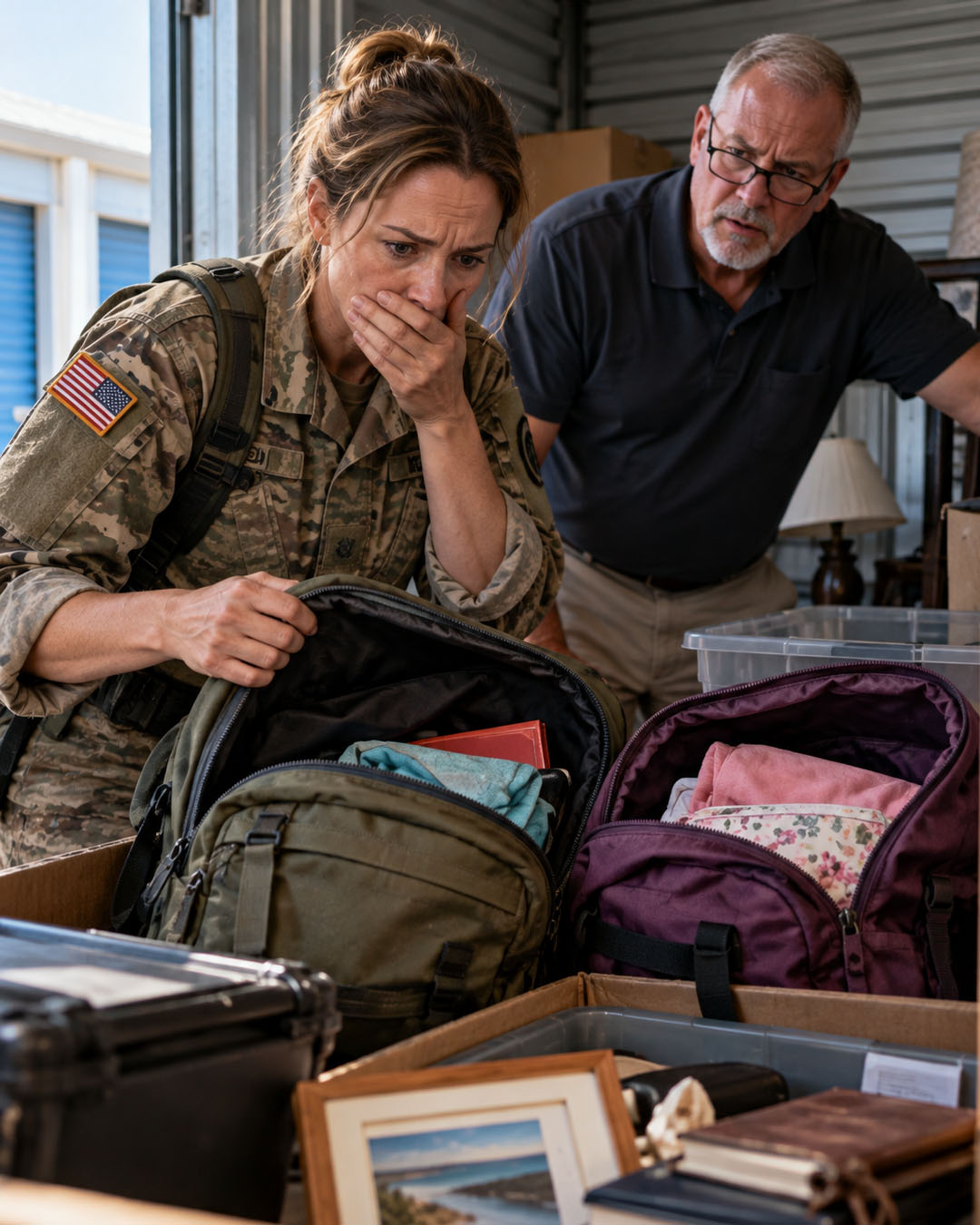
The purple and green backpacks.
The photograph dated after the disappearance.
The forged paperwork.
Margaret’s secrets.
Marissa’s voicemail.
The itinerary with my children’s names.
For a long time, I believed justice would mean watching Ethan lose everything.
I thought I needed him to feel what we had felt.
Fear.
Confusion.
Loss.
But sitting in those mountains, listening to wind move through the trees, I understood something I had missed.
Justice was not making Ethan suffer as much as we had.
Justice was making sure his choices no longer controlled us.
I did not get every dollar back.
My children still had questions.
Some wounds would take years to soften.
Emma might always remember waiting for a father who chose not to call.
Noah might always wonder why a man who claimed to love him had been willing to let him grieve.
I could not erase those things.
What I could do was build something stronger around them.
Our house was safe.
Our finances were ours again.
The twins were laughing.
And for the first time in a long time, I no longer woke before dawn wondering what Ethan might take next.
He had taken enough.
He had taken trust.
Time.
Money.
Sleep.
He had taken six months of his children’s peace because facing the truth seemed harder than running away.
But he was not taking our future.
When we returned home, the maple tree beside the porch had grown taller.
Noah stood beneath it and looked up.
“Think it’ll ever get really big?”
“Probably.”
“Like taller than the house?”
“Eventually.”
Emma came up behind us carrying one of the old backpacks.
The purple one.
After investigators released certain property, I had been given the children’s belongings from the storage unit. For months, I had kept the backpacks in a closet because seeing them made my stomach tighten.
Emma had found hers.
“Can I use this for school next year?”
I looked at the purple fabric.
For a moment, all I saw was that storage unit.
Then I looked at my daughter.
“You sure?”
She shrugged.
“It’s just a backpack.”
Three simple words.
It’s just a backpack.
To Ethan, it had once been part of a secret plan.
To me, it had become evidence of betrayal.
To Emma, it was something that could carry books.
I smiled.
“Then use it.”
Noah ran inside and returned with his green one.
“Can I use mine too?”
“Absolutely.”
The next school year, I watched both children walk toward the bus wearing those backpacks.
For one second, I expected sadness.
Instead, I felt something closer to relief.
Ethan had hidden those bags in a room built from lies.
My children carried them into daylight.
That was enough.
I once thought rebuilding meant returning to the life we had before.
I know better now.
Sometimes there is no going back.
There is only taking what remains, protecting what matters, and creating something honest from the pieces.
Ethan chose disappearance.
I chose to stay.
I stayed through the paperwork.
Through the fear.
Through my children’s questions.
Through hearings, counselors, bank calls, sleepless nights, and grocery store decisions about whether strawberries cost too much.
I stayed when staying was exhausting.
And eventually, staying became living again.
THE END.
⚠️ All characters and events are fictional. Do not imitate or apply them in real life. 😌😌😌